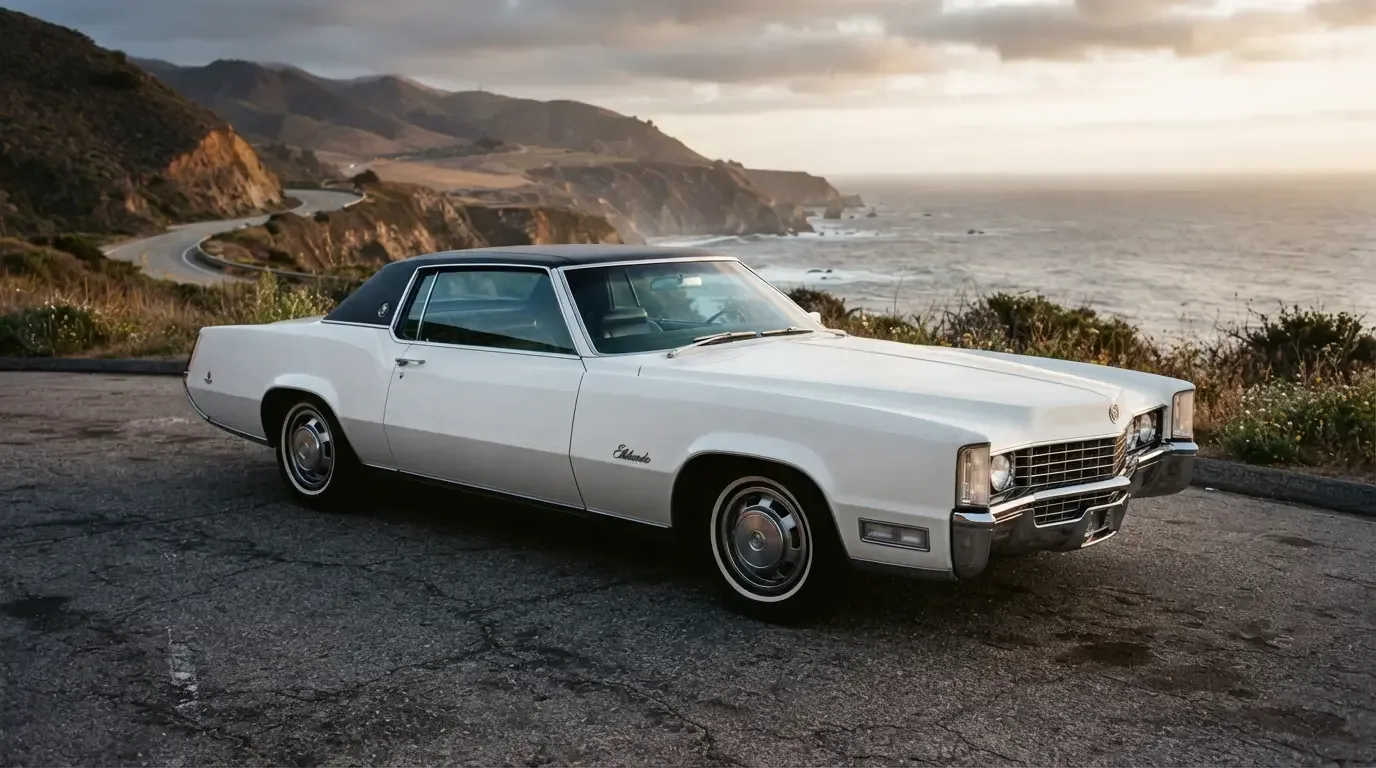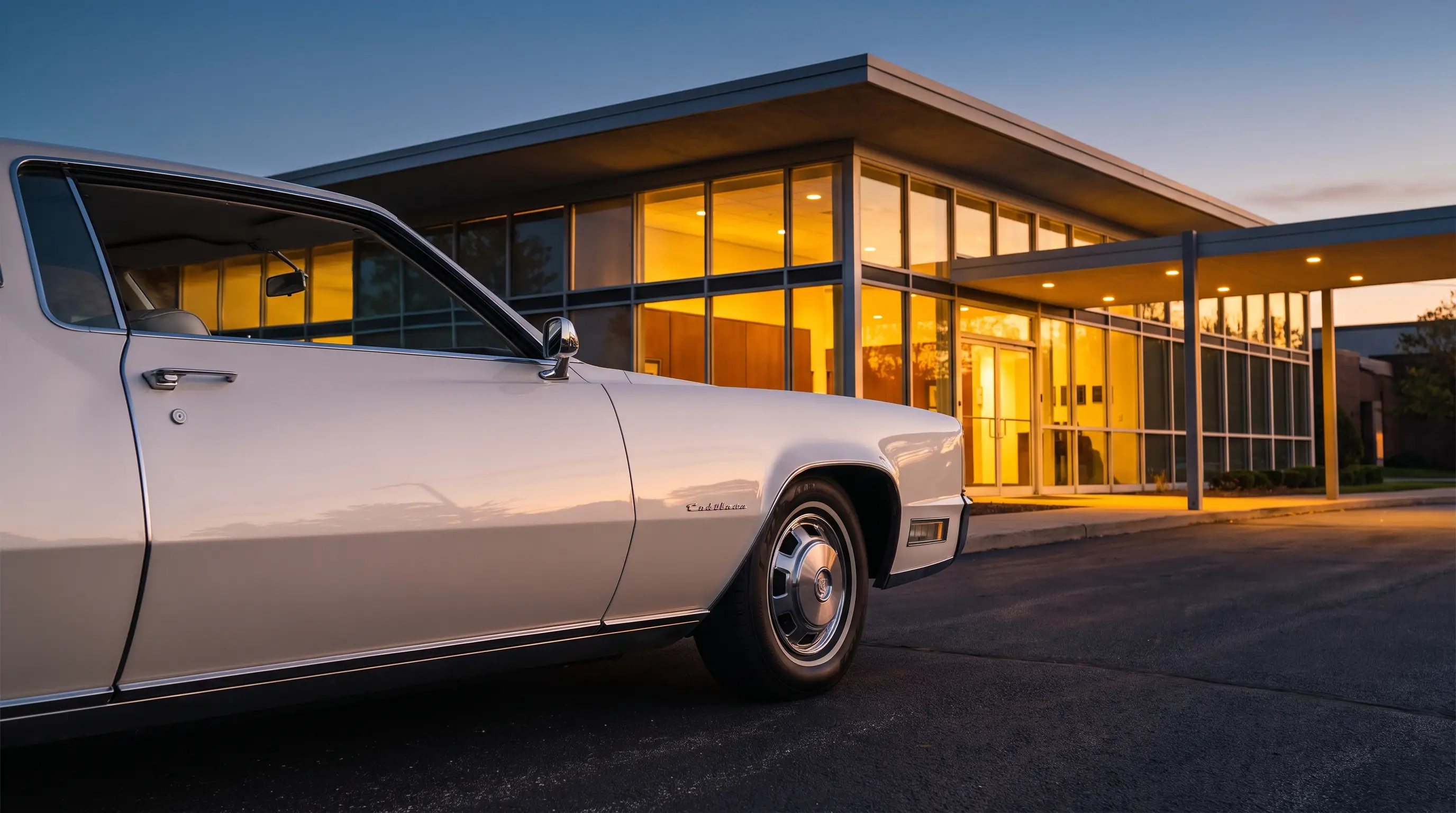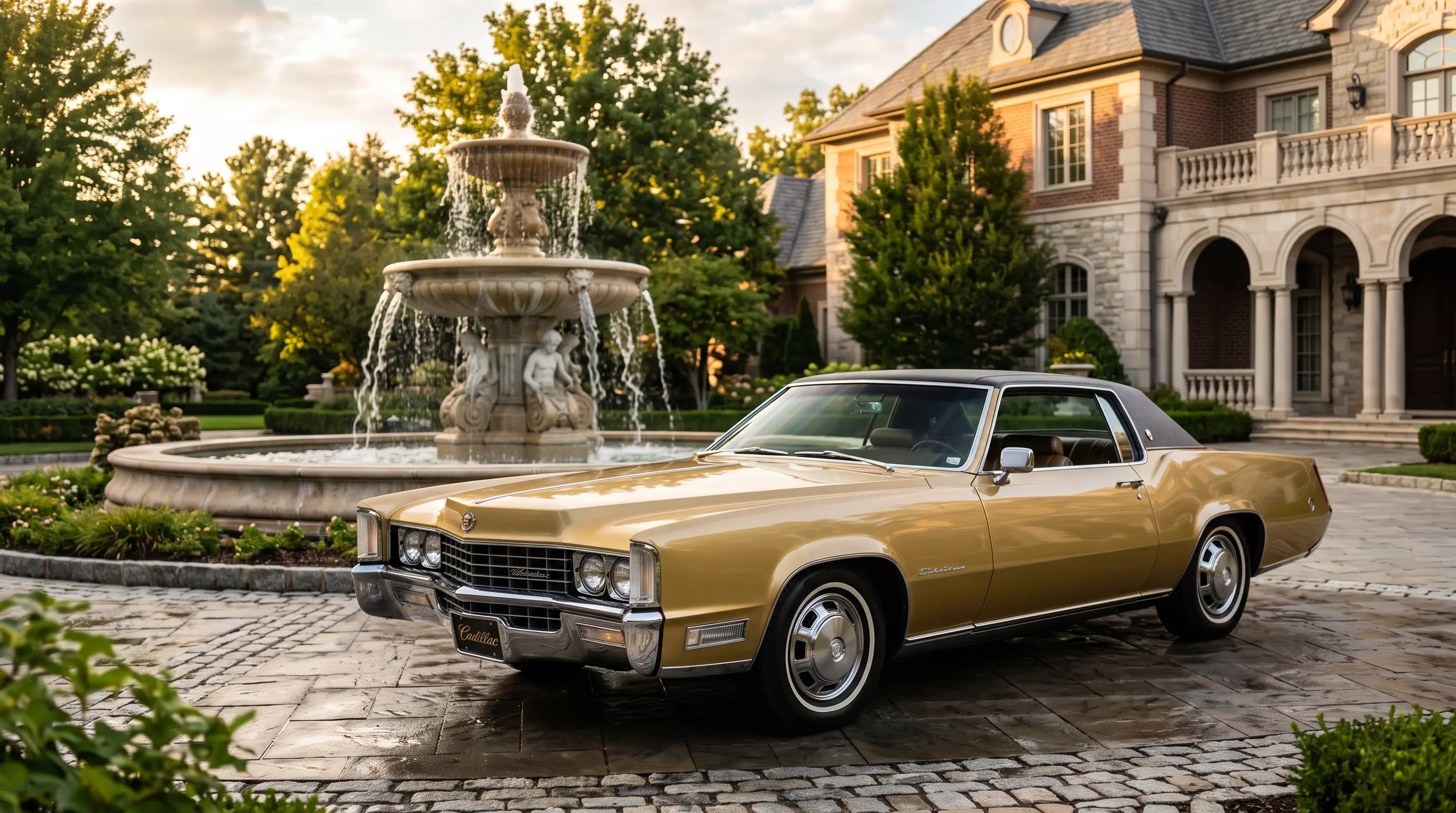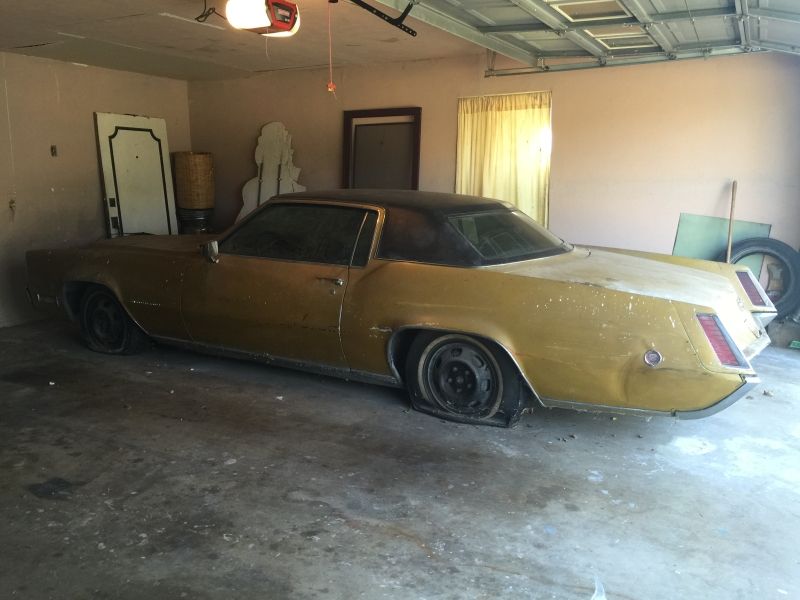
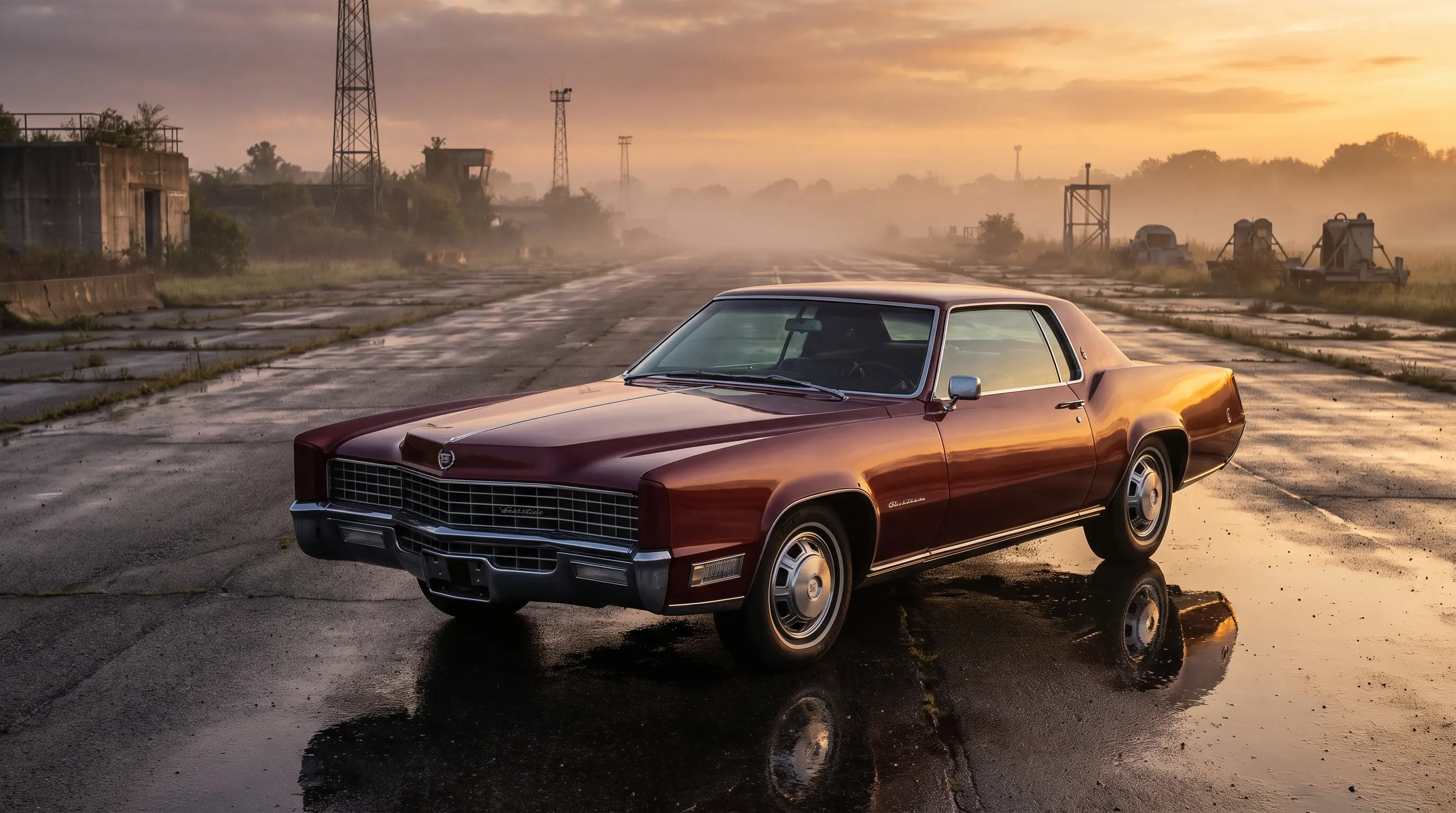
The 1967 Cadillac Eldorado front wheel drive layout was not Cadillac's idea, and the factory record makes that clear if you follow the paper trail back far enough. Anyone reading the full 1967 cadillac eldorado history will find the same starting point: the system that put power to the front wheels on that car had already been proven, argued over, and put into production one division over, at Oldsmobile, a full year earlier. Understanding how that engineering handoff happened tells you more about GM's internal politics in the mid-1960s than any single spec sheet can.
The program that started at Oldsmobile
GM's front-wheel-drive project traced back to internal studies in the early 1960s, developed under a program that eventually produced the Unitized Power Package, a transmission-and-differential assembly mounted alongside the engine rather than behind it, connected by a chain drive instead of gears. Oldsmobile got the assignment to bring this system to market first, and the 1966 Toronado was the result, the first mass-production American front-wheel-drive car since the Cord 810 and 812 of the late 1930s.
Cadillac's version arrived twelve months later on a shared architecture GM called the E-body platform. The factory records show the two divisions worked from the same fundamental drivetrain engineering, but styling, trim, and a good portion of the suspension tuning were handled separately by each division's own teams, which is why a 1967 Eldorado and a contemporary Toronado feel like genuinely different cars despite sharing their most important mechanical bones.
Why Cadillac wanted front-wheel drive at all
The engineering case inside GM centered on interior packaging. Eliminating the driveshaft tunnel that ran the length of a rear-drive car's floor freed up cabin space and allowed a lower overall roofline without sacrificing headroom, both of which mattered enormously for a personal luxury coupe competing directly against the Lincoln Continental Mark III program that was itself still in development. Front-wheel drive also delivered genuinely different handling characteristics in snow and wet weather, a selling point Cadillac's marketing leaned on hard once the car reached dealers.
The tradeoff was weight distribution. Putting the engine, transmission, and differential all ahead of the front axle line gave the 1967 Eldorado a nose-heavy stance, with somewhere in the range of 58 percent of the car's weight over the front wheels. Factory engineers compensated with specific spring and anti-roll bar tuning, and road testers of the period generally praised the resulting ride as smoother than a comparable rear-drive Cadillac, even if outright cornering balance suffered somewhat.
| Spec | 1967 Eldorado |
|---|---|
| Drive layout | Front-wheel drive, Unitized Power Package |
| Engine | 429 cubic inch V8 |
| Horsepower | 340 hp (SAE gross) |
| Platform | GM E-body, shared with Oldsmobile Toronado |
| 1967 production | 17,930 units |
Building a car nobody in Detroit had tooling for
The factory floor consequences of this decision were significant. Cadillac's existing assembly processes were built around rear-wheel-drive architecture, and adapting a plant to build a front-drive car meant new tooling, new training for line workers unfamiliar with the Unitized Power Package's installation sequence, and a revised supply chain for components that had no rear-drive equivalent. This was not a badge-engineering exercise where Cadillac simply borrowed a drivetrain and called it a day. Internal engineering teams spent real time adapting the system to Cadillac's own chassis requirements, ride expectations, and the heavier overall curb weight that came with a car positioned above the Toronado in GM's internal hierarchy.
Reliability data from the car's early service life shows the Unitized Power Package held up reasonably well in normal use, though the complexity of the chain-drive system meant that major repairs required specialized knowledge most independent shops of the era simply didn't have. That specialization requirement shaped the ownership experience for the 1967 Eldorado's entire production life, and dealership technicians needed specific factory training to service the front-drive components correctly.
"What gets lost in the popular version of this story is how much internal negotiation it took to get Cadillac to accept a drivetrain developed by another division. That almost never happened at General Motors in this period, and it tells you how seriously the corporation took the front-drive program."
- Tom Ramirez
The styling response to a shared platform
Sharing mechanical architecture with Oldsmobile put pressure on Cadillac's design studio to differentiate the Eldorado sharply enough that buyers wouldn't perceive it as a badge-engineered Toronado with a different grille. The result was the razor-edge sheet metal that became one of the defining features of the 1967 car, a much crisper, more angular treatment than the Toronado's rounder, more sculpted flanks. For the fuller account of how that design direction came together, a related story covers the studio decisions in detail.
What the front-wheel-drive decision ultimately proved, inside GM and to the broader market, was that a technically radical drivetrain change could be absorbed by a flagship luxury nameplate without damaging the brand's reputation for engineering conservatism. That was not a guaranteed outcome in 1967, and Cadillac's own product planners had internal debates about the risk. The car's commercial success settled the argument, and front-wheel drive stayed part of the Eldorado's identity for the next two decades. If the history has you looking for one of these cars in person, current Eldorados for sale now listings are a reasonable starting point for seeing the Unitized Power Package layout up close.
How the factory documented the changeover
Internal engineering bulletins from the period, the kind restorers and historians now dig out of dealer training archives, show Cadillac treating the front-drive changeover with a level of caution unusual even for a company known for methodical product development. Service manuals for the 1967 model year ran noticeably longer than prior years specifically because technicians needed detailed instruction on a drivetrain layout most had never encountered. Cadillac ran dedicated training sessions for dealership mechanics ahead of the car's launch, a step the division rarely took for a model year that wasn't introducing an entirely new nameplate.
That level of institutional care shows up in the survival rate of the Unitized Power Package itself. Cars that received proper factory-specified maintenance in period tend to have held up better mechanically than the reputation for complexity would suggest, and the failures that did occur were often traced back to shops that treated the front-drive Eldorado like a conventional rear-drive Cadillac rather than following the specific service procedures Cadillac had written for it.
What the changeover meant for the rest of the lineup
The 1967 Eldorado's success validated front-wheel drive within GM well beyond the E-body platform, and engineers who worked on the Unitized Power Package went on to inform later front-drive programs across the corporation. Within Cadillac specifically, the front-drive layout became such a defining part of the Eldorado's identity that the division kept the architecture in place, with updates, all the way through the car's downsized generations of the 1980s and into the Northstar-powered coupes of the 1990s. Few single engineering decisions in Cadillac's history proved as durable as the one made for the 1967 model year, and almost none of them started as another division's idea first.
Sources and notes
- Automobile Catalog - 1967 Cadillac Fleetwood Eldorado specs
- Automotive Mileposts - 1967 Cadillac Eldorado Production/Specifications
- Eldorado-Seville.com - The History of the 1967 Cadillac Eldorado
- Wikipedia - Cadillac Eldorado
- Conceptcarz - 1967 Cadillac Eldorado Specifications
- Hagerty Valuation Tools - 1967 Cadillac Eldorado