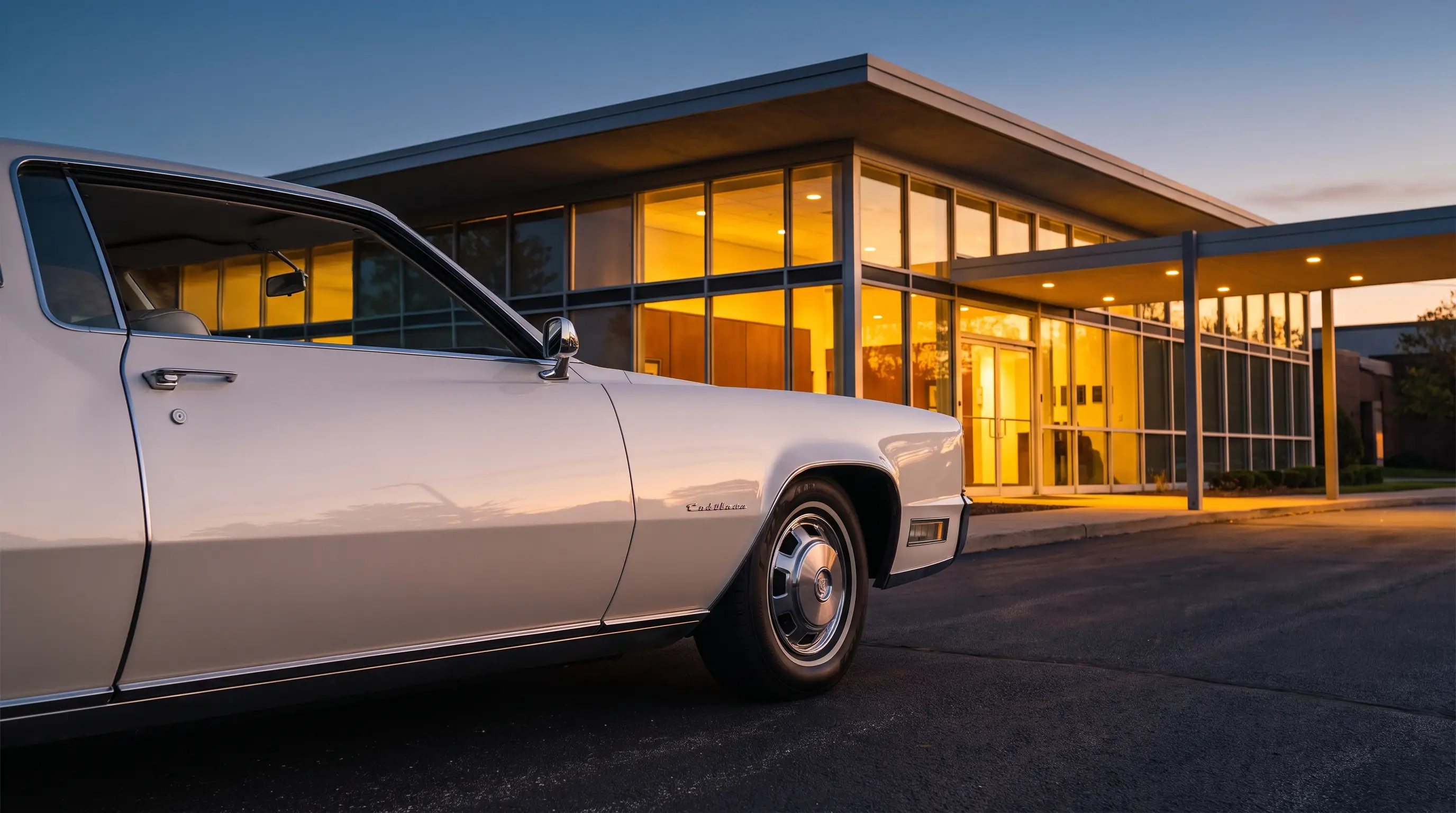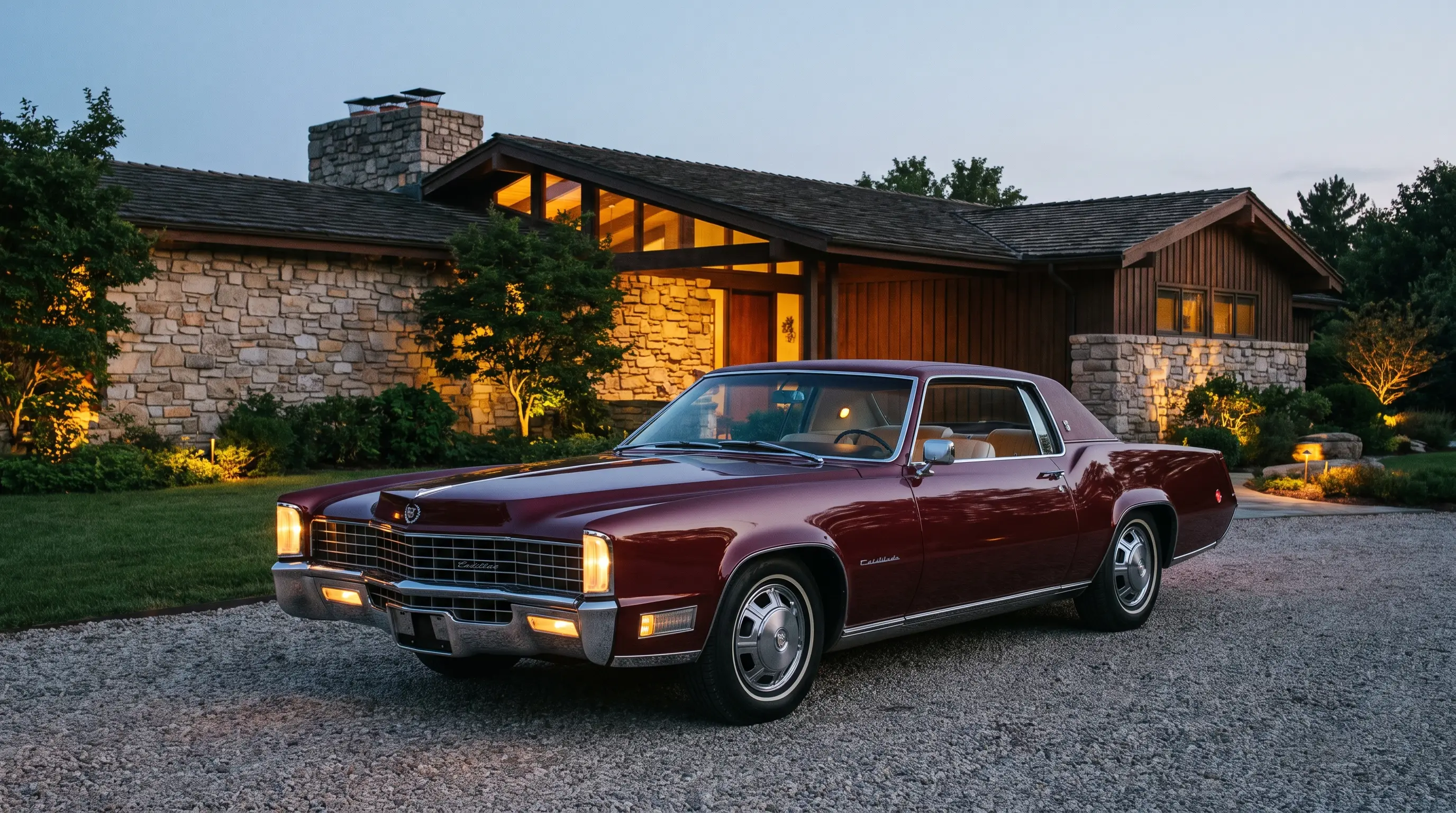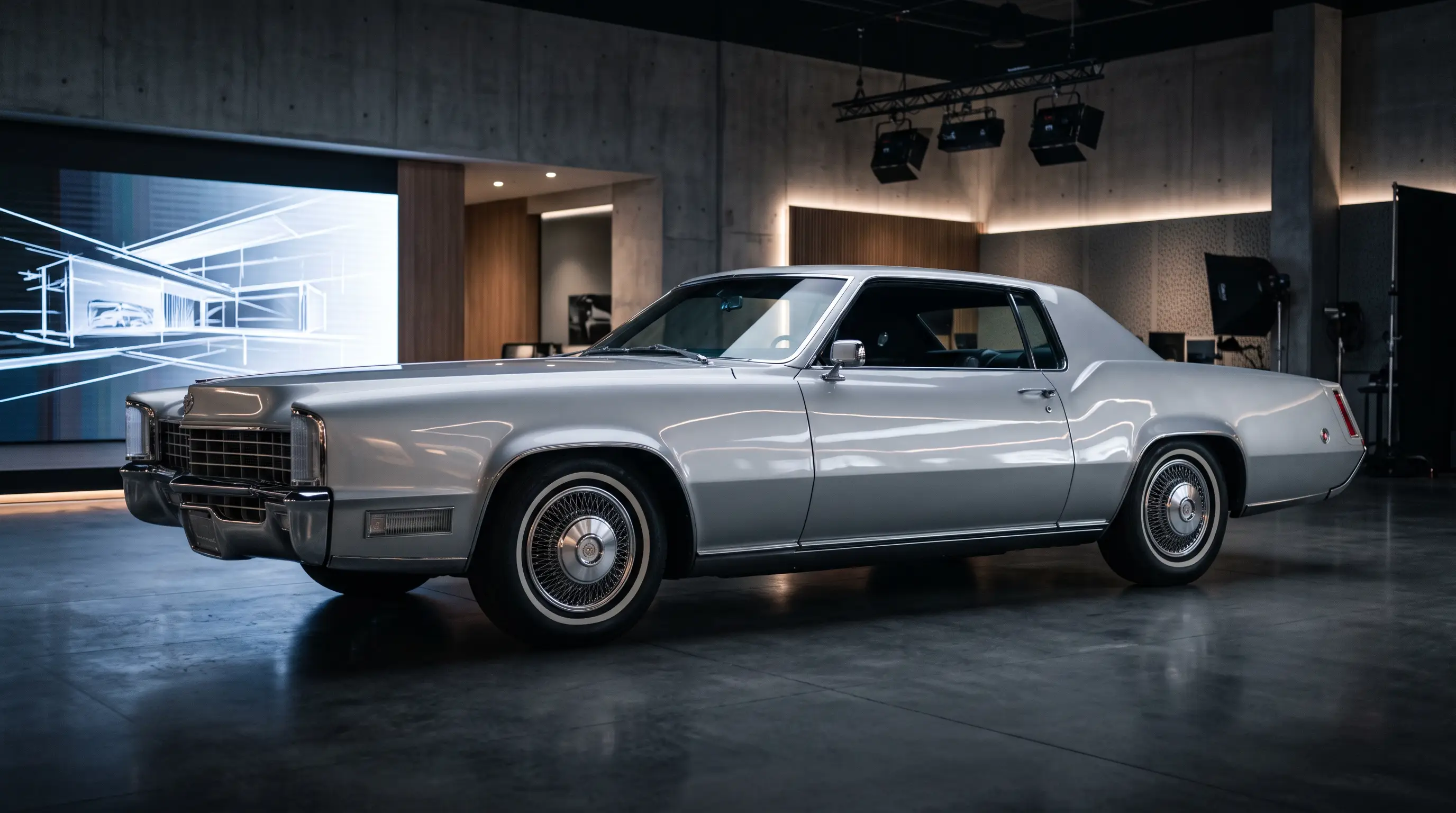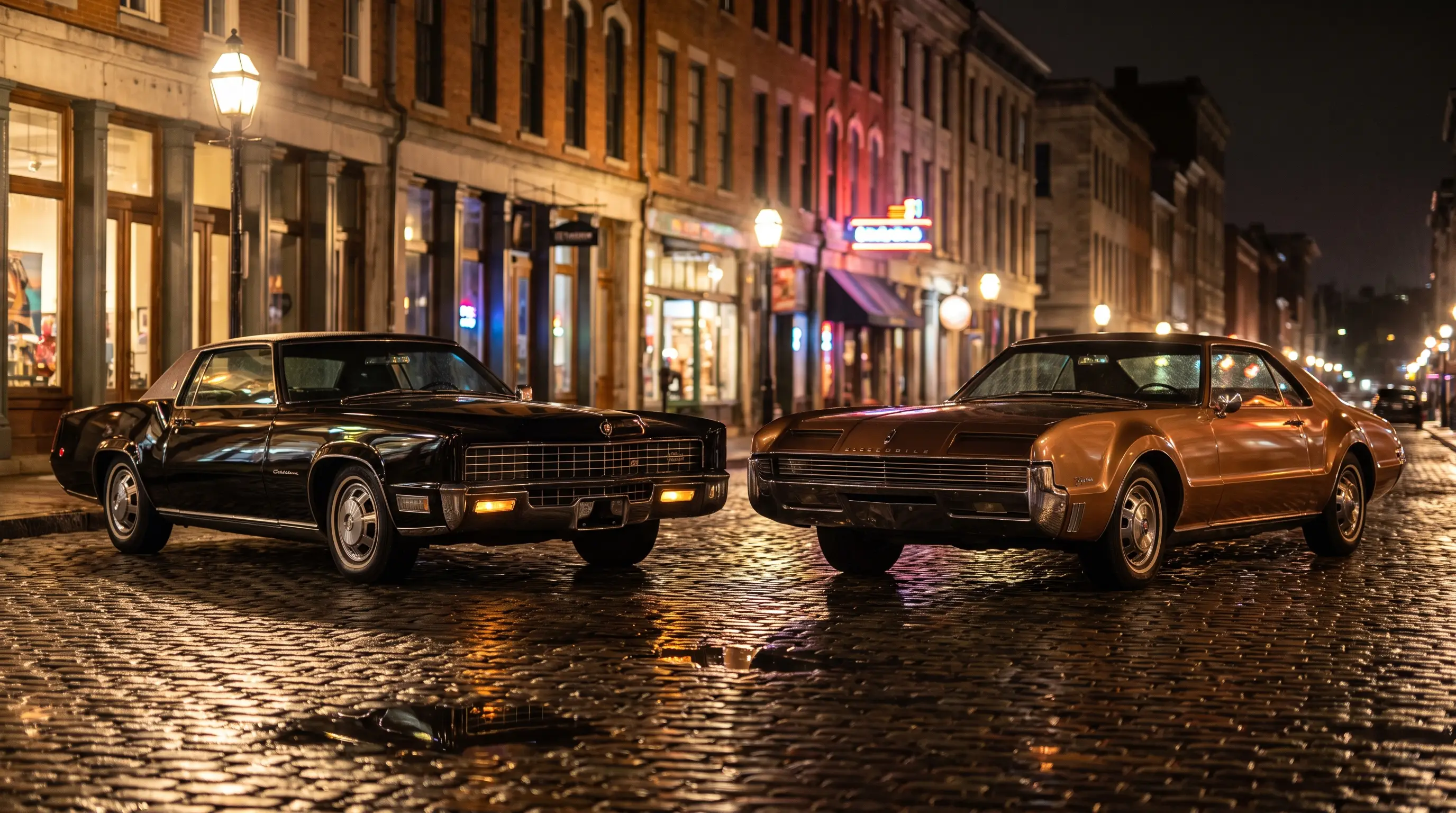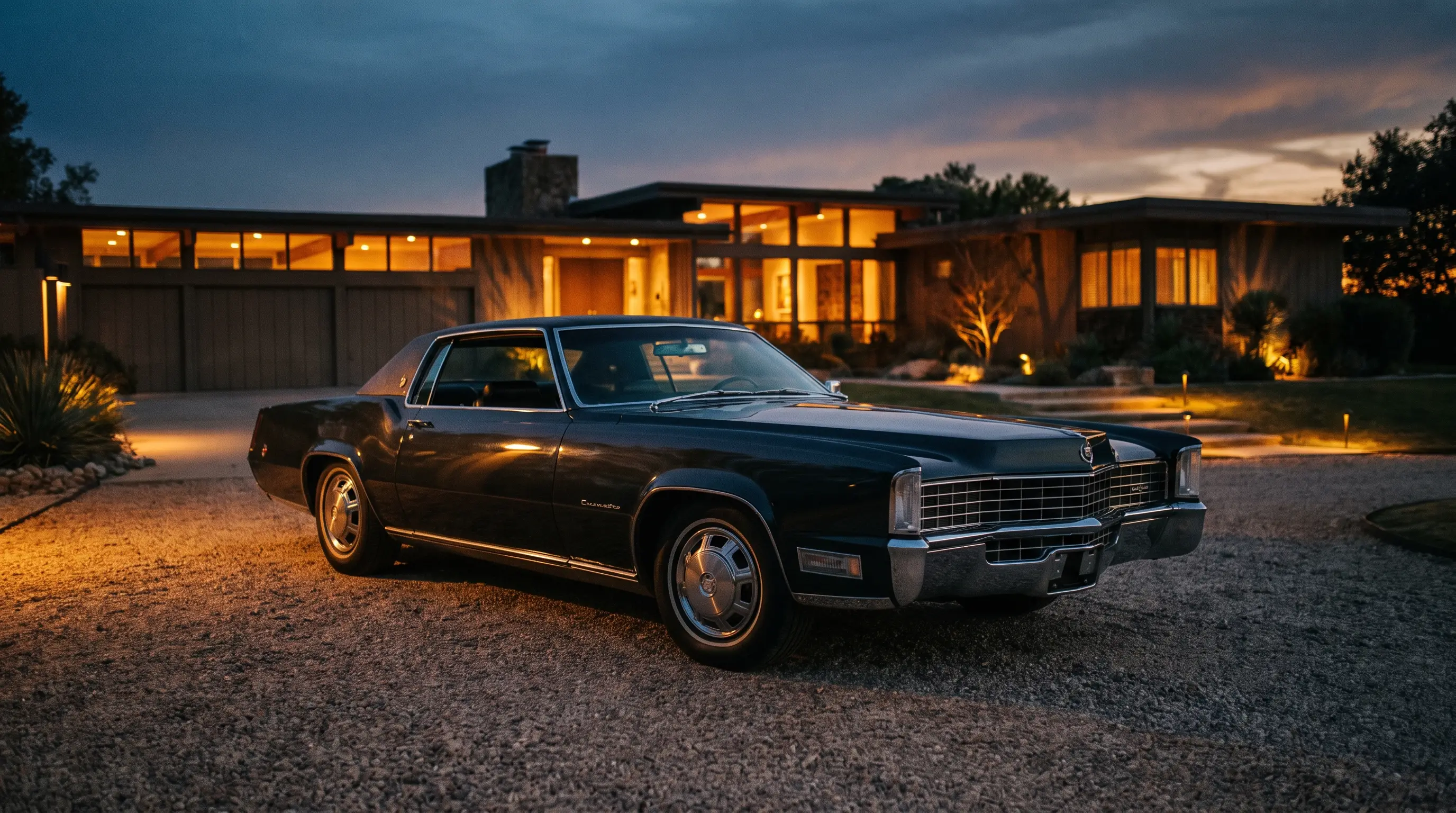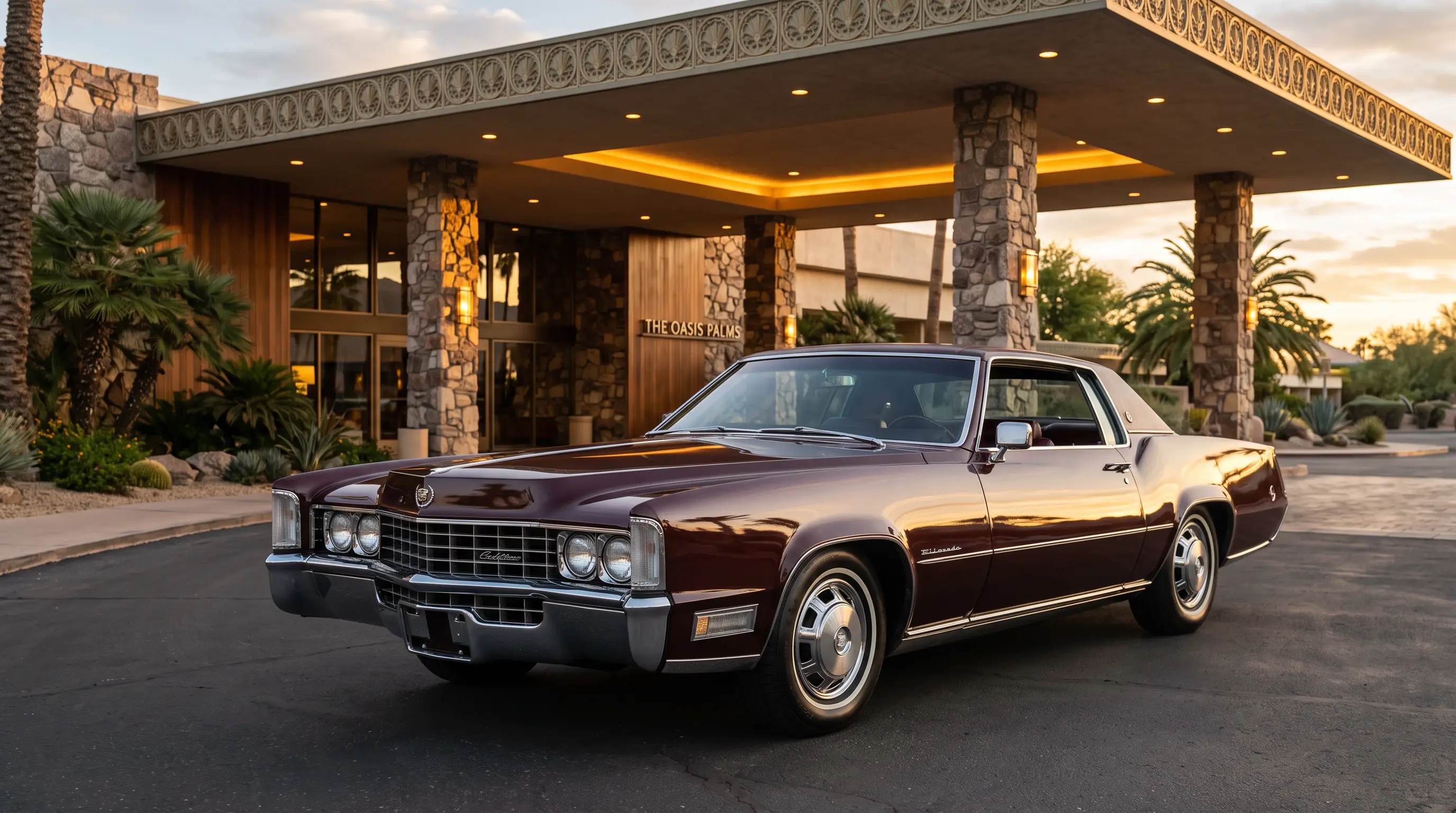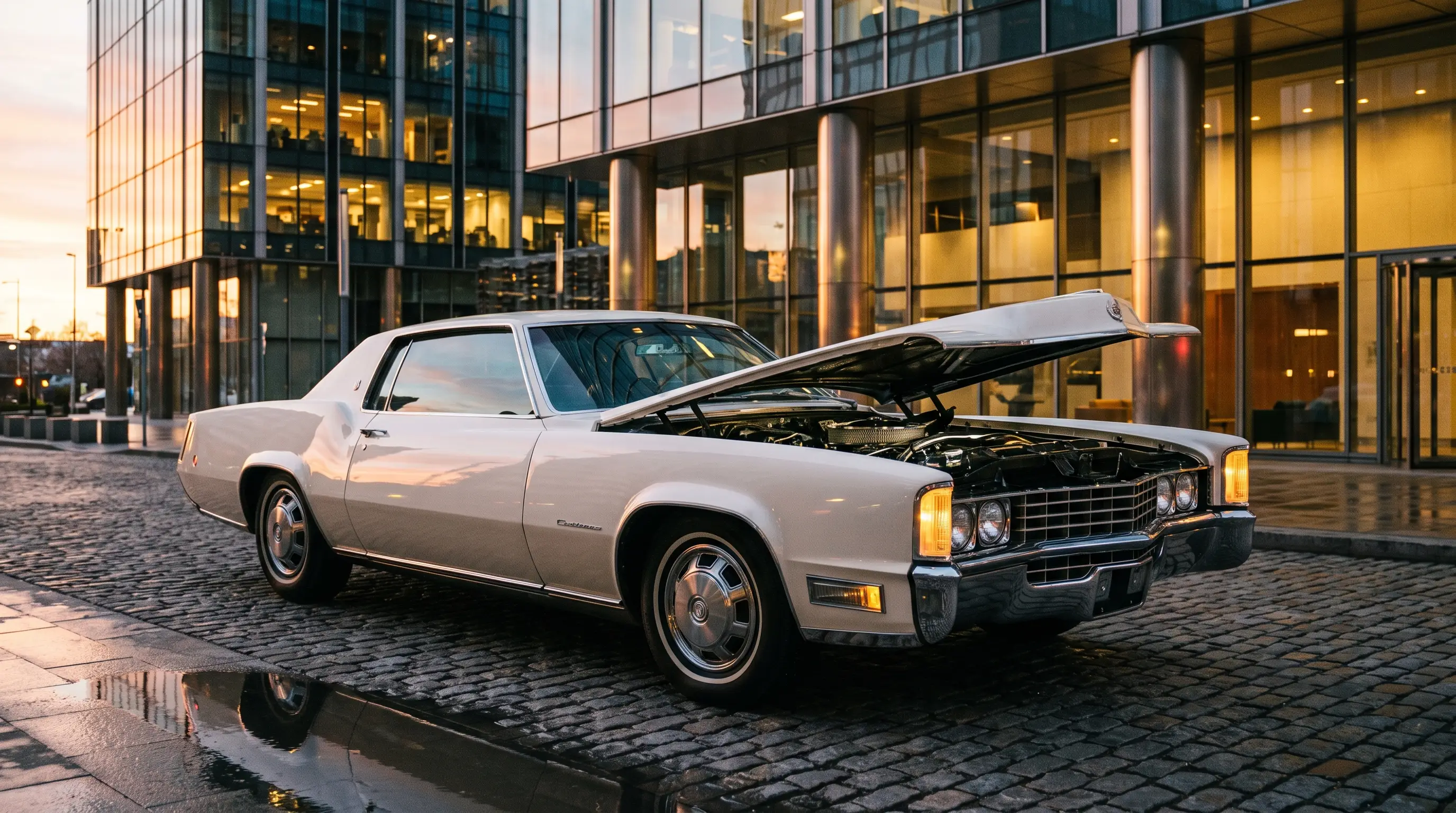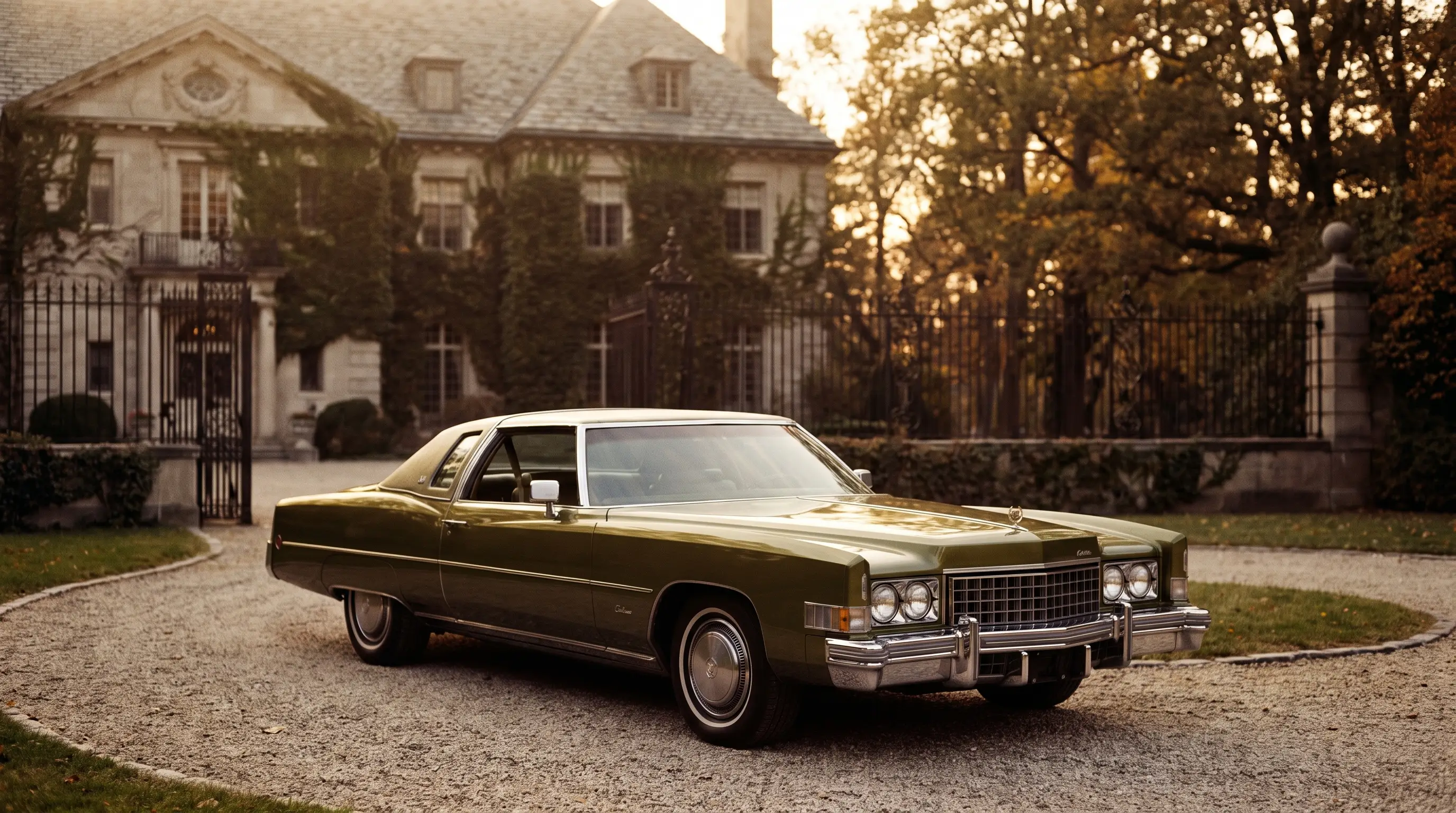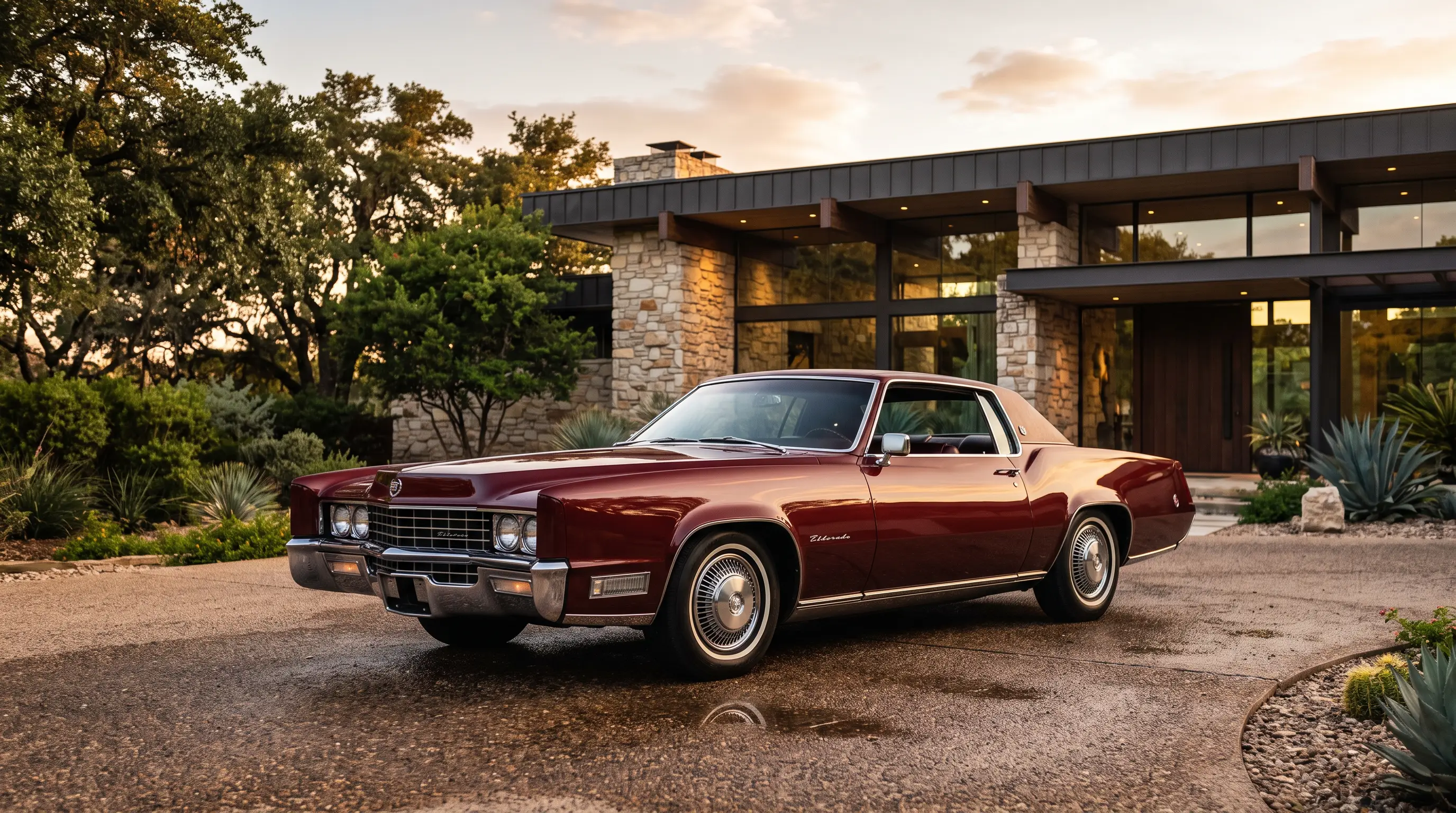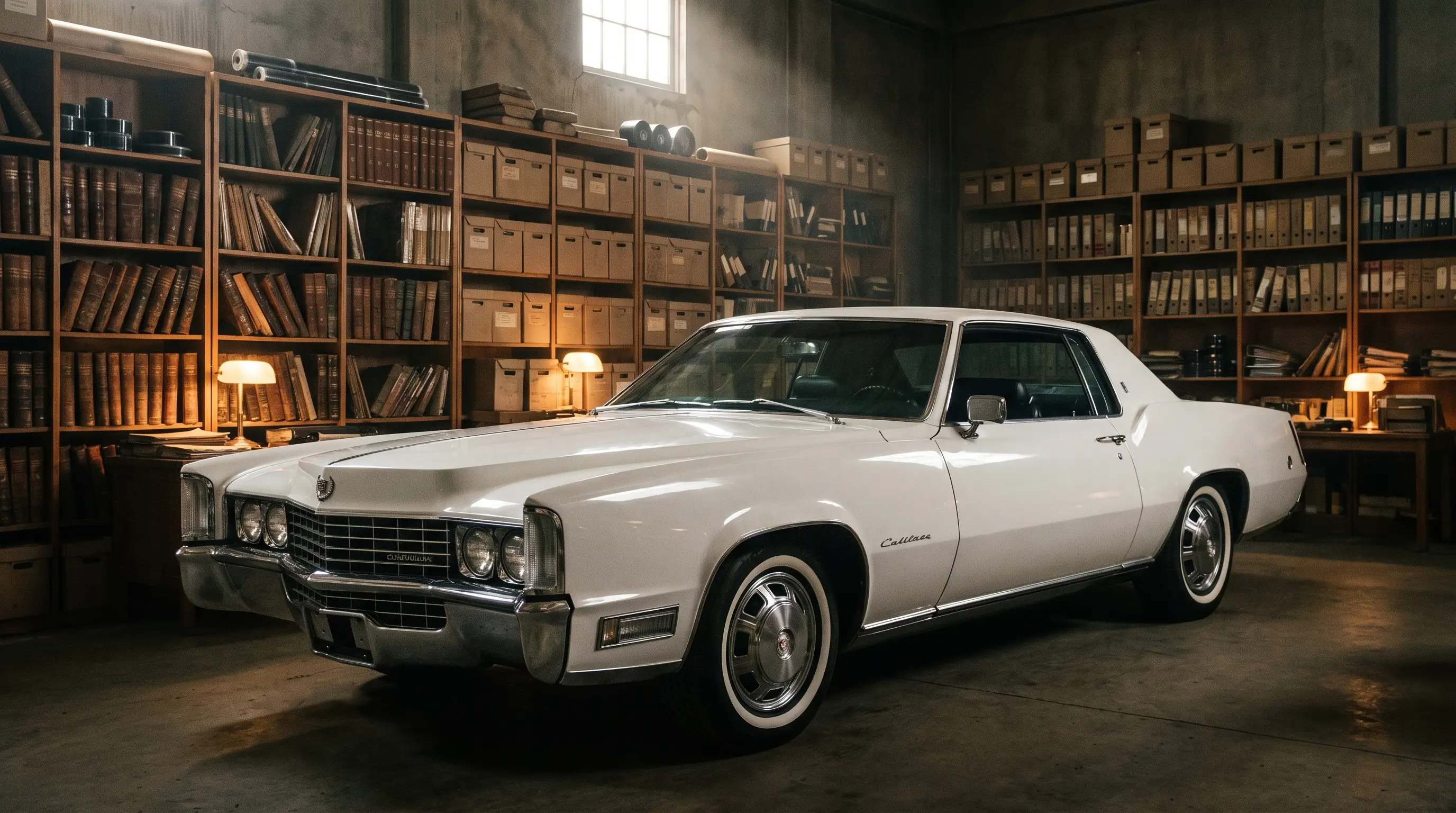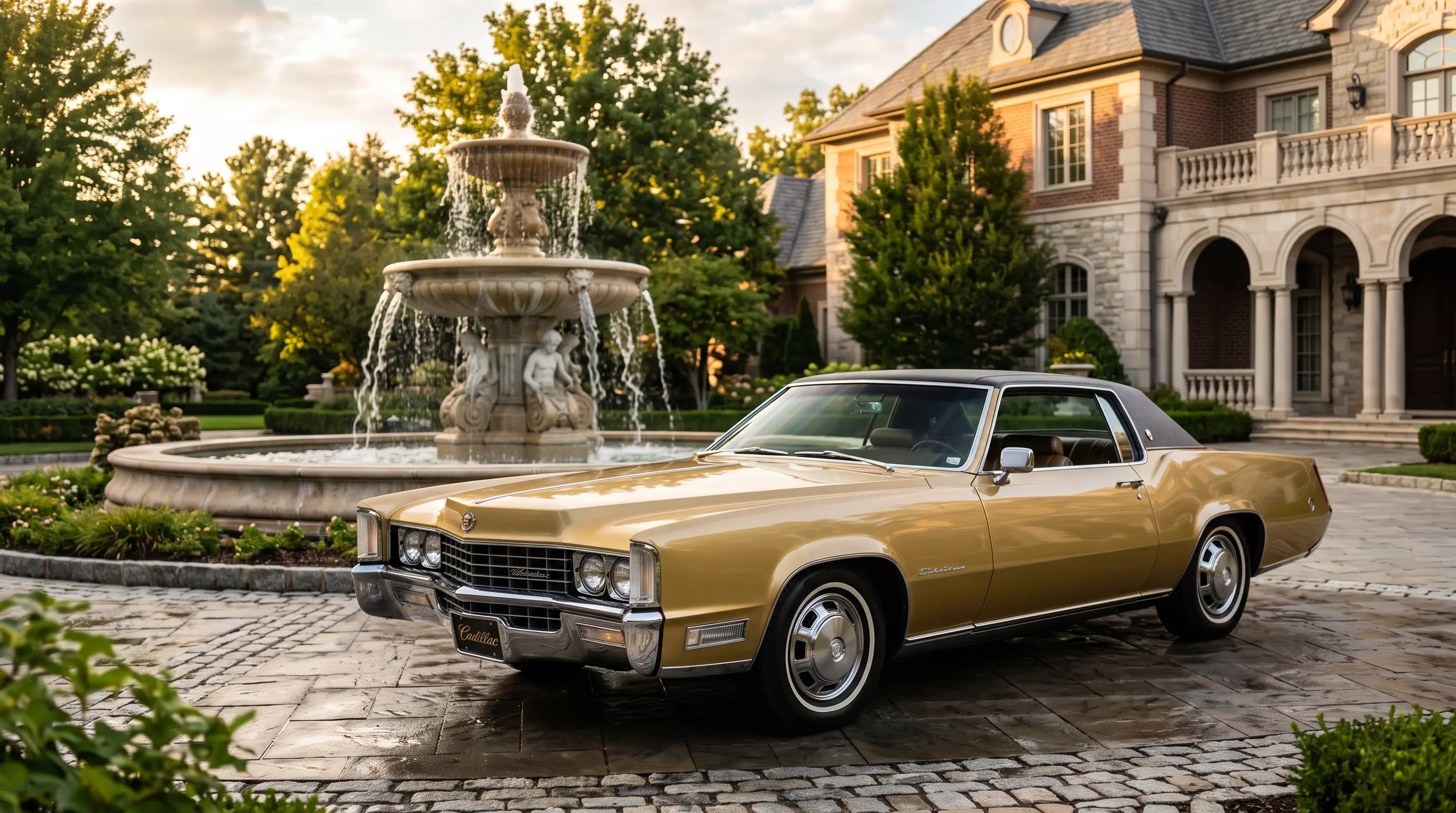
There is a persistent claim that the 1967 Cadillac Eldorado was Cadillac's first front-wheel-drive car, and it is worth correcting gently before we go any further. The engineering that made the 1967 Eldorado possible arrived first at Oldsmobile, in the 1966 Toronado, which was the car that actually reintroduced front-wheel drive to a big American automobile. What the 1967 Eldorado did was take that same hardware, dress it in Cadillac's own sheet metal, and turn a clever Oldsmobile into the most desirable personal luxury coupe General Motors had yet built. The distinction matters, because the 1967 cadillac eldorado was not an experiment. It was the second, more confident use of an idea that had already been proven.
To understand where the car sits, it helps to read it against the wider the cadillac eldorado story, because the nameplate had spent its first fourteen years as a low-volume, rear-drive halo convertible and coupe. The 1967 car broke that pattern completely. It was a new platform, a new drivetrain layout, and a new mission, all at once.
The E-body and the Unified Powerplant Package
The shared platform was General Motors' E-body, and the drivetrain was marketed as the Unified Powerplant Package. That name described an arrangement that was genuinely novel for a large American car. The engine sat longitudinally, and the automatic transmission was mounted alongside it rather than behind it, with a chain drive connecting the two. Power then went forward to the wheels. This let the engineers keep a big Cadillac V8 up front while sending drive to the front axle, and it produced a flat floor and a low, wide cabin that a conventional driveshaft car could not match at the time.
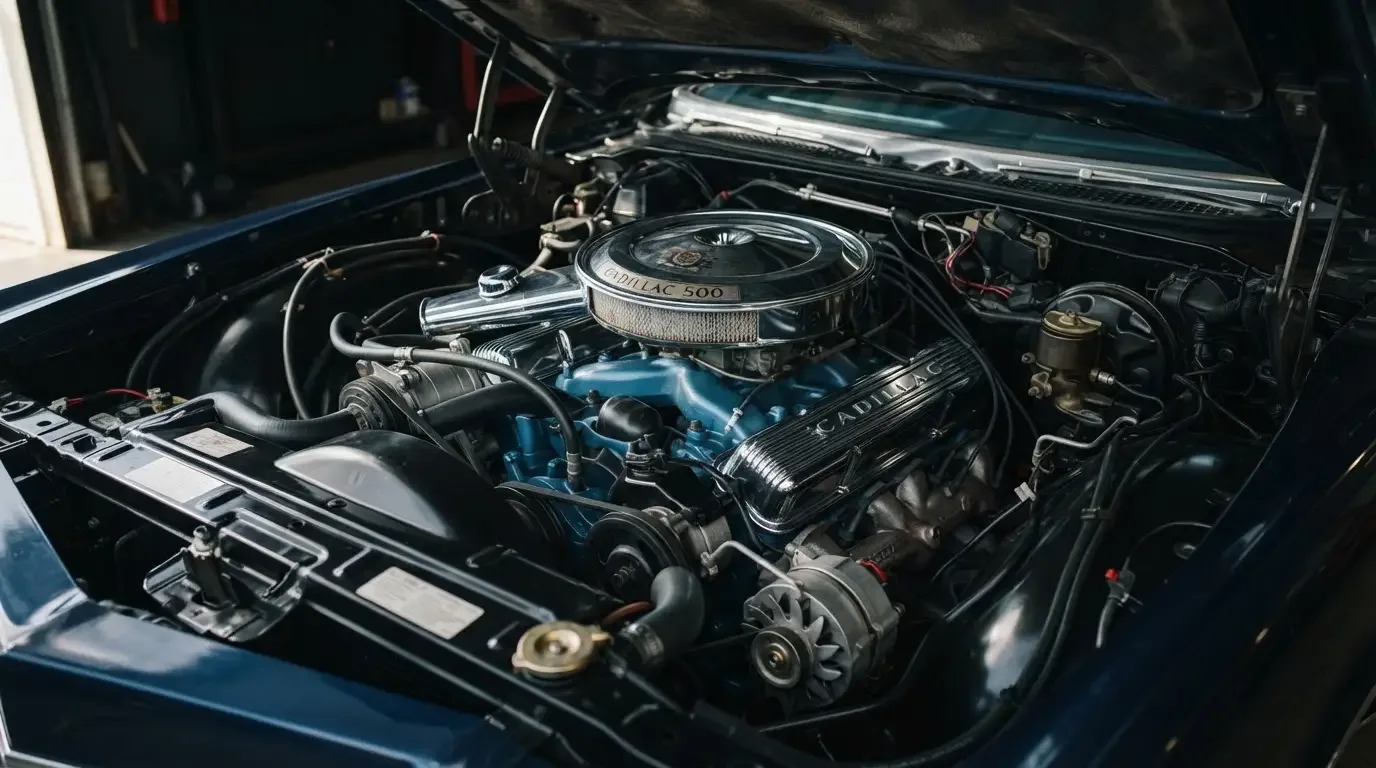
Cadillac and Oldsmobile shared the hard engineering of this package, but they did not share engines. The Toronado used Oldsmobile's own V8. The 1967 Eldorado used a Cadillac 429 cubic inch V8 rated at 340 hp. That is the sort of detail that gets flattened in casual retellings, where people assume the two cars were mechanical twins. They were platform relatives with different hearts, and the Cadillac's engine choice mattered for what came next.
| Detail | 1967 Cadillac Eldorado |
|---|---|
| Platform | GM E-body, shared with Oldsmobile Toronado |
| Drivetrain | Front-wheel drive, Unified Powerplant Package |
| Engine | 429 cubic inch Cadillac V8 |
| Output | 340 hp at 4600 rpm, 480 lb-ft torque |
| Body style | Two-door personal luxury coupe |
| Headlamps | Hidden, behind flip-up covers |
| First model year | 1967 |
| 1967 production | Around 17,930 units |
Bill Mitchell's razor-edge coupe
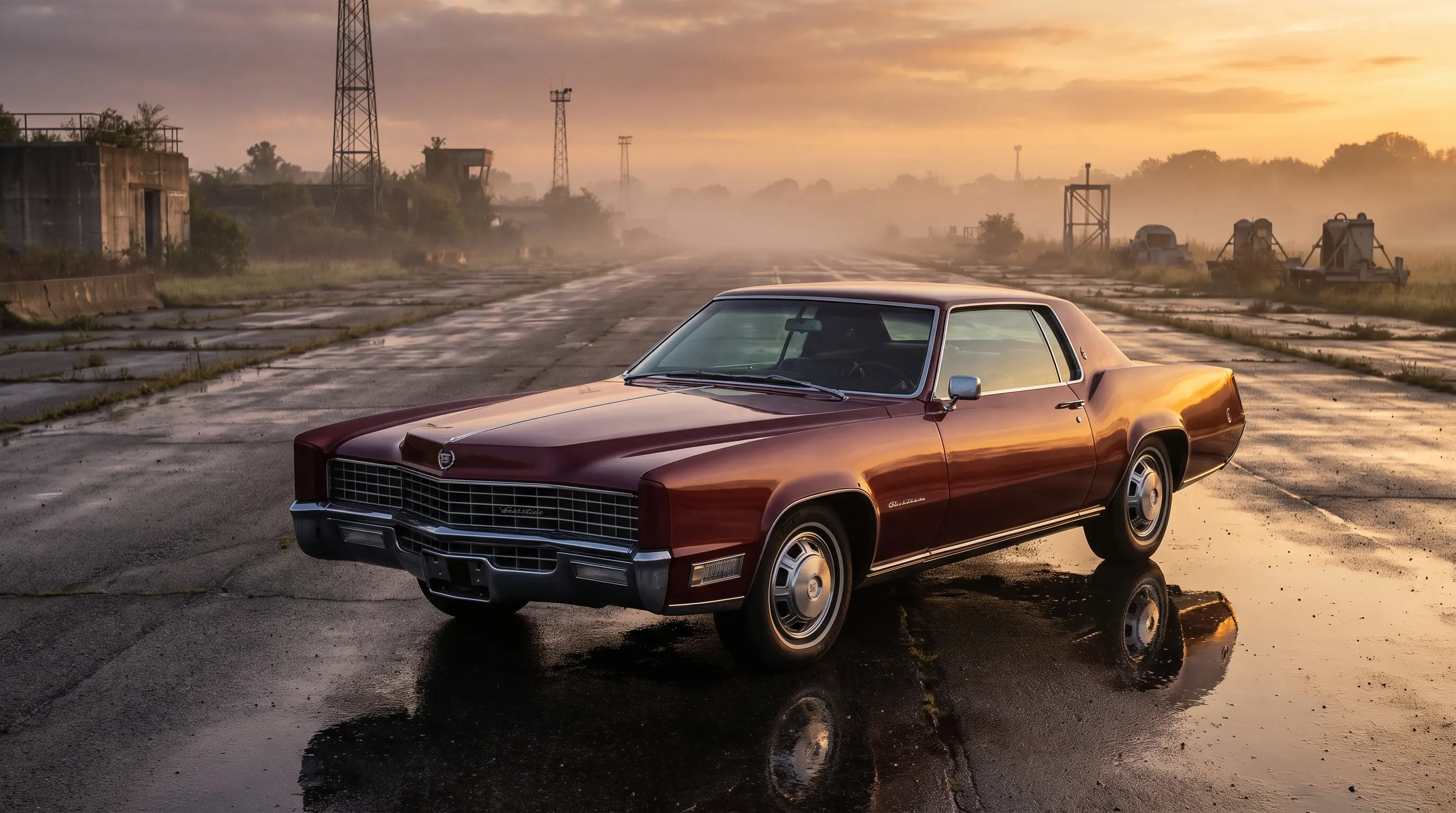
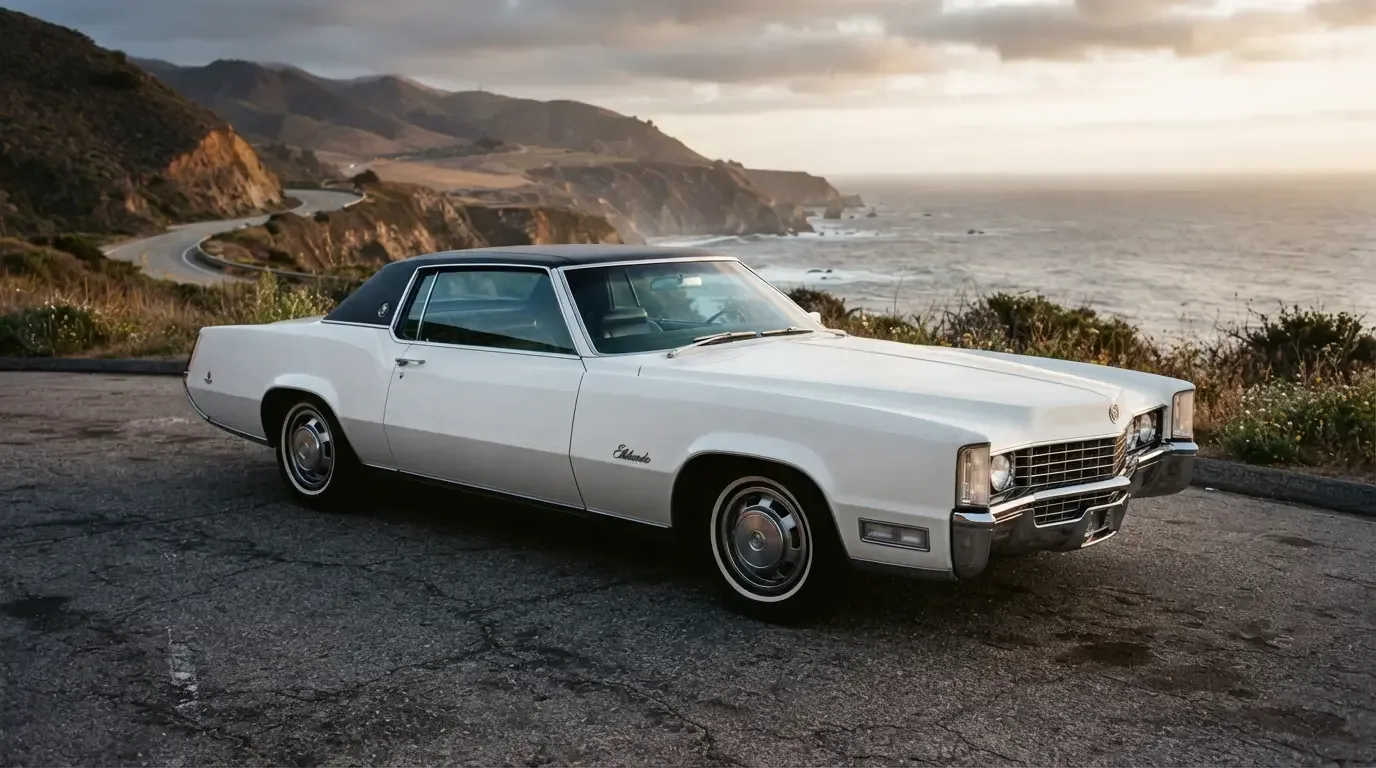
The styling came out of the General Motors design staff under Bill Mitchell, and it is where the 1967 Eldorado separates itself from its Oldsmobile cousin most clearly. Where the Toronado was rounded and muscular, the Eldorado was sharp and formal, with crisp folded edges, hidden headlamps behind flip-up covers, and a long hood that made no secret of the machinery beneath it. The two cars shared a floor and a drivetrain concept, but nobody standing on a sidewalk in 1967 would have confused the two. That was the entire point. Cadillac needed the car to read as a Cadillac first and a piece of clever engineering second.
The archival record is consistent on how well the styling landed. The 1967 Eldorado was widely praised in its own time and has been treated as one of the cleaner statements of the era ever since. It is one of those rare cases where the road car left the design studio with its concept-car crispness mostly intact, rather than being softened for production.
Correcting the volume misconception
Another idea worth correcting is that the Eldorado was always a rare car. Before 1967 it genuinely was, with some early-1950s model years producing only a few hundred cars. The front-drive coupe changed that arithmetic entirely. First-year 1967 production ran to roughly 17,930 cars, a figure that dwarfed anything the nameplate had done before and nearly tripled the previous Eldorado high. The Eldorado had graduated from a low-volume halo into a genuine series that Cadillac expected to sell in real numbers.
That volume is part of why these cars remain relatively attainable today compared with the fin-era rarities. Enough of them were built that a patient buyer can still find honest, unmolested examples, and the community that supports them is large enough to keep parts and knowledge circulating. When these cars come up, they tend to reward the buyer who prizes originality, because the drivetrain and its front-drive hardware reward a car that has been maintained rather than neglected.
"The records are clear on this. The 1967 Eldorado did not invent Cadillac front-wheel drive so much as perfect the presentation of it. The engineering came from Oldsmobile. The character was pure Cadillac."
- Tom Ramirez
Why the layout mattered for what followed
The choice to build a front-wheel-drive personal luxury coupe was not a one-year novelty. It set the mechanical template that the Eldorado would follow for years, and it opened the door to the engine escalation of the years just after. Cadillac had put a 429 in the 1967 car, but the appetite for displacement in this platform did not stop there. If you want the next chapter, the story of how the front-drive Eldorado grew into an 8.2-liter monster is the next chapter, and it follows directly from the decisions made in 1967.
What the 1967 car established was that a large Cadillac could send its power to the front wheels without giving up refinement, silence, or presence. That was not an obvious outcome in the mid-1960s, when front-wheel drive was mostly associated with small economy cars in Europe. Cadillac and Oldsmobile proved the layout could carry a two-ton American luxury coupe, and they did it without asking the buyer to accept any obvious compromise in the way the car drove or rode.
How the press received it
The contemporary reception is part of the historical record and it is worth setting down plainly, because it corrects another loose memory. The 1967 Eldorado was not a car the press had to be talked into liking. Motoring writers of the day treated it as a serious achievement, praising the way a front-wheel-drive car of this size managed to feel composed, quiet, and quick without the vices people expected from the layout. Torque steer, the tendency of a powerful front-drive car to tug at the wheel under hard acceleration, was reported as far better controlled than skeptics had predicted. That was not luck. It was the result of the engineering GM had already refined on the Toronado a year earlier.
What set the Cadillac apart in those reviews was the sense that it delivered the front-drive advantages, the flat floor, the interior space, the traction, without asking the buyer to think about any of it. A Cadillac customer in 1967 did not want an engineering lecture. They wanted a car that felt effortless, and the Eldorado gave them that while quietly carrying one of the more advanced drivetrains in the American industry. The achievement was in making something genuinely novel feel completely normal from the driver's seat.
It is also worth noting what the car was not. It was not a sports car, and it never pretended to be. The 1967 Eldorado was a personal luxury coupe, a category that prized style, comfort, and presence over outright pace. The front-wheel-drive layout served that brief perfectly. It freed up interior room and gave the car a planted, secure feel on the road, which was exactly what its buyers valued. Judged against the job it was built for, rather than against a sports car it was never meant to be, the first-year Eldorado did everything asked of it.
Living with an early front-drive Eldorado
For a collector today, the 1967 Eldorado is one of the more usable entry points into serious postwar Cadillac ownership. The styling has aged well, the mechanicals are well understood, and the production volume means you are not fighting the entire hobby for the last surviving example. The things that matter are the same things that always matter with a technically ambitious car. You want maintenance history. You want a drivetrain that has been kept up rather than left to sit. You want a car whose front-drive hardware has been respected.
The market for these cars has grown steadily as collectors have come to appreciate what the 1967 model represented, which is the moment Cadillac stopped competing on fins and started competing on engineering. If you want to see how honest examples are priced right now, it is worth watching how originality and documentation move the numbers at auction and in private sales. The first-year cars in particular hold a special place, because they were the ones that proved the whole concept could work.
Read against everything the nameplate had been before it, the 1967 Eldorado is the pivot from spectacle to substance. It kept the presence Cadillac buyers expected and added an engineering story worth telling. That combination is why the car still matters, and why the correction is worth making every time. It did not invent Cadillac front-wheel drive. It made front-wheel drive feel like a Cadillac. You can find the survivors among the classic Eldorados on the market whenever the front-drive era calls to you.