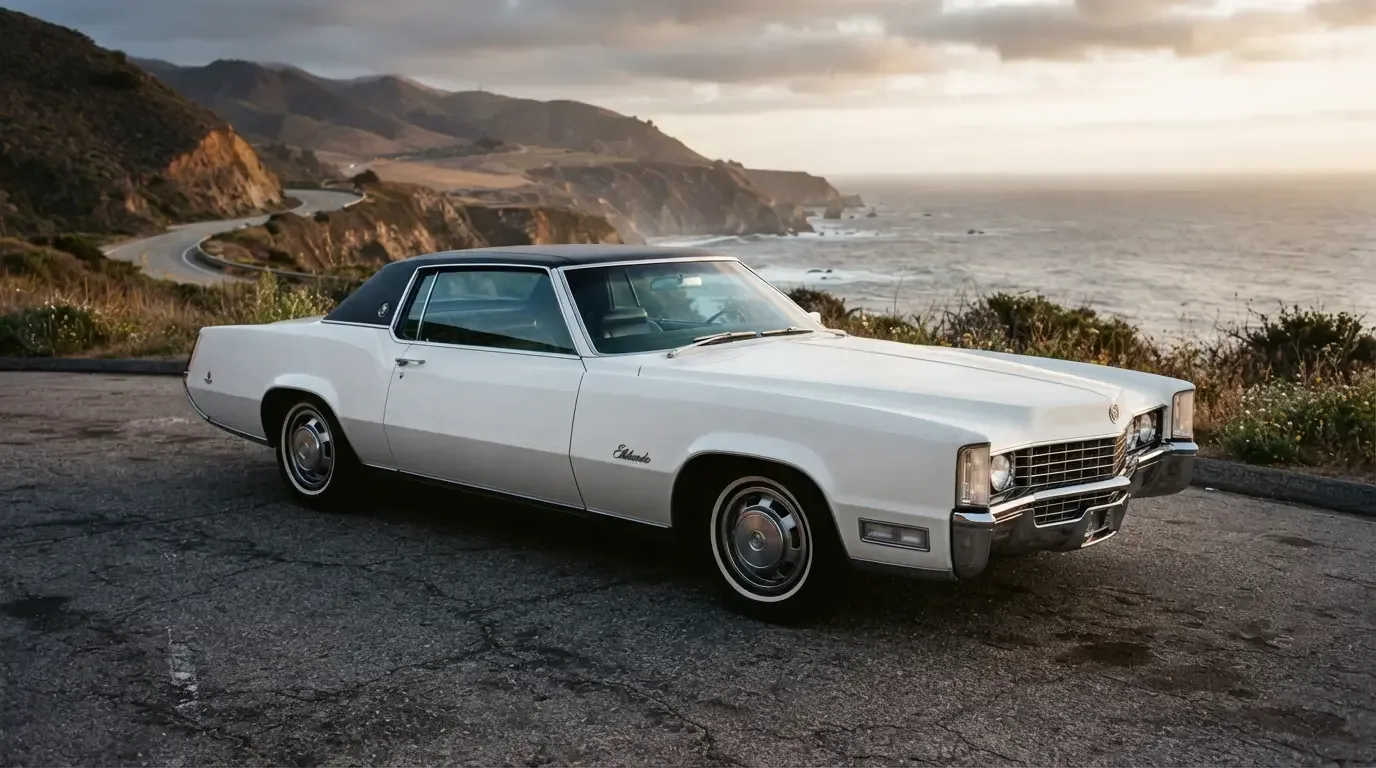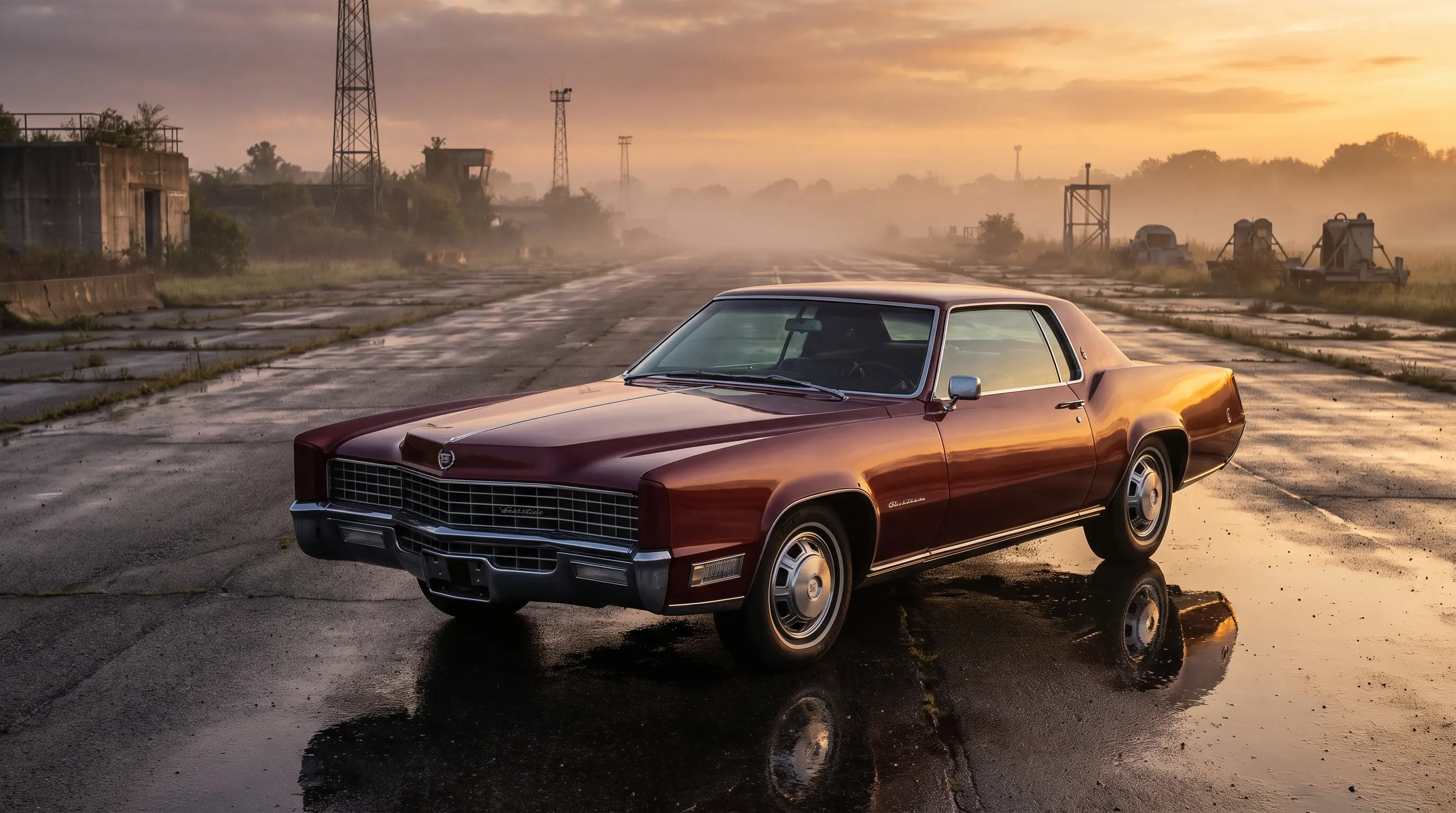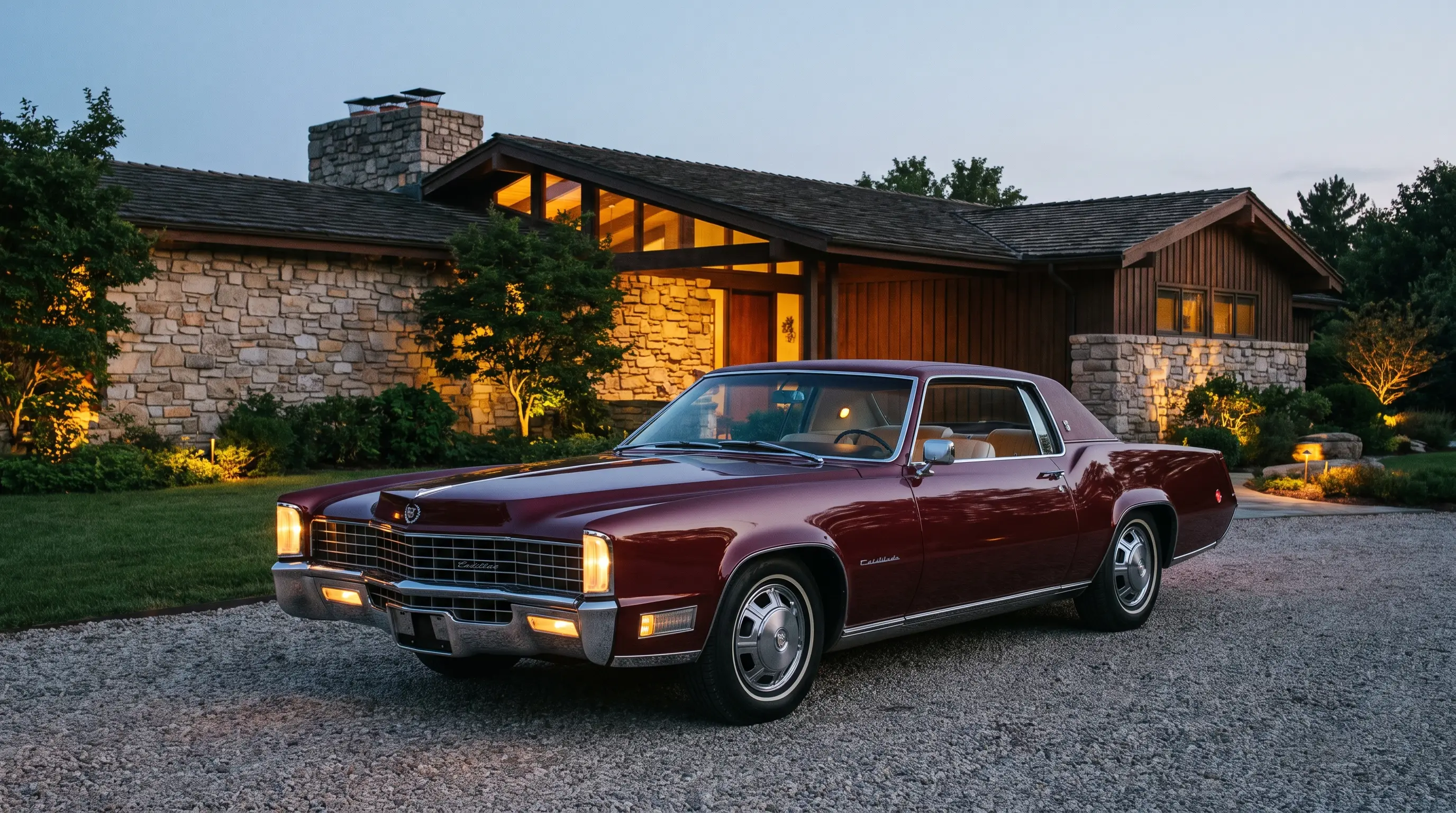
A designer once described the 1967 Cadillac Eldorado's edges as something you could cut paper with, and looking at the car in profile, parked under the right light, it is easy to believe him. The 1967 Eldorado arrived with a body language that broke sharply from the rounded, chrome-heavy Cadillacs of the previous decade, trading soft curves for creases so precise they looked machined rather than shaped by hand.
A studio decision made under pressure
Inside GM's design studios, the shift toward crisp, flat planes and hard-edged corners had been building for a few years before it reached the Eldorado, but this was the car that took the idea furthest. Where earlier Cadillacs let light roll gently across a fender, the 1967 Eldorado's sheet metal was cut at angles meant to catch light and hold it in a single sharp line from headlight to taillight. Designers called this treatment razor-edge styling, and the name fits. Stand at the front quarter panel and trace a finger along the crease running the length of the hood, and there's no soft transition anywhere, just a clean fold that runs the whole way back.
That decision carried real weight because the Eldorado shared its mechanical bones with the Oldsmobile Toronado, a car that had reached showrooms a year earlier wearing a rounder, more sculpted body. Cadillac's studio needed the Eldorado to feel unmistakably like a different car despite the shared platform underneath, and the sharpest possible break from the Toronado's soft curves was the answer they landed on.
What the shape said to a 1967 buyer
Step into a Cadillac showroom in the fall of 1966 and the Eldorado sitting on the floor did not look like anything else on the lot. Buyers who remembered the tailfin era, the chrome, the sweeping curves of the 1950s, found themselves looking at something closer to architecture than automobile. The car's flat hood, its knife-edge fenders, and the way the roofline dropped in a single unbroken line toward the trunk gave it a presence that felt deliberate rather than decorative. This was not a car dressed up with ornament. It was a car whose entire appeal rested on the confidence of its lines.
That confidence mattered to a very specific kind of buyer, someone who wanted a personal luxury coupe that read as modern rather than traditional, someone competing socially with friends who might be cross-shopping a Lincoln Continental Mark III or, further up the price ladder, a European grand tourer. The razor-edge look gave Cadillac a genuine answer to that comparison for the first time in years.
The people behind the lines
The studio work behind this shape ran through Cadillac's design team under the broader direction of GM's styling leadership, with the crisp "sheer look" philosophy that had already started appearing on other Cadillac models finding its fullest expression on the Eldorado's E-body platform. The full account of how that studio leadership shaped the car, and who pushed hardest for the sharpest possible lines, lives in our complete history of the 1967 model, but the short version is that this was not one designer's signature so much as a studio-wide bet that American buyers were ready for something more austere than what Detroit had been offering.
"I've watched people walk up to a 1967 Eldorado at a show and just stand there tracing the fender line with their eyes before they even ask about the engine. That's what good design does. It makes you look before you think."
- Nora Beckett
A shape that aged into something rarer
What strikes me most, decades on, is how specific this look turned out to be to a single moment. Cadillac softened the Eldorado's edges within a few years, and by the 1970s the model had drifted back toward the longer, heavier, more ornamented look that defined the decade's American luxury cars generally. The razor-edge 1967 and 1968 cars stand apart from everything that came before and after in the Eldorado's long run, a shape that belonged entirely to its own narrow window of time.
There's something almost melancholy in that, the way a design this confident and this complete could exist for just two model years before the industry's tastes moved on. But maybe that's exactly why the shape still stops people at car shows more than fifty years later. It never had the chance to wear out its welcome. Anyone who wants to see those lines in person rather than in photographs can usually find a classic Eldorado listed for sale, and there is genuinely no substitute for standing beside one and watching the light move across that fender the way it was always meant to.
Why the shape still matters to new collectors
Younger buyers discovering the Eldorado for the first time often come to it through photographs of the razor-edge cars specifically, drawn by a design language that feels closer to mid-century modern furniture than to anything else Detroit built in the same decade. That crossover appeal, car as object rather than car as transportation, has kept the 1967 and 1968 Eldorados relevant to an audience that never experienced them new, and it's a rare thing for a sixty-year-old design to still recruit its own admirers this many decades later.
What gets lost in a photograph
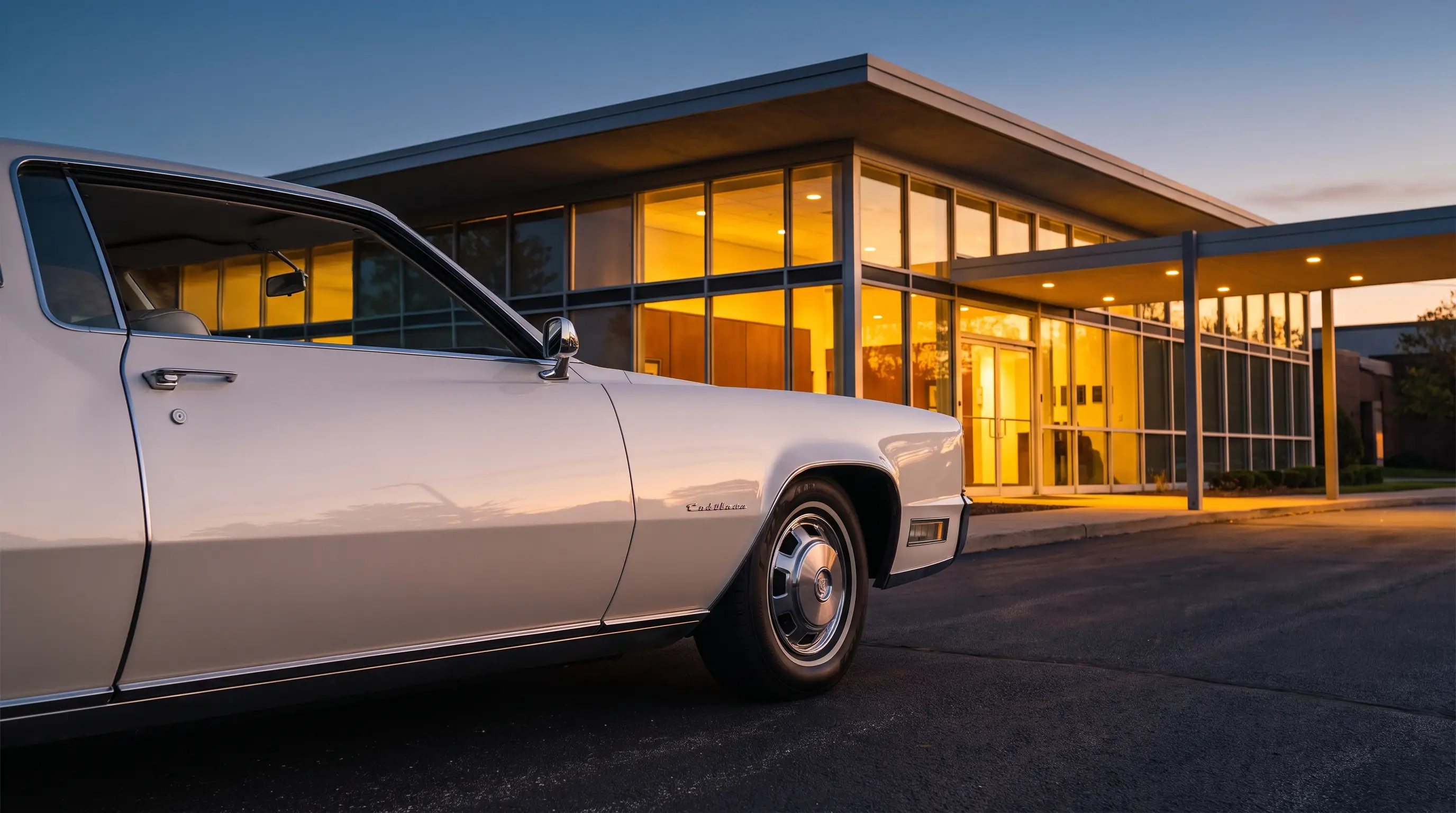
Photographs flatten this car in a way that does it a disservice. Two dimensions cannot capture what happens when the Eldorado's crease lines meet actual daylight, the way a single fold can look almost invisible from one angle and razor-sharp from another just a few feet to the left. I've talked to owners who say they didn't fully understand the design until they saw the car parked outside at sunset, when the low light caught every plane at once and the whole shape suddenly made sense as a single composition rather than a collection of separate lines.
That's the part I keep coming back to when I write about this car. The 1967 Eldorado wasn't styled to look good in a brochure, though it did. It was styled to reward the kind of attention only a person standing next to it, in real light, with real time to look, would ever give it. Fifty-some years later, that's still the only way to really understand what the studio was after when they drew those first sharp lines across a clay model and decided not to soften a single one of them.
I think about the clay modelers themselves sometimes, the people with the actual tools in their hands, running a steel scraper along a line that a designer had only sketched on paper. Getting a crease that sharp to read consistently across a compound-curved hood is not a drawing problem, it is a sculpting problem, and it took real skill to translate a flat sketch into a three-dimensional surface that held its edge from every angle a customer might ever look at the car. Their names rarely made it into the brochures or the press releases, but their hands are the reason the shape still reads as intentional instead of accidental, all these decades later.
Sources and notes
- Eldorado-Seville.com - The History of the 1967 Cadillac Eldorado
- Wikipedia - Cadillac Eldorado
- Curbside Classic - Cadillac Eldorado styling history
- Conceptcarz - 1967 Cadillac Eldorado Specifications
- Automotive Mileposts - 1967 Cadillac Eldorado Production/Specifications
- Automobile Catalog - 1967 Cadillac Fleetwood Eldorado