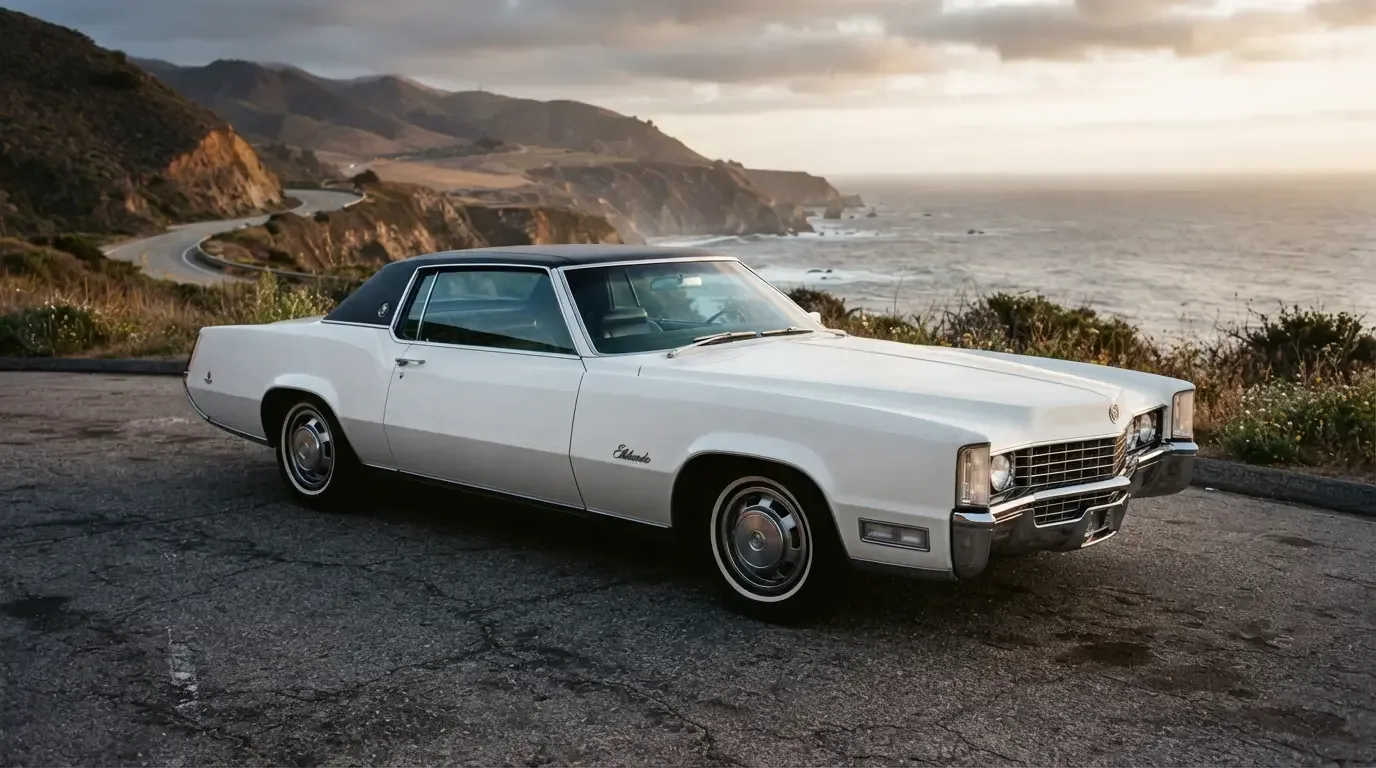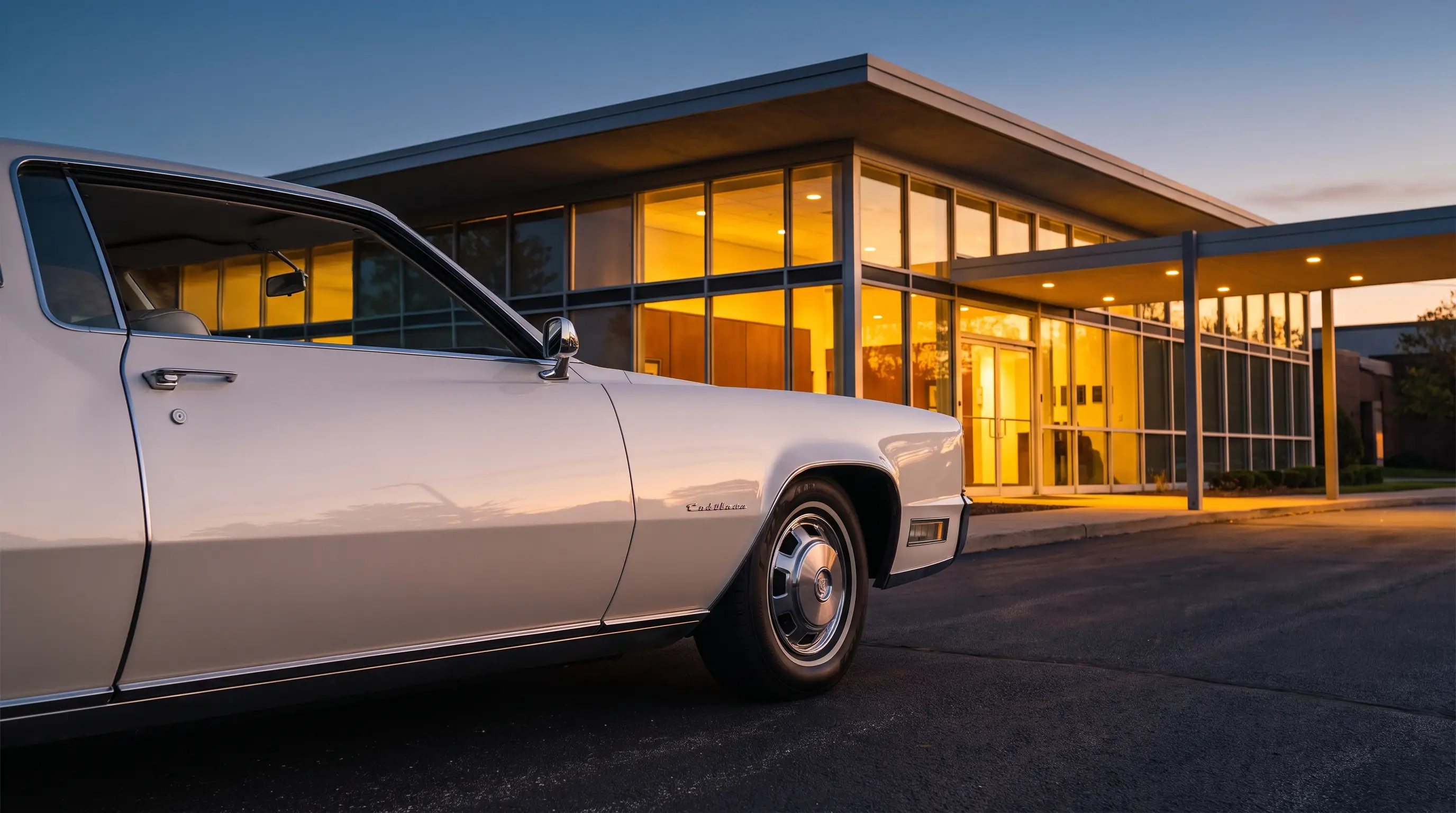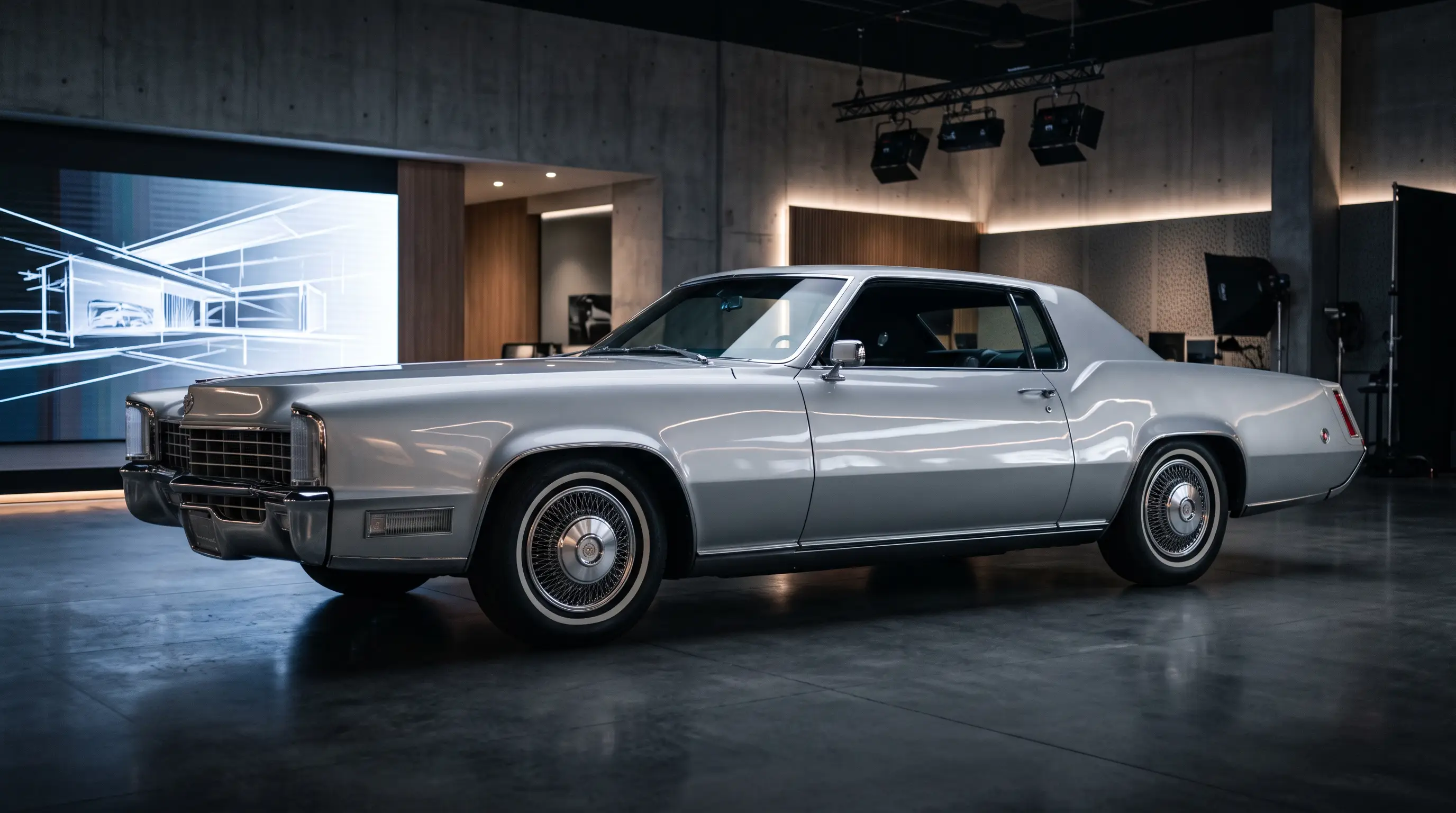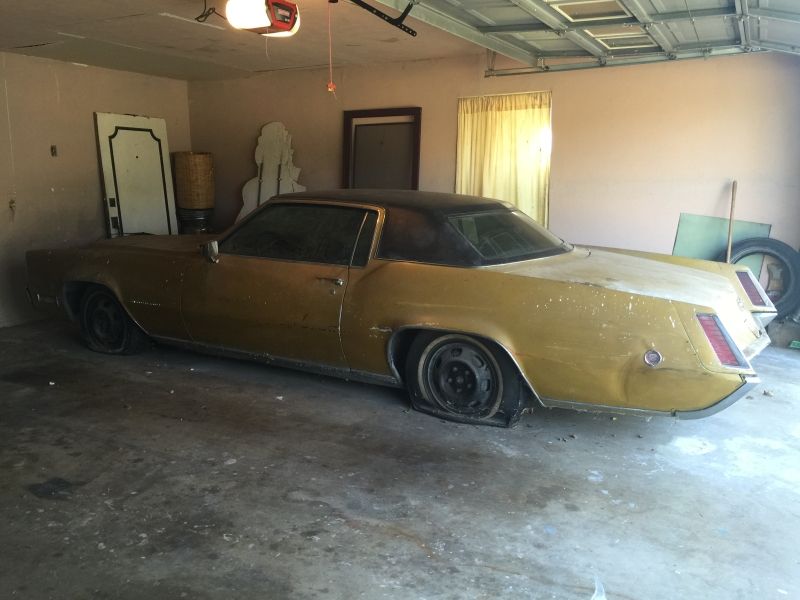
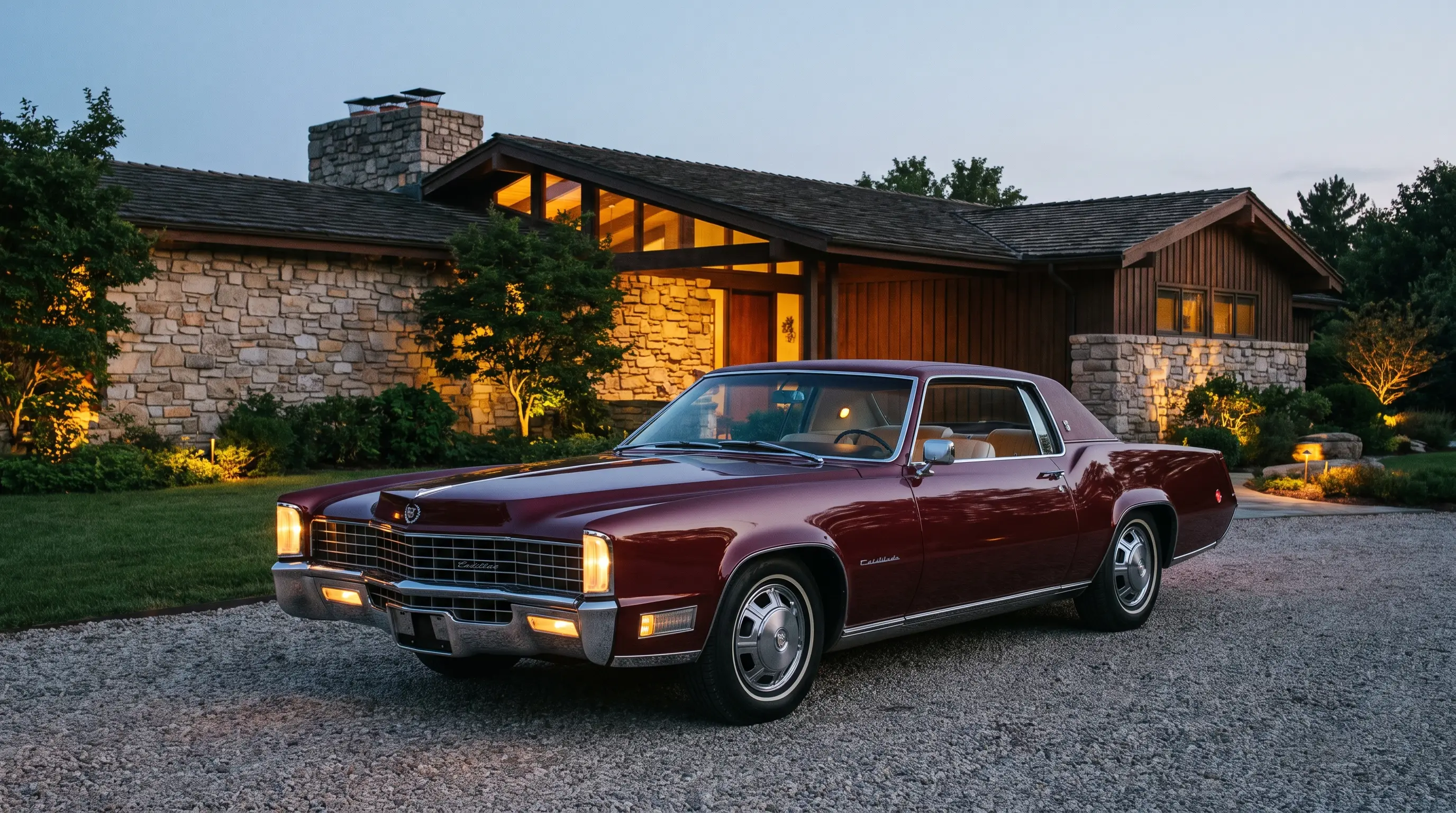
The 1967 Eldorado hidden headlights sat behind a section of grille that looked, at a glance, like nothing more than another row of chrome slats. Only when a driver switched on the low beams did a vacuum-operated door swing open and reveal the lamps underneath, a piece of mechanical theater that Cadillac's engineering department had to justify in cost and complexity terms before it ever reached a production line.
Why hidden lamps needed a real engineering case
Concealed headlight systems were not new to the American industry by 1967, but they were still expensive to engineer properly, and Cadillac's product planners did not approve features on novelty alone. The factory case for hiding the headlights on the Eldorado rested on the same argument that drove the car's razor-edge styling generally, a cleaner, more unbroken front-end surface that let the car's crisp horizontal lines run uninterrupted across the nose rather than getting broken up by two round lamp housings sitting in the open.
Engineering the mechanism itself meant integrating a vacuum-actuated door system into a front end that already had to accommodate a heavy V8, the front-wheel-drive Unitized Power Package, and the specific structural requirements of a unibody-adjacent E-body platform. None of that space was free to give up, and the headlight doors had to be packaged without compromising the crash structure or the cooling airflow the engine needed.
How the system actually worked
Factory service documentation describes a vacuum motor mounted behind each headlight door, connected through a system of hoses back to the intake manifold. Switching on the headlights triggered a solenoid that redirected vacuum to the motors, pulling the doors open on a pivoting hinge. Turn the headlights off, and the vacuum released, allowing return springs to pull the doors back to their closed, flush position. When everything worked correctly, the motion was smooth enough that owners in period described it as almost imperceptible unless they were specifically watching for it.
Cadillac's technicians received specific training on diagnosing this system as part of the broader dealer education push for the 1967 model year, the same training effort that covered the front-wheel-drive Unitized Power Package. Vacuum leaks, failed solenoids, and worn return springs were the most common points of failure documented in period service bulletins, and dealership technicians were instructed to check the entire vacuum circuit rather than assuming a fault sat with the door motor itself.
| Component | Function |
|---|---|
| Vacuum motor | Pivots headlight door open on activation |
| Solenoid | Redirects engine vacuum when headlights switch on |
| Return spring | Closes door when vacuum releases |
| Vacuum source | Shared intake manifold circuit |
A feature that outlived its own model year
Cadillac carried the hidden headlight concept forward into subsequent Eldorado generations, though the specific mechanism evolved as the car itself changed through the 1970s and into the downsized cars of the 1980s. The 1967 implementation remains the reference point historians and restorers return to, in part because factory documentation from that specific model year survives in unusually complete form, a byproduct of how thoroughly Cadillac had to document an all-new platform for dealer technicians who had never serviced anything like it. For the broader context of how this feature fit into the car's launch, read the background on the front-wheel-drive program the headlight system shared its debut with.
"The vacuum system on those doors gets blamed for a lot of problems that actually trace back somewhere else in the engine bay. Read the factory bulletin before you condemn the door motor. Nine times out of ten the fault is a cracked hose nobody thought to check first."
- Tom Ramirez
The design team behind the decision to hide them at all
The choice to conceal the headlights rather than simply style around exposed lamps sat squarely within the design studio's broader push for the crisp, unbroken sheet metal that defined the 1967 Eldorado's whole front-end treatment. That same studio work, driven by the same team responsible for the car's razor-edge fenders, is worth a look too for anyone curious how much of the car's final shape traced back to a single design leader's insistence on clean, unbroken surfaces over conventional ornamentation.
Sixty years on, the hidden headlight system remains one of the more reliable ways to date a 1967 or 1968 Eldorado at a glance, since Cadillac revised the door styling and mechanism in later years. For anyone hunting an original example, shop classic Eldorado listings to see how many surviving cars still have their vacuum-operated doors functioning as the factory intended, a detail that says as much about how the car was maintained over its life as any paint or interior condition report ever could.
How the feature compared across GM's E-body cars
The Eldorado was not alone in hiding its headlights for 1967. The Oldsmobile Toronado, sharing the same E-body architecture, had introduced its own concealed-lamp treatment a year earlier, though the mechanical execution and the styling context differed meaningfully between the two cars. Where the Toronado's hidden headlights sat within a rounder, more sculpted nose that suited Oldsmobile's softer design language, the Eldorado's doors had to integrate into flat, razor-edge sheet metal with far less forgiving surface curvature to hide the mechanism's seams. Factory engineers working on the Eldorado's specific application had to solve a tighter packaging problem than their counterparts on the Toronado program faced, precisely because the styling brief demanded such an uncompromising flat plane across the nose.
This cross-division comparison matters because it shows how the same basic engineering concept could produce genuinely different outcomes depending on which studio and which product planners were driving the specification. Cadillac's version prioritized visual concealment even at the cost of some mechanical complexity, a choice consistent with the division's broader positioning above Oldsmobile in GM's internal hierarchy, where price and prestige justified spending more engineering effort on a detail most buyers would never think about unless it failed.
What survives in the historical record today
Dealer training films, factory service bulletins, and internal engineering memos from the 1967 model year have survived in better condition than similar documentation from many other Cadillac programs, largely because the Eldorado's front-wheel-drive debut required Cadillac to over-document nearly everything about the car for a dealer network encountering unfamiliar systems for the first time. That same documentation habit extended to the headlight door mechanism, giving historians today an unusually clear picture of how the system was engineered, tested, and explained to the people who had to keep it running in the field.
Reading through those period materials now, what stands out is how seriously Cadillac treated what might look, from the outside, like a purely cosmetic feature. The headlight doors received their own diagnostic flowcharts in the factory service literature, their own specific torque specifications for the mounting hardware, and their own section in the dealer training curriculum. That level of institutional attention tells you the division understood exactly how visible a malfunctioning door would be to a customer, and how much a sticking or misaligned headlight cover could undercut the whole impression of precision the car's styling was built to project in the first place.
Sources and notes
- Eldorado-Seville.com - The 1967 Cadillac Eldorado Technical Data
- Wikipedia - Cadillac Eldorado
- Automotive Mileposts - 1967 Cadillac Eldorado Production/Specifications
- Conceptcarz - 1967 Cadillac Eldorado Specifications
- Automobile Catalog - 1967 Cadillac Fleetwood Eldorado
- Curbside Classic - Cadillac Eldorado history