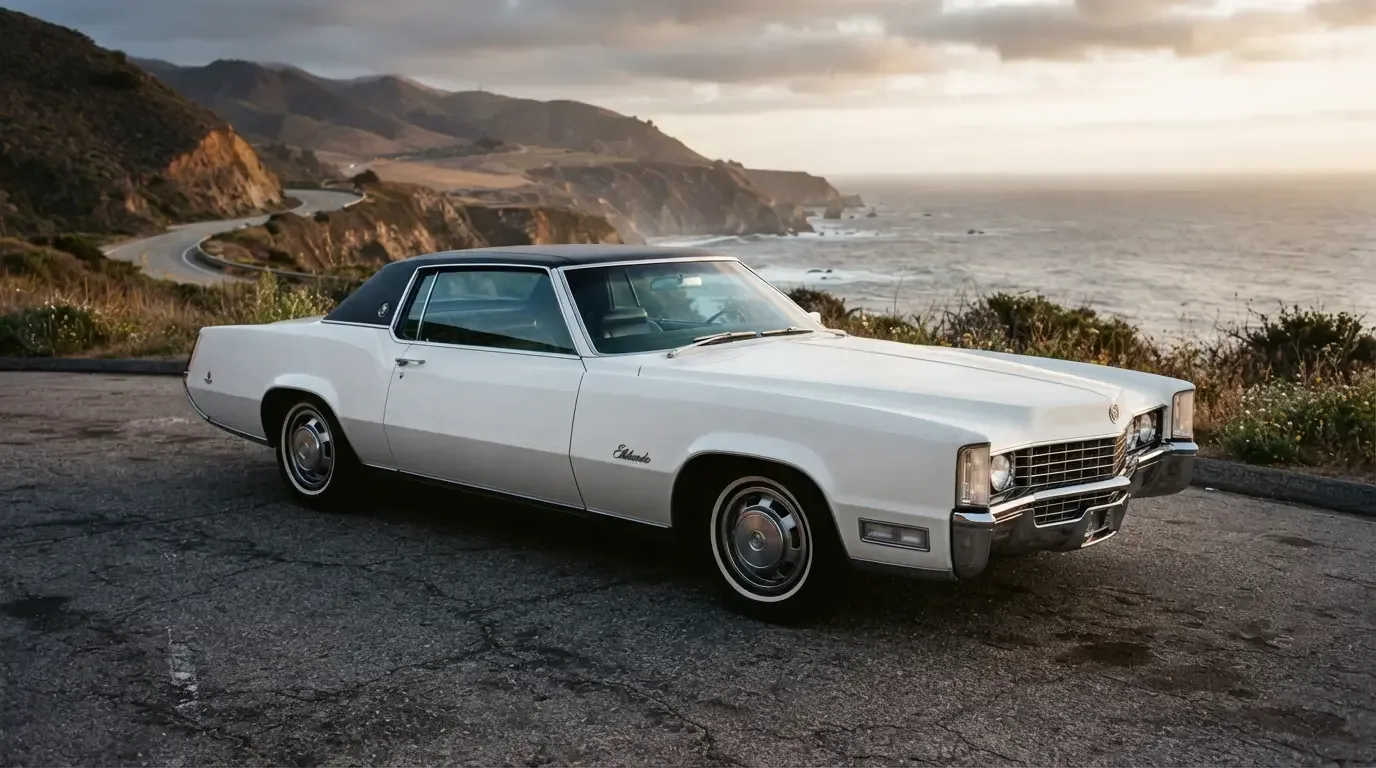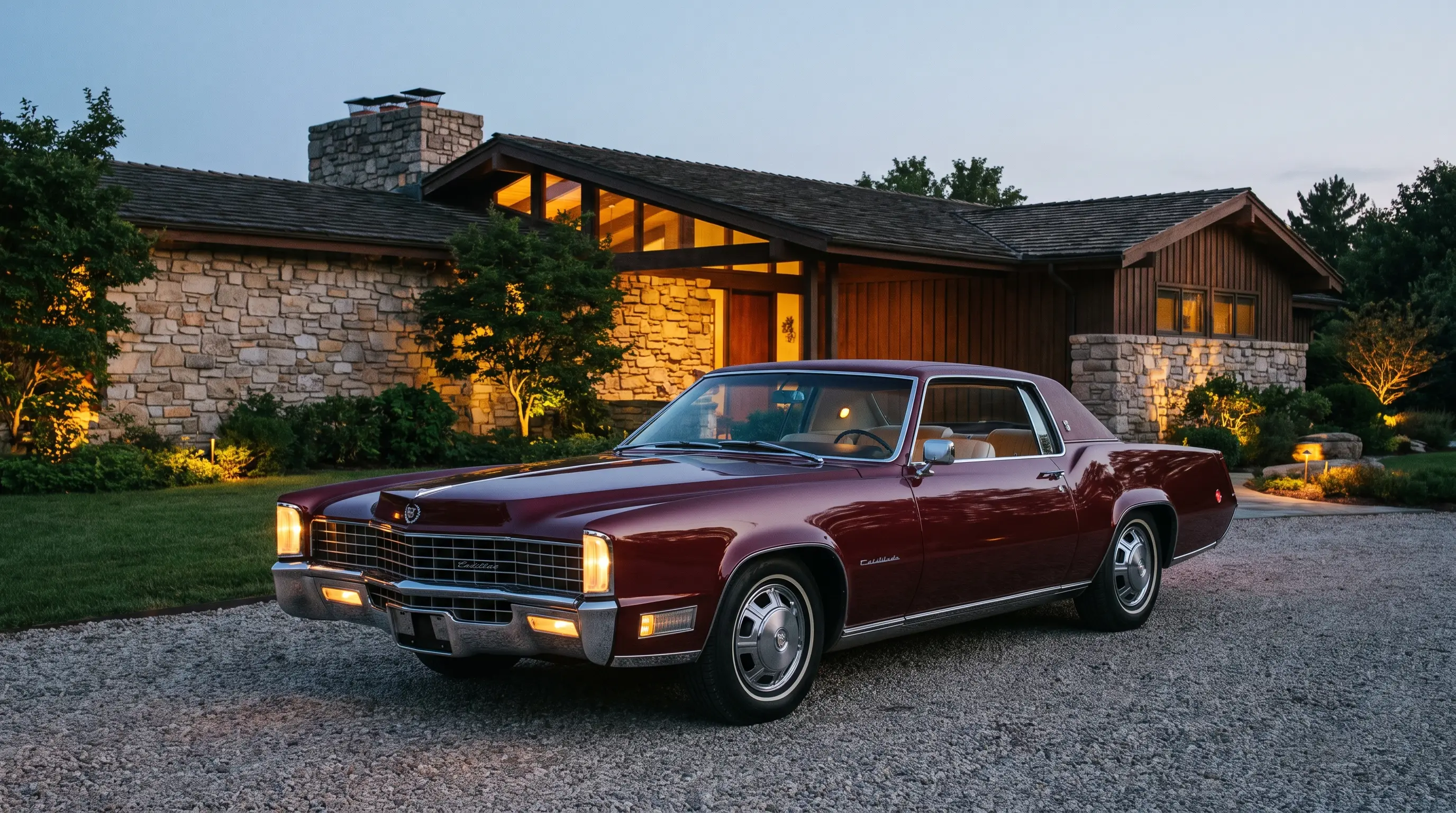
Bill Mitchell cadillac eldorado stories usually start with a sketch, and this one is no different. As the story goes among GM stylists of the period, Mitchell kept pushing his design teams to draw the 1967 Eldorado's front fenders flatter than anyone thought a production car should look, insisting the surface stay hard and unbroken even as engineers warned him about tooling costs and manufacturing tolerances that would need to tighten well beyond anything Cadillac's stamping plants were used to.
The man running GM Design in 1967
Mitchell had taken over as General Motors' vice president of design in 1958, succeeding Harley Earl, the man who had defined American car styling for a generation with sweeping curves and towering tailfins. Mitchell's own instincts ran the opposite direction. He favored crisp, architectural surfaces over Earl's baroque flourishes, and by the mid-1960s that philosophy, sometimes called the "sheer look" inside GM's studios, had started reshaping everything from the Corvette Sting Ray to full-size sedans across the corporation's divisions.
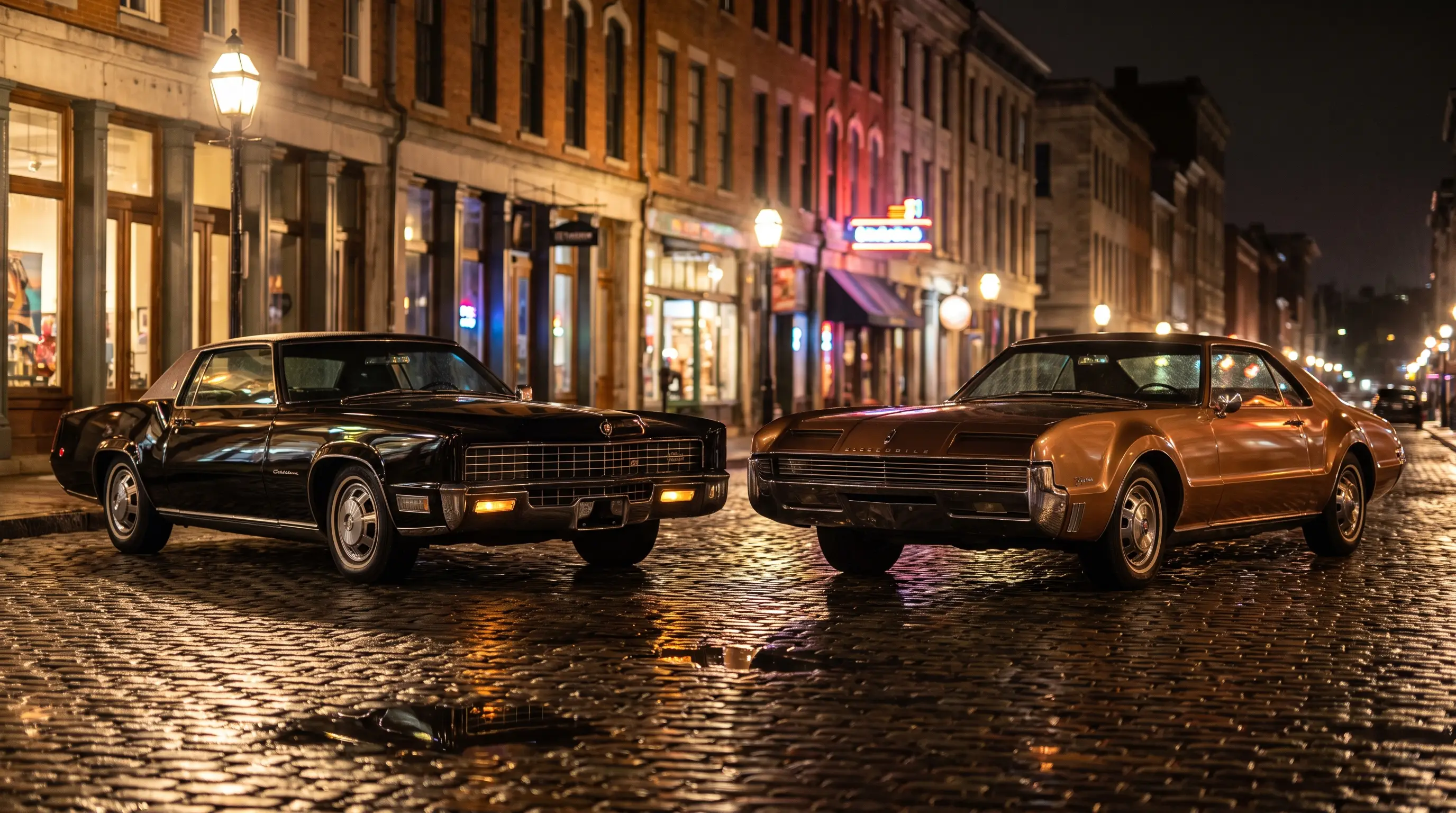
The 1967 Eldorado landed at the point where Mitchell's design philosophy and Cadillac's engineering ambitions collided productively. The car needed to distinguish itself sharply from its E-body platform-mate, the Oldsmobile Toronado, and Mitchell's appetite for hard edges gave Cadillac's studio exactly the visual argument it needed to make that separation feel obvious rather than cosmetic.
Walking the studio floor in 1965
Picture the scene two years before the car reached showrooms: a full-size clay model sitting under studio lights at GM's design center, designers and clay modelers working in shifts to chase the exact crease Mitchell wanted running from the headlight surround back through the door panel. Period accounts from people who worked in GM's studios describe Mitchell as a hands-on presence, someone who would walk the floor, run a hand along a clay surface, and demand another quarter-inch of correction on a line most outside observers would never have noticed was off in the first place.
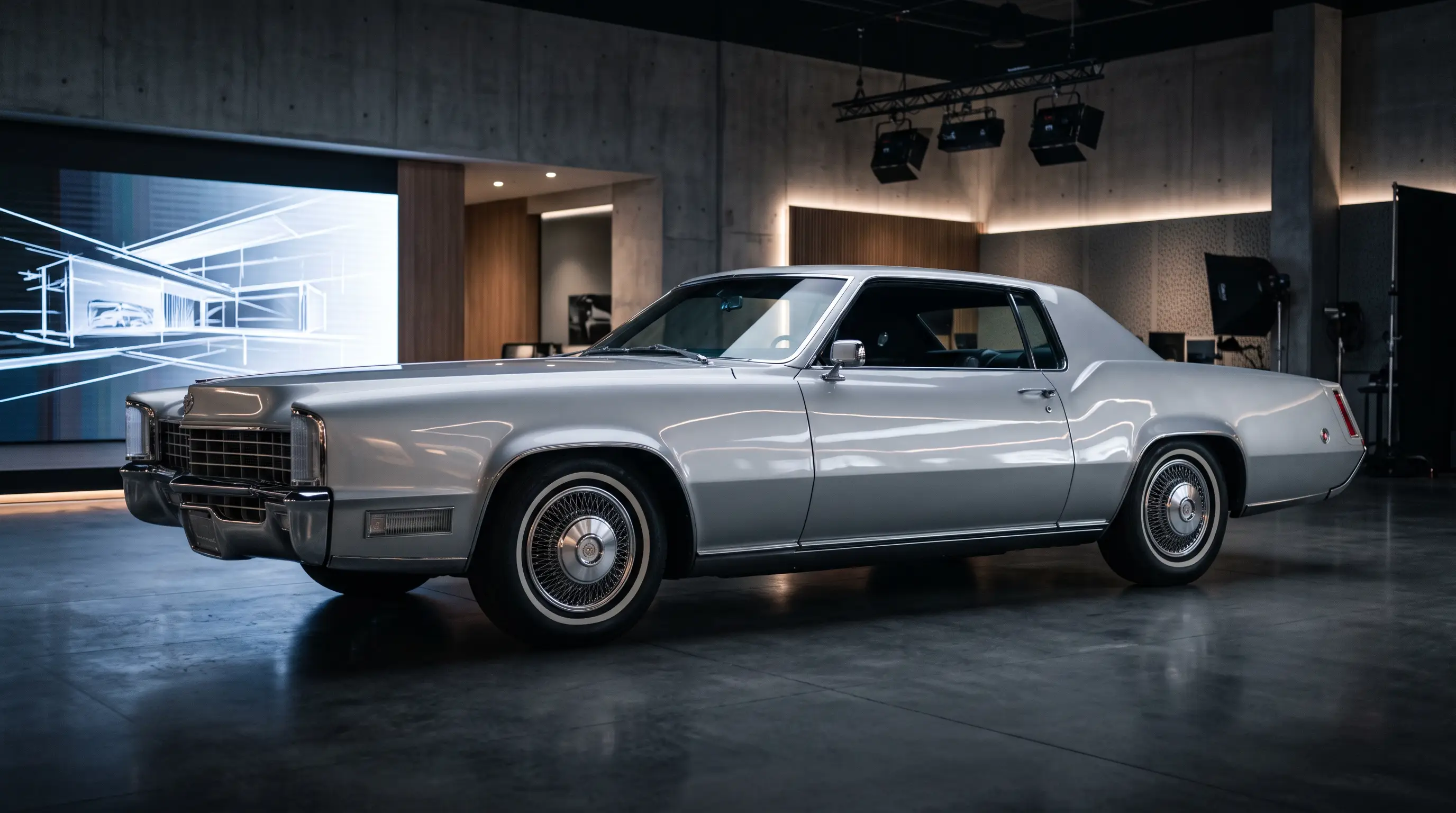
That obsessiveness produced the razor-edge fenders and the flat, unbroken hood that became the 1967 Eldorado's signature. It also produced real friction with engineering, since a surface that sharp is genuinely harder to stamp consistently at production volume than a rounder, more forgiving shape. Cadillac's manufacturing teams had to tighten tolerances on the stamping dies to hold Mitchell's lines through a full production run, an expense the division absorbed because the design had already won internal approval at the highest level.
| Detail | Fact |
|---|---|
| Bill Mitchell's GM tenure as design VP | 1958-1977 |
| Predecessor | Harley Earl |
| Design philosophy | The "sheer look" |
| 1967 Eldorado platform | GM E-body, shared with Oldsmobile Toronado |
Why the risk was worth taking
Mitchell's insistence on the razor-edge treatment was, in blunt terms, a bet. Cadillac buyers in the mid-1960s had spent two decades associating the brand with chrome and curves. Asking that same customer base to embrace a flat, hard-edged coupe with hidden headlights and a nose you could apparently cut paper on was not an obvious commercial slam dunk. Mitchell had the internal standing at GM, built over years of successful programs including the Corvette Sting Ray, to push the idea through despite skepticism from more conservative voices inside the corporation.
The bet paid off. The 1967 Eldorado sold well enough to justify the studio's confidence, and the razor-edge look became one of the most recognizable American design statements of the decade. Cadillac's own sales literature leaned hard into the car's sculptural quality, treating the sheet metal itself as the primary selling point in a way that felt genuinely different from how the brand had marketed cars in the 1950s.
"Talk to anyone who worked under Mitchell in that period and they'll tell you the same thing. He didn't ask for opinions on the sharp lines, he demanded them, and he was right often enough that nobody wanted to be the one who talked him out of it."
- Patrick Walsh
Where this fits in the larger Eldorado story
Mitchell's fingerprints on the 1967 Eldorado connect directly back to the broader arc of a nameplate that had already been through several completely different identities by the time this car reached the design studio. For where this started, the Eldorado began in 1953 as a limited-run halo convertible built to demonstrate what Cadillac could do at the very top of its lineup, a mission not so different from what Mitchell's studio was trying to prove again in 1967, just with a completely different visual language. For the fuller picture of the drivetrain program that gave Mitchell's design team the platform to work with in the first place, more on the 1967 cadillac eldorado covers the front-wheel-drive engineering that made this whole generation possible.
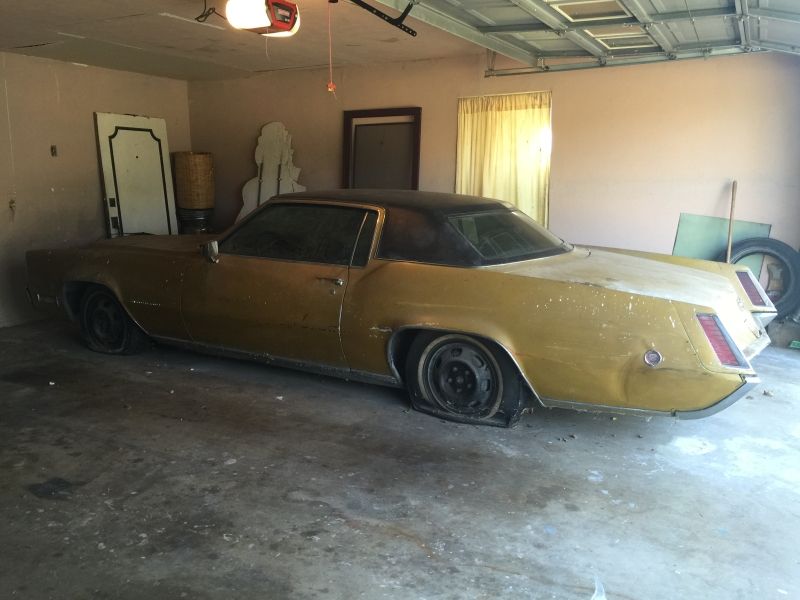
What Mitchell proved with this car, more than anything specific to sheet metal or stamping tolerances, is that a design leader with enough internal credibility could still push an American flagship into genuinely new visual territory in the mid-1960s, at a scale and on a timeline that would be almost unthinkable for a single designer's vision to survive intact today. Anyone who wants to see the results of that studio fight in person rather than in old photographs can look at classic Eldorados on the market right now, and the razor-edge lines Mitchell fought for are still the first thing most people notice.
Mitchell's reputation among the people who worked for him
Designers who passed through GM's styling studios during Mitchell's tenure describe a man who was demanding to the point of exhausting, quick with criticism, and genuinely uninterested in compromise once he'd settled on a direction. He was also, by most accounts, right often enough that talented people stayed in his orbit for years despite the difficulty of working under him. Stories from the period describe him walking studio floors unannounced, running a critical eye over half-finished clay models, and sending designers back to the drawing board over details as small as a quarter-inch of curvature on a single fender.
That reputation shaped how the 1967 Eldorado project moved through GM's internal approval process. Design proposals that might have been softened or compromised under a less forceful leader survived largely intact because nobody below Mitchell in the studio hierarchy had the standing to argue him out of the sharpest version of his idea. Whether that makes him a visionary or simply a stubborn boss with good instincts probably depends on who you ask, but the car that resulted from his insistence remains one of the more distinctive shapes to come out of Detroit in the entire decade.
A legacy that outlasted the man
Mitchell stayed at the head of GM Design until 1977, a full decade after the Eldorado's razor-edge debut, and the sheer look philosophy he championed influenced Cadillac styling long after the 1967 car's specific shape had given way to the softer, longer cars of the 1970s. Historians tracing GM's design lineage still point back to this specific car and this specific fight over fender surfaces as one of the clearest examples of Mitchell's personal design philosophy translating directly into a production automobile, with almost none of the usual committee-driven softening that flagship programs typically endure on the way from clay model to assembly line.
Sources and notes
- Wikipedia - Bill Mitchell (automobile designer)
- Automotive Hall of Fame - William L. Mitchell
- Corvette Action Center - Bill Mitchell, GM Head of Design
- Eldorado-Seville.com - The History of the 1967 Cadillac Eldorado
- Wikipedia - Cadillac Eldorado
- Barrett-Jackson - The GM designs from the Bill Mitchell era