
A woman at a car show in Ohio once told me she bought her 1968 Eldorado not for how it looked from the curb but for how it felt when she sat down inside it for the first time, before she had even asked the price. She described the floor as flat under her feet in a way no other car of that size had ever been, and the seat as something closer to a living room chair than an automobile bench. That sensation, more than the styling or the badge, is what the 1967 cadillac eldorado interior was built to deliver.
Car Features
6 min read
Inside the Front-Drive Eldorado
The 1967 Cadillac Eldorado interior was shaped by a flat, tunnel-free floor and quiet, deliberate comfort that owners remember decades after the last drive.
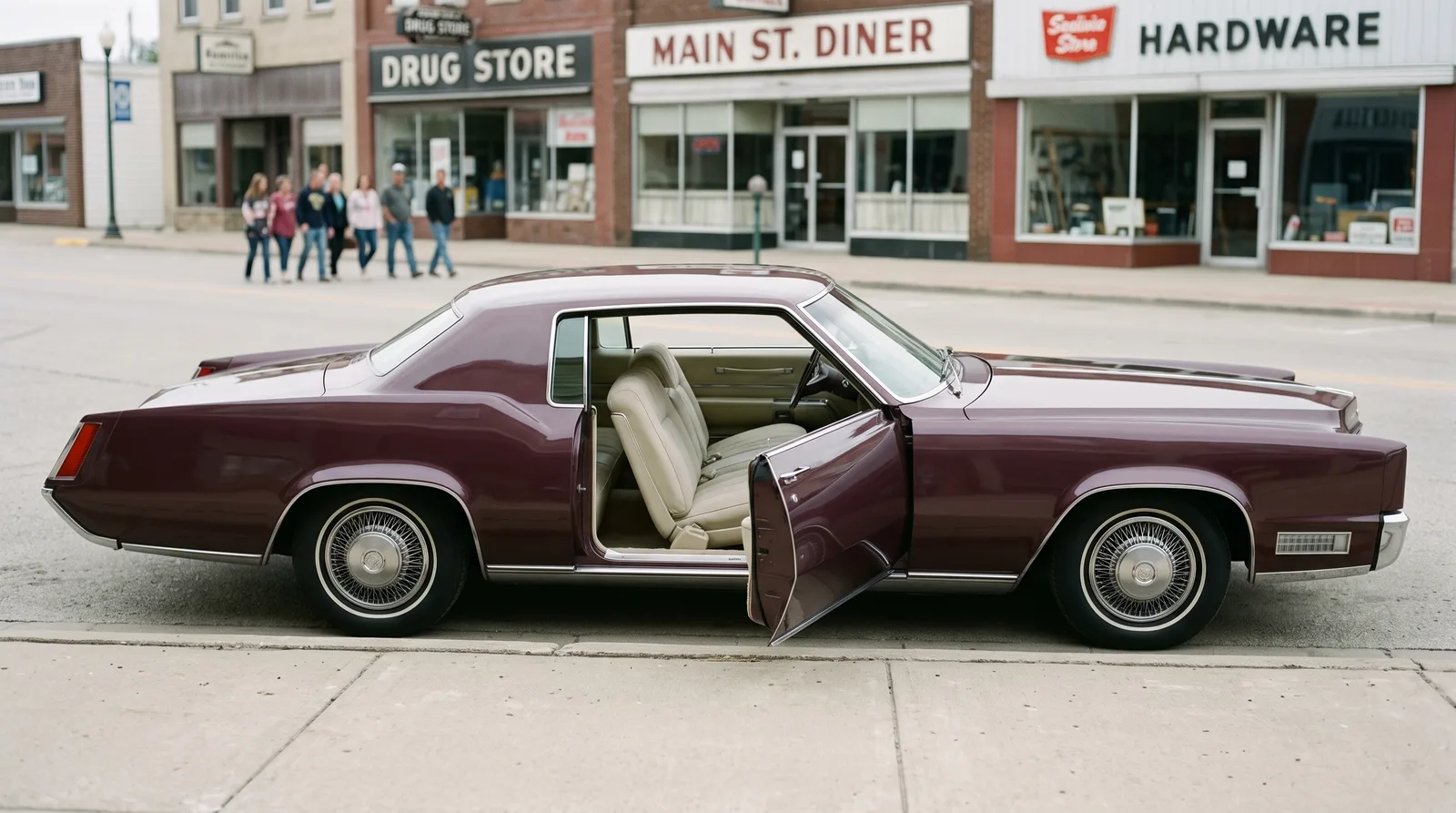
A cabin shaped by an engineering decision
The flat floor a passenger notices first is a direct consequence of the front-wheel-drive layout Cadillac adopted for this generation. Without a driveshaft tunnel running the length of the car, the interior floor could sit low and level from door to door, front and back, a small detail that changed the whole feel of getting in and moving around inside the cabin. Passengers in the center of the front bench, when that configuration was ordered, were not straddling a hump the way they would in almost any other American car of the period. That flatness gave the Eldorado's interior a sense of room that its exterior dimensions alone do not fully explain.
The dashboard sat low and wide, wrapped toward the driver, with a full set of gauges on better-equipped cars rather than the simpler warning-light clusters some contemporary Cadillacs used. It felt, deliberately, like the cockpit of something meant to be driven, not merely occupied.
Materials that were meant to be touched
Leather was available across the trim range, in a palette of colors coordinated with the exterior paint, and buyers who wanted it could specify front bucket seats with a floor console instead of the traditional bench, a configuration that pushed the car further toward personal coupe territory and away from formal Cadillac sedan tradition. The seats themselves were deep and heavily padded, built for long highway stretches rather than quick errands, and the door panels carried thick padding wrapped in matching material that muffled road noise as much as it looked good under a showroom light.
Wood-toned trim accented the dashboard and door caps on many examples, a warm counterpoint to the metal and vinyl surfaces that dominated less expensive cars of the era. None of it was ostentatious in the way later decades of automotive luxury would become. It was quiet confidence, the kind meant to be felt by the person sitting in the seat rather than admired by someone standing outside the car.
"People who have only seen these cars from a distance, in photographs or across a parking lot, always underestimate the interior. It's the part of the car that was built for one person at a time, not for an audience, and that intimacy is easy to miss until you're actually sitting inside one."
- Nora Beckett
The technology that quietly impressed
Automatic climate control, available as an option, was a genuine convenience in an era when most cars still relied on manually adjusted heater and vent controls. A tilt and telescoping steering wheel let a driver of almost any height find a comfortable position, another small comfort that added up to a cabin genuinely designed around the person using it rather than a single average body type. Power windows, power seats, and a stereo system rounded out an interior that, fully optioned, rivaled anything else on the American road for sheer occupant comfort.
What stays with people, though, is rarely the options list. It is the quiet. Owners from this era and restorers today both describe the same thing, a cabin that seemed to absorb road and wind noise more completely than a car this size had any right to, letting a conversation between the front seats continue at a near whisper at highway speed.
Small rituals the cabin encouraged
There is a particular ritual that owners of these cars describe, almost identically, no matter which decade they bought their Eldorado in. It starts with the sound of the door, a heavy, deliberate thunk rather than a tinny click, followed by the settling weight of the seat as you sink into padding built for hours rather than minutes. Then the small mechanical courtesies begin, the automatic climate control finding its setting without a fuss, the power seat easing forward or back to a position remembered from the last drive, the wheel tilting into place. None of it was flashy. All of it was designed to make the first thirty seconds inside the car feel effortless, a small performance of comfort repeated every single time someone opened that door.
Children who grew up riding in the back of a family Eldorado in this era often remember the same details decades later, the particular smell of the leather warming in the sun, the way the flat floor let them slide across the bench instead of climbing over a hump, the hush that fell over the cabin once the doors shut and the outside world went quiet. Those are not engineering specifications. They are memories, and they are a large part of why this generation of Eldorado still commands genuine affection from people who encountered it first as passengers rather than owners.
Why the interior still matters to people today
Ask a current Eldorado owner why they keep the car, and the answer is rarely purely mechanical or purely visual. It is usually something closer to what that woman in Ohio described, a feeling that lives in the seat and the floor and the way the door closes with a particular, solid weight. Our complete history of the front-drive generation covers the engineering and styling story in full, and it helps explain why the cabin feels the way it does, but no amount of reading substitutes for actually sitting inside one.
For anyone who wants to find that feeling for themselves, it is worth taking the time to browse classic Eldorado listings and, where possible, sit in more than one example before deciding. Photographs capture the dashboard and the leather. They do not capture the quiet, and the quiet is, for a lot of people, the whole point.
Some cars are remembered for how they look going down the road. The 1967 through 1970 Eldorado is remembered, by the people who actually owned one, for how it felt to simply sit still inside it with the engine off, door closed, city noise fading away on the other side of the glass. That is a harder thing to photograph than a grille or a taillight, and it may be exactly why the interior deserves more attention than it usually gets when people talk about this car.
Sources and notes
Related Reading
Have a
Cadillac Eldorado
for Sale?
Reach thousands of serious classic car collectors across the US.
Sell It Here →
Are You a Classic Car Dealer?
List your full inventory and connect with targeted classic car buyers.
Join as a Dealer →
#personal luxury coupe
#Cadillac Eldorado
#classic Cadillac interior
#front-wheel drive Cadillac
#1967 Cadillac Eldorado interior
#Cadillac Eldorado cabin

About the author
Nora Beckett
Automotive features writer and photographer who tells the human stories behind the cars, from show fields to cross-country road trips.
Related Listings - Cadillac Eldorado
Comments
Be the first to comment on this article.