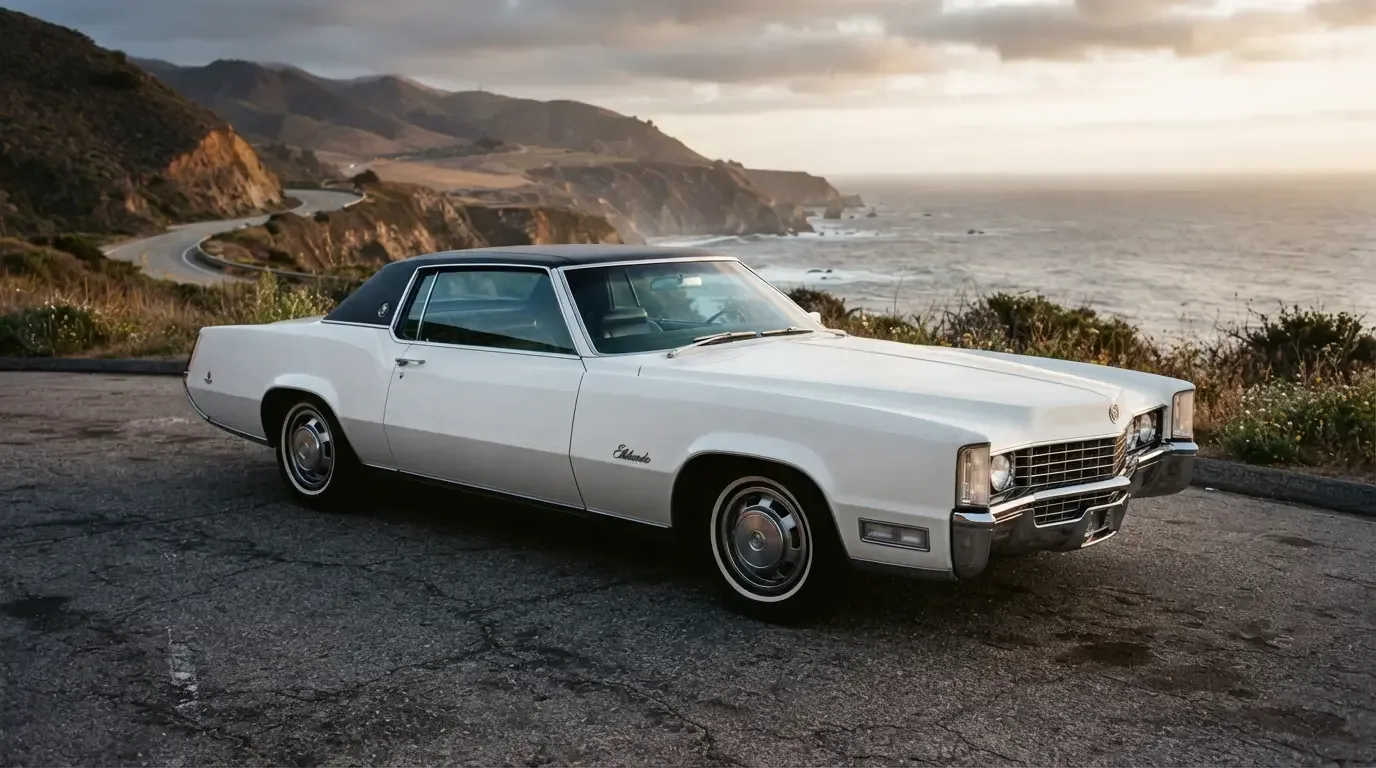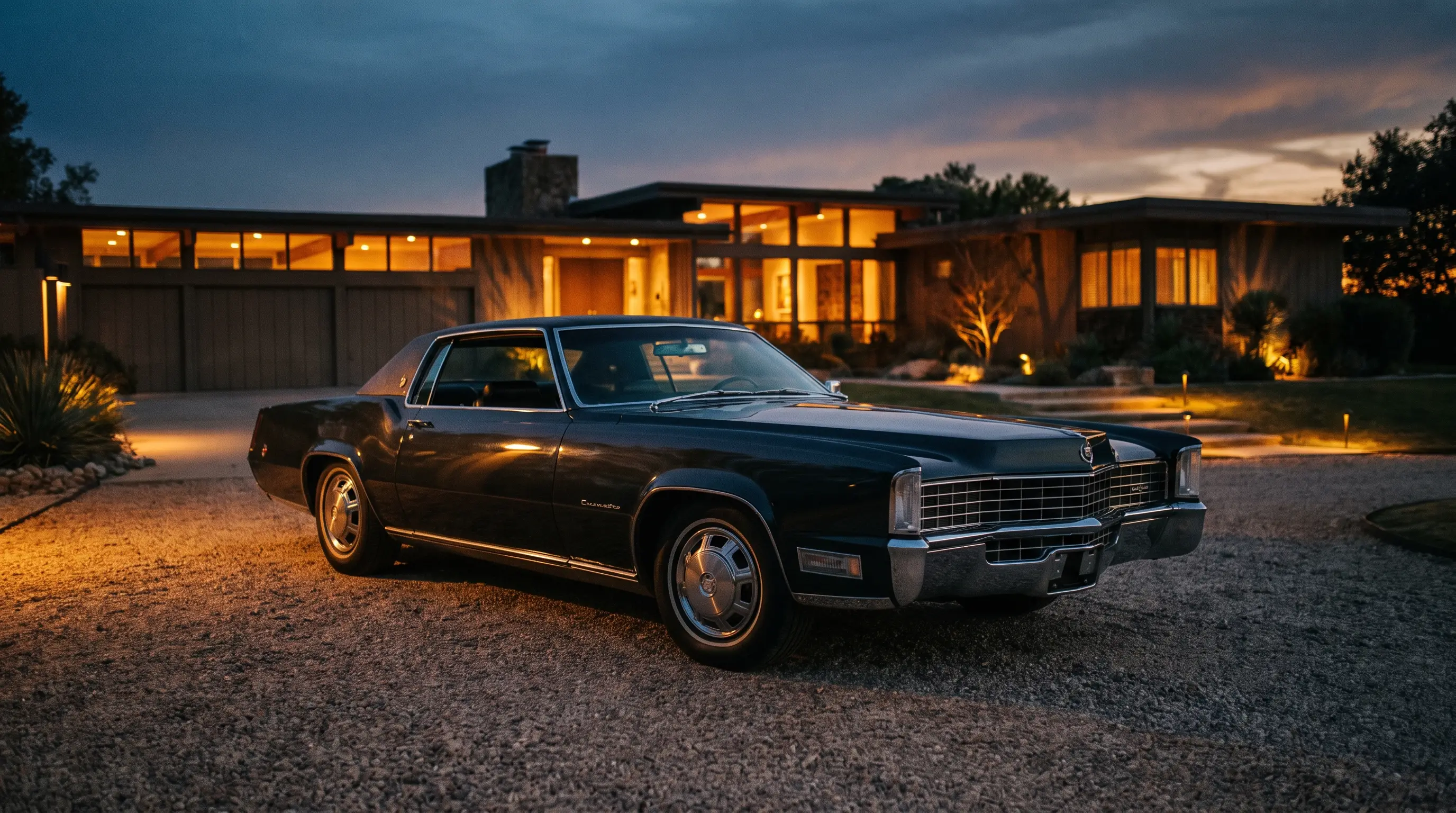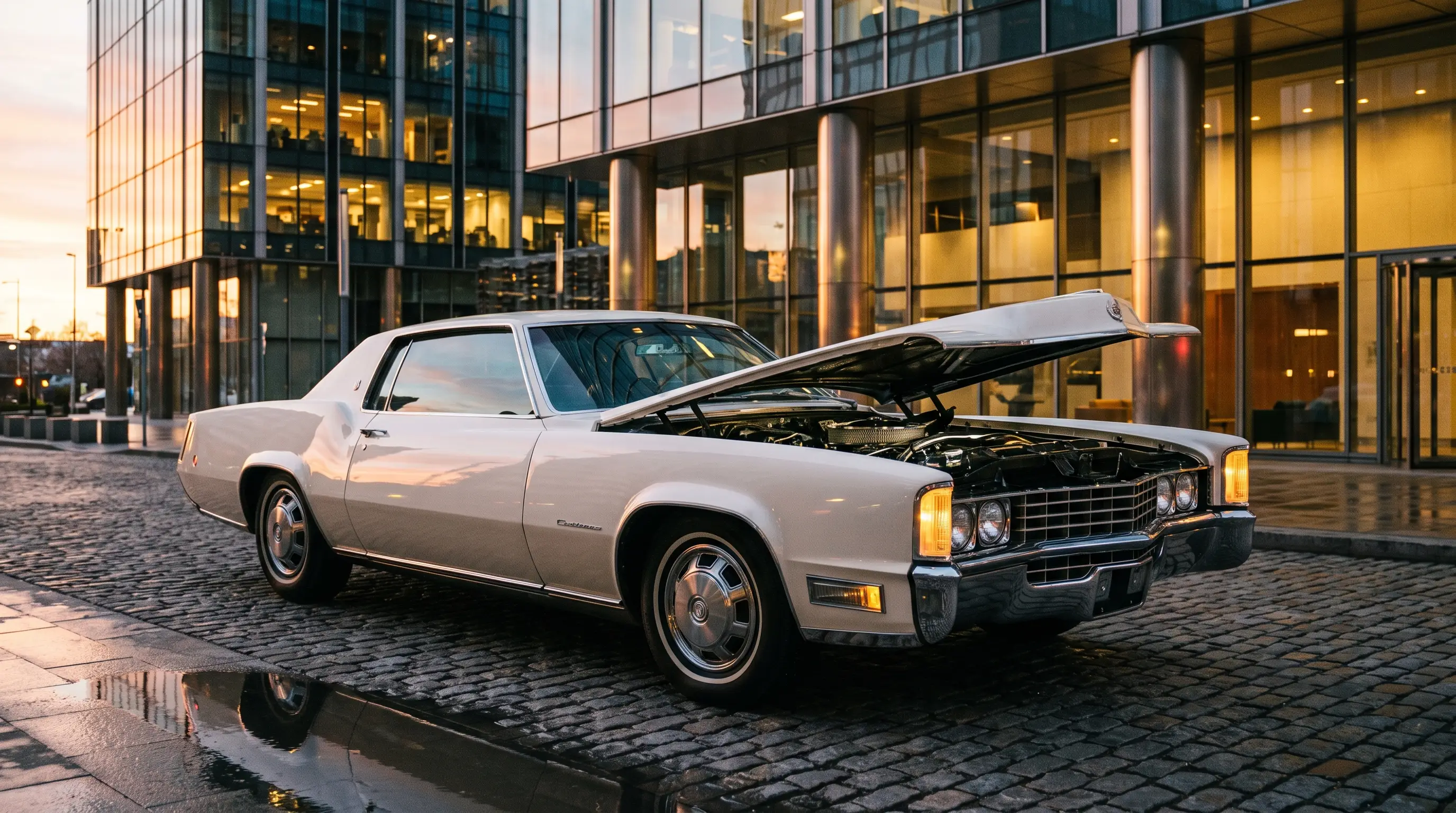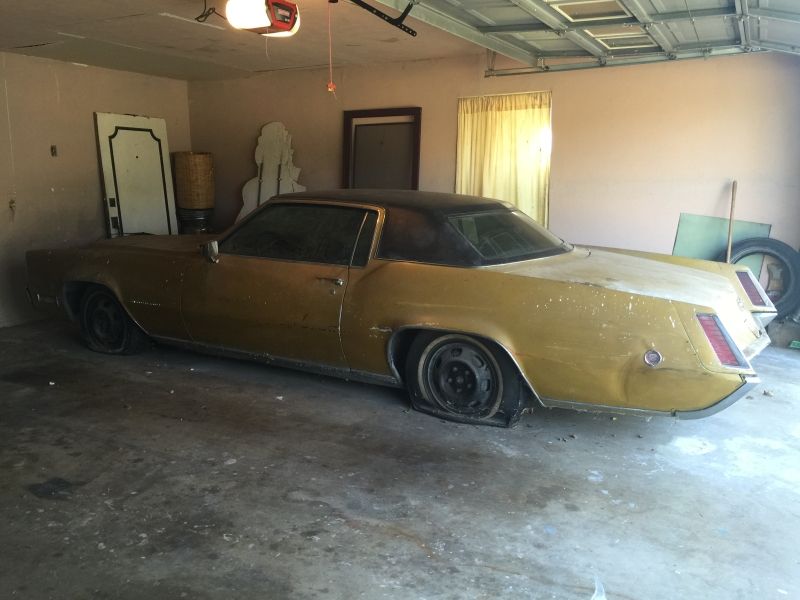
The 1969 Cadillac Eldorado sits in an odd spot in the front-drive story. It is not the debut car that shocked the industry in 1967, and it is not the redesign that closed out the generation in 1971. It is the year Cadillac stopped experimenting and started refining, and that makes it one of the more instructive Eldorados to study if you want to understand how a radical idea gets absorbed into a production line.
A third year, not a new car
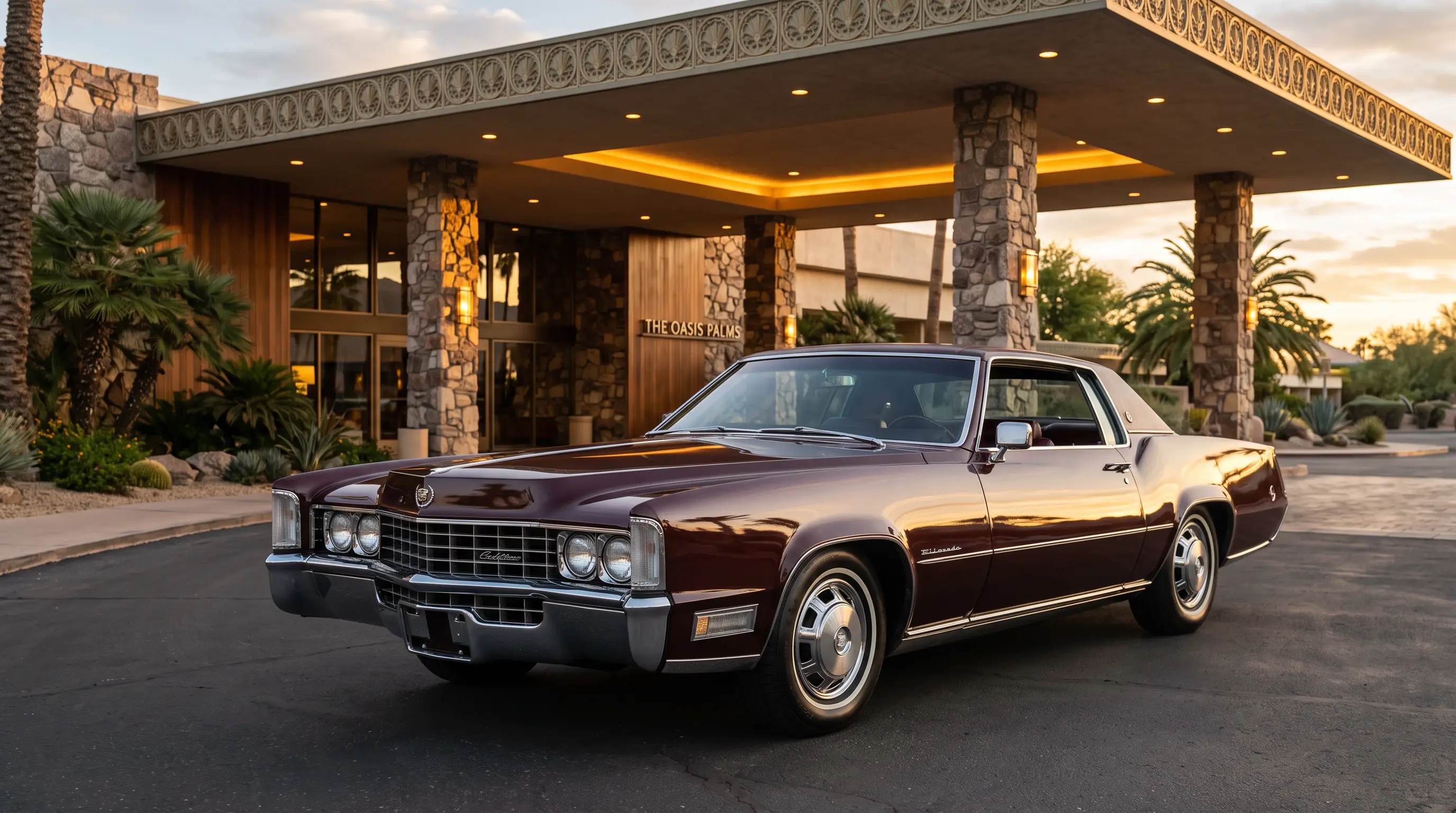
By 1969 the Eldorado's front-wheel-drive layout, borrowed and reworked from the Oldsmobile Toronado program, was no longer a novelty inside GM. The engineering had proven itself on the road for two full seasons, and Cadillac's changes for 1969 read like a punch list from people who had been living with the car rather than dreaming it up on a drafting table. The grille went from a single wide opening to a pattern of vertical bars split by a center division, the parking lamps moved, and the taillights were reshaped into a slimmer horizontal unit that sat better with the rest of the corporate lineup that year.
The most visually significant change was the return of rear fender skirts, absent since the nameplate's rear-drive years before 1967. Cadillac buyers of that era expected the long, unbroken flank a skirt provided, and its reappearance on the 1969 Eldorado signaled that the front-drive car had graduated from experimental flagship to full member of the Cadillac family, expected to look the part as much as perform it.
Under the hood: the 472 carries on
The 1969 Eldorado carried over the 472 cubic inch V8 that had replaced the original 429 for the 1968 model year, paired with the Turbo-Hydramatic 400 transmission sending power forward through a chain-driven transfer case to the front wheels, an unusual arrangement Cadillac and Oldsmobile had jointly refined. Output was rated at 375 hp gross at 4,400 rpm with 525 lb-ft of torque, respectable for the era though never the headline of the car. Cadillac was not selling the Eldorado on quarter-mile numbers. It was selling the sensation of a two-ton coupe that pulled itself forward instead of being pushed, with a flat floor unburdened by a driveshaft tunnel and a low, wide stance that made the car feel planted through a highway sweeper in a way full-size rear-drive Cadillacs simply did not.
Variable-ratio power steering, standard since 1967, quickened as the wheel turned further from center, a feature engineers used to make a heavy front-wheel-drive car feel manageable at parking speeds without going numb on the highway. Front disc brakes, another carryover, mattered more on this platform than most because so much of the car's mass sat over the front axle.
"People assume the front-drive Eldorado was still a science project through the late sixties. By 1969 it wasn't. The build sheets read like any other mature Cadillac program, with running changes instead of redesigns, which tells you the engineering had already done its job."
- Tom Ramirez
Production and where 1969 fits
Cadillac built the Eldorado in real numbers through this generation, and 1969 output landed comfortably above the 1967 launch year, reflecting a buyer base that had grown confident in the car rather than treating it as a curiosity. Factory tallies for the model year commonly cite 23,333 units built, up from roughly 24,528 the year before and well above the 17,930 built in the 1967 launch year. What is not in dispute is that the Eldorado outsold the Toronado it was mechanically related to during these years, evidence that Cadillac's badge and interior treatment carried real weight with buyers who might otherwise have shopped Oldsmobile for a similar driving experience at a lower price.
The car's base price for 1969 sat at about $6,700, positioning it as one of the more expensive personal luxury coupes on the market, ahead of a Toronado or a Buick Riviera and in the same conversation as a Lincoln Continental Mark III.
Reading the 1969 car against its siblings
Anyone tracing this generation front to back benefits from seeing the 1969 car in context. Our 1967 cadillac eldorado retrospective covers the engineering gamble that made this whole run possible, and the changes Cadillac made two years later only make sense once you understand what the original car was reacting against and building on. The 1970 model, which brought a larger 500 cubic inch V8 and its own set of styling revisions, is worth reading about too in a related story that picks up exactly where 1969 leaves off.
Collectors tend to treat 1969 as a sensible middle choice within the generation: later than the launch car that draws the most attention from historians, earlier than the 1970 car with its bigger engine, and benefiting from two years of running refinements without yet carrying the extra displacement and slightly higher curb weight of the final model year. It is not the car that gets the magazine covers, but it is often the car mechanics and long-term owners recommend to someone buying their first front-drive Eldorado.
Cabin and options for the model year
Inside, the 1969 Eldorado offered an options list that let buyers push the car well past its already-substantial base price. Leather upholstery, a tilt and telescope steering wheel, automatic climate control, and a stereo eight-track player were all available, and Cadillac buyers of this era tended to check most of the boxes on the order form rather than leave a Eldorado sparsely equipped. A well-optioned 1969 example could carry a sticker price approaching eight thousand dollars, a significant sum when a typical American sedan sold for a third of that figure.
The instrument panel carried over the padded, driver-focused layout introduced in 1967, with full gauges rather than idiot lights on higher trims, a detail Cadillac used to distinguish the Eldorado from softer, more isolated Cadillacs like the Calais and DeVille. The front-wheel-drive layout also freed up interior space that a conventional driveshaft tunnel would have consumed, giving the front bench, or the optional front buckets with console, a genuinely flat floor that owners at the time noted as unusual for a car this size.
What to look for today
Rust remains the primary threat to any 1969 Eldorado, particularly around the lower quarters, rocker panels, and the trunk floor, areas where road salt and decades of storage take their toll regardless of how well the drivetrain has held up. The front-wheel-drive mechanicals, when properly maintained, have a reputation for durability that surprises people expecting fragility from an unconventional layout of this vintage. Parts availability for trim-specific pieces, such as the correct 1969 grille insert or taillight lenses, is tighter than for the more commonly restored 1967 launch cars, so buyers should factor that scarcity into any purchase decision.
For those ready to start looking, Eldorados for sale now is a reasonable place to begin, since listings for this generation are frequently grouped together across model years given how closely related the cars are mechanically and cosmetically.
The 1969 Eldorado rewards a buyer who wants the front-drive experience without paying a premium for launch-year status. It is a mature, confident car from a company that had figured out exactly what it built two years earlier, and that confidence shows in every panel gap and every quiet mile.