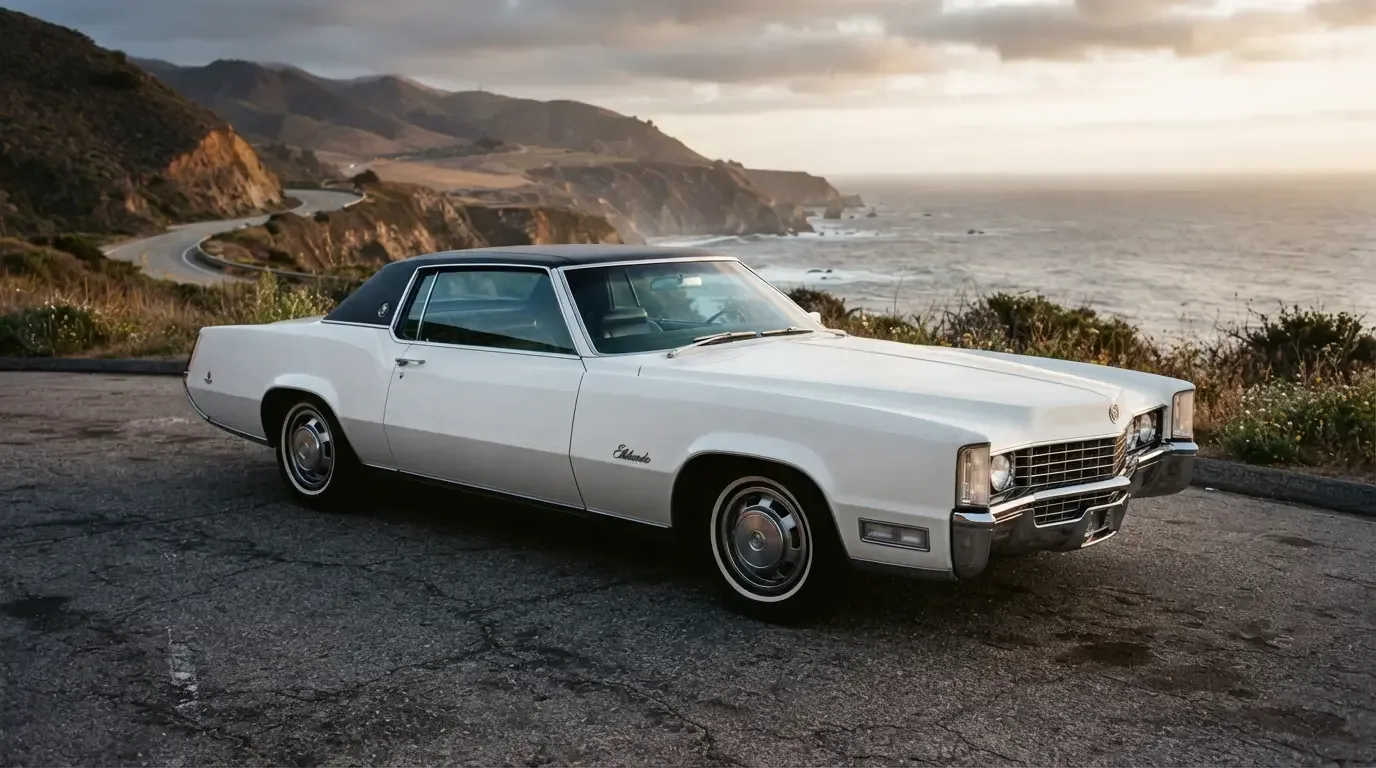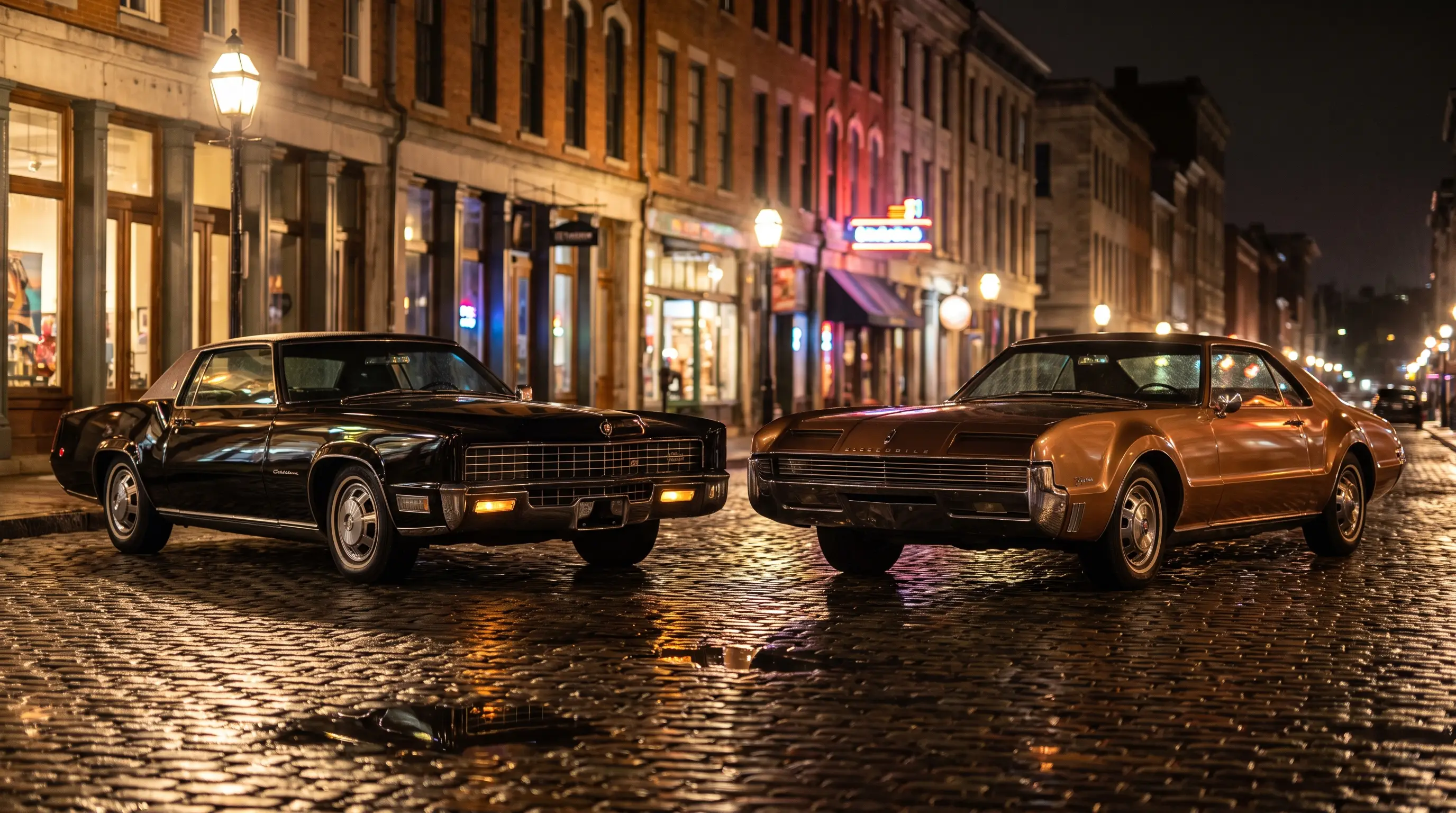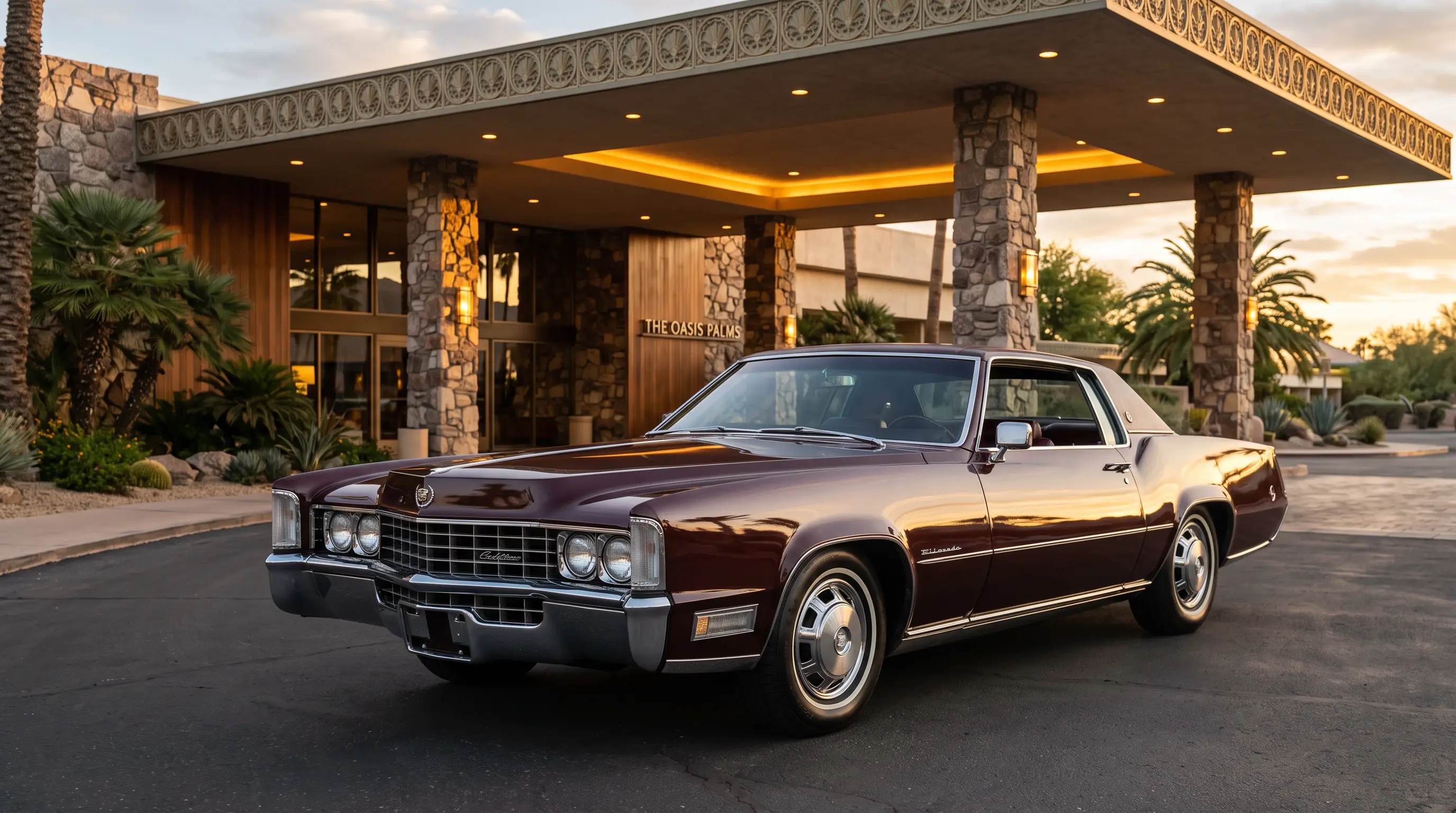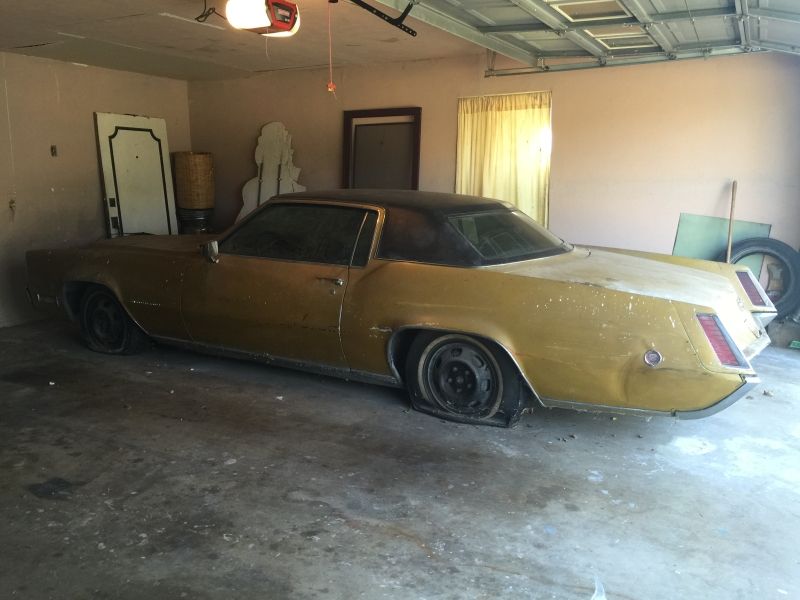
The 1968 Cadillac Eldorado inherited the sharp, razor-edge body of the previous year almost unchanged, but underneath the hood sat a genuinely new engine, one that marked the moment Cadillac committed to a larger displacement V8 for the entire decade that followed. Documenting this specific model year matters precisely because so much of the attention paid to the front-wheel-drive Eldorado generation gravitates toward the 1967 launch car, leaving the 1968 refinements under-examined despite their real significance to the platform's development.
The move to the 472 cubic inch V8
Cadillac replaced the 429 cubic inch V8 that had powered the 1967 Eldorado with a new 472 cubic inch unit for 1968, part of a broader engine family redesign the division rolled out across its full lineup that year. Factory literature from the period lists output at 375 horsepower (SAE gross) and 525 lb-ft of torque for the new engine, a figure that reflected the pre-1972 gross measurement standard rather than the more conservative net ratings the industry adopted a few years later. The larger displacement gave the Eldorado noticeably stronger low-end torque, a meaningful improvement given the car's substantial curb weight and the demands placed on the front-wheel-drive Unitized Power Package by that additional mass over the front axle.
Documentation from Cadillac's engineering department at the time frames the 472 as part of a corporate-wide push toward larger, more torque-oriented V8s, a trend that would continue through the early 1970s before emissions regulation began reshaping engine design priorities across the entire American industry. For the Eldorado specifically, the new engine addressed criticism from period road testers who had found the 1967 car's 429 adequate but not especially strong relative to the car's weight.
What changed on the outside
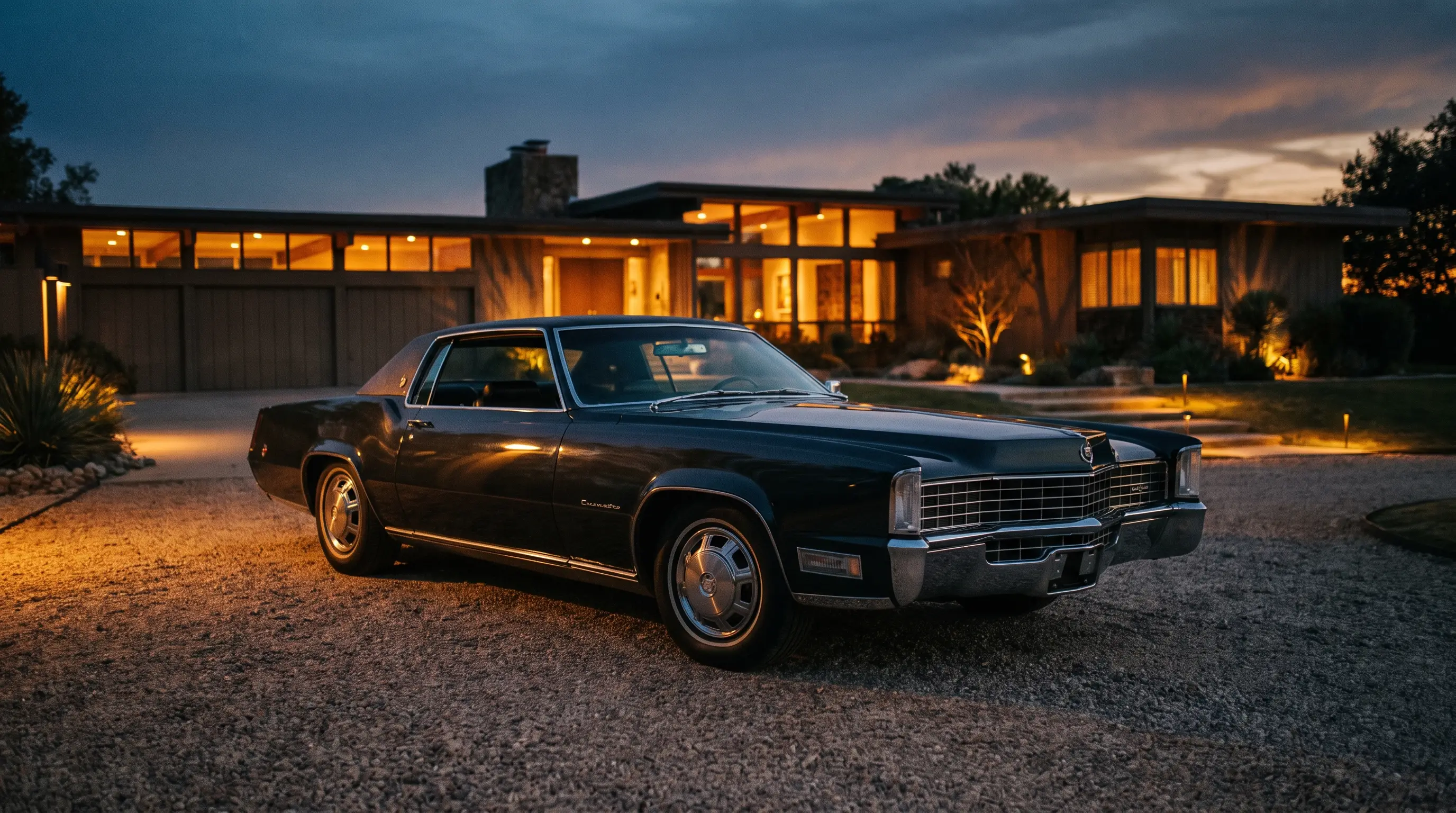
Visually, Cadillac kept the 1968 Eldorado's changes deliberately modest, a decision consistent with how the division typically handled a car's second model year on an all-new platform. The most immediately noticeable revision was the grille, which moved from the vertical bar treatment of 1967 to a horizontal design more in keeping with the rest of Cadillac's 1968 lineup. Taillight detailing also received minor updates, along with small trim revisions that collectors and researchers now use as one of the more reliable ways to distinguish a 1968 car from its 1967 predecessor at a glance, since the fundamental razor-edge body shell carried over essentially unaltered.
| Spec | 1967 Eldorado | 1968 Eldorado |
|---|---|---|
| Engine | 429 cubic inch V8 | 472 cubic inch V8 |
| Grille | Vertical bars | Horizontal bars |
| Production | 17,930 units | 24,528 units |
| Platform | GM E-body | GM E-body, carryover |
Reading the production numbers
Cadillac built 24,528 Eldorados for the 1968 model year, a substantial increase over the 17,930 units produced for 1967. That growth reflects the model settling into the market after its first-year novelty, with dealers and buyers alike having a full year to become comfortable with the front-wheel-drive layout that had represented such a significant departure for Cadillac when it first appeared. For anyone researching the platform's full development, the full story of the 1967 launch provides the necessary context for understanding what the 1968 revisions were actually responding to.
Production documentation from this period also shows Cadillac continuing to refine build quality on the front-wheel-drive components as the assembly line gained experience with the Unitized Power Package. Warranty claim data, where it survives in accessible form, suggests the 1968 cars benefited from a full model year of manufacturing process improvements that the rushed 1967 launch had not allowed time to implement.
"Researchers tend to treat the 1968 Eldorado as a footnote to 1967, and that undersells it. The engine change alone represents a meaningful engineering decision, and the production increase tells you the market had genuinely accepted the front-drive concept by that point, not just tolerated it as a novelty."
- Sarah Whitfield
Why this model year matters to serious research
Cataloguing the precise differences between 1967 and 1968 Eldorados matters for anyone doing careful provenance work, because the two years are frequently confused in casual descriptions despite meaningful mechanical and cosmetic distinctions. A car advertised generically as a "razor-edge Eldorado" without a specified model year could be either, and the engine displacement alone settles the question definitively for anyone with access to a build sheet or a look under the hood. The grille pattern offers a faster visual confirmation for researchers working from photographs alone, without needing engine documentation to make the determination.
This kind of precise, year-specific documentation is exactly the discipline concours judging and serious historical research demand, and it's worth doing carefully even for a model year that sits somewhat in the shadow of its more celebrated predecessor. The 1968 Eldorado deserves recognition as the year Cadillac proved the front-wheel-drive platform could mature into a stronger, more capable car rather than remaining a one-year technological experiment. Anyone documenting or acquiring a car from this specific year can currently find browse classic Eldorado listings to compare surviving examples against the specifications outlined here.
Interior and trim details worth documenting
Cabin materials and trim options for 1968 carried over largely from the prior year's specification, though Cadillac's option sheets for the model show a handful of new interior color combinations and minor hardware revisions that researchers should note when dating a car from photographs or partial documentation alone. Upholstery choices spanned the leather and cloth combinations typical of the era's top-tier personal luxury coupes, and the dashboard layout remained functionally identical to 1967 aside from switchgear detail changes that align with the broader running changes Cadillac made across its 1968 lineup.
For provenance work specifically, cross-referencing interior trim codes against factory build sheets remains the most reliable method for confirming a car's originality, since aftermarket reupholstery over the decades has sometimes introduced color combinations that were never actually offered from the factory in a given year. Careful researchers treat any interior claim without supporting build sheet documentation as provisional until verified against the factory record.
Placing 1968 within the generation's arc
Considered against the full run of first-generation front-wheel-drive Eldorados, which continued with further updates through 1970, the 1968 model represents the point at which the platform's initial engineering ambitions and its commercial execution finally aligned. The 1967 car proved the concept could work. The 1968 car, with its stronger engine and improved production numbers, proved the concept could sell consistently rather than simply generate curiosity in its debut year. That distinction is worth preserving carefully in any serious accounting of how this generation developed, rather than collapsing the entire span into a single undifferentiated story built around the more heavily photographed launch year alone.
Concours judges and researchers who specialize in this generation generally agree the 1968 model deserves its own line of inquiry rather than a passing mention inside the broader 1967 narrative. Getting the engine displacement, the grille pattern, and the trim details right on a specific car is not a pedantic exercise. It is the difference between an accurate historical record and a blurred one, and for a platform as mechanically significant as this, that accuracy is worth the extra research effort every time.
Sources and notes
- Automobile Catalog - 1968 Cadillac Fleetwood Eldorado specs
- Automotive Mileposts - 1968 Cadillac Eldorado Production/Specifications
- Wikipedia - Cadillac Eldorado
- Hagerty Valuation Tools - 1968 Cadillac Eldorado
- Conceptcarz - 1968 Cadillac Fleetwood Eldorado Specifications
- NotoriousLuxury - The Incomparable 1968 Cadillac Fleetwood Eldorado