Horsepower claims from 1970 need to be checked against the calendar before they mean anything. The 1970 Cadillac Eldorado horsepower rating of 400 gross at 4400 rpm sounds unremarkable next to a big-block muscle car number from the same year, but the comparison misses the point. The Eldorado was not chasing quarter-mile times. It was chasing something harder to measure: total, unhurried authority at any speed.
The engine behind the number
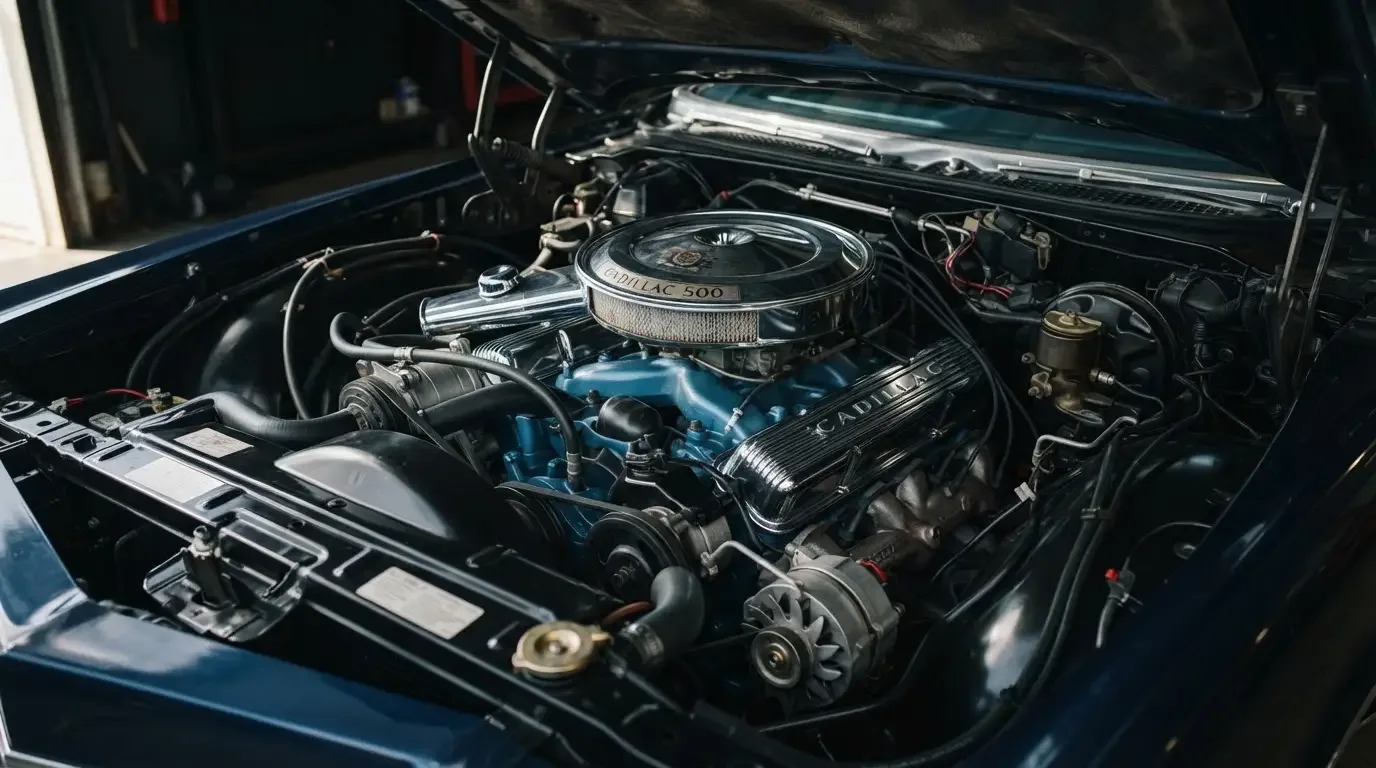
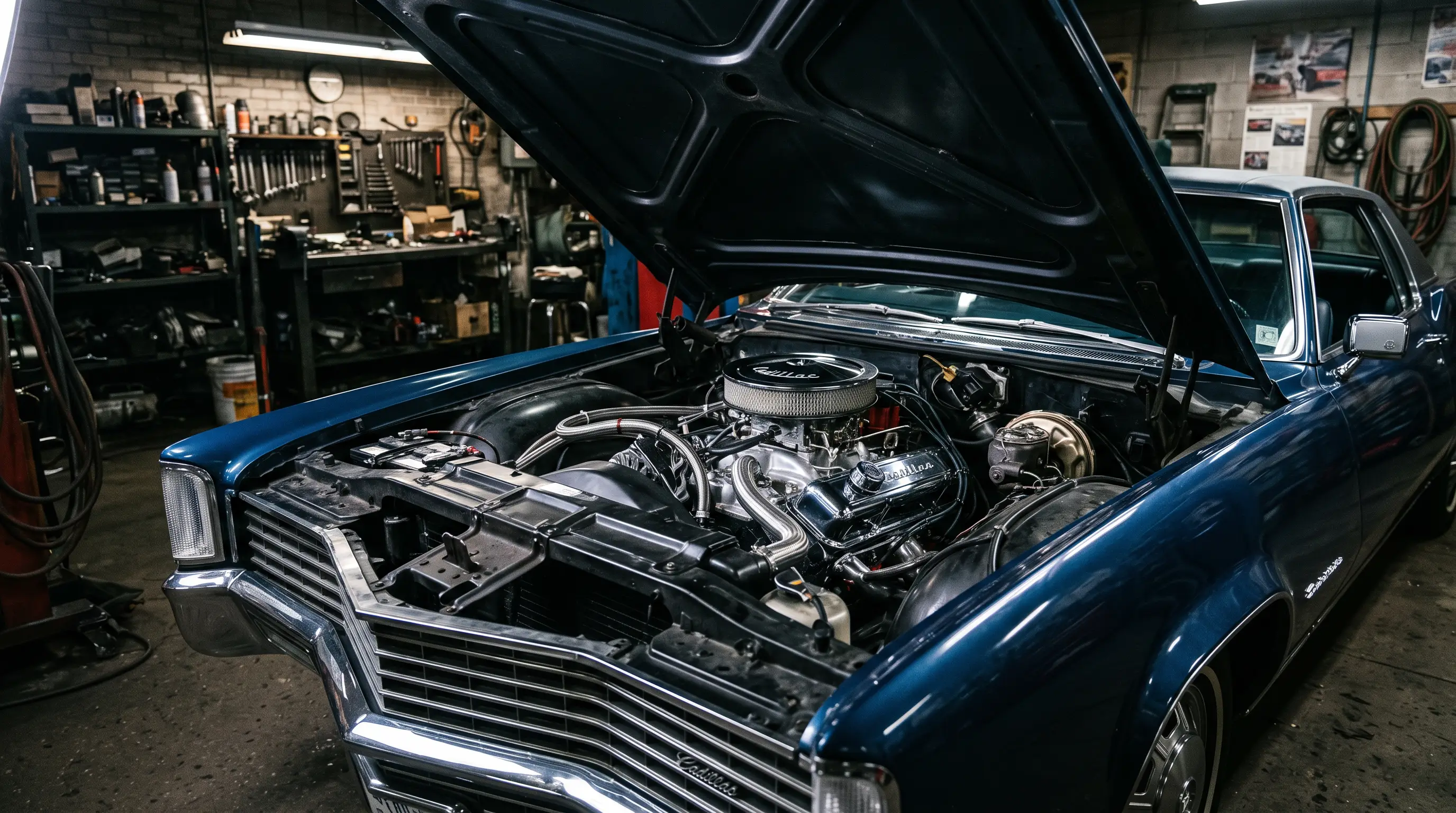
1970 was the first year of Cadillac's 500 cubic inch V8, and the Eldorado was the only car to get it. Everything else in the Cadillac lineup kept running the older 472. The 500 was rated at 400 gross horsepower and, more tellingly, 550 lb-ft of torque at 3000 rpm. That torque figure is what actually defined how the car drove. A 4,700-pound coupe does not need to rev to feel strong; it needs torque low in the range, and the 500 delivered more of it than almost anything else sold in America that year.
Bore and stroke were nearly square at 4.30 by 4.304 inches, which is not the layout you would expect from an engine built purely for torque. Cadillac's engineers balanced displacement against rpm range so the engine could still spin freely enough to feel smooth, not just strong. The result was a V8 that pulled hard from idle and kept pulling well past where most drivers would ever take it.
Why gross horsepower numbers deserve scrutiny
Every domestic manufacturer rated engines on a test stand in 1970, with no accessories, no exhaust back-pressure, and no real-world load. That is the gross rating system, and it flattered every engine on the market, not just Cadillac's. The Eldorado's 400 gross horsepower would have measured meaningfully lower once installed in the actual car with a full exhaust, power steering pump, air conditioning compressor, and everything else drawing power off the crank. Buyers in 1970 did not have access to net numbers; those did not become standard until 1972. So the 400 figure has to be read as a ceiling, not a delivered result.
| Spec | 1970 Eldorado 500 V8 |
|---|---|
| Displacement | 500 cubic inches (8.2 liters) |
| Horsepower (gross) | 400 @ 4400 rpm |
| Torque (gross) | 550 lb-ft @ 3000 rpm |
| Bore x Stroke | 4.30 in x 4.304 in |
| Compression Ratio | 10.0:1 |
How it compared on the street
Against a same-year Lincoln Continental Mark III, the Eldorado's 500 had a clear displacement and torque edge, and it felt that way from behind the wheel. Against a genuine muscle car, a Hemi or a big-block Chevelle, the Eldorado was never going to win a stoplight race, and nobody buying an Eldorado cared. The comparison that actually mattered to 1970 buyers was refinement under power, and there the 500 had few rivals. It made its torque without drama, without a raspy exhaust note, without the car feeling like it was working.
The front-drive engineering problem
Front-wheel drive complicated everything about putting a big V8 to work. Torque steer, packaging, and weight distribution all worked against the engineers who had to make a 500 cubic inch engine live happily up front, driving the front wheels through a variable-pitch Turbo Hydra-Matic transmission. The car managed it by leaning on that low-rpm torque rather than asking the engine to rev, which kept the front tires from being overwhelmed the way a peakier engine might have overwhelmed them. It was not a subtle solution. It was a big engine doing a big job in the simplest way Cadillac's engineers could manage.
"The 1970 Eldorado never needed to win a drag race. It needed to make four and a half tons of car feel like nothing was happening, and the 500 did that better than anything else on the market."
- Emily Chen
Transmission and gearing played a role too
Horsepower and torque numbers only tell part of the story of how the 1970 Eldorado actually delivered its power to the road. The car used a Turbo Hydra-Matic automatic with variable-pitch stator vanes, a feature borrowed from Buick and refined for Cadillac's application, which let the transmission alter its torque multiplication on the fly depending on throttle position. In its normal setting the transmission favored smoothness and fuel efficiency; in its performance setting it multiplied torque more aggressively off the line. That flexibility meant the same 500 cubic inch engine could feel notably different depending on how the driver had the transmission dialed in, something a static horsepower figure can never capture.
Gearing was chosen for cruising, not acceleration. Cadillac's engineers assumed most Eldorado owners would spend the bulk of their driving on highways and boulevards, not around a road course, so the final drive ratio favored quiet, low-rpm cruising over outright launch performance. That decision reinforces the same point the horsepower number does on its own: the 1970 Eldorado was engineered around comfort and torque delivery, with acceleration numbers as a secondary outcome rather than the primary design goal.
What the number means for buyers today
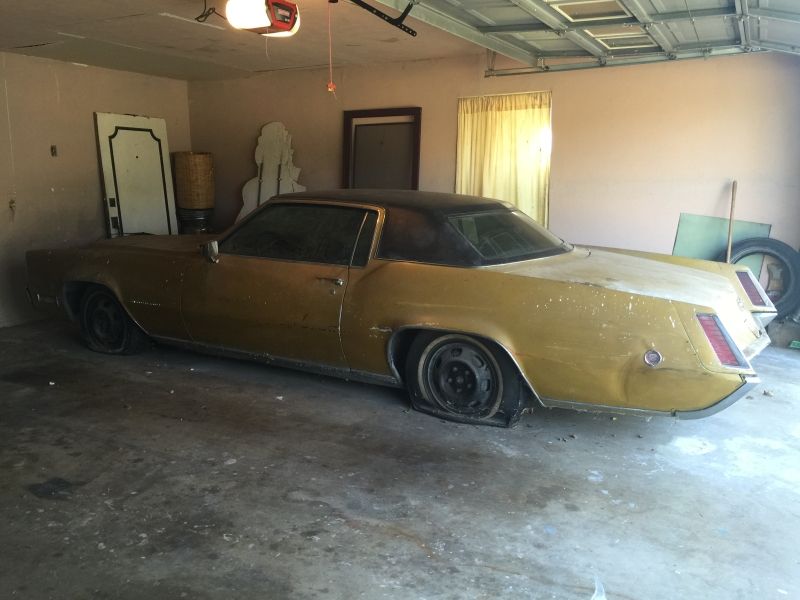
Anyone cross-shopping a 1970 Eldorado now should treat the horsepower figure as historical context, not a performance promise. These cars were never quick by muscle car standards, and a well-sorted 500 today drives closer to its torque number than its horsepower number. The engine's real appeal is how little effort it takes to move a big car, which is exactly what it was built to do in 1970. For the full mechanical background on the engine itself, our complete history covers how the 500 evolved across its production run. And for those ready to see what is actually available, find a classic Eldorado currently listed for sale.
The competitive field in 1970
The personal luxury coupe segment in 1970 was more crowded than it might appear in hindsight. Lincoln's Continental Mark III, Buick's Riviera, and Oldsmobile's Toronado were all chasing a similar buyer, someone who wanted a big, distinctive two-door with genuine road presence rather than outright sports car handling. Against that specific field, the Eldorado's displacement advantage was real and measurable. The Toronado, which shared front-wheel-drive DNA with the Eldorado, topped out around 455 cubic inches that year, well short of the 500. The Mark III relied on Ford's 460 cubic inch V8, itself a large engine, but still 40 cubic inches smaller than Cadillac's offering. In a segment where size and presence were part of the sales pitch, Cadillac had the biggest number on the spec sheet, and it made sure buyers knew it.
That competitive context matters because it explains why Cadillac was willing to build an engine this large in the first place. The 500 was not created in a vacuum; it was a direct response to a market where displacement, torque, and quiet authority were the currency personal luxury buyers cared about. Being able to say the Eldorado had the biggest engine in its class was a genuine selling point in 1970, even if very few buyers ever asked to see a dyno chart to confirm it.