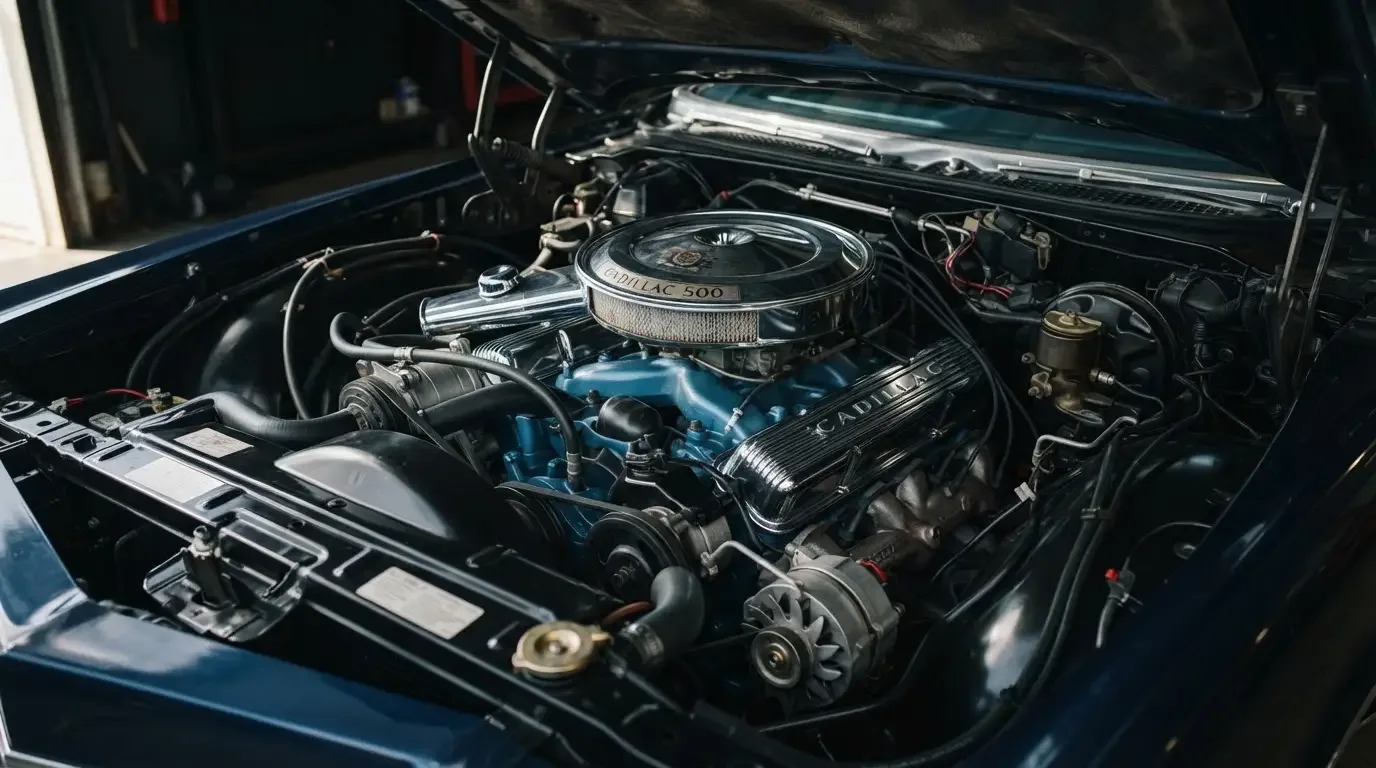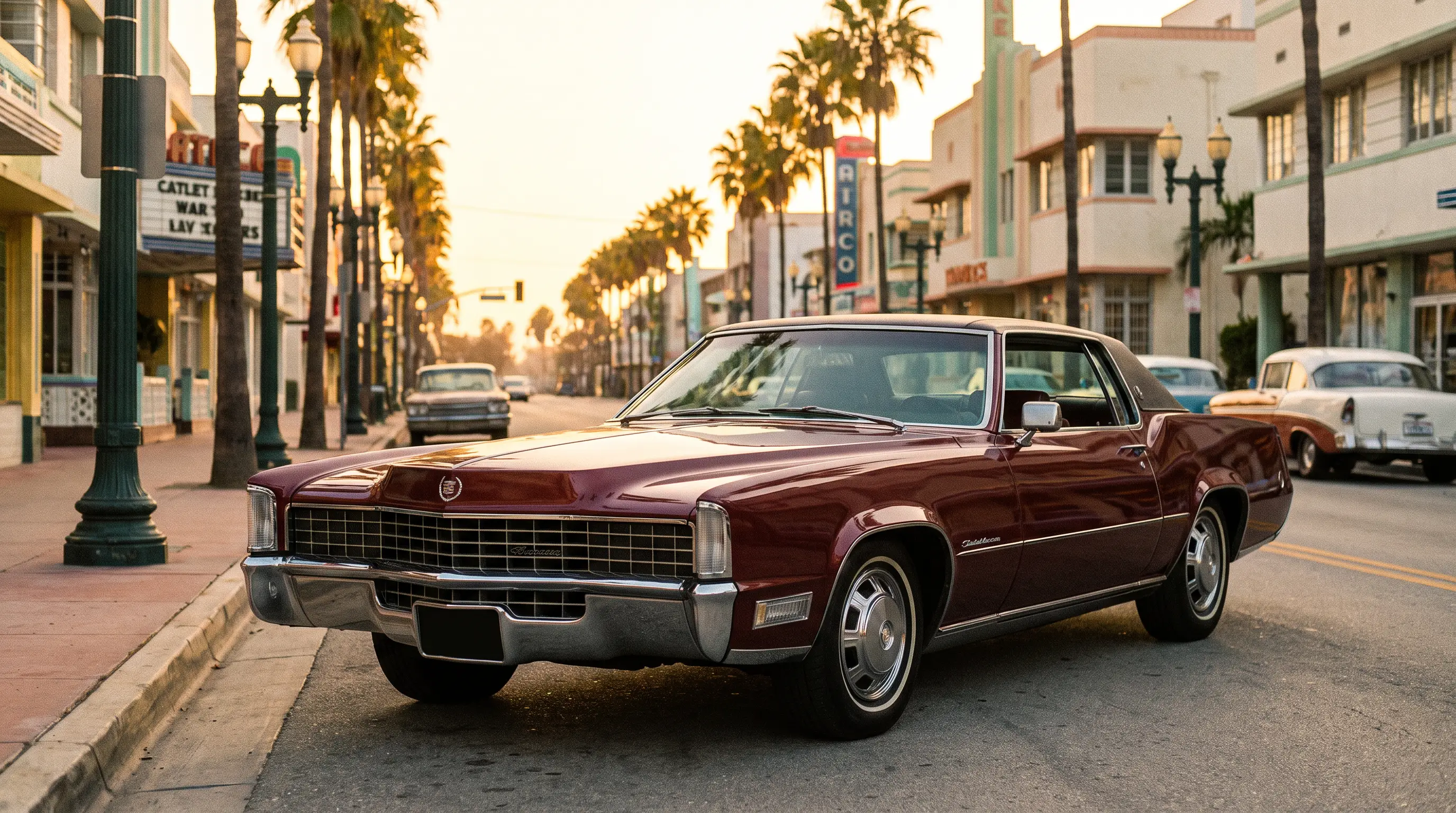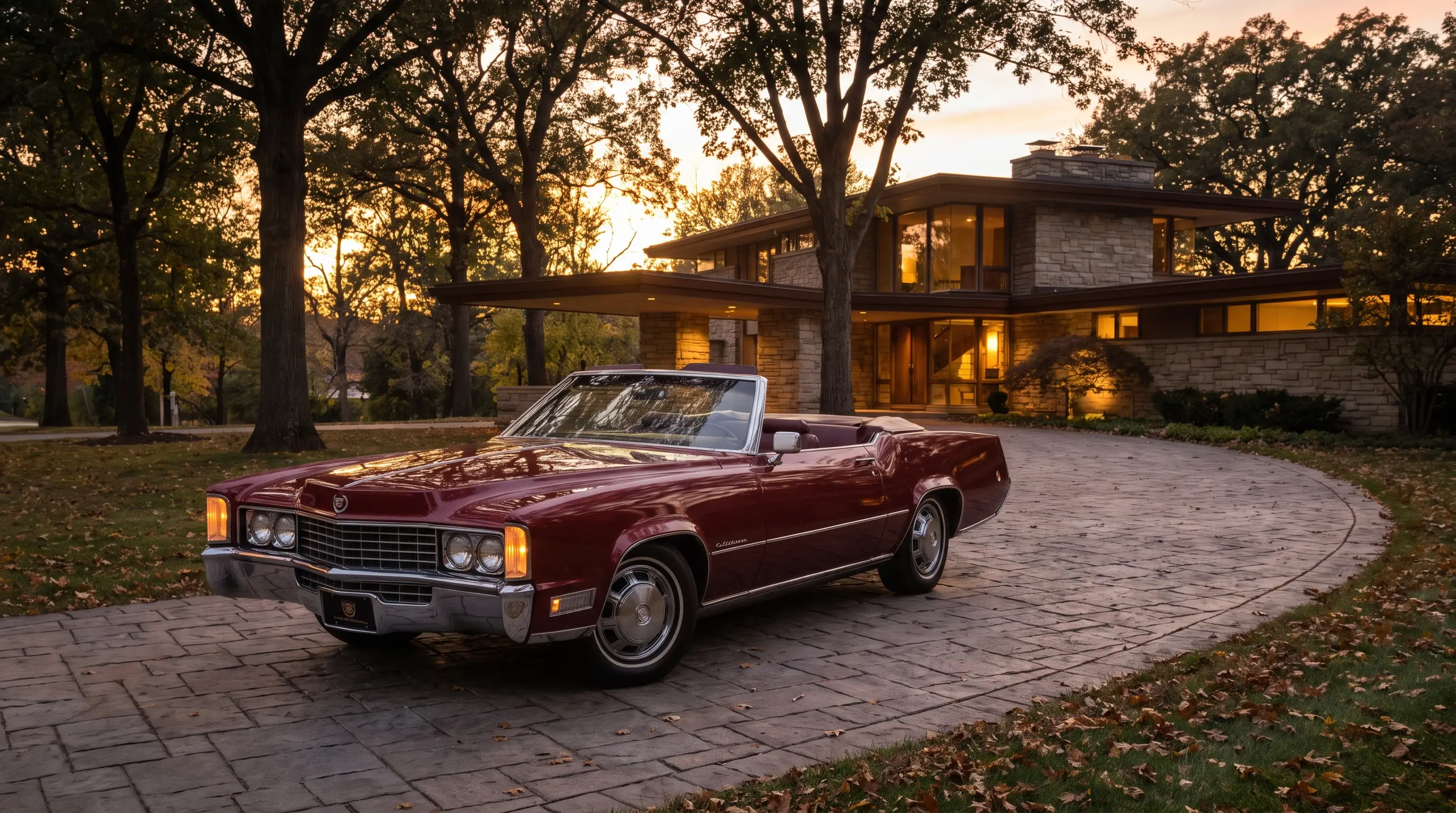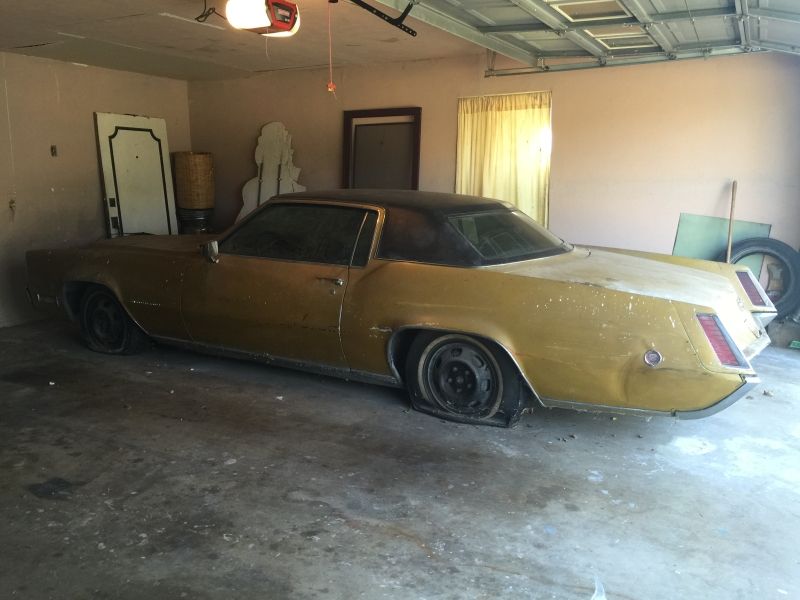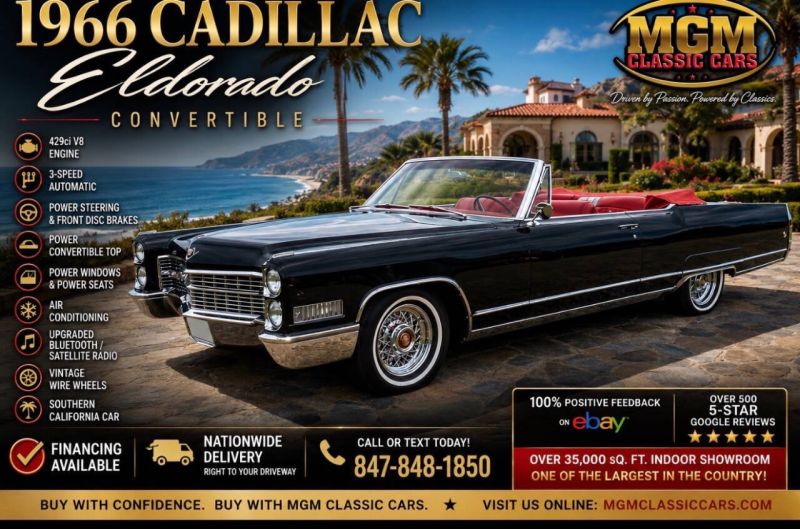
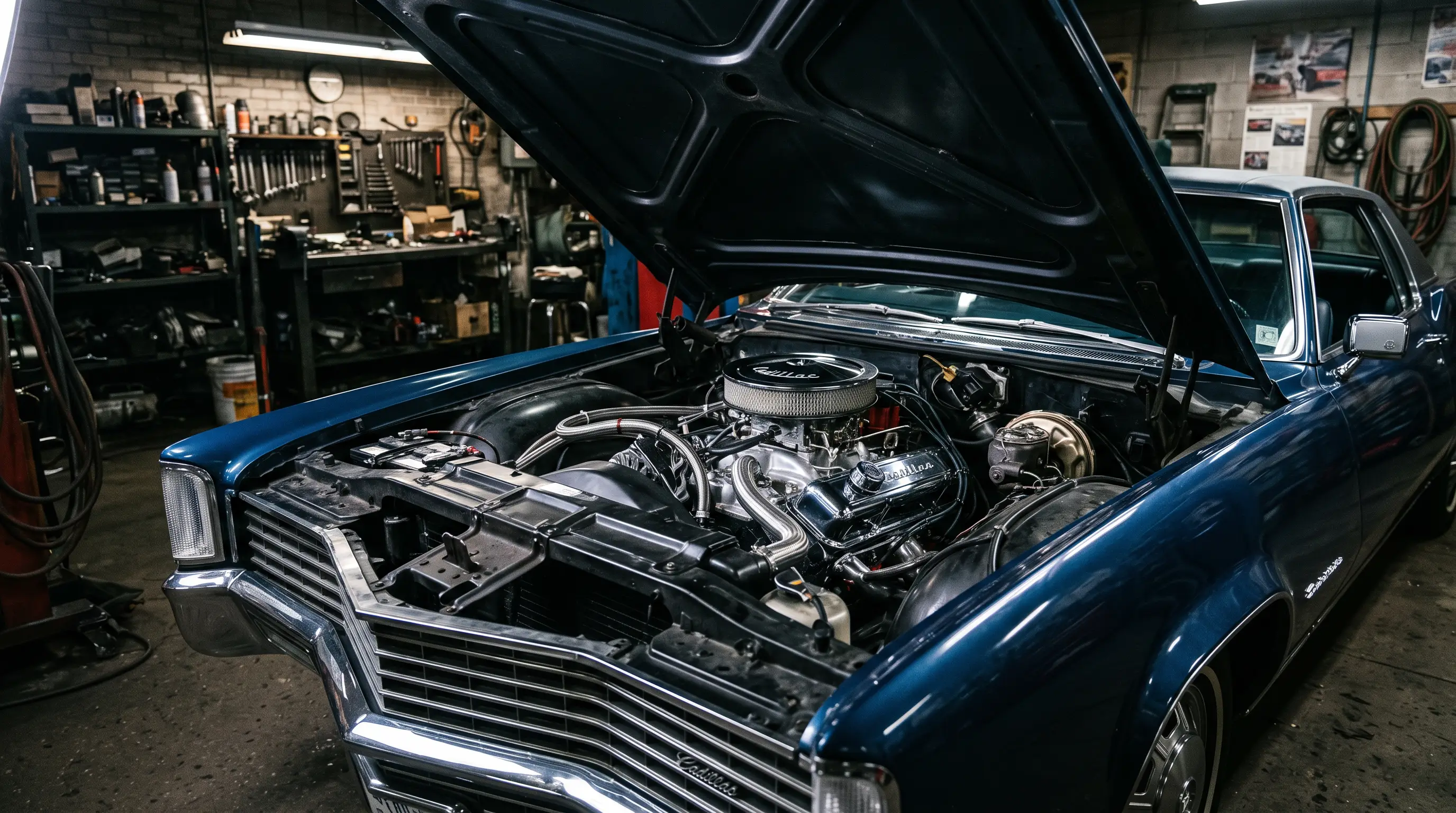
The Cadillac 472 engine did not launch the front-drive Eldorado, but it is the engine that proved the concept could last. The 1967 Eldorado debuted with a 429 cubic inch V8, borrowed largely unchanged from the rear-drive lineup. For 1968, Cadillac replaced it across the entire model range, Eldorado included, with a new 472 cubic inch V8, and that engine is what actually carried the front-wheel-drive Eldorado into its second year and beyond.
A new engine for an unproven layout
Front-wheel drive was still a gamble for Cadillac in 1968. The Eldorado had broken from a century of rear-drive convention just one year earlier, and the company needed an engine that could handle the unusual demands of driving the front wheels on a full-size luxury coupe without torque steer making the car feel unruly. The 472 was built with that job in mind: bigger displacement than the outgoing 429, a stronger block, and a torque curve tuned to come in low and stay flat. Rated output was 375 horsepower at 4400 rpm and 525 lb-ft of torque at 3000 rpm.
What changed between the 429 and the 472
The two engines shared a family resemblance, both part of Cadillac's big-block V8 architecture, but the 472 was not simply a bored-out 429. Cadillac increased bore and stroke together, strengthened the bottom end, and revised the intake and exhaust to move more air through a larger displacement without sacrificing the smoothness Cadillac buyers expected. The result was an engine that felt more settled under load than the 429 it replaced, particularly at the low rpm where a front-wheel-drive Eldorado spent most of its life.
| Spec | 1968-69 Eldorado 472 V8 |
|---|---|
| Displacement | 472 cubic inches (7.7 liters) |
| Horsepower (gross) | 375 @ 4400 rpm |
| Torque (gross) | 525 lb-ft @ 3000 rpm |
| Years used in Eldorado | 1968-1969 |
Why it only lasted two years in the Eldorado
By 1970 Cadillac had gone even bigger, replacing the 472 in the Eldorado with the 500 cubic inch V8 that would go on to become the largest production V8 ever installed in an American passenger car. The 472 did not disappear from the lineup entirely; it stayed in Cadillac's other full-size models for years afterward. But in the Eldorado specifically, it was a two-year bridge engine, arriving after the original 429 and stepping aside once the 500 was ready. Two years is a short run for an engine this significant, and it is easy to overlook the 472 because of what came immediately after it. That undersells what it accomplished. The 472 is the engine that took a brand-new, unproven front-wheel-drive layout and made it feel like a finished product rather than an experiment.
Driving impressions from the era
Period road tests praised the 472 for exactly what it was built to do: move a heavy car without fuss. Reviewers noted the near-total absence of torque steer despite the engine's size, a real accomplishment given how new front-wheel drive was to American luxury cars in 1968. The engine was not quick by any objective measure, but nobody cross-shopping an Eldorado in 1968 was cross-shopping a muscle car. They wanted a big coupe that felt effortless, and the 472 gave them that without drawing attention to itself, which was exactly the point.
"The 472 is the engine nobody remembers because it did its job too quietly. It took a brand-new layout and made it boring in the best possible way, which is exactly what a first-generation Eldorado owner needed in 1968."
- Dan Reeves
The engineering problem nobody saw coming
Front-wheel drive on a car this heavy created a packaging challenge that had nothing to do with horsepower or torque directly. The engine, transmission, and final drive all had to fit transversely-adjacent under a hood designed around a much longer, narrower drivetrain layout than a typical front-engine, rear-drive Cadillac. Engineers working on the 472 had to account for how the engine's mass would sit relative to the front axle, since too much weight too far forward would have made the car understeer badly and strain the front tires under hard acceleration. The 472's dimensions were shaped as much by where it needed to physically sit in the engine bay as by what output Cadillac wanted from it.
That packaging discipline paid off. Reviewers in 1968 rarely mentioned handling complaints tied to the drivetrain layout, which suggests Cadillac's engineers solved the weight distribution problem well enough that most drivers never noticed there was one to solve. Getting a big V8 to sit correctly over the front wheels of a two-and-a-half-ton coupe without upsetting the car's balance was a genuine engineering achievement, even if it never showed up as a bullet point in period advertising.
What it means for the model today
A 1968 or 1969 Eldorado with its original 472 is a specific slice of the car's history, distinct from both the 429-powered launch year and the 500-powered cars that followed from 1970 on. Values and parts availability track closer to the 500 cars since the two engines share so much underlying architecture, which is good news for anyone maintaining a 472. For more on how the displacement race played out after the 472 stepped aside, read the background on the 500 that replaced it. The story of the torque record that followed is also worth a look too, and buyers ready to see what is currently available can shop classic Eldorado listings today.
A bridge engine worth remembering
The 472 rarely gets its own headline in Eldorado history, sandwiched as it is between the launch-year 429 and the record-setting 500. But bridge engines matter. The 472 is what proved front-wheel drive could carry real Cadillac displacement without falling apart under its own torque, and that proof is what let Cadillac go even bigger two years later with confidence instead of guesswork.
Rarity and what it means for collectors
Because the 472-powered Eldorado only spans two model years, 1968 and 1969, surviving examples are less common than the longer-running 500-powered cars from 1970 onward. That relative scarcity has not translated into dramatically higher values across the board; the market for early front-wheel-drive Eldorados has historically prized condition and originality over which specific engine sits under the hood. Still, a documented, numbers-matching 472 car represents a specific and comparatively narrow window in Eldorado production, and collectors who understand the model's full engine history tend to view these two years as a distinct chapter worth preserving rather than treating them as an interchangeable stand-in for the more famous 500 cars that followed.
Parts interchangeability between the 472 and the 500 helps keep these earlier cars maintainable, since many external components and some internal specifications carry over between the two engine families. That shared parts bin has been a quiet advantage for 472 owners for decades, even if it means the engine rarely gets discussed as its own distinct achievement rather than as a smaller sibling to the engine that came after it.