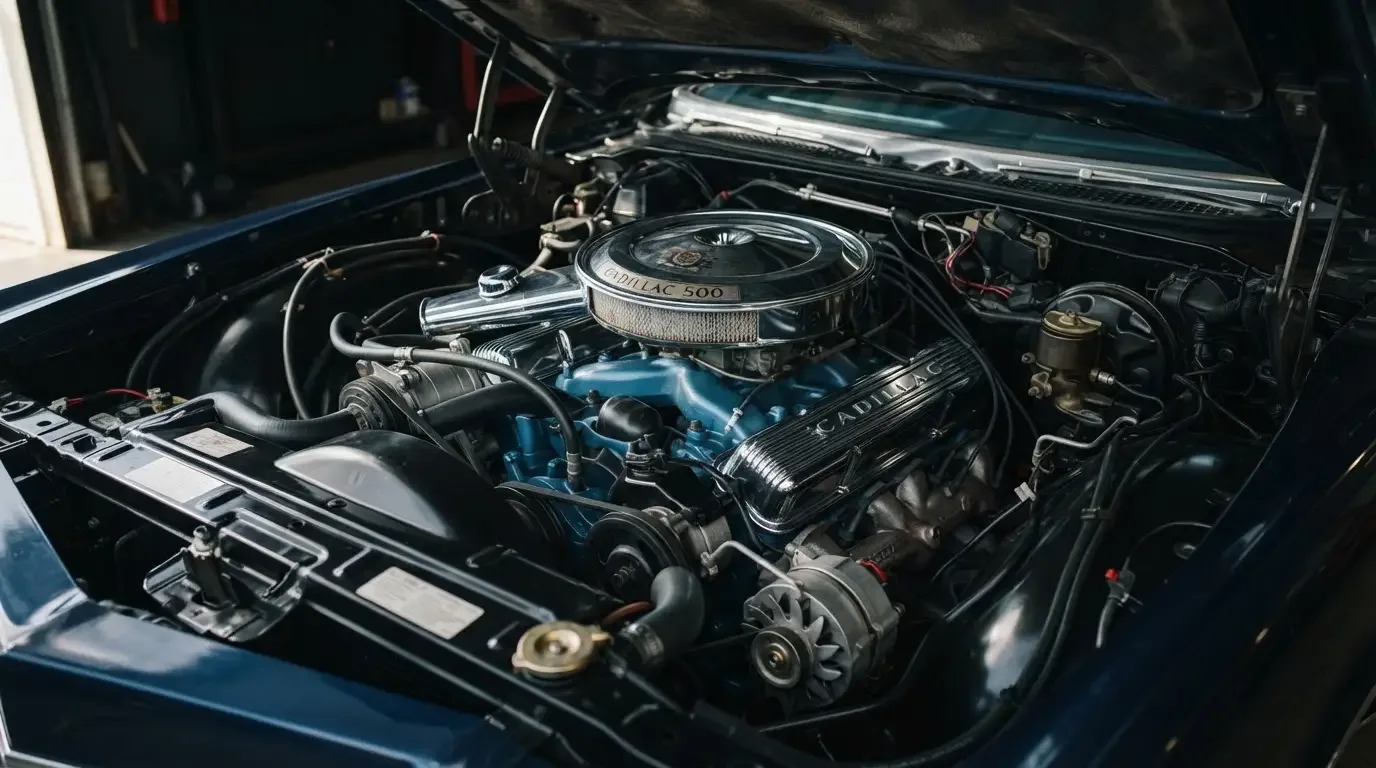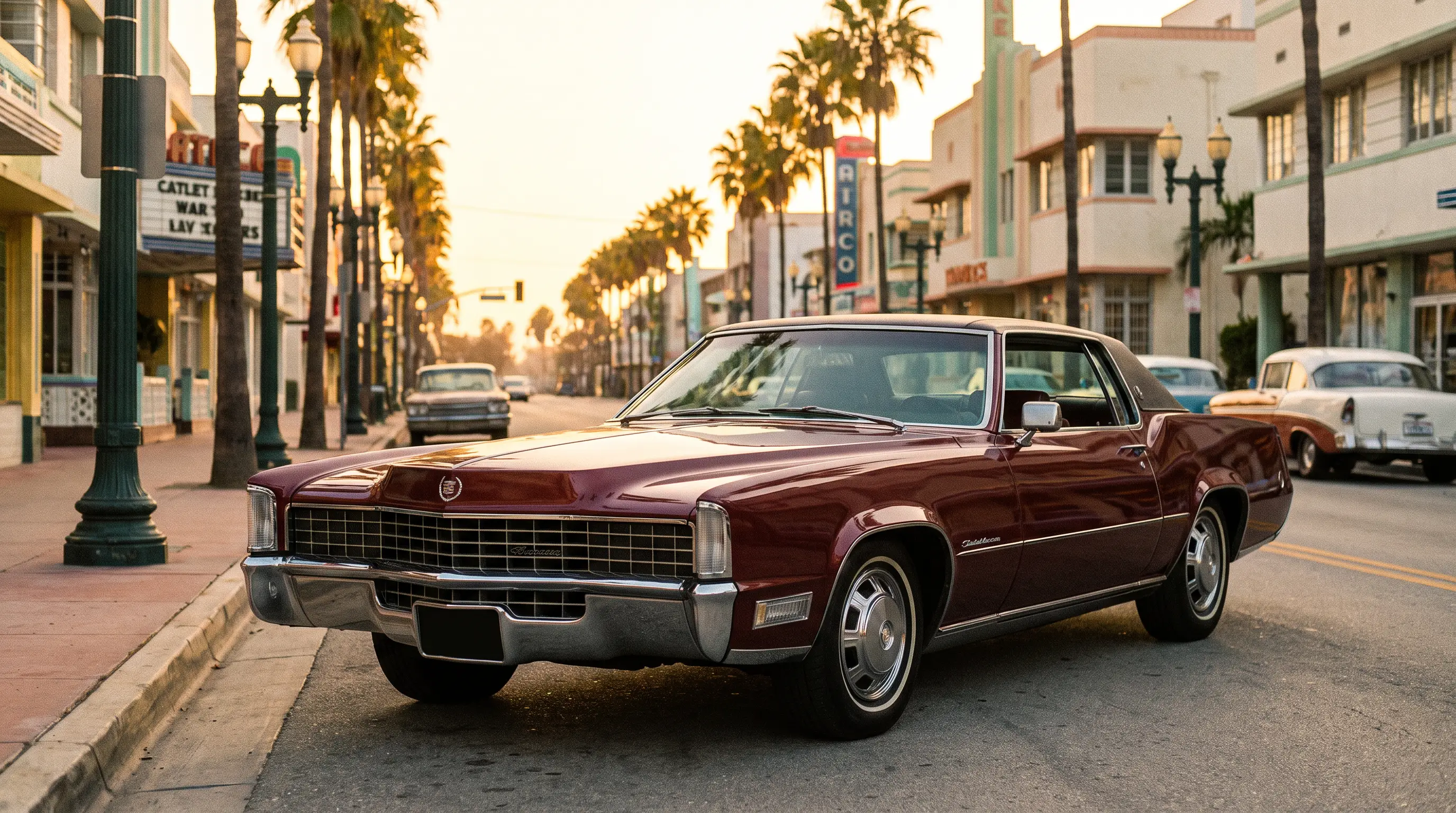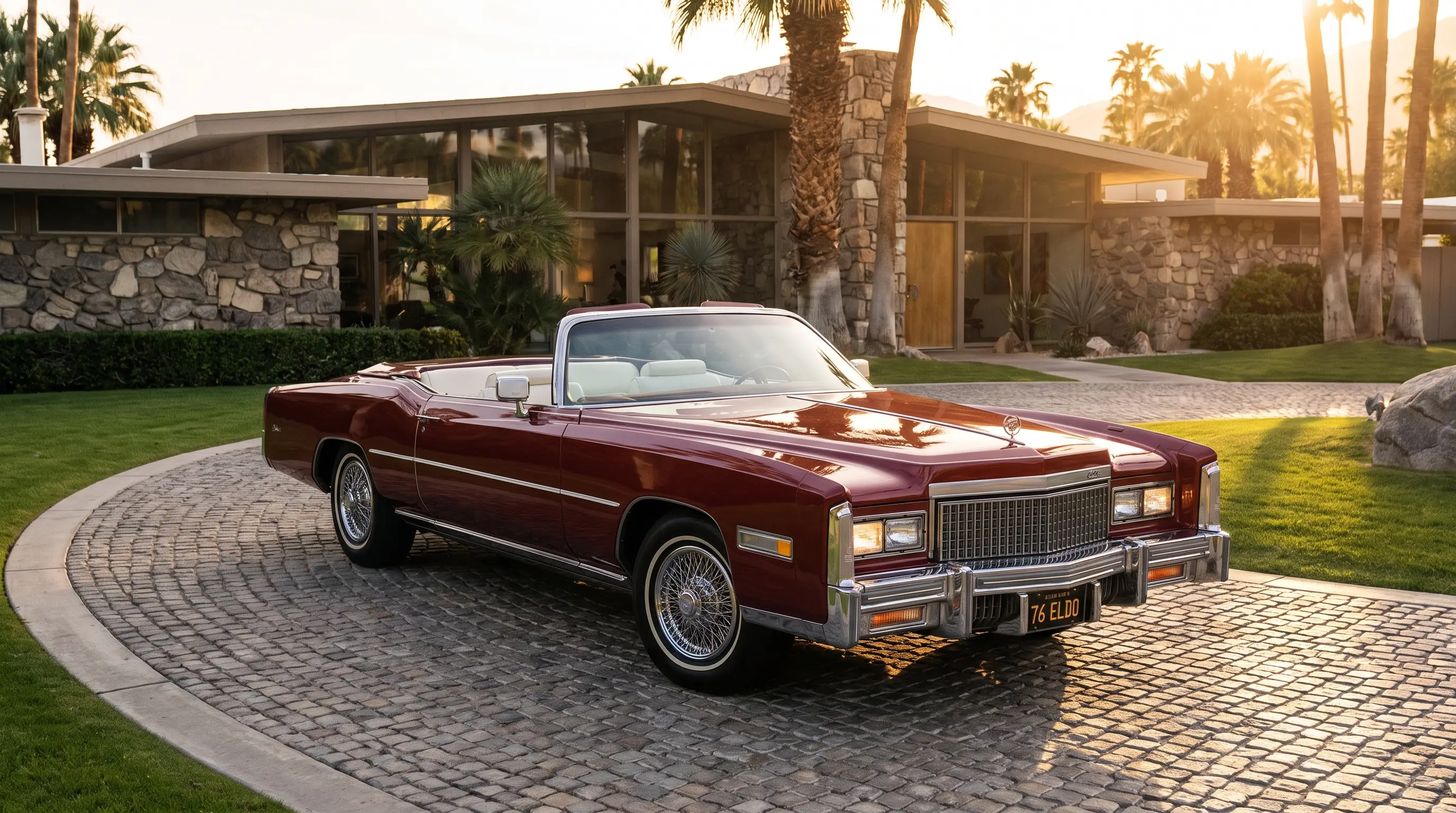
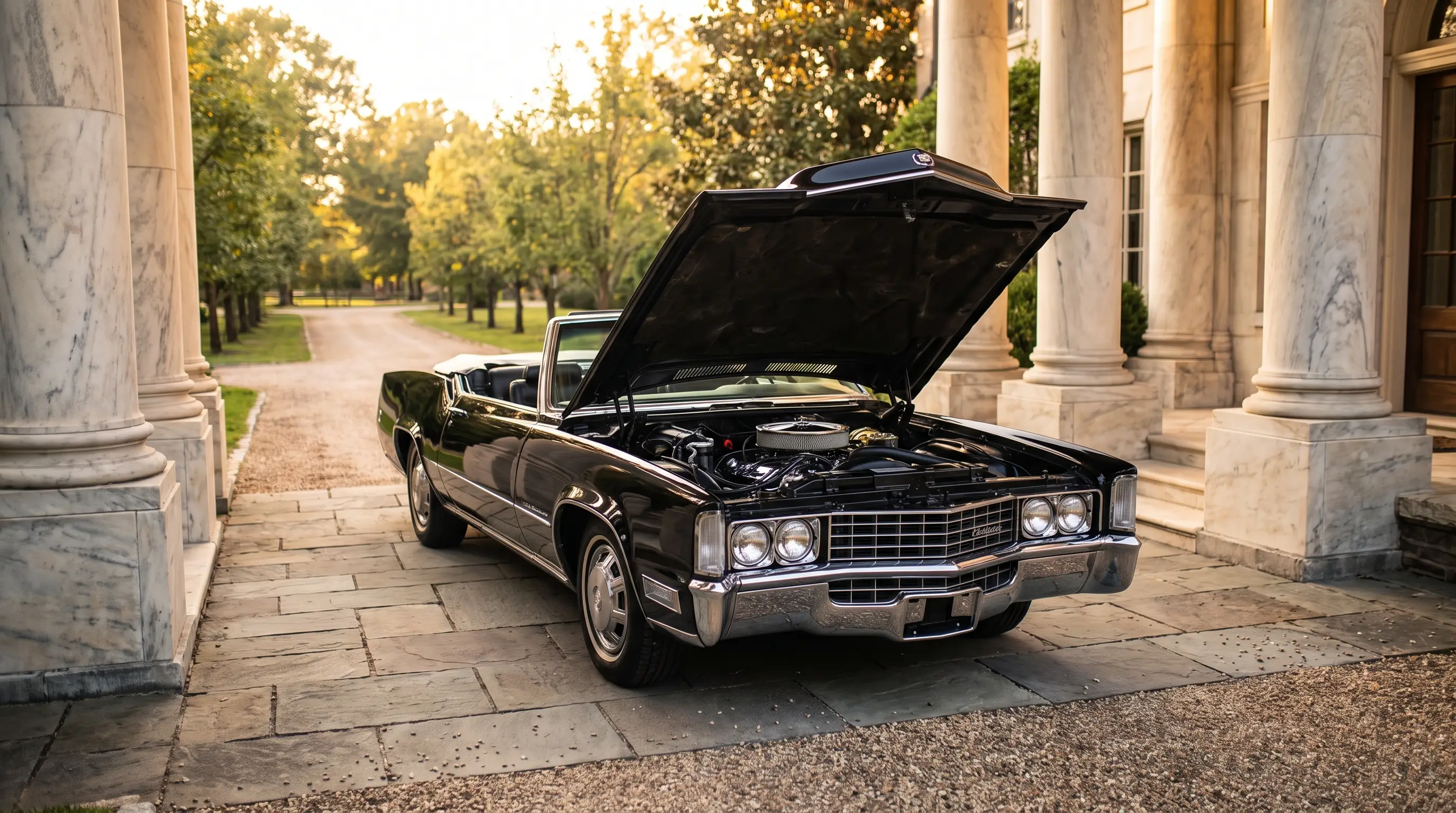
Displacement wins arguments. In 1970, Cadillac ended the argument entirely by dropping a 500 cubic inch V8, 8.2 liters, into the Eldorado, and no other American production car has topped that number since. The cadillac 500 cubic inch engine history is really the story of how big Detroit was willing to go before the rules changed, and the Eldorado is where that story peaks.
The number that still stands
500 cubic inches is 8.2 liters. Nobody in Detroit built a bigger production car V8 before it, and nobody has built one since. Not Chrysler's 440, not Ford's 460, not even Cadillac's own later efforts. The 500 arrived in the Eldorado for the 1970 model year and simply out-displaced everything on the lot. Bore was 4.30 inches, stroke was 4.304 inches, close to square, which is unusual for an engine this size. Most big blocks of the era were long-stroke torque monsters built for pulling, not revving. The 500 split the difference and still made the torque number that mattered.
Rated output at introduction was 400 gross horsepower at 4400 rpm and 550 lb-ft of torque at 3000 rpm. Those are gross figures, measured on a stand with no accessories, no exhaust restriction, no real-world drag. Even discounted for that, the torque number was real enough to move a two-and-a-half-ton personal luxury coupe without strain.
Why Cadillac needed it
The Eldorado had gone front-wheel drive in 1967, and front-wheel drive on a car this heavy demanded torque low in the rev range, not high-rpm horsepower. A smaller, revvier engine would have made the front tires work overtime just getting the car moving. Cadillac's engineers went the other direction: build the biggest, torquiest V8 they reasonably could and let the engine do the work at low rpm where the drivetrain was happiest. The 500 was the answer, and it stayed the answer through 1976, growing more restrained each year as emissions rules tightened around it.
Built for a specific kind of car
This was never meant to be a performance engine in the muscle car sense. Nobody raced a 500 Eldorado at the strip and expected to win. The engine existed to make a 4,700-pound coupe feel effortless at a stoplight and unbothered on the highway. Fuel economy was never part of the design brief, and buyers who wanted a Cadillac Eldorado in 1970 were not asking about miles per gallon. They wanted quiet authority, and the 500 gave it to them without complaint.
What happened after 1970
The 500 did not stay at 400 gross horsepower for long. By 1972, the industry switched from gross to net horsepower ratings, a more honest measurement that included the exhaust, accessories, and everything else bolted to a running car. The number on paper dropped hard, even though the hardware barely changed. Then came catalytic converters in 1975 and tighter emissions controls year over year, and the 500's output kept sliding through the mid-1970s. The displacement never changed. The atmosphere around it did.
The engine soldiered on in the Eldorado through 1976, and Cadillac even used a fuel-injected variant in some full-size models toward the end of its run. By 1977 the Eldorado had moved to a smaller 425 cubic inch V8 as part of a broader downsizing push across the whole industry, and the era of the 500 was over. It had lasted exactly seven years, which is a long production run for an engine that existed almost entirely because of one design decision made in 1970.
"You can't fake 500 cubic inches. Every other engine on the lot in 1970 was still arguing about horsepower. The Eldorado just settled it with displacement."
- Dan Reeves
Reading the numbers today
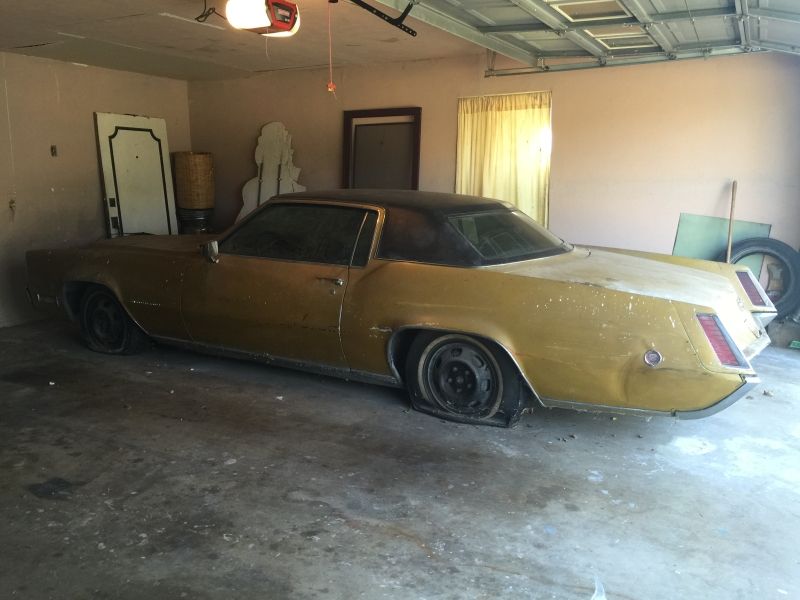
Shoppers looking at a 500-powered Eldorado now need to know which year they are looking at, because the gross-to-net switch and the emissions creep mean a 1970 car and a 1976 car share an engine block but not much else on the spec sheet. A 1970 500 is the strongest version by a wide margin. A 1976 500 is a quieter, more compliant engine built to pass a smog check, and it drives like it. Neither is wrong for what it is. They are simply two different answers to the same displacement.
For anyone weighing what a 500-cubic-inch Eldorado is actually like to own, the a related story on the 1970 model's output numbers fills in the rest of the picture. And if the idea of owning one of these big-block coupes has taken hold, Eldorados for sale now is the place to see what is actually on the market.
What it took to build an engine this big
Casting a block this large was not a trivial exercise in 1970. Cadillac's foundries had to account for the extra material stress that comes with a bigger bore and a longer stroke, and the company reinforced the block accordingly rather than simply scaling up an existing design. The result weighed more than any other Cadillac V8 before it, which is one reason the engine never showed up in a smaller, lighter Cadillac model. It needed the Eldorado's size and weight to make sense as a package. A compact car with a 500 under the hood would have been comically nose-heavy, and Cadillac never tried it.
Cooling a block this size also demanded a larger radiator and a revised water jacket layout compared to the 472 it replaced. Cadillac's engineers were not just scaling up an existing engine family; they were solving new thermal and structural problems that came with genuinely unprecedented displacement in a passenger car. None of that complexity showed up in the marketing. Buyers just saw a number, 500, and understood immediately what it meant without needing an explanation.
Why it still matters
The 500 cubic inch V8 is a landmark not because it was fast, but because it represents the ceiling of a particular engineering philosophy: bigger is simpler, torque solves problems, and displacement is honest in a way that forced induction and clever tuning are not. Cadillac never chased that ceiling again after 1976, and nobody else in the industry chased it at all. The Eldorado's 500 is a number that will not be beaten in a gasoline production car, and that alone makes it worth understanding, whether or not you ever plan to own one.
Sources and notes
- Cadillac V8 engine - Wikipedia
- Go Big or Go Home: Cadillac's 500 Cubic-Inch V8, 1970-76 - Mac's Motor City Garage
- The Cadillac 500 Cubic Inch V8 Was GM's Last Classic Big Block - DrivingLine
- In 1970, You Could Buy a Giant Cadillac With a 500 Cubic Inch V8 and 400 HP - The Autopian
- Cadillac 500 V8: What Made The Brand's Largest Engine So Interesting - Jalopnik