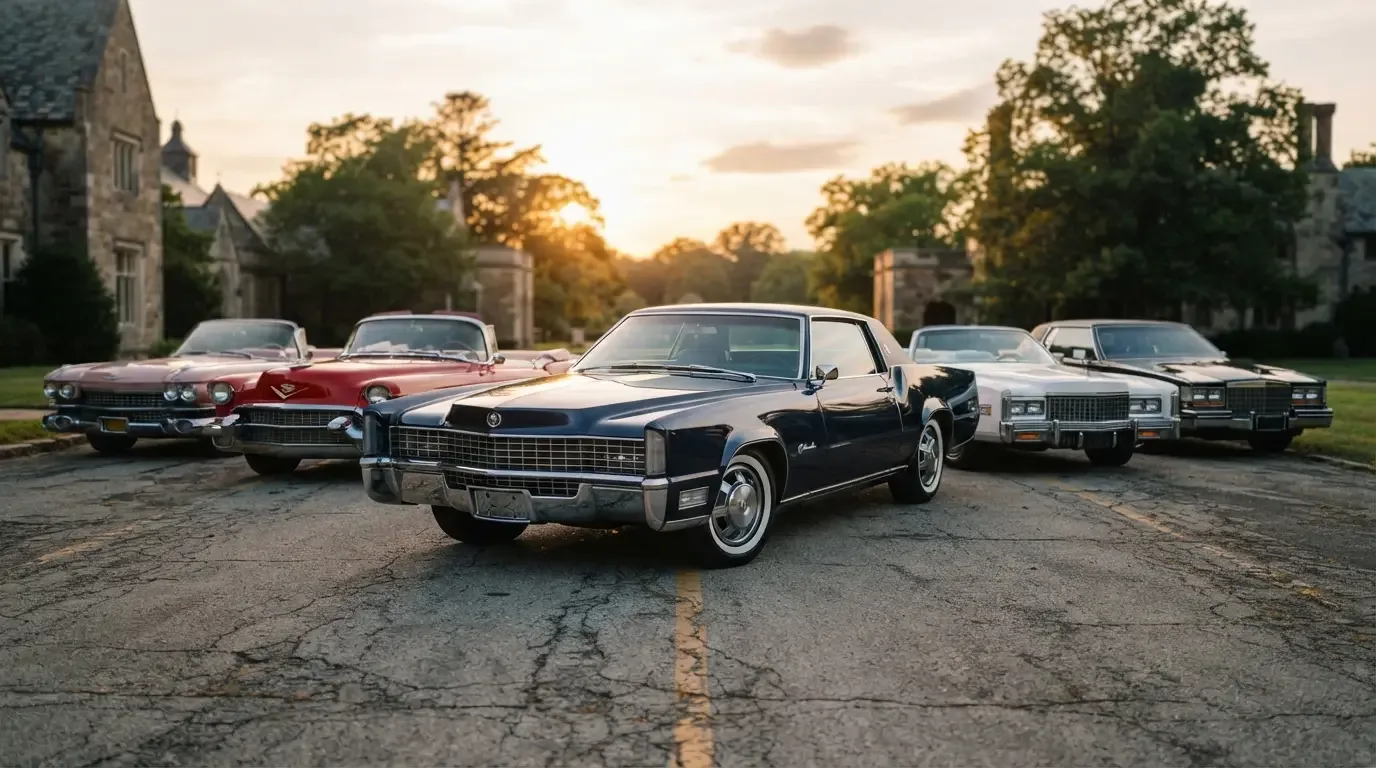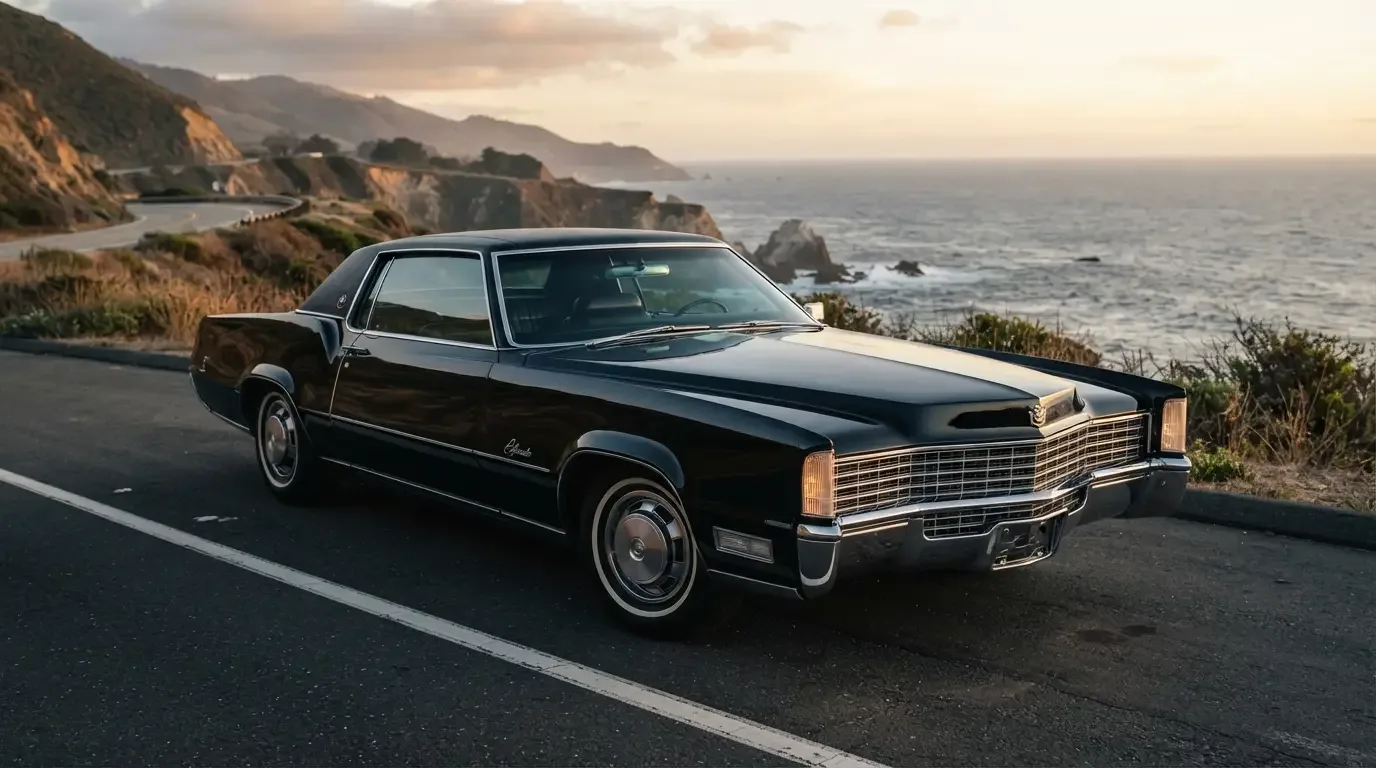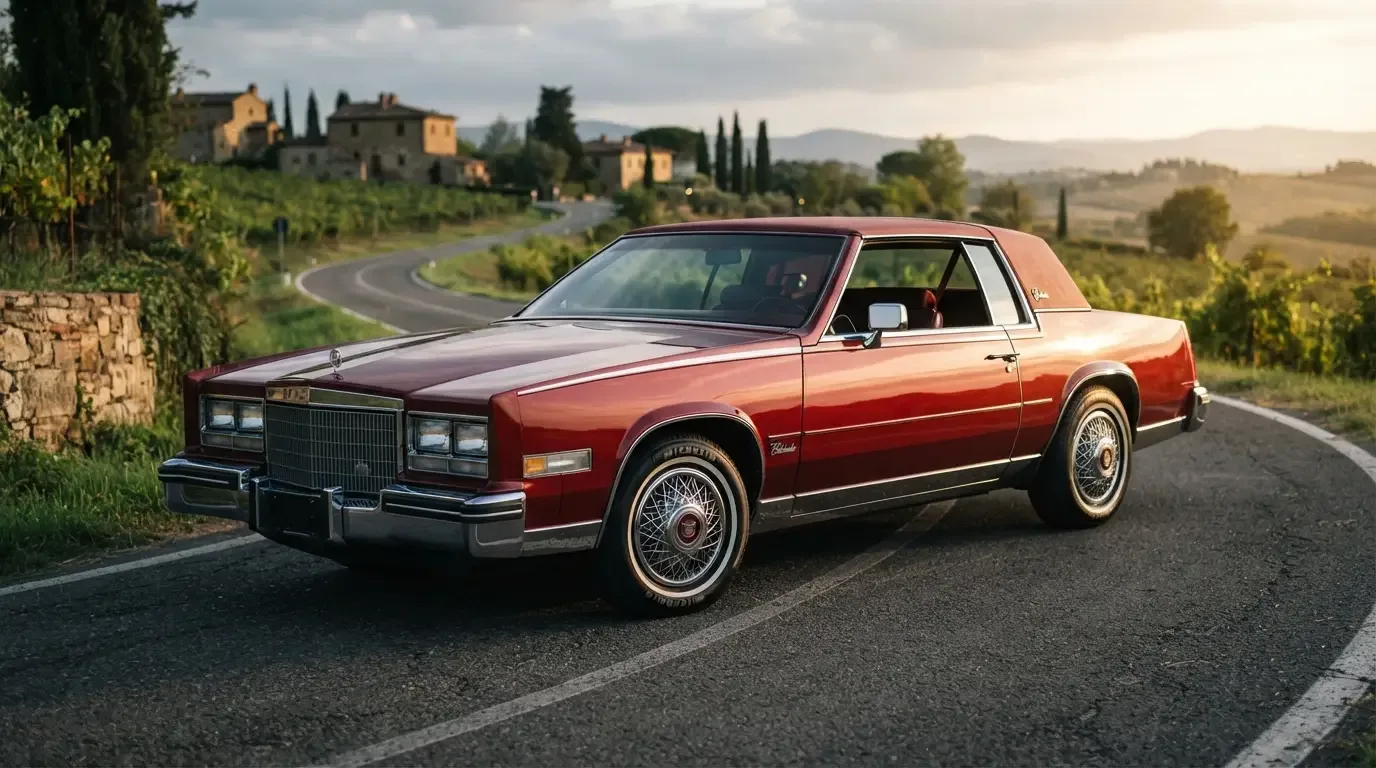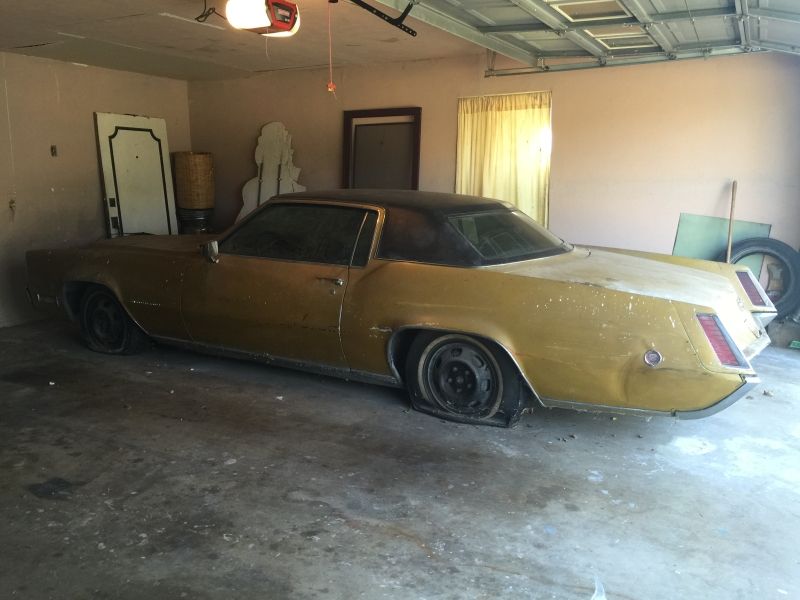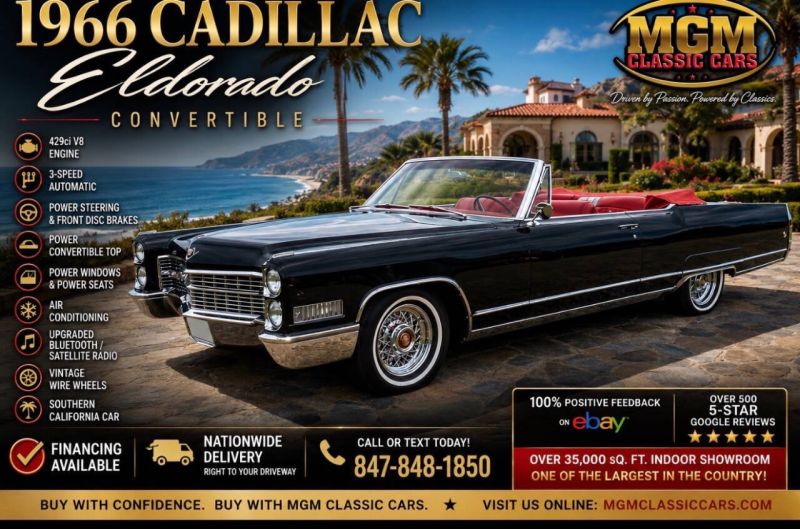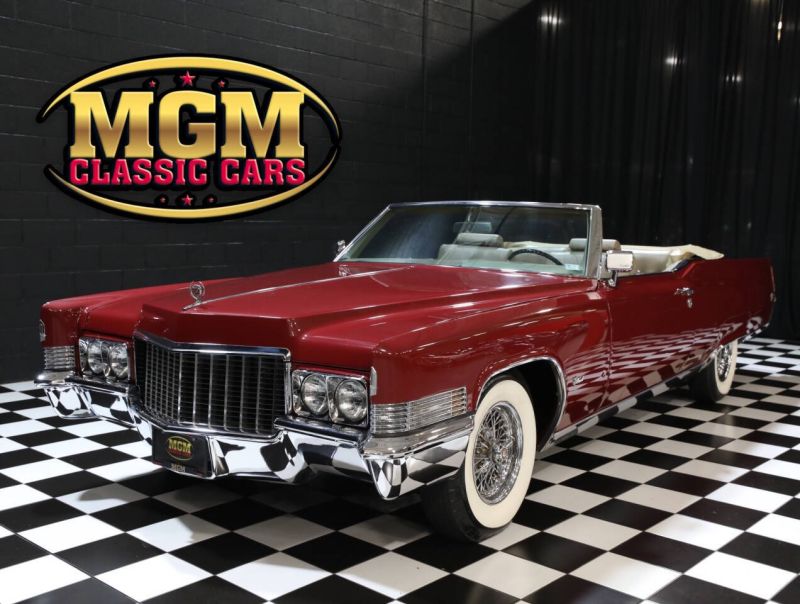
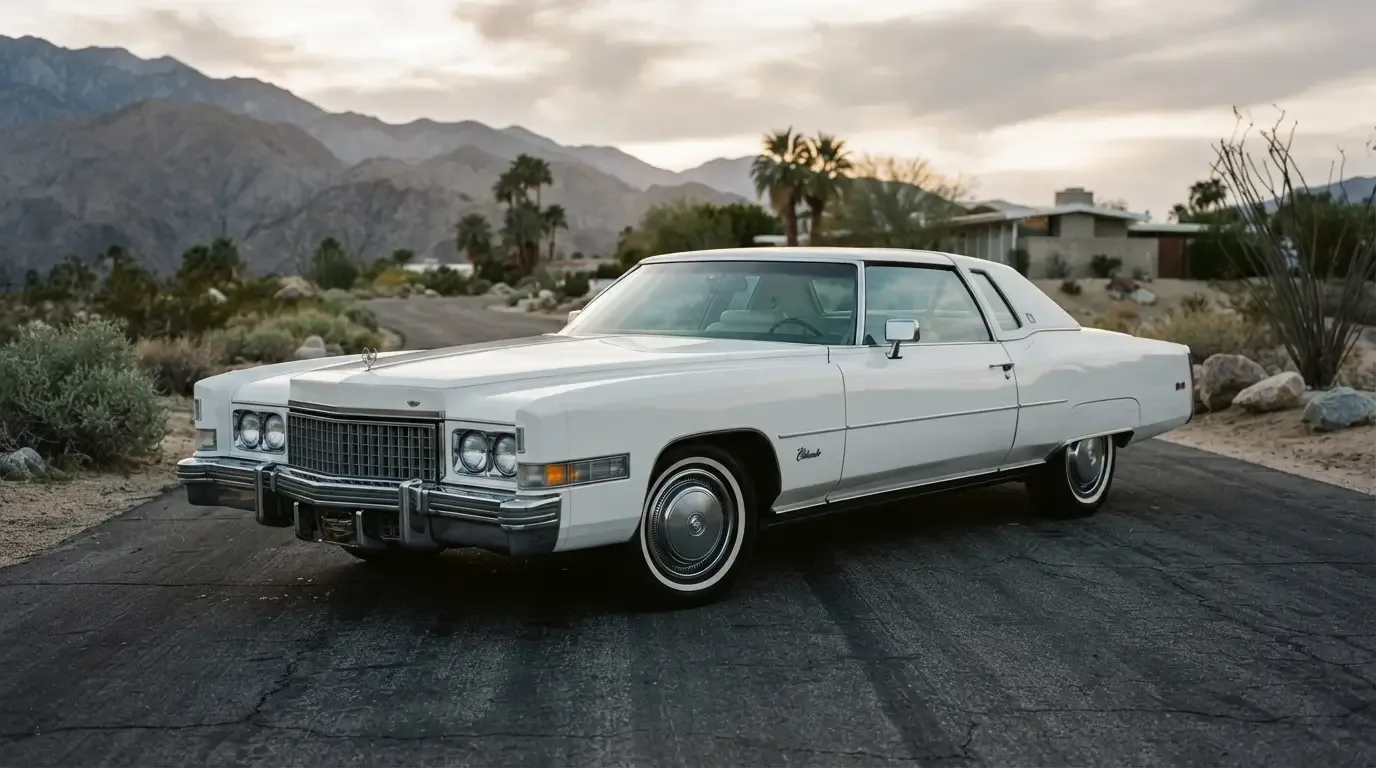
No decade grew the Eldorado bigger, or made bigger claims about itself, than the 1970s. The 1970s cadillac eldorado stretched to nearly nineteen feet on some model years, reintroduced a convertible body style after a decade-long absence, and closed with a marketing line about being the last American convertible that turned out to be premature, but was believed by nearly everyone who bought one at the time. This is the decade the phrase "land yacht" was practically invented to describe, and no single car earned the label more thoroughly than the Eldorado at its 1970s peak.
1971: the convertible returns
Cadillac had dropped the Eldorado convertible after the 1966 model year, focusing entirely on the front-drive coupe body through the rest of the 1960s. That changed in 1971, when a new generation of the front-drive platform arrived with a substantially larger body and, for the first time in five years, an open-top Eldorado back in the catalog. The new car grew in every dimension compared to its 1960s predecessor, reflecting Detroit's broader trend through the early 1970s toward bigger, heavier, more insulated luxury cars built for effortless highway cruising rather than nimble handling.
The reintroduced convertible arrived with a fully automatic power top and a substantial cloth or vinyl covering that folded away almost seamlessly, a level of engineering polish Cadillac had refined considerably since the manually assisted tops of earlier decades. Buyers who remembered the 1966 convertible's departure treated the 1971 return as a genuine event, and dealers reported strong early demand for the open-top body style even though it carried a real price premium over the coupe. Magazine road tests from the period frequently singled out how quiet the new convertible stayed with the top up, praising the insulation and fit of the folding mechanism as evidence Cadillac had solved the noise and weather sealing problems that plagued earlier open-top luxury cars.
Growth through the middle years
Cadillac kept adding size and weight to the Eldorado through 1971, years when fuel prices had not yet forced the industry toward smaller cars and buyers still rewarded bulk as a signal of luxury. Engine displacement grew right alongside the body, with Cadillac's 500-cubic-inch (8.2-liter) V8, the largest passenger car engine General Motors ever put into production, arriving under the Eldorado's hood in 1970, rated at 400 horsepower (SAE gross) and 550 lb-ft of torque. That engine remains a genuine curiosity of automotive history, a displacement figure few other production cars before or since have matched, and it stayed exclusive to the Eldorado for its first several years on the market.
Tightening emissions regulations through the early 1970s sapped horsepower across the entire industry, and by the mid-1970s the same 500-cubic-inch V8 was making noticeably less power than its 1970 debut rating even as displacement stayed unchanged. Cadillac tuned later versions primarily for smooth, quiet torque delivery rather than outright power, which suited the land yacht mission perfectly even if it disappointed buyers expecting a number on par with the muscle car engines of the previous decade.
1976: the "last convertible"
Cadillac marketed the 1976 Eldorado convertible as the final American convertible before GM discontinued open-top production across every division. That claim generated intense demand at the time, with buyers rushing to secure what dealers presented as a genuinely historic last chance, and it drove strong resale premiums almost immediately after the model year ended. The claim did not hold up in the long run, since convertibles returned to American showrooms within a decade once emissions and rollover concerns eased, but in 1976 nobody buying an Eldorado convertible had reason to doubt it, and that belief shaped the car's collector reputation for decades afterward.
Cadillac's dealers reportedly received far more orders for the 1976 convertible than the division could build, and some buyers reportedly paid above sticker price to secure one before the model year ended. That kind of speculative buying pressure was unusual for Cadillac at the time, more typical of a limited-production sports car than a full-size domestic convertible, and it reflected just how effectively the "last convertible" narrative had taken hold with the buying public in a single model year.
| Year range | Development | Significance |
|---|---|---|
| 1971 | New platform, convertible returns | First open-top Eldorado since 1966 |
| 1970 | 500-cubic-inch V8 introduced | Largest GM passenger car V8 ever built |
| 1976 | "Last convertible" marketing | Drove strong period demand |
| 1977-1978 | Coupe-only Biarritz continues | Broughams grow more ornate |
1977 to 1978: the final act of the land yacht era
With the convertible discontinued after 1976, the Eldorado spent its final two years of the decade as a coupe-only proposition, still enormous by any modern standard but increasingly out of step with an industry already pivoting toward smaller, more fuel-efficient cars in response to tightening federal standards. Opera windows, ornate Biarritz trim, and increasingly plush interiors defined these final land yacht years, right before Cadillac executed its first major downsizing for the following generation in 1979. Interior options grew more elaborate too, with available leather combinations, additional sound insulation, and increasingly sophisticated climate control systems, all aimed at reinforcing the Eldorado's position as the most comfortable long-distance cruiser Cadillac knew how to build. Looking back, 1977 and 1978 represent the last moment American luxury cars could grow essentially without restraint before regulation and fuel economy reshaped the entire industry.
"The 1970s Eldorado is a car that could only have existed in that specific decade, before the fuel crises fully changed what American buyers expected from a luxury coupe. It represents the absolute ceiling of that particular idea of luxury, size as a virtue in itself."
- Tom Ramirez
Why the land yacht years still matter to collectors
The 1976 convertible in particular remains one of the most collected Eldorados of any generation, its "last convertible" marketing having become a genuine piece of automotive folklore regardless of whether the claim technically held up. Cars from this generation also tend to be more affordable to acquire than fin-era 1950s cars or historically significant early front-drive models, making the land yacht years an accessible entry point for collectors who want the presence and drama of a full-size 1970s Cadillac without the premium attached to rarer earlier generations. Readers wanting the complete picture of how this era connects to everything before and after should see our cadillac eldorado generations retrospective, and the dramatic size reduction that followed this decade is covered in detail in a related story about the 1986 downsizing that shocked longtime Eldorado buyers.
For anyone drawn to the sheer scale of these cars, Eldorados for sale now regularly include land yacht-era examples, convertibles and coupes alike, from a decade that built Cadillacs bigger than the company would ever build them again.
Documentation matters as much here as with any earlier generation, particularly for the 1976 convertible, given how many owners kept meticulous paperwork specifically because the car was marketed as historically significant from the moment it left the factory. A verified, well-documented 1976 convertible with its original window sticker and delivery records intact still commands real attention from buyers who understand exactly what made that specific model year matter.