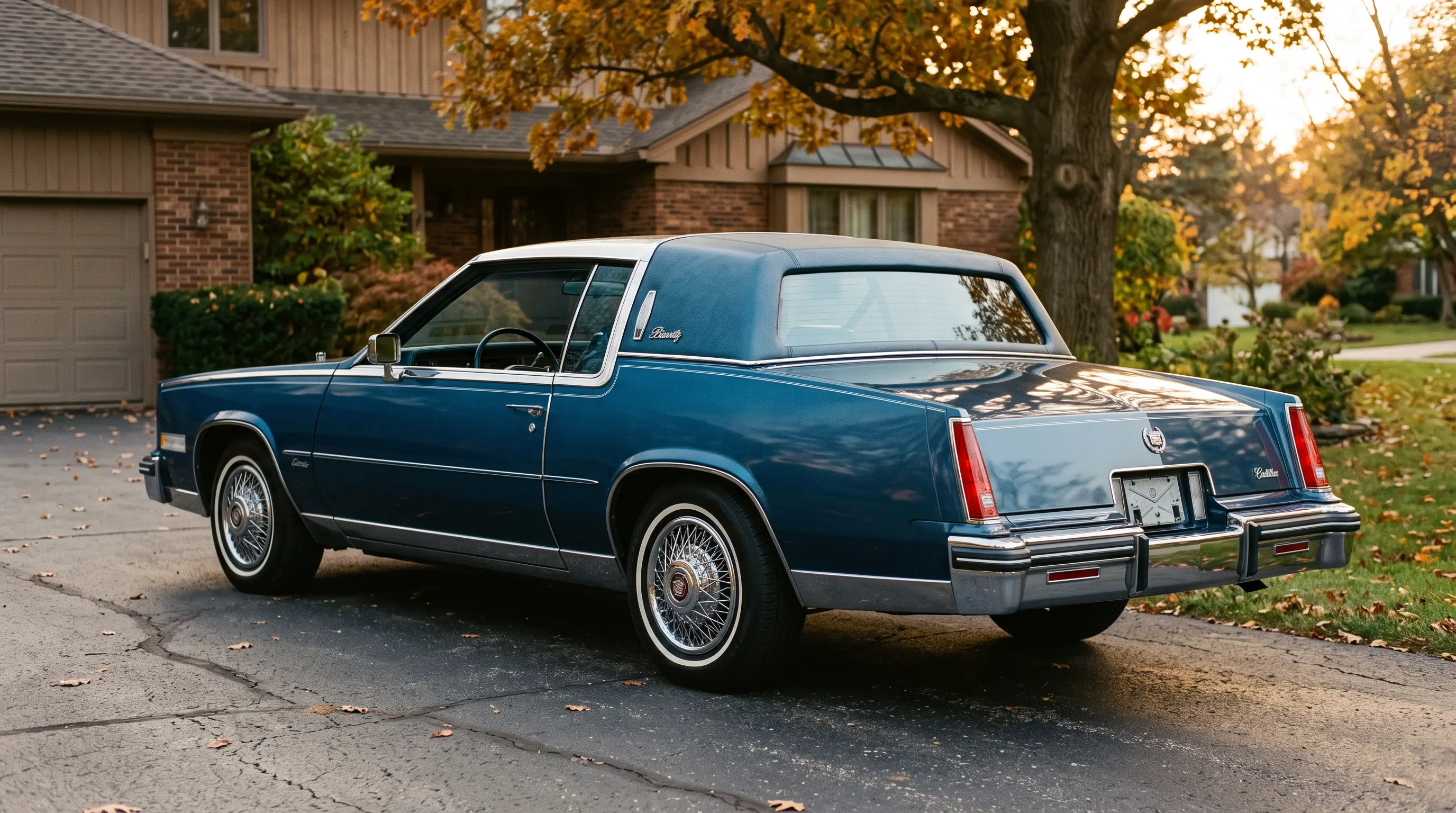
Margaret still remembers the exact angle of afternoon light that hit her father's new Eldorado Biarritz the day he brought it home in the fall of 1979, how the brushed stainless panel across the roof caught the sun and made the whole driveway look like it belonged in a magazine. She was twelve. Forty-some years later, that image is still the clearest memory she has of the car, clearer even than the sound of the engine or the smell of the leather.
A smaller Cadillac with a bigger idea on the roof
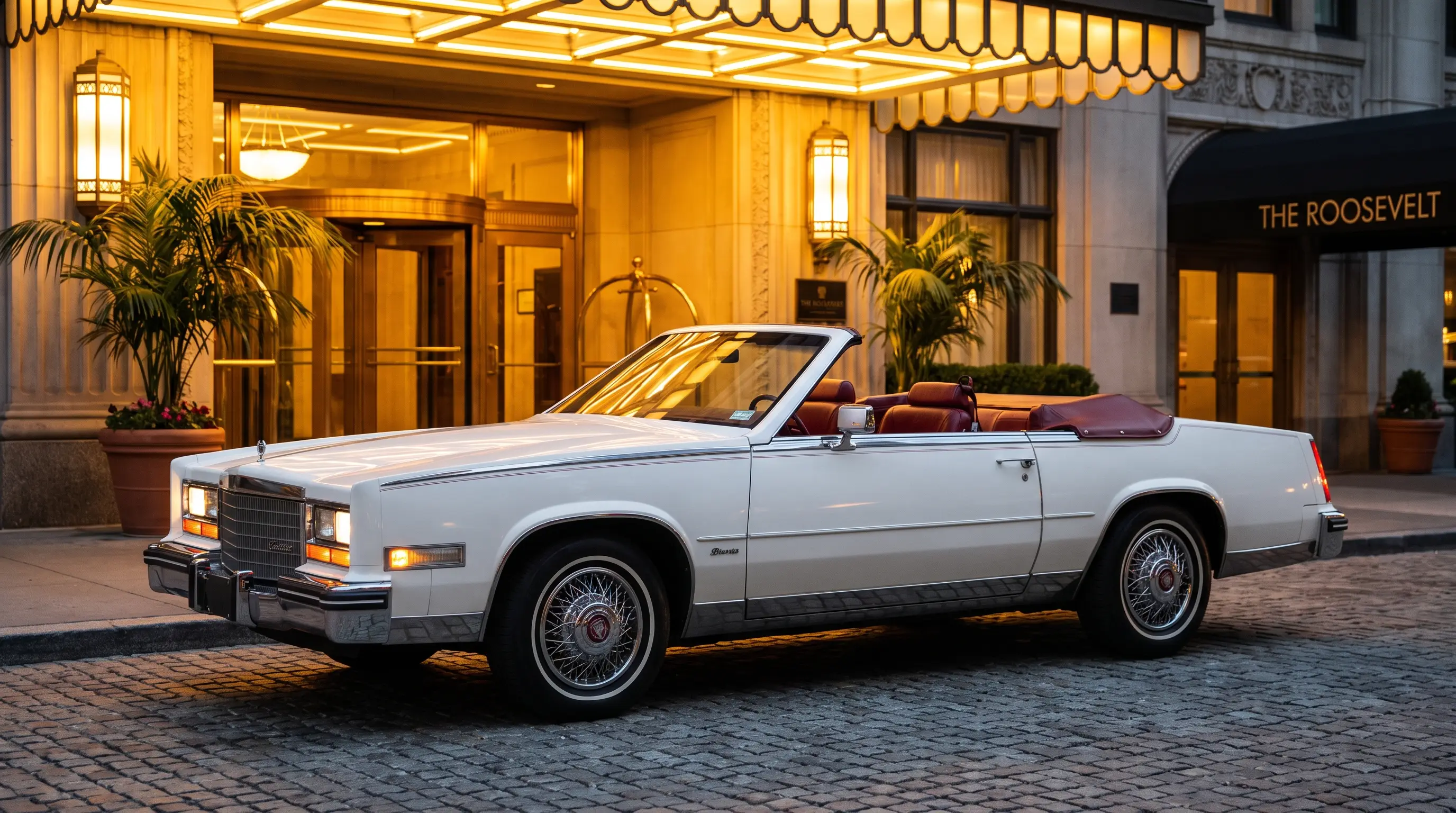
By 1979, Cadillac had already downsized the Eldorado once, trimming the car's dimensions to something closer to what the market was starting to demand after the fuel crises of the 1970s. The Biarritz trim, which had meant leather and pinstriping and wire wheel covers for most of the decade, added something new that year: an available stainless steel roof cap, a shining half-roof treatment that echoed the far more expensive Eldorado Broughams of the late 1950s. It was a small detail on paper, a roof option among dozens of other choices on the order form, but it changed how the whole car read from across a parking lot.
For families like Margaret's, the stainless roof was not really about metal or manufacturing. It was about arriving somewhere and having people notice. Her father, a man who did not spend money easily, chose it deliberately, and she still describes the decision as the one indulgence she ever remembers him allowing himself.
| Detail | 1979 Eldorado Biarritz |
|---|---|
| Roof option | Stainless steel roof cap |
| Trim level | Biarritz package |
| Body style | Two-door coupe |
| Design lineage | Echoes the 1957 to 1958 Eldorado Brougham stainless roof |
What the roof meant beyond the showroom
There is a quiet symbolism to a stainless roof that a lot of people miss on a first glance. It does not rust the way painted steel eventually does, it does not fade the way vinyl tops fade under years of sun, and it was marketed, whether Cadillac said so directly or not, as something closer to permanent than the rest of the car around it. For a generation of owners who had lived through economic uncertainty in the years leading up to 1979, that idea of permanence, of one part of the car that would always look the way it did on day one, seems to have mattered more than the engineering explanation ever could.
Margaret's father kept that Eldorado for eleven years, longer than he kept almost anything else he ever owned, and she believes the roof played a small but real part in that loyalty. He washed it by hand every other weekend. He never once let it sit in a body shop for cosmetic work, because it never seemed to need any.
"She told me her father used to run his hand along that stainless panel the way some men check the mail, an unconscious little ritual, done without even thinking about it, every single time he walked past the car."
- Nora Beckett
Finding these cars today
Surviving 1979 Biarritz coupes with the stainless roof intact are a genuine point of interest for buyers who understand what they are looking at, since the panel can show light scratching or dulling over decades if it was not cared for the way Margaret's father cared for his. A well-preserved example still carries that same quiet shine, the kind that does not shout for attention the way chrome does, but rewards a closer look. For the fuller history of how the Biarritz trim developed across the decades leading up to this roof option, the full story traces the badge back to its 1956 origins.
A memory that outlasts the metal
Margaret does not own her father's Eldorado anymore. It was sold not long after he passed, to a buyer she never met, for a price she says she has genuinely tried to forget. What she kept instead is the memory of that light on the driveway, and a habit she never noticed picking up until years later, running her own hand along the roof of her car sometimes, without quite knowing why.
Stories like hers are common among people who grew up around a Biarritz from this era. The car itself moves on, sold, restored, sometimes lost to rust or neglect, but the small rituals people built around it tend to stay behind, passed down as a memory long after the car itself is gone. If her father's story has you thinking about finding one of your own, you can browse classic Eldorado listings and see what survives today, stainless roofs included.
What owners notice years later
Margaret is not the only person I have talked to who describes a Biarritz roof in terms that have almost nothing to do with cars. One man in Ohio told me his mother used to say the roof made the whole neighborhood look like it had gotten a little nicer, just because the car was parked on the street. A woman in Georgia remembered her grandmother refusing to park under trees, worried about sap dulling the stainless finish, a small daily ritual of care that her grandmother never explained and never needed to.
These are not stories about horsepower or trim codes. They are stories about the strange emotional weight a single design choice can carry across a family for decades, long after the person who chose it is gone. A stainless roof is, in the most literal sense, a piece of sheet metal. In the stories people tell about it, it becomes something closer to a keepsake, one that happened to also be capable of driving to the grocery store.
I think that is part of why the 1979 Biarritz still draws a particular kind of attention at shows, quieter than the reaction a bright red convertible gets, but often longer. People do not just glance at the roof. They stop, and more often than you would expect, they start telling you about someone they knew who had one.
Caring for the roof today
Owners who have kept these roofs looking the way Margaret's father did tend to treat the panel gently, avoiding abrasive polishes that can leave fine scratches in the brushed finish, and washing by hand rather than running the car through an automated wash with stiff brushes. It is a small, quiet form of maintenance, not unlike the ritual her father kept up every other weekend without ever calling it a ritual at all, a habit passed down from one careful owner to the next without a manual ever telling them to do it.