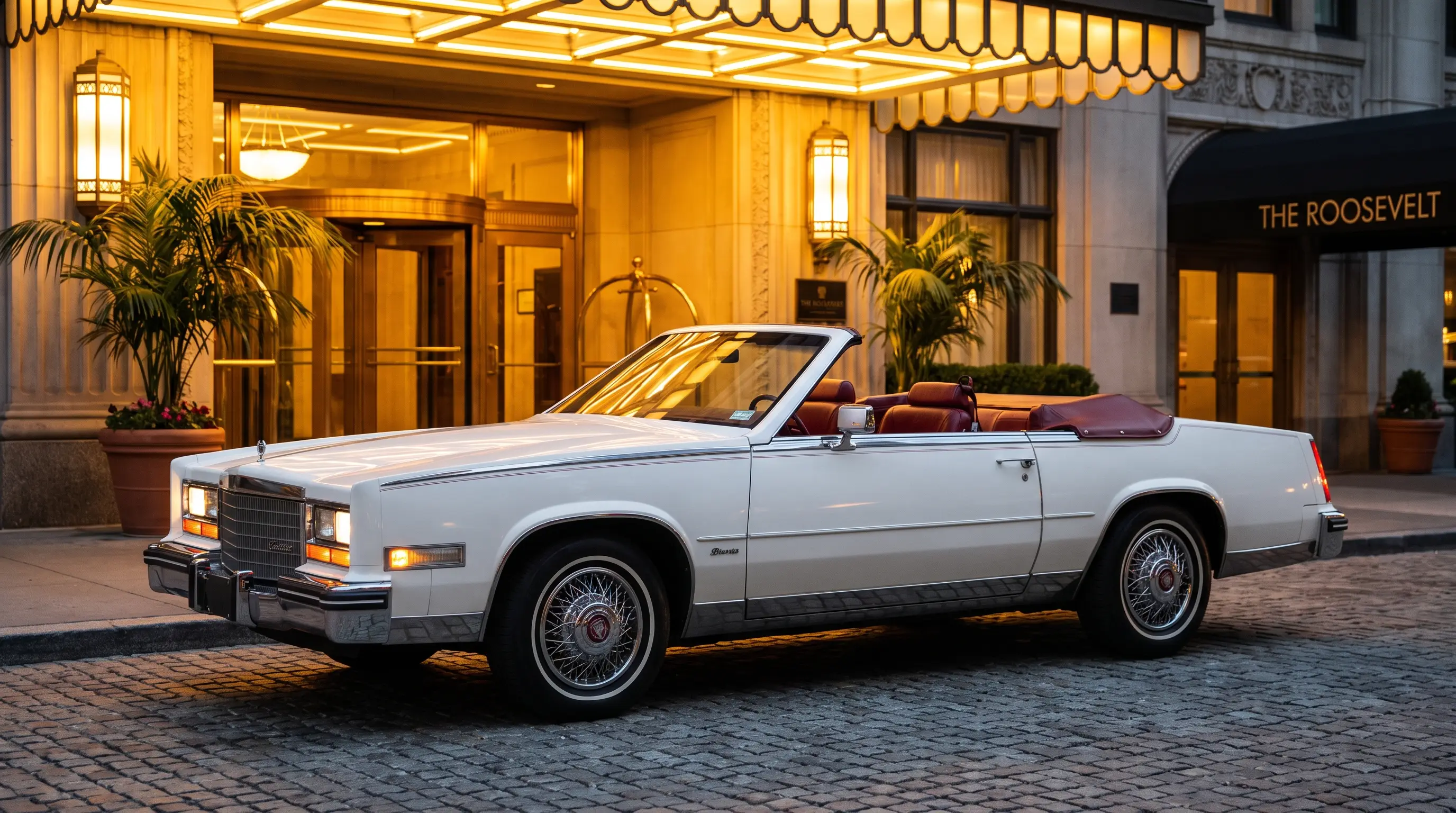
Somebody in our club still has the newspaper clipping from 1984 announcing that Cadillac was bringing back a factory convertible after nearly a decade away, and every time it comes out at a meet, someone remarks on how strange it is that a car we now take for granted was actually a genuine industry event at the time. The 1984 Eldorado Biarritz convertible was not just a new option on the order sheet. It was Cadillac publicly admitting the "last convertible" story from 1976 had an expiration date after all.
Ending an eight-year drought
General Motors had stopped building factory convertibles across most of its lineup after the 1976 model year, and Cadillac had leaned hard into marketing that 1976 Eldorado as the final American ragtop. For eight years, that story held. Then in 1984, Cadillac brought the convertible back to the Eldorado lineup, and specifically to the Biarritz trim level, reversing a decision the company itself had spent nearly a decade insisting was permanent.
The reintroduction was not a full return to the old-school approach of building a convertible on the assembly line from the start. Early cars in this revival were converted from coupes by an outside contractor, a process that became more refined as the years went on, but it meant Cadillac could bring the body style back without redesigning the whole platform around it. For the fuller history of how the Biarritz name got to this point, our cadillac eldorado biarritz retrospective covers the decades leading up to this moment.
| Detail | 1984 Eldorado Biarritz Convertible |
|---|---|
| Significance | First factory Eldorado convertible since 1976 |
| Conversion method | Coupe converted by outside contractor |
| Trim level | Biarritz |
| Engine | HT4100 V8 |
Why club members treat this year as a genuine milestone
There is real debate at our meets about how "factory" a converted car actually is, and I understand both sides of that argument. Purists point out these were not built as convertibles from the body-in-white stage the way a 1959 Biarritz was. But I tend to side with the owners who point out that Cadillac approved the process, sold the car through its own dealer network with a full warranty, and marketed it under the Eldorado Biarritz name without any asterisk attached. However you build it, a car that Cadillac stood behind is a Cadillac.
What makes the story genuinely interesting is the reversal itself. Cadillac spent 1976 telling America the convertible was dead and telling buyers to grab one while they could. Eight years later, they quietly undid that entire narrative, which tells you something about how much dealer and customer pressure had built up in the interim, and how much money there clearly was to be made by admitting the earlier decision had been wrong.
"You had dealers in 1976 telling customers to buy now because it was their last chance, and by 1984 those same dealers were selling a brand new convertible with a straight face. Nobody in the industry seemed embarrassed about it, which tells you everything about how that business actually works."
- Wayne Coburn
What to know if you are considering one
Because early cars in this revival went through a conversion process rather than rolling off the line as convertibles, inspection matters more than it does on an original factory ragtop from an earlier decade. Check the trunk area and rear seat structure carefully for signs of the reinforcement work done during conversion, since quality varied somewhat as the process matured through the mid-1980s. A well-executed example should show no obvious flex or misalignment around the top mechanism.
The HT4100 V8 under the hood of these cars has a reputation in the hobby that is worth knowing about honestly rather than glossing over. It was Cadillac's first modern aluminum-block V8, and early versions had real durability issues that later revisions improved. Buyers should ask directly about head gasket history and cooling system maintenance before assuming a clean-looking engine bay tells the whole story.
Where this fits in the bigger Biarritz story
Anyone curious how the Biarritz name itself came to carry this much weight across three decades of Eldorado history should also look at a related story covering where the badge originated. Understanding that longer arc makes the 1984 revival feel less like an isolated event and more like one more chapter in a name that Cadillac kept reshaping to fit whatever the market wanted at the time.
If the story of the ragtop that came back has you thinking about owning one, Eldorados for sale now is worth a look, whether you end up drawn to a 1984 revival car or one of the earlier Biarritz convertibles that came before the drought ever started.
How the revival changed the rest of the decade
Once Cadillac reopened the door on the convertible body style, it stayed open. The Biarritz convertible remained available through the rest of the downsized Eldorado's production run, and the conversion process itself improved noticeably as the contractor gained experience with the platform. Later cars in the run show tighter panel fit and fewer reports of squeaks and rattles around the top mechanism than the earliest 1984 examples did, which is a normal pattern for any manufacturing process finding its footing in its first year or two.
That improvement curve matters for buyers today. A 1984 or early 1985 car represents the pioneering version of the revived convertible, interesting for its historical position but sometimes rougher in execution, while a later car in the run tends to be the more refined product even though it carries less of the specific "first one back" story. Neither choice is wrong. It depends on whether you are buying for the history or for the day-to-day experience of owning the car.
What our club has learned from two decades of ownership
Members who have owned 1984 and later revival Biarritz convertibles for a long stretch generally report that the conversion holds up well when the car has been kept dry and out of harsh weather, which is honestly true of most convertibles regardless of how they were built. The specific failure points our club watches for are water intrusion around the top seal, which can lead to trunk floor rust if ignored, and electrical gremlins in the top motor circuit that tend to show up after the car has sat unused for long stretches.
None of that should scare anyone away from these cars. They are, by this point, forty-plus years old and have proven themselves as durable, drivable classics rather than fragile curiosities. Our club treats the 1984 revival as one of the more significant turning points in the whole Eldorado story, not because the engineering changed dramatically, but because it marked the moment Cadillac admitted the market, not the marketing department, gets the final say on what people actually want to buy.