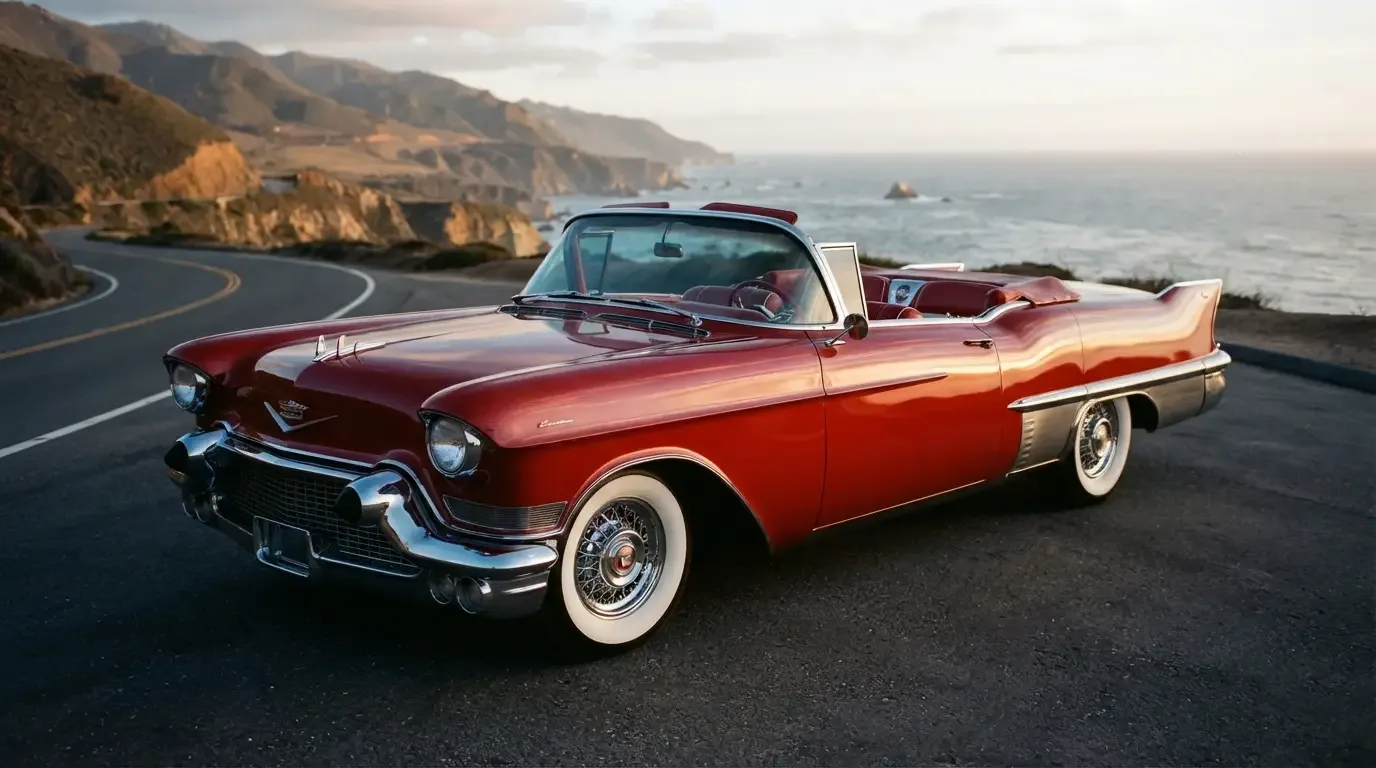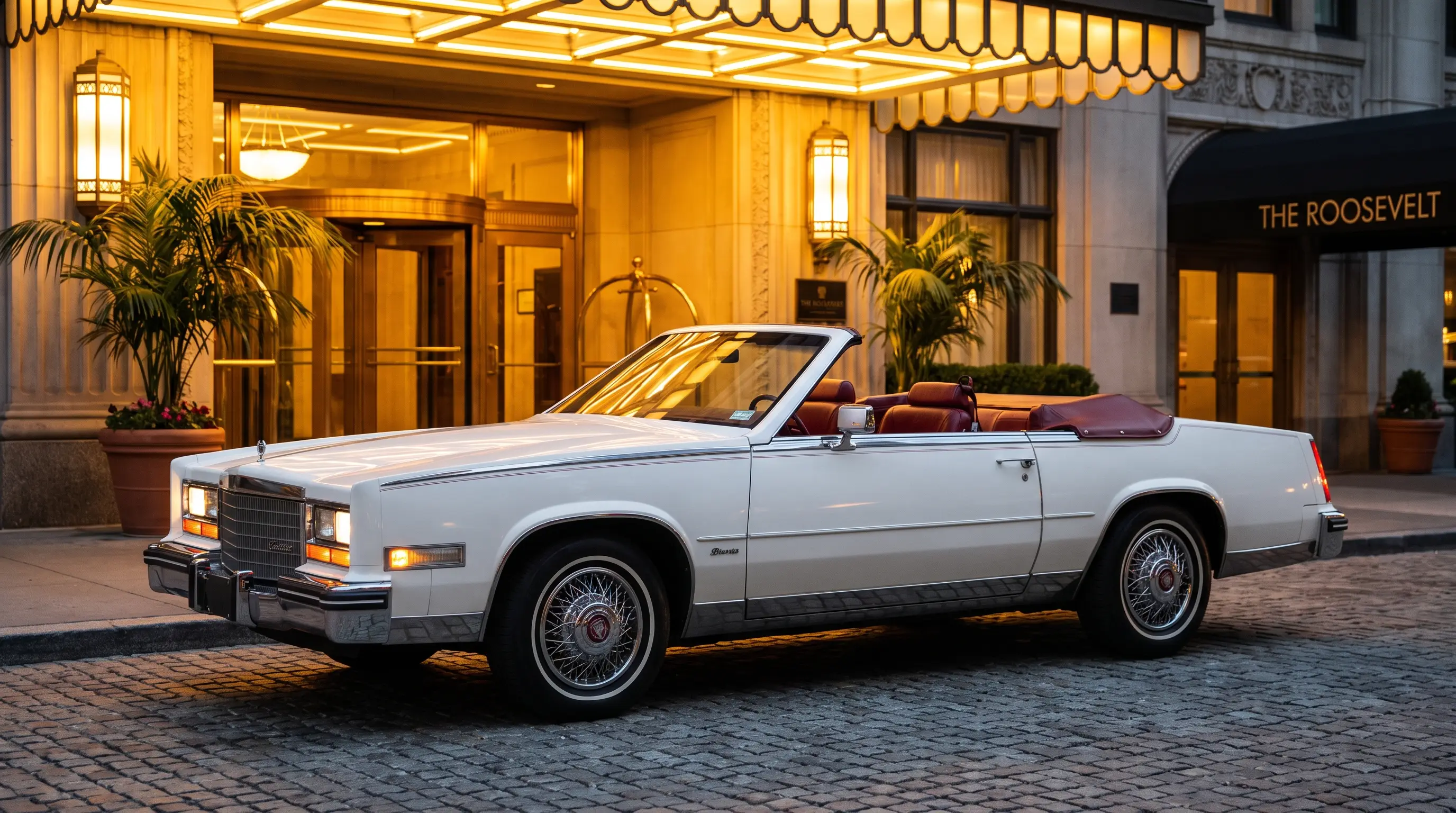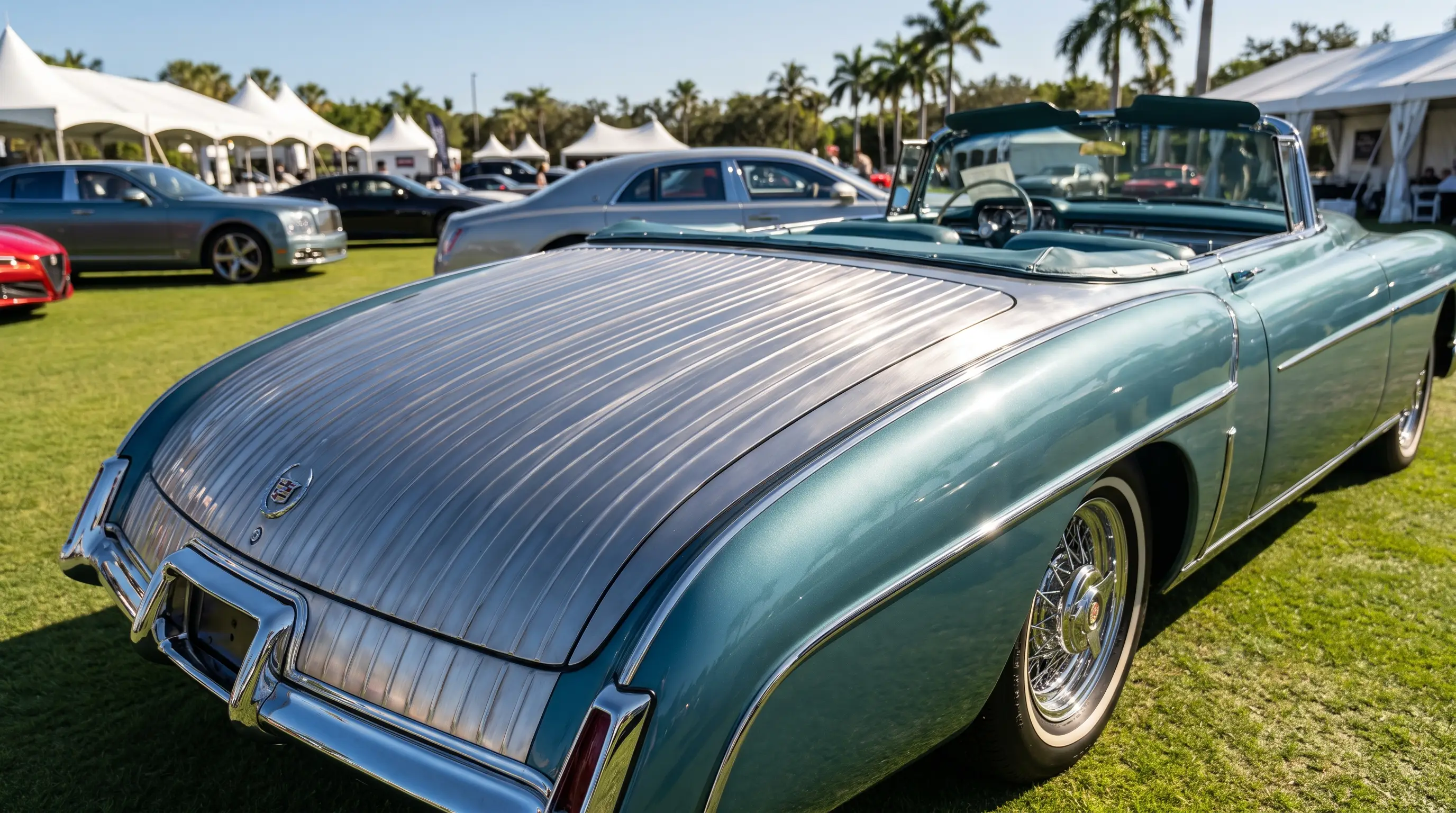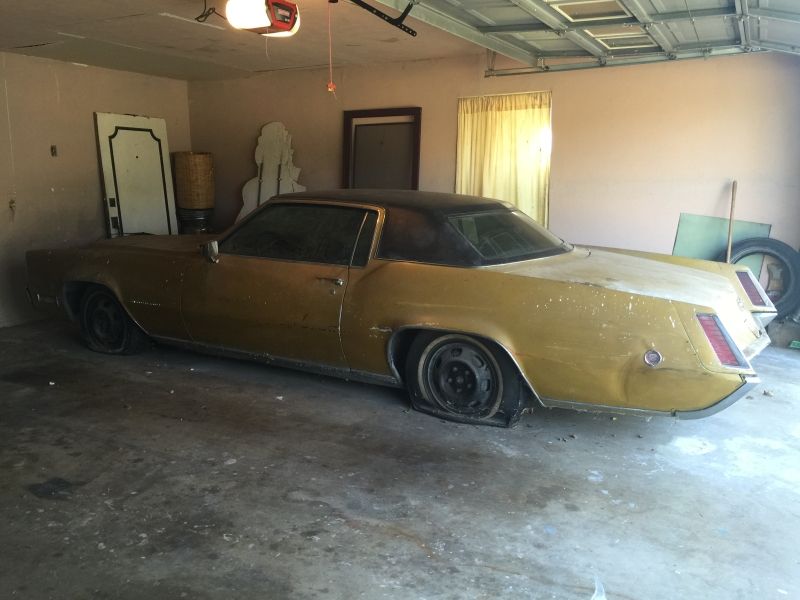
The Cadillac Eldorado Biarritz carries one of the more evocative names in postwar American car history, and the market still pays a premium for that word on the trunk lid. Understanding the cadillac biarritz name origin means understanding how Cadillac's marketing department thought about status in the mid 1950s, because the name was chosen with the same deliberation the division put into chrome, tailfins, and horsepower claims.
A resort town becomes a trim level
Biarritz is a seaside resort on the French Basque coast, a town that had drawn European royalty and wealthy vacationers since the nineteenth century. Napoleon III and Empress Eugenie popularized it, and by the 1920s it was a fixture on the itinerary of anyone with money and a passport. Cadillac's naming committee reached for that cachet in 1956, when the convertible Eldorado needed a name that separated it from the standard Series 62 line it was built alongside. Eldorado itself referenced the mythical city of gold, so pairing it with a real European resort town extended the fantasy from legend into lived aristocratic experience.
The Eldorado had existed since 1953 as a stand-alone limited-production convertible, but by 1954 and 1955 it had become closer in trim and structure to other Series 62 convertibles, just with extra brightwork. Cadillac needed the Eldorado name to mean something distinct again, and in 1956 the division split the lineup: the convertible became the Eldorado Biarritz, and a new pillarless hardtop coupe became the Eldorado Seville. Two European place names, two body styles, one shared halo nameplate.
Why Biarritz and not somewhere else
Cadillac's stylists and marketers of the era leaned hard on European glamour as shorthand for exclusivity. American buyers of the 1950s associated the French Riviera and the Basque coast with old money and film stars rather than with anything domestic, and Biarritz specifically carried connotations of understated wealth rather than gaudy display, which fit a convertible aimed at buyers who already had a Cadillac in the garage and wanted a second, showier one. Seville, by contrast, evoked Spanish elegance for the hardtop. Neither name was accidental, and neither was cheap to license conceptually since Cadillac was essentially borrowing the prestige of two real places it had no formal connection to.
Internal Cadillac correspondence from the period is not something most owners will ever read, so much of the naming rationale comes down to how the division talked about the cars publicly: brochures leaned on words like continental, custom, and hand-finished, tying the Biarritz name to the idea that this Eldorado was assembled with more care than a standard Series 62, even though the mechanical differences were modest.
The name outlived the split
The Seville name eventually left the Eldorado family and went on to a very different life as its own model starting in 1976, but Biarritz stuck around on the Eldorado convertible and later on Eldorado coupes well into the 1970s and 1980s as an appearance package rather than a distinct body style. By the time the Biarritz badge reappeared on downsized 1980s Eldorados, it signaled a padded vinyl roof, wire wheel covers, and pillow-top upholstery rather than hand-finished bodywork, which is a meaningful shift buyers researching read the background on before they start comparing cars for sale. The name had become a trim designation, not a separate model, and that distinction matters when you are pricing a car today because a 1980s Biarritz package Eldorado is a different proposition than a 1956 to 1960 Eldorado Biarritz convertible.
That drift from limited-production halo car to options package is a pattern seen across the American luxury segment in the 1970s and 1980s, and it is one reason collectors treat the earlier Biarritz convertibles as the more significant cars historically, even when later Biarritz-badged coupes are more usable day to day.
What the name means for value today
In the auction data, the word Biarritz attached to a 1956 through 1960 Eldorado convertible consistently commands more attention and higher bids than an unbadged Series 62 convertible from the same years, even when the underlying mechanical package is close to identical. Buyers are paying for the story as much as the car, and the story starts with that name. A documented, numbers-matching Eldorado Biarritz from the late 1950s in good original or well-restored condition regularly clears six figures at major auctions, while comparable Series 62 convertibles without the Eldorado Biarritz badge tend to land meaningfully lower.
My take, after watching this segment for a while: the name premium is real and it is not going away, because the Biarritz cars were genuinely lower production and genuinely better equipped than the standard convertibles they were based on. If you are shopping and see two similar-looking Cadillac convertibles from 1956 to 1960 at different price points, check for the Biarritz script and the associated equipment list before assuming the cheaper car is the better deal. It usually is not.
"A name only holds a premium if the car behind it actually earns it, and the early Eldorado Biarritz convertibles earned theirs with lower production numbers and genuinely better trim, not just a badge."
- David Mercer
How the name compares to Cadillac's other place names
Cadillac did not stop at Biarritz and Seville. Over the following decades the division reached for Fleetwood, a name tied to a Pennsylvania coachbuilder rather than a European destination, and later De Ville, French for "of the city," a phrase meant to suggest a car built for urban sophistication rather than open-road touring. None of those names carried quite the same resort-town glamour as Biarritz, which is part of why the Biarritz badge still reads as more aspirational to collectors today than De Ville ever did, even though De Ville outsold it many times over across its production life. Fleetwood eventually became Cadillac's flagship full-size nameplate in its own right, while Biarritz stayed tied to the Eldorado specifically, which kept it feeling like a special edition rather than a standalone model.
That naming discipline is part of what makes the Biarritz story clean for collectors to research. There is no ambiguity about which years wore the name as a distinct convertible model versus which years wore it as an options package, once you know to look for the split at 1956 and the later shift to appearance-package status. Sellers who understand this history tend to price their cars more accurately, and buyers who understand it are harder to overcharge.
Shopping with the name in mind
If you want an Eldorado with the Biarritz story attached, decide first whether you want the 1956 to 1960 convertible era, when the name meant a distinct, limited body style, or a later Biarritz-package coupe, which is a more affordable and more usable classic but a different kind of collectible. Either way, verify documentation before you commit, because the badge alone is easy to add and hard to fake convincingly to a knowledgeable inspector. Buyers ready to move can find a classic Eldorado and compare Biarritz-badged cars against standard trims directly, which is the fastest way to see the price gap the name still commands in today's market.