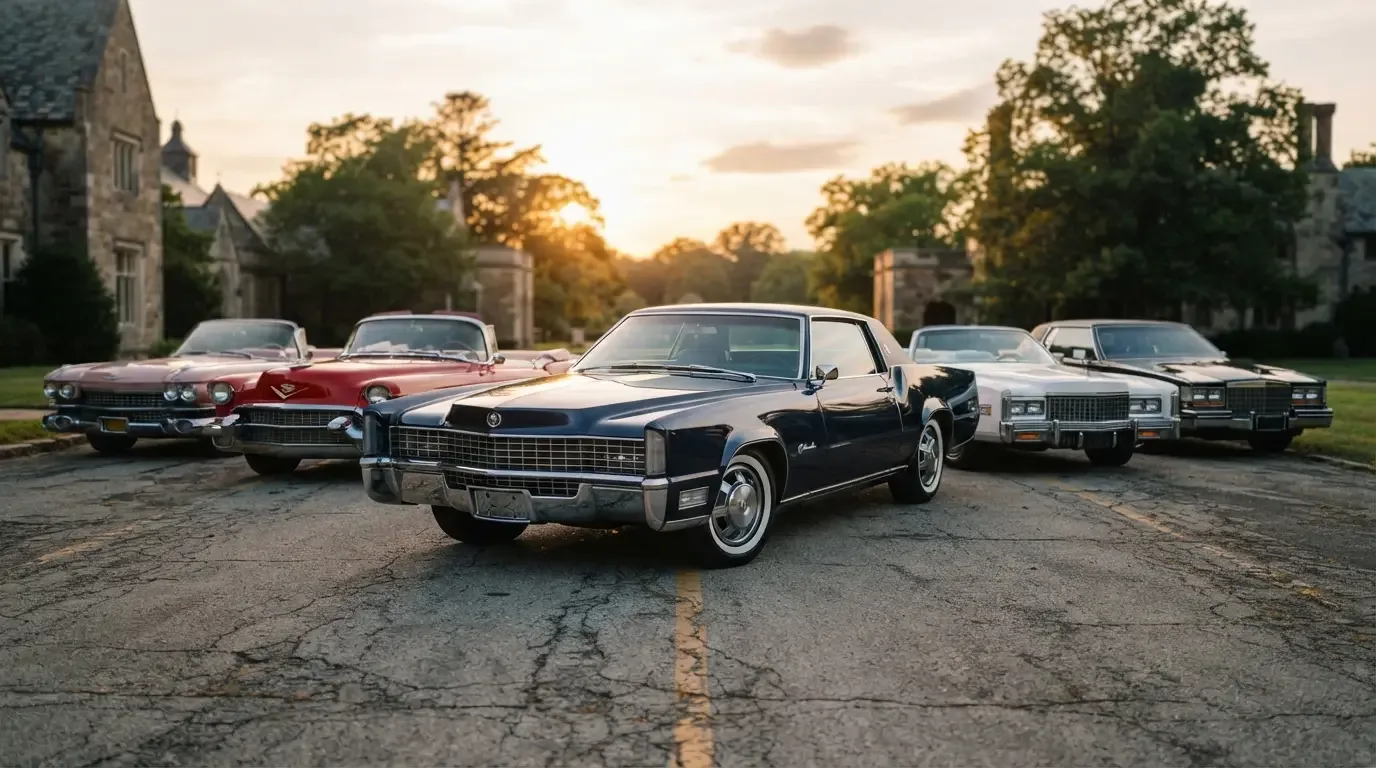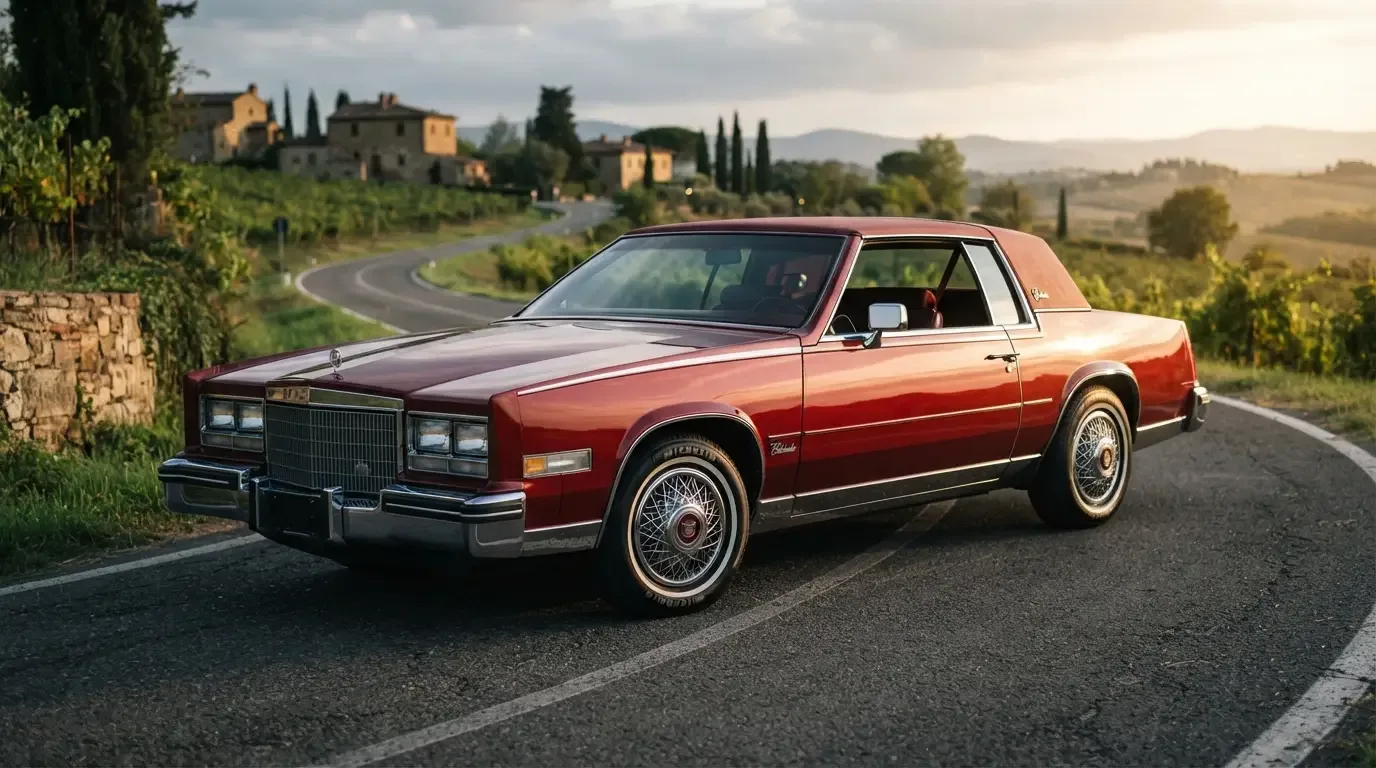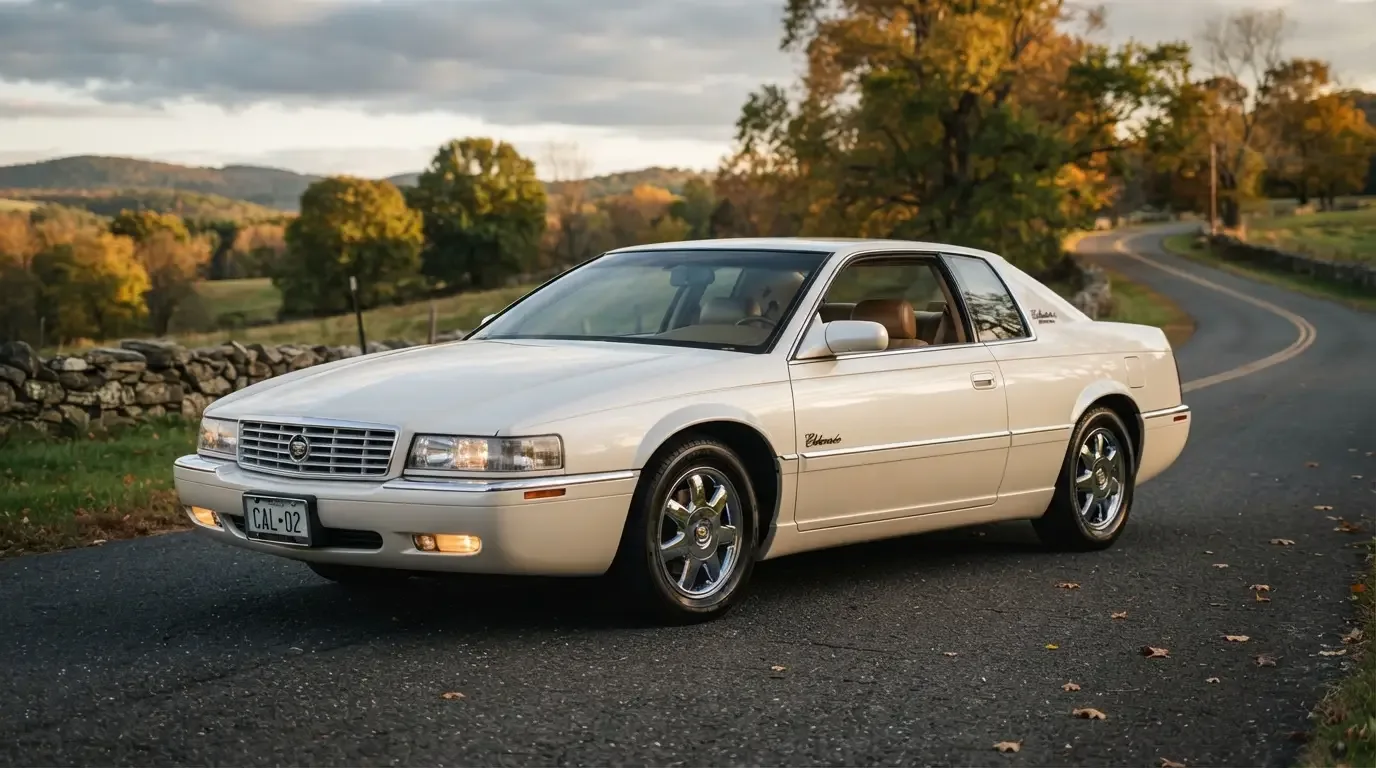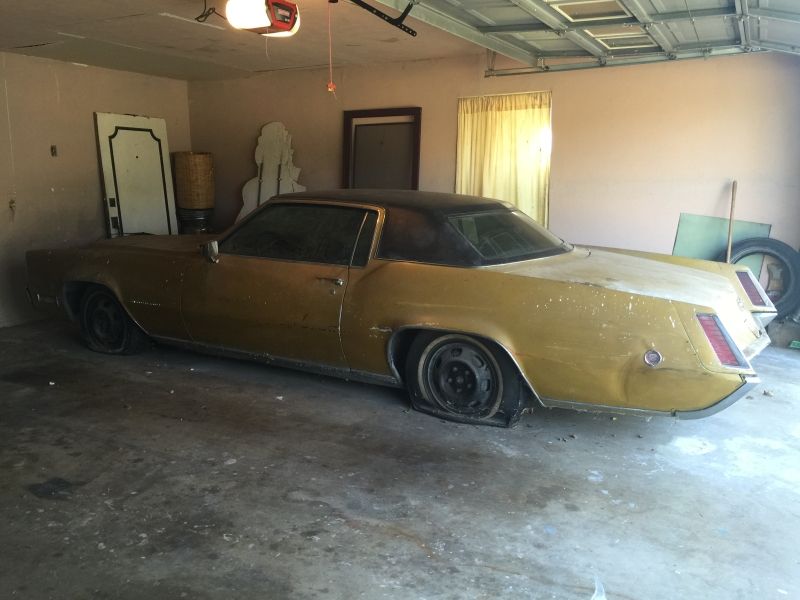
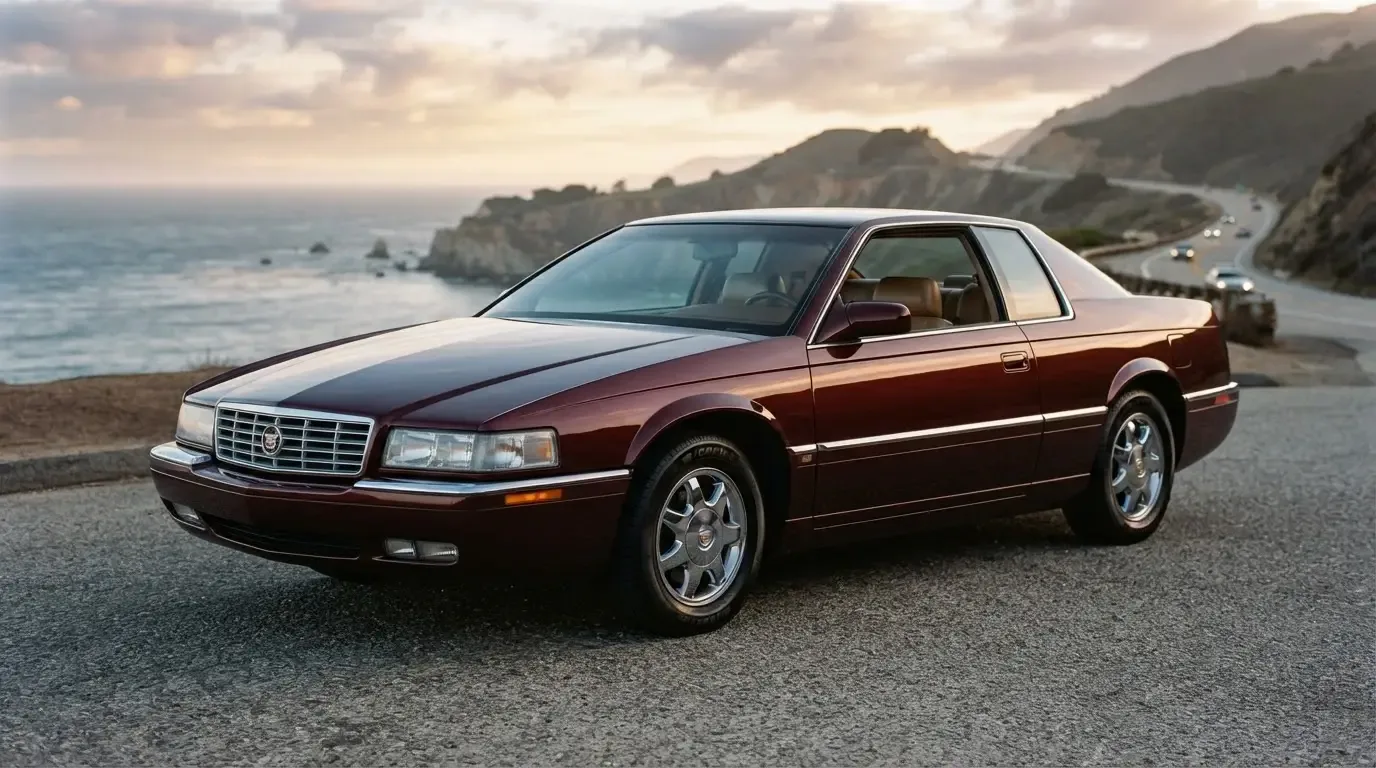
The 1990s Cadillac Eldorado is the car that proved Cadillac still knew how to draw a coupe. After the compact, slab-sided cars of the 1980s left buyers cold, the 1992 redesign put the Eldorado back on proportions that made sense: a long hood, a low beltline, and a greenhouse that actually let the sheet metal breathe. It did not chase the boulevard cruisers of 1976. It chased something closer to a modern grand tourer, and for the first time in over a decade, the shape matched the ambition.
A design that finally fit the name
The outgoing 1986-1991 Eldorado had been criticized since the day it launched for looking too much like a Cadillac Cimarron with better badges. General Motors heard it. The 1992 model, built on GM's K-body platform shared with the Cadillac Seville, stretched the wheelbase and widened the track so the car no longer looked like it was wearing someone else's clothes. Cadillac Studio design chief Dick Ruzzin's team drew a nose with a formal Cadillac grille, hidden wipers, and a fastback roofline that swept into a short, tucked trunk. Critics at the time called it the best-looking domestic personal luxury coupe in years, and dealers reported cross-shopping against European coupes that cost twice as much.
Inside, the cabin dropped much of the fake wood and adopted a driver-oriented dash with real gauges instead of the digital displays some late-1980s Cadillacs had leaned on. Leather was standard on the Touring Coupe trim, and the analog clock and simplified switchgear signaled a company trying to sound less like a computer and more like a car.
The Northstar changes the conversation
The bigger story arrived in 1993, when the Northstar V8 became available in the Eldorado Touring Coupe. This was a 32-valve, 4.6-liter aluminum engine making 295 horsepower at 6,000 rpm and 290 lb-ft of torque, a number that would have been unthinkable in a Cadillac coupe a decade earlier. It was Cadillac's first clean-sheet V8 in a generation, engineered with a limp-home mode that let the car run, at reduced power, even after a coolant loss. That single feature became a point of engineering pride inside GM and a talking point for every dealer selling the car.
The base Eldorado kept a 4.9-liter V8 through 1995, but by the mid-1990s the Northstar had become the engine most buyers wanted, and it stayed under Eldorado hoods for the rest of the model's life. It gave the 1990s Cadillac Eldorado a genuine performance argument, something the nameplate had not had since the front-drive cars of the 1970s traded power for isolation.
A mid-cycle refresh and a quieter finish
Cadillac refreshed the Eldorado again for 1995, smoothing the bumpers and updating the taillamps, and gave it a final facelift for 1997 that carried the car to the end of the decade with softer, more aerodynamic front and rear fascias. Trim levels settled into the base Eldorado and the sportier Touring Coupe, with the ETC wearing firmer suspension tuning and monochromatic trim aimed at buyers who wanted less chrome and more road feel.
Sales never returned to the volumes Cadillac saw with the Eldorado in its 1970s heyday, but the 1990s cars sold steadily and held their design language without another full redesign until the car's final year in 2002. That consistency matters for anyone researching the model today, because it means a 1994 and a 1999 Eldorado share the same basic shape, the same K-body architecture, and, in ETC trim, the same Northstar heart.
"The 1992 redesign is the moment Cadillac stopped apologizing for the Eldorado. Before that, the car had spent most of the 1980s explaining itself. After it, the shape did the talking."
- Tom Ramirez
Colors, trim, and how buyers spec'd the car
Cadillac leaned into a more restrained palette for the 1990s Eldorado than it had in decades past. Deep reds, forest greens, and a range of pearlescent whites replaced the vivid brights of the 1970s. Two-tone paint largely disappeared, and buyers who wanted visual drama got it from wheel choice rather than color blocking, with the Touring Coupe's alloy wheels reading as sportier than the base car's wire-style covers. Interior color choices narrowed too, mostly to neutral leather tones that aged better and photographed better decades later, which is part of why so many surviving cars still look presentable rather than dated.
Options that had once been a la carte, like power seats, keyless entry, and a trip computer, became standard or near-standard across the lineup by the mid-1990s, a reflection of how much the luxury coupe segment had shifted toward expecting convenience features as baseline rather than upcharge. The Eldorado's competitive set at the time included the Lincoln Mark VIII and, at a stretch, European coupes from Mercedes-Benz and BMW, and Cadillac's answer was to match or beat those cars on comfort features while undercutting them meaningfully on price.
The Touring Coupe badge itself signaled more than firmer springs. It came with a version of Cadillac's Road Sensing Suspension, an electronically controlled damping system that adjusted stiffness based on driving inputs, a genuinely advanced piece of engineering for a personal luxury coupe of that era. Buyers cross-shopping a base Eldorado against an ETC in period were essentially choosing between a boulevard ride and something with actual body control, and that distinction still matters to enthusiasts sorting through used examples today.
Why collectors are paying attention now
For years the 1990s Eldorado sat in the shadow of the finned 1950s cars and the massive 1970s land yachts, treated as just another used Cadillac rather than a car with its own story. That is changing. Clean, low-mileage Touring Coupes with the Northstar engine are drawing renewed interest from buyers who want a comfortable, genuinely quick coupe without the fuel bills or maintenance headaches of the earlier V8s. The design also reads better with distance. What looked merely handsome in 1993 now looks like a clear, confident statement from a company that had briefly lost its nerve.
Anyone trying to place these cars in context should look at the whole picture of how the Eldorado evolved across five decades, because the 1990s cars only make sense as a course correction after the missteps that came before them. Buyers ready to look at real cars rather than history can shop classic Eldorado listings and see how many clean examples from this era are actually on the market.
Parts availability also plays in the 1990s Eldorado's favor. The Northstar V8 saw enormous production volume across the GM lineup through the 1990s and early 2000s, so mechanical parts remain far easier to source than trim and glass for a 1959 car. That practicality, paired with a shape that has genuinely aged well, is why more collectors now treat the 1992-2002 Eldorado as a legitimate entry point into Cadillac ownership rather than a placeholder before something older and more expensive.
Sources and notes
- Automobile Catalog: 1993 Cadillac Eldorado Touring Coupe specs
- Wikipedia: Cadillac Eldorado
- Dean's Garage: Design of the 1992 Cadillac Seville and Eldorado
- Wikipedia: General Motors K platform (FWD)
- The Truth About Cars: The 2002 Cadillac Eldorado Collector Series
- Edmunds: 1993 Cadillac Eldorado Review