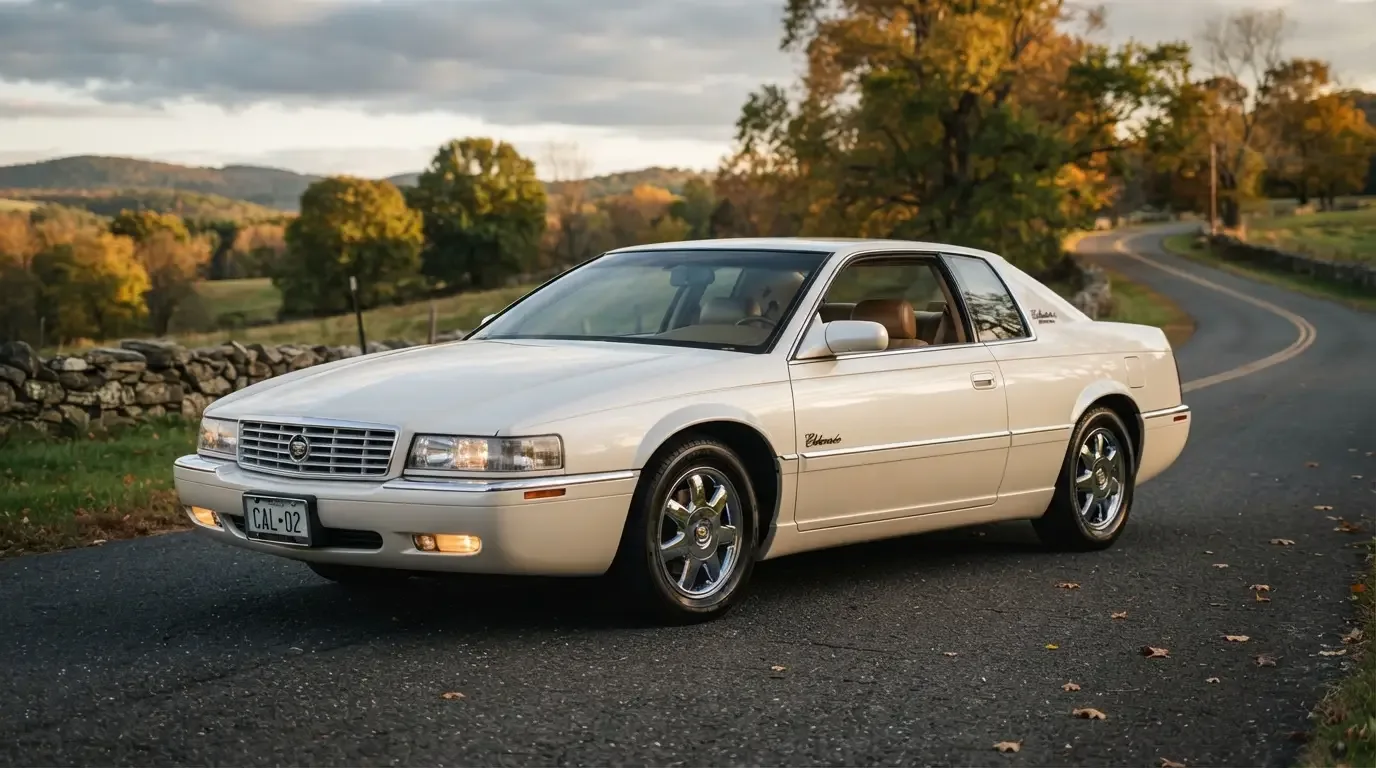
The last Cadillac Eldorado rolled off the line in 2002, closing out a nameplate that had opened in 1953 as Cadillac's answer to the question of how far a luxury coupe could be pushed. That final model year did not pretend otherwise. Cadillac built a run of Collector Series Eldorados, badged and trimmed specifically to mark the end, and sold them to a generation of buyers who understood they were watching a nameplate close rather than pause.
A model year built around an ending
By 2001, General Motors had already confirmed that the Eldorado would not continue past the 2002 model year. The K-body platform underneath it was aging, sales of full-size personal luxury coupes had been sliding across the entire American market for a decade, and Cadillac's product planning had shifted toward sedans and, soon, the Art and Science design language that would define cars like the CTS. Rather than let the Eldorado fade out on a standard trim, Cadillac built the Collector Series as a deliberate send-off, complete with unique badging, wheels, and interior treatments not offered on the regular Eldorado ETC.
The Collector Series arrived exclusively in two colors, red and white, chosen to echo the colors offered on the original 1953 Eldorado, each paired with specific interior trim, and every one carried a numbered dash plaque acknowledging its place in a limited final run. Cadillac built 1,596 Collector Series Eldorados for the 2002 model year, a genuinely small number for a car built by a major manufacturer, and small enough that surviving examples in original condition are tracked individually by owners' clubs rather than treated as generic used Cadillacs.
What was under the hood at the end
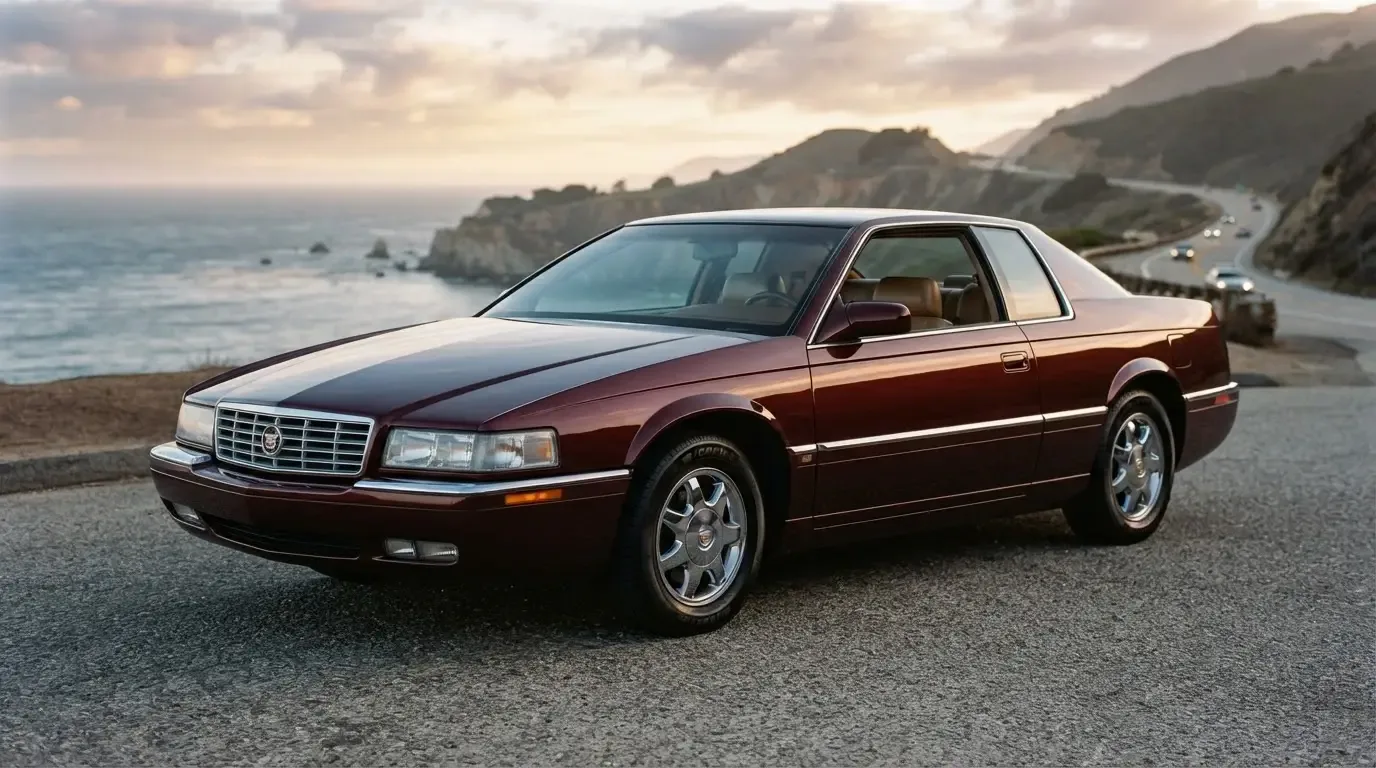
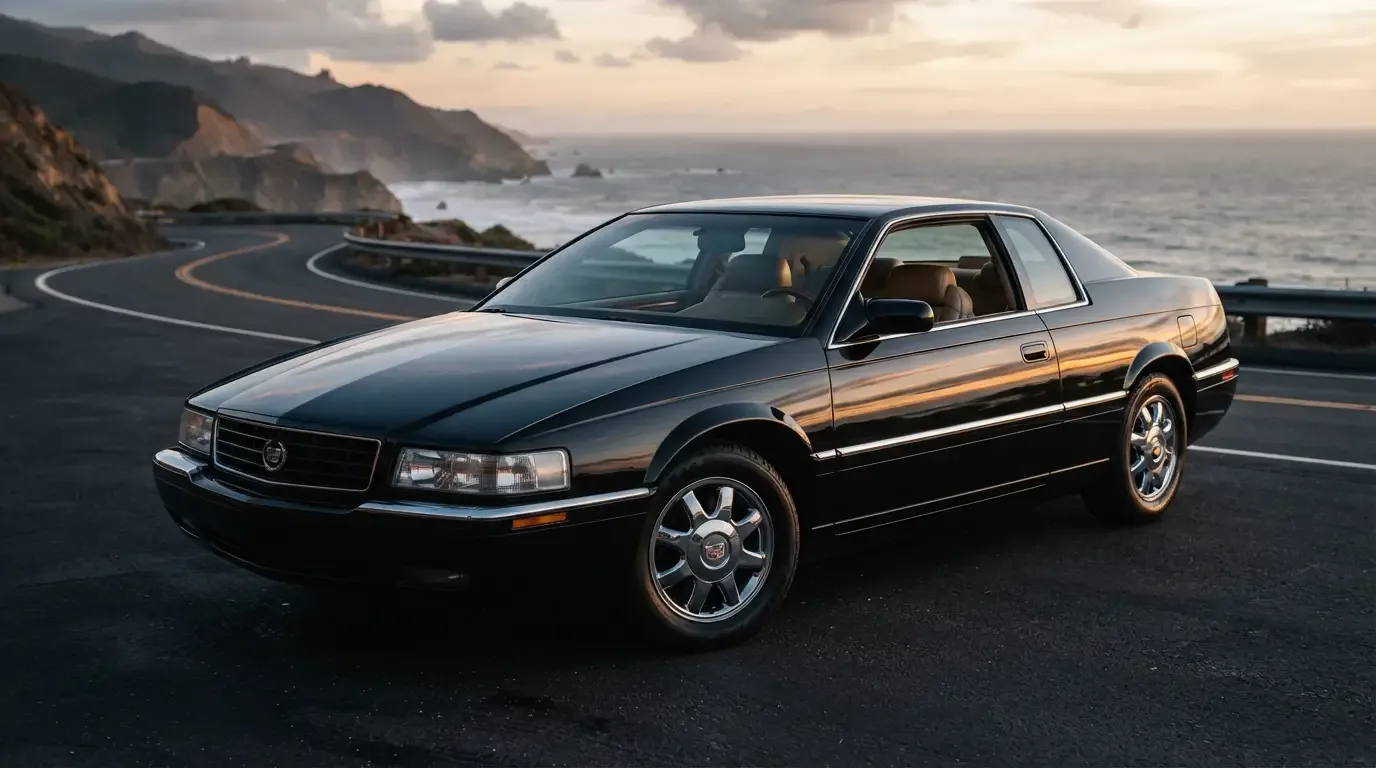
Every 2002 Eldorado, Collector Series or standard ETC, used the Northstar V8, by then a mature engine with roughly a decade of production refinement behind it. The Collector Series was built exclusively on the ETC (Eldorado Touring Coupe), which made 300 horsepower and 295 lb-ft of torque, mated to a four-speed automatic transmission (the standard, non-ETC Eldorado made 275 horsepower), numbers that were respectable but no longer class-leading against the German coupes the Eldorado had once shadowed. What the final cars offered instead was completeness. A decade of running changes had ironed out the early Northstar's reliability reputation, and the 2002 car represented the platform at its most sorted, not its most ambitious.
The exterior styling carried over largely unchanged from the 1997 refresh, which by 2002 gave the Eldorado a slightly dated look next to Cadillac's newer sedans, but that familiarity was part of the appeal for buyers who wanted a known quantity rather than a experiment. The Collector Series treatment focused on badging and finish rather than mechanical changes, because the point was never to reinvent the car. The point was to mark that this particular car, in this particular form, would not be built again.
| Spec | 2002 Eldorado (Collector Series) |
|---|---|
| Engine | 4.6L Northstar V8 |
| Horsepower | 300 hp (ETC/Collector Series); 275 hp (base Eldorado) |
| Transmission | 4-speed automatic |
| Colors offered | Red, White (Collector Series only) |
| Collector Series production | 1,596 units |
Why Cadillac closed the book on the Eldorado
The decision to end the Eldorado in 2002 was not really about the car itself. It was about the shape of the market around it. Two-door personal luxury coupes, the segment the Eldorado had helped define, had been shrinking across the entire American industry since the late 1980s, and Cadillac's own dealer body had been asking for more sedans and, increasingly, the SUVs that would soon carry much of the brand's volume. The Eldorado's production numbers by its final years were a fraction of what the nameplate had achieved during its 1970s and early 1990s peaks, and GM made the calculation that the platform investment needed to keep it competitive no longer matched what it could sell.
Cadillac itself was mid-transformation. The Art and Science design language, first previewed on concept cars and then rolled out on the CTS, represented a deliberate break from the rounded, softer forms the Eldorado had worn since 1992. There was no natural successor coupe waiting in the wings built on the old formula, and Cadillac chose not to force one. The nameplate simply ended, a rare instance of a manufacturer retiring a genuinely historic badge on its own terms rather than letting it wither through years of declining relevance.
"What strikes me about the 2002 Collector Series is how deliberate it feels. Cadillac did not quietly discontinue the Eldorado and hope nobody noticed. They built a specific edition to say goodbye, which tells you the company still understood what the name was worth."
- Sarah Whitfield
Collecting the 2002 cars today
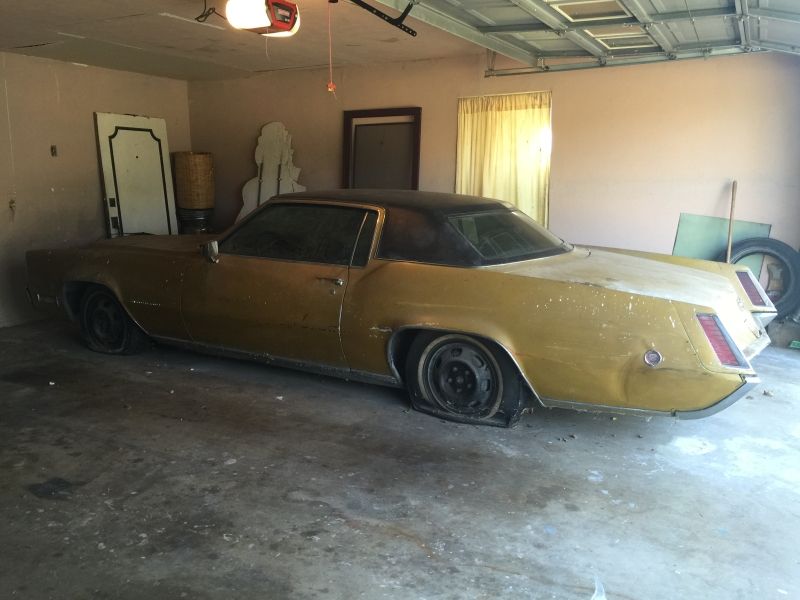
Condition matters more with the final Eldorado than with most late-model American cars, because the Collector Series was never intended to be a daily driver in the ordinary sense. Many original buyers bought them with an eye toward preservation, aware that they were purchasing the last of a line, which means a meaningful share of surviving cars have low mileage and careful ownership histories. That combination, a genuinely limited production run plus buyers who treated the cars as keepsakes from the start, is unusual for anything built after the muscle car era and gives the 2002 Eldorado a collector profile closer to a numbered special edition than an ordinary used luxury coupe.
Documentation is worth chasing specifically. The dash plaque number, original window sticker, and any Cadillac dealer paperwork confirming Collector Series status all add real value, because the visual differences between a dressed-up standard ETC and a genuine Collector Series car are subtle enough that provenance does most of the work. Interior wear patterns, service records showing the low annual mileage typical of a preserved car, and matching-numbers Northstar engines round out what a careful buyer should verify before treating any 2002 Eldorado as the genuine final-edition article.
Placing the final cars in the larger story
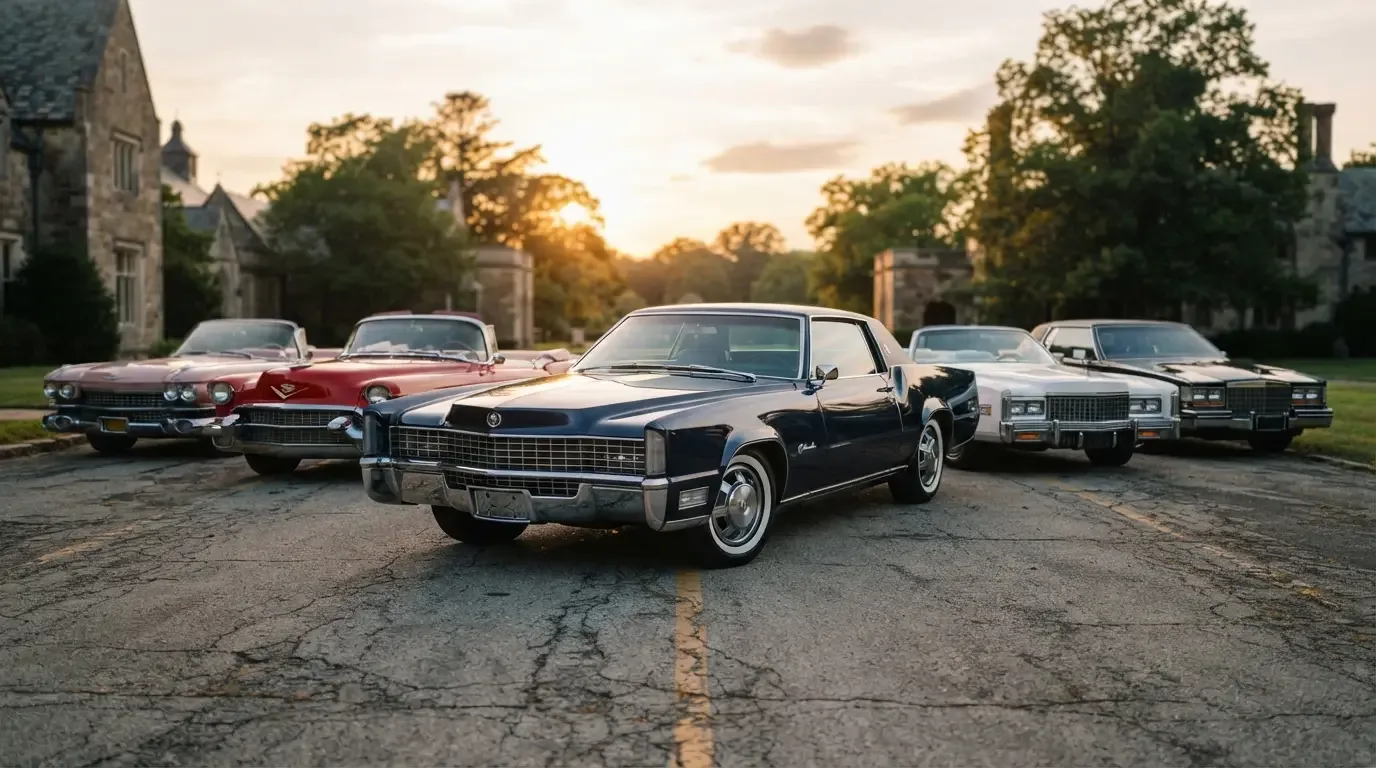
To understand why the 2002 model matters, it helps to see it against everything that came before. Readers who want the cadillac eldorado generations story in full will find the 2002 cars make far more sense as an ending once they have seen the beginning, from the 1953 launch through the tailfin years, the front-drive shift of 1967, and the downsizing of 1986. For the full story of the nameplate across nearly five decades, the final Collector Series is less a footnote than the closing paragraph of a genuinely significant American car.
The last Cadillac Eldorado 2002 models are increasingly sought after precisely because the ending was documented so carefully. Buyers looking for the real thing rather than a standard ETC dressed up to look special should verify the dash plaque, the color, and the interior trim against known Collector Series specifications before paying a premium. Those interested in seeing what is currently available can look at classic Eldorados on the market and compare standard late-model Eldorados against genuine Collector Series examples, which command a real price difference for good reason.
Sources and notes
- The Truth About Cars: The 2002 Cadillac Eldorado Collector Series
- Automobile Catalog: 2002 Cadillac Eldorado ETC specs
- Moto Gallery: 2002 Cadillac Eldorado Collector Series Guide
- ClassicCars.com Journal: 2002 Cadillac Eldorado ETC Collector Series
- Edmunds: 2002 Cadillac Eldorado Review
- Hagerty Valuation Tools: 2002 Cadillac Eldorado