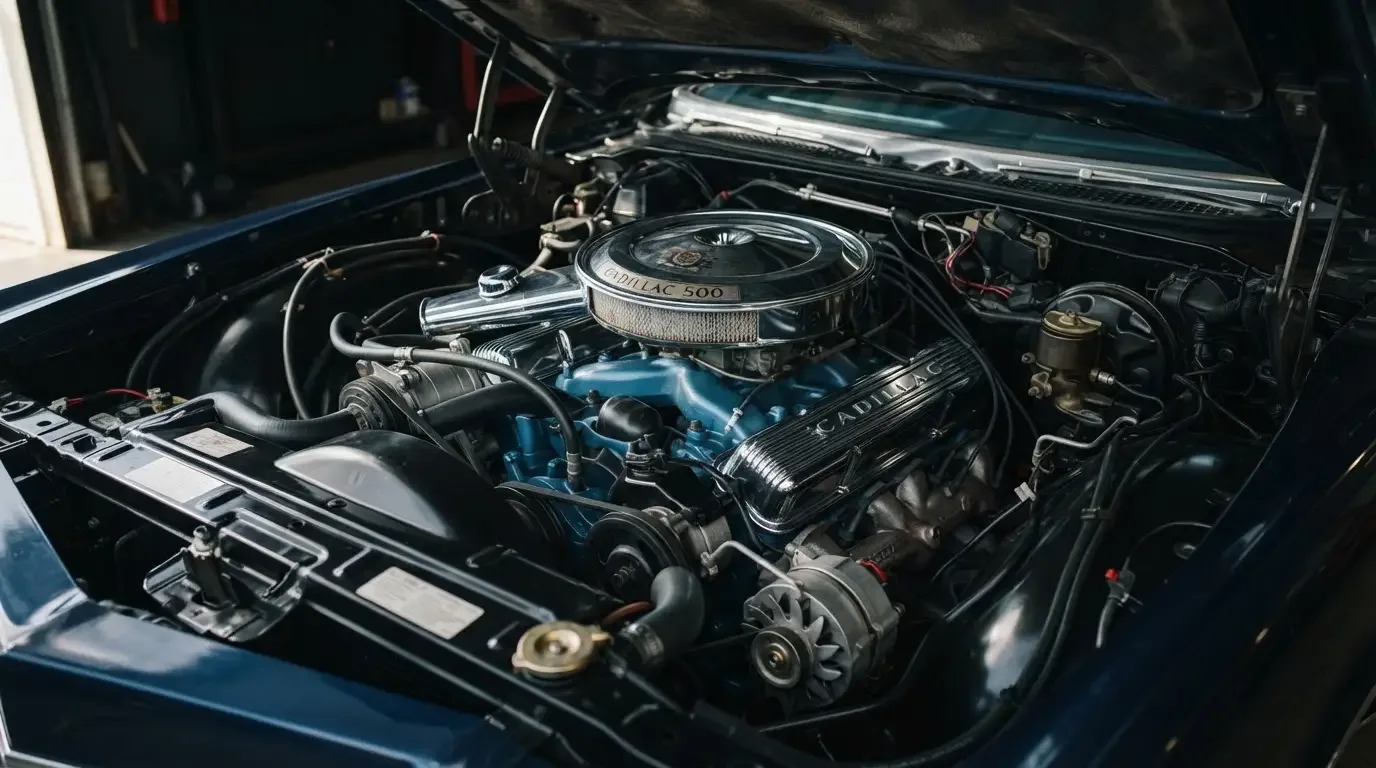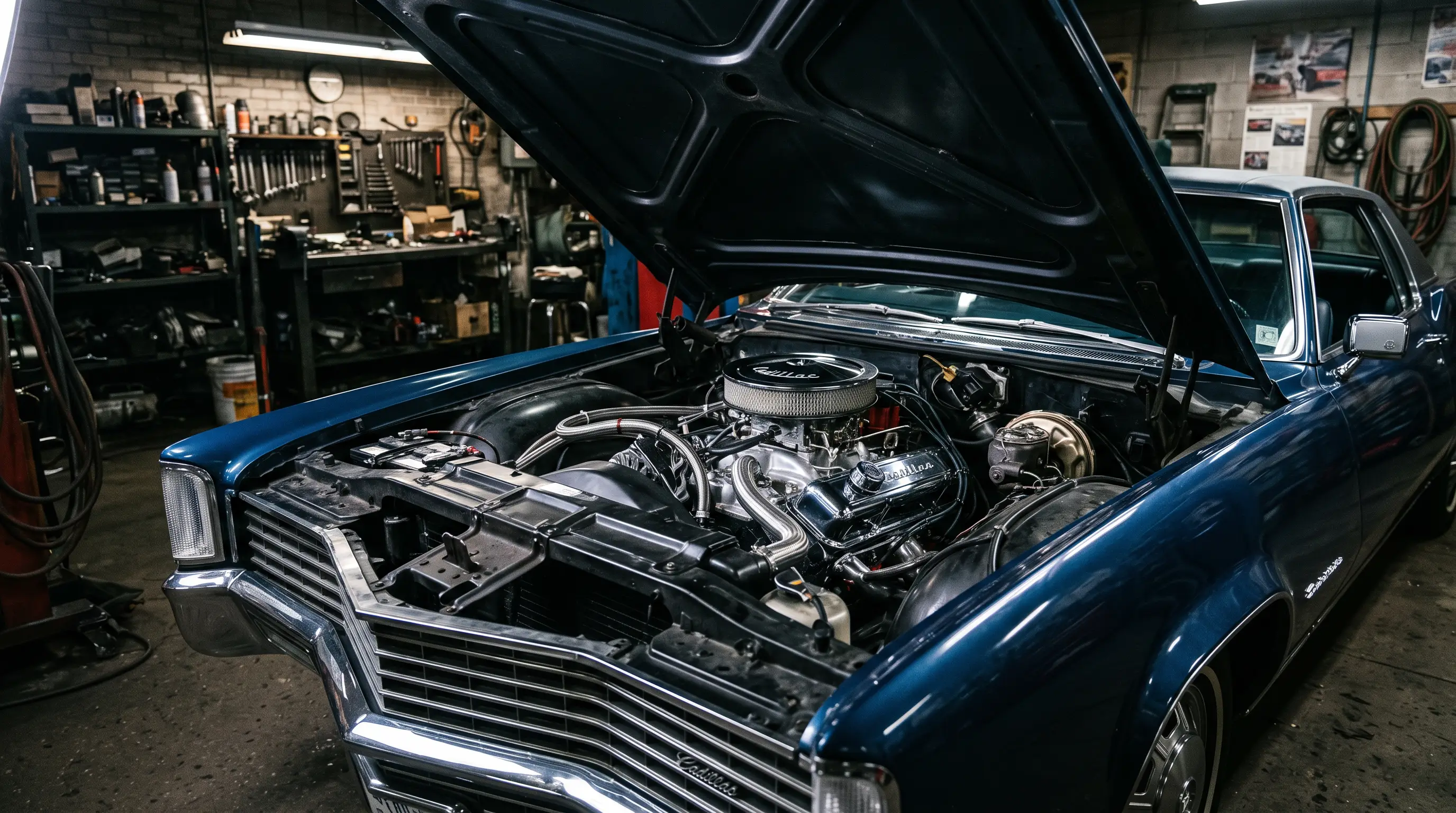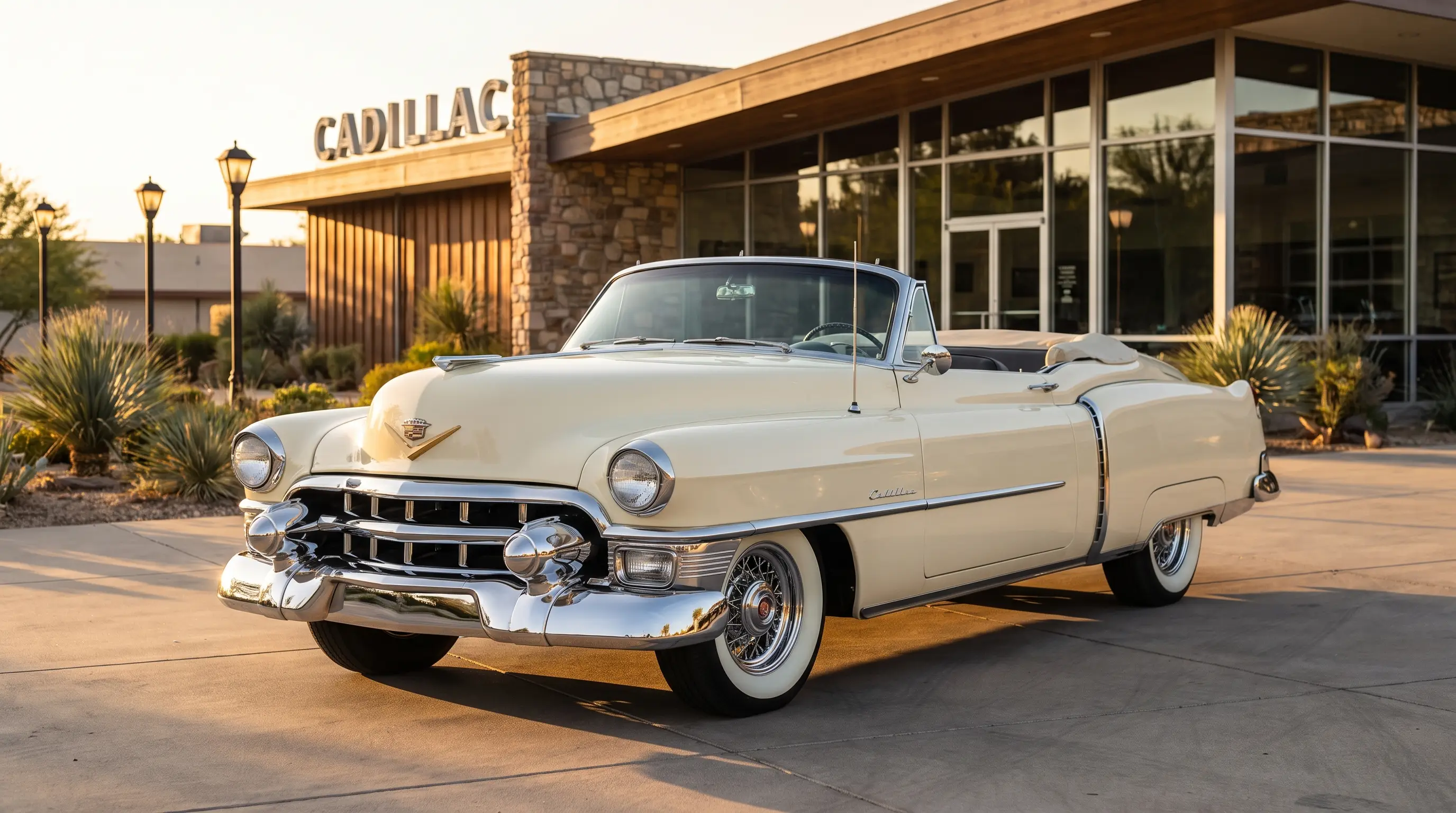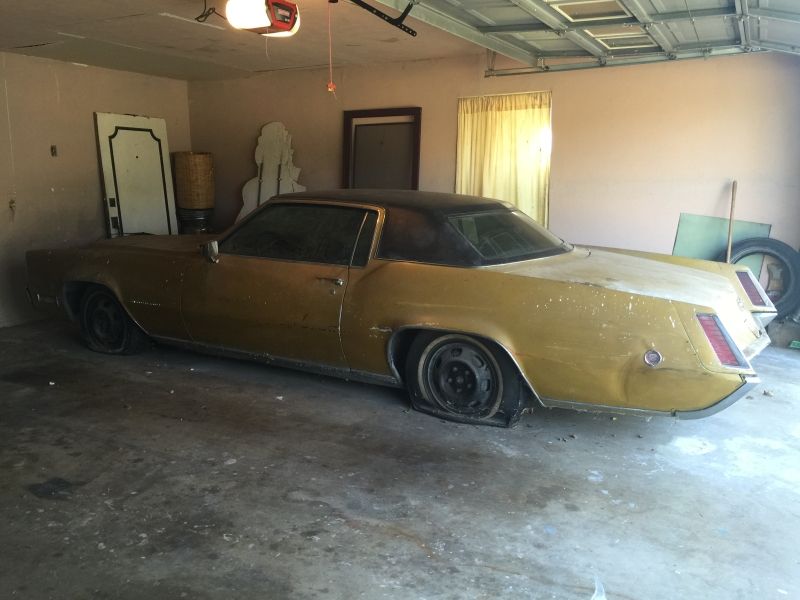
Torque, not horsepower, is what actually moves a car off the line, and the Cadillac 500 V8 torque figure from 1970 is the number that made the Eldorado feel unstoppable at any speed. Rated at 550 lb-ft at 3000 rpm, it was among the highest torque figures of any American production V8 at the time, gasoline or otherwise, and it arrived low enough in the rev range that the driver rarely had to work for it.
Why torque mattered more than horsepower here
Horsepower sells magazine covers. Torque is what a driver actually feels. The Eldorado weighed close to 4,700 pounds, and a car that heavy does not want to be revved to make power; it wants low-end shove that gets it moving without drama. The 500's torque peak at 3000 rpm meant the engine was already making nearly all of its pulling power before most drivers would have their foot fully into the throttle. That is the entire design philosophy behind the engine in one number.
How Cadillac got there
Displacement is the simplest way to make torque, and at 500 cubic inches the Cadillac V8 had more of it than any other production passenger car engine in American history. Bore and stroke were close to square, 4.30 by 4.304 inches, which is a slightly unusual choice for a torque-focused engine; longer-stroke designs typically make more low-end pull. Cadillac's engineers balanced the two anyway, betting that sheer displacement would deliver the torque number they wanted without needing an extreme stroke that might have hurt smoothness at higher rpm.
| Engine | Torque (gross) | Peak RPM |
|---|---|---|
| 1970 Cadillac 500 V8 | 550 lb-ft | 3000 rpm |
| 1968-69 Cadillac 472 V8 | 525 lb-ft | 3000 rpm |
| 1967 Cadillac 429 V8 | 480 lb-ft | 3000 rpm |
What that torque felt like on the road
Period reviewers consistently described the 500-powered Eldorado as feeling faster than its actual acceleration numbers suggested, and the torque curve is why. A car that makes most of its pulling power at low rpm feels responsive at city speeds and effortless at highway speeds, even if its zero-to-sixty time was never going to embarrass a genuine performance car. The 500 did not need to be revved out to feel strong, and Cadillac buyers of the era were not interested in revving anything out. They wanted the sensation of power without the sound and fury that came with it in a muscle car, and the torque-first tuning of the 500 delivered exactly that.
The decline after 1971
Like the horsepower figure, the torque number did not survive the 1970s intact. The industry-wide switch to net ratings in 1972 pulled the published torque figure down substantially even before emissions equipment started eating into real output. Catalytic converters arrived in 1975, tightening exhaust flow, and compression ratios dropped across the board to accommodate lower-octane unleaded fuel. By the time the 500 was phased out of the Eldorado after 1976, its torque output on paper was a fraction of the 1970 figure, even though the physical displacement never changed. The engine did not get weaker. The rules around it got stricter.
"Everyone talks about the 500's horsepower because it's the bigger number to print. The torque figure is the one that actually explains why this car never felt like it was straining."
- Emily Chen
How the transmission put that torque to use
Torque figures mean little without a transmission that can deliver them to the road effectively, and the 500's pairing with Cadillac's Turbo Hydra-Matic transmission mattered as much as the engine itself. The variable-pitch torque converter could multiply the engine's already substantial torque further under hard acceleration, then relax that multiplication once the car was up to speed to favor smoothness and efficiency. This meant the 550 lb-ft figure on paper actually understated what the car could feel like from a stop, since the torque converter itself added multiplication on top of the engine's raw output before power ever reached the wheels.
That combination, big displacement paired with a transmission designed specifically to exploit low-end torque, is what separated the 500-powered Eldorado from other large-displacement cars of the era that paired similar engines with more conventional automatics. Cadillac built the whole drivetrain around the idea that torque delivered smoothly and early mattered more than outright horsepower delivered high in the rev range, and the transmission calibration reflects that priority just as clearly as the engine specifications do.
Where the torque record fits in Eldorado history
The 500's torque output is inseparable from the engine's broader story, and anyone curious about the full arc of that engine's development should look at more on the cadillac 500 cubic inch engine, from its 1970 introduction through its emissions-era decline. The torque figure also connects back to where the Eldorado nameplate itself began; where this started traces the model's roots well before the 500 ever existed. For those weighing whether to own one of these torque-heavy coupes, classic Eldorados on the market is a good place to see current listings.
A number that still impresses
Torque figures from 1970 need context to be understood properly, gross ratings inflate everything relative to what a running car actually delivers, but even discounted, 550 lb-ft from a single naturally aspirated V8 was a serious number for its era. It is the reason the 500-powered Eldorado earned a reputation for effortlessness that horsepower alone never could have created.
How the torque figure compares across generations
Placed next to the Eldorado's other engines, the 500's 550 lb-ft stands alone. The 331 cubic inch V8 that powered the original 1953 Eldorado made roughly 330 lb-ft. The 472 that preceded the 500 made a genuinely strong 525 lb-ft, but still fell short of the bigger engine's peak. Even the Northstar V8 that eventually replaced pushrod power in the Eldorado during the 1990s, for all its technical sophistication, never approached 550 lb-ft; its aluminum, high-revving design was built around a completely different torque philosophy, one that traded outright low-end grunt for broader efficiency and higher-rpm capability. Of every engine ever fitted to an Eldorado across nearly five decades of production, the 1970 500 remains the torque champion by a wide margin, and nothing that followed it, inside Cadillac's own lineup or outside it, seriously challenged that number in a comparable American production V8.
That gap is worth sitting with for a moment. Engineering trends over the following decades moved decisively away from the low-rpm, high-displacement approach the 500 represented, favoring instead higher-revving, more efficient designs that produced their peak torque further up the rev range. The 500 sits at the far end of an approach the industry largely abandoned, which is exactly why its torque figure has never really been threatened since. Nobody was building engines that way anymore by the time anything could have come close.