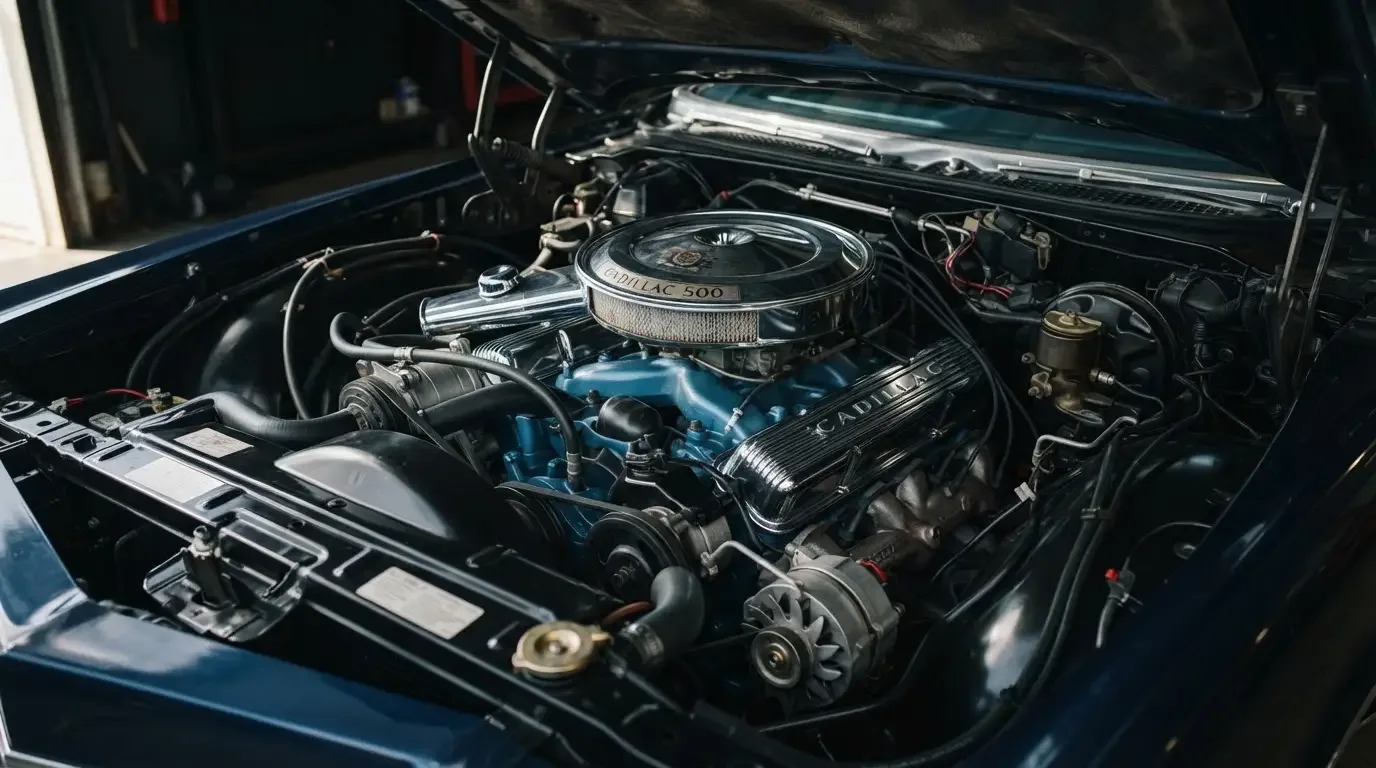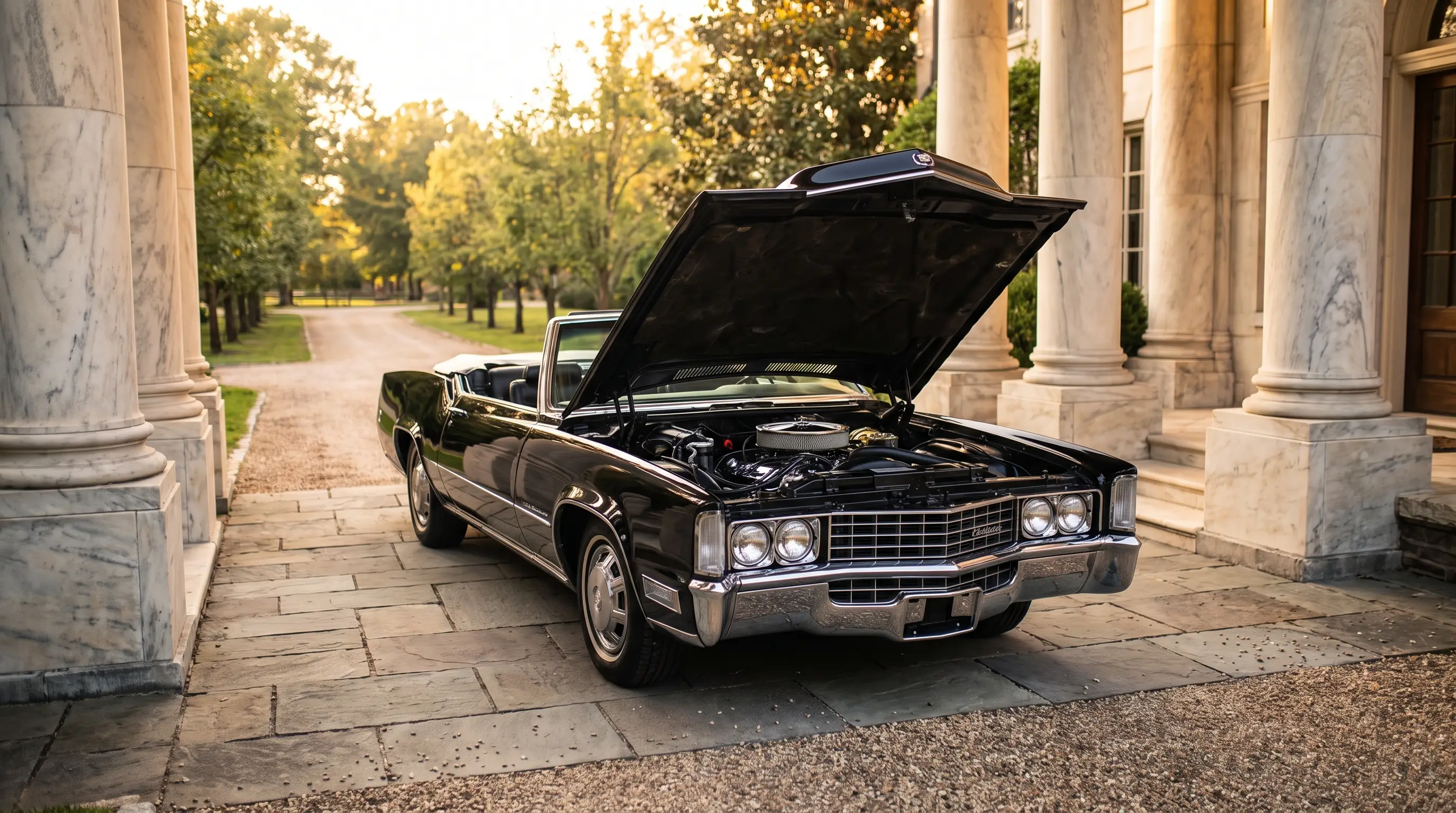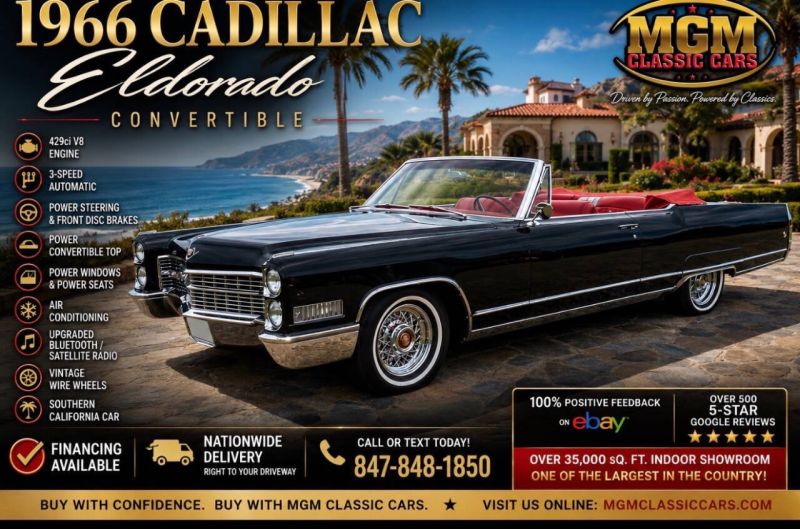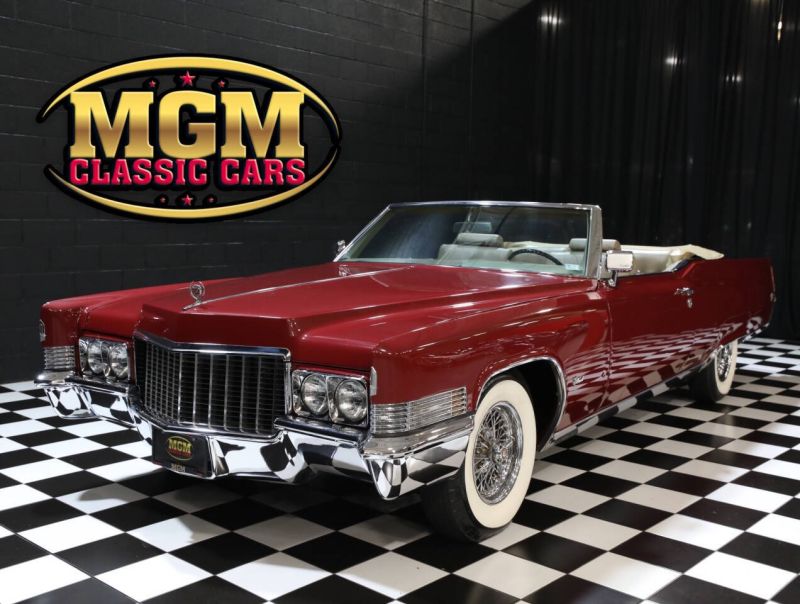
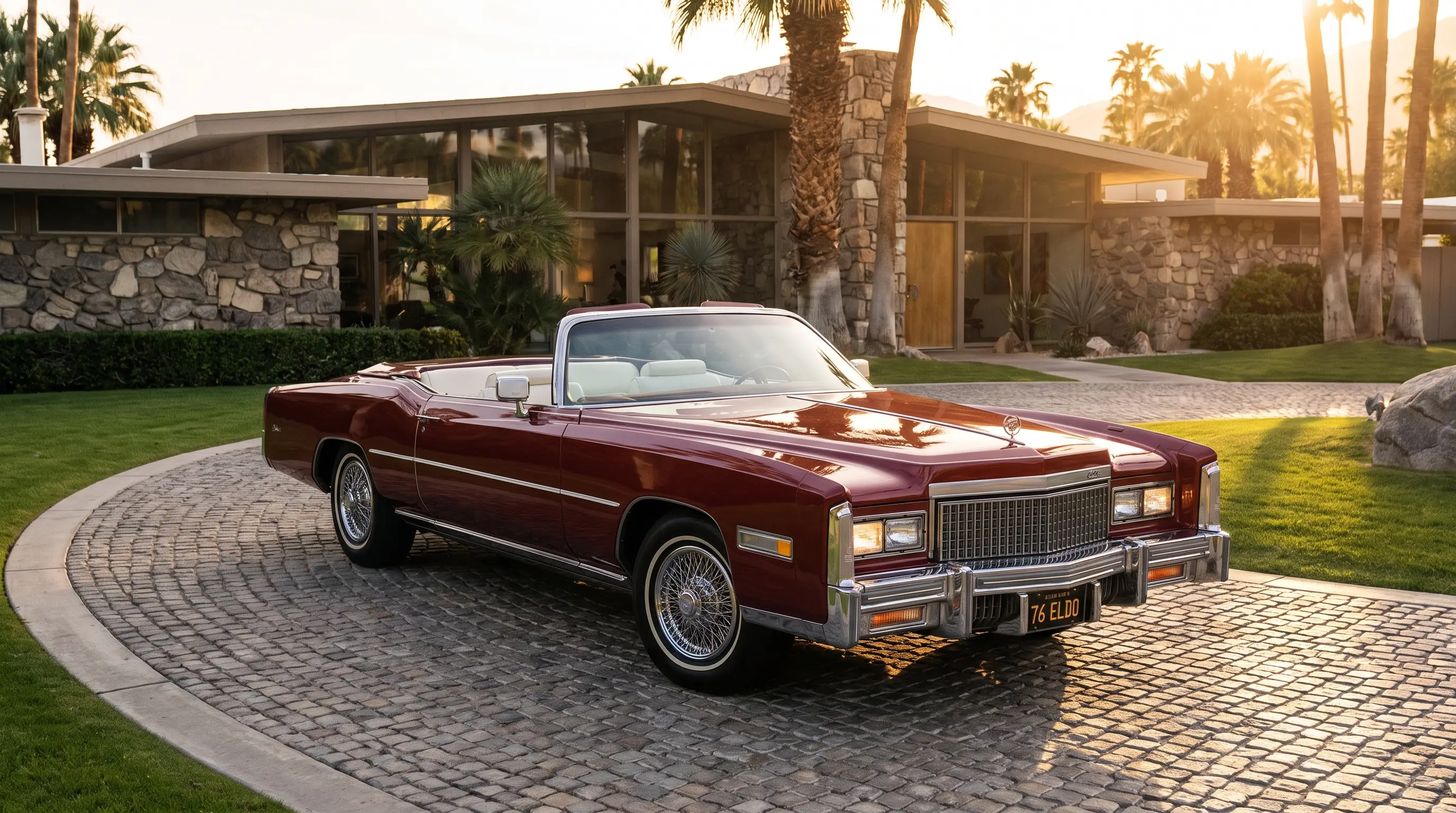
500 cubic inches. No other passenger car engine in American production history has matched that displacement, and the Cadillac 500 V8 legend rests entirely on that one fact. Introduced for the 1970 Eldorado, this engine was not a marketing stunt. It was the direct result of a company that had spent seventeen years building the biggest, smoothest luxury cars in the country and had run out of ways to grow except one: make the engine bigger than anyone else had ever dared.
Why Cadillac built an engine this big
By the end of the 1960s, the Eldorado had grown heavier with every redesign, and the front-wheel drive layout introduced in 1967 added its own mechanical weight penalty compared to a conventional rear-drive car. Cadillac's engineers needed torque, not just horsepower, to move a car in the 4,800 to 5,000 pound range without straining the front-drive components. Rather than chase higher revs and more complex breathing, they simply built the largest V8 displacement the platform could physically accommodate.
The 500 arrived rated at 400 horsepower and 550 pound-feet of torque, gross figures by the measurement standards of the day, on a compression ratio around 10:1. Those numbers alone explain most of the Cadillac 500 V8 legend. This was, and still is, the largest displacement V8 ever installed in a mass-production American passenger car, ahead of anything Ford, Chrysler, or even Cadillac itself would build before or since.
How it actually drove
What made the 500 a legend rather than just a big number on a spec sheet was how effortless it felt at the wheel. Torque this large meant the Eldorado pulled hard from idle without the driver needing to work the throttle, and it did this while staying nearly silent, exactly the trait Cadillac had spent two decades cultivating. Reviewers of the period consistently noted that the engine felt almost unstressed even at highway speed with a full load of passengers, a sensation smaller-displacement engines of the era simply could not replicate no matter how they were tuned.
That effortlessness came at a real cost in fuel economy, and by the early 1970s the gap between what the 500 delivered in driving feel and what it cost at the pump was becoming impossible to ignore.
The oil crisis changed everything about how it was measured
The 1973 oil embargo hit right in the middle of the 500's production run, and the engine's reputation shifted almost overnight from triumphant to problematic. Gross horsepower ratings gave way to more realistic net figures starting in 1972, and emissions equipment added through the mid-1970s cut real output substantially even as the displacement stayed the same. By 1976, the last year of the true land yacht Eldorado convertible, the 500 was a shadow of its 1970 self in terms of usable power, even though it remained, on paper, the same enormous engine.
This is the part of the Cadillac 500 V8 legend that often gets left out of the nostalgic version of the story. The engine's greatest achievement, sheer displacement, became a liability almost as fast as it became a selling point, and Cadillac retired it after the 1976 model year in favor of the smaller 425 cubic inch V8 for 1977.
"The 500 is the engine everybody wants to talk about at a car show, and honestly it deserves the attention. But you have to hold two facts at once. It really was the biggest passenger car V8 America ever built, and it also arrived about three years before the fuel crisis made that kind of displacement a genuine liability for Cadillac's bottom line."
- Emily Chen
Why the legend survived the engine's retirement
Despite only six model years of production, 1970 through 1976, the 500 cubic inch V8 has outlasted plenty of engines that stayed in production far longer. Part of that is the simple, quotable fact of the displacement record, which has never been broken by another American production engine. Part of it is that the 500 arrived at the absolute peak of the Eldorado's size and presence, the true land yacht years, before downsizing changed the car's identity for good starting with the 1979 redesign.
For readers who want the complete mechanical account, including original horsepower figures across all six years and how the 500 compares to the 429 and 472 engines that came before it, our complete history covers the engine year by year with production numbers and specification changes.
How the 500 compares to its rivals
Lincoln's largest engine of the same period, the 460 cubic inch V8 used in the Continental Mark series starting in 1969, came close in displacement but never matched the 500 cubic inch mark. Chrysler's biggest passenger car engines topped out in the low 400s. Even within GM, nothing else in the corporate lineup, not Buick, not Oldsmobile, not Pontiac, ever built a passenger car V8 this large. That isolation is part of why the Cadillac 500 V8 legend has held up so well among enthusiasts. There is no direct competitor to compare it against, only smaller engines trying to do a similar job.
It is worth noting the 500 was never marketed with the same performance framing as a muscle car engine, even though the numbers would have supported that pitch. Cadillac positioned it purely as a luxury and comfort feature, more torque meant a smoother, quieter, more relaxed driving experience rather than a quarter mile time. That framing shaped how the engine was received in period and how it is remembered now, less as a performance legend and more as the definitive statement of American luxury car excess right before the industry pivoted hard toward efficiency.
Buying a 500-powered Eldorado today
| Model year | Rated horsepower | Torque | Notes |
|---|---|---|---|
| 1970 | 400 hp (gross) | 550 lb-ft | First year, highest output |
| 1972 | 235 hp (net) | 385 lb-ft (net) | Switch to net ratings |
| 1976 | 190 hp (net) | 360 lb-ft (net) | Final year of production |
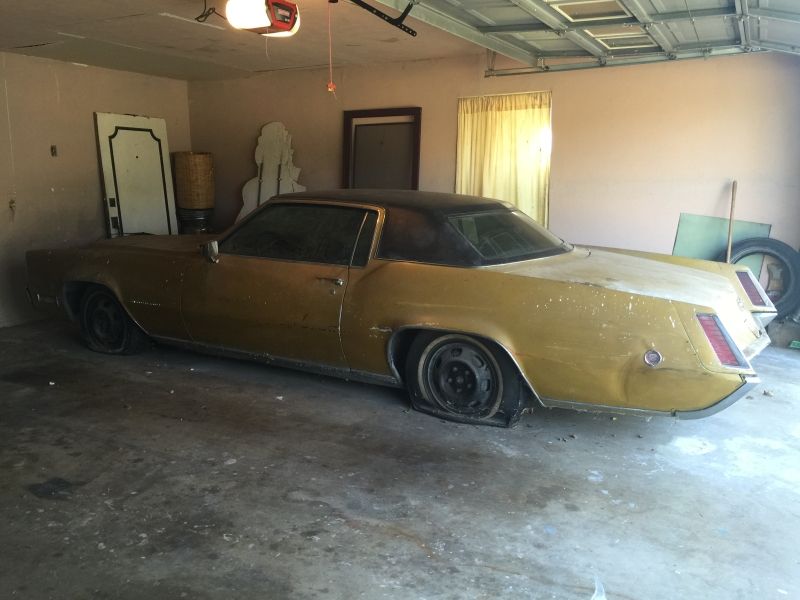
A well-sorted 500-powered Eldorado from this window remains one of the most comfortable classic American cars to drive on a modern highway, largely because of the torque this engine delivers regardless of the year's specific rating. Buyers should check for the usual big-block concerns, sagging motor mounts, cooling system condition given the engine's mass and heat output, and evidence of correct rebuild parts if the engine has been serviced. If you are shopping this generation, you can browse classic Eldorado listings and compare 1970 through 1976 examples directly, and it is worth asking any seller for documentation on whether the engine has had a rebuild and what compression ratio it currently runs, since a numbers-matching 500 in good original condition commands a real premium over a car with a replacement engine.
Sources and notes
- Cadillac V8 engine history, Wikipedia
- Go Big or Go Home: Cadillac's 500 Cubic-Inch V8, 1970-76, Mac's Motor City Garage
- The Cadillac 500 Cubic Inch V8 Was GM's Last Classic Big Block, DrivingLine
- 1970 Cadillac 500 cubic inch V8 and 400 HP, The Autopian
- 1972 Cadillac Fleetwood Eldorado Coupe specs, Automobile Catalog
- Cadillac 500 V8: Vanquished by Emissions Restrictions, autoevolution