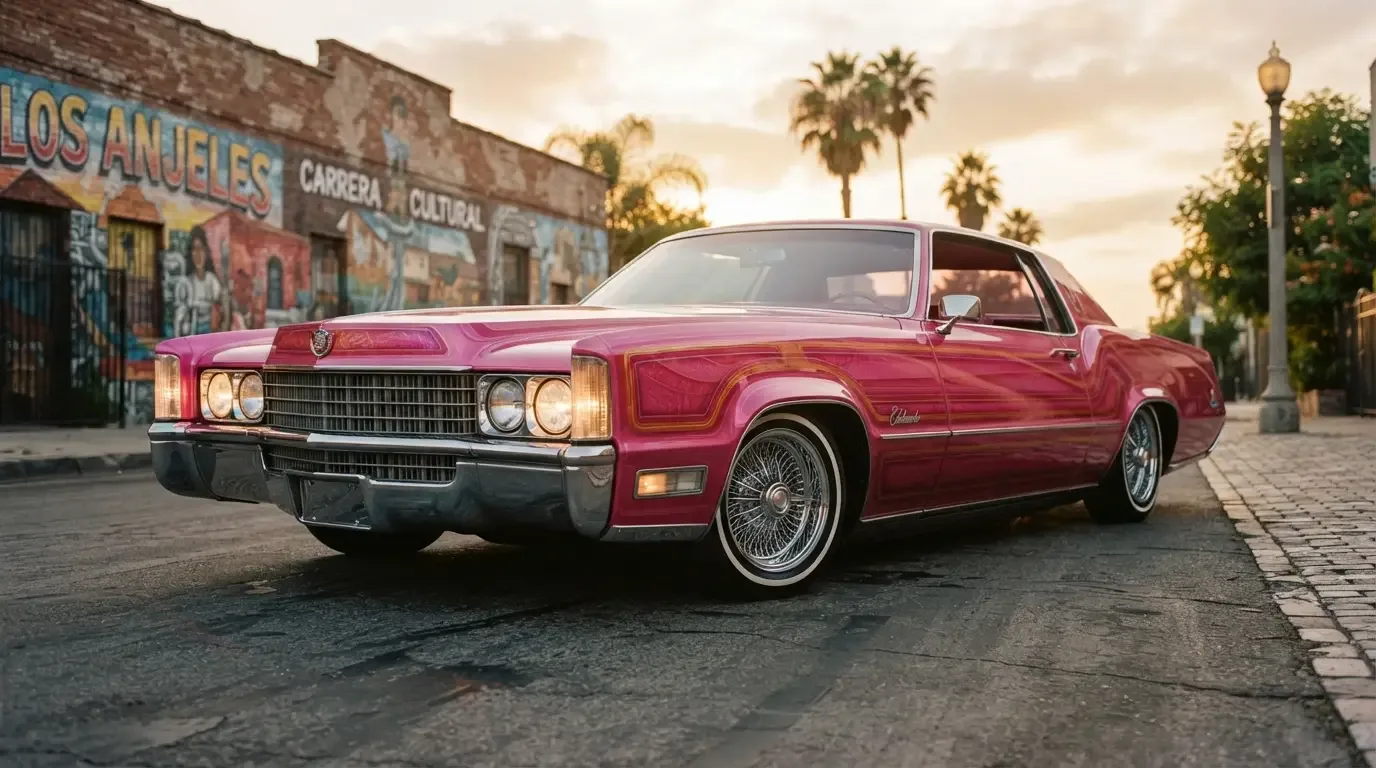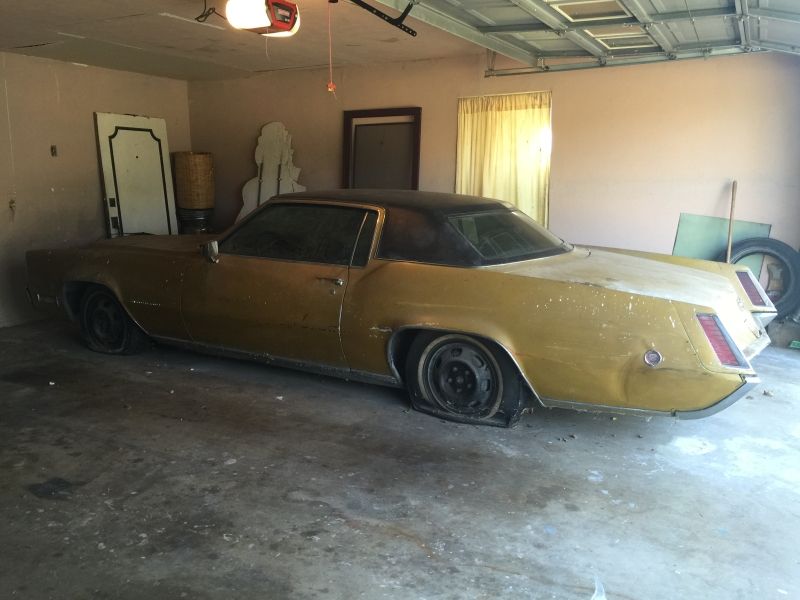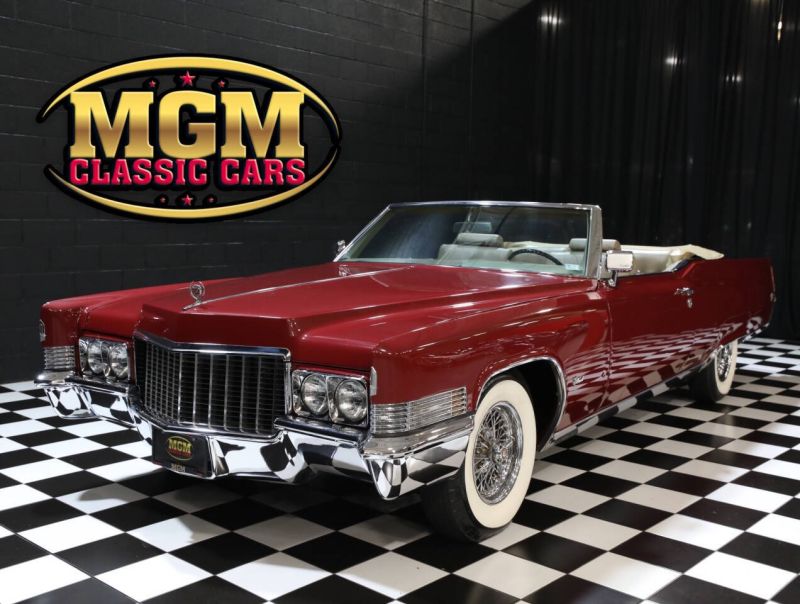
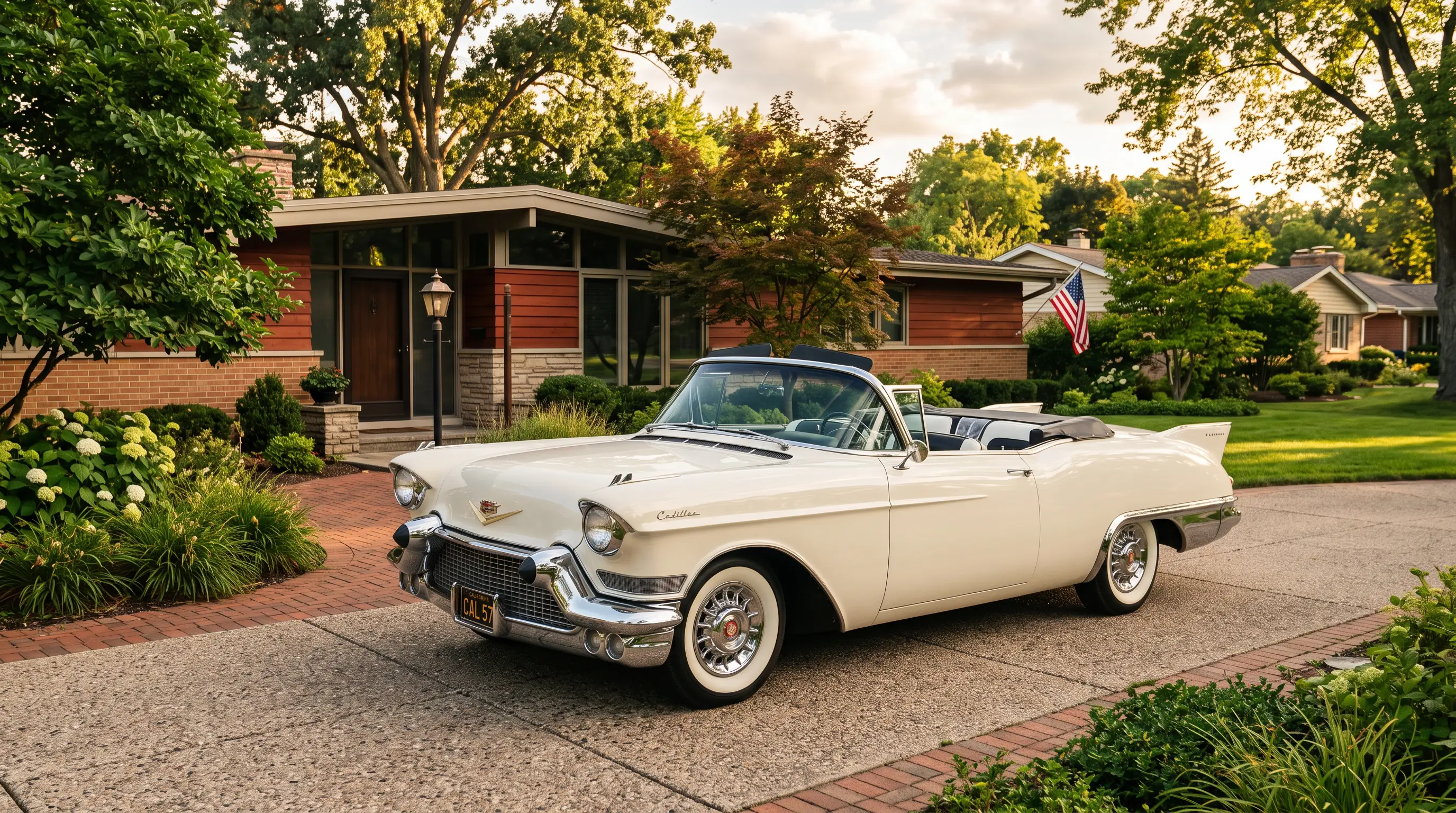
Ask someone to picture the American dream in car form and a surprising number will describe something close to a Cadillac Eldorado without ever naming the model directly, tailfins or chrome, a long hood pointed toward somewhere better. The Cadillac Eldorado American dream connection was not an accident of marketing. It grew out of a very specific postwar moment when owning the biggest car in the biggest brand's lineup meant something concrete about how far a family had come.
A postwar promise made physical
When Cadillac introduced the Eldorado in 1953, the United States was only a few years removed from wartime rationing, a period when new cars of any kind were nearly impossible to buy. The Eldorado arrived into a country hungry for exactly the kind of unapologetic excess it offered, and its price tag, deliberately set above every other Cadillac, made it a specific kind of milestone rather than simply another car purchase. Buying one meant a family had not just recovered from hard years, it had exceeded them, which is a different and more emotionally loaded kind of achievement than ordinary prosperity.
Suburbs, driveways and a new kind of visibility
The Eldorado's rise coincided almost exactly with the growth of American suburbs, and that timing mattered enormously to how the car functioned as a status symbol. A driveway visible from the street gave neighbors a daily, unavoidable view of what a family had achieved, in a way that earlier generations rarely experienced when cars sat in garages or on city streets packed with similar vehicles. An Eldorado parked in a suburban driveway did work that no advertisement could match, repeated silently every single day to anyone who happened to drive past.
"The Eldorado did not just represent the American dream, it sat in the driveway and proved it, every morning, to anyone walking by."
- Nora Beckett
Immigrant families and the first big purchase
For many immigrant families and first generation Americans across the 1950s and 1960s, an Eldorado purchase carried particular weight, often functioning as the visible proof of a journey that had started somewhere far more modest. Family stories passed down through generations frequently mention a first Cadillac, sometimes specifically an Eldorado, as the moment a parent or grandparent felt they had genuinely arrived in a country that had not always made that feeling easy to reach. These stories rarely appear in official Cadillac marketing, but they circulate widely in family histories, car club newsletters and oral history projects focused on postwar American life, giving the car a private meaning that ran alongside its public reputation.
The land yacht years and a wider dream
By the 1970s, as the Eldorado grew into its largest form, the car had become accessible enough that the American dream it represented widened past the original postwar generation and into working professionals, small business owners and entertainers who had built success on their own terms rather than inherited it. The Eldorado during these years stopped being purely aspirational and became, for a meaningfully larger group of buyers, an achievable milestone, a car within reach after a specific number of good years rather than a permanently distant fantasy. That shift did not diminish the car's symbolic weight so much as spread it across a broader cross section of the country.
A dream that survived downsizing and changing tastes
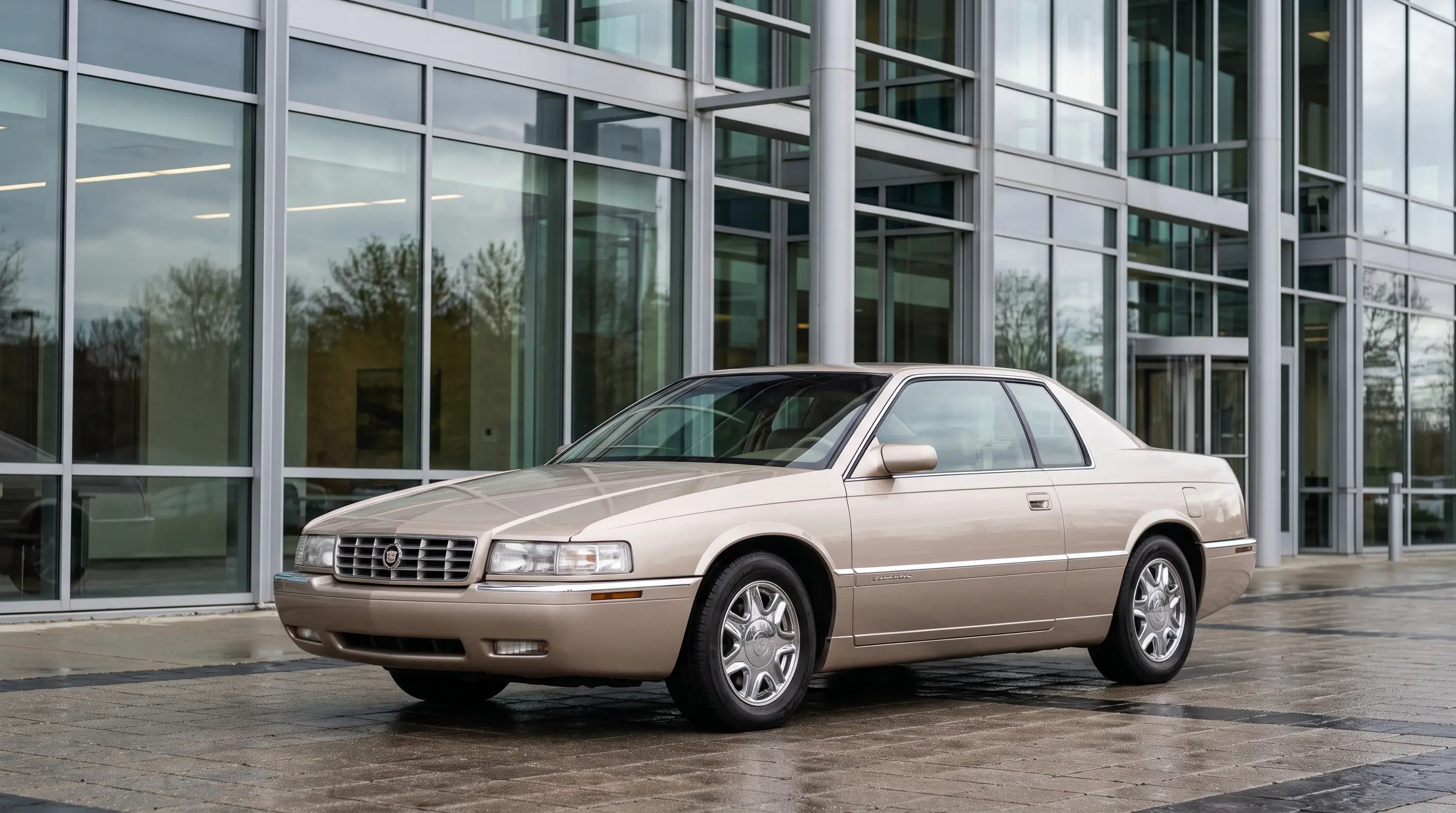
When Cadillac downsized the Eldorado for 1986 and later built the Northstar powered coupes of the 1990s, the car's association with achievement and arrival persisted even as its physical size shrank considerably from the land yacht years. Buyers in these later decades were often chasing the same underlying feeling earlier generations had chased, proof of having made it, even if the specific styling cues had changed from tailfins and acreage to sharper, more aerodynamic lines. The Eldorado name itself carried enough accumulated meaning by this point that the car did not need to be the biggest thing on the road to still function as a genuine milestone purchase for its buyer.
What the car meant beyond ownership itself
Even people who never owned an Eldorado absorbed its symbolic weight through repeated exposure, a neighbor's driveway, a relative's garage, a photograph passed around at a family gathering years later. That secondhand relationship to the car mattered almost as much as direct ownership in cementing its place in the wider American dream narrative, since a symbol only works broadly if enough people recognize it without needing an explanation. Children who grew up watching a parent or grandparent wash an Eldorado on a Sunday afternoon absorbed a lesson about achievement that had nothing to do with horsepower or trim levels and everything to do with what the act of ownership represented within a family's own story.
A dream measured in specific, memorable details
Family stories about a first Eldorado tend to fixate on small, specific details rather than broad statements about success, the exact color ordered, the dealership where the deal was signed, the reaction of a particular relative seeing the car for the first time. Those details survive in memory far longer than any abstract idea about achievement, and they are part of why the Eldorado story keeps resurfacing in personal essays, family history projects and casual conversation decades after the postwar generation that first embraced the car has largely passed on. A car remembered in specific detail carries more emotional weight than one remembered only as a general symbol, and the Eldorado benefits from generations of people who chose to remember it that way.
How the dream connects to a wider cultural story
The American dream reading of the Eldorado sits alongside a much larger cultural record, songs, films, celebrity ownership and decades of advertising that all leaned on similar ideas of arrival and achievement. The full story pulls those separate threads together, showing how consistently different corners of American culture returned to the same car whenever they needed a quick, universally understood symbol for having made it.
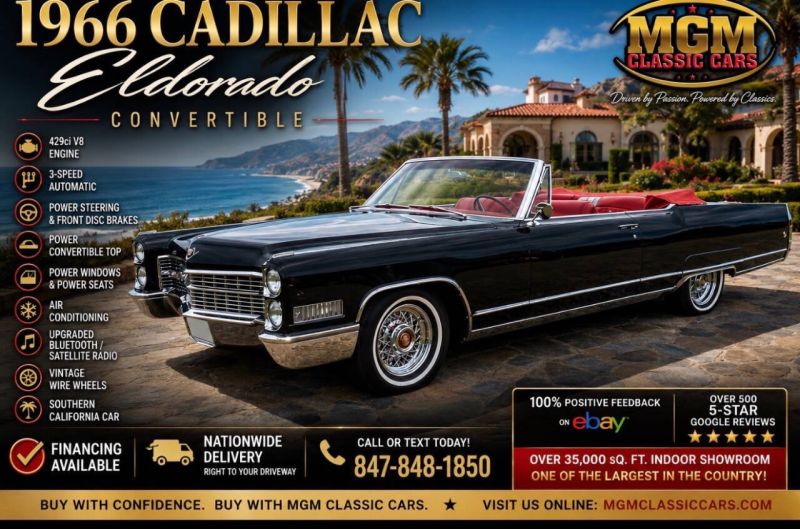
What makes the Cadillac Eldorado American dream connection genuinely interesting, rather than simply a marketing cliche, is how consistently real people outside of any advertisement kept reaching for the same car to mark the same private milestone, generation after generation, family after family. For anyone who wants to understand that feeling firsthand rather than only read about it, there is a classic Eldorado for sale waiting to explain the rest of the story on its own.
The dream the Eldorado represented was never really about the car's engine or its options list, it was about what pulling into a driveway in one meant to the people watching, and to the person finally allowed to feel, for at least one afternoon, that the hardest years were behind them.