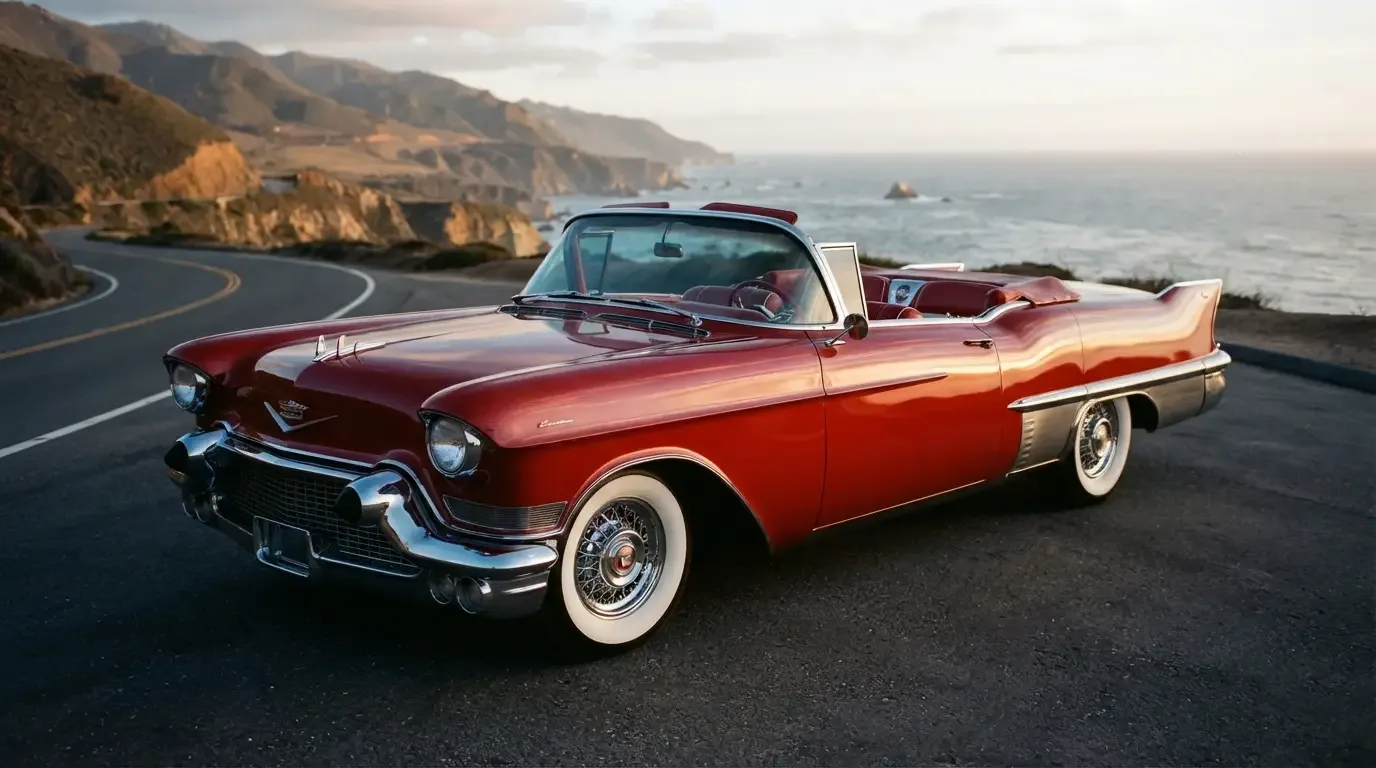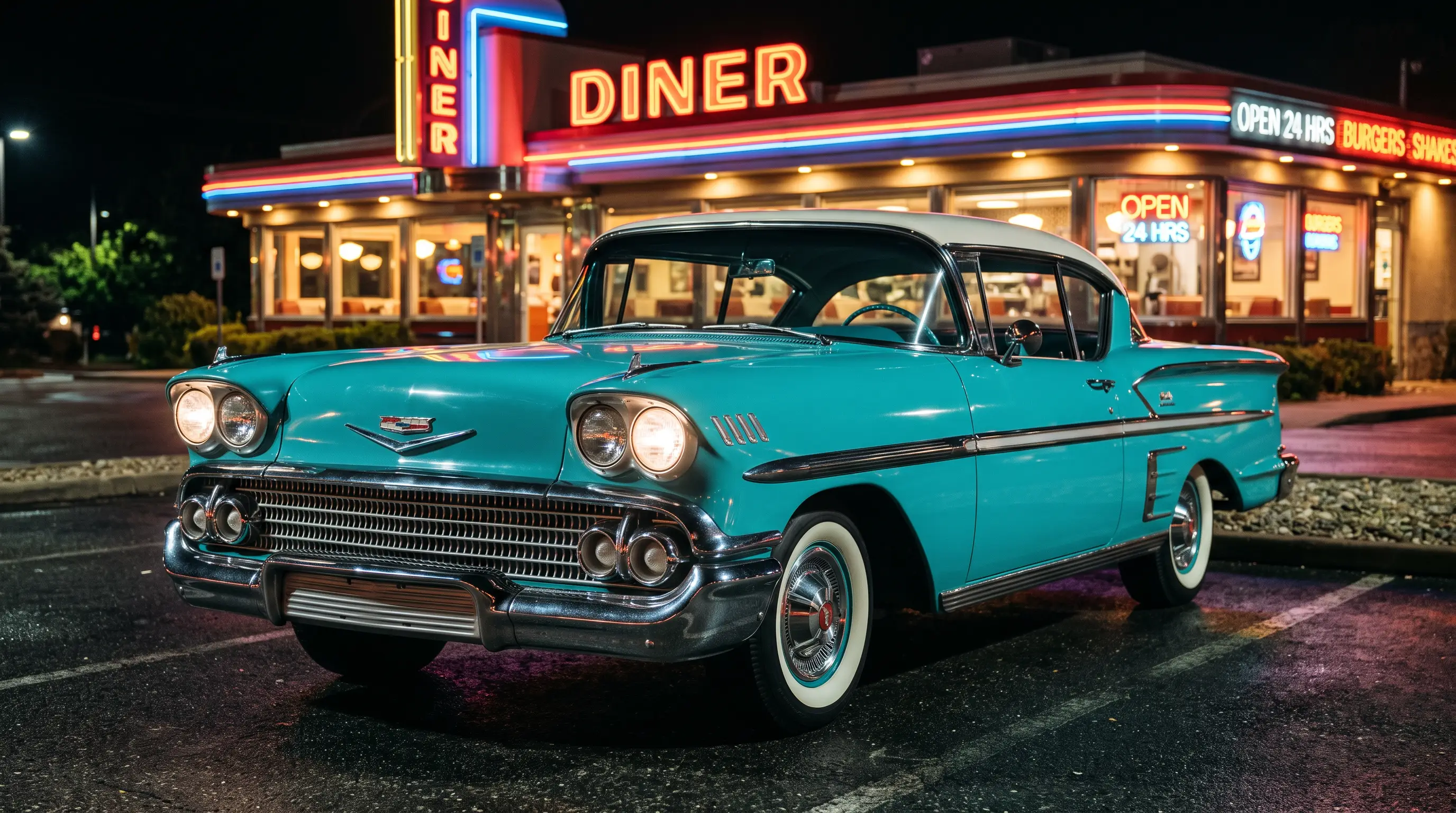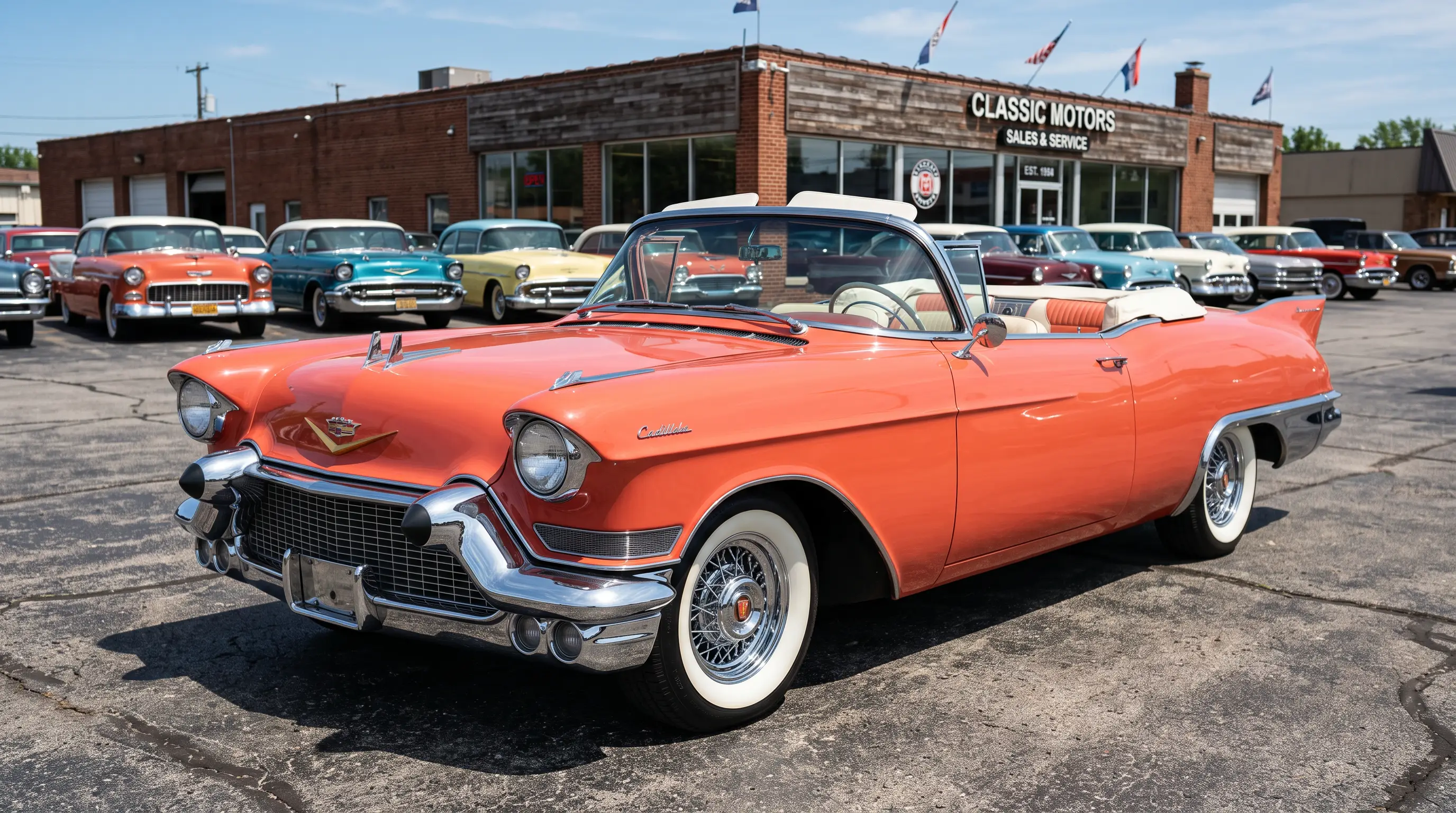
I was at a regional Cadillac club meet a few summers back, standing next to a fellow whose 1959 Eldorado Biarritz had just taken a trophy, when a kid walked up and asked why this Cadillac looked so much fancier than the Series 62 convertible parked two spots down. The owner grinned and started pointing at brightwork, and twenty minutes later that kid understood more about cadillac eldorado biarritz trim than most people learn in a year of reading spec sheets. That is the thing about the Biarritz: the trim tells the whole story if you know where to look.
The deck lid panel that gave it away
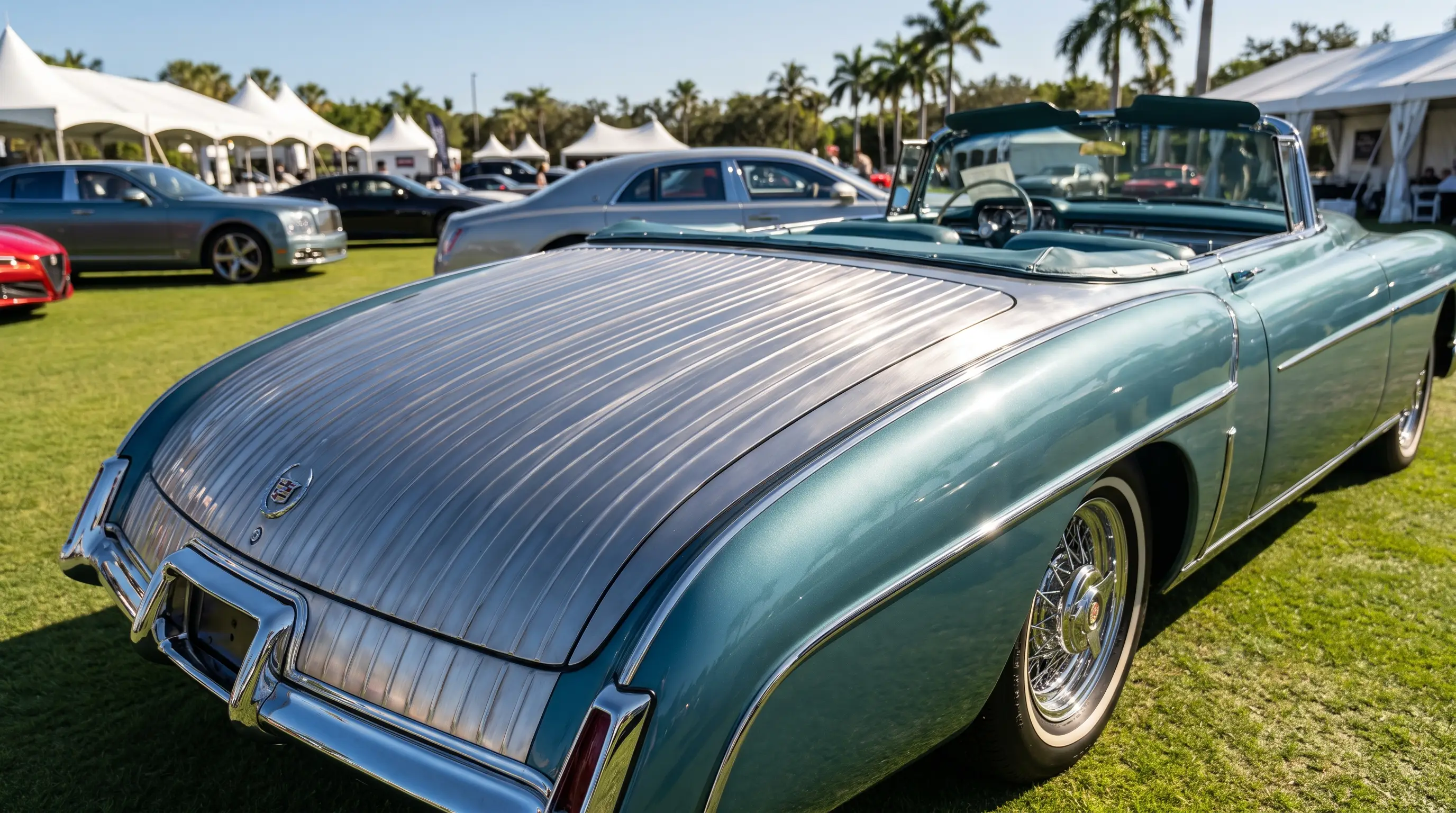
The single most recognizable Biarritz signature is the brushed stainless steel panel across the rear deck, ribbed and set into the trunk lid between the fins. It was not just decoration bolted on for show. That panel visually separated the Biarritz from every other Cadillac convertible on the road, and it became such a strong identifier that club members today can spot a real Biarritz from across a parking lot before they ever check a build sheet. Underneath the flash, the panel also did practical work, hiding the seam where the trunk met the body and giving the rear end a lower, wider look that matched the fins Cadillac was leaning into during those years.
Pair that with the twin chrome-tipped rear fins and the wraparound taillights, and the whole rear three-quarter view of an Eldorado Biarritz reads differently than a standard convertible even from fifty feet away. Old-timers at the club always tell newcomers to walk the car from the back first, because that is where Cadillac spent its trim budget.
Interior details that separated the cars
Inside, Biarritz buyers got upholstery combinations not offered on lesser Cadillacs, often leather bolsters paired with a woven nylon or cloth insert that had a subtle metallic thread running through it, which caught light in a way plain leather never could. The dash carried the same brightwork language as the exterior, with more chrome accenting on the instrument surround, and options like power windows, power seats, and a signal-seeking radio were far more common on Biarritz build sheets than on standard convertibles, since the whole point of the trim level was to let a buyer order every comfort feature Cadillac made in 1957 through 1960.
Wire wheel covers, or what the factory literature called sabre spoke wheel discs, showed up on plenty of Biarritz convertibles too, adding another visual cue that separated the car from a standard Series 62 riding on simpler flat hubcaps. None of this was subtle. Cadillac wanted the Biarritz to look expensive from every angle, and by most accounts it succeeded.
The community keeps the details straight
What I appreciate about the Cadillac club scene is how seriously members take getting these trim details right. A Biarritz missing its correct deck panel, or wearing the wrong wheel covers for its model year, gets noticed fast at a show, and the corrections happen politely but firmly. That peer pressure has done more to preserve accurate restorations than any factory manual, because owners know their car will be checked against a real one parked three rows over. You want to read the whole picture before you start a Biarritz restoration, because getting the trim wrong is the fastest way to turn a correct car into a questionable one in the eyes of anyone who knows what they are looking at.
Parts sourcing for that stainless deck panel and the correct wheel covers has gotten harder every year, and reproduction quality varies enough that club members trade sources quietly among themselves rather than posting them in open forums. That is not gatekeeping so much as protecting a supply chain that took decades to build.
"You can tell how much a Cadillac club values documentation by how fast someone at a show will point out a wrong wheel cover on a Biarritz. That is not pettiness, that is people protecting a piece of history."
- Wayne Coburn
How the trim evolved year to year
The Biarritz badge stuck around for several model years, and the trim was not frozen in place the whole time. Fin height, taillight shape, and grille design all shifted from one year to the next as Cadillac chased the styling trends of the late 1950s, which means a 1957 Biarritz and a 1959 Biarritz look related but not identical. Club members who judge these cars at shows learn the year-by-year differences the hard way, by staring at photographs and comparing notes with owners of specific model years until the small changes in bumper shape or side trim become second nature. That kind of knowledge does not come from a single reference book. It comes from decades of people showing up to the same events and comparing real cars against each other.
By the early 1960s, the Biarritz name had shifted away from a heavily chromed convertible identity toward something a little cleaner as Cadillac's overall design language simplified, and the deck panel treatment that defined the late 1950s cars eventually disappeared. Owners restoring a Biarritz from this later stretch need a different reference point than owners working on a 1957 or 1958 car, and mixing up the two eras is a common mistake among restorers who have not spent enough time around the actual cars.
Trim as a buying guide
If you are looking at an Eldorado Biarritz for sale, the trim itself is one of the best tools you have for judging whether the car is what the seller claims. Check that the deck panel is present and correctly ribbed, confirm the interior upholstery pattern matches factory documentation for the model year, and look closely at the wheel covers and any badging on the fenders and deck lid. A car missing its Biarritz-specific trim, or wearing mismatched pieces from different model years, is either a project that needs work or a car that has been misrepresented, and either way you want to know before you buy rather than after.
The good news is that once you have looked at two or three real ones, the differences become obvious, the same way that kid at the club meet picked it up in twenty minutes standing next to a trophy-winning car. Talk to your local Cadillac club before you commit to a purchase. They have seen more Biarritz trim variations than any online listing will show you, and they are usually happy to share what they know if you ask the right questions and show up in person rather than just emailing photos.
When you are ready to compare cars side by side, you can shop classic Eldorado listings and start checking that trim against what you have learned here, one deck panel and one wheel cover at a time.