An older club member once handed me a set of the little accessories that came standard in a 1957 cadillac eldorado brougham, a cigarette case, a comb, a lipstick holder, and a small notepad, all fitted into the glovebox like a hotel amenity kit, and told me to imagine explaining that level of detail to a factory foreman on a normal assembly line. He could not, and neither could Cadillac, which is exactly why the Brougham was not built on a normal assembly line at all.
A flagship built apart from the rest
By 1957 Cadillac wanted a genuine flagship, something that sat above the Eldorado Biarritz and Seville rather than beside them, and the Brougham was the answer. Where standard Cadillacs moved down a conventional production line, the Eldorado Brougham was assembled in a dedicated area with far more hand fitting and hand finishing than any other American production car of the period attempted. Body panels were checked and adjusted individually, trim was hand fitted rather than simply bolted to a jig-built spec, and the level of attention given to each car more closely resembled a coachbuilt European car than anything else rolling off a Detroit line that year.
That hand-built approach was the whole point. Cadillac was not trying to compete with its own Series 62 or even the Eldorado Biarritz on price or volume. It was trying to prove that an American manufacturer could match, or beat, the finishing standards of the world's most exclusive coachbuilders, and it committed real resources to make that case.
The stainless steel roof and the details that followed
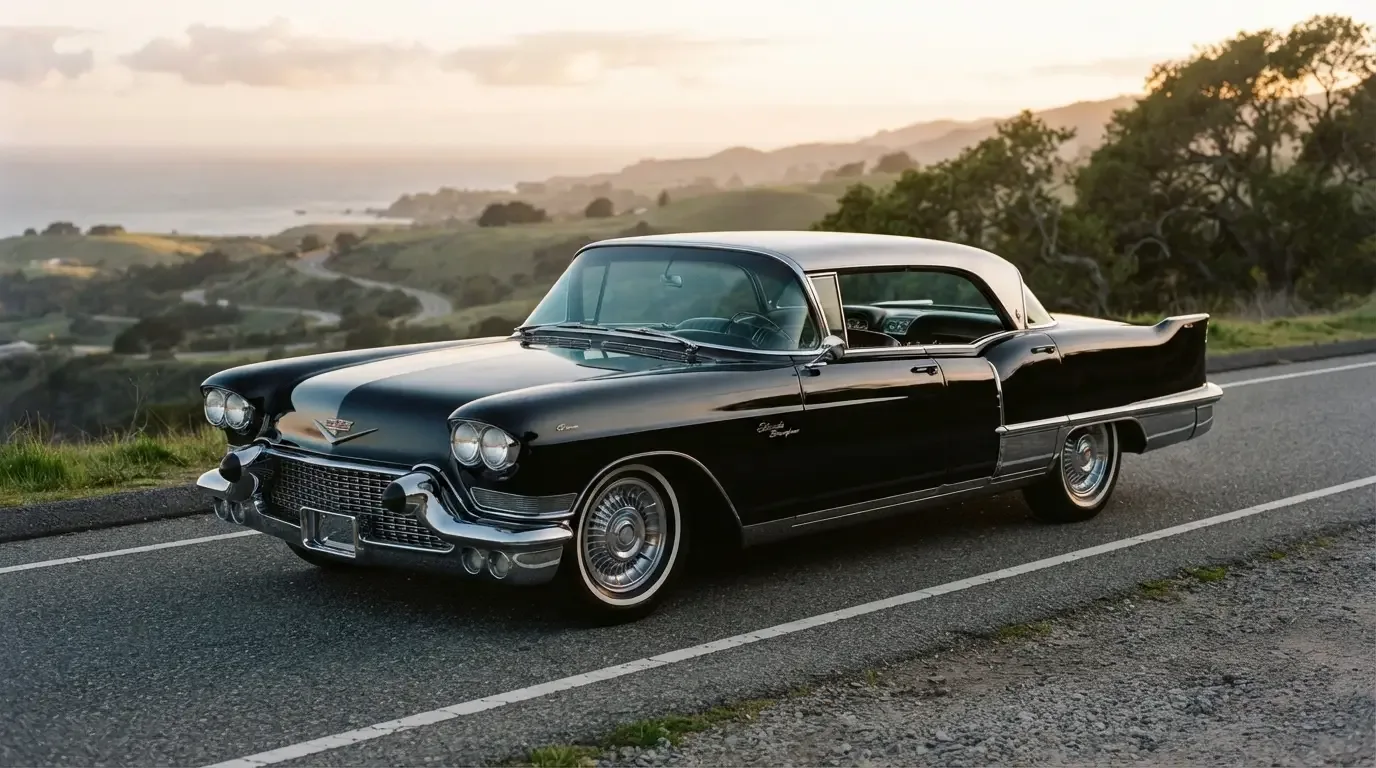
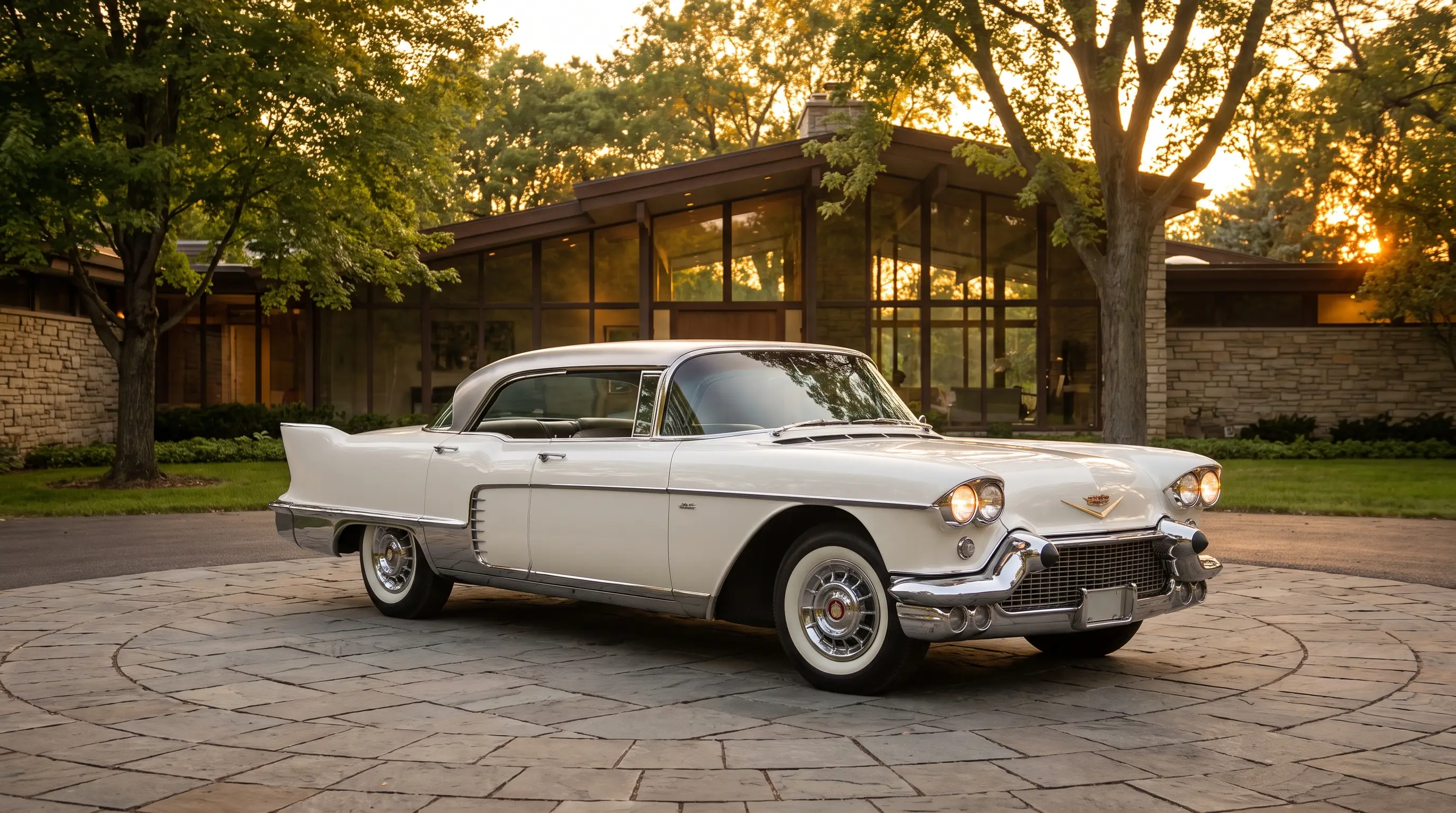
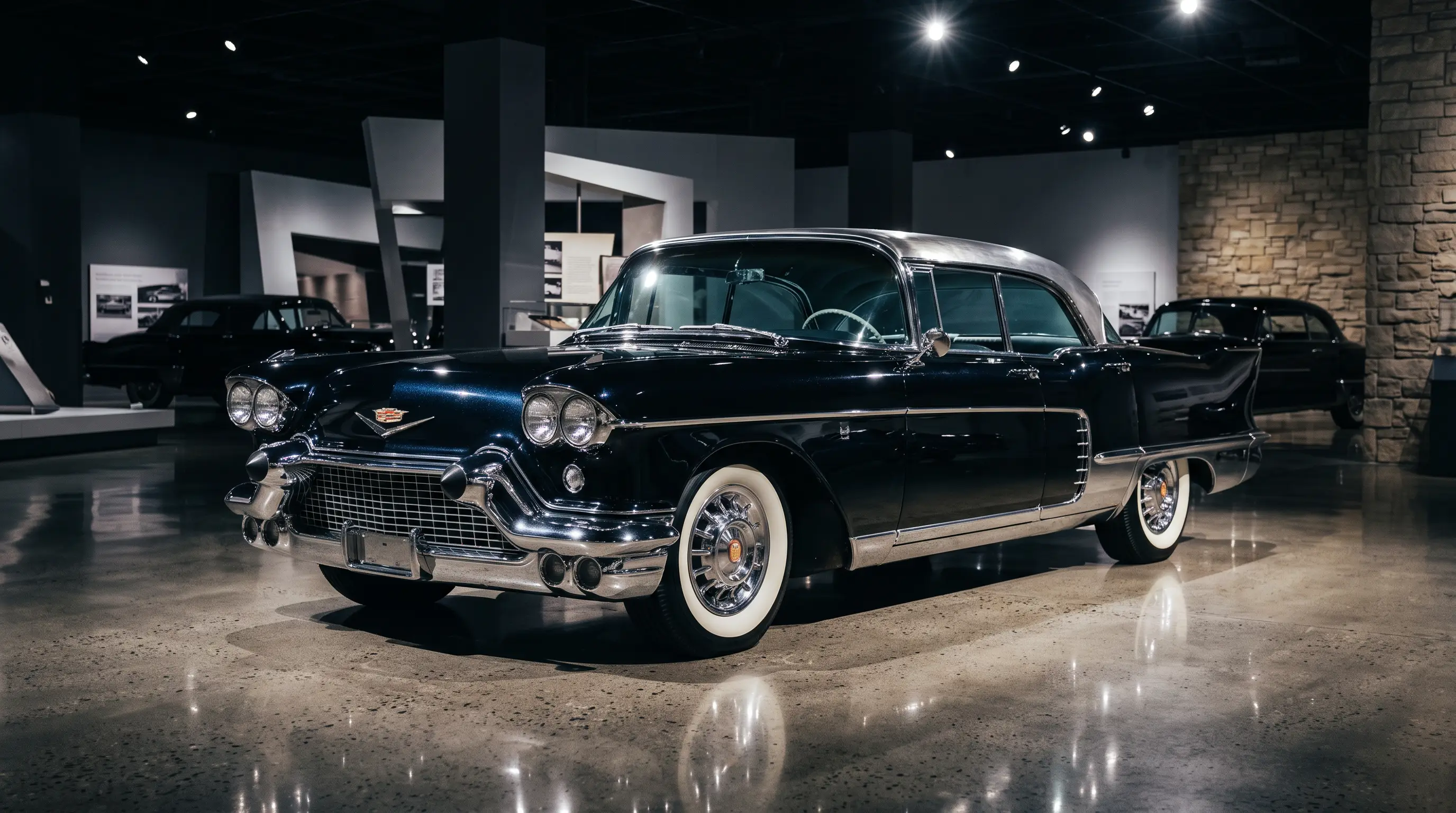
The Brougham's most recognizable feature is its brushed stainless steel roof, a design choice that gave the car a distinct two-tone look even on cars finished in a single body color, and one that has become the single fastest way to identify a real Brougham from across a show field. Quad headlights were another headline feature, arriving on the Brougham the same year several manufacturers introduced them simultaneously once state laws began permitting the change, which meant Cadillac's flagship debuted with genuinely new technology rather than styling alone.
Underneath the visual statement sat real engineering ambition too. Air suspension was standard equipment, a first for a Cadillac production car, aimed at giving the Brougham a smoother, more controlled ride than a conventional leaf or coil setup could match, and a memory seat feature let the driver return the seat to a preset position at the touch of a button, a genuinely novel convenience for 1957.
Four doors, no center pillar
Unlike the convertible Biarritz or the hardtop Seville, the Brougham was a four-door design, and it dispensed with a center pillar entirely, giving it the clean, open-window profile of a true pillarless hardtop sedan. That configuration required extra structural engineering to keep the body rigid without the pillar's support, another example of Cadillac spending real engineering effort on a car that was never going to sell in large numbers. Rear-hinged rear doors, sometimes called suicide doors by enthusiasts, added to the sense of occasion when getting in or out, opening the whole side of the car for entry in a way conventional doors never could.
You can read cadillac eldorado brougham history to see how this four-door format fit within the broader Eldorado lineup, since the Brougham's body style set it apart from every other Eldorado built before or after it during this stretch of the model's run.
A halo car that lost money on purpose
None of this hand-built ambition came cheap, and Cadillac reportedly priced the Brougham, at $13,074, well below what it actually cost to build each one, treating the loss as a marketing expense rather than a failure. GM is estimated to have lost roughly $7 million combined on the 704 Broughams built across the 1957 and 1958 model years, on the order of $10,000 lost per car. The idea was straightforward: a flagship this exclusive would draw attention to the entire Cadillac lineup, elevating perceptions of every less expensive model sold under the same badge, even if the Brougham itself never turned a profit on its own.
"Cadillac built the Brougham to prove a point about what an American factory could do by hand, not to make money on it, and every rivet and glovebox accessory in that car says as much."
- Wayne Coburn
Materials most Cadillacs never saw
Interior materials on the Brougham reached further than anything else in the Cadillac catalog that year. Buyers could choose from leather and fabric combinations not offered anywhere else in the lineup, and the fit and finish inside the cabin matched the ambition of the stainless roof outside it. Chrome and brightwork on the dash and door panels were more heavily used than on a standard Cadillac, but the execution stayed controlled rather than gaudy, aiming for the kind of restrained richness a wealthy buyer would expect from a true flagship rather than the maximalist chrome some other Cadillacs of the era leaned into.
Even small hardware pieces, door handles, window switches, and trim bezels, were finished to a higher standard than parts-bin Cadillac components, which is part of why so few reproduction parts exist for the Brougham today. Restorers working on one of these cars often have to source original parts or commission custom reproduction work, since aftermarket suppliers never had the volume to justify tooling up for Brougham-specific pieces the way they did for far more common Cadillac models.
That scarcity of parts is a genuine consideration for anyone thinking about ownership. A Brougham missing an interior trim piece or a specific badge can sit incomplete for years while an owner searches for a correct replacement, which is a very different ownership experience than restoring a standard Series 62 with a healthy aftermarket parts supply behind it.
Why it still matters to the club
Talk to almost any serious Cadillac collector and the 1957 Eldorado Brougham comes up as the car that proves the brand's engineering ambition was real, not just advertising copy. Club events treat a genuine Brougham as a centerpiece attraction whenever one shows up, and owners of standard 1957 Cadillacs will often walk the length of a show field just to stand next to one. There is a related story worth reading about how the Brougham's price stacked up against its European rivals, since a related story covers exactly that comparison in detail.
If a hand-built 1957 flagship is what draws you to this era of Cadillac, there are Eldorados for sale now worth a look, though genuine Broughams surface far less often than standard Eldorados and are worth researching thoroughly before you commit to a purchase.
Take the time to talk with owners before you buy, if you can. Nearly everyone who has one will tell you the same thing in different words: the Brougham rewards patience, both in the search for a genuine example and in the ongoing work of keeping one correct. That patience is exactly what Cadillac's hand-built approach demanded of the factory workers who built these cars in the first place, and it seems fitting that the cars still ask the same of the people who care for them now.