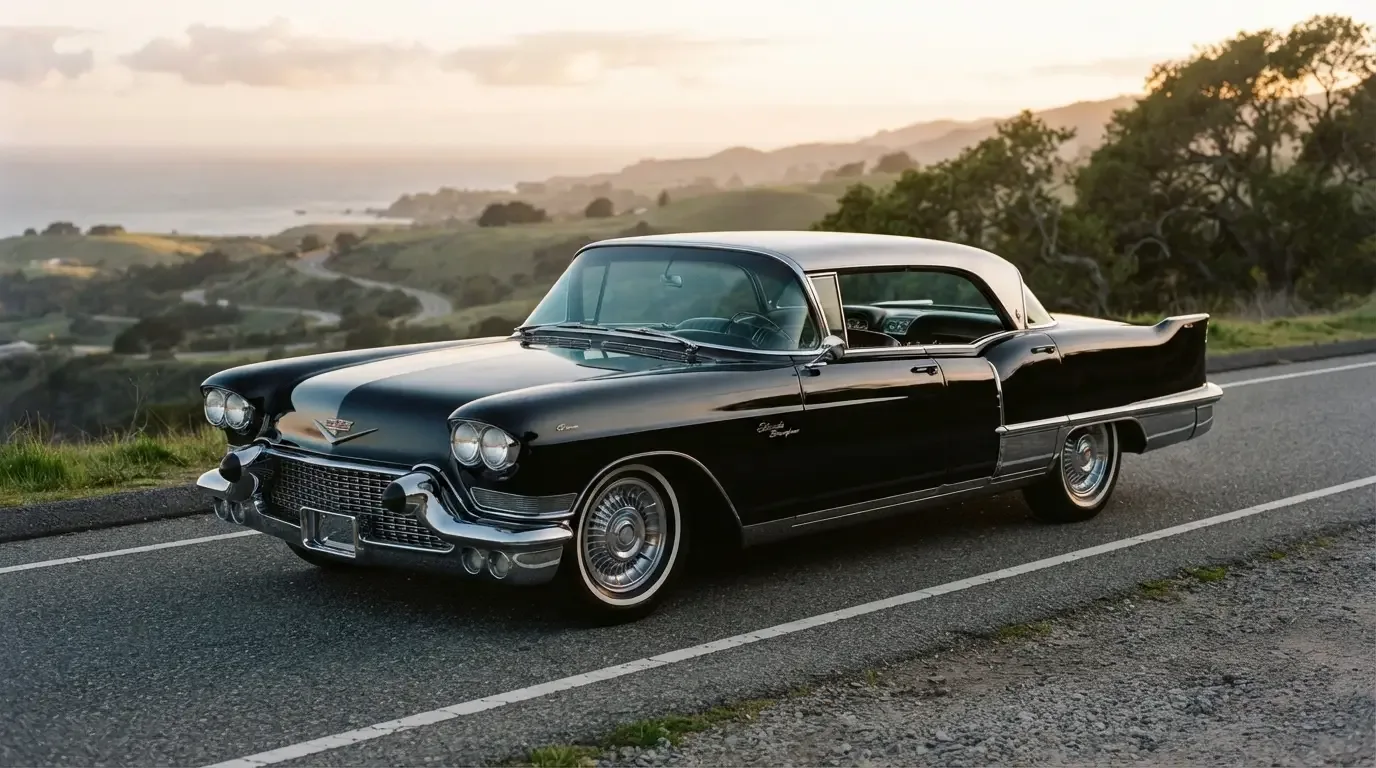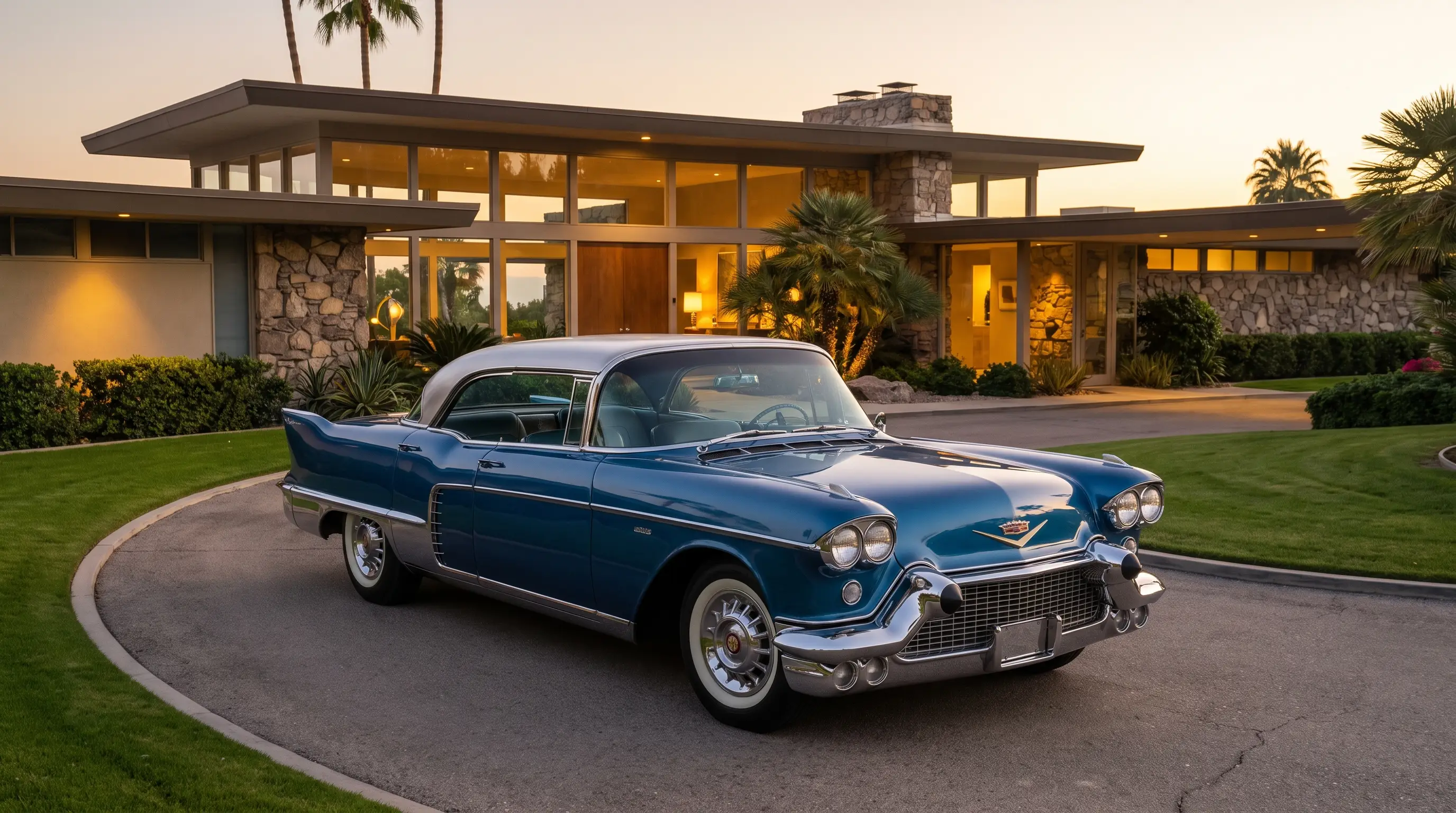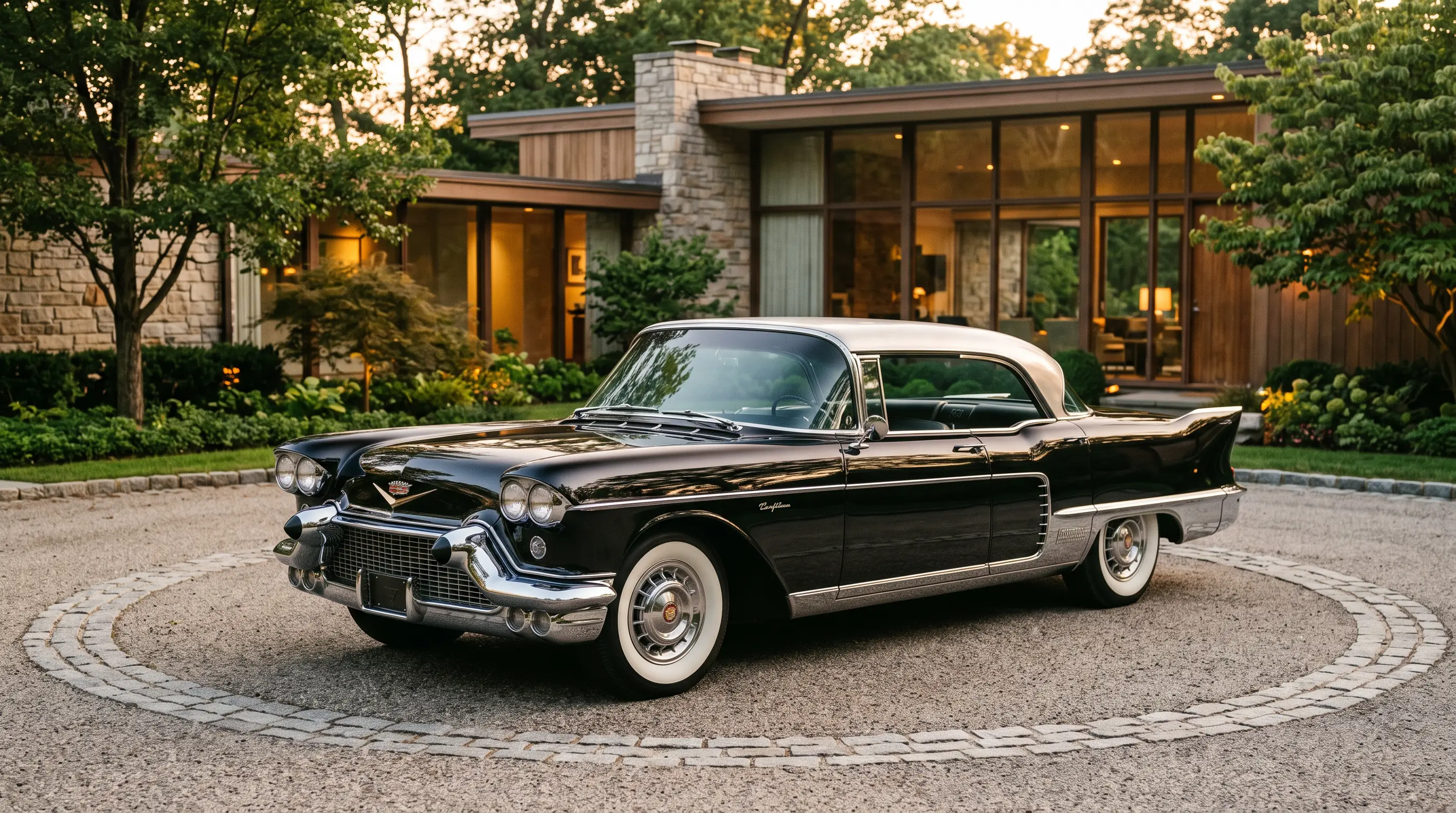
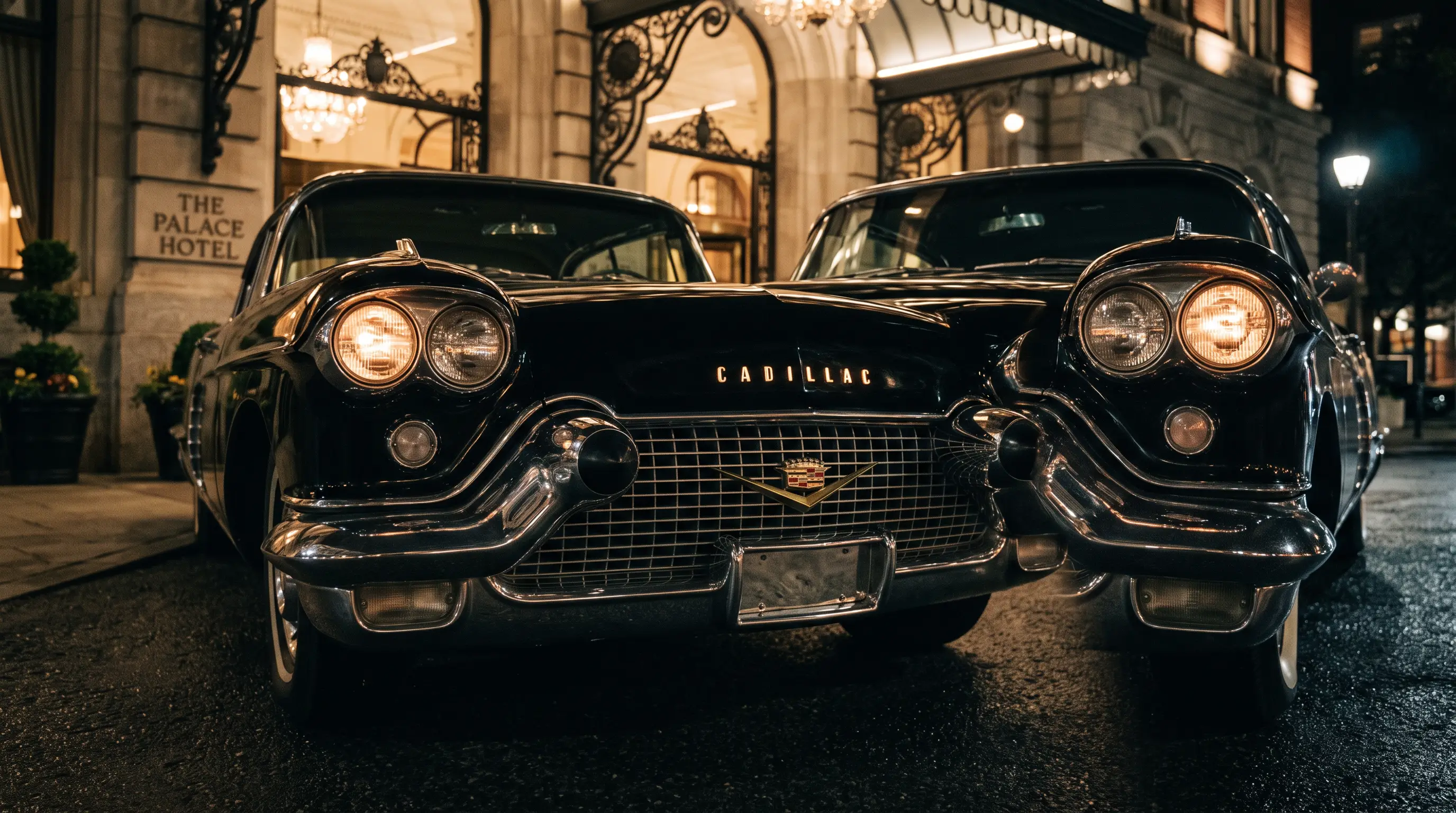
Ask a room full of Cadillac people which car brought quad headlights to America and you will get a confident, wrong answer more often than not. Most people guess a later model year, or credit a different manufacturer entirely. The real answer is the eldorado brougham quad headlights fitted to the 1957 Cadillac Eldorado Brougham, and the story of how they got there involves state law, a scramble across the industry, and a car that was already breaking rules just by existing.
The legal maze behind four headlights
Dual headlight systems, one lamp per side, had been the American standard for decades by the mid 1950s, and state vehicle codes were written around that assumption. Quad headlight systems, with two smaller lamps stacked or paired at each corner, promised better illumination and became a genuine engineering possibility as sealed beam technology improved. The catch was legal, not technical. Each state controlled its own vehicle equipment laws, and quad headlights were not universally legal across the country when Cadillac wanted to introduce them.
Cadillac's answer was blunt rather than clever. Other manufacturers offering quad lamps that year, Lincoln and Mercury among them, built an alternate single or dual lamp front end specifically to keep selling in states where quads were not yet legal. Cadillac did not bother. The Eldorado Brougham was offered solely with quad headlights, full stop, and in the handful of states where that configuration was not yet street legal, Cadillac simply did not sell the car there rather than compromise the design with a fallback front end. For a low volume halo car already built at a loss, chasing every state's approval one by one was not worth the tooling cost of a second front end, so the division let the car's exclusivity do double duty as the workaround.
If you want the whole picture on why Cadillac was willing to navigate this kind of regulatory headache for one model, that background is worth reading, because the quad headlight rollout was just one more example of the lengths the division went to in order to make this specific car stand apart from anything else on the road.
What this means at a swap meet or a show
I have watched more than one argument break out at a show over whether a "dual lamp Brougham" someone claims to have seen was ever a real factory car, and the honest answer is no. Unlike Lincoln and Mercury that same year, Cadillac never engineered an alternate single or dual lamp front end for the Brougham. Every genuine 1957 Eldorado Brougham left the factory with quad headlights, period, which means a Brougham wearing dual lamps today is a modification or a mistake, not a regional factory variant.
This is exactly the kind of detail that separates people who have spent real time with these cars from people repeating secondhand internet summaries. Our club has had members track down state sales records specifically to confirm which states simply never received Brougham allocations in 1957 because quad headlights had not yet cleared local law, because getting this detail right matters enormously to a correct restoration and to how a car is judged at a concours event.
"Somebody always wants to tell you their '57 Brougham came with dual lamps from the factory. Show them that Cadillac never built that car, and watch them recalculate everything they thought they knew."
- Wayne Coburn
How the lamps actually worked
The quad system paired a high beam and low beam lamp at each corner rather than relying on a single dual filament unit to handle both functions, the way earlier dual headlight cars had done. Each lamp was purpose built for its specific beam pattern, which gave engineers more control over how light was distributed on the road and, at least in theory, produced better illumination without blinding oncoming drivers. It was a genuine functional improvement, not styling dressed up as engineering, even though it also happened to give the Brougham's front end a distinctive, more purposeful look that set it apart from every dual lamp car sharing the road with it.
Getting four lamps, their wiring, and their mounting hardware to fit cleanly into a front end originally conceived around a two lamp layout took real engineering effort, not just a parts swap. Cadillac's stylists and engineers had to rework the grille and front fender detailing around the new lamp configuration, which is part of why the quad headlight cars carry a slightly different front end character than a dual lamp Brougham built to the same basic specification.
Why the Brougham gets the credit
Other manufacturers were racing toward quad headlights around the same period, and the exact sequence of who technically offered them first in which specific state has been debated by historians for decades. What is not seriously disputed is that the Eldorado Brougham was among the earliest production cars in America to offer the configuration, and it did so as part of a broader package of technical firsts, alongside the air suspension and the stainless roof, that made the car a genuine demonstration of what Cadillac's engineers could achieve when given the resources and the mandate to ignore cost.
That combination of firsts is part of why the quad headlight story keeps getting told at meets and in club newsletters decades later. It was not one isolated gadget bolted onto an otherwise ordinary car. It was one more piece of a car explicitly built to be the most advanced thing on American roads, and it happened to be a piece that eventually became standard equipment on nearly every car built afterward, which gives it a legacy well beyond the Brougham itself.
A footnote that outlasted the car itself
It says something about the Brougham's engineering ambition that a feature introduced on a car built in numbers small enough to fit in a large parking lot went on to become standard equipment on essentially every car sold in America within a few years. Most low volume flagship models leave behind a reputation and not much else, a curiosity for historians rather than a lasting technical contribution. The Brougham's headlight story is different, because the configuration it pioneered on a scarce, hand built halo car became completely ordinary, invisible, unremarkable equipment on family sedans built a decade later. That kind of legacy is rare even among genuinely significant historic cars, and it is one more reason club members keep telling this particular story at meets instead of letting it fade into a footnote nobody bothers repeating.
What to check if you own one
Owners and prospective buyers researching a specific Brougham's originality should treat the headlight assembly as a genuine documentation point rather than something obvious from a glance at the car. Confirming that a car's lamp housings, wiring, and trim match the factory quad configuration, and that nothing has been altered to fit a later or non-factory arrangement, is the best way to protect against an incorrect restoration. Getting this wrong is an easy, understandable mistake, but it is also one that knowledgeable judges and buyers will catch.
For anyone chasing down a real example to add to their own garage, you can shop classic Eldorado listings and start comparing what is actually available against everything this story lays out.