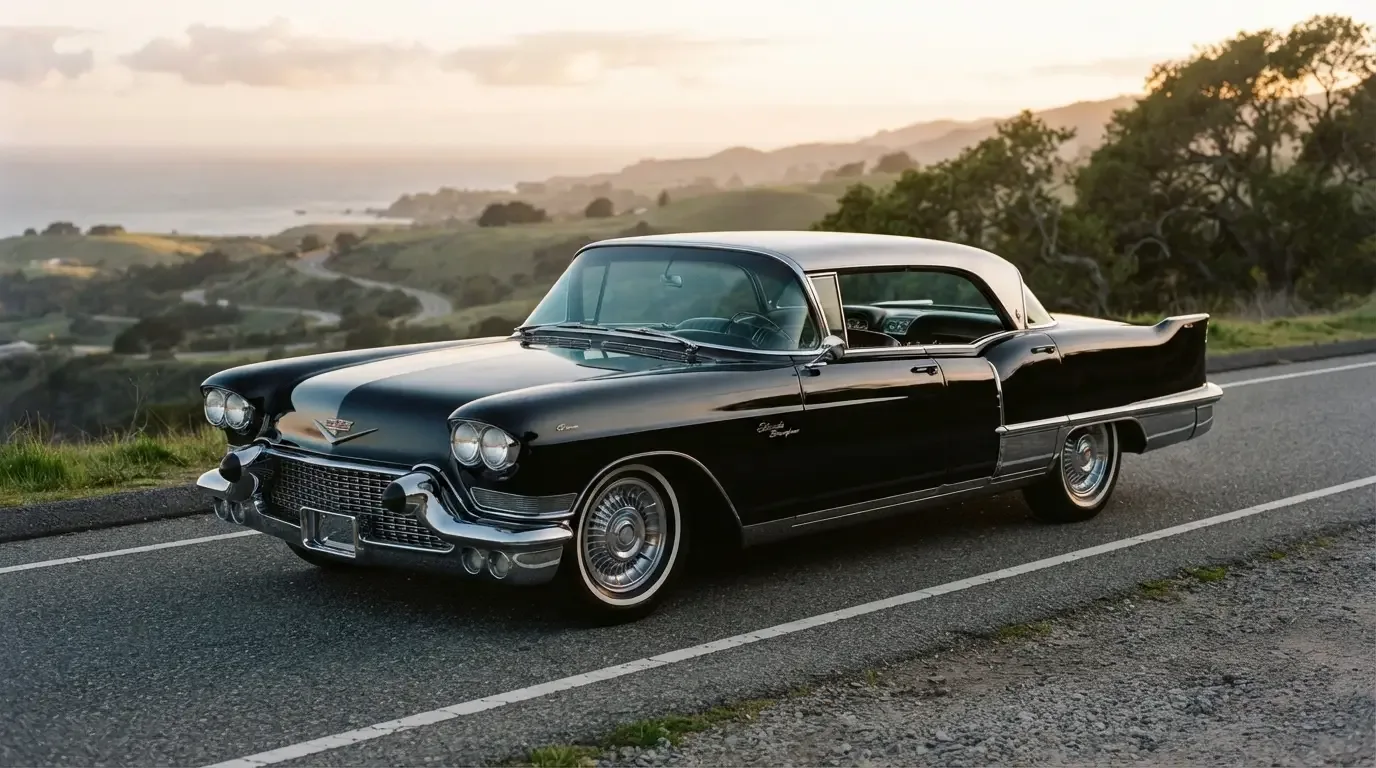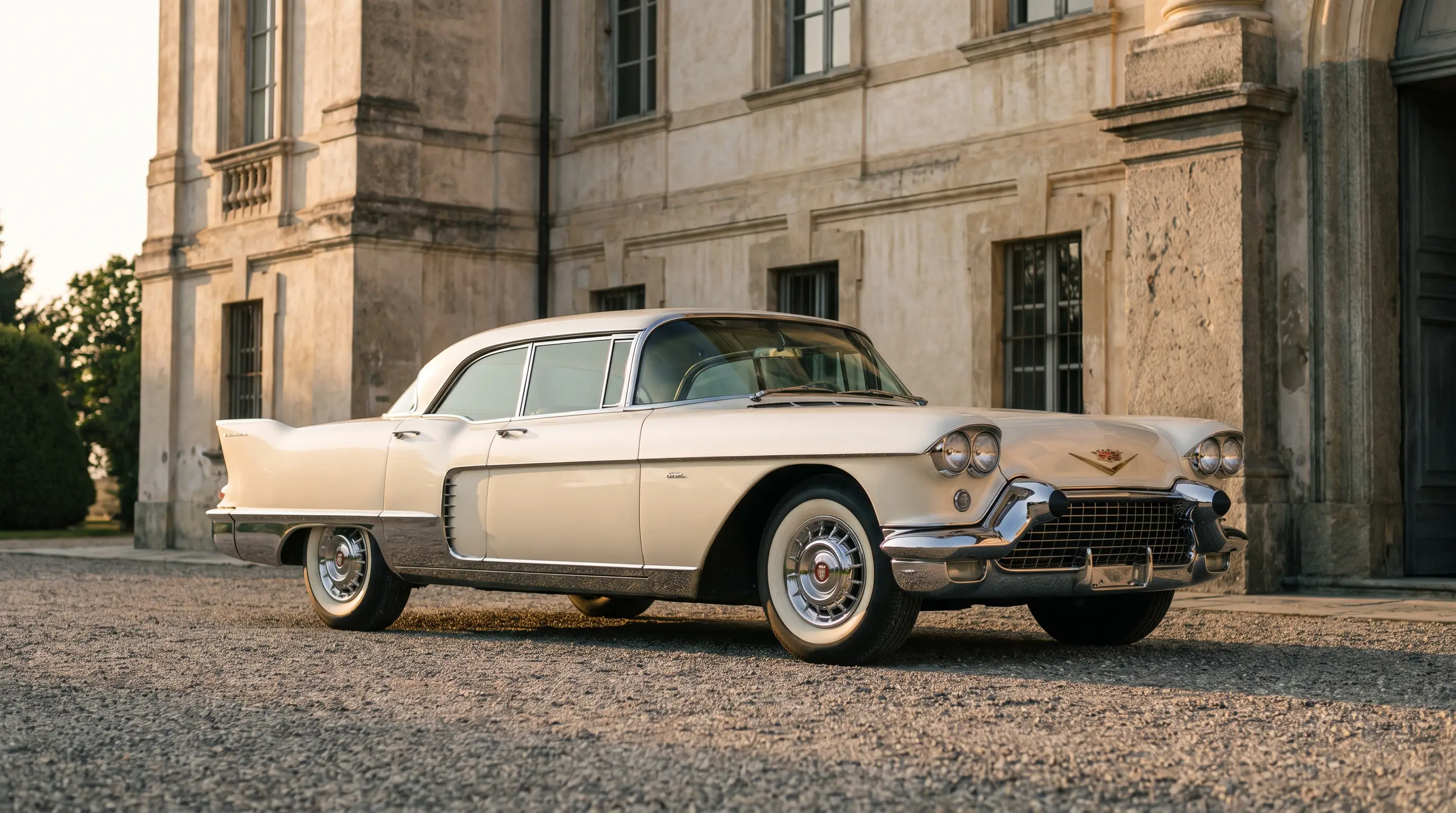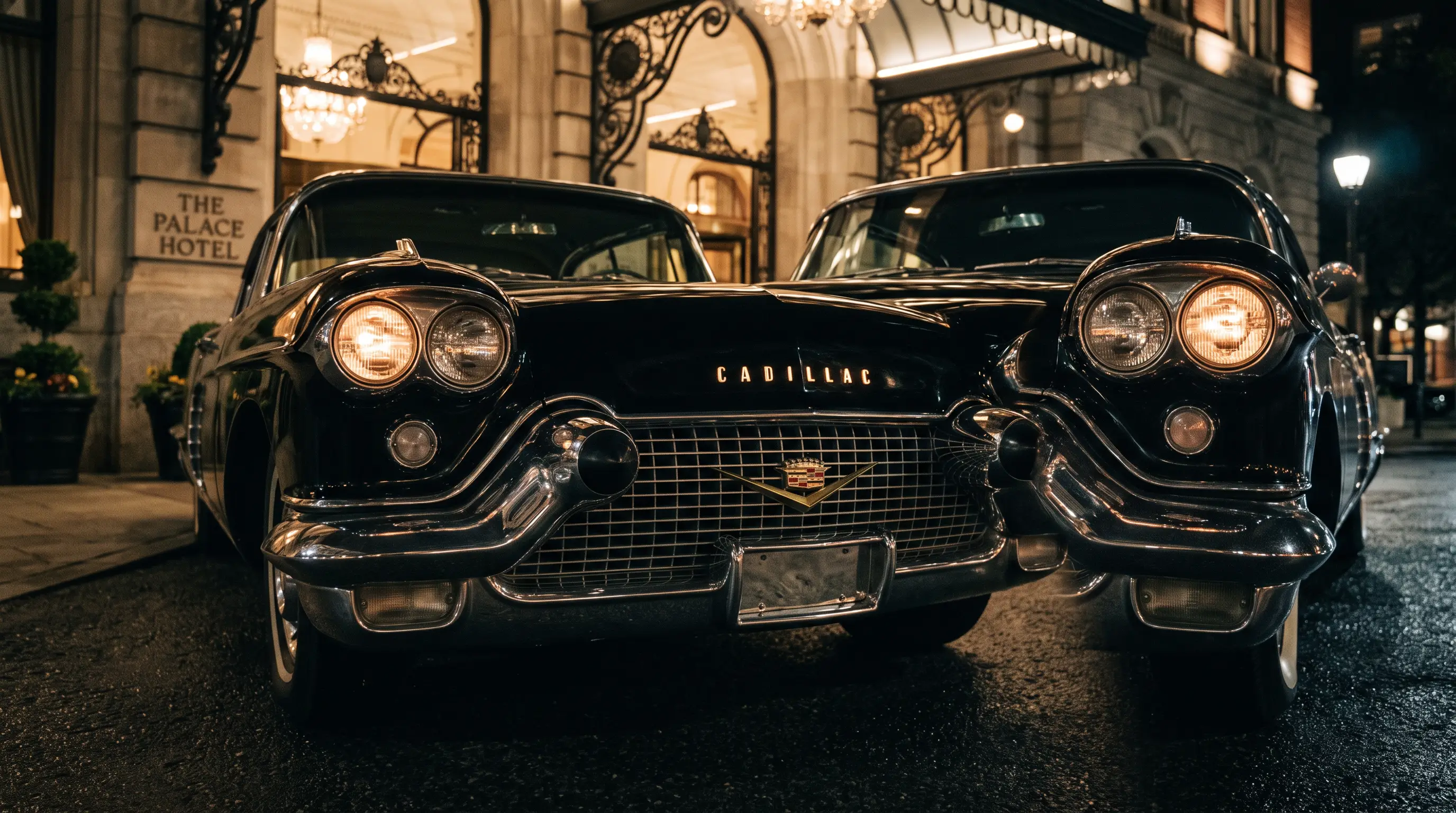
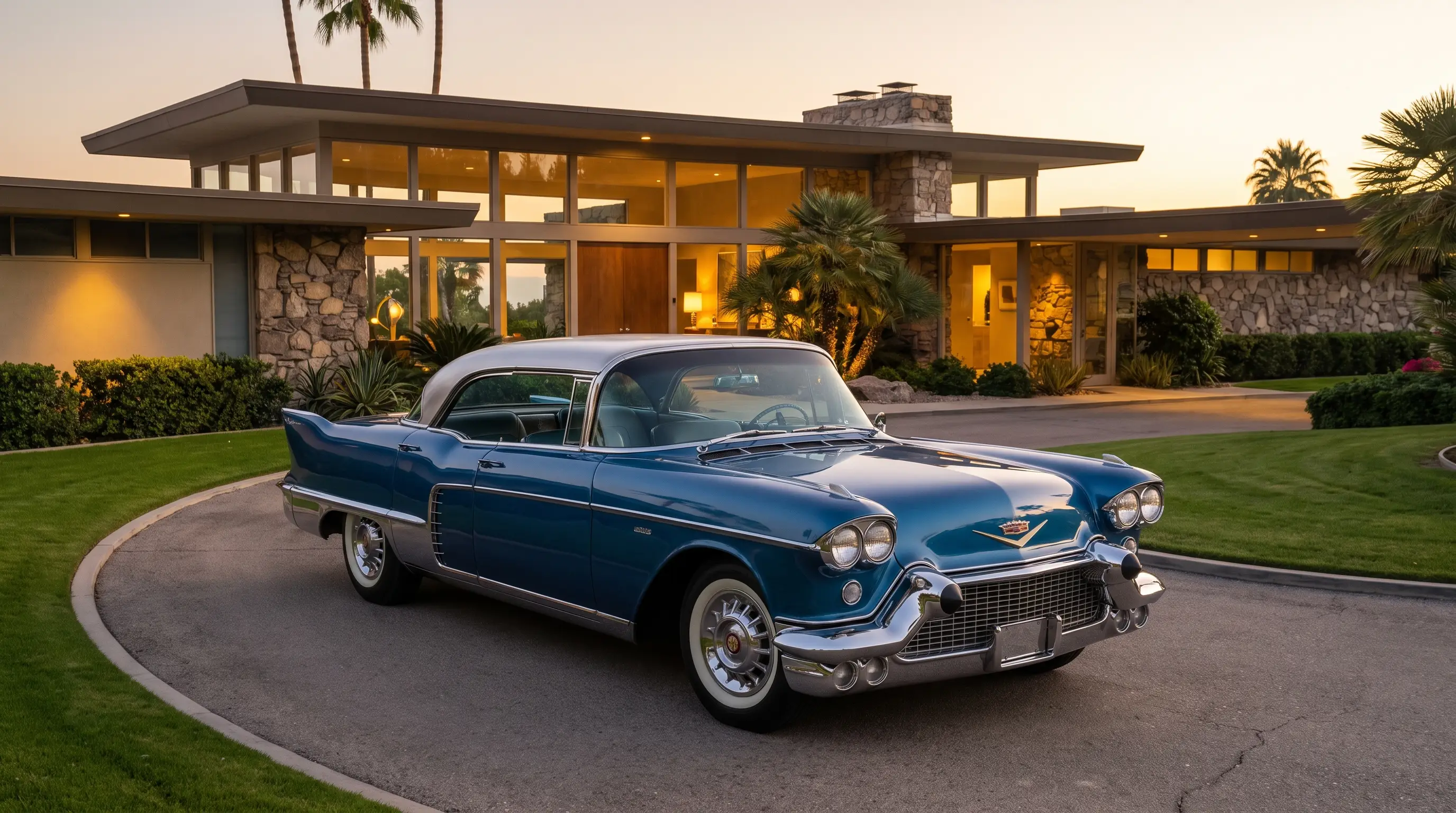
No American production car of the 1950s carried a feature list like the Cadillac Eldorado Brougham. Cataloguing the eldorado brougham luxury features that came standard on this car is not an exercise in nostalgia. It is a useful lens for understanding why the car cost what it did, why Cadillac lost money on every unit, and why the equipment list still shapes how these cars are valued and judged today.
A cabin built like nothing else on the road
Air conditioning came standard at a time when it was still a rare and expensive option on most American cars, luxury or otherwise. A memory seat allowed the driver to store a preferred seating position and have the car return to it automatically, a genuinely advanced piece of engineering for the period and a feature most manufacturers would not offer widely for another two decades. Automatic headlight dimming used a photocell to sense oncoming traffic and switch between high and low beams without driver input, removing one more task from behind the wheel.
The center console carried a full set of what were essentially personal accessories built into the car itself. A cigarette case and tissue dispenser sat within reach of front seat occupants, a small notepad and pen were provided for messages or reminders, and a perfume atomizer let owners scent the cabin to their preference. Cordless drink tumblers, magnetized to stay secure in their holders while the car was in motion, rounded out an accessory package that read more like a hotel suite amenity list than a car's standard equipment sheet.
None of this happened by accident, and readers who want the full context on why Cadillac committed to this level of extravagance should read the background on the Brougham program as a whole, since the feature list only makes sense alongside the pricing strategy and the loss Cadillac was willing to absorb on every car.
Small details that added up
Beyond the headline items, the Brougham's cabin was finished with a level of material quality that most American manufacturers reserved for coachbuilt one-offs rather than anything sold through a regular dealer network. Leather selection, carpet quality, and the fit of interior hardware were all specified to a standard closer to a European bespoke car than a domestic production model, even one wearing a Cadillac badge. Door panels, headliner material, and even the switchgear used to control the various electrical accessories were chosen and finished with an attention to detail that added cost at every single step of assembly.
Power everything came standard as well, at a time when power windows and power seats were still optional extras on most luxury cars, let alone mainstream models. Combined with the more novel accessories already covered, the overall effect was a cabin that gave a driver or passenger almost nothing left to want, which was precisely the intent behind the entire program from the beginning.
Pricing the impossible feature list
Every one of these features added real engineering cost, real assembly time, and real warranty risk to a car that was already being hand built at a fraction of normal production line efficiency. The retail price reflected some of that cost, listed around $13,074, more than a comparable Rolls-Royce of the period, but even a price tag that eye watering did not come close to covering what Cadillac actually spent building each car. This is the fundamental economic tension that ran through the entire Eldorado Brougham program from 1957 through 1960: a feature list this ambitious simply could not be priced profitably at the volumes Cadillac was willing to build.
Understanding this pricing reality matters for anyone evaluating these cars as collectibles today, because it explains why the Brougham has always occupied a category separate from other Cadillacs of its era. It was never meant to make financial sense as a product. It was meant to demonstrate what Cadillac's engineers and stylists were capable of when cost constraints were essentially removed from the conversation.
"When you list out everything standard on this car, the number that should stick with you isn't the feature count. It's how much Cadillac lost building it, because that tells you this was never a rational business decision."
- David Mercer
How competitors responded
Other American luxury manufacturers took notice of what Cadillac had shipped standard on the Brougham, and the ripple effects showed up across the industry within a few years. Features that seemed almost outrageous as standard equipment in 1957, memory seats, automatic dimming, factory air conditioning, gradually filtered down into optional equipment lists across the luxury segment, and eventually into mainstream cars entirely, over the following decade. The Brougham did not just display what Cadillac could build. It effectively set a target that the rest of the American auto industry spent years trying to catch up to, one feature at a time.
How the feature list affects value today
Functioning original equipment carries a real premium in this market, and it is not a small one. Many of these systems, the memory seat, the automatic dimming, the air conditioning compressor and its associated hardware, were built with 1950s materials and components that were never designed for seven decades of service. Cars that retain working original features, rather than features that have been disconnected, removed, or quietly replaced with later technology, command noticeably stronger interest from serious buyers and command higher prices at auction.
Appraisers and buyers researching a specific car should treat the feature list as a checklist during inspection rather than a marketing bullet point to skim past. Ask specifically whether the memory seat still functions, whether the original radio is present and working, and whether accessories like the tumblers, notepad, and atomizer survive with the car rather than having been lost to decades of ownership changes. Completeness on a car this rare and this loaded with unique equipment genuinely moves the needle on value in a way it simply does not on a more common Cadillac from the same era.
The bottom line for buyers
The Eldorado Brougham's feature list is not a curiosity to admire from a distance. It is a core part of the car's identity and a central factor in how the market prices individual examples against one another. A well documented car with intact original features will always outperform a stripped or incomplete example, regardless of how good the paint or chrome looks in photographs. Buyers who understand this going in make better decisions, and sellers who can document originality on these specific systems have real leverage in negotiations.
For anyone ready to compare real examples against each other, you can find a classic Eldorado currently on the market and see how completeness and originality actually translate into asking price across the current inventory.