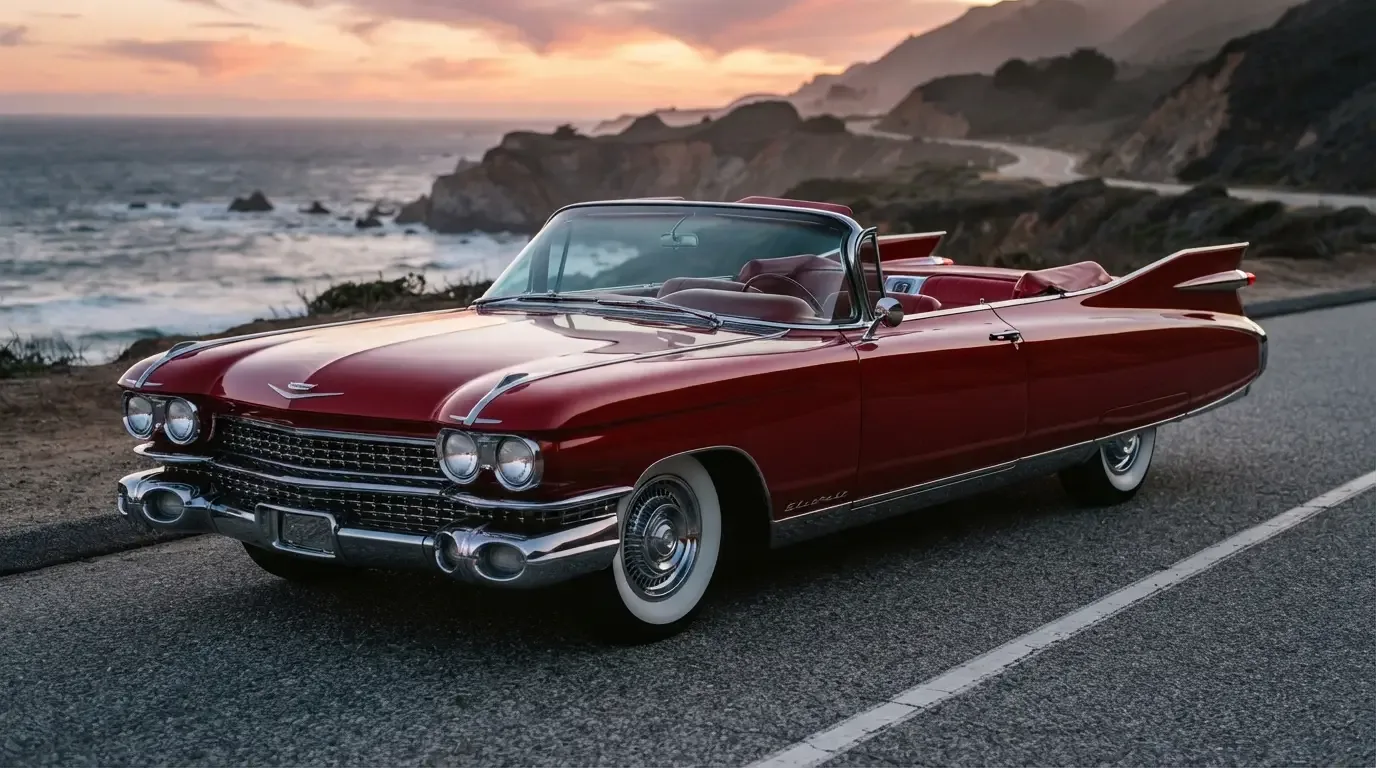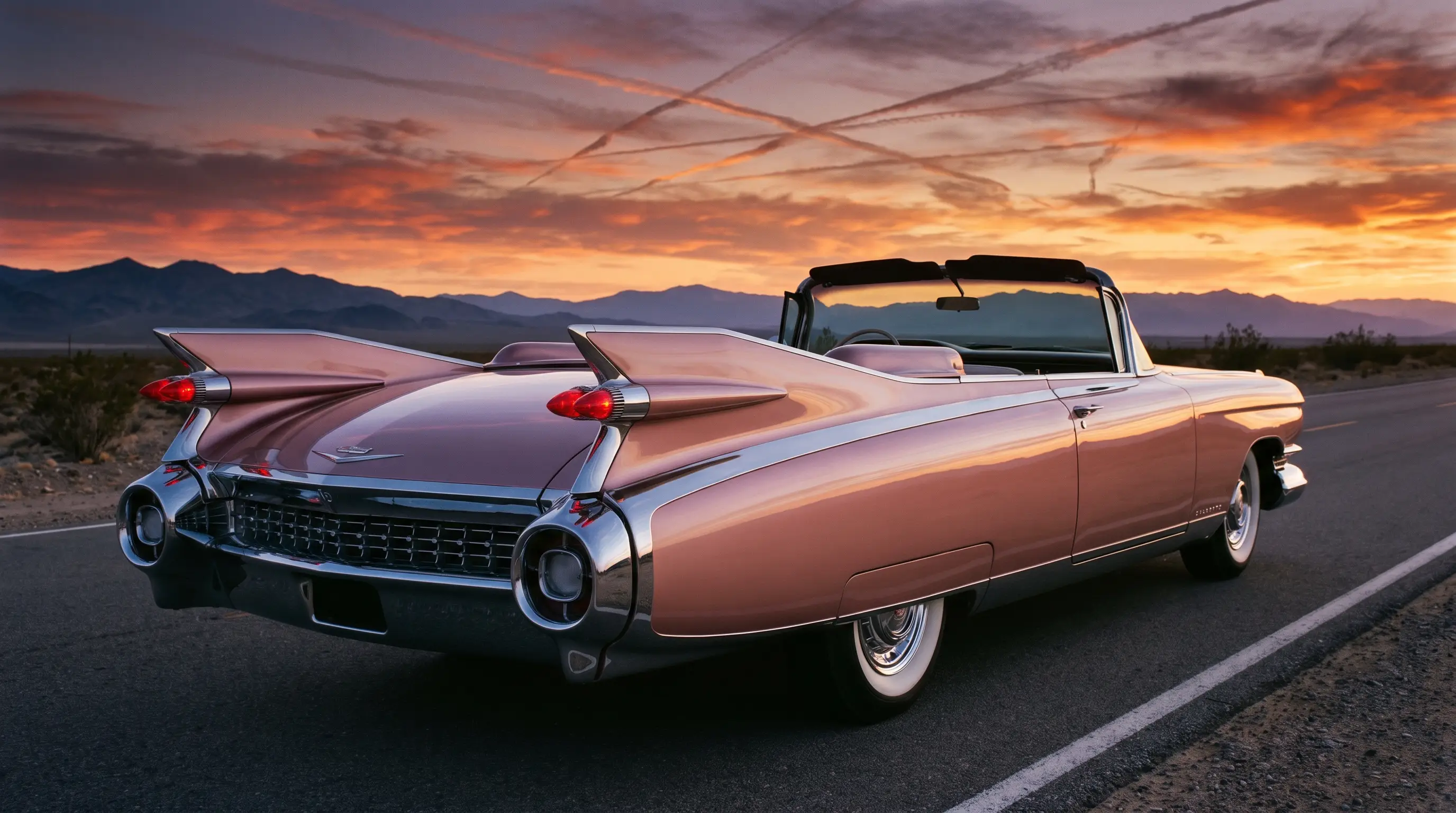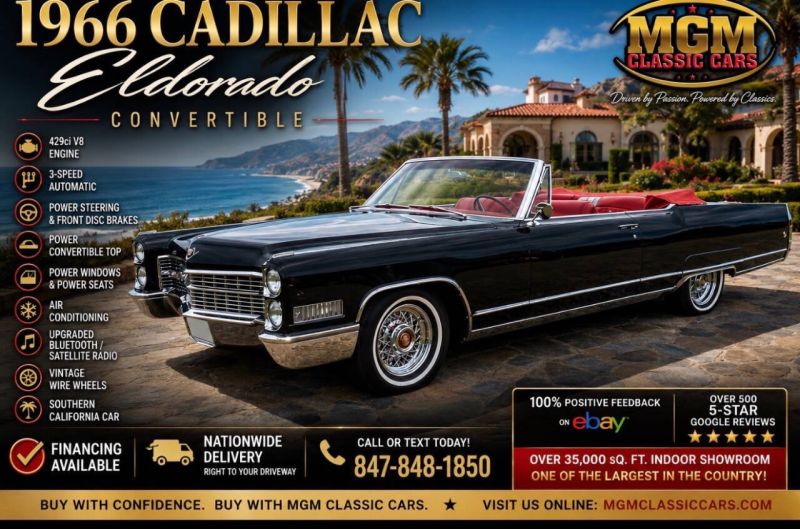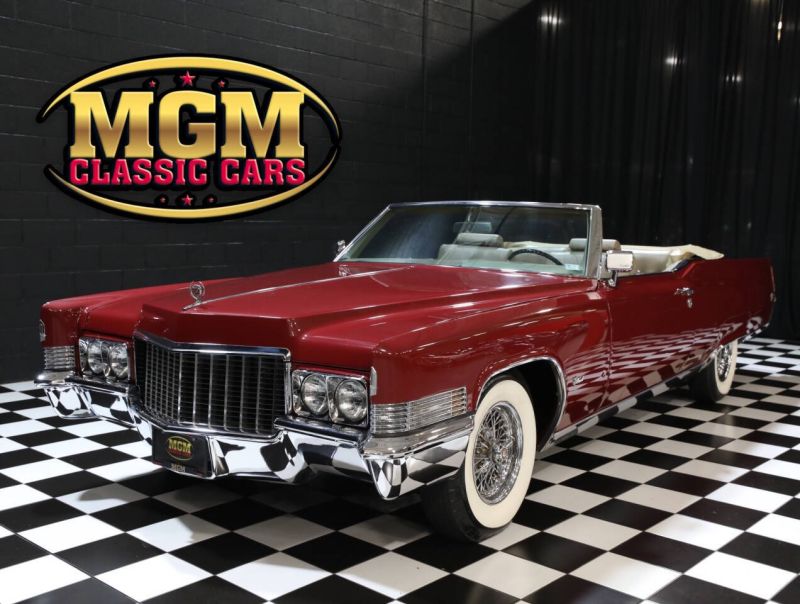
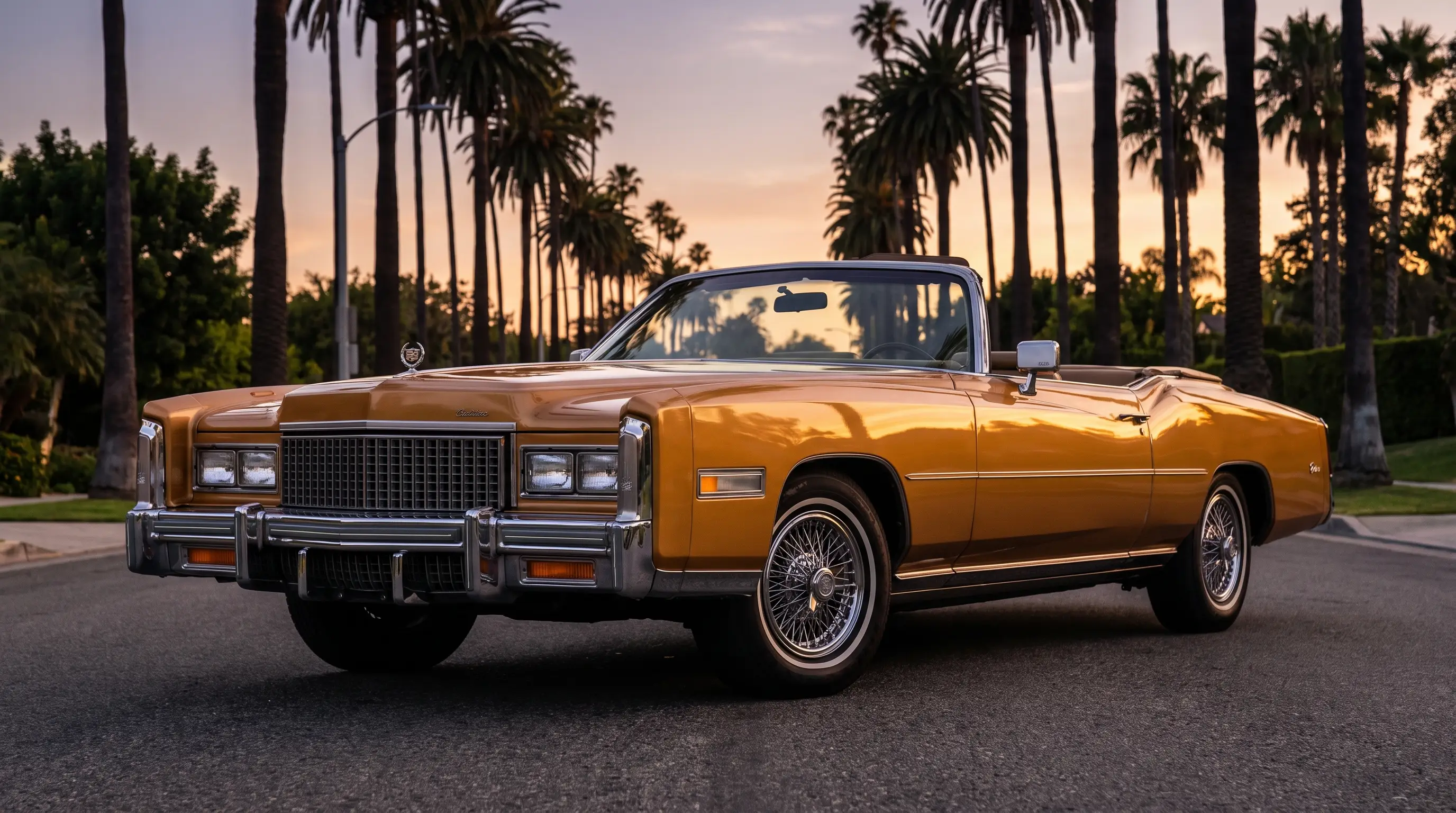
A parking lot full of classic Cadillac Eldorado colors tells you more about American taste than any history book. Coral, aqua, and gold from the 1950s. Deep burgundy and forest green from the land-yacht 1970s. Muted pastels and eventually monochrome grays from the Northstar era. The Eldorado's paint chart is a quiet timeline of what Americans wanted their cars, and by extension themselves, to say about the decade they were living through.
The candy-colored 1950s
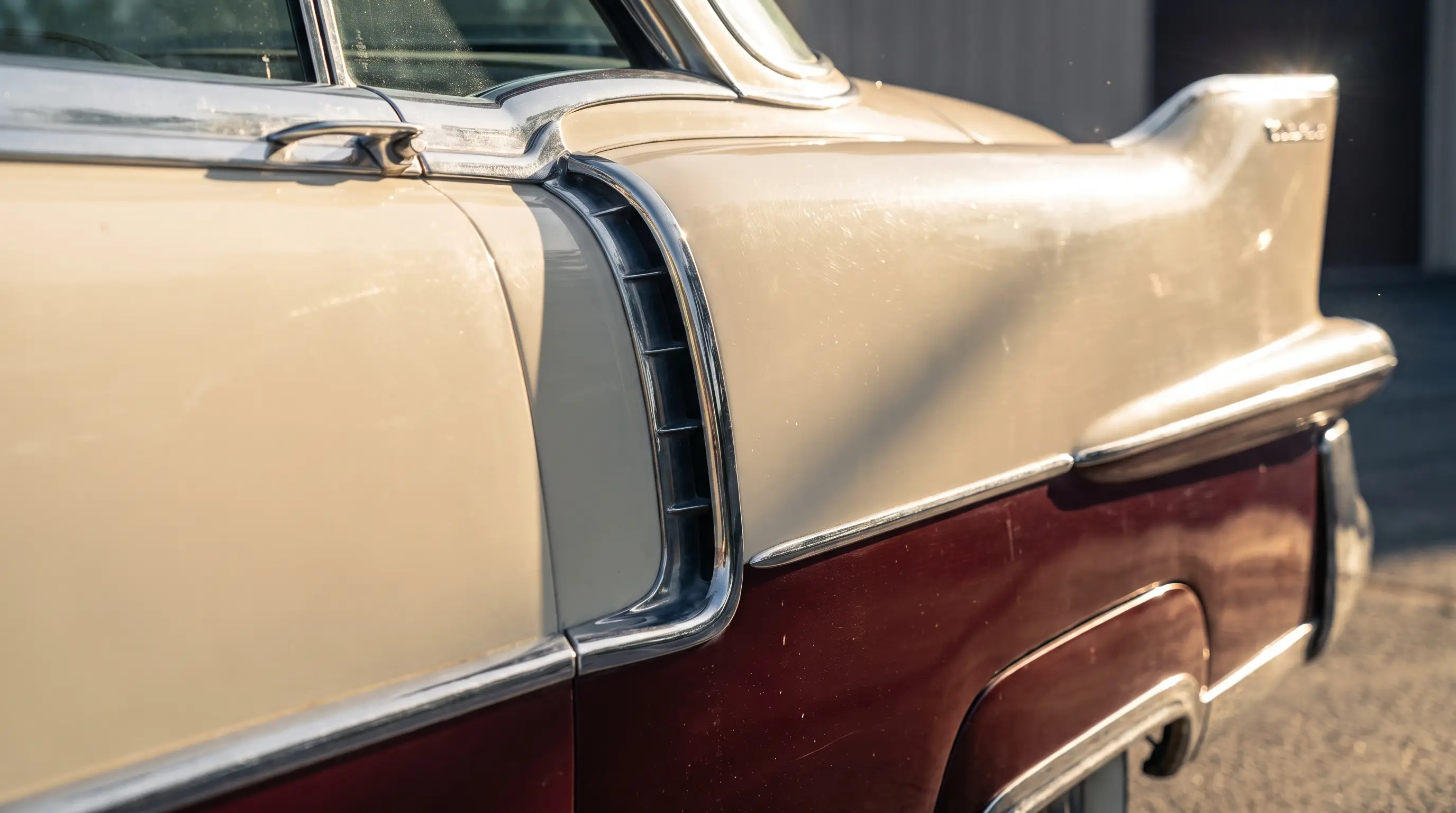
Cadillac's palette in the 1950s was unapologetic. Names like Aztec Red, Manila Cream, and Bahama Blue filled the order sheets, and the Eldorado, as the top-of-line convertible, got first pick of the boldest shades. A woman in Palm Springs or Miami buying a new Eldorado convertible in 1957 was not choosing a car so much as choosing a statement piece for the driveway. Two-tone combinations only amplified the effect, pairing a pale roof or lower panel against a saturated body color so the car read as bright even parked in shade.
Postwar optimism drove a lot of this. Rationing was over, the economy was expanding, and buyers wanted color the way they wanted chrome, in quantities that would look excessive by later standards. Cadillac's stylists understood the assignment and kept pushing the palette brighter through the decade, right up until the tailfin era peaked in 1959.
Two-tone paint had its own internal hierarchy at the dealership. Certain combinations, like a white roof over a deep coral body, became so popular they functioned almost like a default choice, while more adventurous pairings, gold over turquoise for instance, stayed rarer and today draw more attention from collectors precisely because so few buyers ordered them new. Dealer order books from the period show clusters of a handful of favorite combinations repeated over and over, with the truly unusual pairings appearing only a few times per region.
The 1960s cool-down
Color followed the same restraint that hit Cadillac's sheet metal in the early 1960s. As fins shrank and lines sharpened, the palette shifted toward more sober tones, think Sherwood Green, Regency Gray, and various near-black finishes that suited the cleaner, more architectural bodies Bill Mitchell's studio was drawing. The 1967 Eldorado, the first front-wheel-drive generation, arrived in this calmer color world and looked all the sharper for it. A low, crisp body did not need shouting colors to get attention, and Cadillac's paint offerings reflected that new confidence.
Metallic finishes also became more common through this period, giving colors like Sable Black and Cotillion White a depth that flat 1950s paint simply could not match under showroom lighting.
Interior colors in the 1960s tracked the same restraint. Where a 1950s Eldorado might pair a bright exterior with an equally bright leather interior, a 1967 Eldorado buyer was more likely to choose a black or dark saddle interior regardless of exterior color, letting the body lines carry the visual weight instead of a loud cabin. It was a more tailored, adult approach to color, and it suited the front-wheel-drive car's new sense of confidence.
Land-yacht decadence in the 1970s
Nothing captures the 1970s Eldorado quite like its colors. This was the land-yacht era, when the car grew to its largest dimensions and the palette grew right along with it. Firemist paints, a translucent multi-coat finish Cadillac introduced with genuine pride, gave shades like Firemist Copper and Firemist Green a shimmer that regular single-stage paint could not replicate. Buyers paired these with vinyl roofs in contrasting colors, often white or a matching tone, and the combination became a defining look of American luxury during the disco years.
Interior colors matched the ambition outside. Deep burgundy leather, forest green velour, and camel-tone broadcloth turned the cabin into an extension of the exterior statement. This was not a subtle decade for Cadillac, and the Eldorado, as the brand's personal luxury flagship, led the charge.
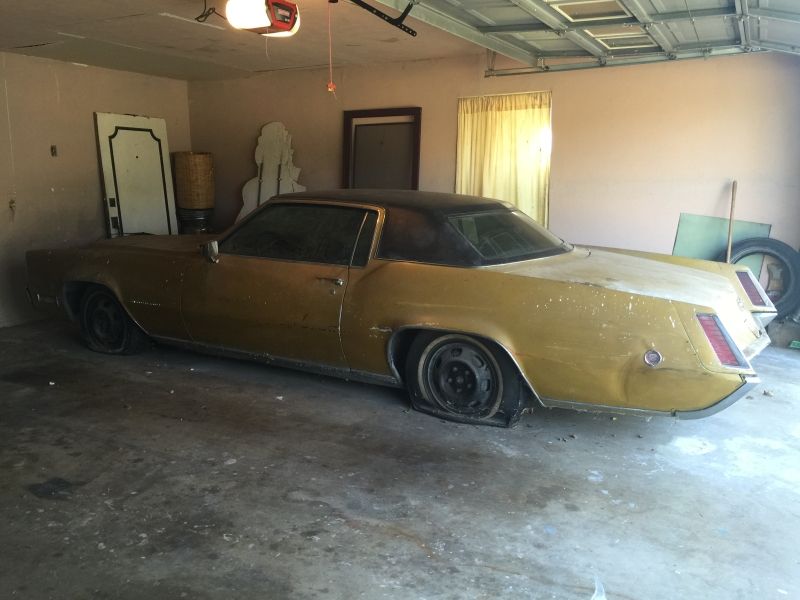
The Firemist line deserves its own mention because of how it was applied. Rather than a single pigmented coat, Firemist used a base color topped with a translucent layer carrying fine glass and pearl particles, giving the finish a depth that shifted subtly depending on the angle of light. It cost more to apply correctly and it cost more to repair correctly decades later, which is part of why so many surviving 1970s Eldorados have been repainted in a simplified, single-stage version of their original color rather than the true multi-coat finish.
"You can date a photograph of an Eldorado almost to the year just from the paint. Nobody in 1976 was ordering the same gray a buyer chose in 1963, and nobody in 1963 would have touched the copper Firemist that defined the following decade."
- Nora Beckett
Downsizing and the muted 1980s
When the Eldorado shrank dramatically for 1986, the color story shrank with it. Gone were the loudest Firemist shades, replaced by a more restrained lineup of grays, blues, and burgundies that fit the smaller, more conservative body. This was Cadillac trying to modernize quickly, and the paint choices reflected a brand hedging its bets rather than making a statement. It is arguably the least memorable chapter in the Eldorado's color history, though collectors researching the period still find it worth the full story behind why the body shrank so suddenly in the first place.
By the early 1990s, as the Northstar-powered Eldorado arrived with softer, more aerodynamic lines, the palette settled into the kind of quiet, sophisticated tones that defined luxury cars industry-wide, deep reds, pearlescent whites, and increasingly common metallic silvers and grays. The exuberance of the 1970s was gone for good, replaced by a more restrained kind of confidence.
Chasing an original color today
For collectors, color is not just aesthetic trivia, it directly affects value. A 1959 Eldorado Biarritz in a rare original shade commands real attention at auction, while a common repaint in a period-incorrect color draws immediate scrutiny from serious buyers. Firemist colors from the 1970s carry similar weight, since the multi-coat process was expensive to replicate correctly and many restorers cut corners on the finish.
Anyone shopping with color as a priority should expect to pay a premium for a documented original finish, and to walk away from anything where the paint code on the build sheet does not match what is on the car. If a rare shade is the goal, patience matters more than speed, since the right color in the right condition does not surface every week.
Those ready to start that search can browse classic Eldorado listings and see how much the color story still shapes what collectors are willing to pay for a car nearly seventy years into the Eldorado's run.
What makes the Eldorado's color history worth studying, rather than just admiring in old photographs, is how honestly it tracks the country's mood decade by decade. Bright postwar optimism, a calmer and more tailored 1960s, indulgent 1970s excess, a cautious downsized 1980s, and a quietly confident 1990s. Few single model lines ran long enough, or stayed prominent enough, to leave that complete a record in paint alone.