Ask any old-timer at a Cadillac club meet why the Eldorado looks the way it does, and the aviation inspired Cadillac Eldorado answer comes up within a minute. Jet fighters were the most exciting machines of the 1950s, and Cadillac's stylists were paying close attention. Fins, bullet tips, and cockpit-style dashboards did not happen by accident. They happened because a generation of designers grew up watching P-38 Lightnings and F-86 Sabres carve up the sky, and they wanted a car that looked like it could do the same.
Harley Earl and the fascination with flight
Harley Earl ran GM styling for three decades, and he was obsessed with speed even when he was not drawing cars. He reportedly toured a Lockheed plant during the war and came away fixated on the twin-boom tail of the P-38 Lightning. That fixation eventually landed on the 1948 Cadillac, the first production car with tailfins, and it never really left. By the time the Eldorado arrived for 1953 as Cadillac's halo convertible, the aviation language was already baked into the brand. The Eldorado just pushed it further, faster, and with more chrome than any fighter squadron would have tolerated.
The connection was not subtle. Cadillac's own advertising in the 1950s leaned on words like "jet-smooth" and pictured cars next to contrails. Earl's team was not hiding the influence. They were selling it, and the sales force loved the shorthand because it gave customers a story to repeat to their neighbors. A car is just a car until it has a narrative attached, and "styled by the same instincts that build fighter jets" was a narrative that moved metal off showroom floors.
Earl also understood something subtler than fins and chrome. Fighter aircraft of the period had a visual tension to them, long noses balanced against short tails, canopies that suggested forward lean even parked on the tarmac. He pushed his stylists to chase that same tension in sheet metal, arguing that a car sitting still in a driveway should still look like it wanted to move. Few cars achieved that better than the early Eldorado, whose long hood and low beltline created an illusion of speed that had nothing to do with the engine underneath it.
From tailfins to afterburners
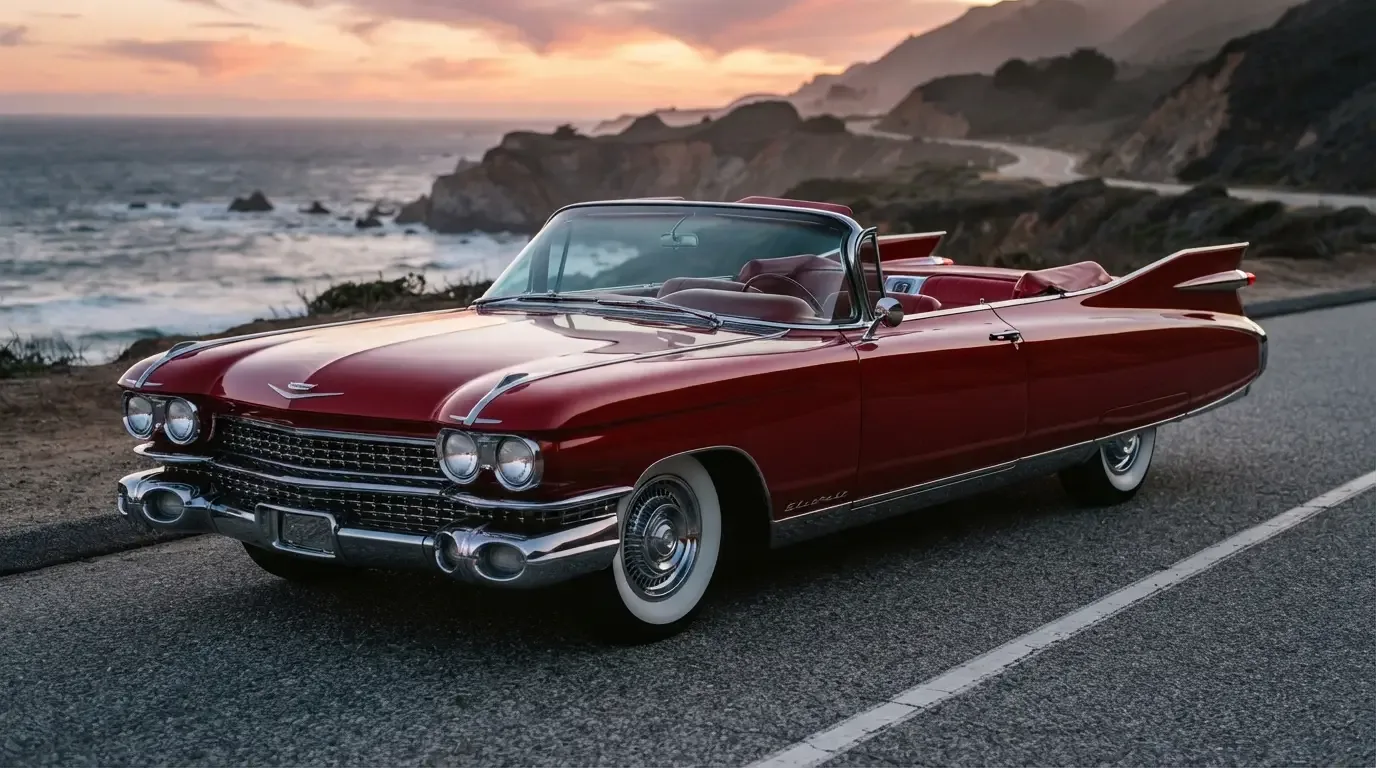
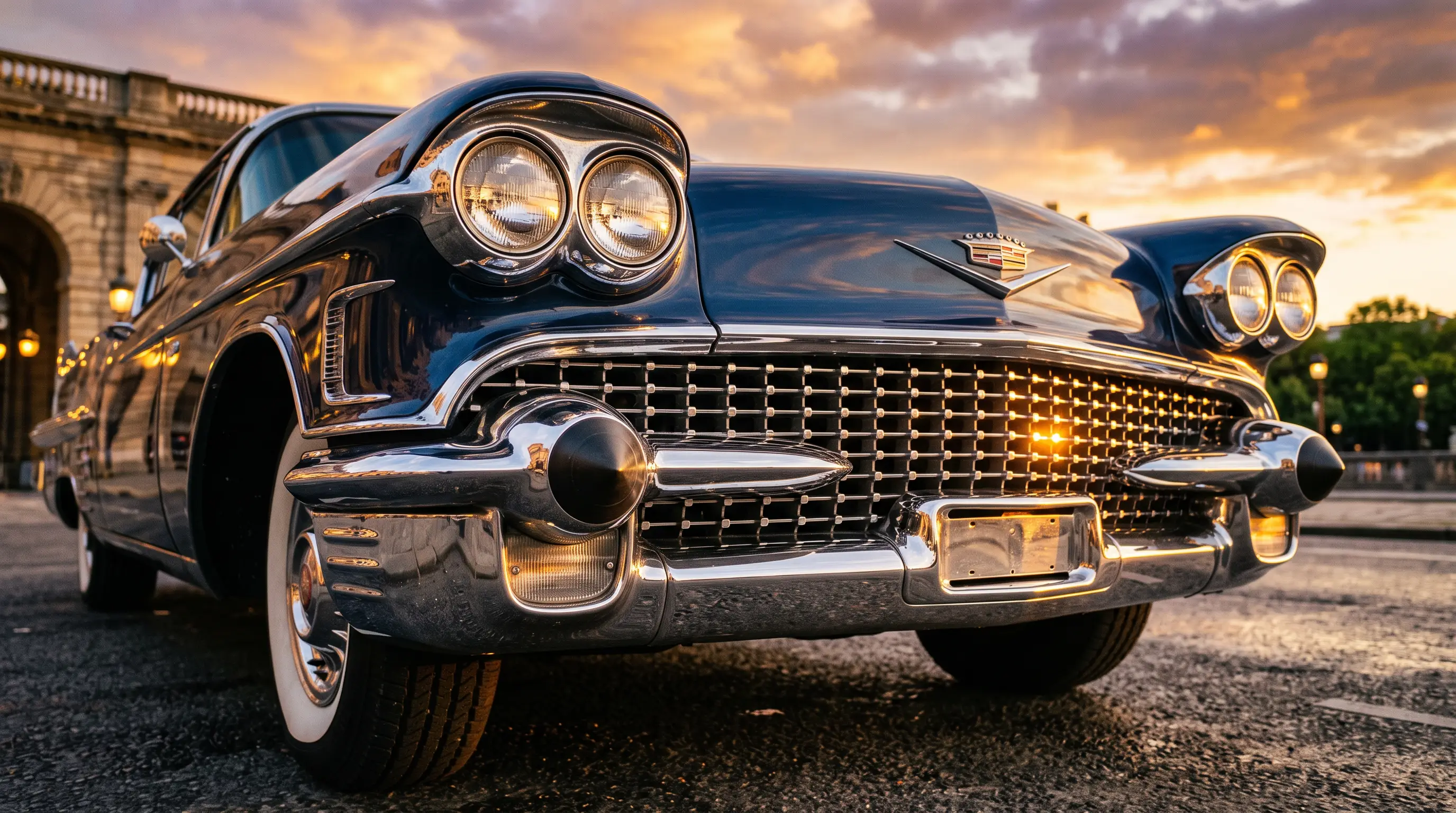
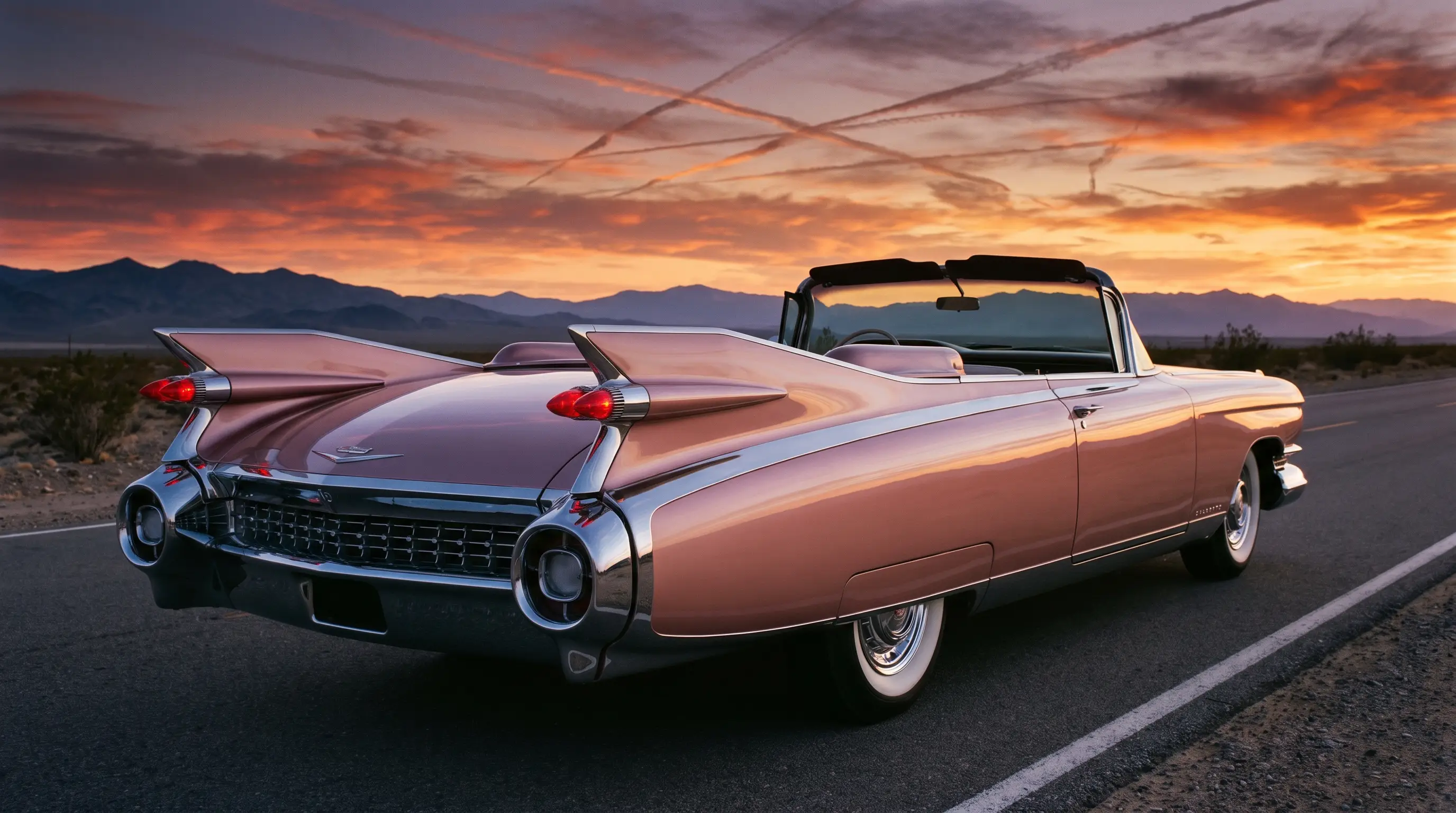
The fin grew every year through the decade, and so did the aircraft references built into it. By 1959 the Eldorado's fins carried dual bullet taillights that dealers openly compared to jet exhaust nozzles. Some buyers thought it was gaudy even then. Nobody thought it was boring. The 1959 Eldorado, with its towering fins and quad headlights, remains the single most photographed American car of the tailfin era, and it is the clearest statement of how far Cadillac was willing to take the jet-age idea before pulling back.
That pullback came fast. By 1961 the fins had shrunk dramatically, and Cadillac design chief Bill Mitchell steered the brand toward cleaner, more architectural lines. The aviation influence did not disappear, it just changed vocabulary, moving from literal fins and rocket taillights to a more restrained sense of thrust and forward motion. Mitchell was less interested in literal fighter jet quotations than Earl had been, but he kept the underlying premise that a Cadillac had to look like it was outrunning something.
Contemporary road tests picked up on this shift immediately. Writers who had mocked the excess of 1959 praised the discipline of the early 1960s cars while still noting that the Eldorado retained a sense of purpose the sedans lacked. It was still the halo car, still the one built to turn heads at a country club or a hotel valet stand, even after the rocket-ship trim was toned down.
Cockpits, canopies, and control panels
Aviation influence went beyond sheet metal. Cadillac interiors of the era borrowed cockpit language directly, with wraparound instrument clusters, toggle-style switches, and dashboard layouts that echoed a flight deck more than a living room. The Eldorado Brougham of 1957 and 1958 pushed this furthest with its stainless steel roof and a dashboard that Cadillac literally marketed using aircraft terminology. Owners were told they were piloting the car, not merely driving it.
This was smart marketing as much as design instinct. America in the 1950s was captivated by jets, by the space race that followed, and by anything that suggested speed beyond what a person could feel on the ground. Cadillac sold the Eldorado as the closest a driveway could get to a runway, and buyers responded.
Even the naming conventions inside Cadillac's own engineering documents leaned on flight terms. Test drivers described ride quality using words borrowed from pilots, smooth versus turbulent, stable versus twitchy. None of that language appeared in brochures, but it shaped how engineers talked about the car internally, and it reinforced the same aviation mindset that Earl had pushed into the styling studio a decade earlier.
"You can trace half of Detroit's fin obsession straight back to a handful of designers who spent the war years staring at fighter planes. The Eldorado just happened to be the car with the biggest checkbook to run with it."
- Wayne Coburn
What survived after the fins came off
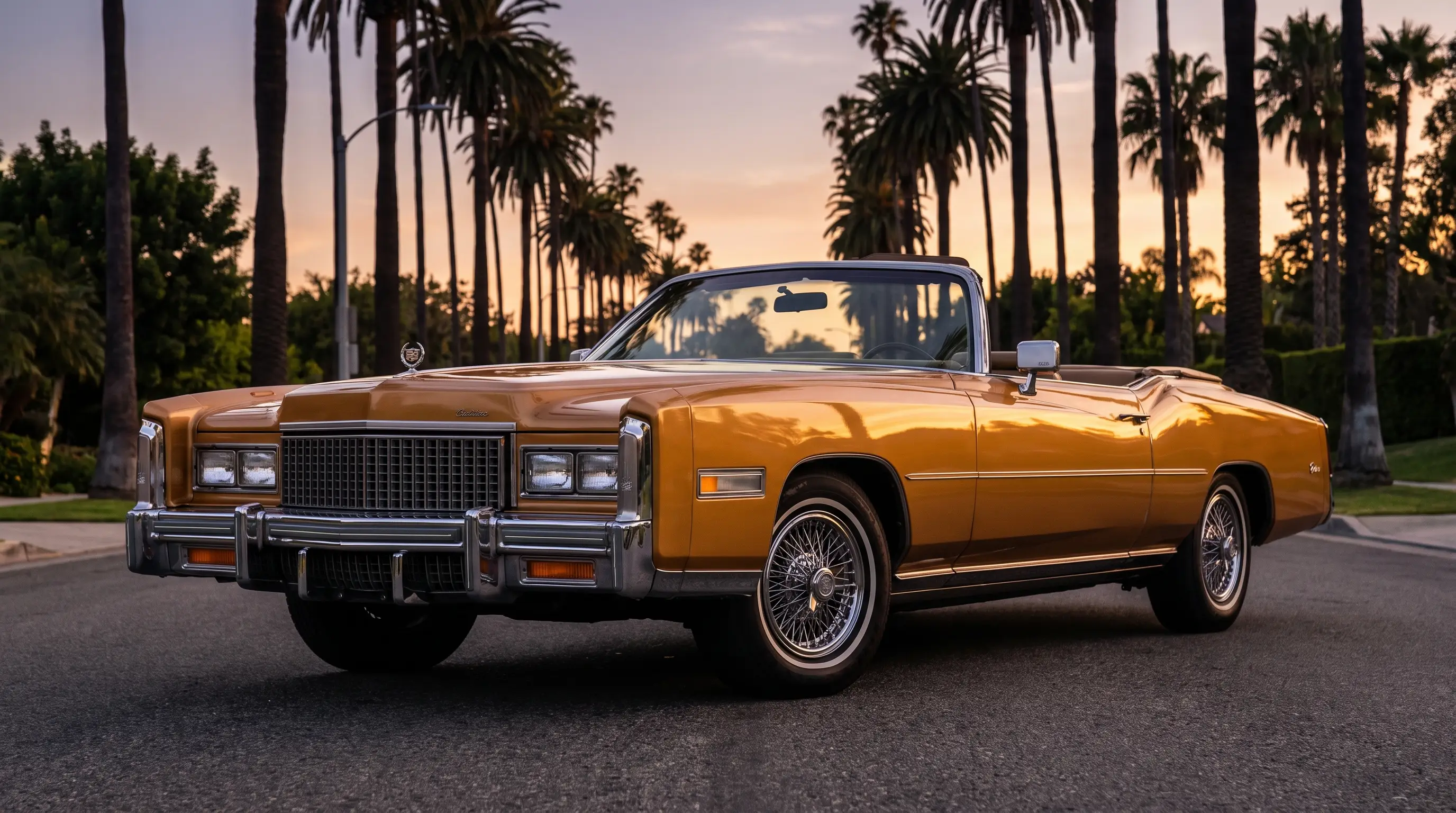
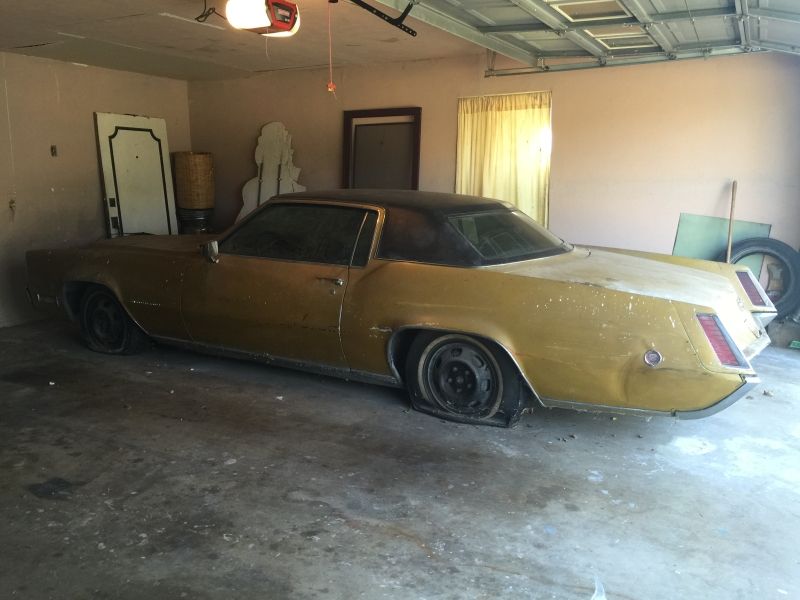
By the mid-1960s the literal jet references were gone from Cadillac styling. Fins flattened, chrome trim calmed down, and the 1967 Eldorado went front-wheel drive with a low, sharp-edged body that owed more to contemporary architecture than to aerospace. But the underlying idea, that a personal luxury car should feel faster and more dramatic than it needed to be, never left the Eldorado's DNA. You can hear echoes of it in the way collectors still talk about the car today, chasing that sense of motion even when it is parked in a garage.
If you want to trace how that visual language actually developed generation by generation, where this started is worth reading in full. The aviation influence is really just the opening chapter of a much longer design story.
For anyone who has read this far and started thinking about ownership rather than history, a classic Eldorado for sale is usually not hard to find, particularly from the fin-heavy years that made this whole obsession worth talking about.
Why the jet-age idea still resonates
Part of the reason the aviation angle still gets repeated at car shows is that it is true, not just a nice story tacked on after the fact. Cadillac's own engineers and stylists talked about airplanes constantly during the development of these cars. It shaped proportions, chrome placement, even naming conventions inside the company. The Eldorado carried that language more visibly than any other Cadillac because it was always the halo model, the one built to prove what the brand could do when nobody told the stylists to hold back.
That is why, decades later, people still walk up to a 1959 Eldorado and instinctively reach for aviation words. Rocket. Fin. Afterburner. Nobody had to teach them that vocabulary. Cadillac built it into the car on purpose, and it worked so well that the association survived long after the fins themselves disappeared from the lineup.
Modern collectors sometimes treat the jet-age years as a novelty, a quirky detour before cars got serious again. That undersells what actually happened. For roughly a decade, Cadillac's design department genuinely believed a luxury car should borrow its emotional cues from the fastest machines on earth, and they had the budget and the confidence to build that belief into steel. Few other manufacturers committed as fully, and none did it with the same theatrical flair. The Eldorado was the test bed for that belief, generation after generation, long before anyone called it heritage.