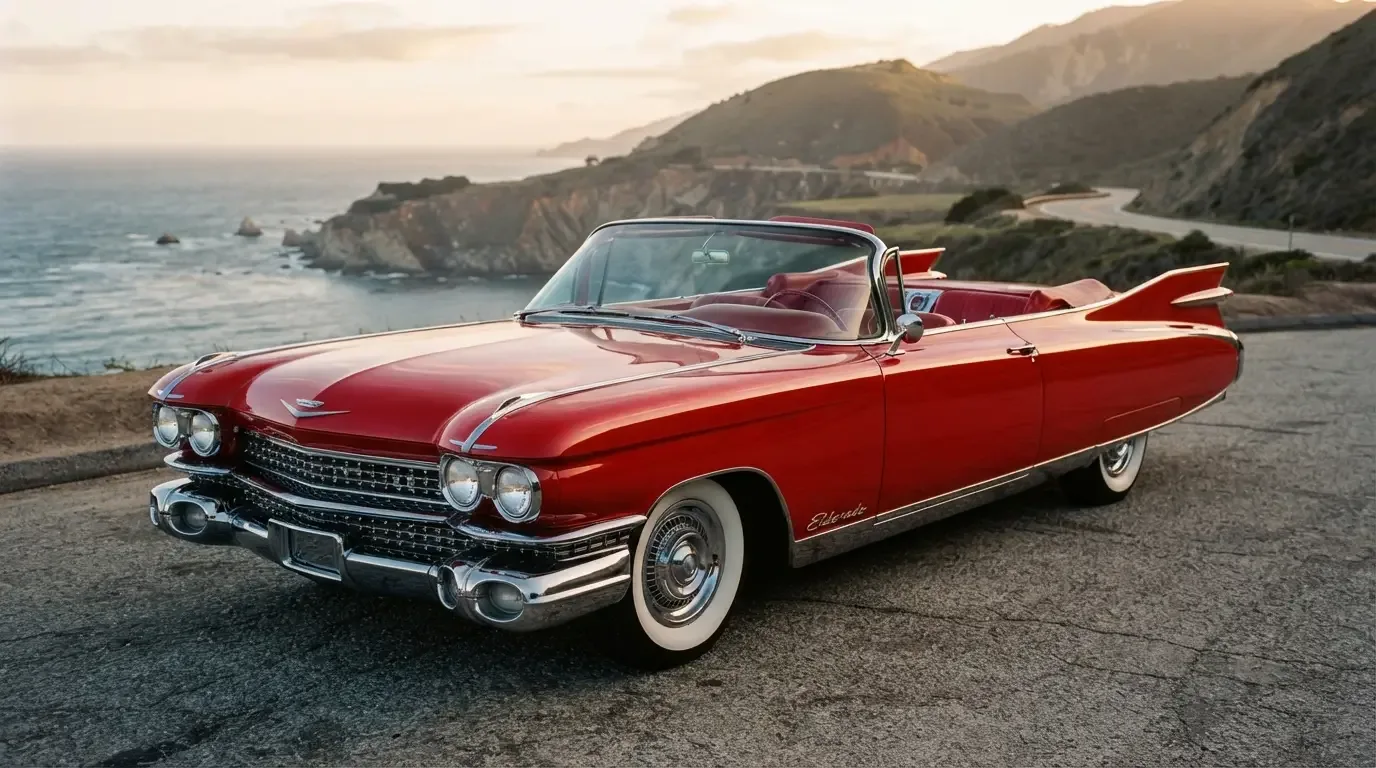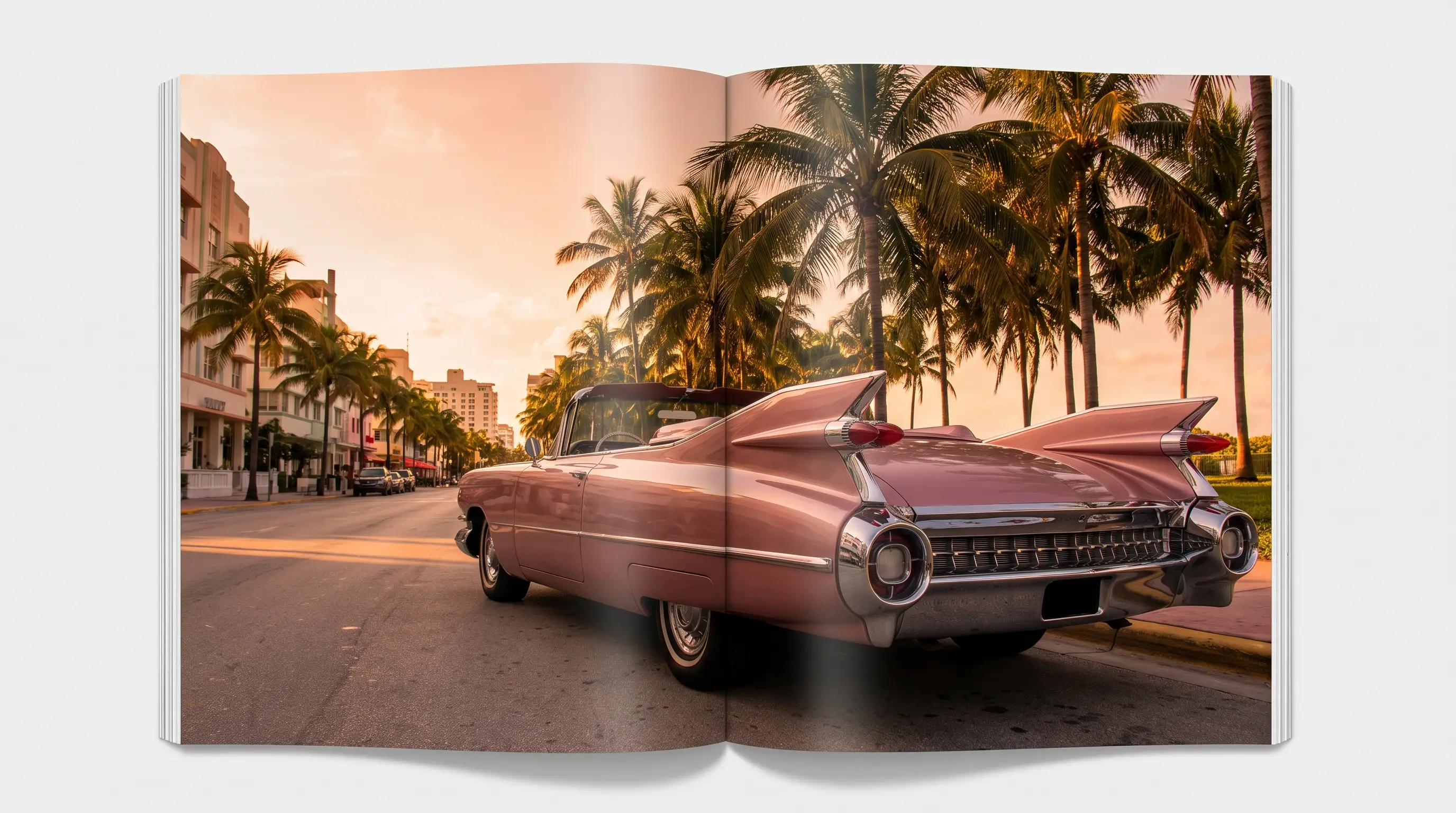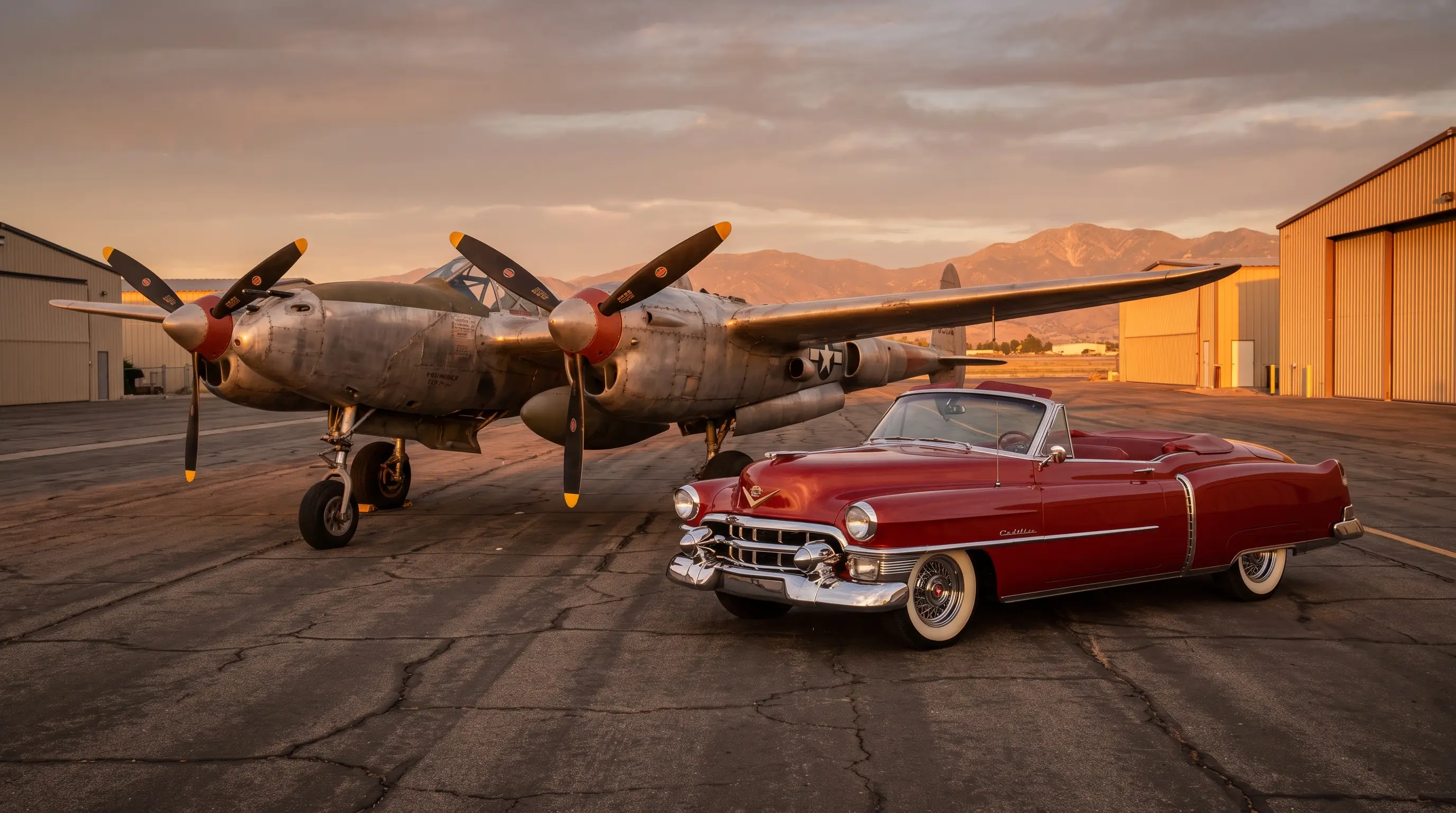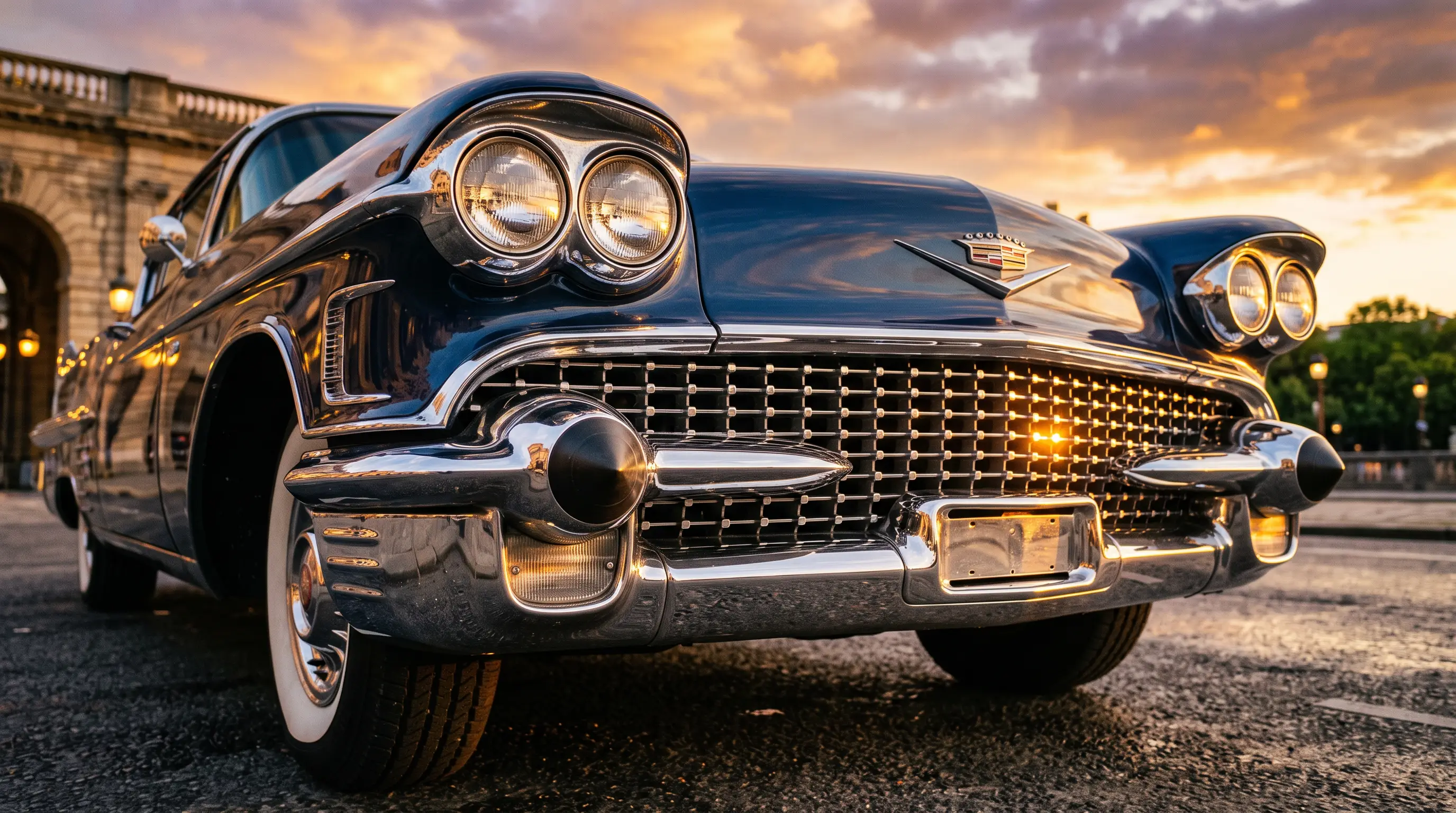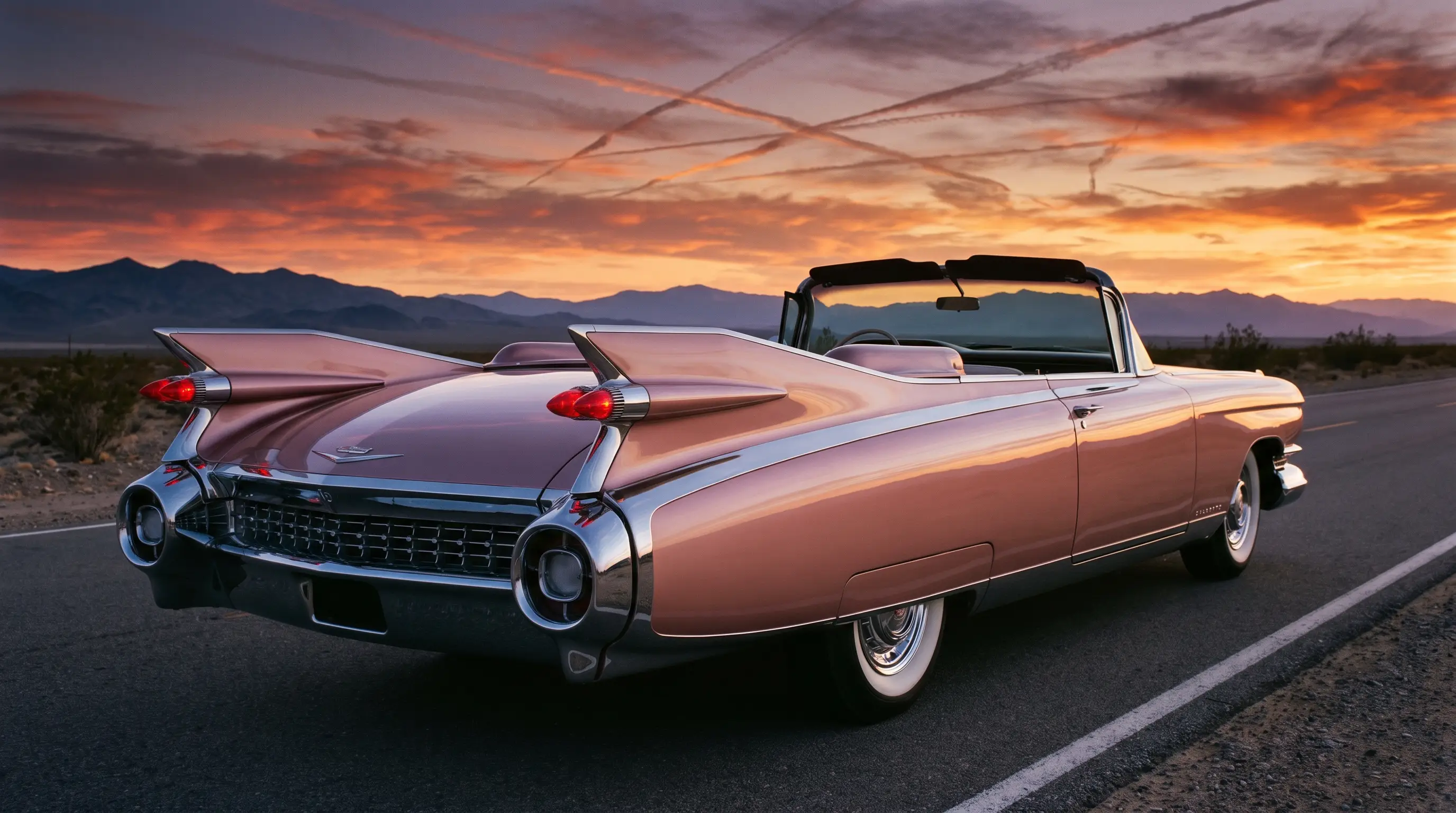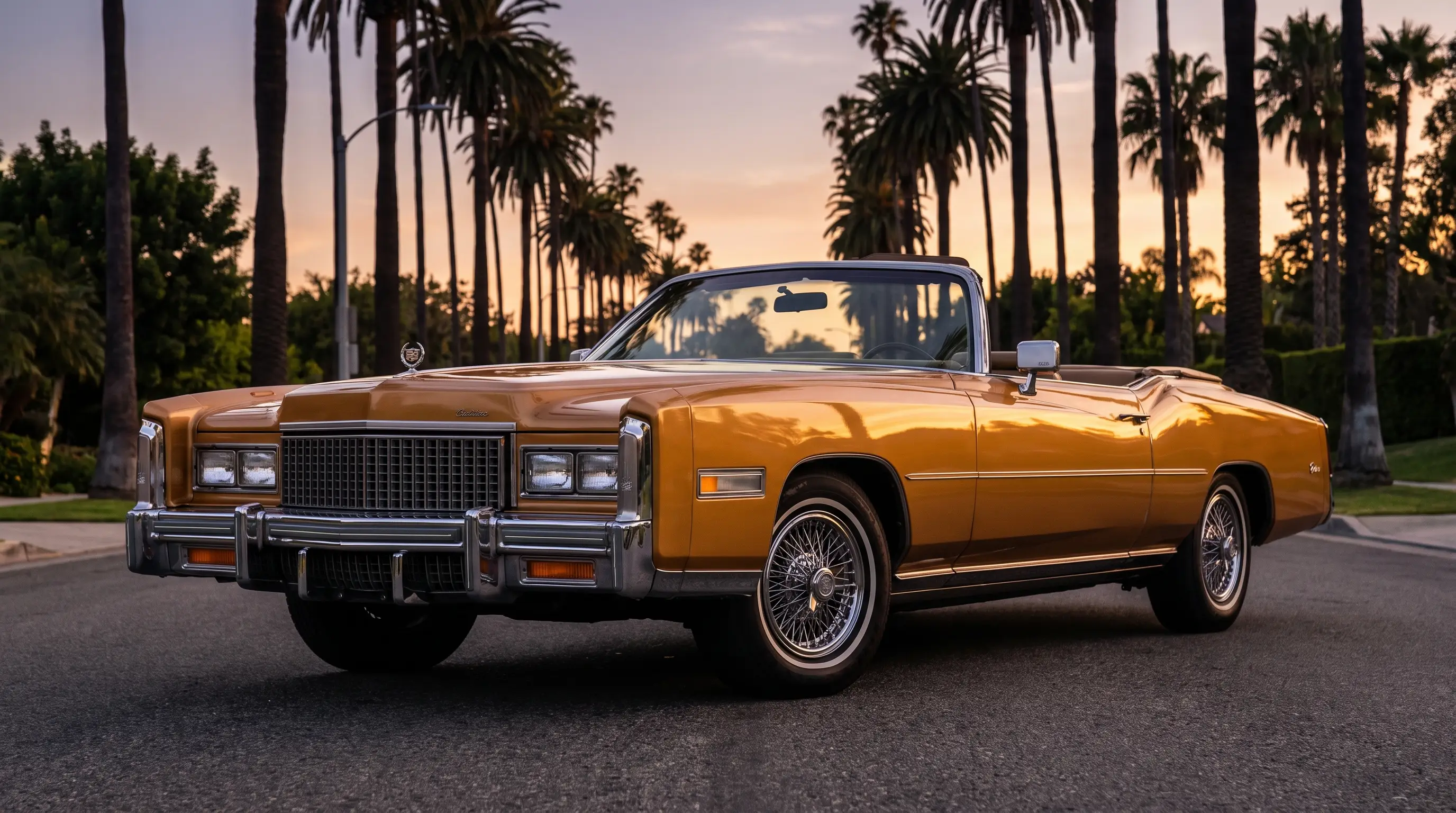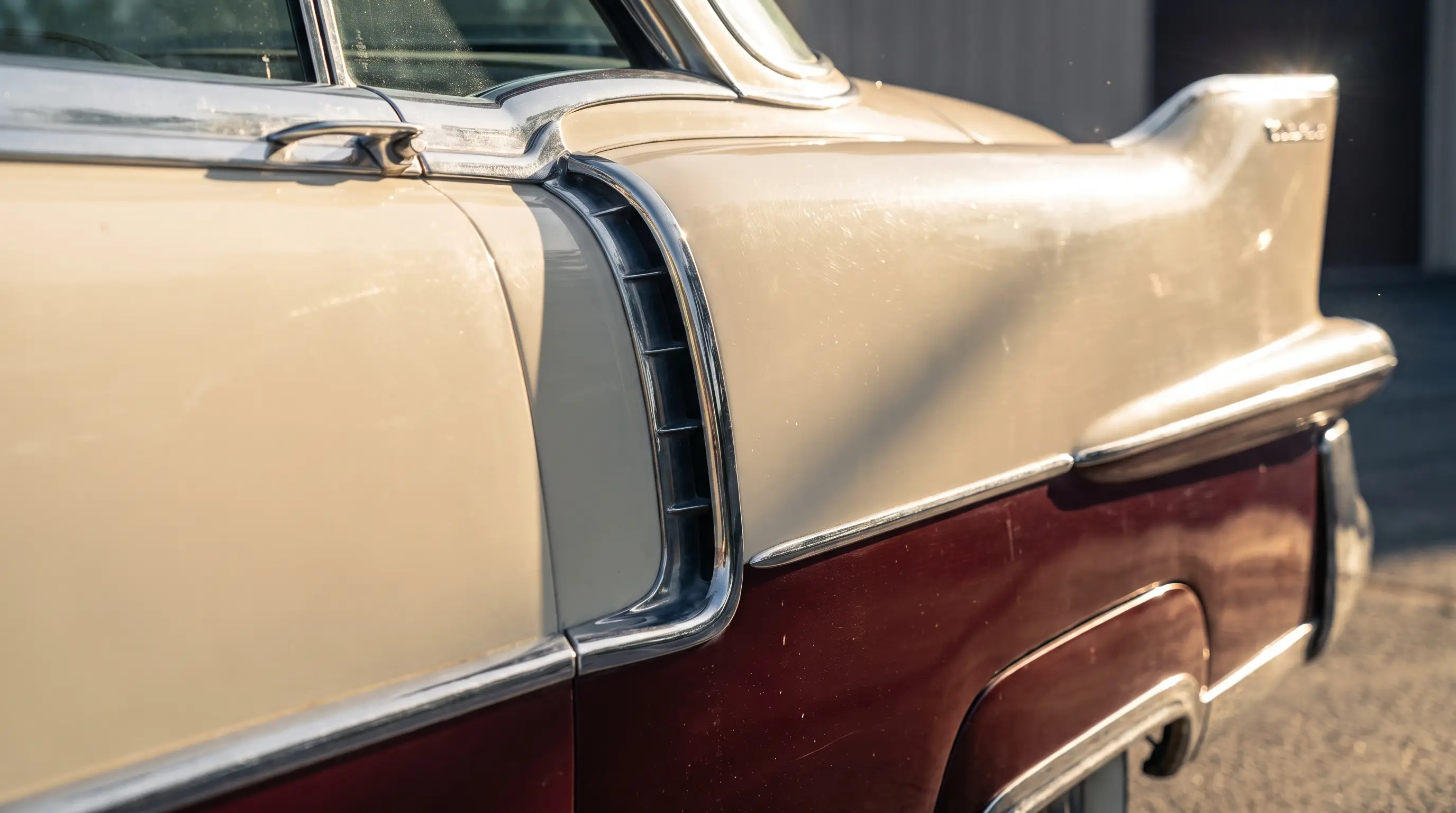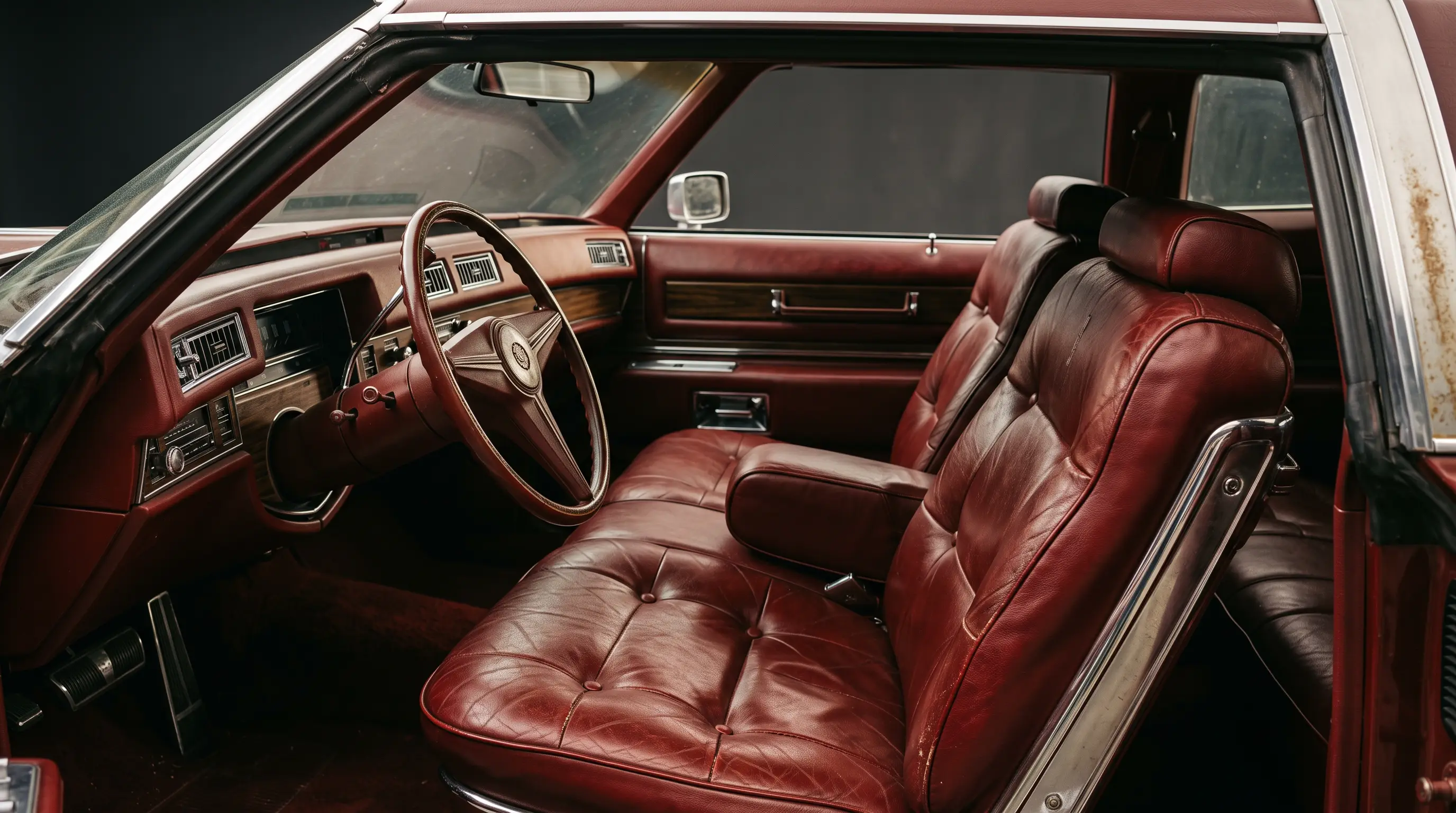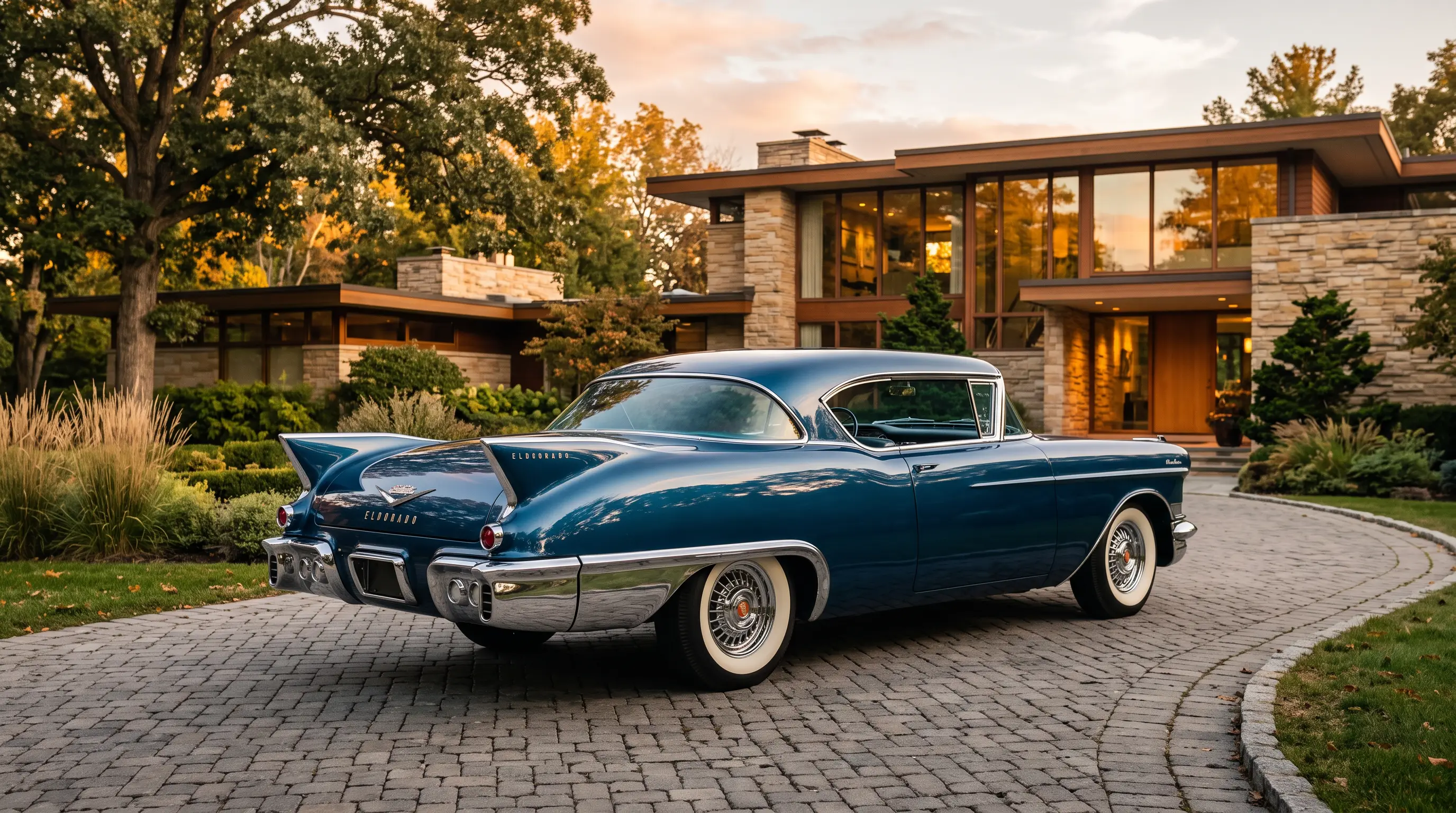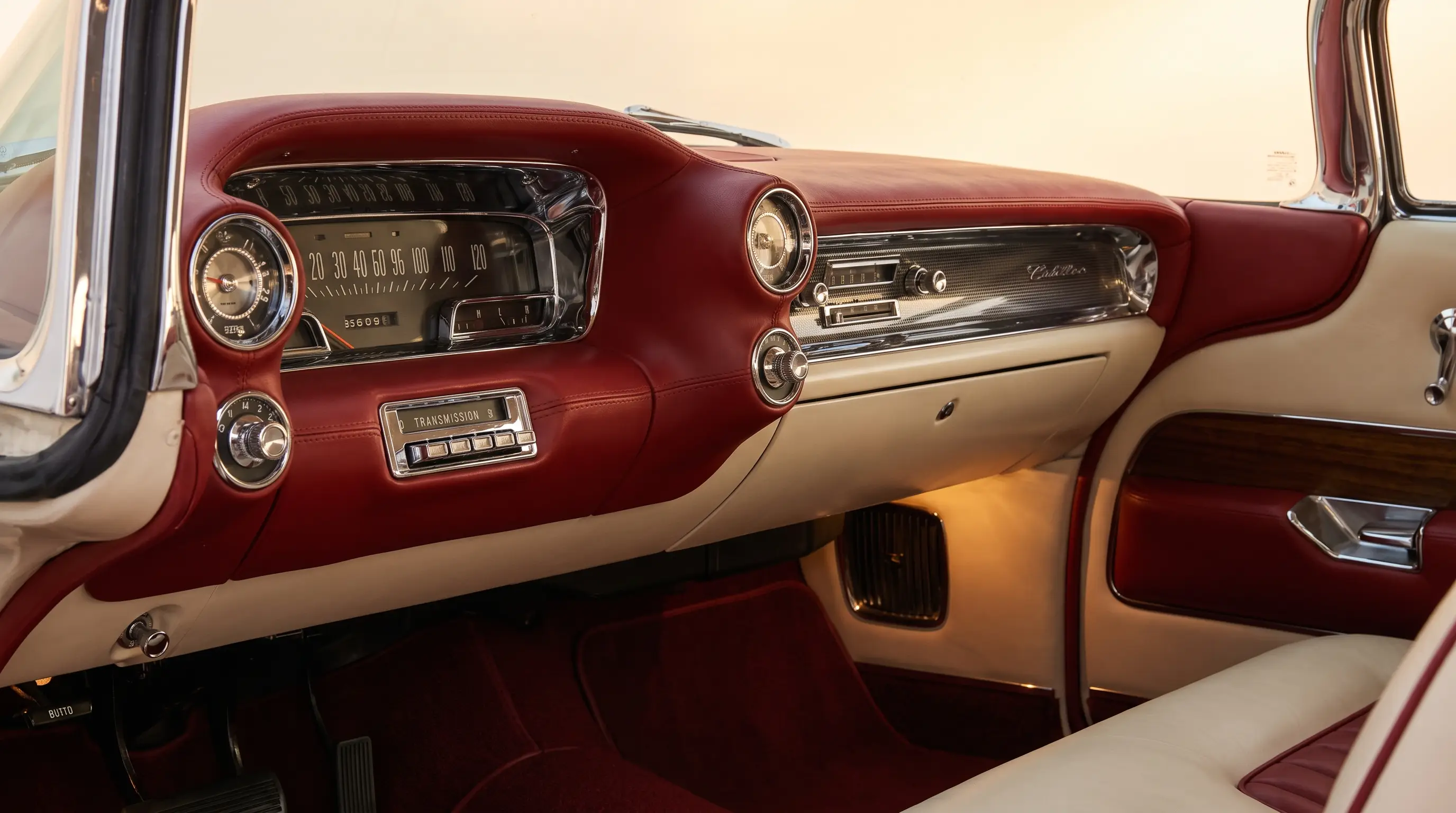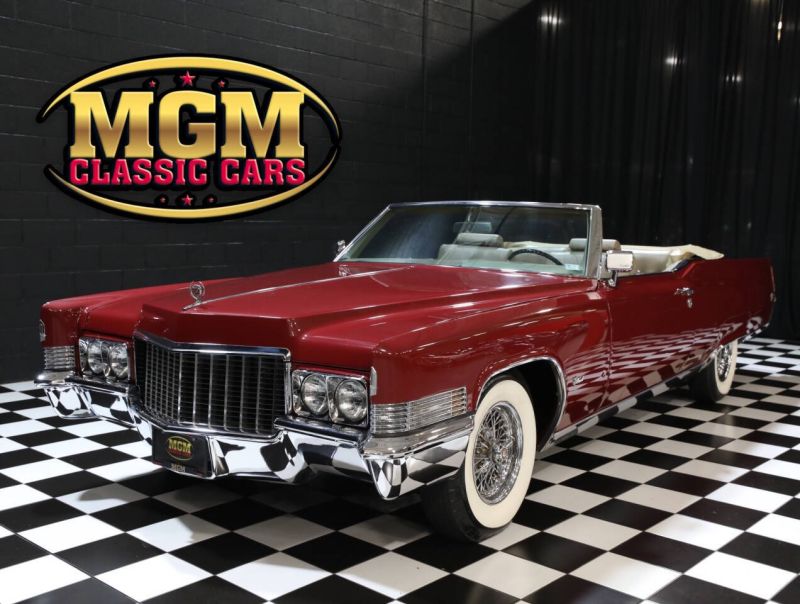
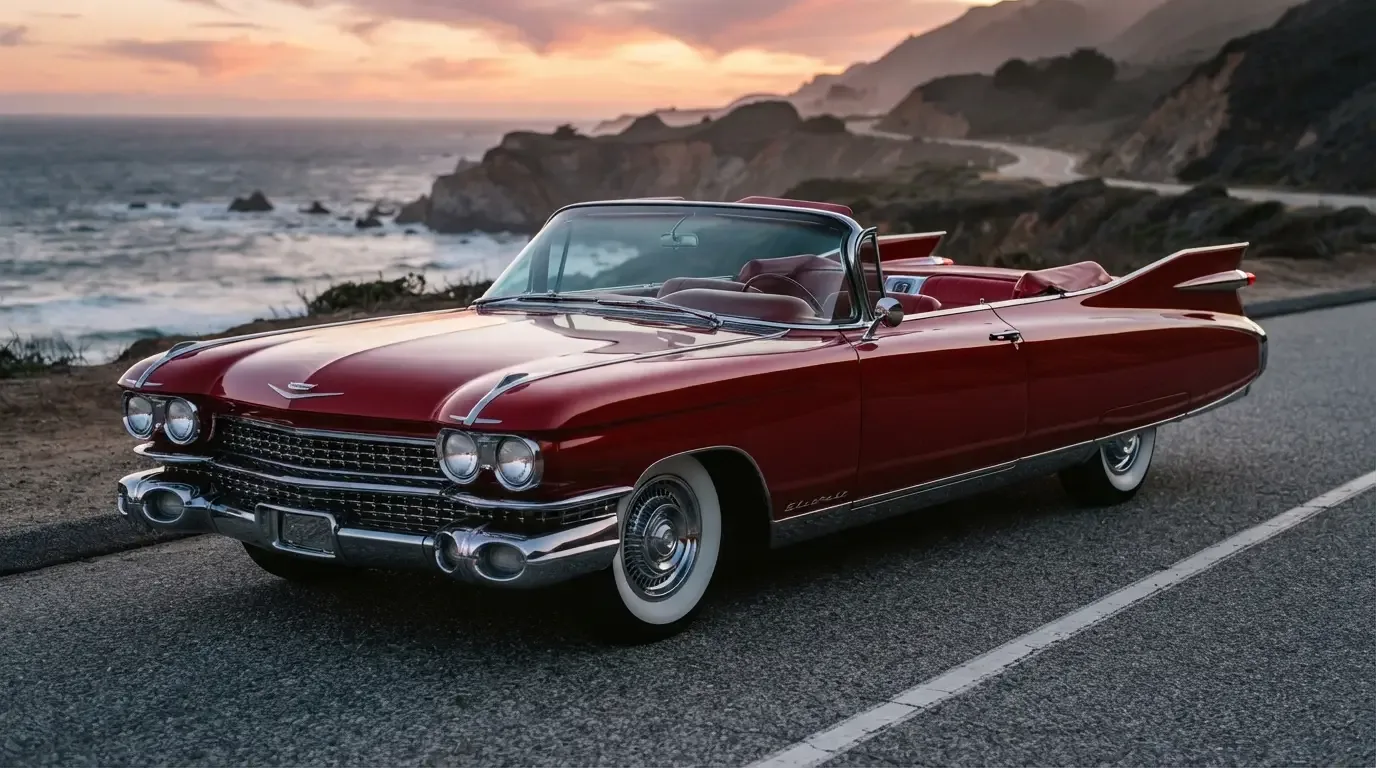
A wartime fighter plane is a strange place to begin the story of a luxury car, and yet that is where it begins. In the early 1940s a General Motors designer named Frank Hershey was allowed a look at the Lockheed P-38 Lightning, with its twin booms and their upswept tails, and something about those shapes stayed with the studio. A few years later, on the 1948 Cadillac, a small pair of fins appeared above the rear fenders. They were modest, almost shy. Nobody in that room could have known they were lighting a fuse that would run for a decade, or that the cadillac eldorado design would come to sit at the very peak of what those fins became.
The man who set the whole thing in motion was Harley Earl. He was a big man with big hands and an eye that had been trained in Hollywood, building custom bodies for movie stars before General Motors brought him east. Earl created the Art and Colour Section, the first true styling studio at any major carmaker, and for thirty years he decided what American cars would look like. The Eldorado, when it arrived in 1953, was his kind of car. It was long, low, expensive, and unashamed.
Harley Earl and the longer, lower dream
Earl had a phrase he lived by, that a car should be longer and lower, and he chased that line for his entire career. He believed a person should feel a small thrill just walking up to the thing. The first Eldorado of 1953 carried that belief in its wraparound windshield and its cut-down doors, details borrowed from the show cars Earl paraded through the Motorama halls to see which dreams the public would pay for. The Eldorado was, in a sense, a Motorama fantasy that had been given license plates.
What Earl understood, and what the accountants sometimes did not, was that people do not only buy transportation. They buy the feeling of the car in the driveway on a Sunday morning. The Eldorado was engineered to produce that feeling. Its price kept it rare, its styling kept it wanted, and the two together made it the car other cars were measured against. If you want more on the cadillac eldorado and the whole run of the name, the design thread is the one that ties every generation together, from the first fins to the last.
The fins reach the sky
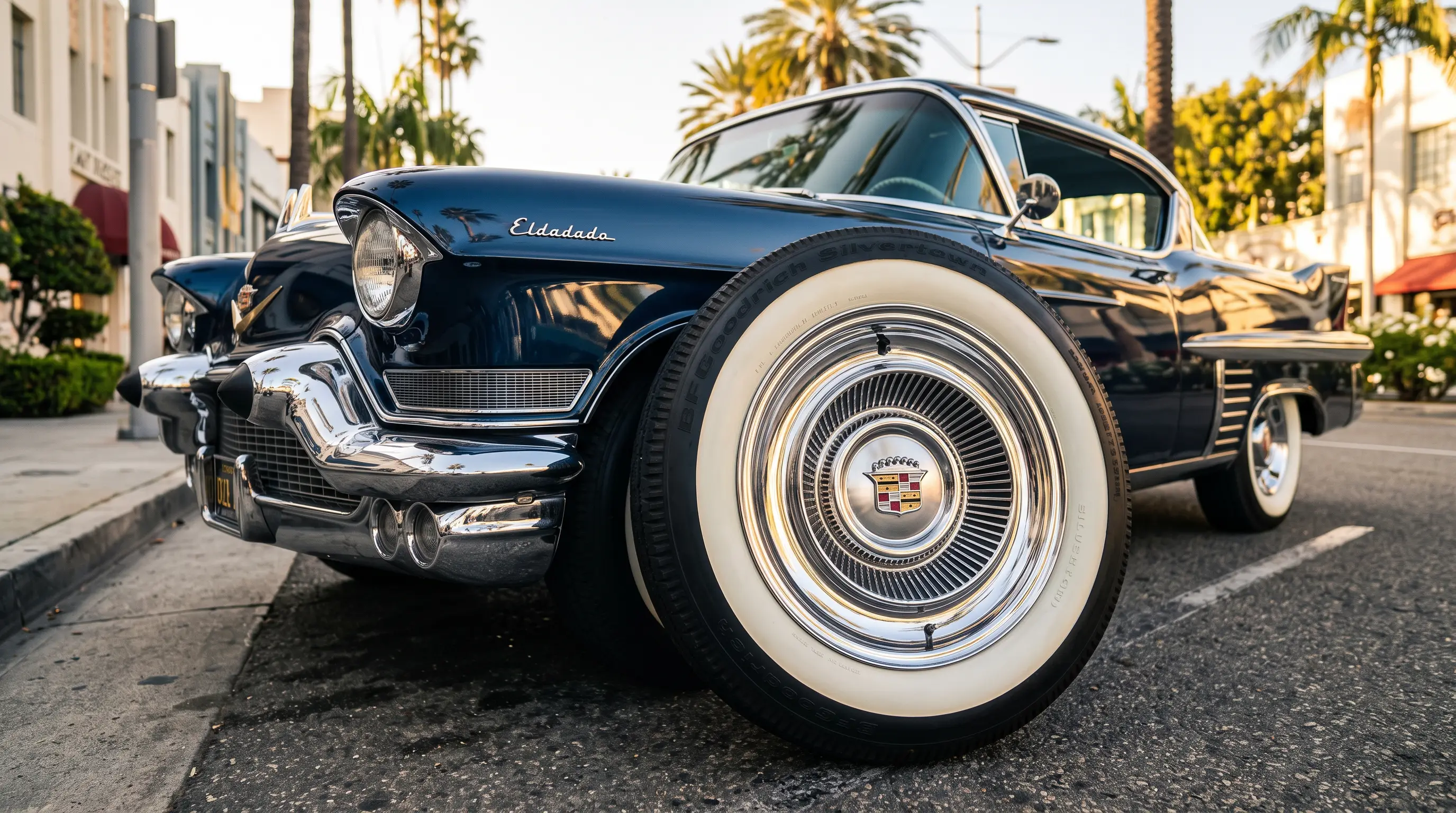
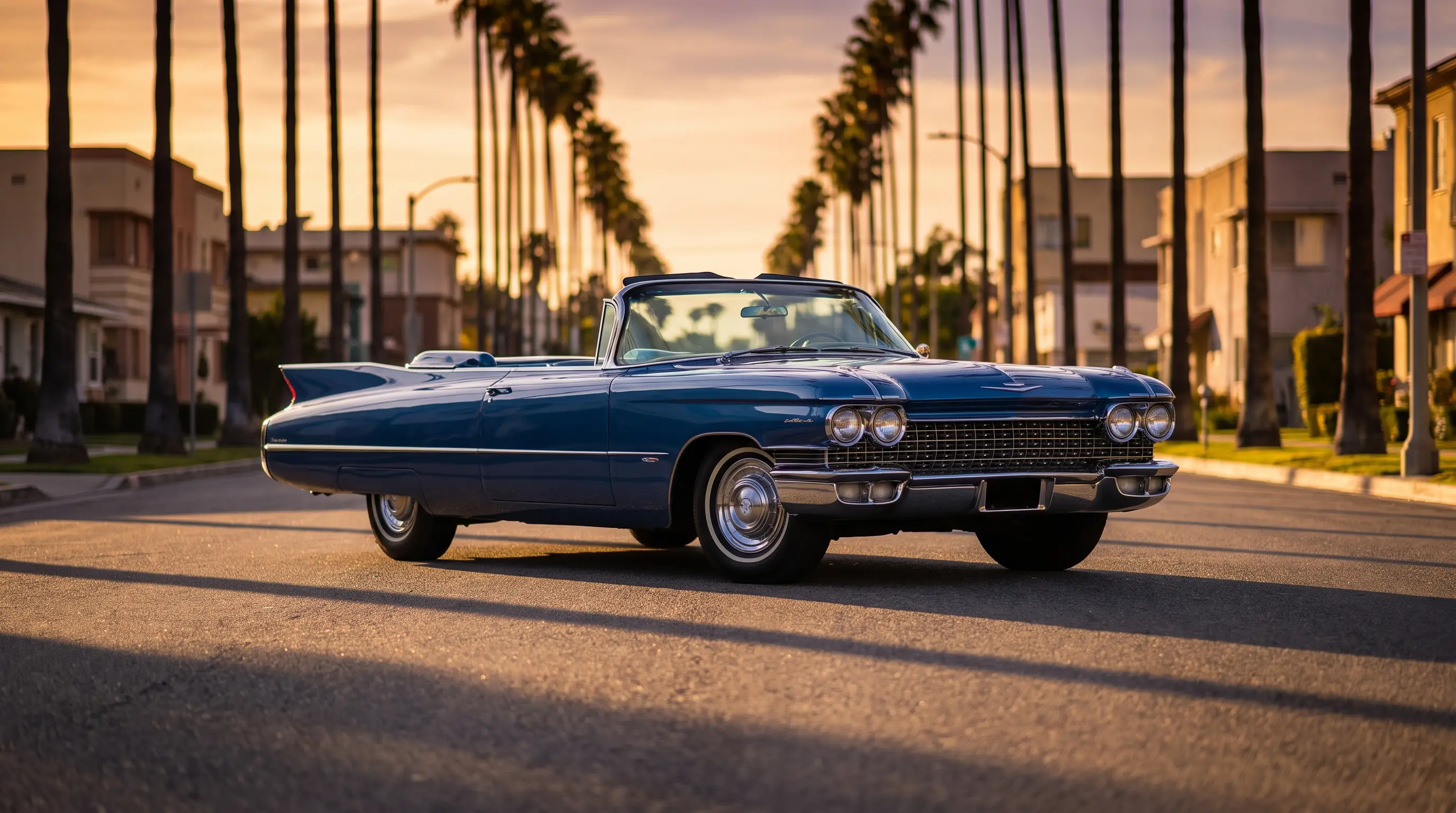
The fins grew slowly and then all at once. Through the 1950s they climbed higher on the Cadillac's rear fenders, gathering chrome and taillights and a kind of confidence that matched the country around them. By 1959 they had reached their absolute peak, twin blades rising off the back of the car like something that meant to leave the ground. On the Eldorado of that year the fins were not a detail. They were the whole rear half of the design, and they remain the single image most people summon when they picture a 1950s Cadillac.
| Milestone | Design moment |
|---|---|
| 1948 | First small Cadillac tailfins, inspired by the P-38 Lightning |
| 1953 | First Eldorado, a Motorama dream given production form |
| 1957 | Eldorado Brougham, the studio's no-limits statement |
| 1958 | Bill Mitchell succeeds Harley Earl as GM design chief |
| 1959 | Tailfins reach their tallest point on the Cadillac |
| 1967 | Mitchell's razor-edge, front-drive Eldorado |
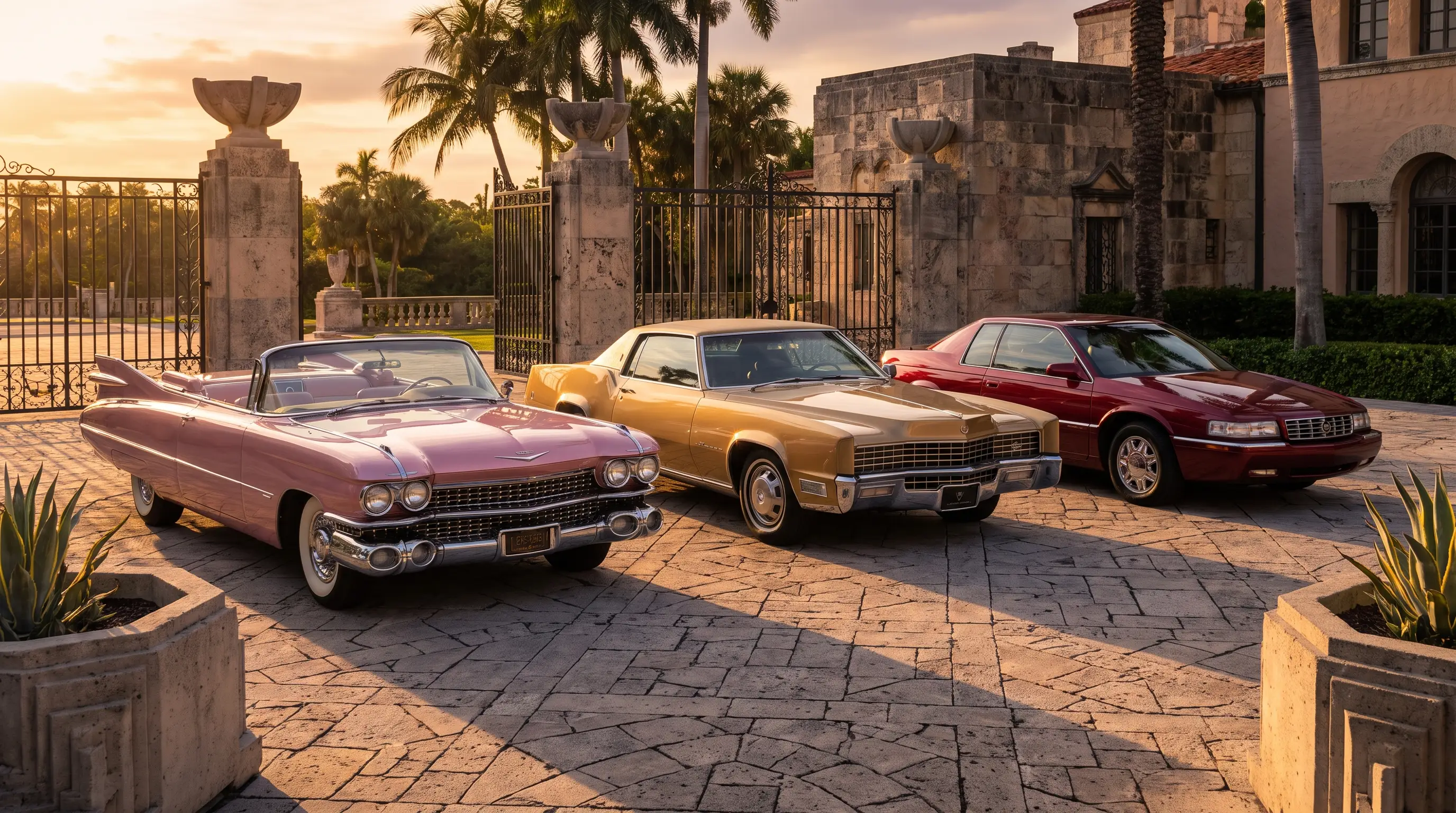
Stand next to a 1959 today and it is almost funny, the sheer nerve of it. Nobody needed fins that tall. That was the point. They were a shape drawn purely for delight, an argument that a car could be a piece of optimism you parked in the garage. The tailfin era was brief, and its excess is easy to mock, but it produced some of the most instantly recognizable American objects ever made.
Bill Mitchell and the turn toward the edge
Then the tide went out. Harley Earl retired at the end of the 1950s, and the studio passed to Bill Mitchell, a designer who had come up under Earl but saw the world differently. Where Earl loved roundness and chrome and abundance, Mitchell loved the crisp line and the sharp fold. Under his hand the fins came down and the edges came up. The change was not sudden, but by the middle of the 1960s the Cadillac had traded its rocket-ship curves for something leaner and more tailored.
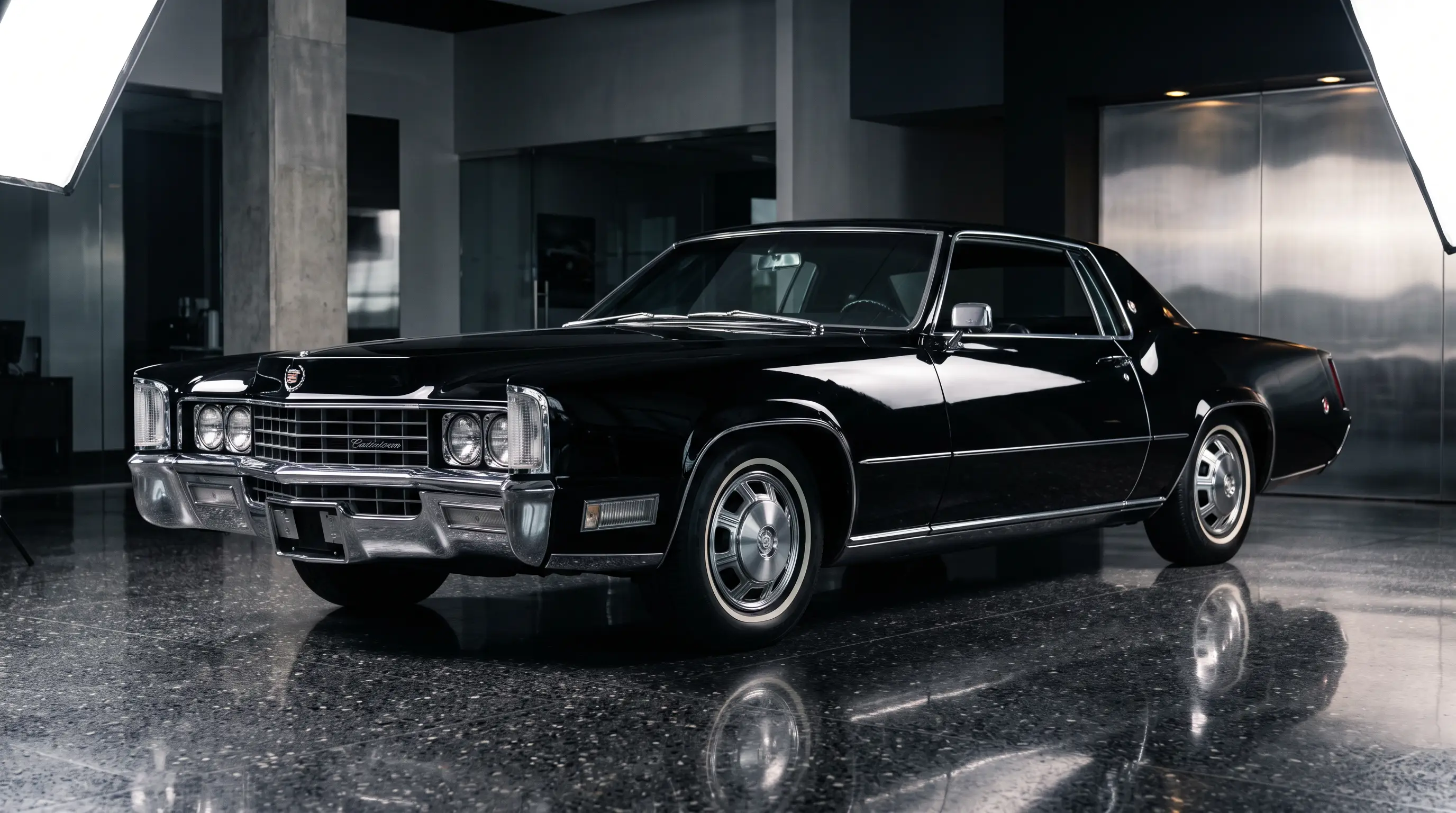
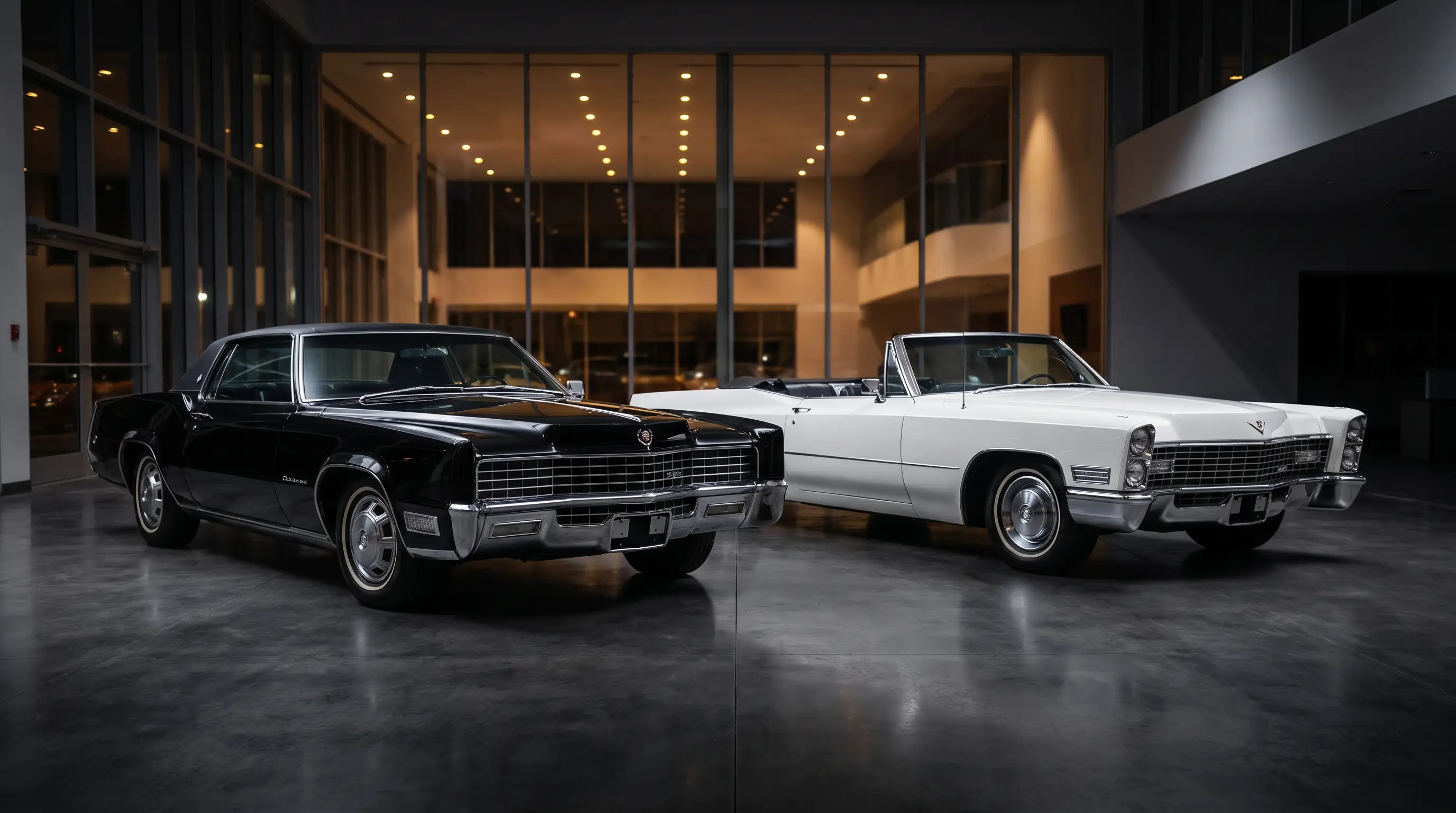
The 1967 Eldorado is the clearest place to see the shift. It was Mitchell's car through and through, formal and folded and sharp, with hidden headlamps and a long flat hood. Nobody would mistake it for one of Earl's cars, and that was the intention. The Eldorado had grown up. It had traded the exuberance of youth for the composure of a well-cut suit, and the design reflected exactly that.
"Earl gave the Eldorado its dream and its chrome. Mitchell gave it its discipline. You can stand between two of these cars, a fin car and an edge car, and watch American taste change its mind in the space of a few feet."
- Nora Beckett
Color as a decision
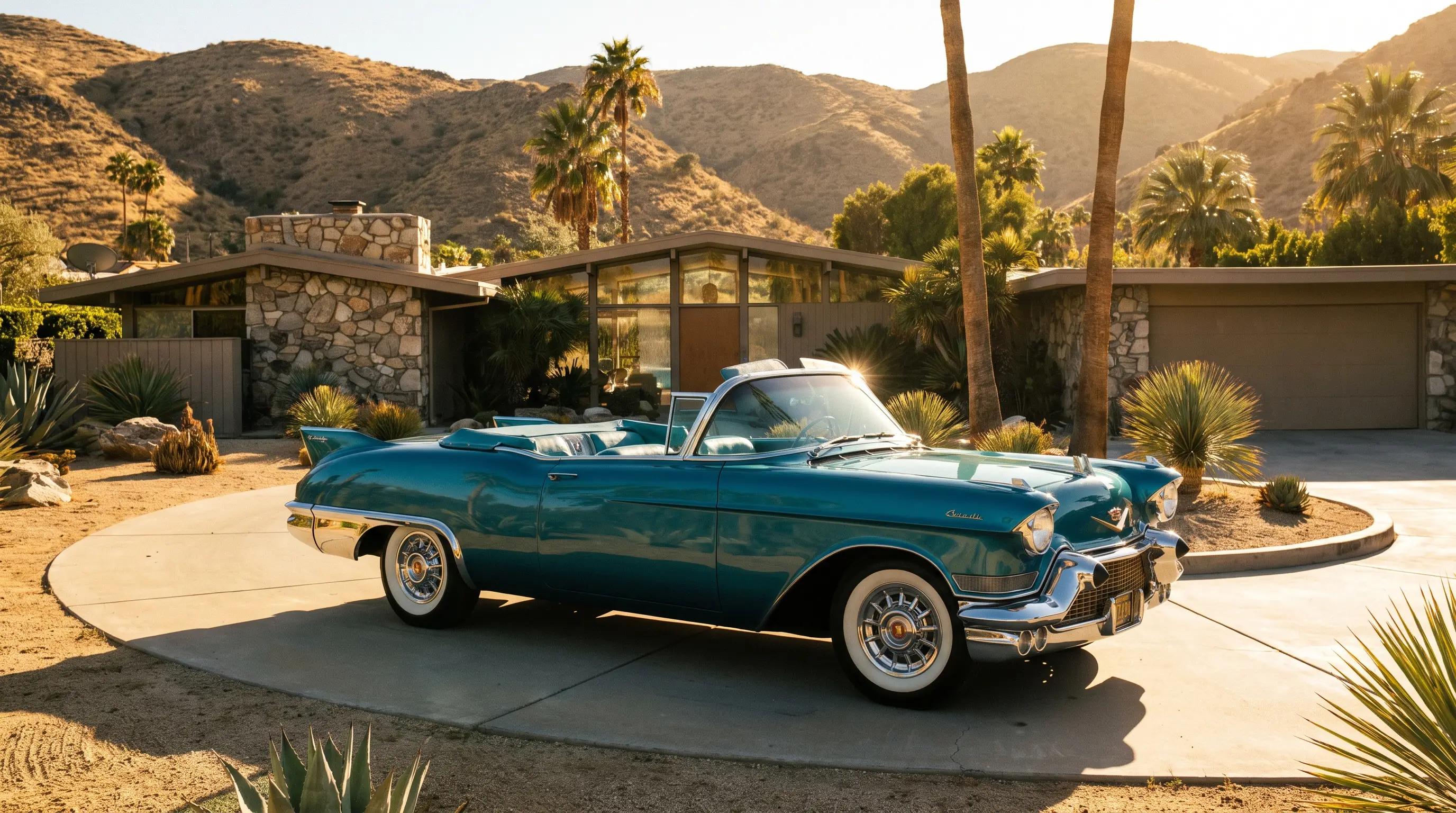
There is a quieter part of the design story that gets less attention than the fins, and it deserves a moment. Color. The Art and Colour Section had that second word in its name for a reason. In the 1950s a Cadillac could be ordered in shades that sound like a summer memory, pale corals and soft turquoises and a persimmon that Cadillac actually offered on the Eldorado. These were not accidents. Someone chose them, mixed them, and argued for them, because color was understood as part of the design and not an afterthought applied at the end.
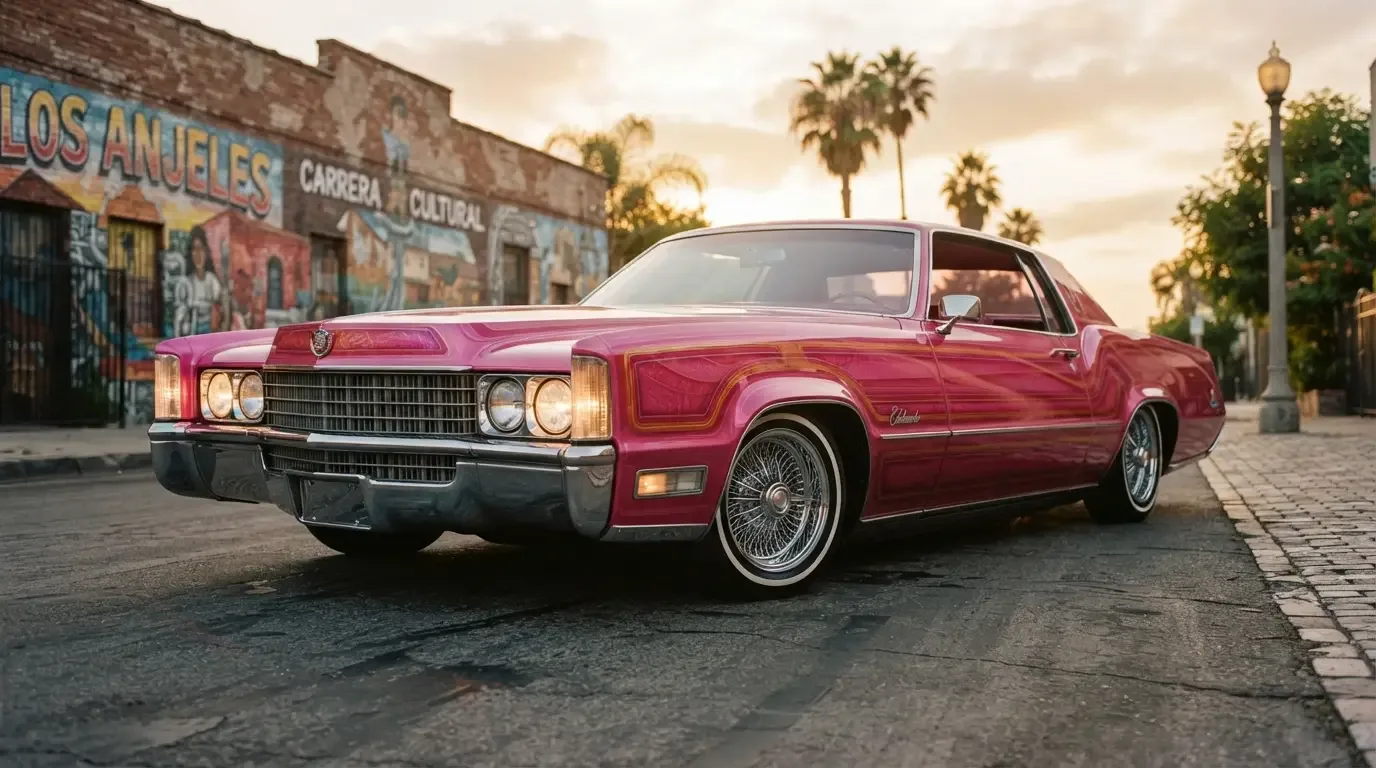
A car's color told you who its owner wished to be. A black Cadillac was a statement of seriousness. A pale pink Eldorado was a different statement entirely, one about confidence and a certain refusal to apologize. The designers knew this, and they gave buyers a palette wide enough to say almost anything. To see how those choices reached out into music, film, and the wider culture, there is another one worth knowing that follows the Eldorado off the design table and into the American imagination.
The Motorama years
Before an Eldorado ever reached a showroom, it was tested in a way that feels almost theatrical now. General Motors ran a traveling show called the Motorama through the 1950s, a glittering circuit of hotel ballrooms and auditoriums where the company paraded its dream cars in front of enormous crowds. These were not ordinary auto shows. They were closer to Broadway, with revolving stages, live music, and cars so far ahead of production that many of them never became anything at all. Harley Earl treated the Motorama as his laboratory of desire, a way to watch which shapes made people lean in.
The Eldorado grew out of exactly this. When Cadillac wanted to know whether the public would pay for wraparound glass, cut-down doors, and low sculpted bodies, it did not commission a survey. It put a show car on the Motorama stage and watched the faces. The features that drew a crowd found their way onto the production Eldorado. In that sense the car was designed twice, once by the studio and once by the audience, and the second vote mattered as much as the first.
There is something touching about that process when you learn it. These cars were not handed down by executives who assumed they knew best. They were shaped, in part, by the reactions of ordinary people standing in a ballroom on a weekday evening, dreaming a little above their means. The Eldorado carried a piece of that public longing in its lines. It was a dream car that had been voted into existence, and the voters were the same people who would never quite be able to afford it.
What the design left behind
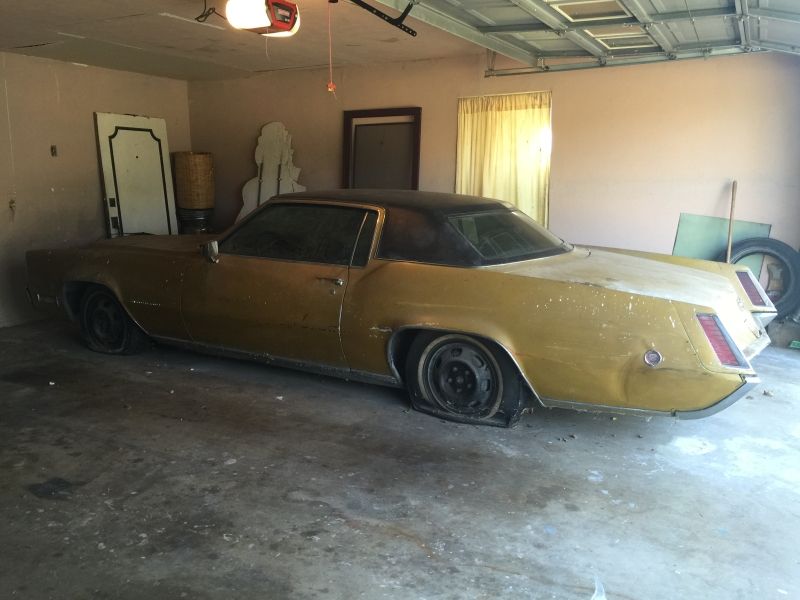
The tailfin era ended, as all fashions do, and for a while its cars were merely old rather than treasured. That has reversed completely. The fin-era Eldorados are now among the most sought objects of postwar American design, valued not in spite of their excess but because of it. They are honest about what they were, which is joy rendered in steel and chrome, and there is something moving about an object that never pretended to be practical.
The Mitchell cars carry their own following, prized by people who love the discipline of a hard edge and the restraint that came after the fins. Between the two men, Earl and Mitchell, the Eldorado covered the full range of American confidence, from the rocket-ship optimism of the fifties to the tailored composure of the sixties. That is a rare thing for one nameplate to hold. If the shapes speak to you, you can browse classic Eldorado listings and see which era of the design you would want in your own garage, the dream or the discipline.
Frank Hershey saw a fighter plane and drew a small fin. Harley Earl grew it into a national mood. Bill Mitchell folded it back into something quieter. The Eldorado carried all of it, and that is why, decades on, people still stop on the sidewalk when one drives past. The design was never only about the metal. It was about the feeling, and the feeling has outlasted everything else.