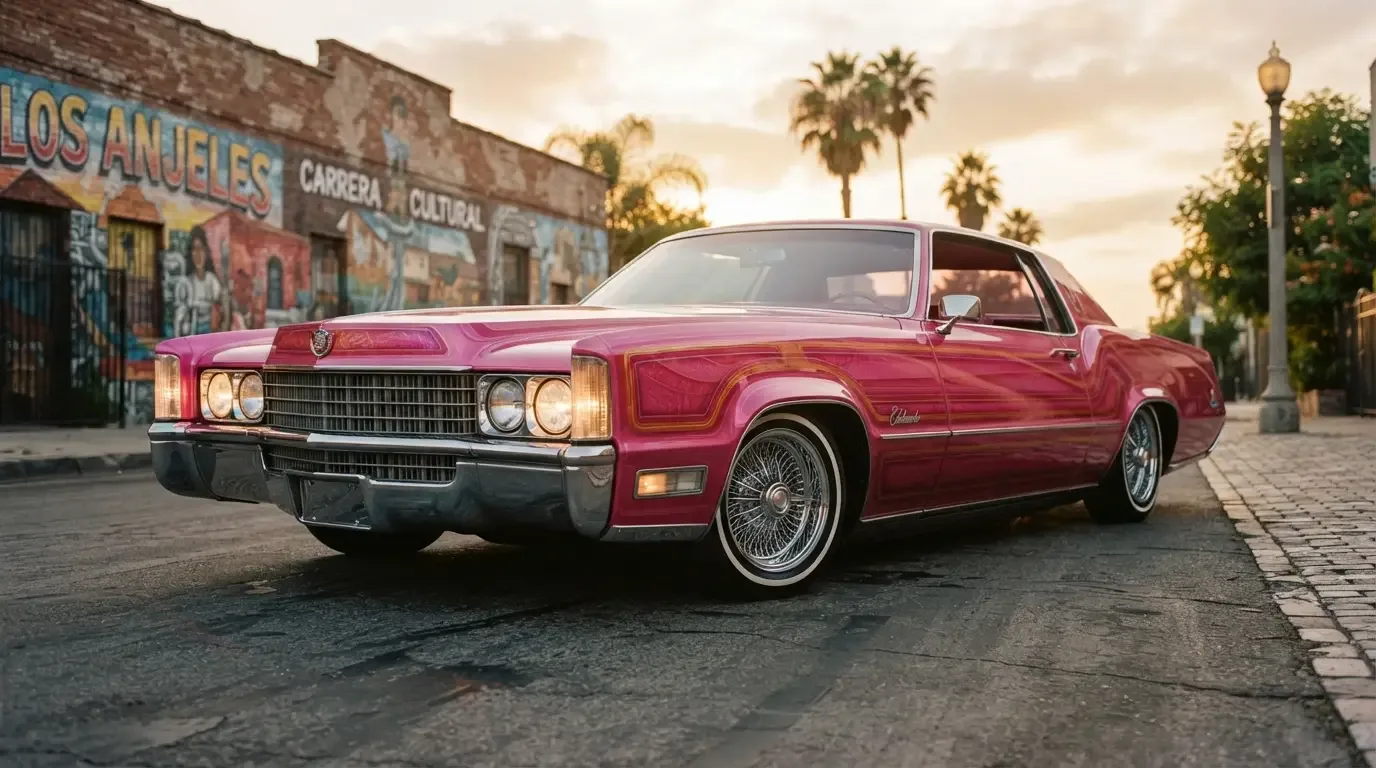
The story goes that a young singer walked onto a Memphis car lot in 1955, freshly flush with his first real money, and did not haggle over the price of the pink Cadillac he had been circling for weeks. Whether or not every detail of that afternoon survives intact after seventy years of retelling, the pattern it started was real and lasting. Elvis Presley bought, gifted, and posed with more Cadillac Eldorados over the following two decades than any other public figure of his era, and the elvis cadillac eldorado pairing became shorthand for a very specific kind of American arrival, the moment fame turns into visible, rolling proof.
The pink Cadillac that was not quite an Eldorado
Here is a detail that gets flattened in most retellings: the famous 1955 pink Cadillac most associated with Presley was a Fleetwood Series 60 Special, not an Eldorado. But the confusion is understandable and, in a way, telling. Presley's relationship with Cadillac as a brand ran so deep and so publicly that the specific model line mattered less to the popular imagination than the fact that it was a Cadillac, pink, and his. The Eldorados came later, and when they did, they came in numbers that left no ambiguity about his preference.
Graceland's fleet and the Eldorados that lived there
By the late 1960s and into the 1970s, Presley was buying Eldorados regularly, both for himself and as gifts for friends, family, and, according to numerous accounts from people who worked at Graceland, occasional strangers who caught his attention. The front-drive Eldorado, introduced in 1967, suited his taste for a low, dramatic profile, and several examples associated with his ownership have survived and changed hands at auction in the decades since his death, each one carrying a documented chain of ownership that collectors now treat as its own form of provenance.
Why the Eldorado specifically
Presley could have bought any car in the world by the mid 1960s, and for a period he did own a wide range of vehicles, from motorcycles to sports cars, filling multiple garages at Graceland with machines he rarely drove more than a handful of times. But he returned to Cadillac, and increasingly to the Eldorado, because the car matched the persona he had built. The Eldorado in this era was Cadillac's boldest, lowest, most dramatic body, the personal luxury coupe positioned above even the Coupe de Ville in visual presence. For a performer whose whole public identity ran on scale and spectacle, the Eldorado was the rolling equivalent of the stage costumes, a car built to be seen from the back row.
That relationship between the Eldorado and mid century celebrity culture runs well beyond one performer, and the fuller cadillac eldorado pop culture history traces how the car became shorthand for arrival across music, film, and television long before and after Presley's own ownership.
"There is something almost tender about a man who grew up with nothing buying car after car for people who reminded him of who he used to be. The Eldorado was not really about the Eldorado. It was about what handing someone a set of keys could say when words were not enough."
- Nora Beckett
The cars that survived him
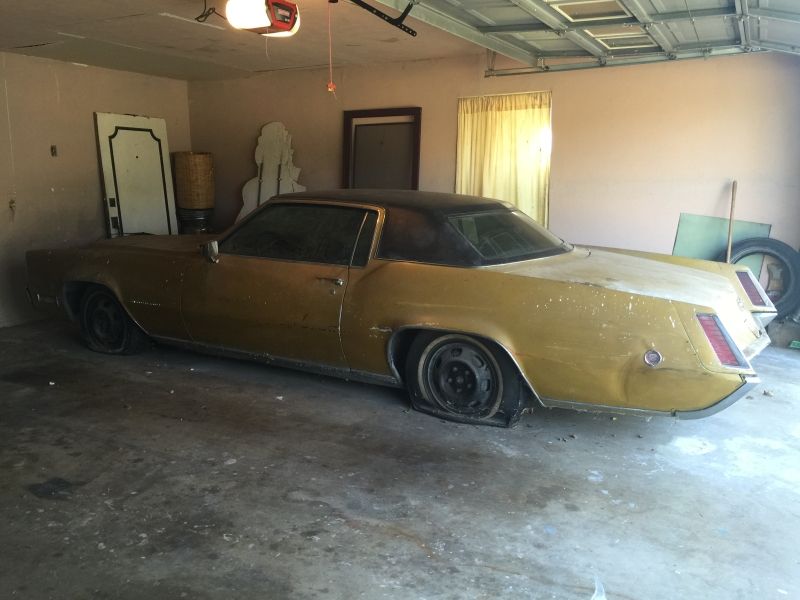
Several Eldorados with a documented Presley connection have crossed the auction block since the 1980s, and each sale draws attention well beyond the usual classic Cadillac buyer pool. Provenance in these cases functions almost like a second title, verified through photographs, dealership records, and in some cases direct family testimony from people who worked at Graceland during his ownership. Prices for these specific cars run far above what an equivalent Eldorado without celebrity history would bring, a reminder that the collector market prices story as heavily as it prices sheet metal and mechanical condition.
The broader thread of the Eldorado showing up in film, on album covers, and in the hands of other performers is its own rich subject, covered in a related story if Presley's ownership has you curious about who else made the car part of their public image.
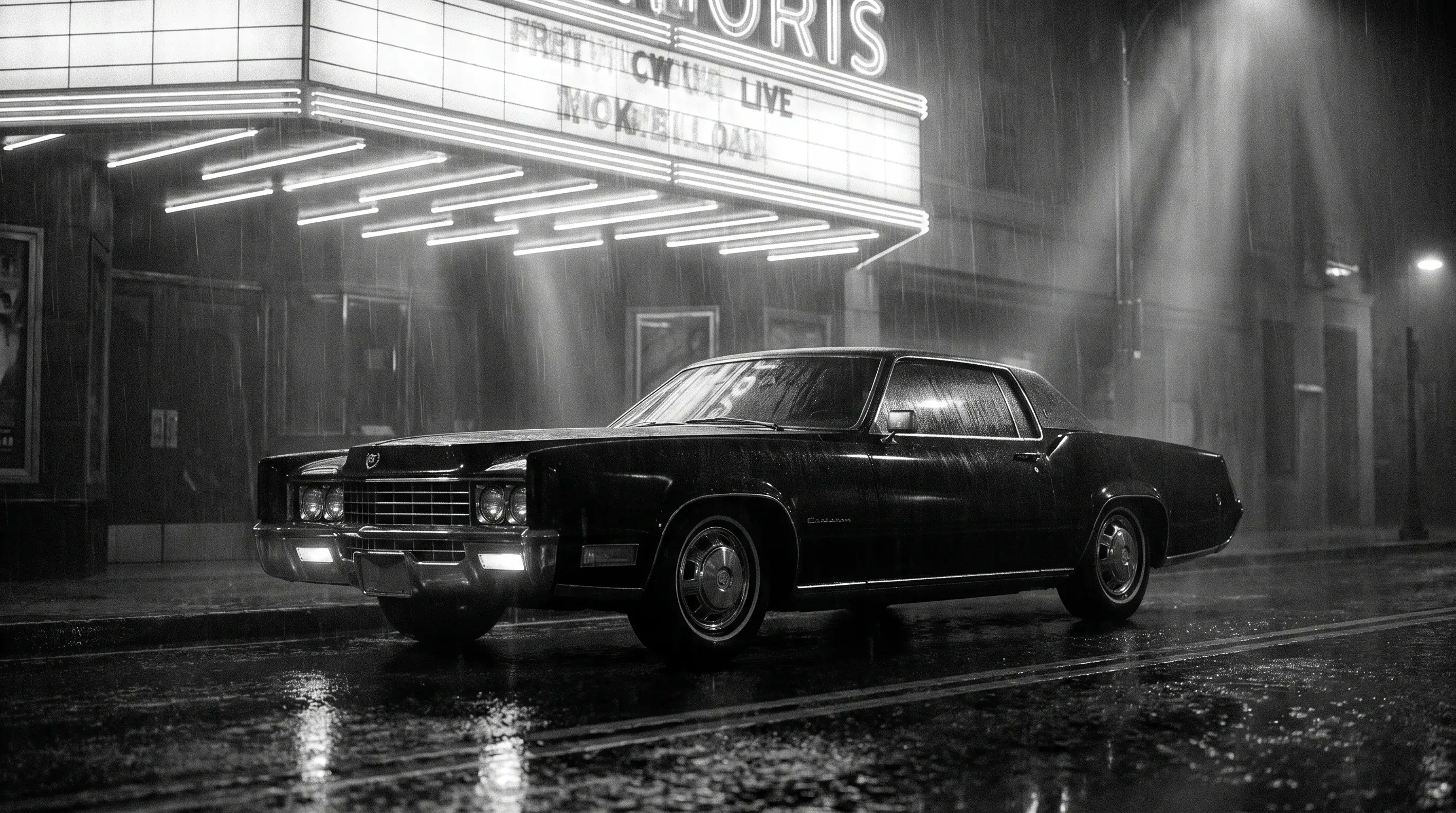
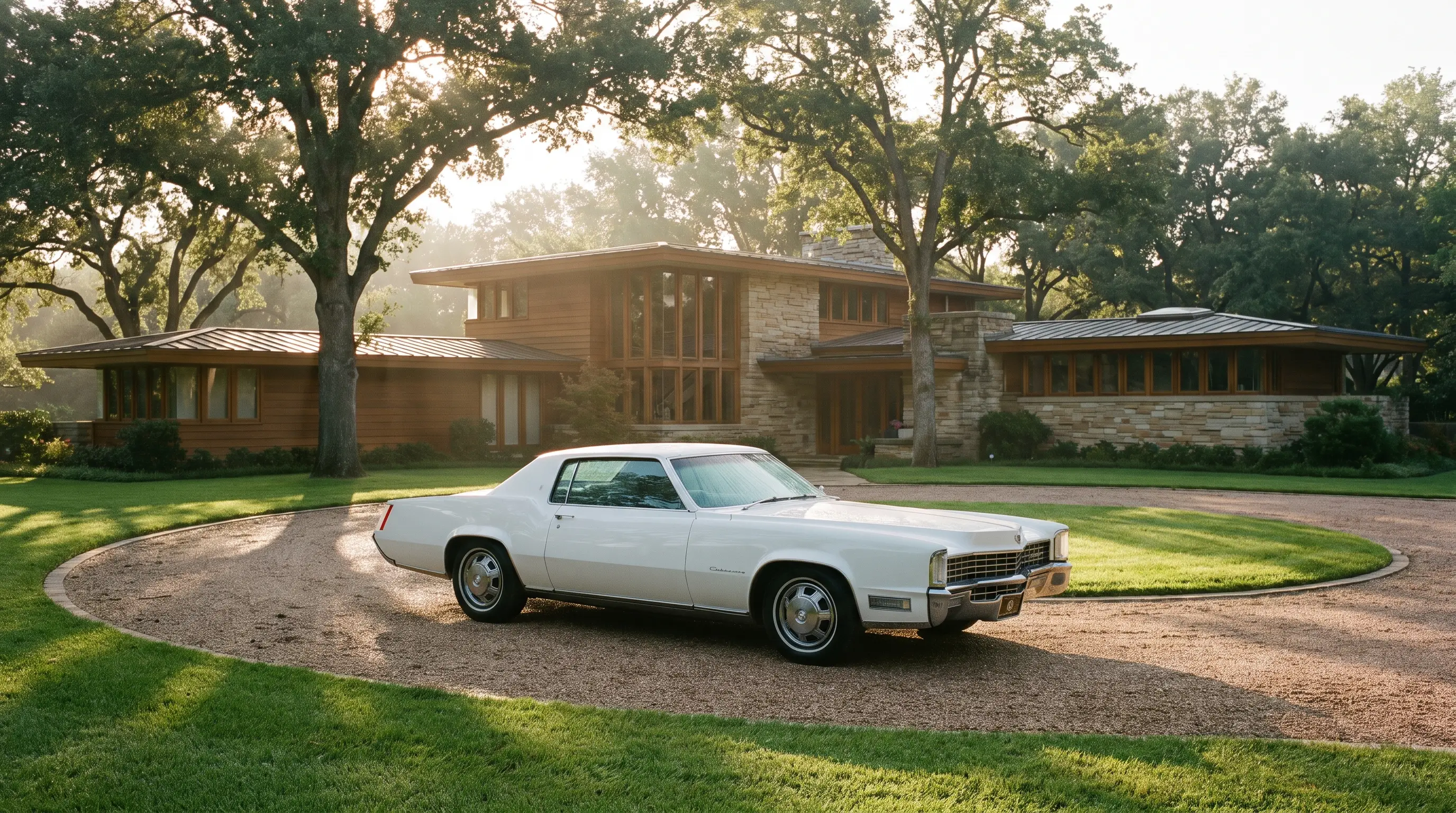
Presley did not stick to a single Cadillac color, and the variety tells its own small story. Pink defined the early legend, but by the late 1960s and into the 1970s his Eldorados appeared in deep blues, dark reds, and formal blacks alongside the occasional flashier tone. Some of that shift tracked ordinary taste changing as he aged out of his twenties. Some of it tracked the fact that by then he did not need a shocking color to announce himself. The car itself, an Eldorado parked in front of Graceland, already did that work.
Interior choices followed a similar arc, often leaning toward plush, heavily customized upholstery well beyond what a dealership offered on the showroom floor. Custom shops in Memphis and later in California handled several of these commissions directly for him, adding details that never appeared in any Cadillac brochure and that collectors today treat as inseparable from the car's documented history.
A legend that outlived the man
Presley died in 1977, but his association with the Cadillac Eldorado did not fade with him. Graceland tours still highlight the cars in his collection, documentaries about his life rarely skip the Cadillac chapter, and the phrase pink Cadillac has entered the language as a stand-in for exactly the kind of success story he represented, even when the specific car in the story was not technically an Eldorado at all. Musicians decades younger than him, working in genres he never lived to hear, still reference his Cadillac era when they want to signal the same idea of hard-won arrival, proof that the image outgrew the man who first made it famous, and that a well chosen car can carry a story further than the person who bought it ever intended. Fifty years later, the pairing of his name with Cadillac's flagship coupe remains one of the most durable celebrity-and-car associations in American culture.
For anyone who wants to own a piece of that same era rather than just read about it, the current listings of Eldorados for sale now include examples from the exact generation Presley favored most.
What makes the elvis cadillac eldorado connection endure, more than any single sale price or documented VIN, is how well it fits the larger American story the car was already telling before he ever bought one. The Eldorado was built from its first year to represent arrival, the car you bought once the harder years were behind you. Presley's version of that story simply happened to be more visible, more generous, and more thoroughly documented than almost anyone else's, which is exactly why it has outlasted him this long.