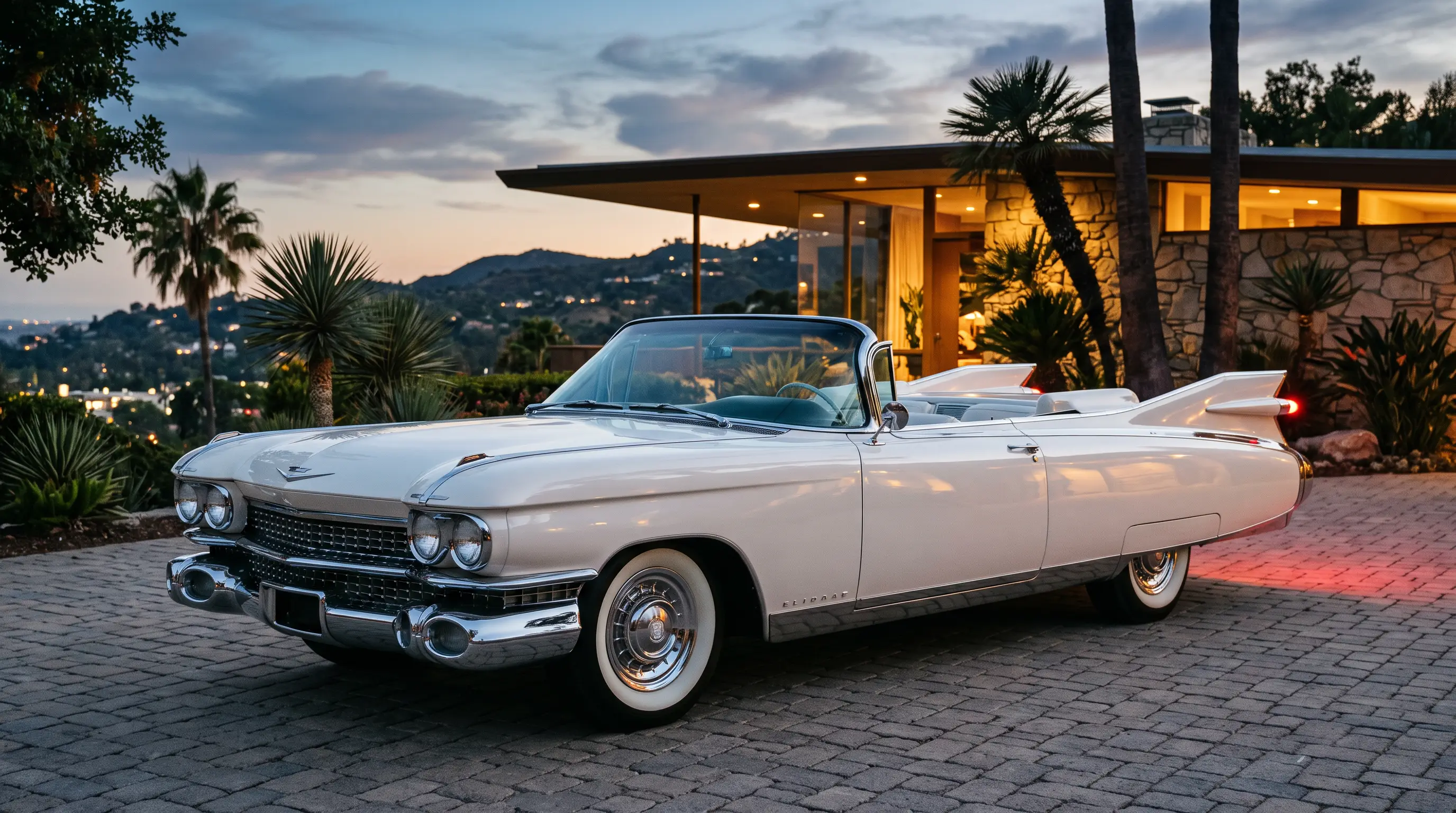
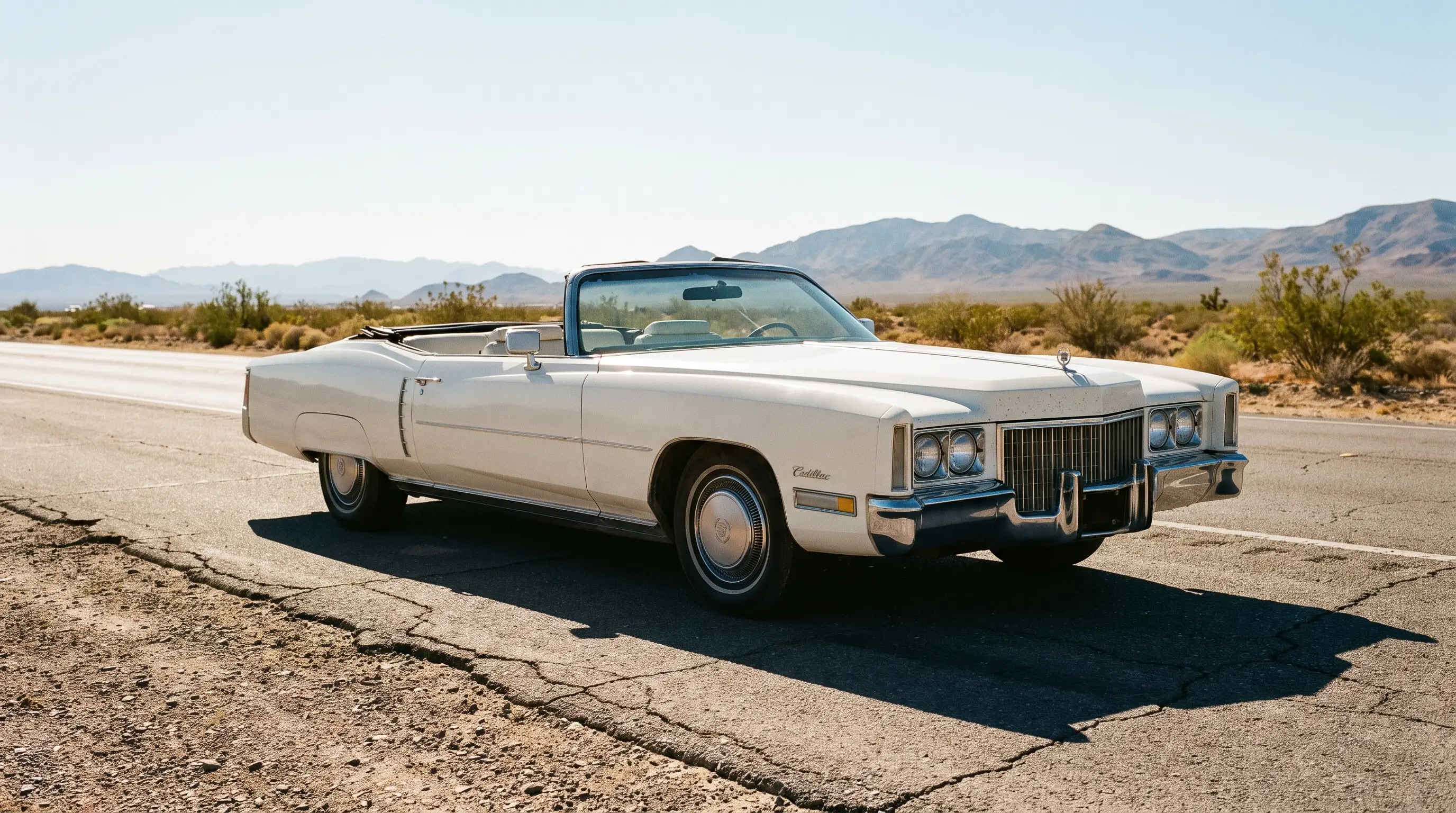
The car arrives before the men do. In the opening pages of Hunter S. Thompson's Fear and Loathing in Las Vegas, a white Cadillac Eldorado convertible named the Great Red Shark is already tearing across the desert toward Vegas, top down, trunk full of ether and mescaline and a rented tape deck screaming something loud. The Fear and Loathing Cadillac in that story is not a prop. It is close to a character, the one steady, gleaming, expensive thing in a narrative that otherwise refuses to hold still.
A convertible named after a fish
Thompson's narrator, Raoul Duke, calls the car the Great Red Shark despite it being white, a small joke the book never explains and never needs to. The Eldorado is a rental, picked up for a magazine assignment covering a motorcycle race in the desert, and it becomes the vehicle for everything that follows, both literally and as a running symbol of borrowed respectability. A rented Cadillac gave Duke and his attorney the appearance of legitimate travelers even as the contents of the trunk suggested otherwise, and that gap between the car's polish and the passengers inside it is where much of the book's comedy lives.
Why an Eldorado and not another Cadillac
By 1971, when Thompson set the book, the Eldorado had grown into Cadillac's biggest, most theatrical convertible, a genuine land yacht with acreage of chrome and a top that folded down into a car nearly nineteen feet long. That size mattered for the story. A smaller car would have felt incidental, a detail readers skimmed past. The Eldorado is large enough to be its own kind of joke, an absurdly plush object hauling two increasingly unraveled men across a desert that keeps threatening to swallow them. Thompson knew exactly what kind of image he was borrowing when he put his narrator behind that wheel.
"Thompson did not need to describe the Eldorado much because readers already knew the shape of it, white, huge, gleaming, the kind of car that photographs like wealth even parked crooked outside a casino."
- Nora Beckett
The film and the car that played it
Terry Gilliam's 1998 film adaptation gave the Great Red Shark a physical form audiences could actually watch cross the desert, and the production found period correct Eldorado convertibles to stand in for Thompson's fictional rental. The film leaned into the same visual logic the book relied on, a spotless white convertible moving through a story about excess and collapse, the car itself never losing its shine even as everything happening inside it falls apart. Seeing the Eldorado on screen rather than only on the page cemented it for a new generation of readers who had never driven one and never would, but who now pictured that specific shape whenever the book came up in conversation.
A car that outlived the story around it
What has kept the Eldorado tied to Fear and Loathing for more than fifty years is not the plot, which is famously hard to summarize, but the picture the book left behind, one white convertible catching desert light on an empty highway. That image sits alongside a handful of other pop culture Eldorado moments that shaped how the car is remembered today, a lineage covered more fully in our cadillac eldorado pop culture retrospective. It is worth noting that the car's outsized theatrical presence was not new to Thompson. Other performers had already discovered a similar effect, a story picked up in a related story about a very different kind of Eldorado spectacle.
Vegas as a backdrop the Eldorado was built for
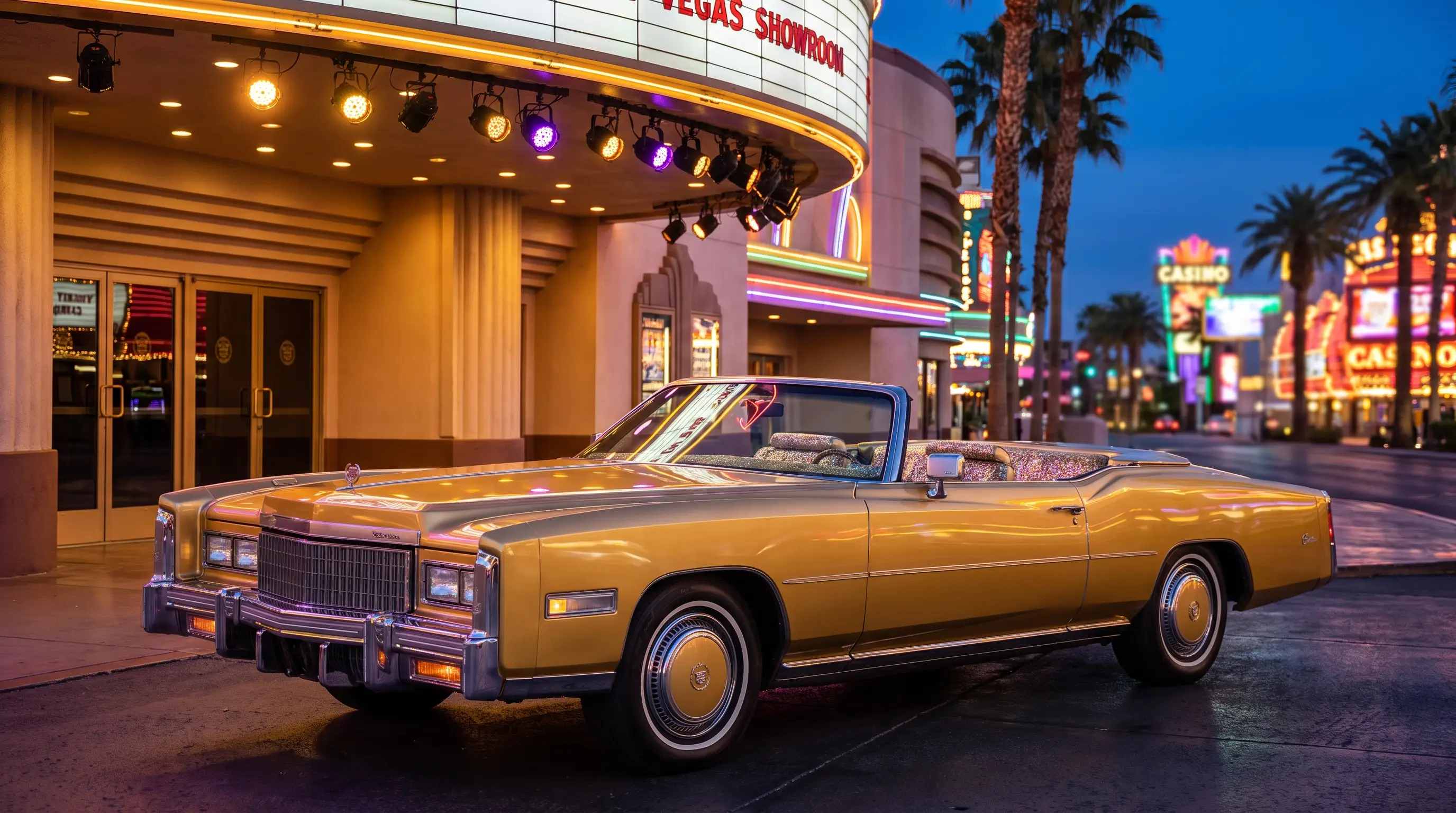
There is a reason the Great Red Shark works so well against a Las Vegas setting specifically. By the early 1970s the Eldorado had become something close to the unofficial car of the Strip, parked outside casinos in white and gold and deep red, the kind of vehicle valet stands were designed around. Thompson's choice of car matches the choice of city almost too neatly, both institutions built on the same promise of easy, visible luxury that could turn dangerous the moment anyone looked too closely at what was actually being spent to maintain it. Duke and his attorney drive a car that belongs in Vegas even while the men inside it clearly do not, and that friction runs through nearly every page of the book.
What the story gets right about the era
Thompson wrote Fear and Loathing as journalism stretched past its normal limits, but the car details hold up as accurate cultural reporting even when the rest of the narrative goes sideways. A magazine writer on assignment in 1971 really could rent an Eldorado convertible for a desert trip, and doing so really would have signaled a certain expense account confidence to anyone watching it roll into a hotel parking lot. That small, true detail is part of why the book still reads as vivid rather than dated. The car was never fictional in the way the rest of the trip sometimes feels. It was simply the biggest, whitest, most expensive convertible Cadillac happened to be building that year, borrowed by two men who had no business being anywhere near it.
Why collectors still ask about it
Owners of early 1970s Eldorado convertibles hear the Fear and Loathing question often enough that most have an answer ready, no, this specific car was not in the movie, but yes, it is the same body style, roughly the same length, roughly the same absurd amount of chrome. That connection alone has kept certain model years desirable among buyers who came to classic Cadillacs through literature and film rather than through family history or car shows. For a reader who wants that same feeling behind the wheel rather than only on a page, there are Eldorados for sale now waiting for exactly that kind of second life.
Thompson never claimed the Cadillac Eldorado meant anything grand. He just needed something big enough, white enough and rented enough to carry two men and their bad decisions into the desert, and Cadillac had already built the perfect car for the job decades before he ever wrote a word about it.
Fifty years on, the Great Red Shark still shows up in conversations about the book long after most readers have forgotten the exact order of events in Las Vegas. Ask someone who has read Fear and Loathing to describe one image from it and a fair number will describe the car first, white paint catching desert sun, top down, headed somewhere it probably should not go. That staying power says something about how well Thompson matched his subject to his machine. He did not invent the Eldorado's outsized presence. He simply pointed a very sharp pen at a car that had already spent two decades building a reputation for exactly that kind of theater, then let it drive the story from the very first page to somewhere well past the last one.