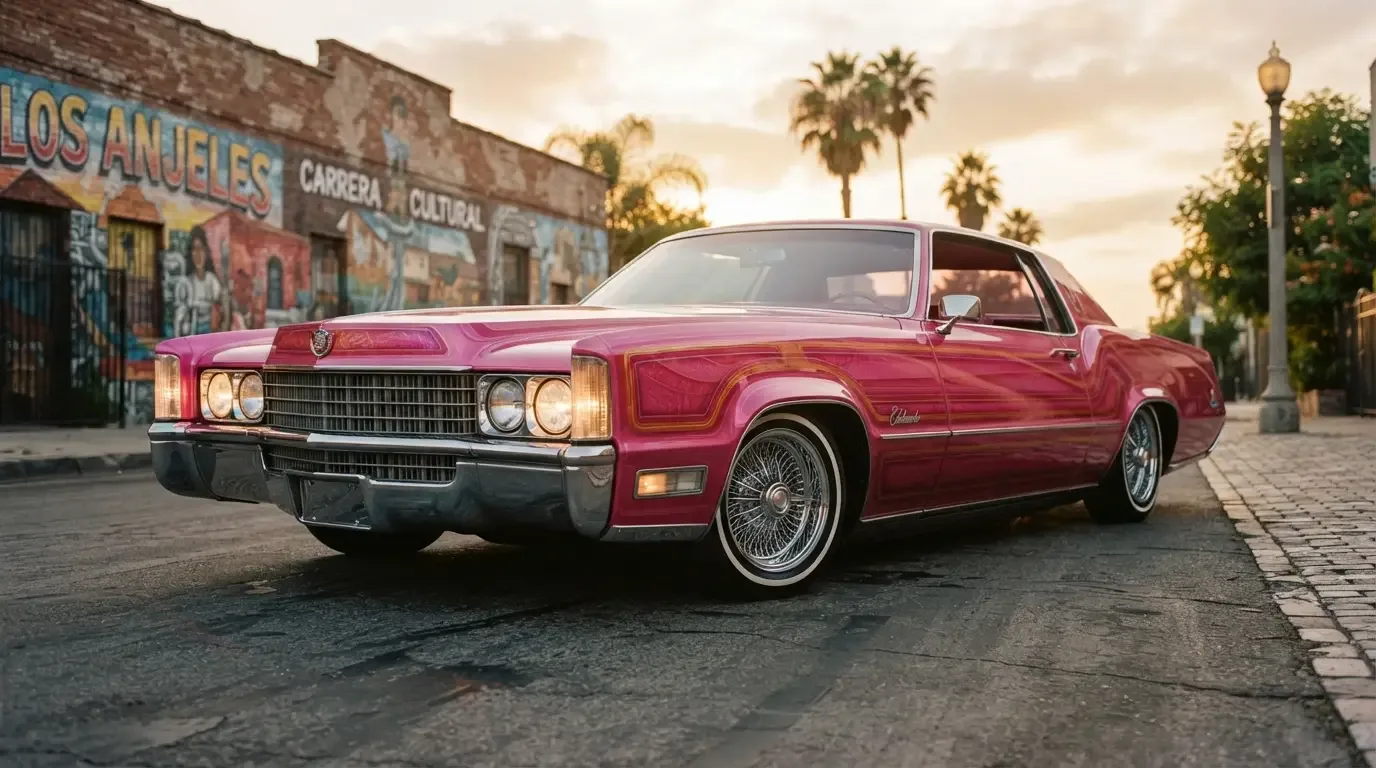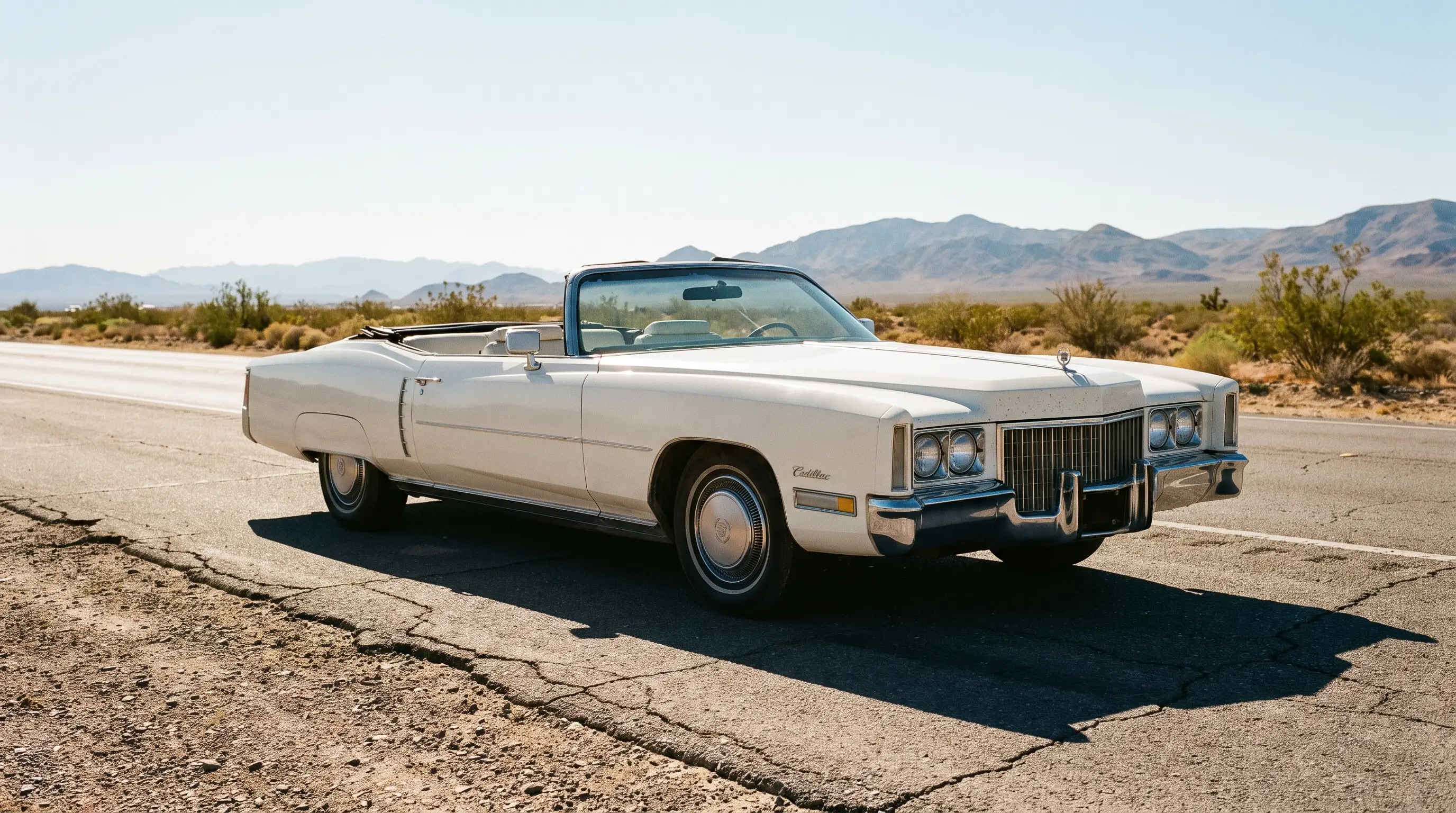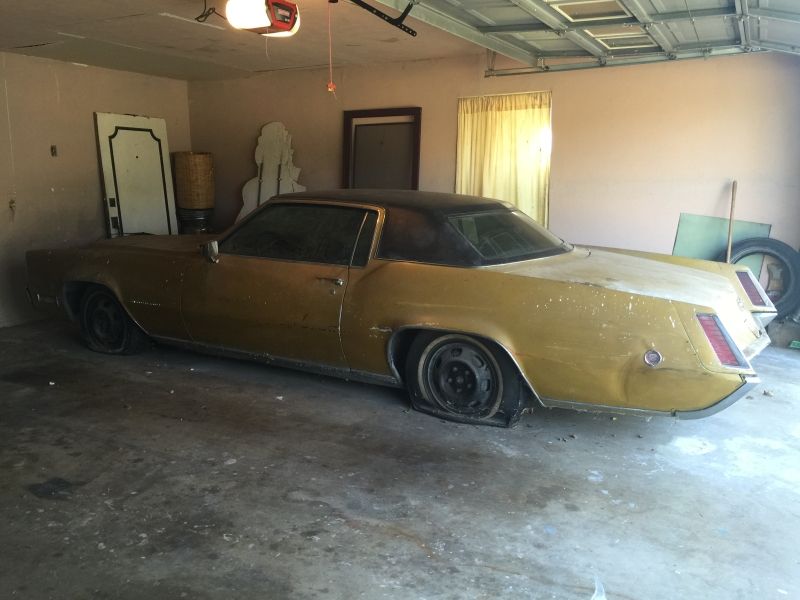
Liberace never did anything by half measures, and the Liberace Cadillac Eldorado he built proved it better than any piano or candelabra ever could. Where most owners bought an Eldorado and left it alone, Liberace treated his as a canvas, commissioning custom bodywork, gold leaf and an interior finished to match his stage costumes. The result was less a car than a traveling extension of his act, built to be photographed as much as driven.
A performer who understood spectacle
By the mid 1970s Liberace had spent three decades building an act around excess done with a wink, rhinestones, furs, a piano shaped candelabra that became his signature. A Cadillac Eldorado fit that persona almost too perfectly. The Eldorado was already the biggest, most chrome heavy convertible Cadillac built, and Liberace saw an opportunity most owners never considered, taking that already theatrical shape and pushing it further with custom coachwork rather than leaving the factory finish alone.
A piano-keyboard Eldorado and a Motor Trend award
The best documented Liberace Eldorado is a 1954 model finished with an interior built around his stage persona rather than gold leaf, upholstery styled to resemble a piano keyboard, with the lower seat panels trimmed to carry bars from the score of his theme song, "I'll Be Seeing You." The restyling was handled by Sam Barris of Barris Kustoms, with the interior assembled by Bob Hauser at the Carson Top Shop, and the car went on to win Motor Trend's interior design award for 1954. That distinction matters for anyone researching the car today, because it shows Liberace's Eldorado customization leaned on theme and craftsmanship rather than the gold plating people often associate with his name, which turns up on a different car in his collection entirely.
"Most custom cars try to look expensive. Liberace's Eldorado tried to look like the most expensive object anyone in the room had ever seen, and by most accounts it succeeded."
- Patrick Walsh
Las Vegas as the natural home for the car
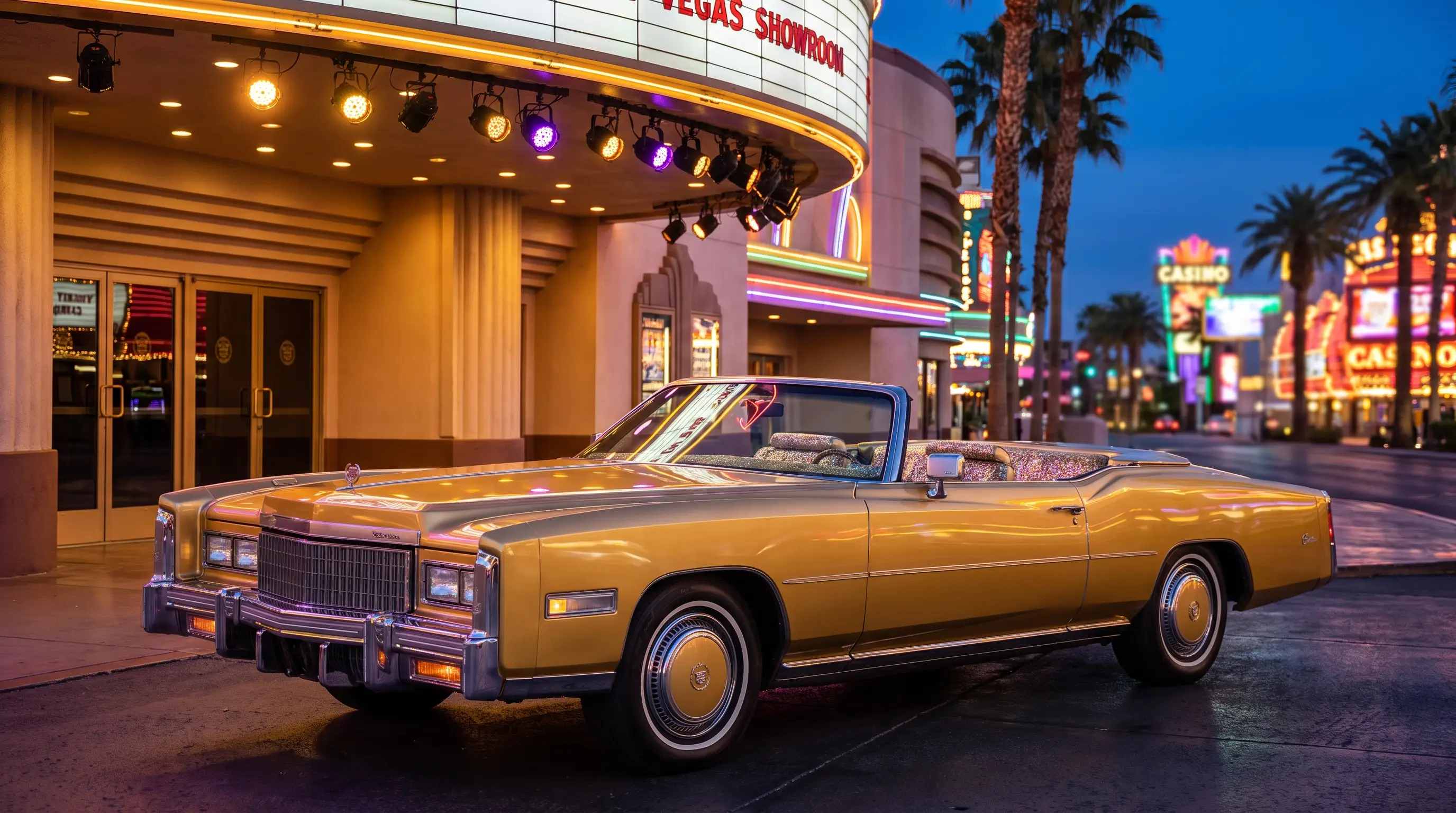
Liberace's relationship with Las Vegas ran for decades, and his customized Eldorado belongs to that city's specific brand of excess as much as it belongs to Cadillac's model history. Las Vegas was already synonymous with gold trimmed everything, from casino signage to lounge furniture, and a themed, one-of-a-kind Eldorado parked outside a hotel marquee did not read as strange there the way it might have on an ordinary street elsewhere. The car worked because the city around it had already normalized that level of visual noise, and Liberace understood his audience well enough to give them exactly the object they expected to see him step out of.
How the story fits Eldorado's wider pop culture run
Liberace's gold Eldorado sits alongside a longer list of performers who used the car as a stage in itself rather than simple transportation, a pattern that runs from early rock and roll through Motown and into Las Vegas lounge culture. Read the background on how those separate stories connect, because Liberace's approach to the Eldorado did not appear in isolation, it built directly on a reputation the car had already earned among performers looking for exactly that kind of visibility.
Custom coachbuilders and the culture around them
Liberace was not working alone when he pushed his Eldorado toward that level of theming. Barris Kustoms, the shop behind the piano-keyboard interior, was already one of the best known customizers in Southern California by the mid 1950s, and a small circle of shops like it specialized in exactly this kind of celebrity commission through the 1950s, 1960s and 1970s, willing to strip a factory interior down to bare metal and rebuild it around a client's specific theme or persona rather than a standard trim option. These builders understood that a performer buying this kind of work was not asking for subtlety, and Liberace was among their most demanding and most publicly associated clients. The relationship between performer and builder mattered as much as the car itself, since a custom Eldorado only worked as spectacle if the craftsmanship underneath the theme was solid enough to survive years of public appearances and, eventually, museum display, without falling apart under its own weight.
A shape other performers borrowed after him
Liberace's success with a themed, award-winning Eldorado did not go unnoticed among other Las Vegas headliners, several of whom commissioned similarly elaborate custom cars in the years that followed, though none quite matched the scale or public recognition of the original. That imitation is itself a useful measure of how well the pairing worked, a performer known for excess choosing one of the biggest, most chrome heavy American cars of its day, one with enough surface area and factory swagger to absorb heavy customization without collapsing under the weight of it. Few other model lines from the era could have carried that treatment convincingly, which is part of why the Eldorado specifically, rather than any competing luxury coupe, became a preferred canvas for this particular strain of celebrity customization.
What collectors ask about today
Custom show cars tied to a specific celebrity carry their own market logic, separate from an ordinary Eldorado in original condition. Documentation matters enormously here, since a car claimed to have Liberace provenance without paperwork is a much harder sell than one with photographs, receipts or a verifiable chain of ownership back to the performer himself. Collectors who specialize in this kind of history tend to value the story as much as the mechanical condition, which is unusual for a Cadillac from this era but makes sense given how thoroughly the car and the man became associated with each other. Buyers drawn to that same era of Eldorado styling, gold trim and all, can find a classic Eldorado without needing custom coachwork to appreciate what made the shape so adaptable to spectacle in the first place.
A car built entirely for the room it was standing in
What separates Liberace's Eldorado from most celebrity car stories is intent. Elvis gave cars away almost carelessly, Sammy Davis Jr drove his to make a point about visibility, but Liberace commissioned his Eldorado specifically to be looked at, a piano keyboard rendered in upholstery until the car functioned as one more prop in a show built entirely around more. It worked because the Eldorado's basic shape, long, low, dripping in factory chrome, already contained the theatrical bones a custom builder needed. Liberace simply pushed a factory tendency toward showmanship toward a very specific, personal extreme, and the result became one of the most recognizable custom Cadillacs of its era, remembered decades after most other celebrity show cars from the period faded out of public memory entirely.