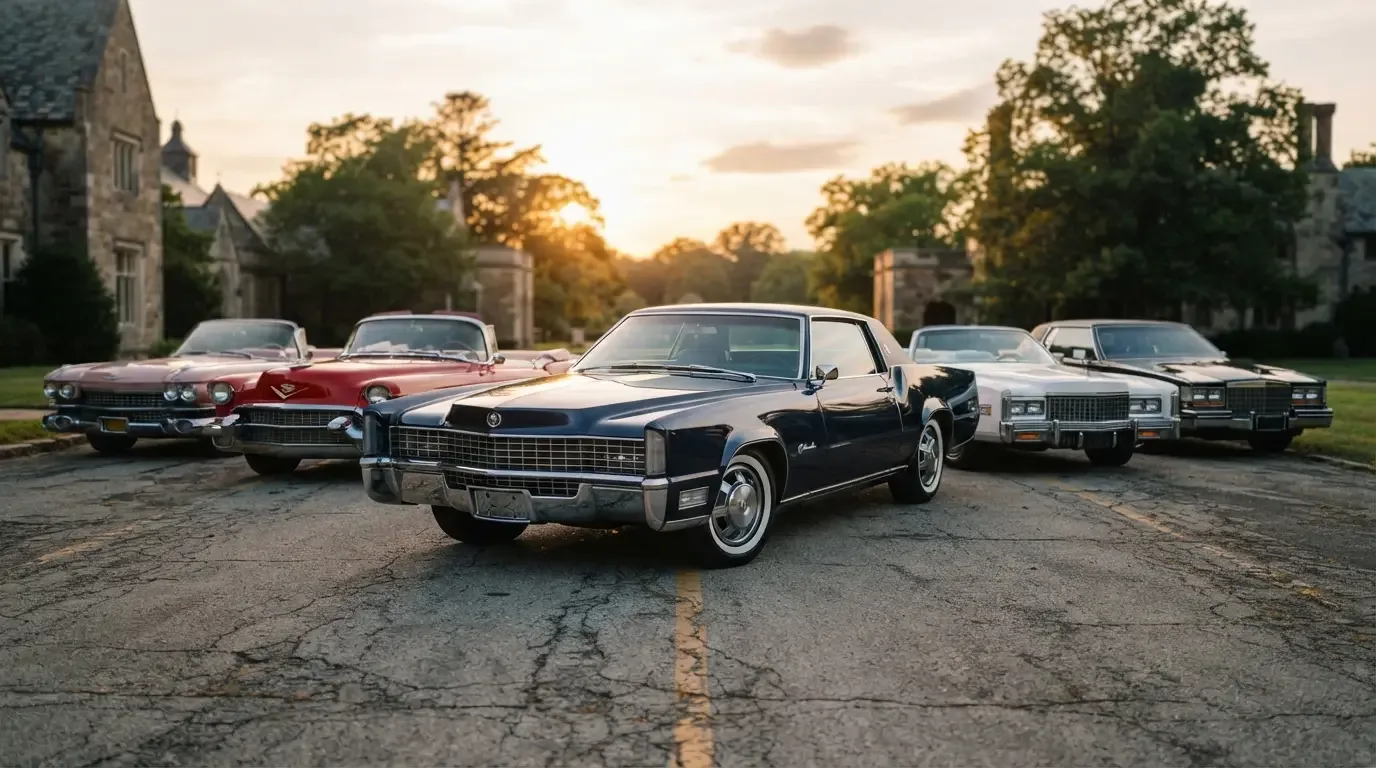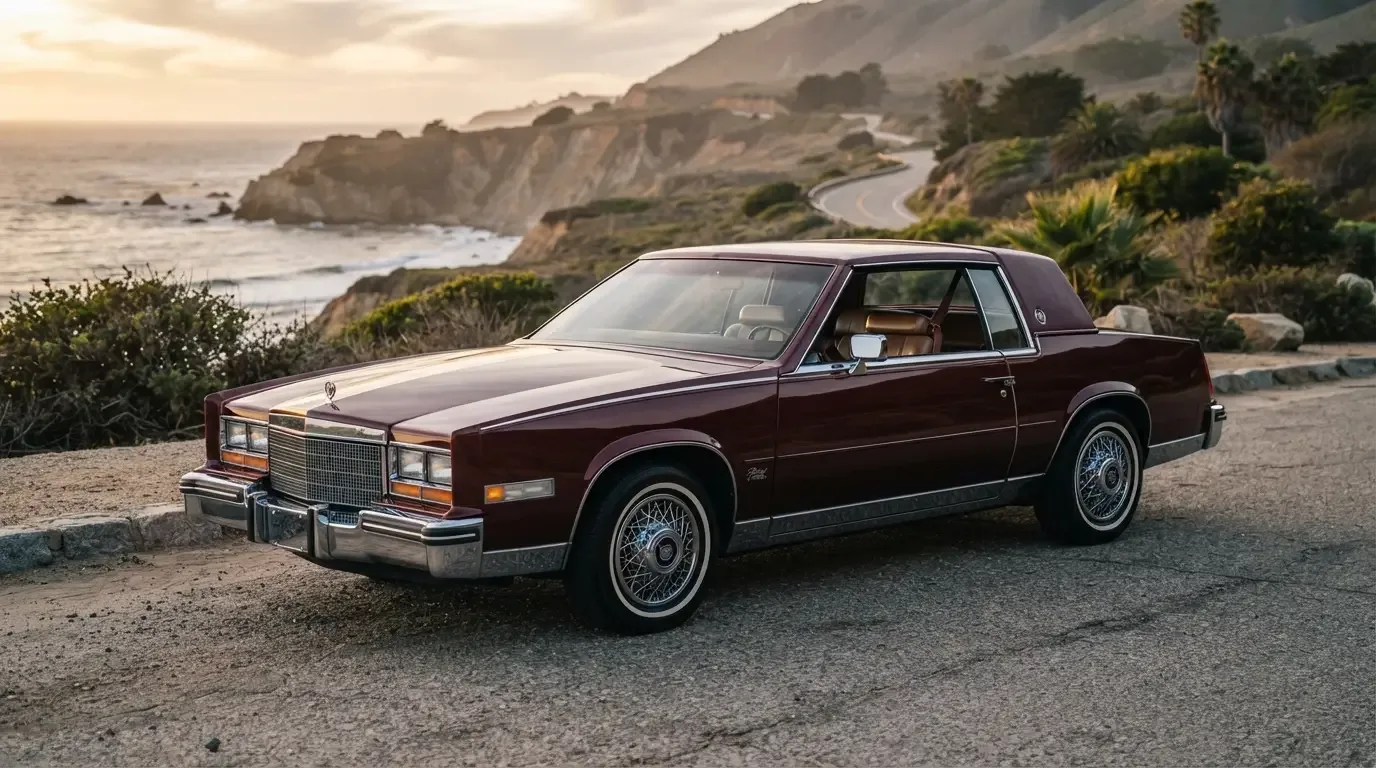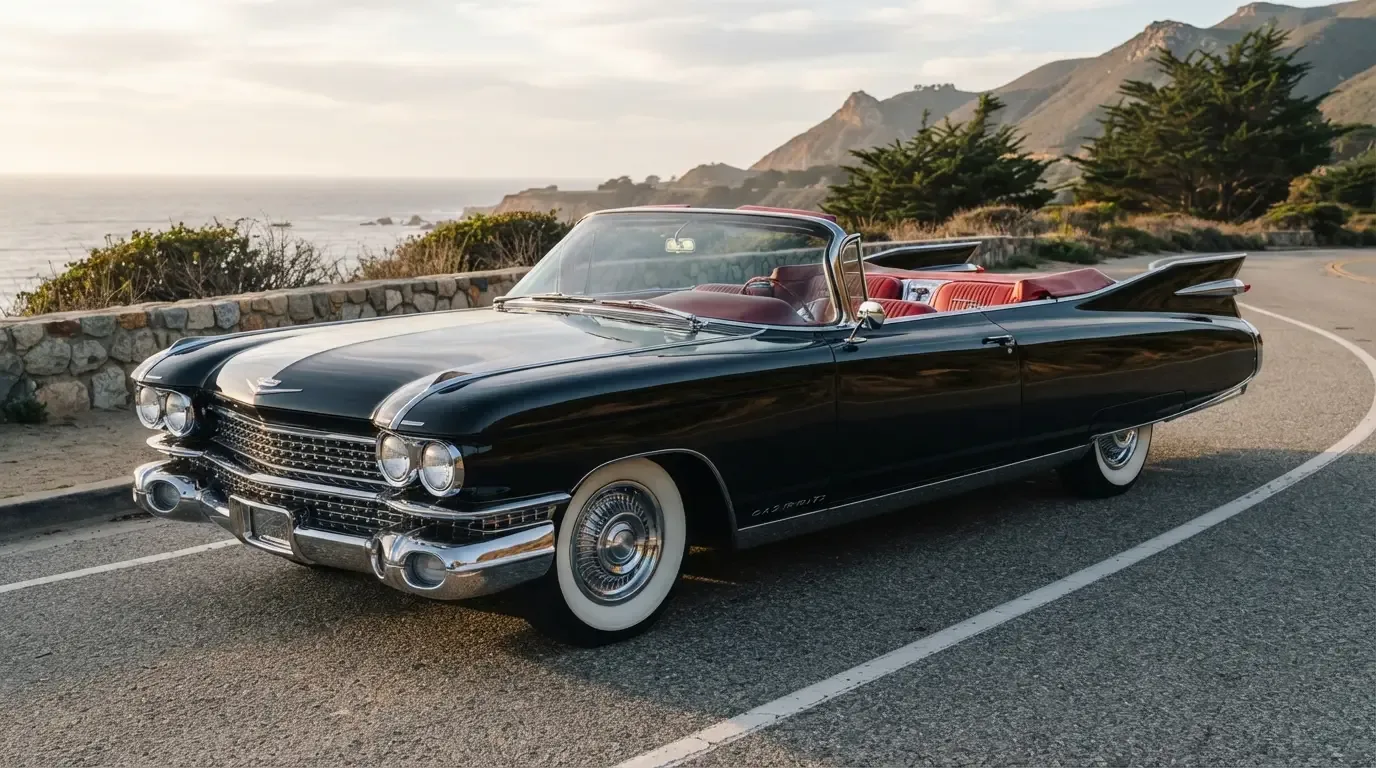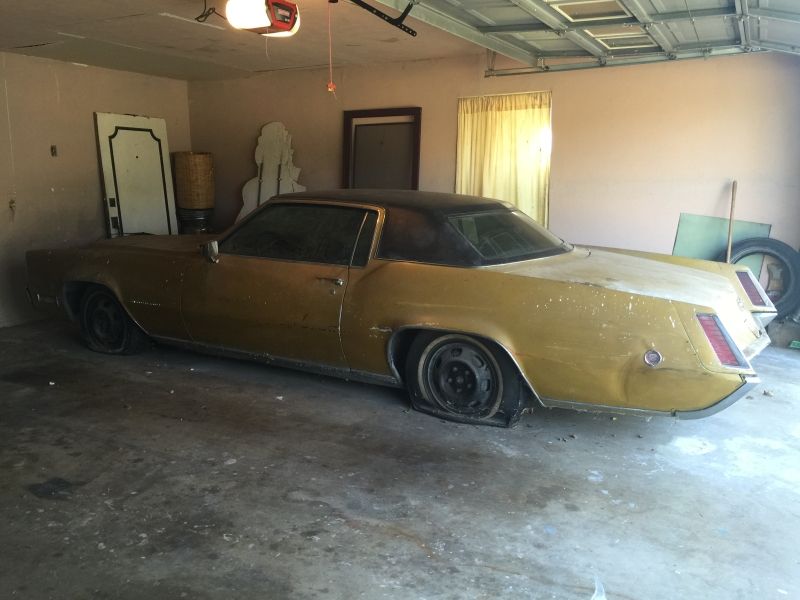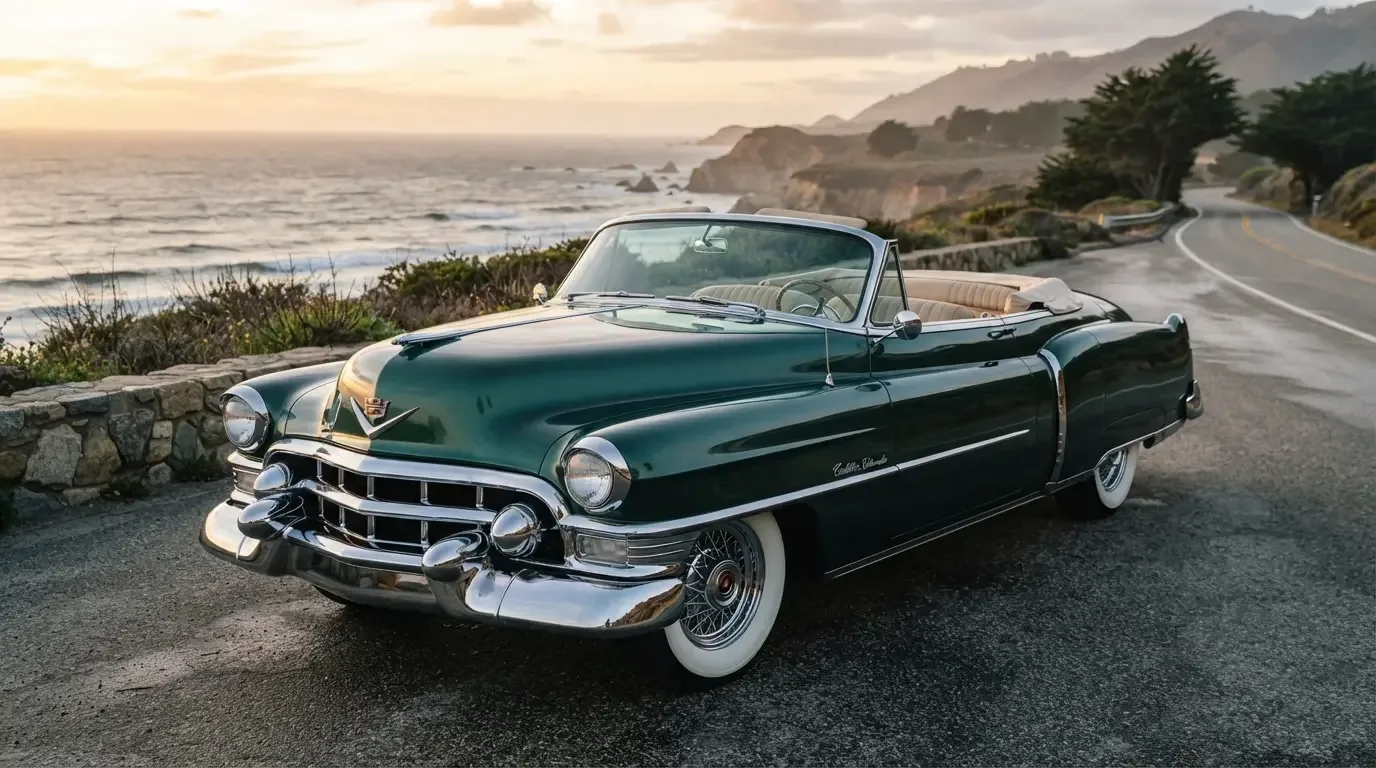
The 1953 Cadillac Eldorado did not need to sell in big numbers to change the trajectory of American luxury cars. Cadillac built it as a rolling display of what the division could do, a car meant to be seen more than sold, and it worked. The 1953 cadillac eldorado arrived as a limited-run convertible sitting on top of the Series 62 lineup, priced well above anything else Cadillac offered that year, and it set the template for every "personal luxury" Cadillac that followed for the next five decades.
A show car built for the street
Cadillac's design studio under Harley Earl had been staging its wraparound-windshield "dream cars" on the Motorama circuit since the late 1940s, and by 1952 the division decided one of those show cars deserved a production version. The result borrowed its most distinctive feature directly from the show floor: a panoramic wraparound windshield that curved sharply at the A-pillars, a look no other American production convertible offered that year. Buick and Oldsmobile got their own wraparound-glass specials at the same time, part of a coordinated General Motors push to prove the corporation could build genuine limited-edition halo cars, not just trim packages.
Underneath the flourishes, the 1953 Eldorado shared its chassis and 331-cubic-inch V8 with the rest of the Series 62 range. What separated it was everything layered on top: a distinctive notched beltline with a wraparound rear line unique to the model, wire wheels, a metal boot that covered the folded top so the convertible's silhouette stayed clean with the roof down, and a cut-down windshield frame that made the whole car look lower than its stablemates even though the mechanicals underneath were shared hardware.
The price tag did the talking
Cadillac priced the 1953 Eldorado at $7,750, nearly double the cost of a standard Series 62 convertible and well above the flagship Series 75 limousine. That price was deliberate. Cadillac wanted a car few people could justify buying, because scarcity was the point. A car built to be unattainable told a story about the whole Cadillac lineup: if this is what sits at the top, everything below it must be worth wanting too. Buyers who did write the check got a car finished largely by hand, with interior appointments and paint options not offered on the standard line.
That strategy paid off in ways that had nothing to do with unit sales. Dealers used the Eldorado as a draw, a car to pull people into the showroom even if they walked out with a Series 62 sedan instead. Cadillac's marketing leaned hard into the idea that the Eldorado represented the absolute best the division could build, a claim that became a recurring theme across the cadillac eldorado generations history that followed.
General Motors ran this same play across three divisions in 1953, and comparing the three cars shows how differently each brand handled the assignment. Buick's Skylark and Oldsmobile's Fiesta shared the wraparound windshield treatment and the halo-car mission, but Cadillac's price and positioning sat well above both. Buick and Oldsmobile treated their limited convertibles as flagship trim levels within an existing model line. Cadillac gave the Eldorado its own name, its own identity, and its own place at the very top of the division, a distinction that let it outlive its GM siblings by decades. Skylark and Fiesta both faded after a season or two as standalone models. The Eldorado nameplate ran until 2002.
The build process itself set the car apart from ordinary Series 62 assembly. Eldorado bodies moved through additional finishing steps for paint depth and panel fit, and interior trim used leather and cloth combinations not cataloged for the standard convertible. Options that were extra-cost or unavailable elsewhere in the lineup, like power windows and a power-operated top, came standard on the Eldorado, which reinforced the idea that this was as much an engineering statement for Cadillac as it was a styling one.
Who actually bought one
The buyer list for the first Eldorado reads like a snapshot of postwar American celebrity and wealth. Entertainers, business owners, and a handful of political figures took delivery in 1953, drawn as much by the exclusivity as by the styling. Cadillac understood that a car this expensive needed visible owners, people who would be seen in it at premieres and country clubs, because that visibility was worth more than any print advertisement the division could buy.
Marilyn Monroe reportedly owned one, and the car showed up in period photography tied to Hollywood and to industry executives on both coasts. That kind of exposure mattered enormously to Cadillac in 1953, a moment when the division was working to distance its image from the wartime austerity that had defined the previous decade and reassert itself as the standard against which every American luxury car would be measured.
Dwight Eisenhower's inaugural year overlapped with the Eldorado's launch, and the broader mood of the country was shifting toward postwar confidence and visible consumption. Cadillac read that mood correctly. A car priced at nearly twice the cost of a well-equipped standard convertible was not a rational purchase for most buyers, and it was not meant to be. It was meant to signal that its owner had arrived, and in a country climbing out of rationing and toward suburban prosperity, that signal carried weight far beyond the car's actual mechanical merits.
"The first Eldorado wasn't really competing with anything else in Cadillac's own lineup. It was competing with the idea that a car could be a status object first and transportation second, and in 1953 that idea was still new enough to be genuinely startling."
- Tom Ramirez
Why the debut year still matters
Every Eldorado that came after 1953, whether it was the finned land yacht of the late 1950s or the front-drive coupe of 1967, traced its identity back to this first car's basic promise: this is Cadillac's best, offered in numbers small enough to matter. Collectors today treat the 1953 model as the foundation piece of any serious Eldorado collection, and its rarity relative to later years keeps demand for surviving, documented examples well ahead of supply.
Because so few were built, condition and paperwork carry outsized weight in what a 1953 Eldorado is worth today. Cars with verified ownership history, original engines, and documented restorations command prices far above driver-quality examples with gaps in their records. Anyone curious about how that first year fits into the bigger picture should read a related story covering every generation side by side.
The 1953 Eldorado never needed to be a volume seller. It needed to prove Cadillac could build a car that made people stop and look, and on that measure it succeeded completely. For buyers looking at the market today, Eldorados for sale now span the full 49-year production run, though examples from that original 532-unit debut year remain the rarest and most sought after of them all.