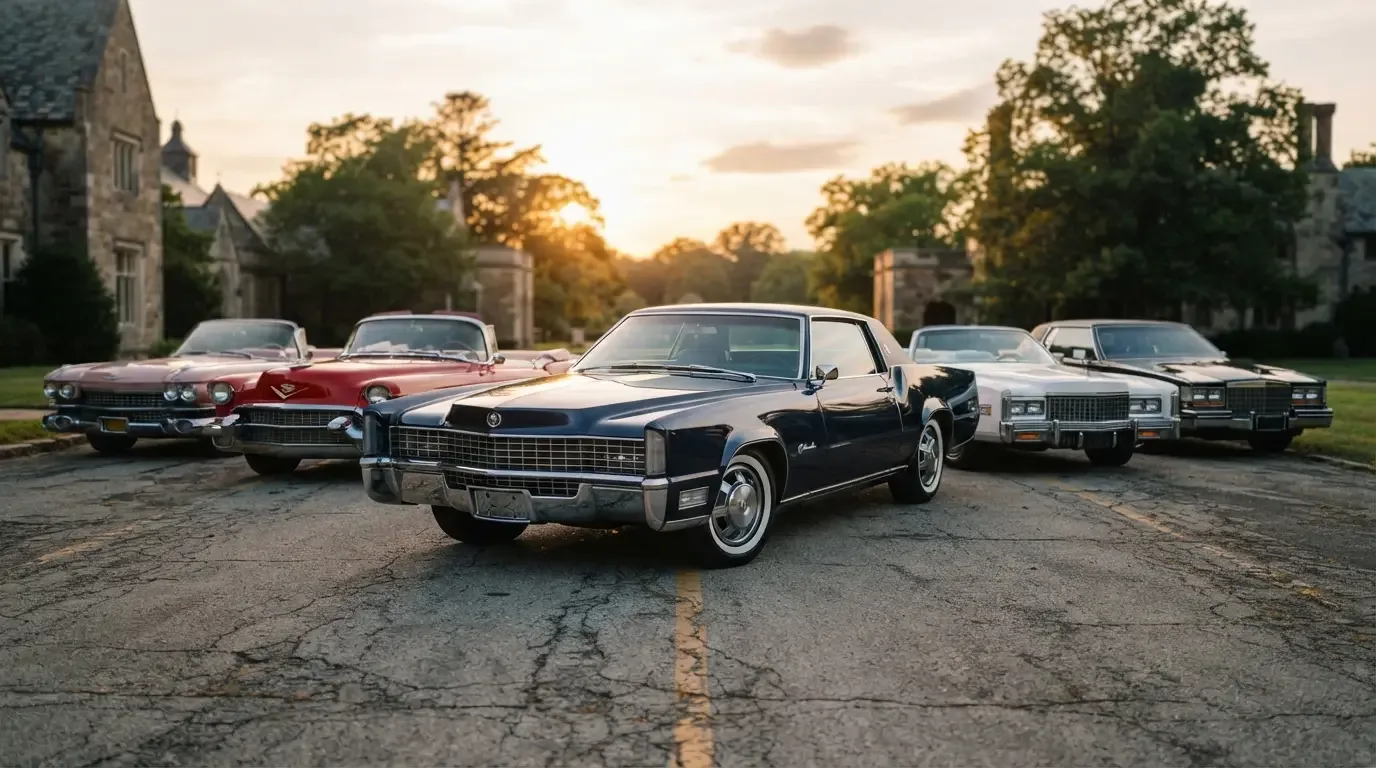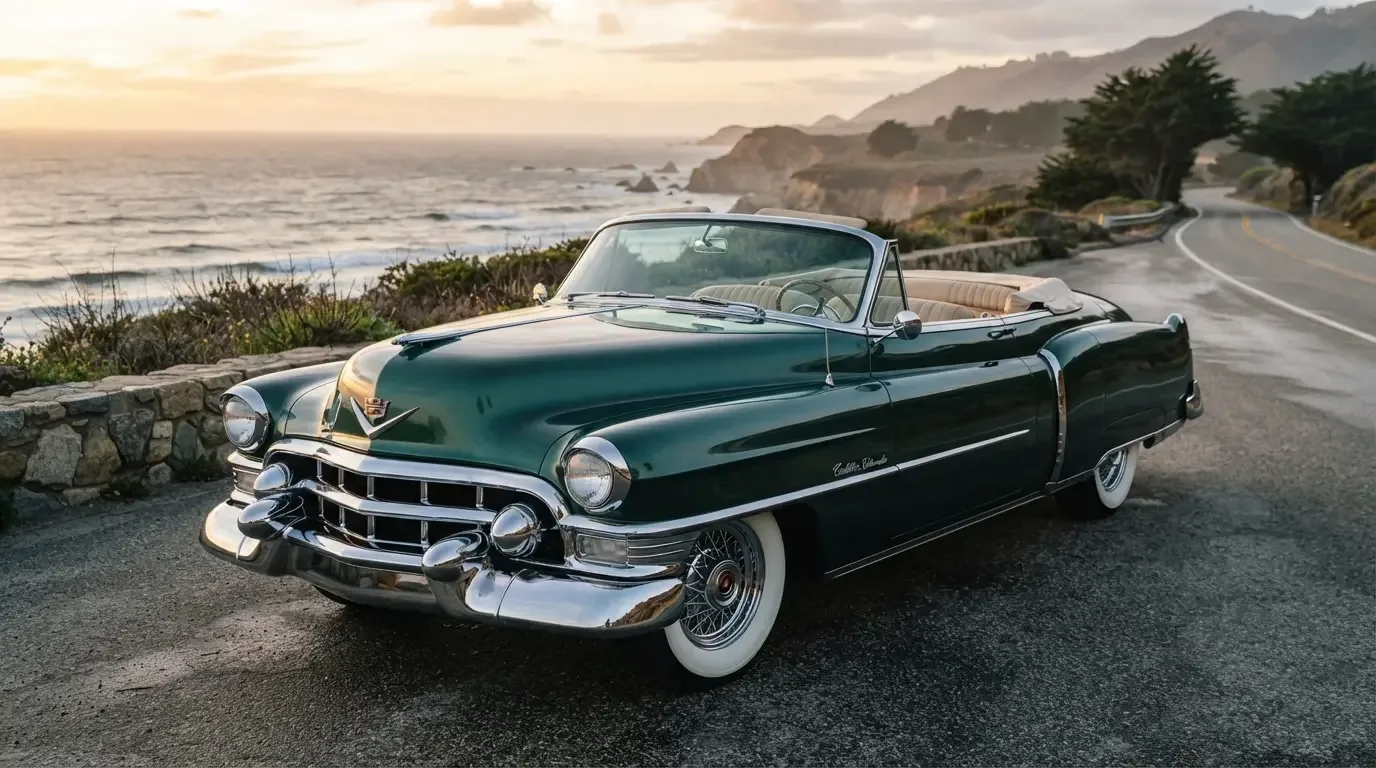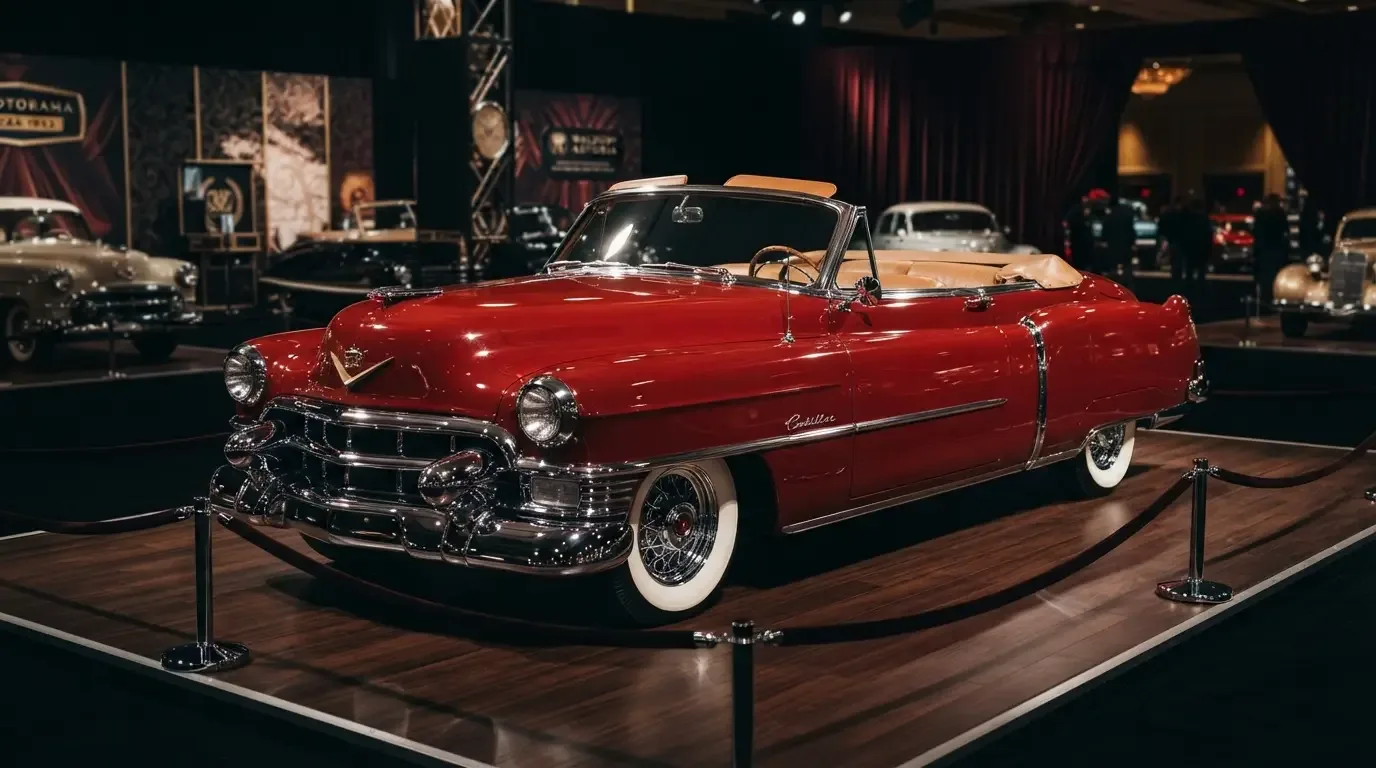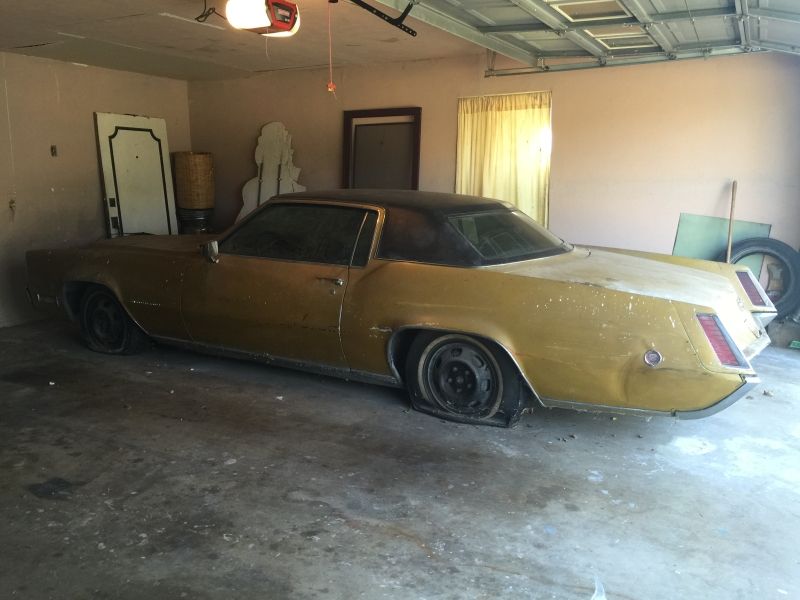
Nearly fifty years of production give the Cadillac Eldorado a genealogy that is easy to lose track of. The cadillac eldorado generations explained here move from a hand-built 1953 show convertible through tailfins, a front-drive engineering leap, a decade of open-top land yachts, a downsizing that alienated loyal buyers, and finally a Northstar-powered coupe that closed out the nameplate in 2002. Treated as artifacts rather than just cars, each generation tells its own story about what Cadillac believed luxury meant at that moment.
First generation, 1953 to 1958: the founding statement
The Eldorado began as a limited convertible built on the Series 62 platform, distinguished by a wraparound windshield borrowed from GM's Motorama show cars and a price that placed it well above every other Cadillac. By 1956 the range expanded to include the Seville hardtop coupe and the Biarritz convertible, and by 1957 to 1958 the Eldorado Brougham arrived as a hand-built, stainless-steel-roofed flagship priced above $13,000, a figure that made the original 1953 car look almost modest by comparison. These years established the tailfin as the Eldorado's visual signature, growing taller and sharper each model year through the decade.
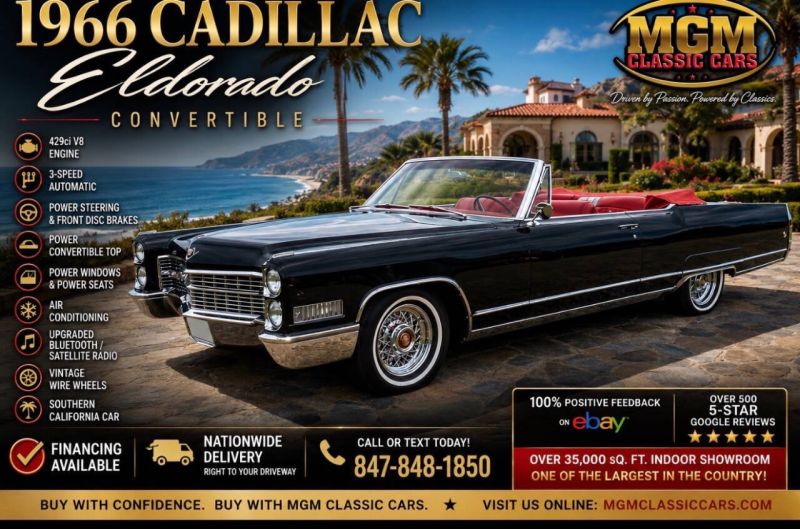
Second generation, 1959 to 1966: peak fins, then restraint
1959 produced the tallest, most dramatic fins Cadillac ever built, a design so extreme it became the reference point for the entire era of American automotive excess. Cadillac pulled back from that extreme almost immediately, and by the early 1960s under design chief Bill Mitchell the Eldorado's lines grew cleaner and more disciplined. The Biarritz convertible carried the nameplate through this period while the Seville coupe name was retired, and by 1966 the fins that had defined the car for a decade had all but disappeared, replaced by a crisper, more architectural body that signaled the platform change coming the following year.
Third generation, 1967 to 1970: the front-drive gamble
1967 marked the most consequential engineering change in the Eldorado's history. Cadillac moved the car onto a new front-wheel-drive unitized platform shared with the Oldsmobile Toronado, making the Eldorado the first American front-drive car built at true luxury scale since the Cord of the 1930s. The design abandoned tailfins entirely in favor of a long, low, knife-edge coupe shape with hidden headlights. It was a significant risk for a division that had spent fifteen years selling excess and ornamentation, and it worked, giving Cadillac a genuinely modern flagship coupe to compete against personal-luxury rivals from Lincoln and Ford.
Engineers inside GM had debated front-wheel drive at true luxury scale for years before 1967, worried that a heavy V8 and a smooth power delivery could not coexist with front-drive packaging. The Toronado program proved the layout could work at Oldsmobile first, and Cadillac's version refined it further, wrapping the mechanical breakthrough in styling that looked nothing like the ornate, fin-heavy cars the brand had built through the 1950s and early 1960s. Reviewers at the time noted how differently the car drove compared to a traditional body-on-frame Cadillac, with a flatter cornering stance and none of the wheel hop that plagued high-powered rear-drive cars of the period.
Fourth generation, 1971 to 1978: the land yacht years
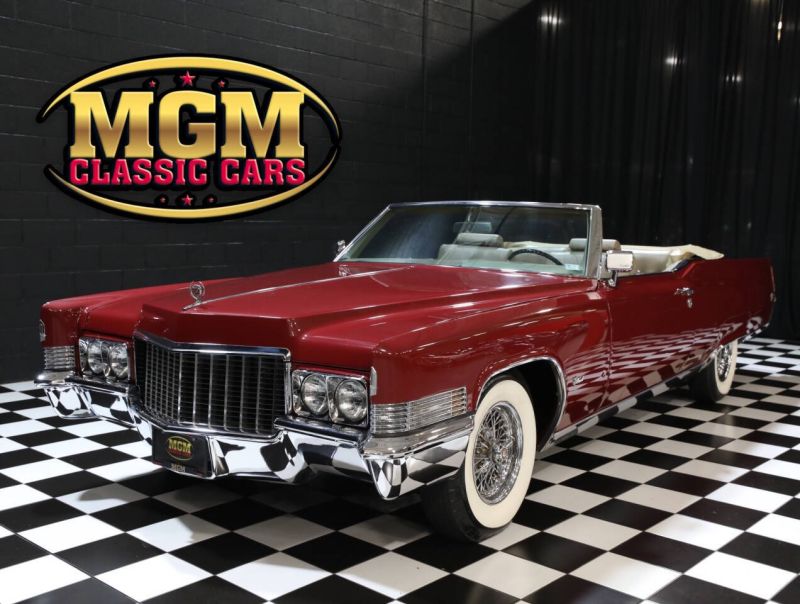
The front-drive platform grew substantially through the 1970s, and the Eldorado grew with it, culminating in some of the largest two-door personal-luxury cars ever sold in America. Cadillac reintroduced an Eldorado convertible in 1971, and by 1976 it was marketed, somewhat prematurely, as the last American convertible before GM discontinued open-top production across the industry. That claim did not age well once convertibles returned to American showrooms in the 1980s, but at the time it drove strong demand and made the 1976 Eldorado convertible one of the most collected cars of the decade. Biarritz trim, opera windows, and increasingly ornate broughams defined this generation's late years.
By the mid-1970s the Eldorado had grown to nearly nineteen feet long, riding on a wheelbase that dwarfed most modern full-size sedans. Cadillac leaned into that scale rather than apologizing for it, marketing the car's presence and weight as virtues in a market that had not yet fully absorbed the fuel crises reshaping the rest of the industry. That confidence carried through right up until federal fuel economy standards and shifting buyer taste forced the far more conservative fifth-generation redesign at the end of the decade.
| Generation | Years | Defining trait |
|---|---|---|
| First | 1953-1958 | Limited convertible, tailfins begin |
| Second | 1959-1966 | Peak fins, then restrained design |
| Third | 1967-1970 | Front-wheel drive, knife-edge coupe |
| Fourth | 1971-1978 | Land yacht scale, convertible returns |
| Fifth | 1979-1985 | First downsizing, digital dash era |
| Sixth | 1986-1991 | Second downsizing, FWD compact coupe |
| Seventh | 1992-2002 | Northstar V8, final generation |
Fifth through seventh generations, 1979 to 2002: shrinking, then Northstar
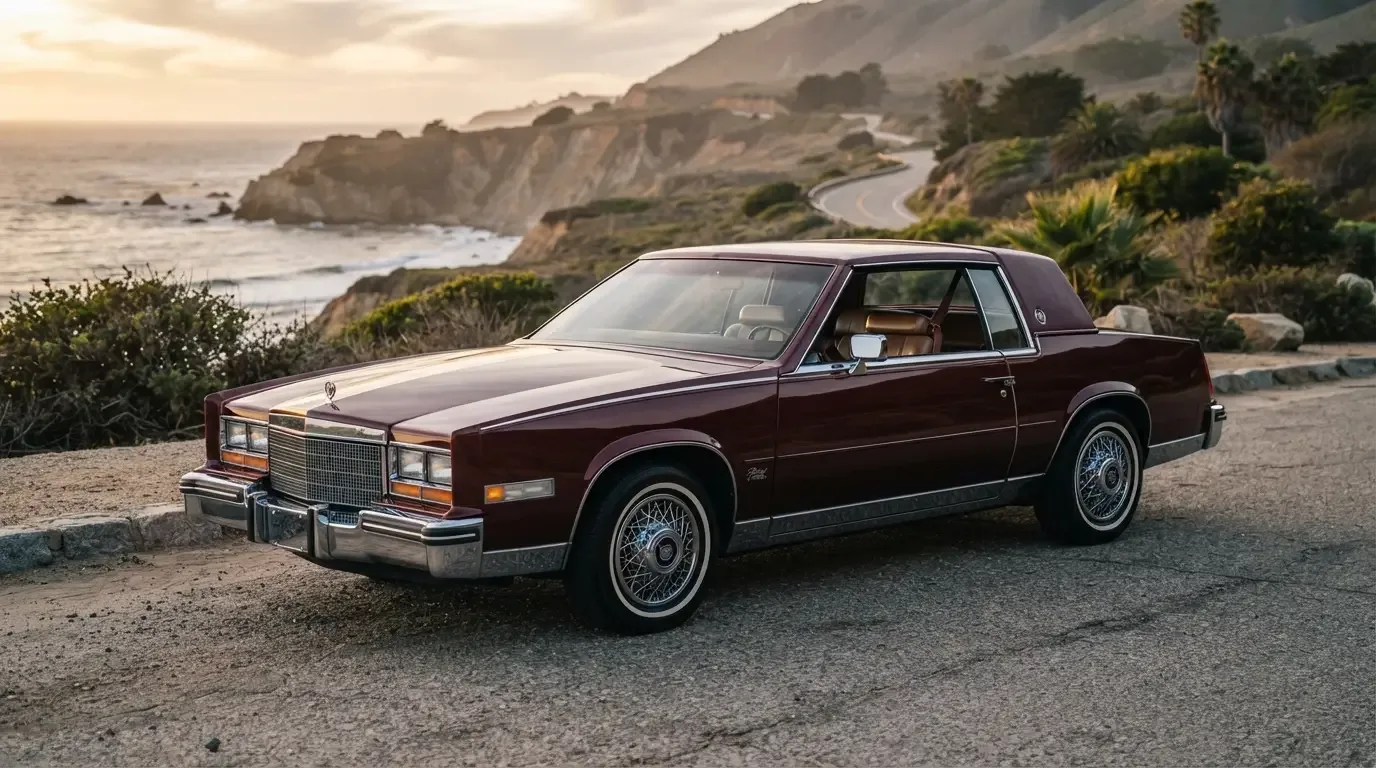
1979 brought the Eldorado's first major downsizing, trimming several hundred pounds and several inches from the land yacht proportions of the previous decade. That was a preview of the far more drastic 1986 change, when Cadillac cut the car down to a genuinely compact front-drive coupe, a shift that confused and alienated many longtime buyers who expected an Eldorado to feel substantial. Cadillac spent the rest of the 1980s and early 1990s gradually restoring size and presence, and the arrival of the 32-valve Northstar V8 in 1993 gave the seventh and final generation real performance credibility. The Eldorado ended its run in 2002 with a Collector Series that closed out 49 years of production.
The Northstar era deserves particular credit for restoring the Eldorado's performance reputation after a rough stretch through the 1980s. Cadillac's 32-valve, dual-overhead-cam V8 produced meaningfully more horsepower than anything the division had offered since the 1970s, and the Eldorado Touring Coupe trim added stiffer suspension tuning aimed directly at European and Japanese luxury coupes rather than at traditional domestic rivals. It was, in many ways, the most technically sophisticated Eldorado ever built, even if it never recaptured the cultural visibility of the fin-era cars or the land yacht convertibles.
"Look at the Eldorado generation by generation and you're really watching Cadillac argue with itself about what luxury means, tailfins, then front drive, then downsizing, then a genuine sports V8. Almost no other nameplate reinvented itself that many times and kept the same name on the trunk lid."
- Sarah Whitfield
Why the full arc matters to collectors
Because the Eldorado changed so dramatically across its production run, values and desirability vary enormously by generation rather than tracking a simple age curve. First-generation cars command premiums for rarity and historical significance. Fourth-generation convertibles from the mid-1970s carry their own strong collector following tied to the land yacht era's cultural cachet. Sixth-generation cars from the downsizing years remain the most affordable entry point into Eldorado ownership, while Northstar-era seventh-generation coupes appeal to buyers who want the badge with modern drivability. Anyone wanting the full narrative behind each of these shifts should read our complete history, which traces the engineering and design decisions behind every generation in detail.
Whichever era appeals most, the used market currently has representation from nearly every generation. Buyers who want to compare tailfin-era cars against Northstar coupes side by side can find a classic Eldorado and see how differently each generation was built, priced, and positioned within Cadillac's own lineup.