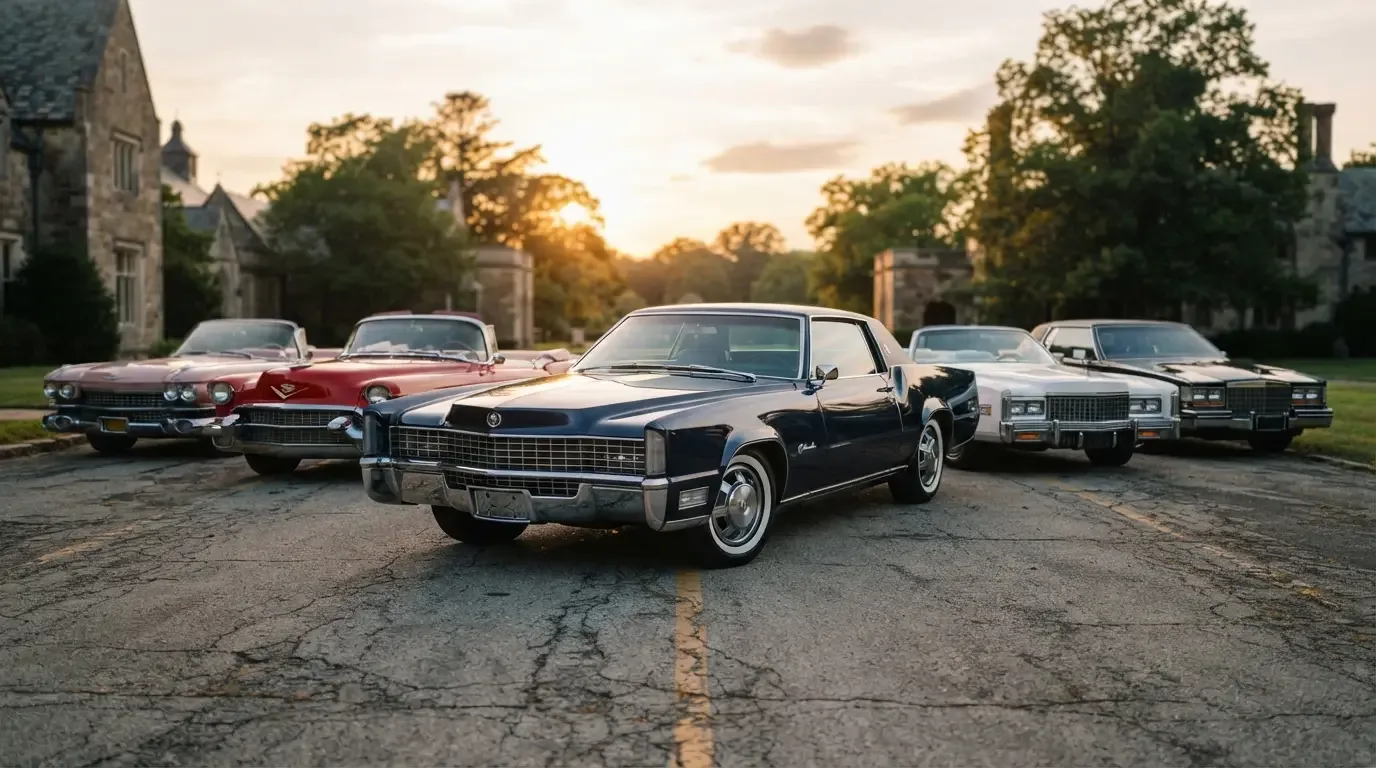
Cadillac Eldorado milestones are not evenly spread across the nameplate's nearly fifty years. A handful of specific moments did most of the work shaping how the car is remembered today, from a scarce 1953 debut through a genuinely radical engineering shift in 1967 to a deliberate, numbered goodbye in 2002. Some of these moments were planned celebrations, others were course corrections after a misstep, and a few were simply the industry catching up to decisions Cadillac had already made years earlier. Looking at the biggest of these moments in sequence shows how much the Eldorado actually changed while somehow keeping the same name the entire way through.
The 1953 launch that set the tone
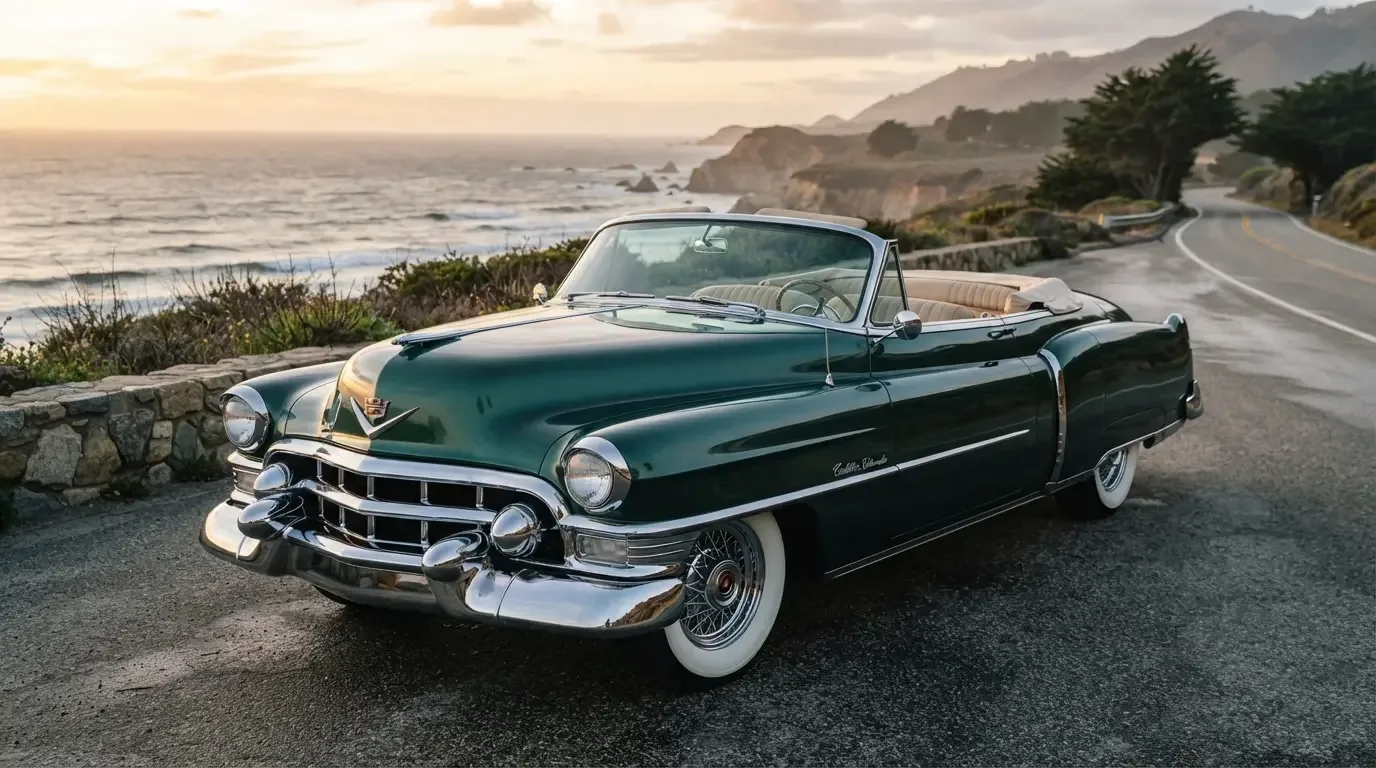
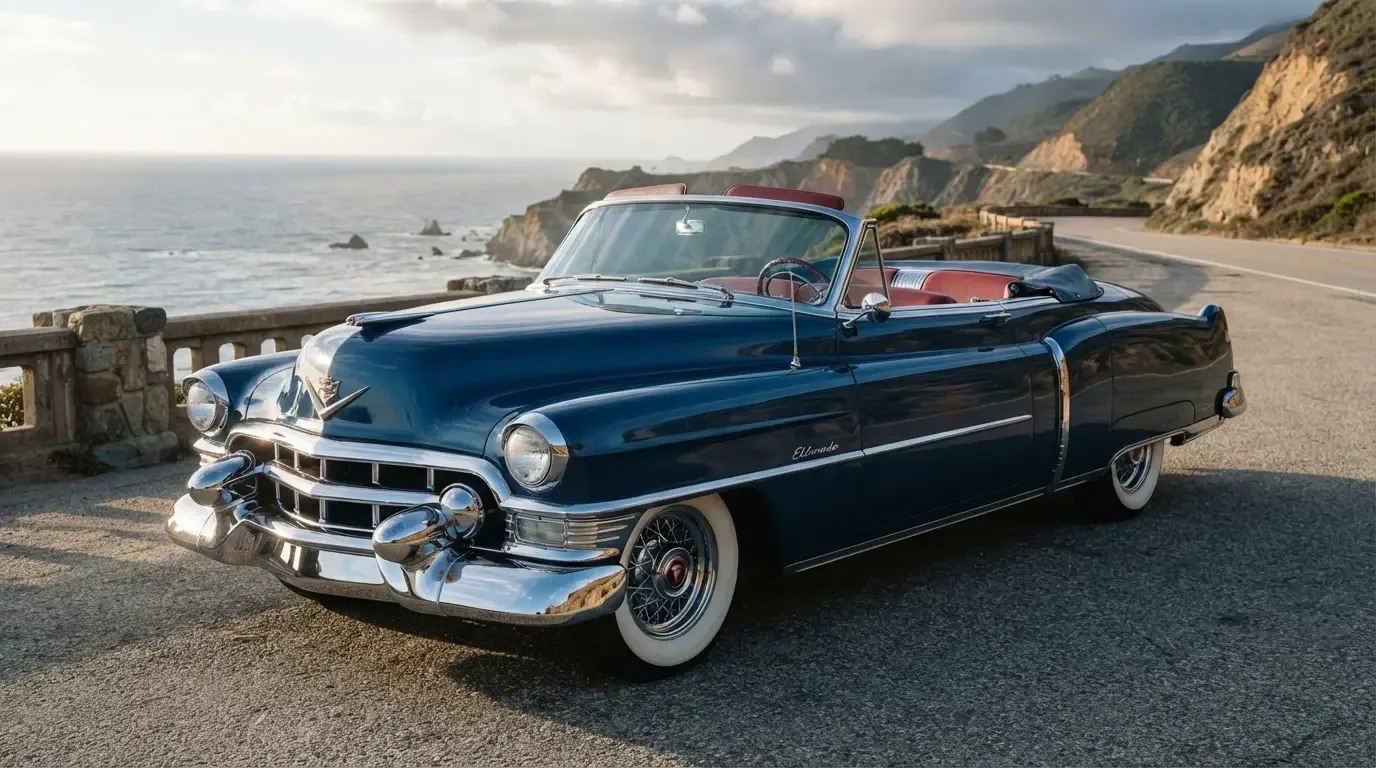
Cadillac introduced the Eldorado for 1953 as a limited-run flagship convertible, built in a run of just 532 units and priced at roughly double a standard Series 62 convertible. That scarcity and price positioning was deliberate. Cadillac wanted a halo car that demonstrated engineering and styling leadership rather than a volume seller, and the strategy worked well enough that the Eldorado name stayed in production continuously for the next forty-nine years. Few American nameplates launched with that specific a purpose, showroom theater rather than mass appeal, and even fewer kept that purpose legible across five subsequent decades of changing ownership, regulation, and taste. The Eldorado outlasted several direct competitors that launched under similar logic, a reminder that the original 1953 positioning, rare, expensive, and deliberately impressive, gave the nameplate a foundation sturdy enough to survive multiple total reinventions of the car built underneath the badge.
1959: the styling milestone everyone remembers
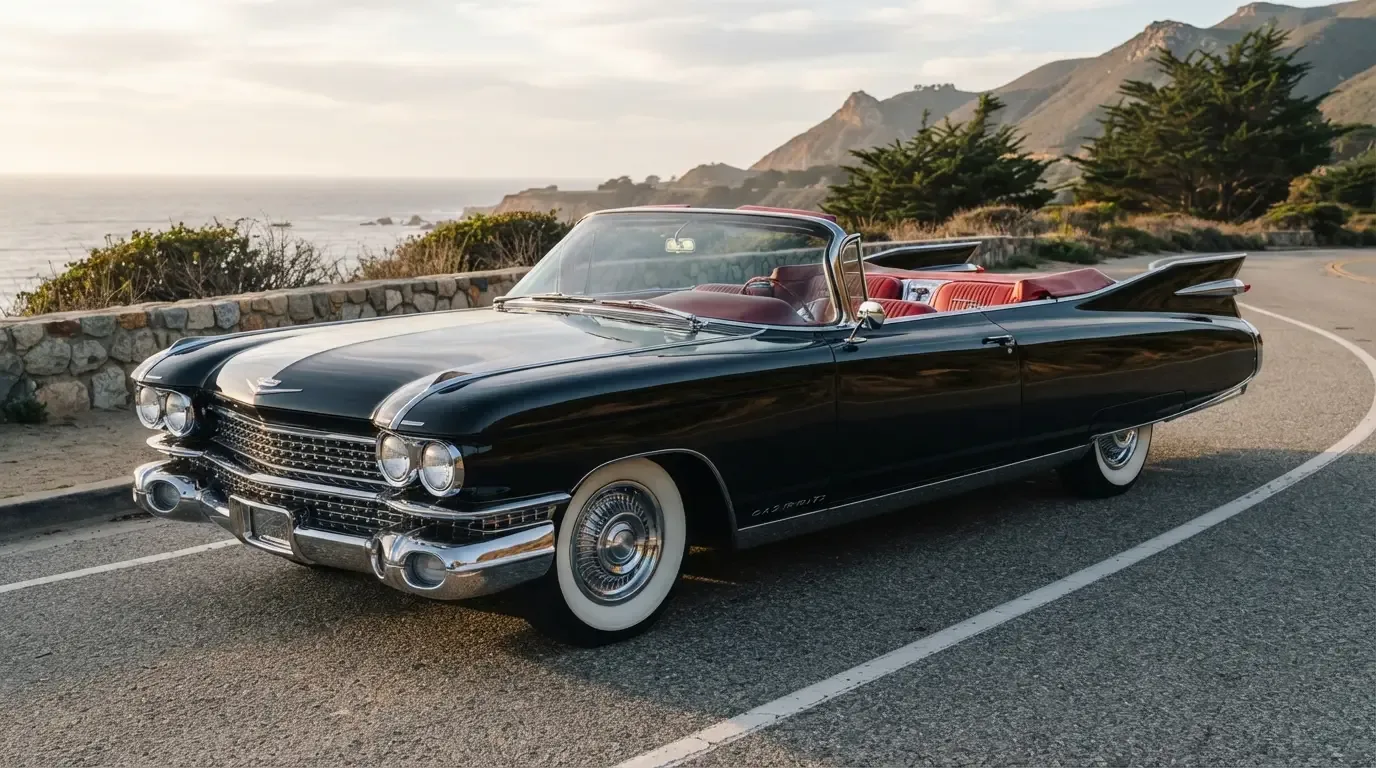
If a single model year defines the Eldorado in popular memory, it is 1959, when the tailfins reached their tallest height of the entire nameplate's history, paired with twin bullet-shaped taillamps and a rear end so heavily chromed it became shorthand for an entire era of American excess. The 1959 Eldorado, in both Seville hardtop and Biarritz convertible form, remains one of the most photographed and referenced American cars from the decade, appearing regularly in film, advertising, and museum retrospectives long after the styling itself fell out of favor with Detroit's own designers.
1967: an engineering milestone, not just a styling one
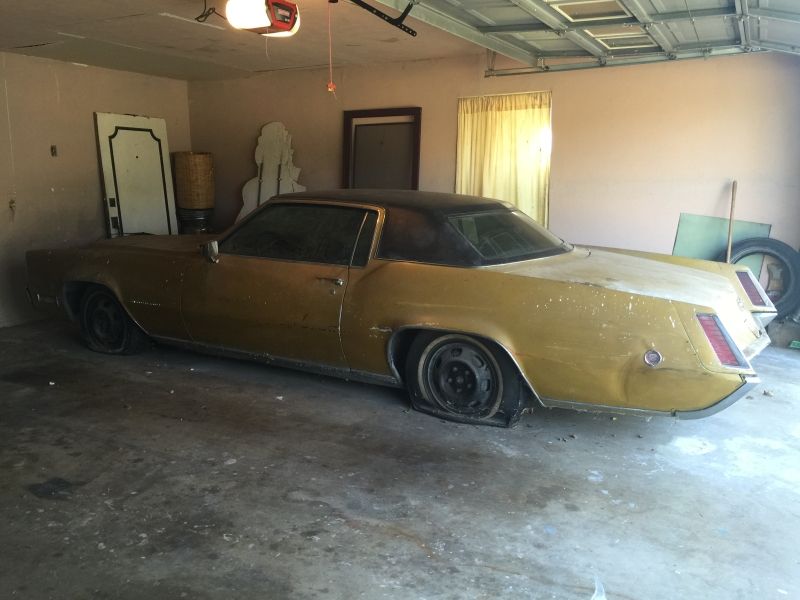
The most consequential Eldorado milestone from an engineering standpoint arrived in 1967, when Cadillac moved the car to front-wheel drive on the E-body platform it shared with the Oldsmobile Toronado. Putting a large, heavy American luxury car's power to the front wheels was genuinely unusual for the period, and the resulting packaging let Cadillac's designers draw a long-hood, short-deck profile that broke completely from the formal three-box shapes the Eldorado had worn through the 1950s and early 1960s. That basic architecture, front-wheel drive paired with a long hood, would define the Eldorado for the next quarter century, through the land yacht years of the 1970s and into the downsized cars of the 1980s.
The 1976 model year adds a milestone of its own to this stretch of the nameplate's history. Cadillac marketed the 1976 Eldorado convertible as the last American-built convertible before the entire domestic industry dropped open-top cars from production, and speculative buyers responded by paying above sticker price for cars they believed would only increase in value. Convertibles returned to the American market within a decade, but 1976 still holds a specific, well-documented place in Eldorado history precisely because buyers at the time believed the story they were told.
The Northstar and the numbered goodbye
Two more milestones bookend the nameplate's final decades. The Northstar V8's arrival in 1993 gave the 1992-redesigned Eldorado a genuine performance credential it had lacked for years, a 32-valve aluminum engine with a limp-home feature that let it run on reduced power even after total coolant loss, engineering sophisticated enough that GM used it to demonstrate the brand's technical seriousness more broadly. And the final milestone, the 2002 Collector Series, closed the story deliberately rather than letting the nameplate simply fade. Cadillac built 1,596 numbered examples in two exclusive colors, each carrying a dash plaque acknowledging its place in the final run, a send-off few American nameplates receive. Most discontinued American cars simply vanish from a catalog between one model year and the next, with no formal acknowledgment beyond a footnote in a dealer bulletin, which makes the deliberate ceremony Cadillac built around the Eldorado's ending genuinely unusual.
"What makes the Eldorado's milestones interesting as a set is how deliberate most of them were. This was not a car that drifted through five decades. Cadillac kept making conscious decisions about what it should be, and those decisions are the milestones people still talk about."
- Sarah Whitfield
Why these moments still matter to collectors
Each of these milestones created a distinct collector category within the broader Eldorado market, and understanding which milestone a specific car belongs to matters more than most buyers initially expect. A 1959 Biarritz trades on styling significance and genuine scarcity. A 1976 convertible trades on cultural cachet tied to a marketing claim that turned out to be premature. A Northstar-era Touring Coupe trades on engineering credibility and everyday usability that the earlier cars cannot match. The 2002 Collector Series trades on documented, numbered rarity inside a production run that was otherwise fairly healthy through the 1990s.
There is also a milestone worth mentioning that gets less attention than the styling and engineering turning points: the 1986 downsizing. Cadillac cut the Eldorado's length and weight substantially that year in response to fuel economy regulation and a broader corporate belief that smaller luxury cars represented the industry's future. The reception was mixed at best, with longtime owners feeling the car had lost the visual presence that justified its price, and the episode stands as a rare Eldorado milestone remembered more as a cautionary tale than an achievement. Cadillac spent the rest of the 1980s addressing the criticism through styling refinements before committing to the more successful 1992 redesign that followed.
None of these milestones exist in isolation. They only make full sense against the whole picture of how the Eldorado evolved generation by generation, since each milestone represents a decision point where Cadillac chose to change course rather than simply continue building the previous year's car with minor updates. Sellers know this too, and asking prices for cars tied to a genuine milestone year routinely run well above otherwise comparable examples from quieter years, sometimes without much documentation to back up the claim being made. Buyers who understand which milestone a given Eldorado represents are in a far better position to judge whether an asking price reflects genuine significance or just an enthusiastic seller. Those ready to look at real cars from across these different eras can find a classic Eldorado and compare how each milestone generation shows up on today's market.
Sources and notes
- The Cadillac Database: 1953 Eldorado Special Sport Convertible Facts
- Smithsonian National Museum of American History: 1959 Cadillac Eldorado Biarritz Tail Light
- Mac's Motor City Garage: Cadillac's First Front-Drive, the 1967 Eldorado
- Ate Up With Motor: The 1971-1976 Cadillac Eldorado Convertible
- The Truth About Cars: The 2002 Cadillac Eldorado Collector Series
- Wikipedia: Cadillac Eldorado