Harley Earl was standing on the tarmac at Selfridge Field in Michigan sometime in 1941, staring up at a Lockheed P-38 Lightning, when he decided the twin tail booms of that fighter plane belonged on a car. It took him seven years to get the idea into production, and it took Cadillac another eleven after that to build the car that would carry his fighter-plane obsession to its absolute extreme. That car was the Eldorado, and the connection between Harley Earl and Cadillac Eldorado design runs through nearly every model year of the nameplate's first decade.
The man who invented the tailfin
Earl ran General Motors' Art and Colour Section, the industry's first dedicated styling department, from 1927 until his retirement in 1958. He was not an engineer. He came from Hollywood, where his father built custom car bodies for silent-film stars, and he brought a showman's instinct for drama to a business that had mostly cared about mechanics up to that point. The 1948 Cadillac, the first American car with tailfins, was his first major bet on that instinct, and it paid off immediately in showroom traffic.
By the time the Eldorado launched in 1953, Earl's fins were already a Cadillac signature, but the Eldorado gave him a car built specifically to push the idea further than the regular lineup could justify. As a limited-production halo model, the Eldorado did not need to sell in the same volume as a standard Series 62, which meant Earl's studio had more room to experiment with each passing year.
1959: the year the fins won
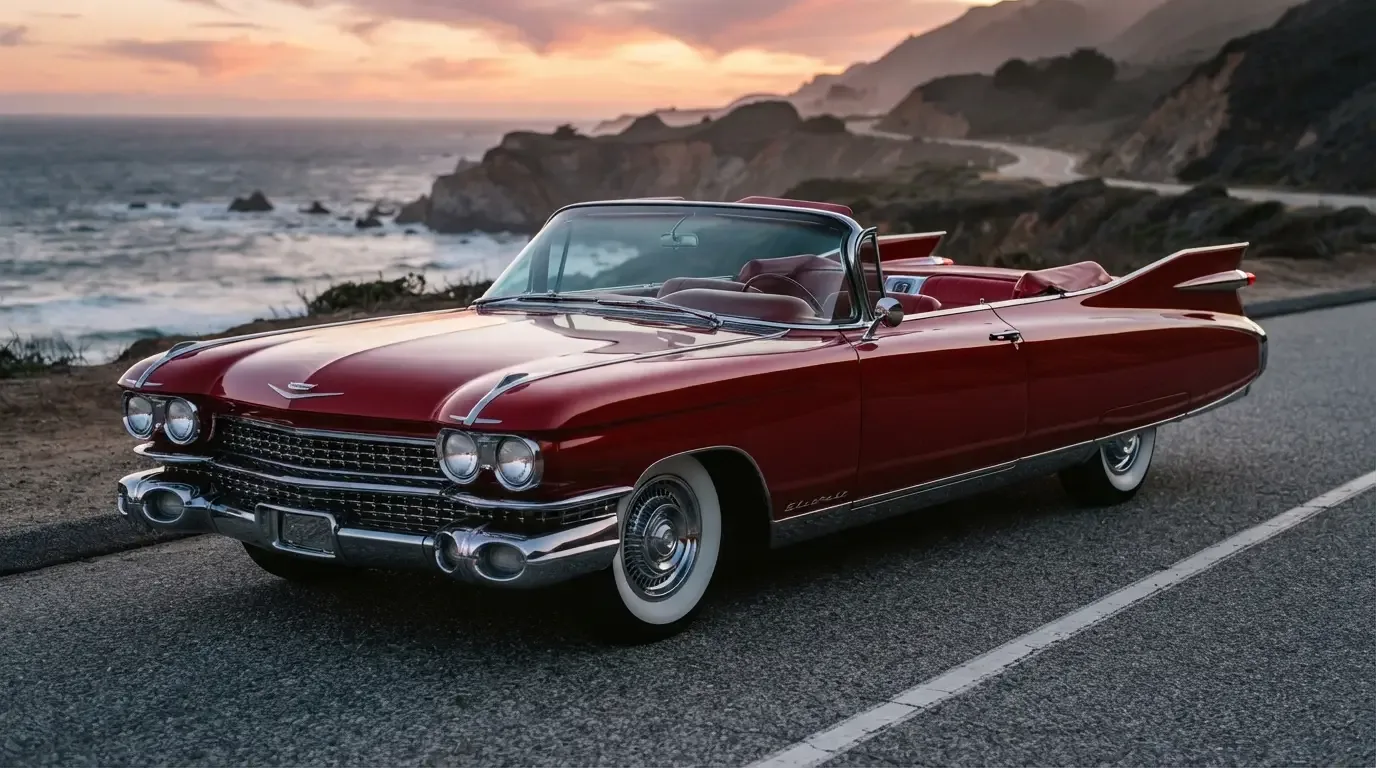
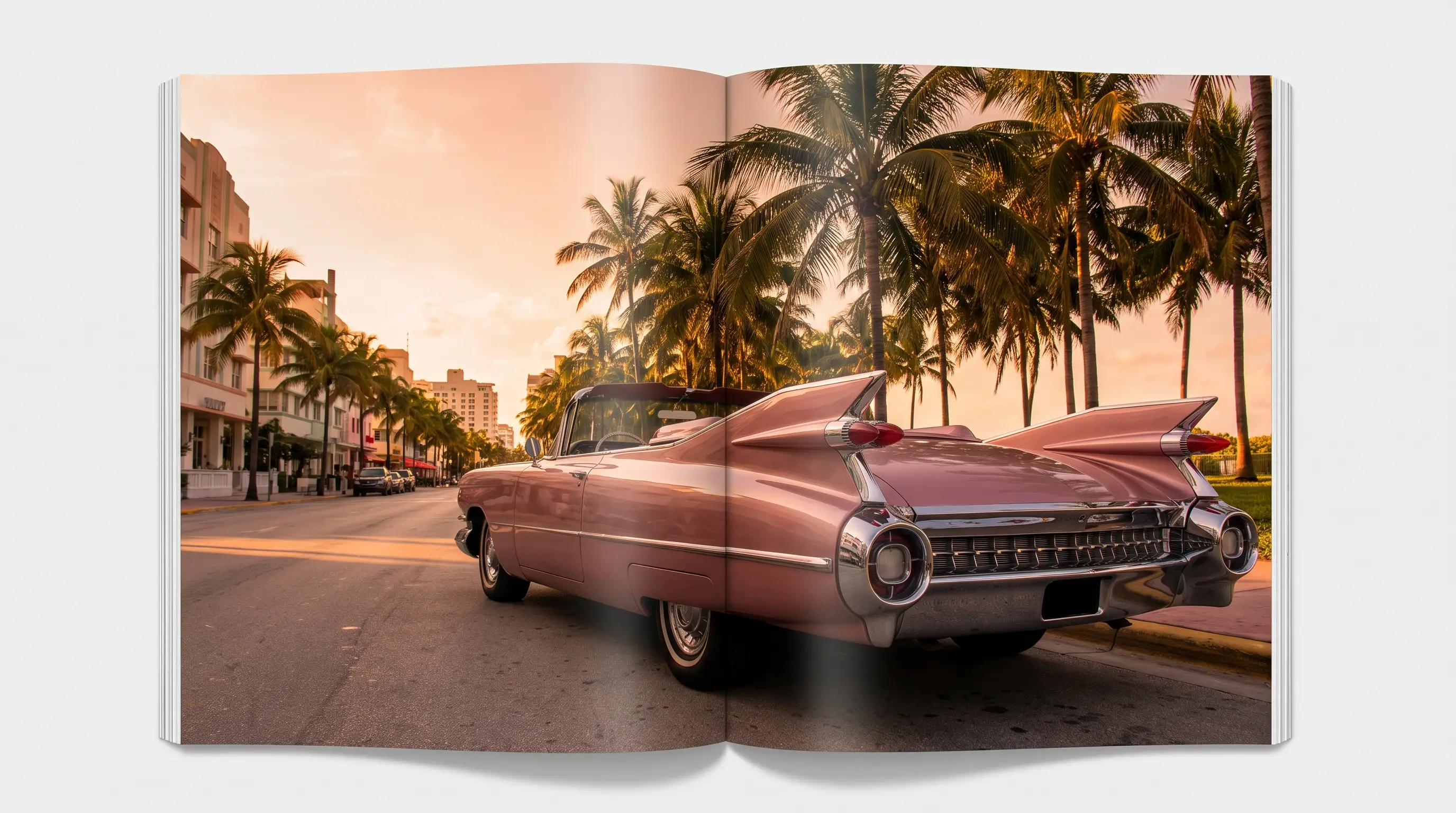
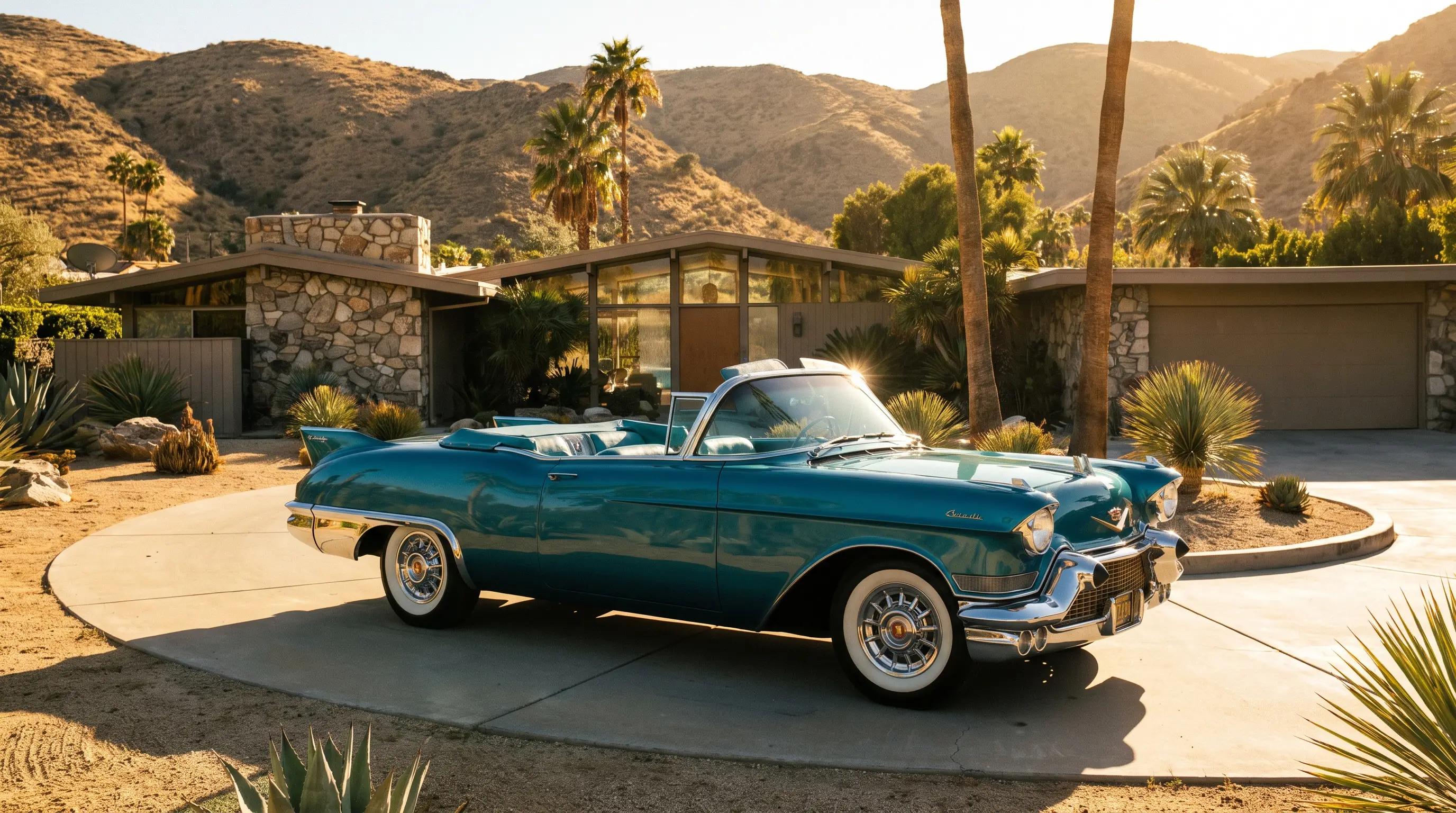
Everything Earl had been building toward since that afternoon at Selfridge Field arrived on the 1959 Eldorado. The fins that year stood taller than on any Cadillac before or since, capped with dual bullet taillights that made no attempt to hide their jet-age inspiration. Critics at the time were split, some called it the high point of American automotive styling, others called it excess for its own sake, but nobody could say it lacked confidence. Earl retired that December, reaching GM's mandatory retirement age of 65 just months after the 1959 models reached showrooms, and the 1959 Eldorado stands as close to a personal signature as any single model year in his long career.
Those fins rose to roughly 42 inches off the ground, among the tallest ever fitted to an American production car. What made the design work commercially, whatever critics thought of it aesthetically, was that Cadillac buyers wanted to be seen. The Eldorado was never subtle, and Earl understood that the people paying a premium for it were not looking for restraint.
Design as a full studio effort, not one man alone
Earl gets the credit in most retellings, and he deserves a large share of it, but the Eldorado's look through the 1950s came out of a full studio system he built at GM, with dedicated teams competing internally on proposals for each model year. Designers like Bill Mitchell, who would eventually succeed Earl as head of styling in 1958, worked under him throughout this period and carried forward his instincts even after Earl's retirement, including into the dramatically different 1967 front-wheel drive Eldorado.
That continuity matters because it shows the Harley Earl and Cadillac Eldorado design relationship was not a one-decade story that ended when he left. The studio culture he built, competitive, visual, willing to prioritize drama over restraint, shaped Eldorado design choices for years after his own direct involvement ended. Readers who want the complete account of how the car's look evolved across every generation, tailfins through Northstar-era coupes, should look at cadillac eldorado design history for the full arc.
"Earl walked into car design like he was still building sets in Hollywood. He wanted people to gasp, not just admire proportions from across a parking lot. The Eldorado gave him exactly the canvas he needed to do that, because it never had to be the practical, high-volume Cadillac. It could just be the showpiece."
- Patrick Walsh
Selling the fantasy to the public
Earl understood something about postwar American buyers that a lot of his engineering-minded peers missed entirely. People who could afford an Eldorado were not comparing torque figures against Lincoln and Packard, at least not first. They were comparing how the car made them feel pulling into a hotel valet stand or parked outside a country club. Earl's design language, low and wide with those upswept fins catching the eye from any angle, was built entirely around that emotional read, and Cadillac's sales figures through the 1950s backed up the bet.
He also pushed Cadillac toward two-tone paint combinations and wraparound windshields years before most of the industry followed, both features that debuted on Eldorado models before trickling down to the rest of the lineup. That pattern, halo car first, mainstream Cadillac second, became the template GM used for decades afterward whenever it wanted to test a styling idea without risking the volume models.
What happened after Earl left
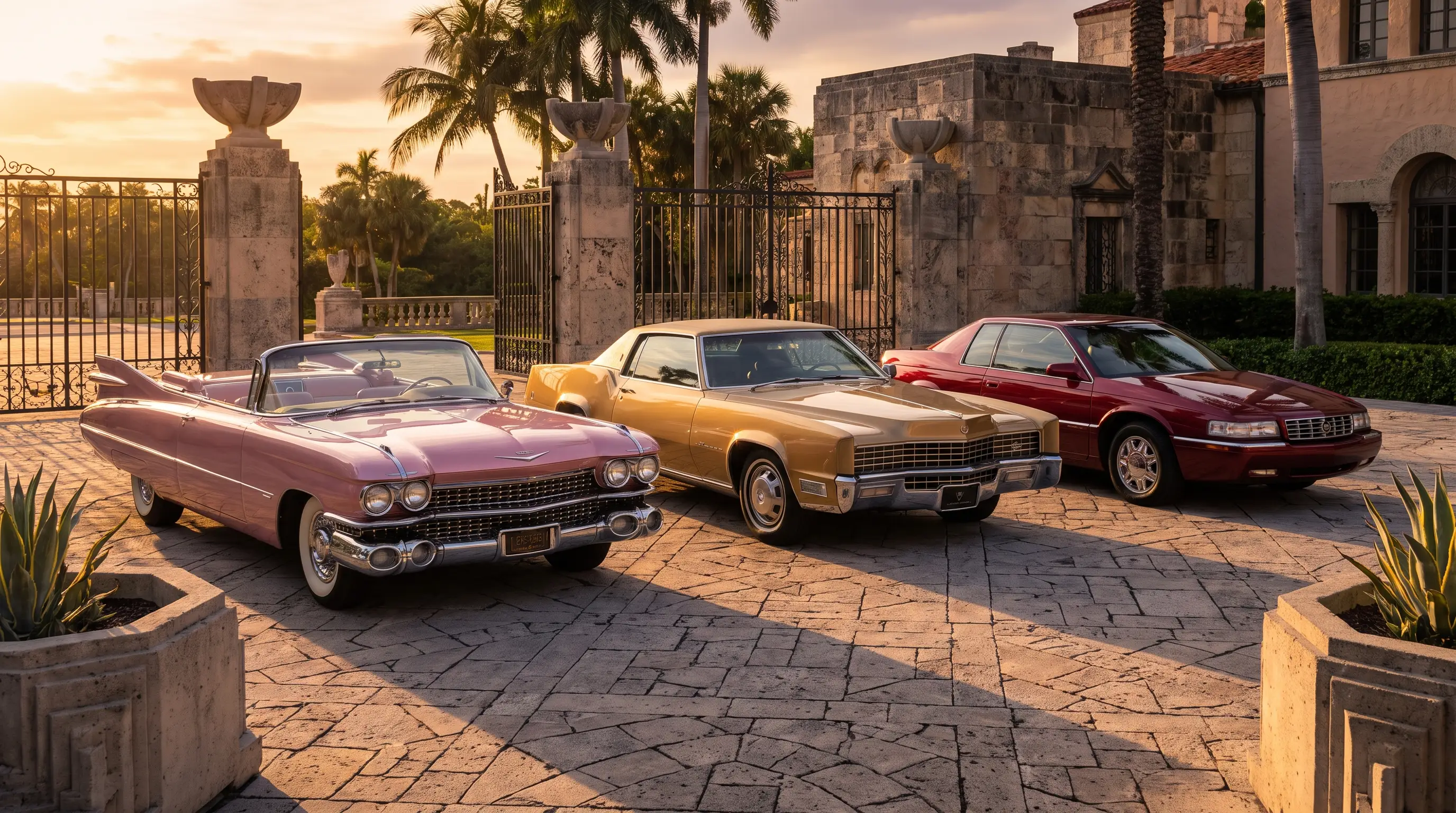
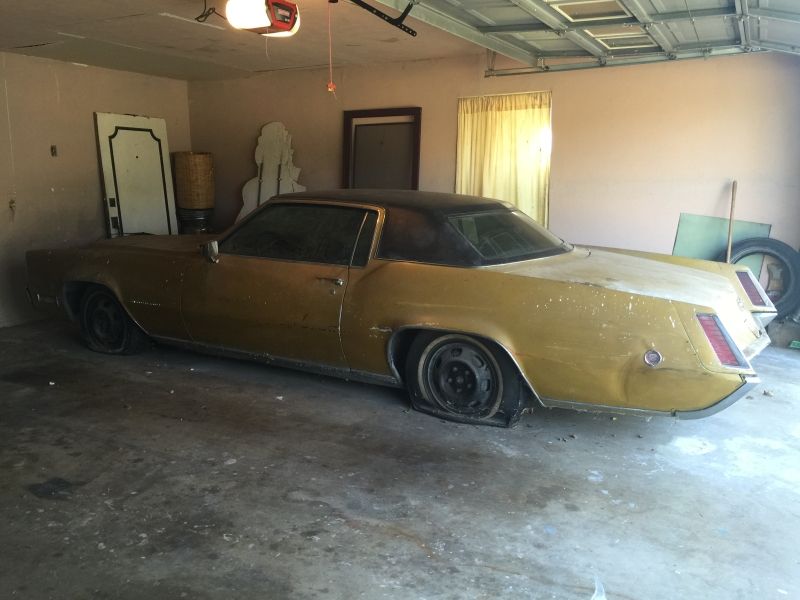
Cadillac styling pulled back from pure tailfin drama almost immediately after 1959, trimming fin height each year through the early 1960s under Mitchell's direction, and the fins disappeared from the Eldorado entirely by the mid-1960s. The 1967 redesign, with its crisp, squared-off lines and front-wheel drive layout, looks like a different design language altogether, and in many ways it was. But the underlying goal Earl had established, that the Eldorado should look like nothing else on the road, survived the transition intact even as the visual vocabulary changed completely.
The tailfin years remain the period most directly tied to Earl personally, and a related story covers how Cadillac used that trend industry-wide beyond just the Eldorado nameplate, since fins spread across the entire American car market before falling out of fashion by the mid-1960s.
Earl died in 1969, a decade after his retirement and two years after the front-wheel drive Eldorado debuted, and he lived long enough to see his design philosophy carried into an entirely new mechanical era, even if the specific vocabulary of fins and chrome had given way to crisper, more architectural lines by then.
His legacy inside GM outlasted him by decades in a more structural way too. The Art and Colour Section he built became the model every other American automaker eventually copied, a dedicated styling department with real authority over engineering decisions rather than a group brought in late to dress up a finished chassis. The Eldorado, more than any other single Cadillac model, is the clearest surviving proof of what that authority could produce when a design chief was given a genuinely long leash.
For anyone drawn to this period of American car design, the tailfin Eldorados from 1953 through 1960 remain the clearest physical record of what Harley Earl was actually trying to do at General Motors, and several examples from those years are available now if you want to see Eldorados for sale now and compare the styling year by year in person.