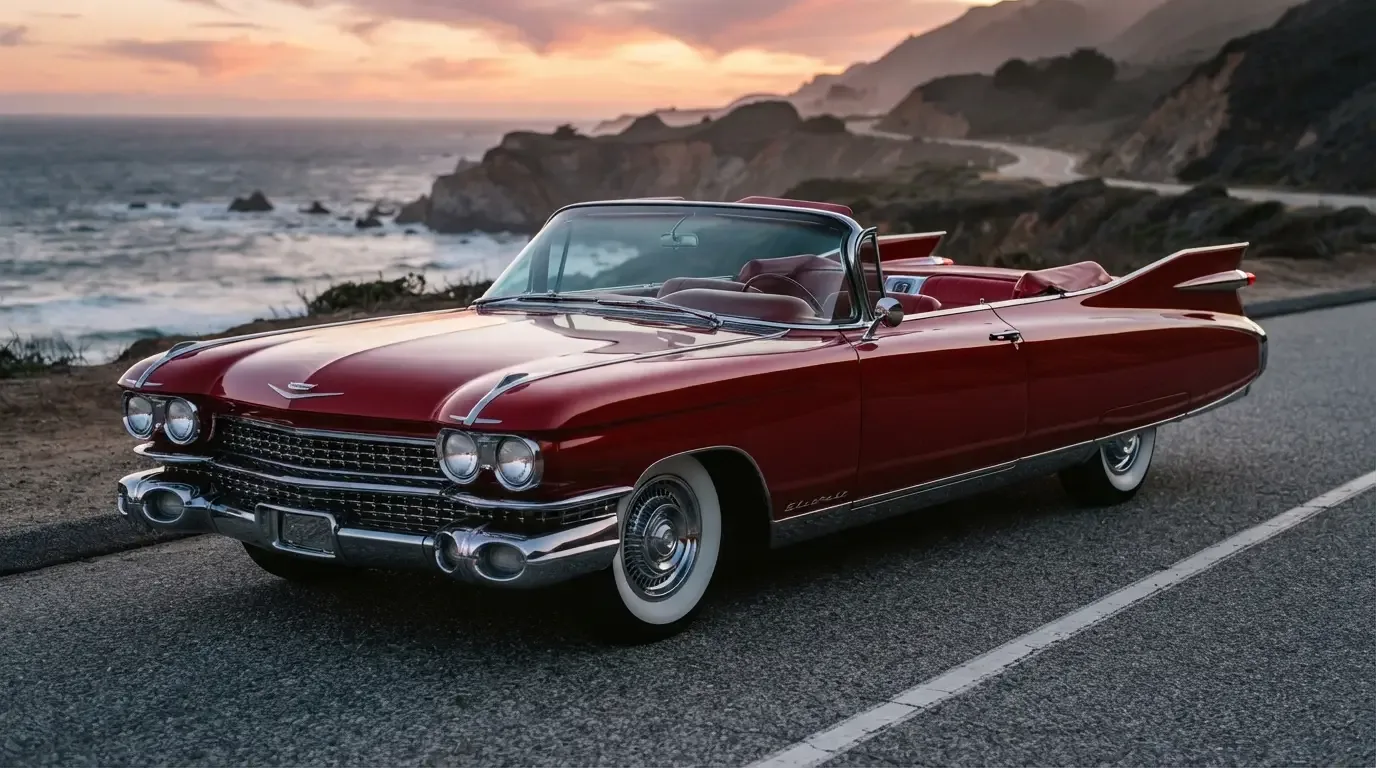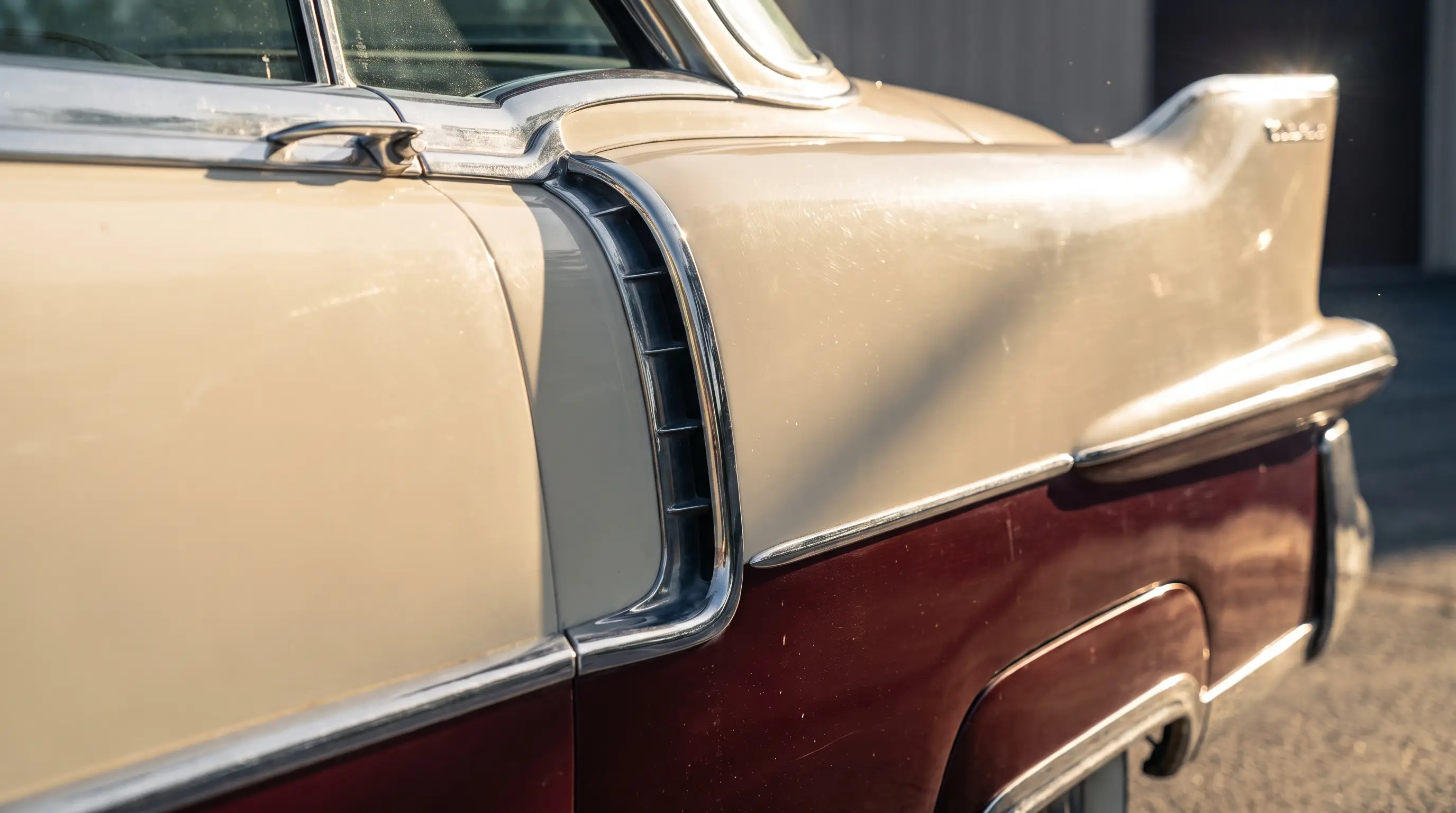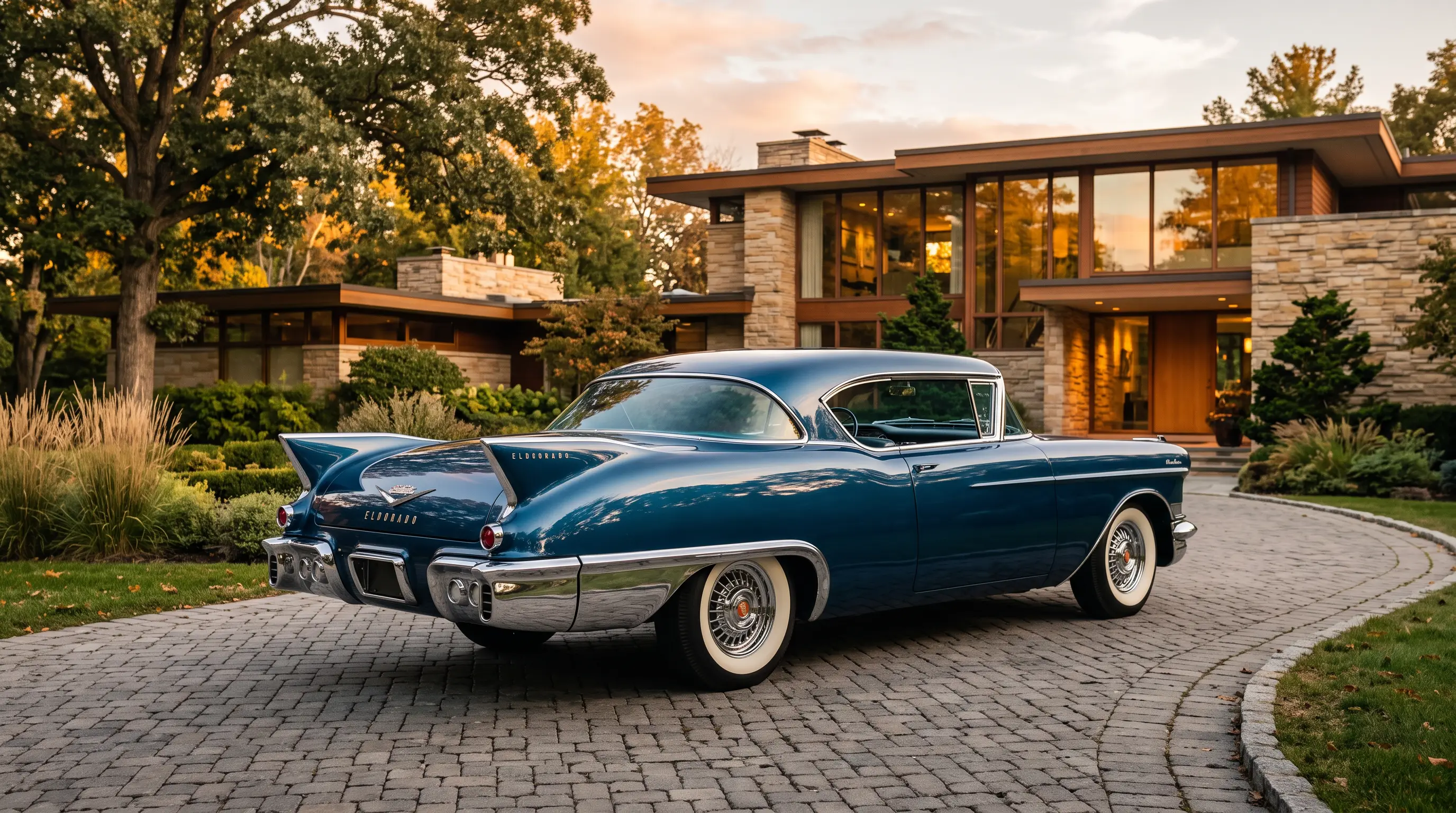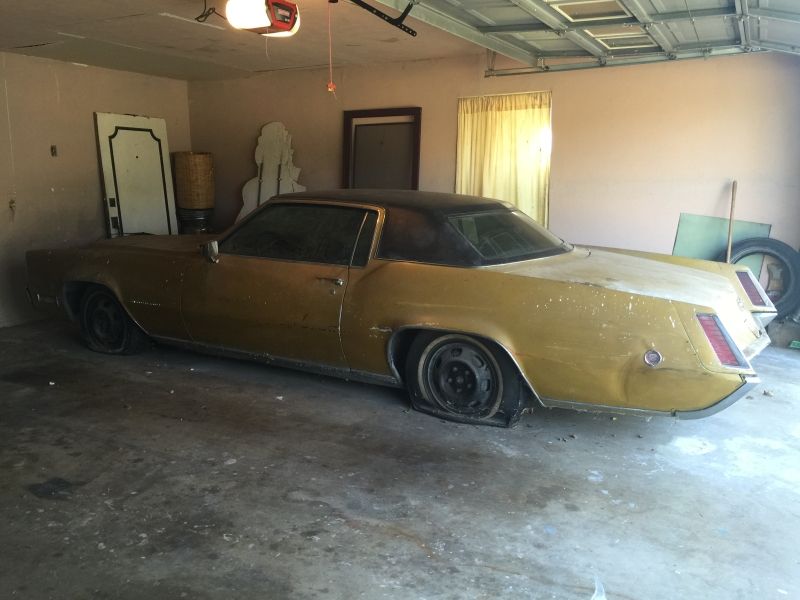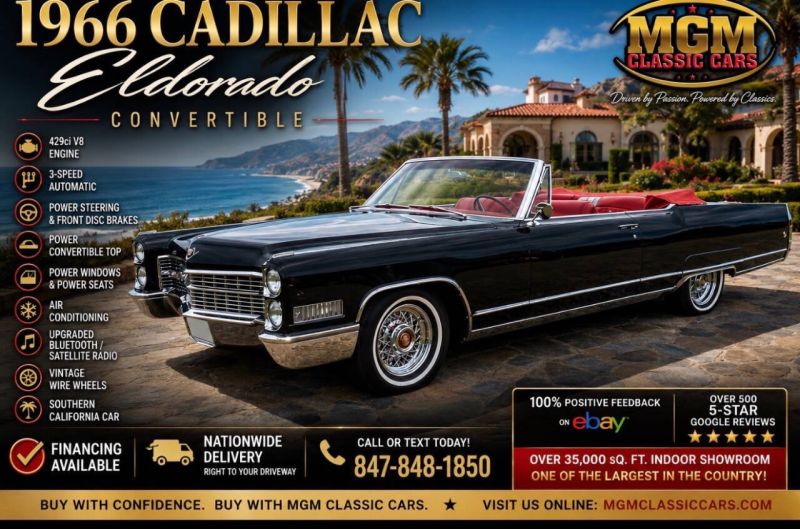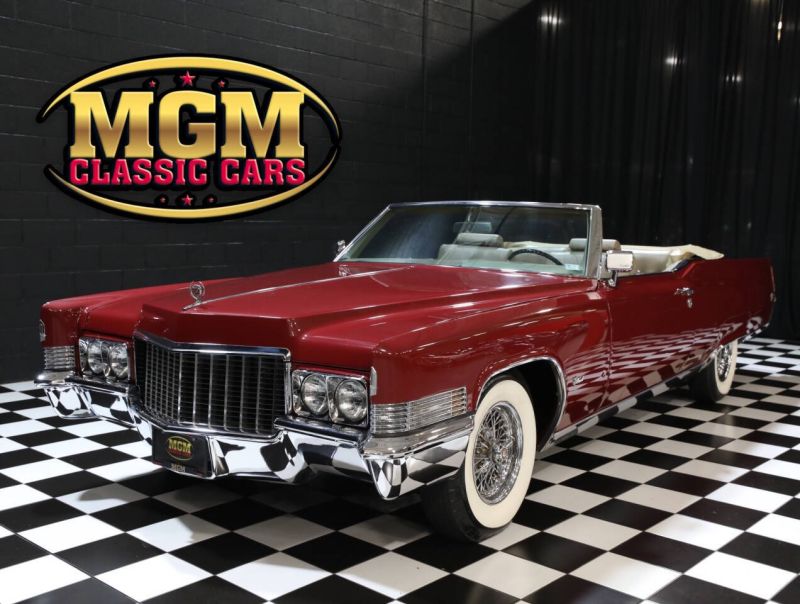
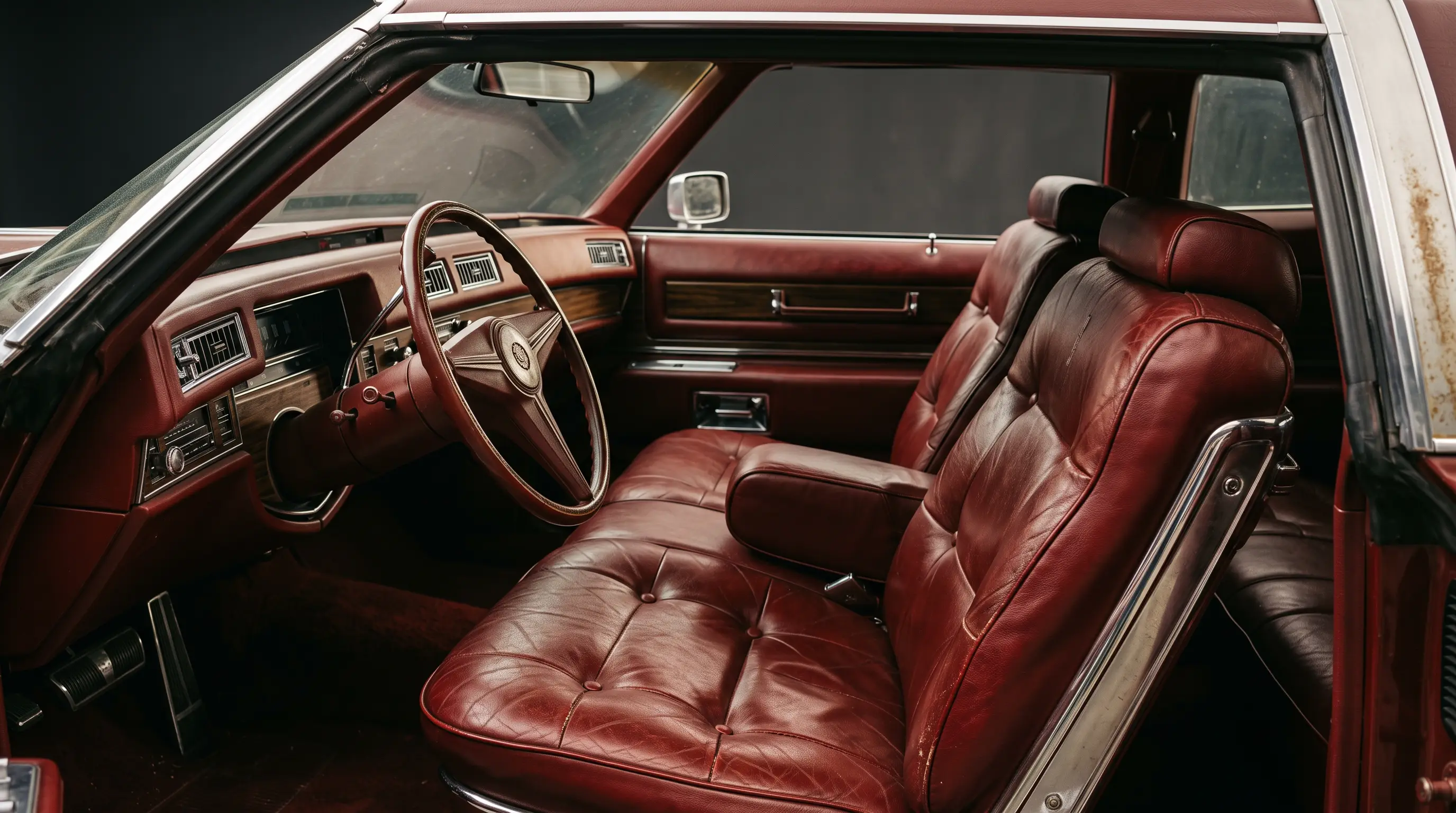
Step inside a 1953 Eldorado and then a 2002 Collector Series and you are looking at nearly fifty years of Cadillac eldorado interior history compressed into two cabins that barely resemble each other. Leather grain, dashboard architecture, even the philosophy of what a luxury interior should feel like all shifted generation by generation. The exterior gets most of the attention in Eldorado retrospectives, but the cabin tells its own story, one that says as much about changing American taste as any tailfin ever did.
Leather, chrome, and postwar confidence
The earliest Eldorados leaned hard on leather and polished metal, a pairing that read as luxury in the immediate postwar years when both materials still carried a sense of scarcity and craftsmanship. The 1953 Eldorado's standard six-way power bench seat, with bucket seats available as an option, was upholstered in leather with a pleated pattern that Cadillac's own literature described in almost reverent terms, and the dashboard carried a symmetry and heft that made the car feel closer to a piece of furniture than a machine.
Color played a role here too. Interior leather often matched or complemented the exterior paint rather than defaulting to black or tan, which meant a coral Eldorado might carry a cream and coral cabin rather than a neutral one. That level of coordination took real effort at the factory and it is part of why unrestored original interiors from this era are so prized today.
Even the smaller details carried weight. Door panel stitching, chrome window cranks, and the specific grain of the vinyl headliner all varied by trim level in ways that a casual glance would miss but that a factory inspector at the time would have checked line by line. Cadillac was competing against Lincoln and Packard for buyers who noticed these things, and the Eldorado's interior team knew it.
The Brougham's stainless steel statement
Nothing in the Eldorado's interior history matches the ambition of the 1957 and 1958 Eldorado Brougham. Beyond its famous stainless steel roof, the Brougham's cabin included features that were genuinely rare for the period, air suspension, a center console with a vanity compact and cigarette case built in, and a dashboard with an aircraft-inspired instrument layout that Cadillac marketed explicitly using flight terminology. It was hand-assembled in far smaller numbers than the standard Eldorado, and the interior reflected that low-volume, no-expense-spared approach at every touchpoint.
The Brougham lost money for Cadillac on every unit sold, but it justified itself as a rolling demonstration of what the division's engineers and trim designers could accomplish when cost was not the deciding factor.
Even the seat frames were different. Rather than the standard bench or bucket construction used on the regular Eldorado line, the Brougham's front seats used a six-way power seat with a two-position memory function, controlled from a panel on the driver's armrest, a preset-return feature that would not become common across the industry for another two decades. Small conveniences like that separated the Brougham from every other Cadillac on the lot, and they explain why so many contemporary road testers described the car as closer to a hand-built European coachbuilt car than a mainstream American product.
Front-wheel drive brings a lower, wider cabin
When the Eldorado switched to front-wheel drive for 1967, the interior changed shape along with the body. Removing the driveshaft tunnel opened up the floor, letting Cadillac design a genuinely flat cabin floor and a lower seating position than any previous Eldorado had offered. The dashboard grew simpler and more horizontal, trading some of the ornamental chrome of earlier decades for a cleaner, more architectural feel that matched the car's sharper exterior lines.
Seat upholstery in this era leaned toward tailored leather or a tightly patterned cloth, a deliberate step away from the plush, almost overstuffed look of the 1950s cars. It suited a Cadillac buyer who wanted understated confidence rather than obvious opulence, a shift you can trace directly back to the broader design changes covered in read the background if you want the full context behind why the whole car changed direction so sharply in 1967.
Land-yacht plushness returns
The restraint of the late 1960s did not last. By the mid-1970s, as the Eldorado grew into its largest dimensions, the interior swung back toward maximalism. Velour and pillow-style tufted seating became common, along with deep-pile carpeting and interior color choices, burgundy, forest green, and camel among them, that matched the era's exterior Firemist paints. Comfort features multiplied too, with power everything becoming standard rather than optional across most of the lineup.
This was the Eldorado at its most indulgent, a cabin built explicitly to cushion its occupants from the outside world, in a decade when that kind of insulated comfort was exactly what buyers of full-size personal luxury cars wanted.
Options lists from this era read like a catalog of everything a cabin could hold. Automatic climate control, a trip computer on later cars, illuminated vanity mirrors, and eventually a phone became available across the run, each one adding to the sense that the Eldorado's interior existed to isolate its occupants entirely from the outside world, right down to the sound of the road itself.
"Sit in a well-preserved 1976 Eldorado and you understand something about that decade that photographs alone never quite capture. The seats do not just hold you, they surround you."
- Nora Beckett
Downsizing and the digital dashboard experiment
The dramatic 1986 downsizing brought the biggest single interior shift in the car's history. A much smaller body meant a much smaller cabin, and Cadillac tried to compensate with technology rather than sheer material excess. Digital instrument clusters appeared on some trims, a genuinely bold move for the mid-1980s, though one that has not aged gracefully in the eyes of most collectors, who now consider the earlier analog gauges more desirable and more reliable.
By the 1990s, as the Northstar-powered coupes matured, the interior found a more confident footing again. Cleaner dashboard graphics, better switchgear, and softer leather brought the cabin back in line with contemporary luxury expectations, culminating in the 2002 Collector Series, which closed out the Eldorado's run with an interior that felt genuinely modern rather than transitional.
Tracking how the cabin changed alongside the body across five decades is its own kind of research project, and anyone curious about the full arc should see find a classic Eldorado to compare interior condition and originality across different generations currently on the market. Few American nameplates offer as complete or as varied a record of how luxury car interiors evolved across the second half of the twentieth century.
What ties all of it together, from the pleated leather of 1953 to the tailored hides of 2002, is a consistent belief that the cabin should feel deliberate. Every generation reflected the design instincts of its era rather than simply repeating what came before, and that willingness to change course, sometimes dramatically within a single redesign, is exactly why the Eldorado's interior history rewards close study rather than a quick glance at exterior photographs alone.