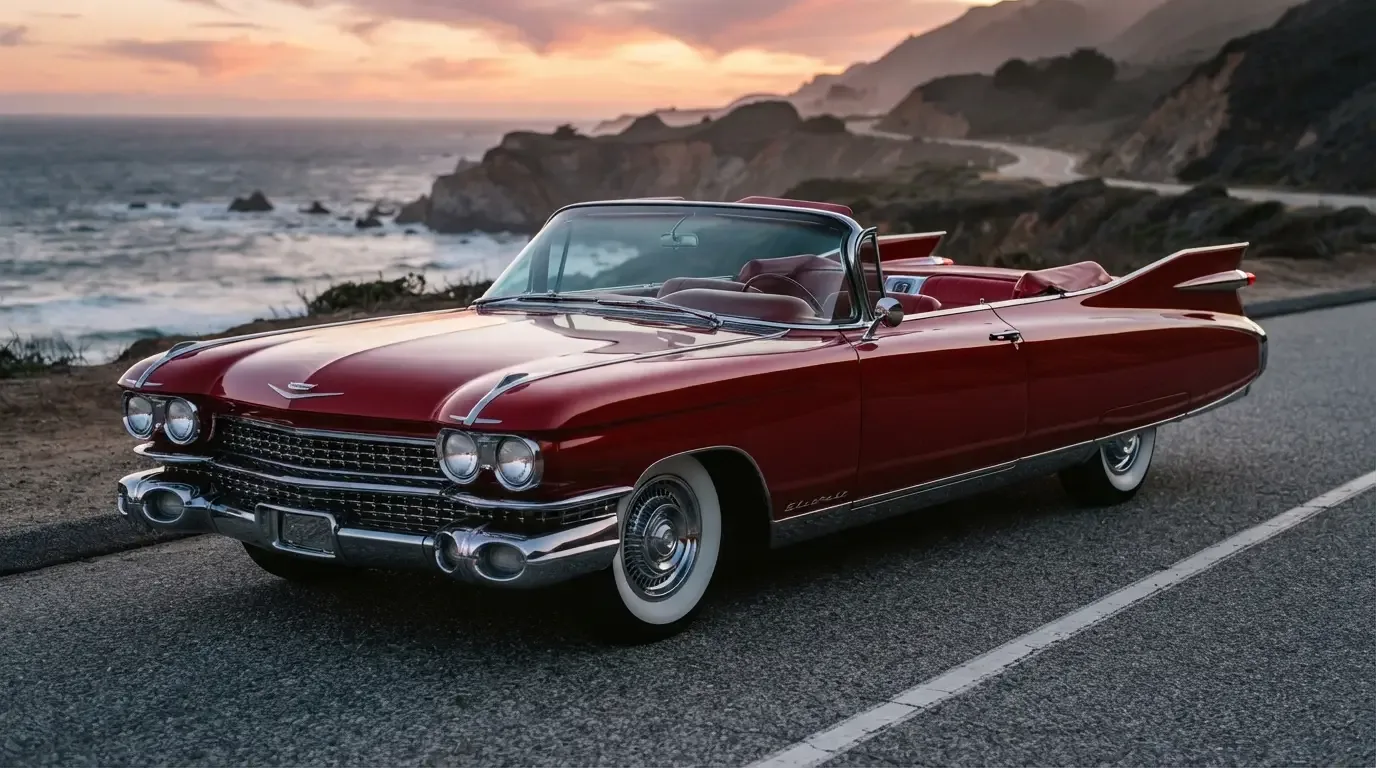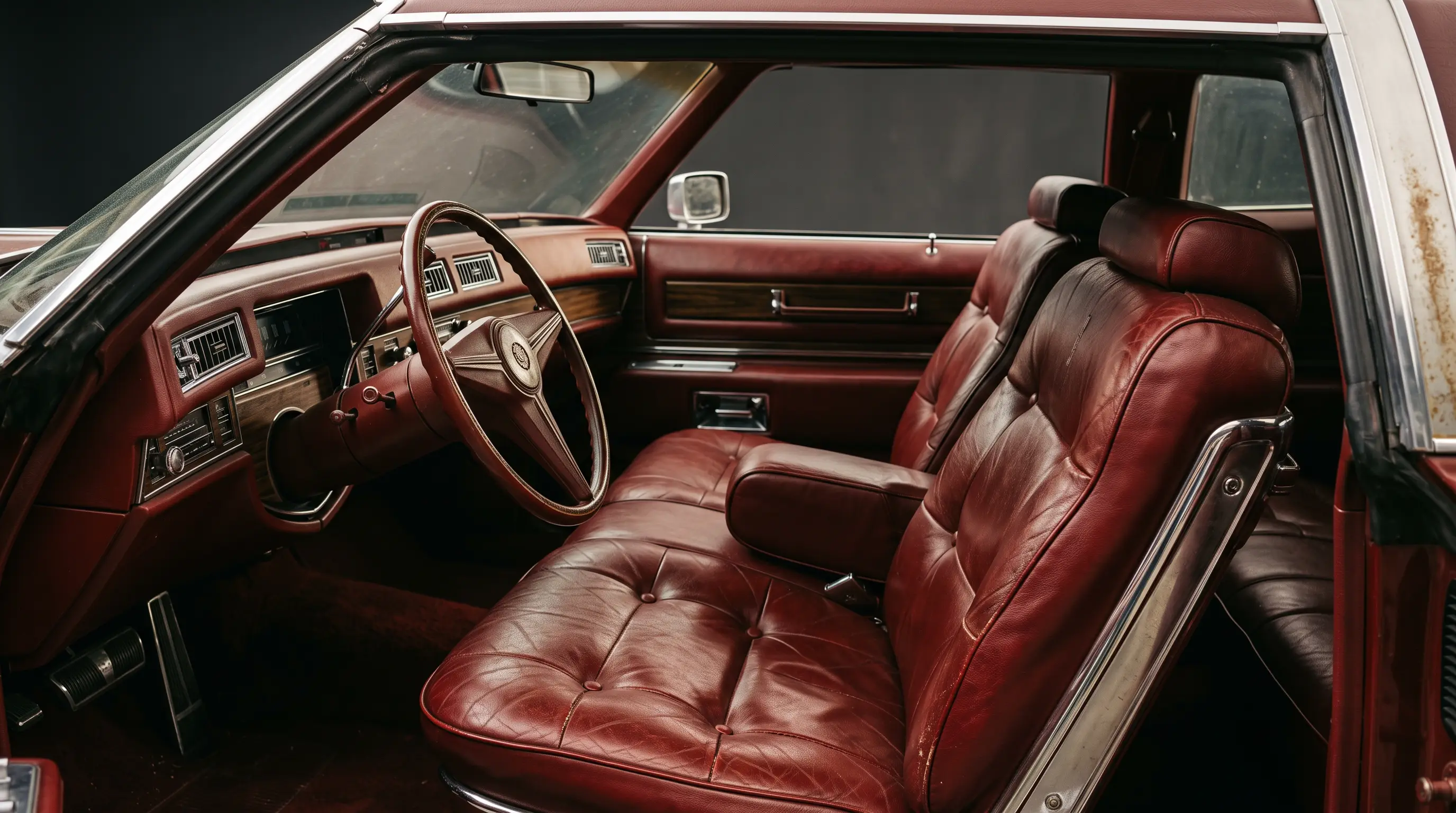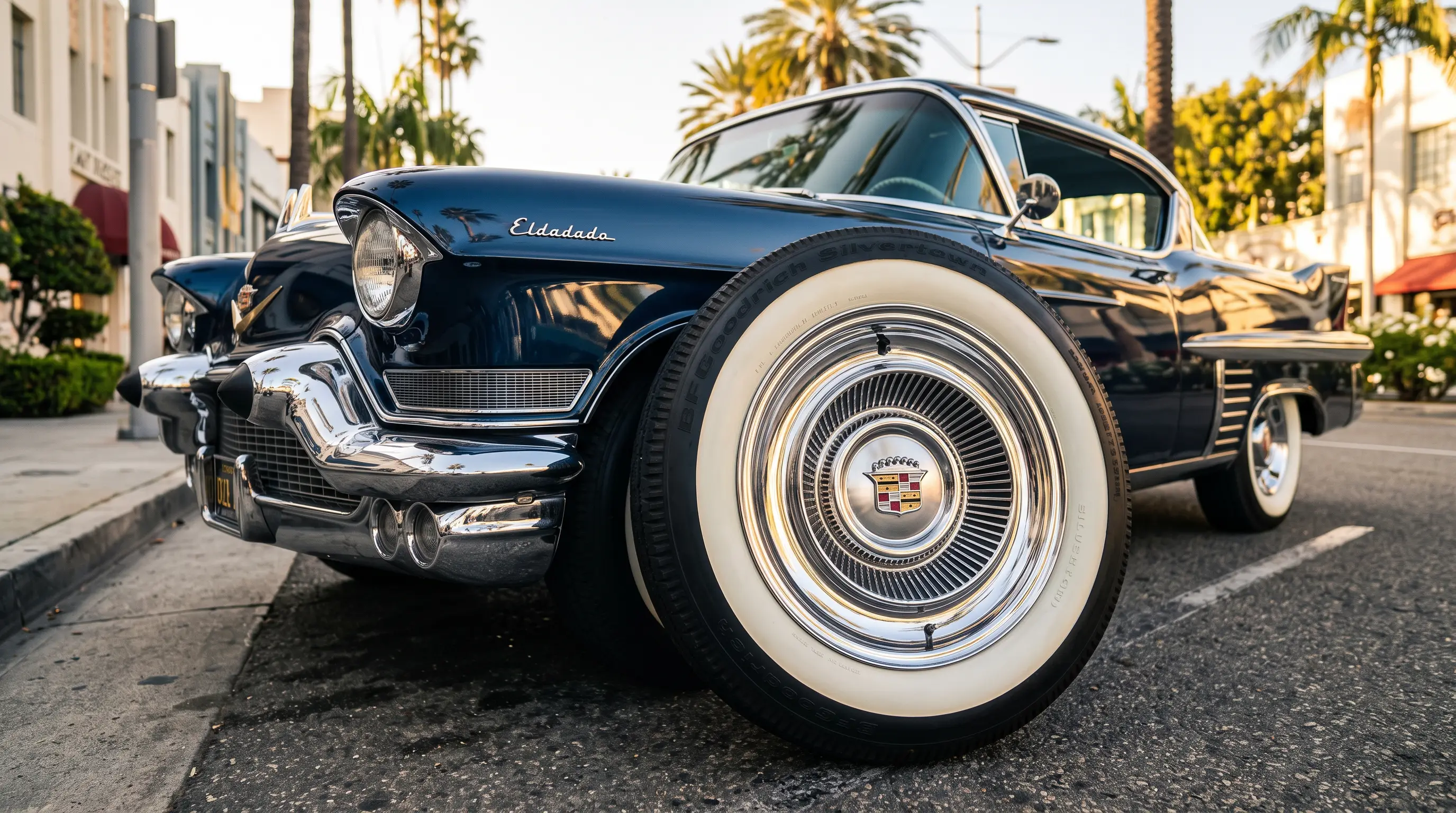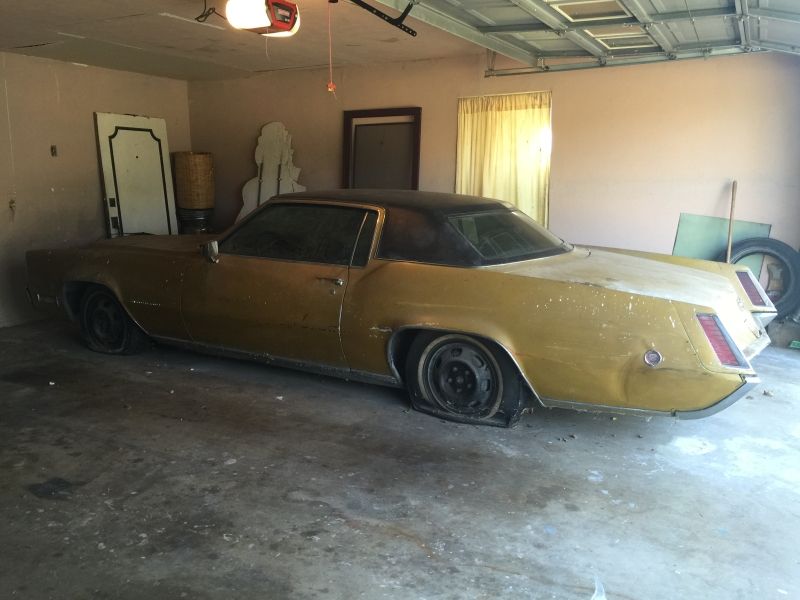
Cadillac Eldorado fender skirts get dismissed by people who have never actually looked at what they do to a car's proportions. I have worked on plenty of full-size American cars from the 1950s through the 1970s, and the ones wearing skirts almost always read longer, lower, and more deliberate than the same body without them. That is not an accident. It is sheet metal doing a very specific job, and the Eldorado wore that job better than almost anything else on the road.
What a skirt is actually doing structurally
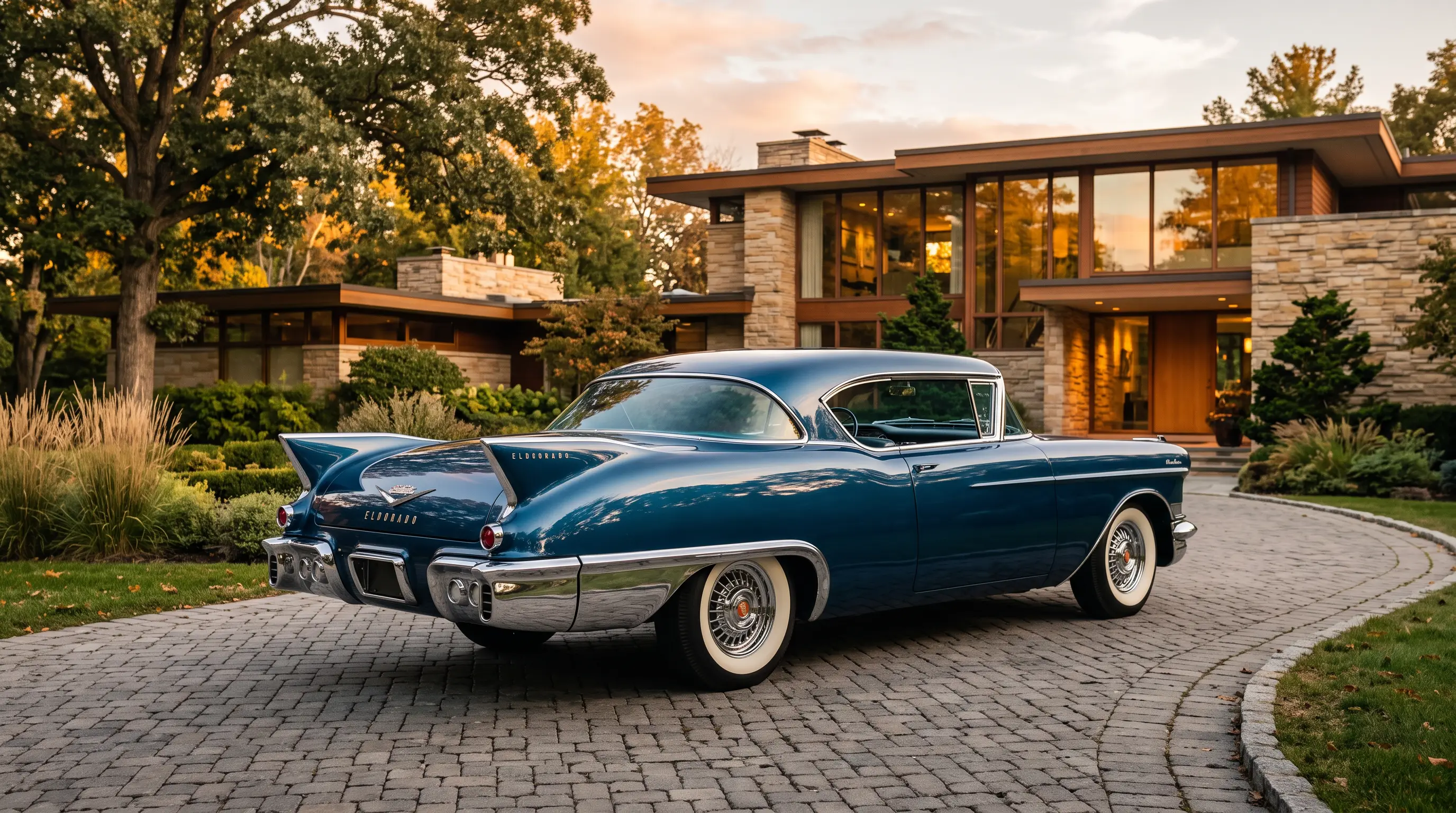
A fender skirt is a removable panel that covers the top portion of the rear wheel opening, leaving just enough of the tire visible to clear the ground. On a car like the Eldorado, with its long rear overhang and low beltline, the skirt closes off what would otherwise be a big, dark gap of negative space behind the door. Close that gap and the eye reads the whole rear quarter as one continuous surface instead of a body interrupted by a wheel well. That is the entire trick, and it works because the Eldorado's rear fenders were shaped with the skirt already factored into the design, not bolted on as an afterthought.
I always tell people trying to fabricate a replacement skirt from scratch, without an original to reference, that the curvature has to match the body line exactly or the whole illusion falls apart. A skirt that sits even slightly proud of the fender breaks the surface continuity the factory was chasing, and the car ends up looking like it is wearing a bandage instead of a body panel.
The gap at the bottom matters just as much as the fit at the top. Cadillac's designers left just enough tire showing to keep the car from looking like it was floating on nothing, but not so much that the skirt lost its visual purpose. That balance shifted slightly from generation to generation as wheel and tire sizes changed, and a skirt cut for one model year rarely transfers cleanly to another without modification, something reproduction parts sellers do not always advertise clearly.
Why they disappeared from most other cars first
Cadillac's own relationship with the skirt on the Eldorado was less continuous than people assume. The 1955 Eldorado dropped its rear skirts on purpose, to show off new wheels and set the convertible apart from lesser Cadillacs, and the sportier 1964 Eldorado went skirtless again for the same reason. Skirts came back in a big way once the car grew into its 1971 through 1974 land-yacht dimensions, then disappeared once more for 1975 as the lower body moved toward a cleaner look closer to the first-generation car. So the skirt was never a constant, it was a styling lever Cadillac pulled deliberately in both directions depending on what image a given generation was chasing. By the mid-1960s, most other American manufacturers had dropped fender skirts entirely as buyer taste shifted toward wider wheels and tires that skirts made harder to service or swap, and on the generations where Cadillac kept them, removing the skirt exposes a genuinely awkward gap around the wheel opening, proof that when the panel was there, it was never an accessory, it was part of how that generation's body was drawn.
Lincoln and Chrysler experimented with skirts on some of their own full-size cars through the 1950s and 1960s, but neither committed the way Cadillac did with the Eldorado. Their skirts tended to look like an option box that got checked rather than a structural piece of the design, mostly because the rest of the body was not drawn around the panel the way the Eldorado's was. That difference is obvious the moment you park the two side by side.
Servicing a car that still wears them
Skirts create real headaches for anyone doing routine maintenance. Changing a rear tire on a skirted Eldorado means removing the panel first, which is a two-minute job when the latch mechanism is in good shape and a genuine frustration when decades of grime and rust have seized it. I keep a dedicated set of tools in the shop just for skirt removal because stripped or corroded fasteners are one of the most common small repairs that come with any skirted full-size Cadillac.
Owners who drive their Eldorados regularly, rather than trailering them to shows, often develop a real appreciation for how well-engineered the latch mechanism actually is once it has been properly serviced. It is a small detail, but it is the kind of small detail that separates a car built by people who cared about the whole ownership experience from one that just looked good in a brochure photo.
I have also seen owners lose the skirts entirely over the years, either because a previous shop misplaced them during a repaint or because a prior owner pulled them off chasing a cleaner look and never reinstalled them. Sourcing a correct replacement pair for the right model year is not always easy, and buyers should factor that into their budget if a car they are considering is missing its skirts. Reproduction quality varies enough that fitment problems are common even from reputable suppliers.
"People assume skirts are pure style. They forget somebody had to engineer a panel that comes off in under a minute without tools, looks seamless installed, and survives forty years of road grime. That is not decoration, that is real work."
- Jim Vasquez
What buyers should check before falling for the look
If you are shopping for a skirted Eldorado, check the fit along the top edge where the panel meets the quarter panel body line. Gaps here usually mean either a reproduction skirt that does not match factory tolerances or years of minor collision damage that shifted the body enough to throw off the alignment. Also check the latch mechanism itself, since replacement hardware varies wildly in quality and a poorly fitted latch will eventually mar the paint around the mounting point.
Anyone chasing the full history behind why Cadillac committed so hard to this look across so many Eldorado generations should read the whole picture, which covers the broader design philosophy the skirts were built to support. And for anyone who has decided the long, skirted rear quarter is exactly the silhouette they want in their own driveway, there are usually a few cars worth checking out among current shop classic Eldorado listings options, particularly from the years when the skirt was most central to the car's identity.
A detail that defined an era
Fender skirts eventually faded from the Eldorado lineup too, as the car downsized in 1986 and moved toward a more compact, less sculpted body that did not need the same visual trick to read as long and low. Their absence on the later cars is one more reminder of how much the skirt contributed to the Eldorado's earlier identity. Once you understand what the panel was actually doing structurally, it becomes hard to look at a skirtless full-size Cadillac from the golden years without feeling like something is missing.
That is really the test I use in the shop whenever a customer wants to remove skirts for a custom look. I will do the work if that is genuinely what they want, but I always show them a photo of the same generation with the skirts on and off side by side first. Nine times out of ten, once they see the bare wheel opening breaking up that long rear quarter, they change their mind and ask me to keep the panels exactly where Cadillac put them.