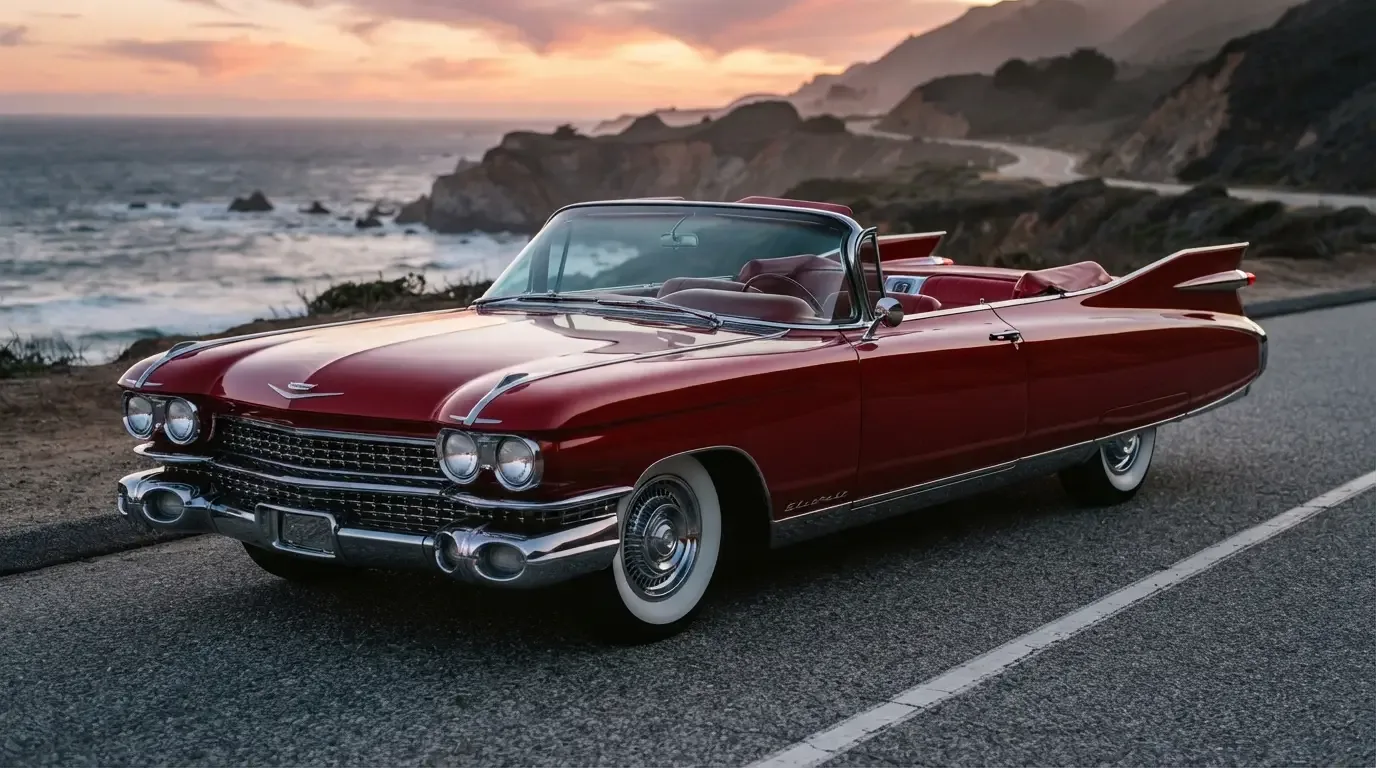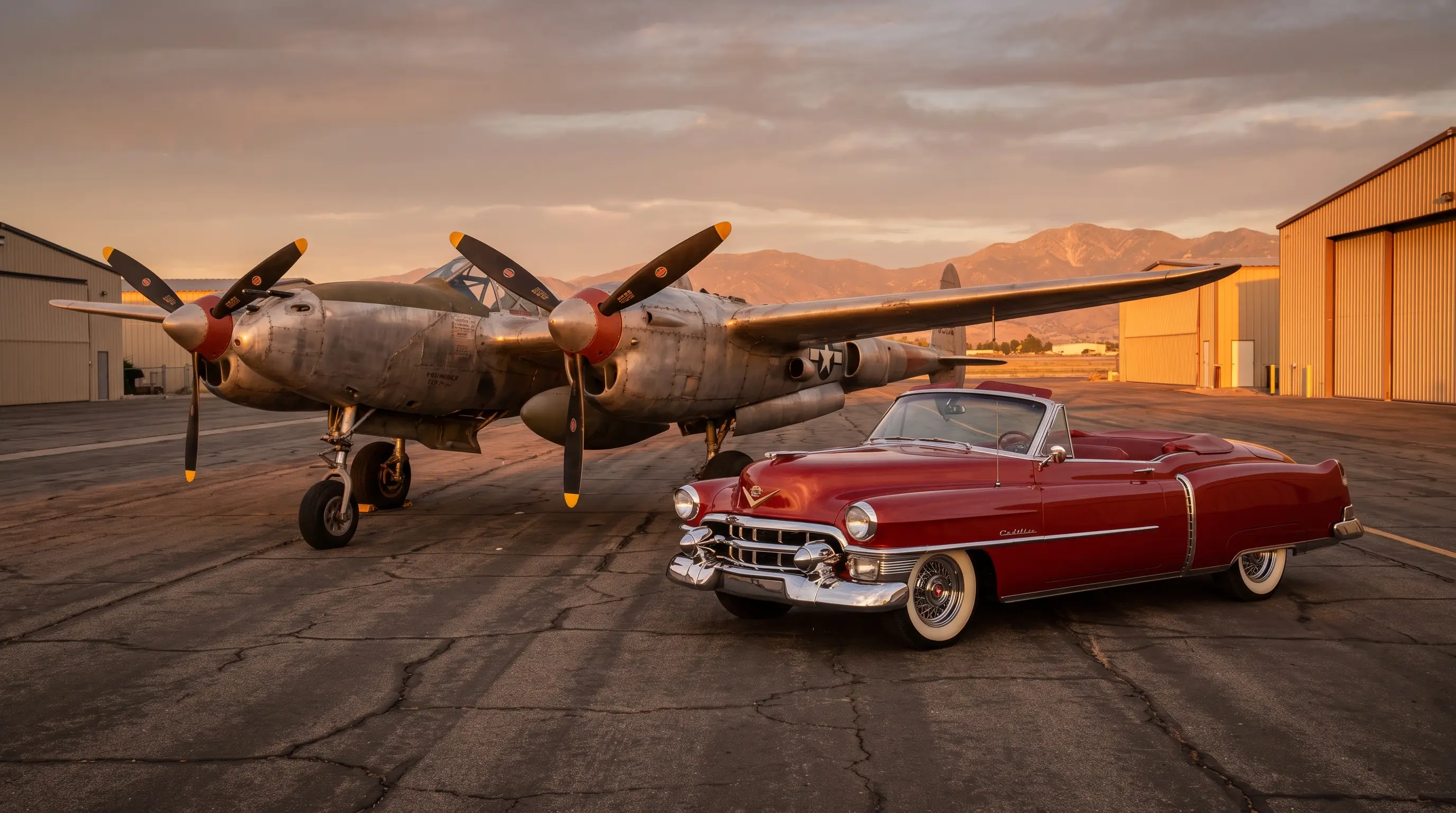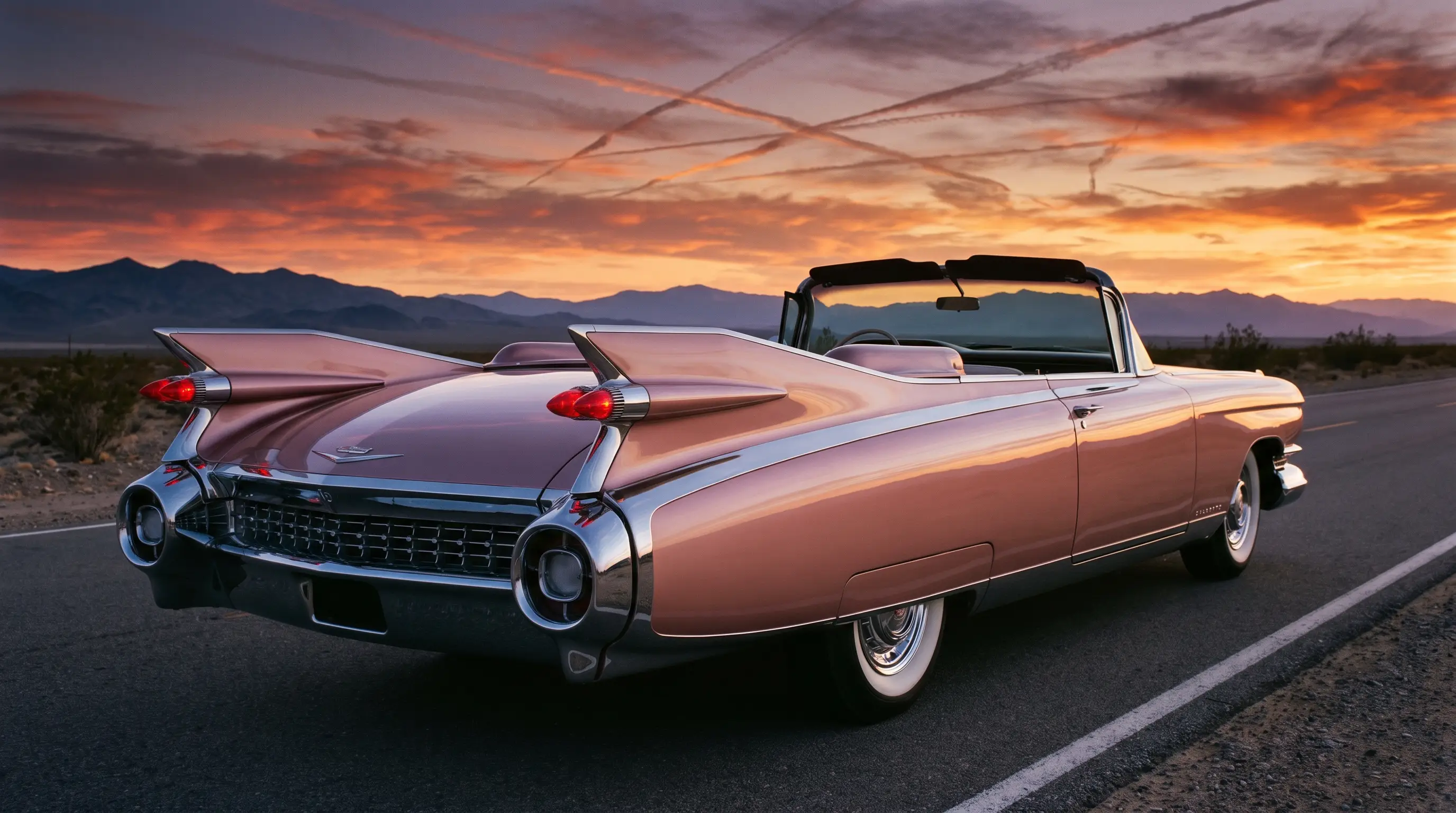
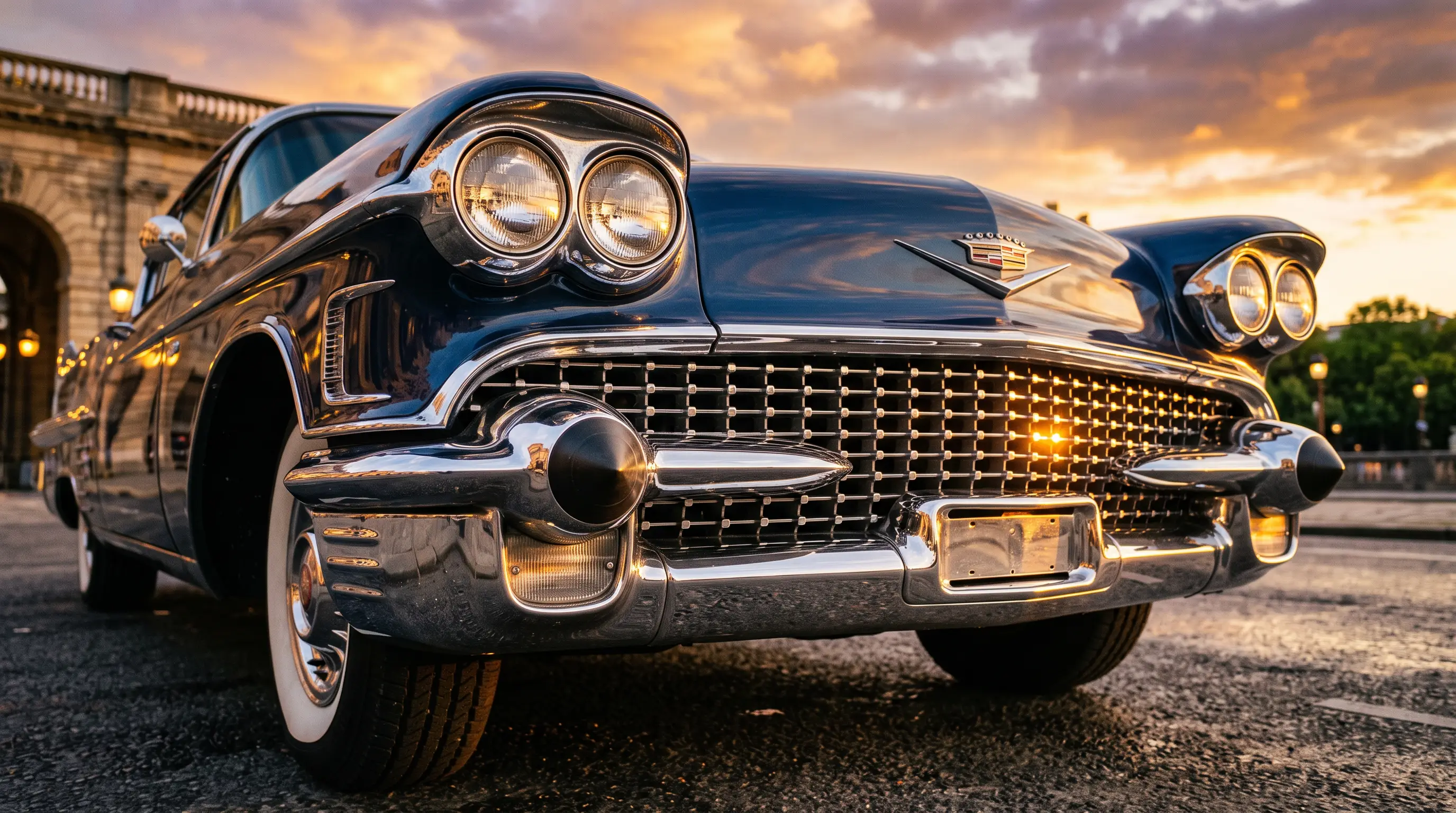
Before the fins, before the chrome bumpers, before anything else about a Cadillac catches your eye, there is usually the grille. The Cadillac Eldorado grille design that emerged through the 1950s, a dense pattern of small chrome squares that people started calling the egg-crate grille almost as soon as it appeared, became one of the most recognized front-end signatures in American automotive history, and its story is quieter and more interesting than the fins that usually get all the attention.
Where the pattern actually came from
The egg-crate grille pattern was not invented for the Eldorado specifically. Cadillac had been experimenting with cross-hatched and geometric grille designs since the late 1940s, part of a broader industry move away from the simple horizontal bars that had defined prewar and immediate postwar automotive fronts. What changed with the Eldorado's arrival in 1953 was the level of finish applied to the pattern, denser chrome work, tighter tolerances between each square, a front end that read as jewelry rather than simple ventilation.
The name itself, egg-crate, came from buyers and journalists rather than from Cadillac's own marketing materials, a nickname that stuck because it described the pattern so plainly that no official name could compete with it. By the mid-1950s the term had become industry shorthand, used to describe similar grille patterns on competing makes that were clearly following Cadillac's lead.
How the pattern changed through the decade
The grille evolved almost every year alongside the rest of the car's styling. Early 1950s versions kept the pattern relatively restrained, integrated cleanly with a simpler bumper design. By 1957 and especially 1959, the grille had grown wider and more assertive, stretching nearly the full width of the car's nose and working in concert with quad headlights to create a front end that felt as dramatic as the fins rising at the rear. This is a detail easy to overlook next to the fin story, but the two design elements were clearly conceived to balance each other, drama at the front and drama at the back, with the rest of the body serving as the connective tissue between them.
The 1957 Eldorado Brougham took the pattern in its own direction, with a slightly different grille texture than the standard Eldorado convertible that same year, part of the Brougham's overall positioning as the more exclusive, more hand-finished variant within an already exclusive nameplate.
Why the pattern outlasted the fins
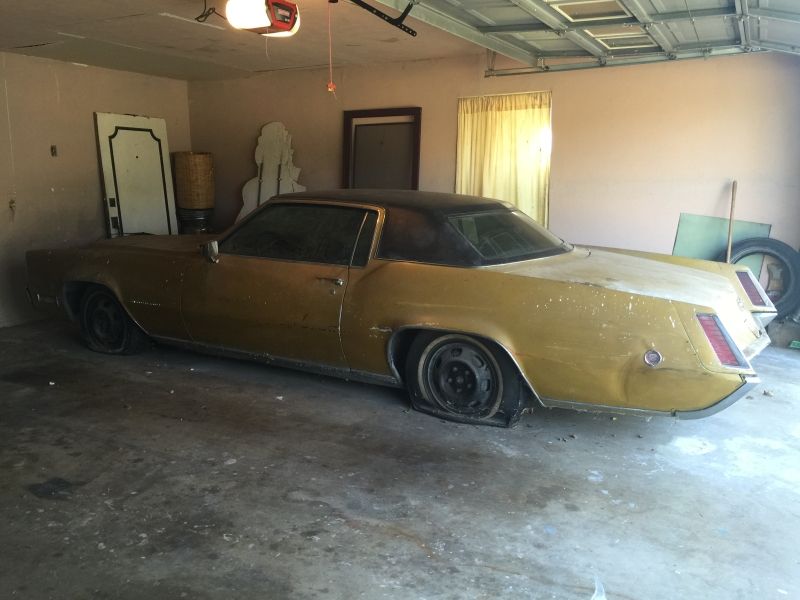
Cadillac retired the tailfin almost entirely by the mid-1960s, but variations on the egg-crate grille pattern kept reappearing across the brand for decades afterward, including on Eldorados well into the front-wheel drive era that began in 1967 and even echoes of it on later downsized models through the 1980s. That longevity says something the fin story cannot quite claim on its own. A grille pattern, unlike a fin, does not require the dramatic proportions of a full-size land yacht to work visually, which meant it survived every downsizing and every shift in body style that eventually made the towering fins of 1959 impossible to justify.
The broader design history behind these choices, how Cadillac's stylists balanced front-end and rear-end drama across five decades of Eldorado production, is covered in full in more on the cadillac eldorado design, which traces the grille alongside every other major styling element year by year.
"I think the grille gets overlooked because it does not move the way a fin does, it just sits there being precise and repetitive and quietly expensive to build. But that precision is exactly what people responded to. It told you, before you even noticed anything else about the car, that somebody had spent real money making sure every single square lined up."
- Nora Beckett
What the pattern signaled to a 1950s buyer
Grilles in the immediate postwar years were mostly functional, wide horizontal openings that let air reach the radiator and did little else. The shift toward a dense, ornamental pattern like the egg-crate grille reflected something bigger happening in American consumer culture during the 1950s, a growing comfort with decoration for its own sake, applied to appliances, furniture, and automobiles alike. Cadillac buyers were not simply purchasing transportation, and the grille told them that from the moment they approached the car in a dealership showroom.
There is also a quieter functional story behind the pattern. The dense chrome squares diffused direct sunlight reflection differently than a simple bar grille, giving the Eldorado's front end a shimmer effect under showroom lighting that Cadillac's design team clearly understood and exploited. Photographs from period dealer brochures often position the car at an angle specifically chosen to catch that shimmer, evidence that the grille pattern was treated as a genuine selling feature rather than an incidental detail buried beneath the fins and chrome bumpers that got most of the attention in advertising copy.
Competing manufacturers noticed the reaction and responded within a few model years, though few committed to the density and precision Cadillac maintained. That gap in execution, more than the basic idea of a cross-hatched grille, is what kept the Eldorado's front end feeling distinct even as rivals borrowed the general concept throughout the decade.
Where the story began and what to look for now
The full arc of how the Eldorado nameplate started, from a limited 1953 halo convertible through the changes that followed, is the natural place to look if the grille story raises questions about the car's earliest years. That full origin is covered in where this started, which lays out the nameplate's founding decisions in detail.
For anyone shopping this era today, grille condition is a genuine indicator of a car's overall care. The individual chrome pieces are delicate, prone to pitting if the plating has worn thin, and a full replacement set is neither cheap nor always available depending on the model year. A straight, unpitted egg-crate grille on an original car is one of the clearer signs that a Cadillac Eldorado has been stored and maintained carefully rather than left exposed for years at a time, and it is worth examining closely before you commit to a purchase. Front-end collision history is another thing to rule out early, since even a minor parking lot impact can bend the grille surround enough to throw off panel gaps for the hood and front fenders on either side. If you want to see what survives from this period, you can browse classic Eldorados on the market and compare grille condition alongside every other detail across different model years, since the front end tells you almost as much about a car's history as a full inspection report would.
Sources and notes
- Cadillac Eldorado, Wikipedia
- Eldorado 1953-66 Specifications, The Cadillac Database
- 1957-58 Cadillac Eldorado Brougham, Heacock Classic
- The Year of the Tailfin: Cadillac for 1959, Mac's Motor City Garage
- The 1959 Cadillac Eldorado Biarritz, Hagerty Media
- 1957 Cadillac Eldorado Brougham, Supercars.net