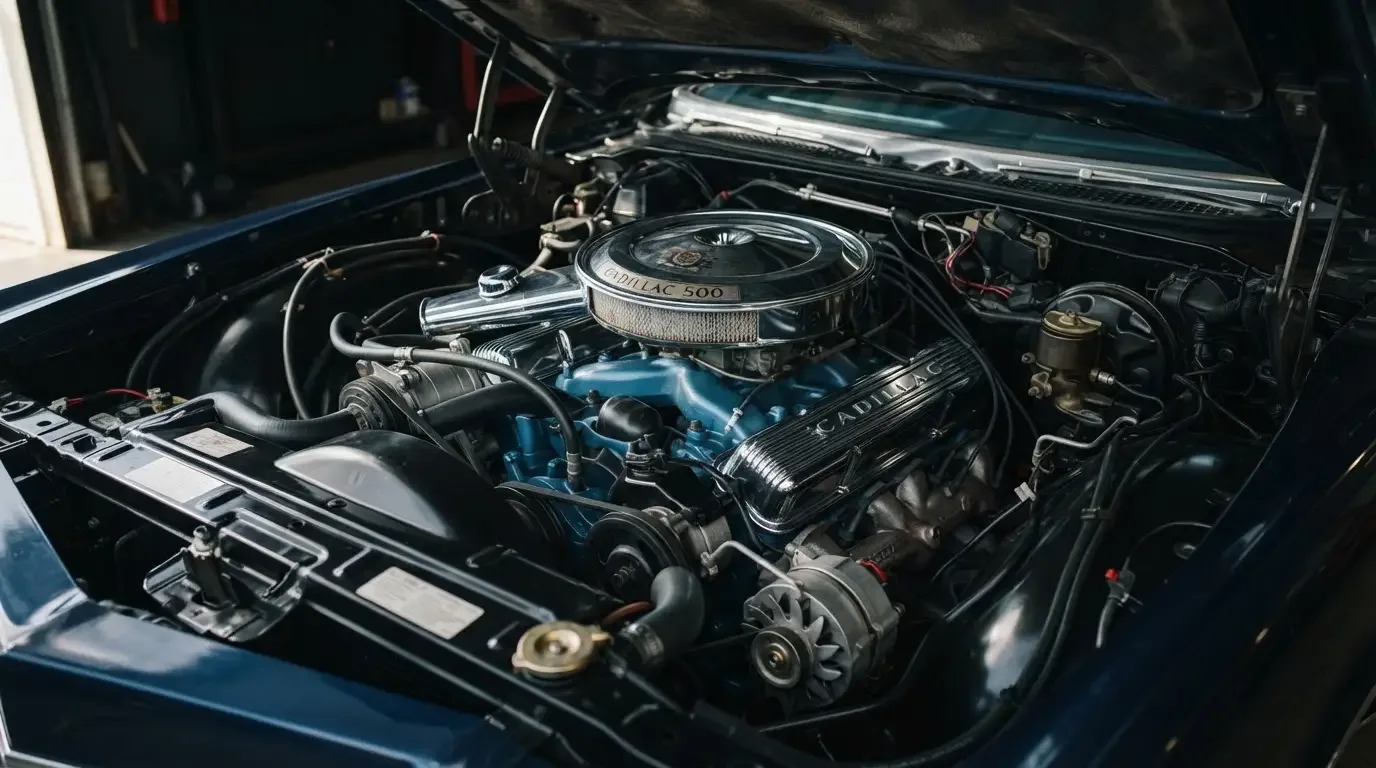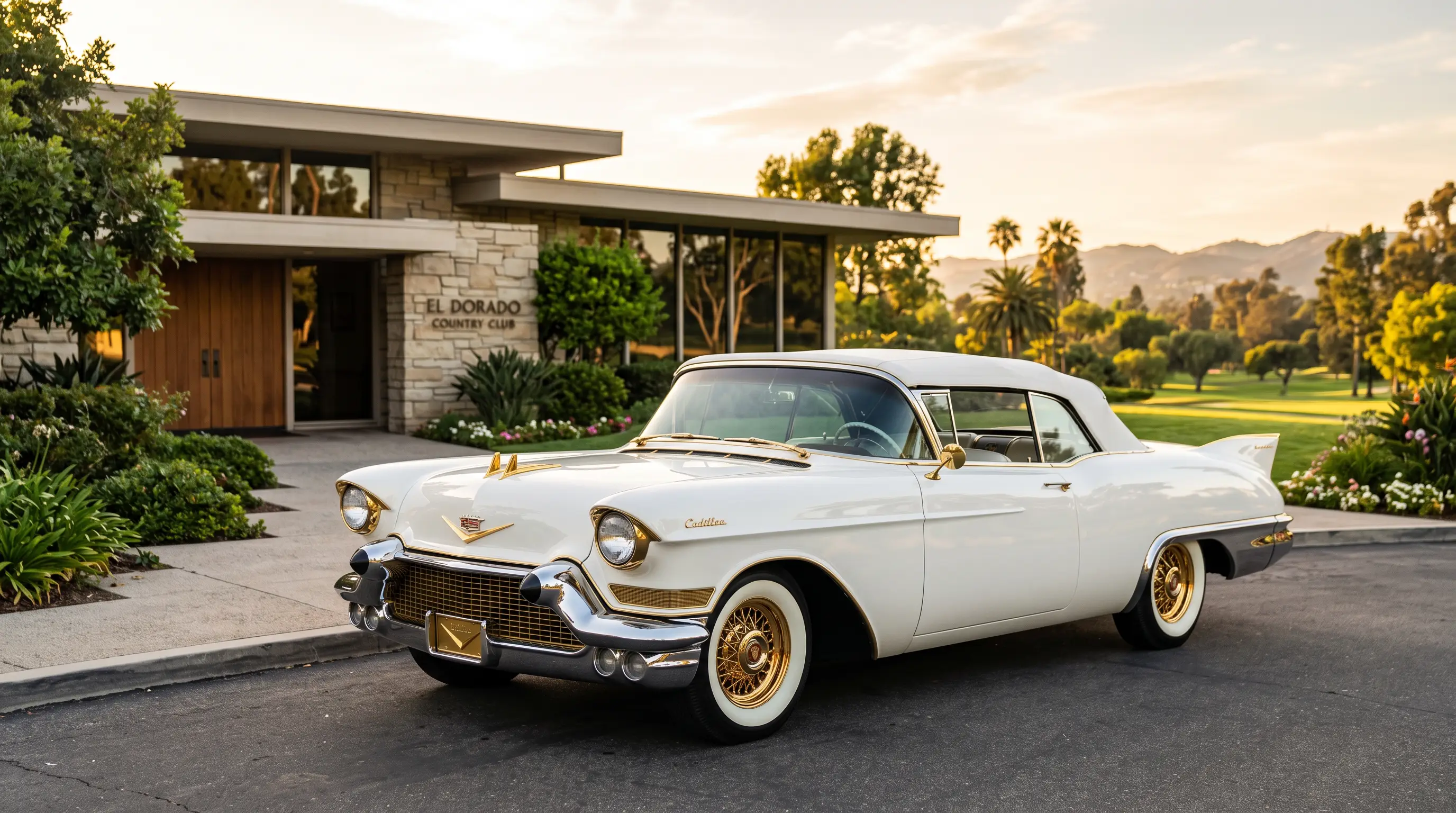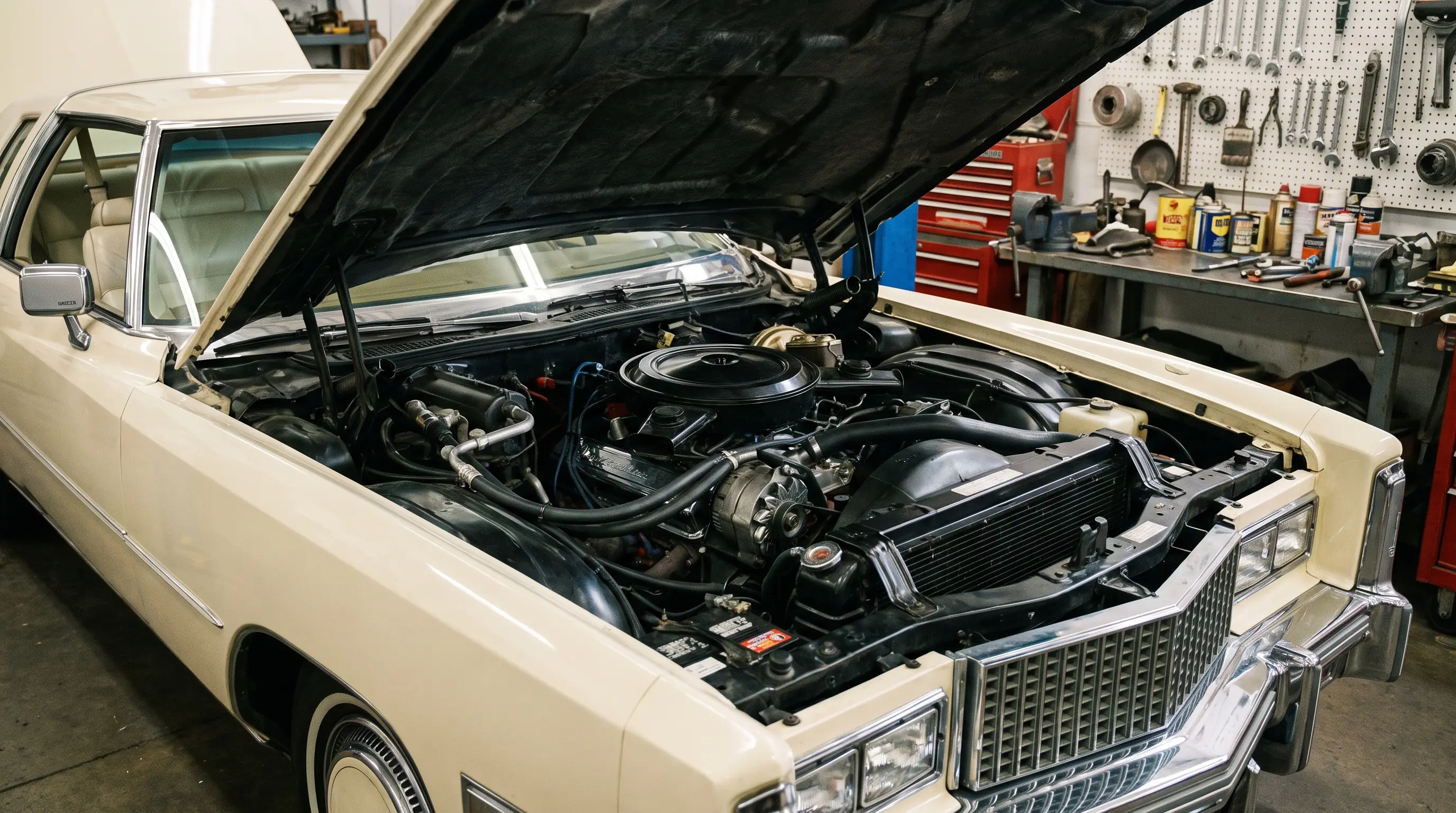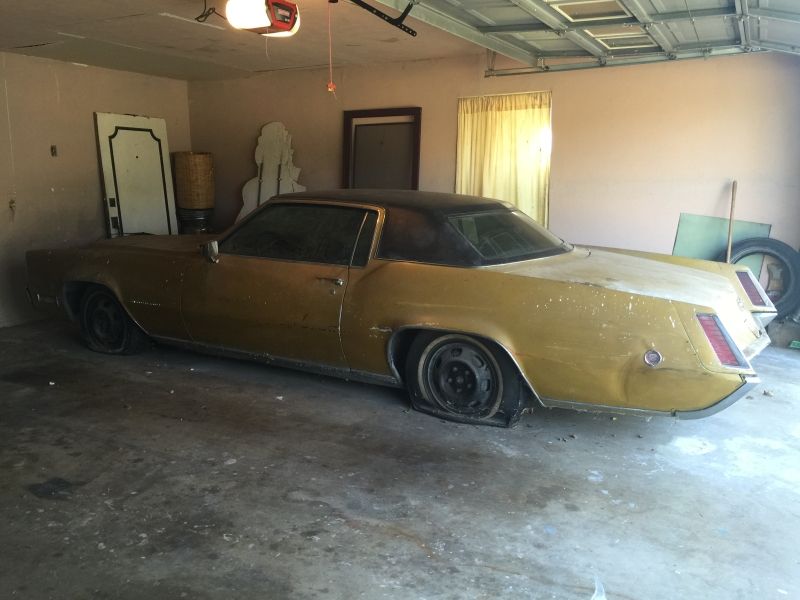
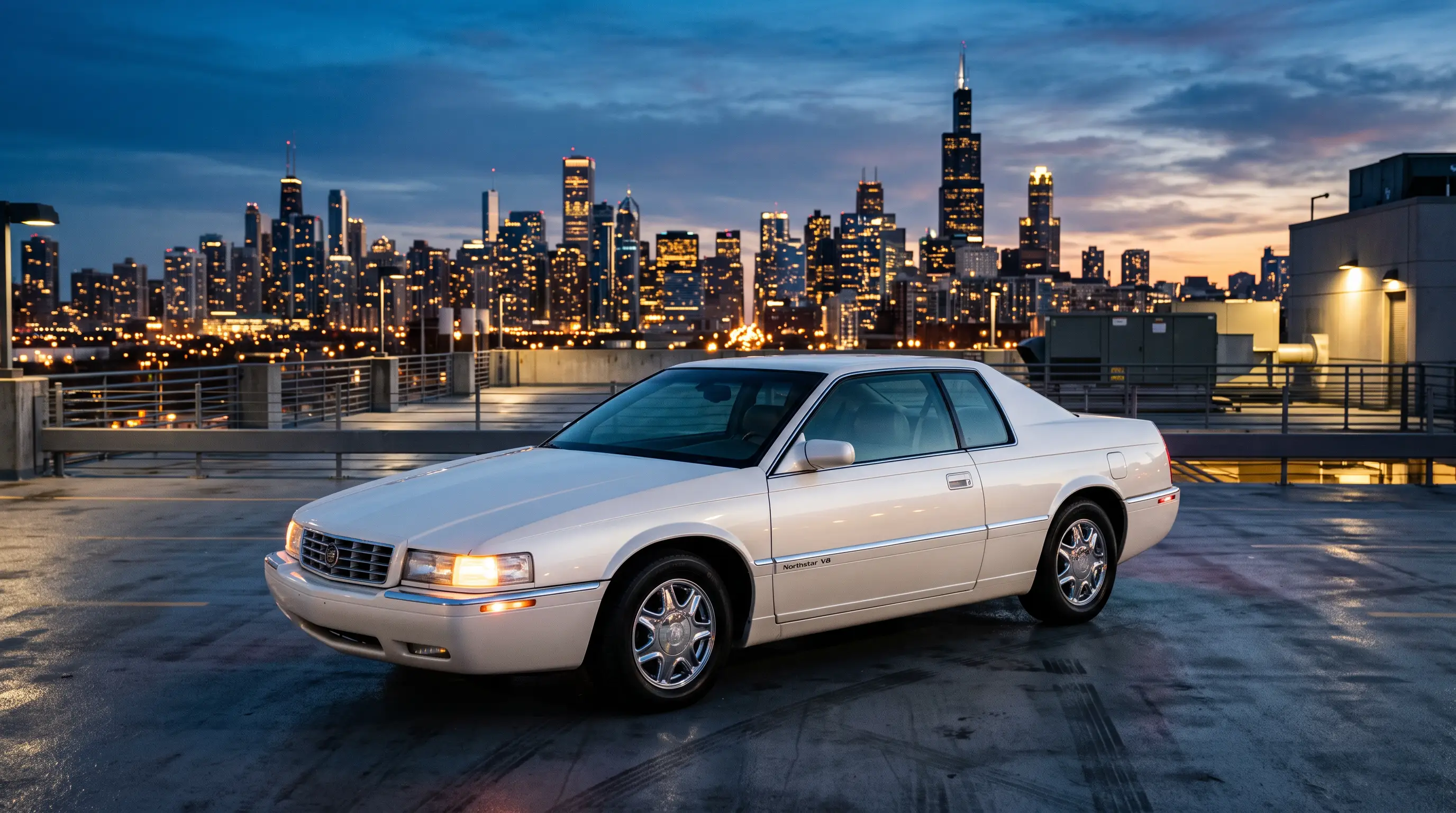
The Eldorado northstar v8 arrived for the 1993 model year and changed what a Cadillac engine could be. Gone was the pushrod architecture that had defined every Eldorado V8 since 1953. In its place sat a 4.6-liter, dual overhead cam, 32-valve aluminum block engine that revved higher, ran cleaner, and made more power per liter than any Cadillac engine before it. The Northstar was not a bigger engine than what came before it. It was a smarter one.
A clean break from tradition
Every Eldorado engine from the 331 cubic inch V8 of 1953 through the 500 cubic inch monster of the 1970s had followed the same basic formula: cast iron, pushrods, two valves per cylinder, and displacement doing most of the work. The Northstar abandoned all of it. Aluminum construction cut weight dramatically. Dual overhead camshafts and four valves per cylinder let the engine breathe far more efficiently than any pushrod design could manage. At 4.6 liters, roughly 279 cubic inches, the Northstar displaced barely more than half of what the old 500 did, yet it made comparable or greater horsepower.
The numbers that mattered
The standard Northstar in the 1993 Eldorado was rated at 270 horsepower, while the higher-output version fitted to the Eldorado Touring Coupe pushed to 295 horsepower. Both figures were net ratings, measured on a fully dressed, exhaust-equipped engine, which made them directly comparable to modern cars in a way the old gross-rated big blocks never were. A 1970 Eldorado's 400 gross horsepower and a 1993 Eldorado's 295 net horsepower are not the wildly different numbers they appear to be once measured the same way.
| Spec | 1993 Eldorado Northstar V8 |
|---|---|
| Displacement | 4.6 liters (279 cubic inches) |
| Configuration | DOHC, 32-valve, aluminum block |
| Horsepower (standard) | 270 |
| Horsepower (Touring Coupe) | 295 |
Why Cadillac needed a new engine philosophy
By the early 1990s, the old displacement-first approach that had defined Cadillac V8s for decades was no longer viable. Fuel economy regulations, emissions standards, and competition from increasingly sophisticated European and Japanese luxury brands meant Cadillac needed an engine that could compete on refinement and efficiency, not just size. The Northstar was the company's answer, developed at significant expense specifically to prove Cadillac could build a modern, technically advanced V8 rather than simply detuning an old design to meet new rules. It represented a real gamble, a from-scratch engine program at a time when the company's finances did not always support that kind of investment.
Living with a Northstar today
The Northstar's reputation is complicated. Early versions, including those in the 1990s Eldorado, developed a well-known issue with head bolt threads pulling out of the aluminum block, leading to head gasket failures and coolant loss that could strand a car if not caught early. Cadillac revised the design over the years to address the problem, but any Eldorado shopper looking at a Northstar-powered car should know the engine's history rather than assume it drives trouble-free simply because it is younger than the classic pushrod cars. The upside is real too: when healthy, a Northstar Eldorado feels genuinely modern to drive in a way no earlier generation does, with smoothness and refinement that the old big-block cars, for all their charm, never attempted to deliver.
"The Northstar is proof Cadillac could still innovate when it had to. It's also proof that innovation doesn't always age gracefully. Buy one with your eyes open."
- Dan Reeves
Where it fits in the bigger Eldorado story
The Northstar ran in the Eldorado through the model's final year in 2002, including the special Collector Series that closed out the nameplate entirely. It stands in sharp contrast to our cadillac 500 cubic inch engine retrospective, which covers the opposite end of the engineering spectrum, a pushrod V8 built entirely around displacement rather than technology. The Northstar's tightening emissions story also echoes, in a different era, what happened to the old big blocks; a related story covers how regulation reshaped the 500 decades earlier. Anyone shopping specifically for a Northstar-era Eldorado can browse current Eldorados for sale now to compare what is on the market.
What buyers should actually check
A Northstar-powered Eldorado is not a car to buy on styling alone. Given the well-documented head bolt issue, any serious buyer should ask for maintenance records specifically addressing the cooling system and head gaskets, and should be wary of a car that has never had that history documented. Coolant level and condition are a faster tell than almost anything else on these engines; a Northstar that has been topped off repeatedly without an explanation is a warning sign worth taking seriously. A well-documented Northstar with head bolt inserts already installed, a common repair that addresses the original design flaw permanently, is a meaningfully safer purchase than one without that history.
None of this should scare buyers away from the Northstar-era cars entirely. Plenty of these engines have covered well over 150,000 miles without major issues, particularly later production years after Cadillac had time to address the early problems. The point is simply that a Northstar Eldorado rewards due diligence in a way the earlier pushrod cars, with their comparatively simple mechanicals, generally do not require to the same degree.
A different kind of landmark engine
Where the 500 cubic inch V8 earned its place in Eldorado history through raw size, the Northstar earned its place through technology. Both engines represent the ceiling of what Cadillac was capable of building at the time they were introduced, just measured by entirely different standards. Understanding the Northstar means understanding that the Eldorado's final decade was as much about proving Cadillac could still engineer at the top of the industry as it was about carrying on a nameplate.
The Collector Series send-off
When Cadillac ended Eldorado production after the 2002 model year, it did so with a Collector Series edition built specifically to close out the nameplate on a deliberate note rather than letting it simply fade out of the lineup. That final car carried the Northstar V8, by then a mature, well-sorted engine with most of its early reliability issues addressed through years of running production changes. It is a fitting bookend: the Eldorado began in 1953 with an engine that was already Cadillac's best available, the 331, and it ended in 2002 the same way, with the most advanced V8 architecture the company had ever built. Between those two endpoints sits the entire engine history covered across this collection, from cubic-inch supremacy to aluminum, overhead-cam sophistication, a full-circle arc that says as much about the changing automotive industry as it does about one specific nameplate.