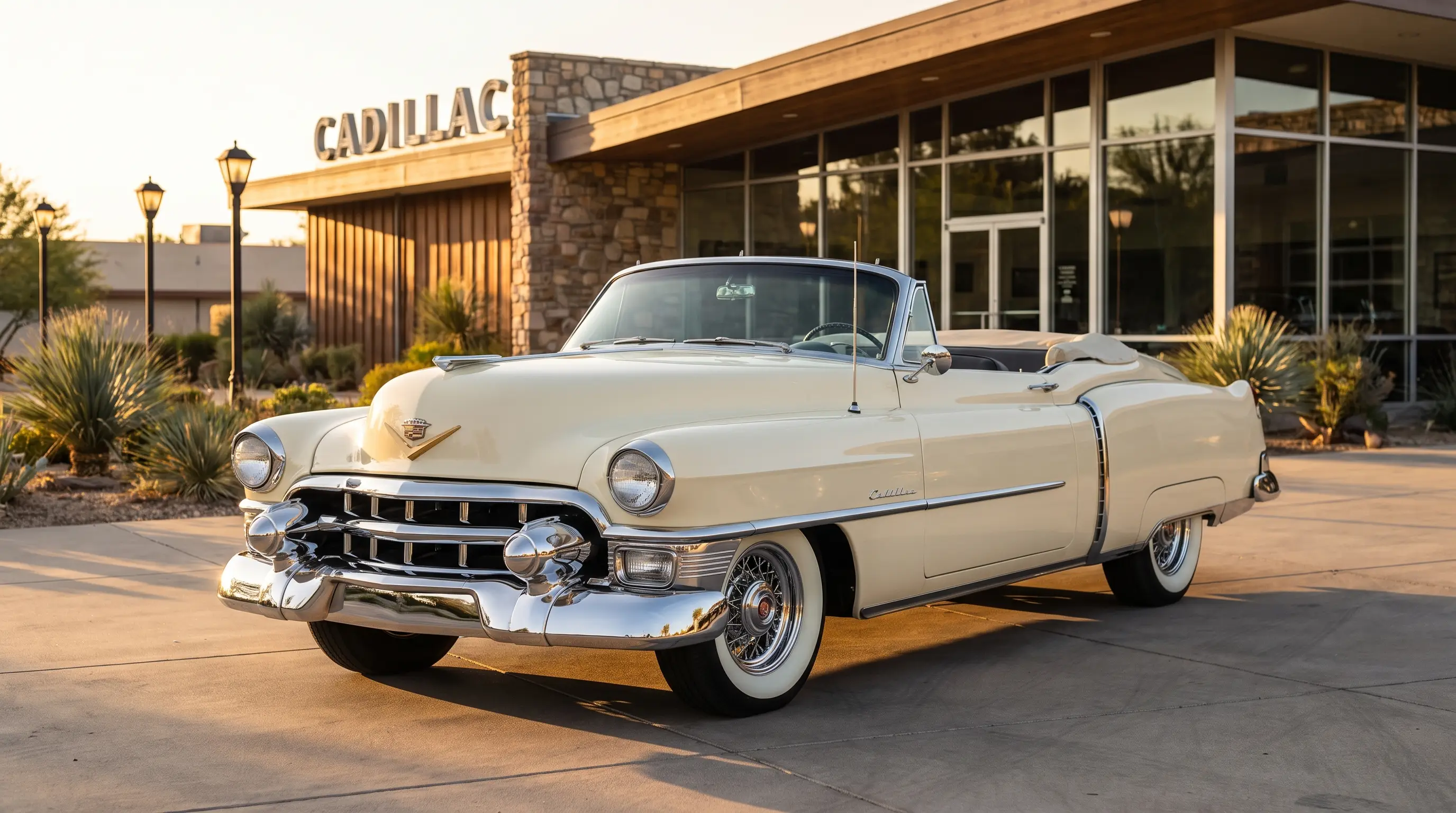
Cadillac's overhead-valve V8 was already four years old by the time the first Eldorado arrived in 1953, but the pairing mattered. This is the cadillac ohv v8 history that made the original Eldorado possible: a modern, high-compression engine design that had already reshaped Cadillac's reputation before it ever powered a limited-edition convertible.
An engine ahead of its debut
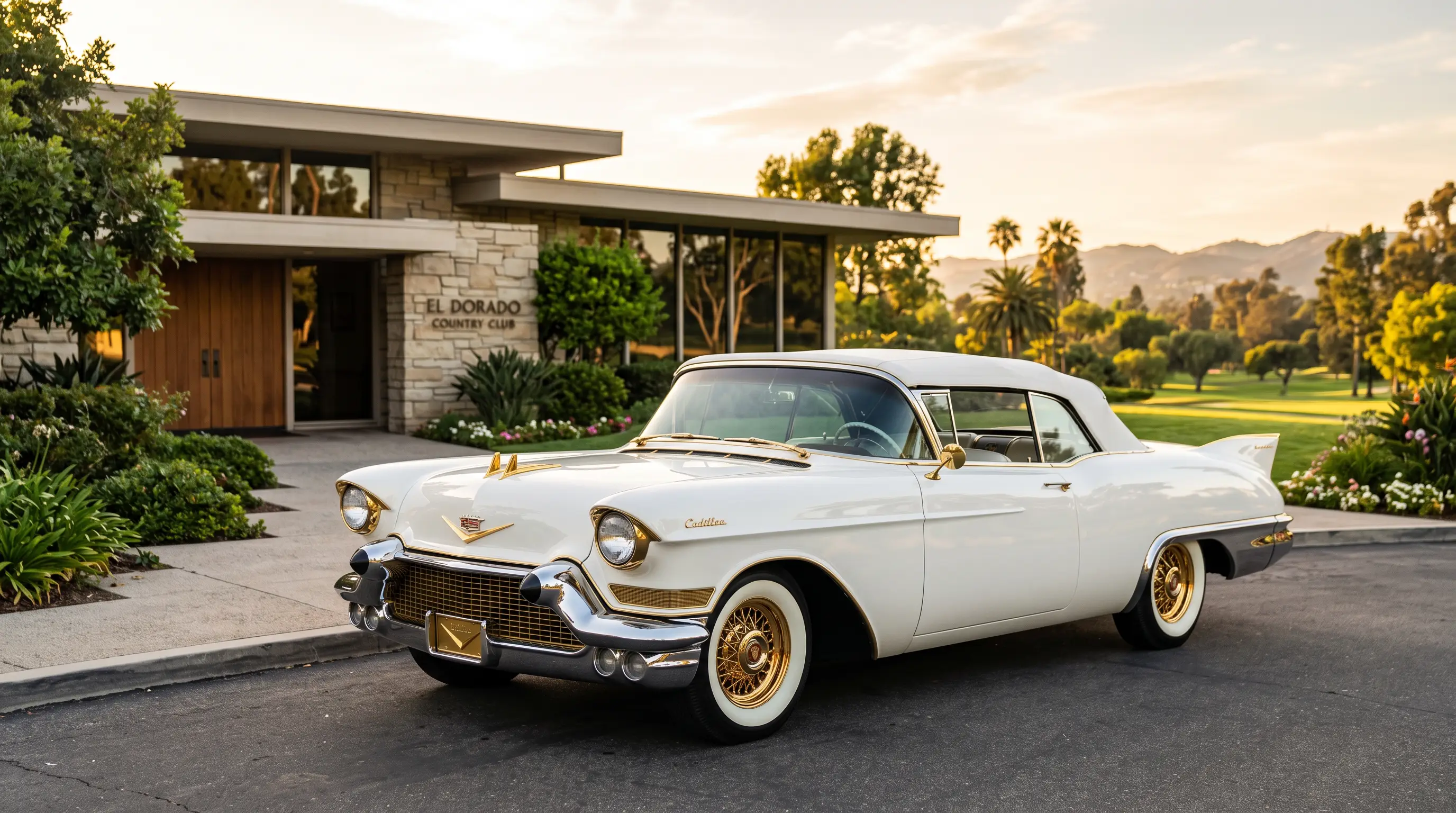
Cadillac introduced its overhead-valve V8 in 1949, replacing an aging L-head flathead design that had been falling behind the competition. The new OHV architecture allowed higher compression ratios, better breathing, and more power from less displacement than the flathead it replaced. By 1953, when the first Eldorado convertible went on sale as a halo model within the Series 62 lineup, the OHV V8 had grown to 331 cubic inches and was already the engine every other Cadillac in the range used. The Eldorado did not get a unique powerplant. It got the same proven 331, dressed up with the rest of the car's exclusive trim.
What the 331 delivered in 1953
The 1953 331 cubic inch V8 was rated at 210 horsepower at 4150 rpm, with a four-barrel carburetor and 8.25:1 compression. Those numbers do not sound dramatic by later muscle car standards, but in 1953 they were near the top of the American luxury segment. Cadillac had spent four years refining the OHV design since its 1949 debut, and the 331 by 1953 was a mature, reliable engine rather than a first-year gamble.
| Spec | 1953 Eldorado 331 V8 |
|---|---|
| Displacement | 331 cubic inches (5.4 liters) |
| Horsepower | 210 @ 4150 rpm |
| Compression Ratio | 8.25:1 |
| Carburetor | Four-barrel |
Why the shared engine was not a compromise
Some buyers might expect a limited-production halo car like the first Eldorado to carry a unique, more powerful engine, but that was not how Cadillac approached the model in 1953. Only 532 Eldorados were built that first year, each one essentially a dressed-up Series 62 convertible with a wraparound windshield, distinctive bodywork, and a much higher price. The engine was left alone because it did not need fixing. The 331 was already Cadillac's best V8, and putting it under the hood of the Eldorado let the car's exclusivity live in its styling and its price tag rather than in mechanical specifications nobody could see from the driveway.
The engine's place in a changing industry
1953 sat at an inflection point for American V8s. Chrysler had just introduced its own Hemi-head V8, Oldsmobile's Rocket V8 was already established, and every luxury and near-luxury make was racing to prove its overhead-valve credentials. Cadillac's 331 held its own in that company, and the fact that the brand-new Eldorado used the same engine as every other Cadillac that year was itself a quiet statement of confidence. The company was not hedging with something experimental for its most expensive model. It was trusting an engine it already knew worked.
"The first Eldorado never needed a special engine to prove a point. The 331 had already made Cadillac's point for four years running. All the Eldorado needed to do was wear it well."
- Dan Reeves
Legacy for later Eldorado generations
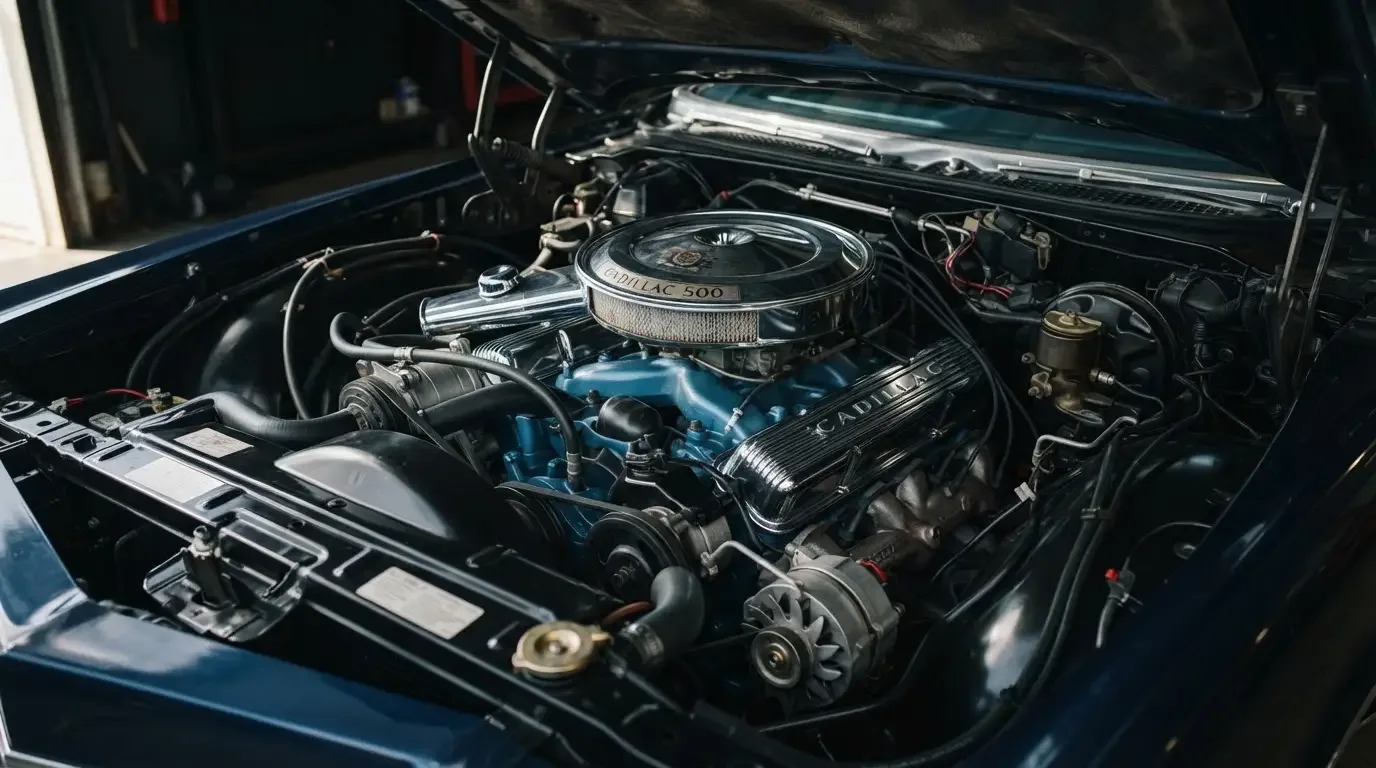
The 331 did not last long in the Eldorado lineup on its own; Cadillac enlarged its V8 family repeatedly over the following decade, eventually reaching 365, then 390, then 429 cubic inches by the mid-1960s. But the basic OHV architecture the 331 established in 1949, and that the first Eldorado carried in 1953, underpins that entire growth path. Every larger Cadillac V8 that followed, right up through the 500 cubic inch engine of the 1970s, traces its design lineage back to the same overhead-valve principles the 331 proved out. For the full account of how that displacement race eventually played out, where this started covers the engine family's later, much larger chapters.
Comparing the 331 to its rivals
Chrysler's FirePower Hemi, introduced in 1951, made more power than the Cadillac 331 on paper, thanks to its hemispherical combustion chambers and generally more aggressive tuning. Oldsmobile's Rocket V8, meanwhile, had a two-year head start on Cadillac's OHV design and had already built a reputation for durability and performance in stock car racing. Against both of those rivals, the 331 was not necessarily the most powerful or the most talked-about engine in America in 1953. What it offered instead was refinement: smooth, quiet operation without the mechanical harshness that could come with a more aggressively tuned Hemi, and a level of build quality that matched the rest of what a Cadillac buyer expected from the brand.
That distinction mattered more to Eldorado buyers than a horsepower race would have. Nobody spending Eldorado money in 1953, a price that ran roughly double a standard Series 62, was choosing the car because it out-accelerated a Chrysler. They were choosing it because Cadillac's reputation for engineering polish extended to every part of the car, engine included, and the 331 delivered exactly that kind of quiet competence rather than a number to brag about at a stoplight.
Seeing the original engine today
A surviving 1953 Eldorado with its original 331 V8 is a rare thing; with only 532 built that year, matching-numbers cars command real attention from collectors who understand exactly what they are looking at. For anyone drawn to that early era of Cadillac performance, classic Eldorado for sale listings occasionally surface cars from this period, and the 331's reputation as a mature, well-sorted engine only adds to their appeal.
The 331's afterlife in later Cadillacs
The 331 did not vanish once the Eldorado moved to larger displacements later in the 1950s. Its basic architecture and manufacturing lessons carried directly into the 365 cubic inch V8 that followed in 1956, and from there into the 390 and eventually the 429 and 472 engines that powered later Eldorados through the 1960s. Understanding the 331 is, in a real sense, understanding the starting point for every V8 Cadillac would build for the next quarter century. Few single engines in American automotive history can claim that kind of direct lineage running so cleanly from one specific model year all the way to engines built two decades later, and the 331's role in establishing that foundation is often underappreciated relative to its later, larger, more famous descendants.
Even the manufacturing processes Cadillac refined while building the 331 carried forward. The casting techniques, tolerances, and quality control standards established during the engine's production run became the baseline the company built on as displacement grew. In that sense, the first Eldorado's engine was never really replaced so much as it was continuously enlarged and refined, generation after generation, until it eventually became the 500 cubic inch V8 nearly two decades later.