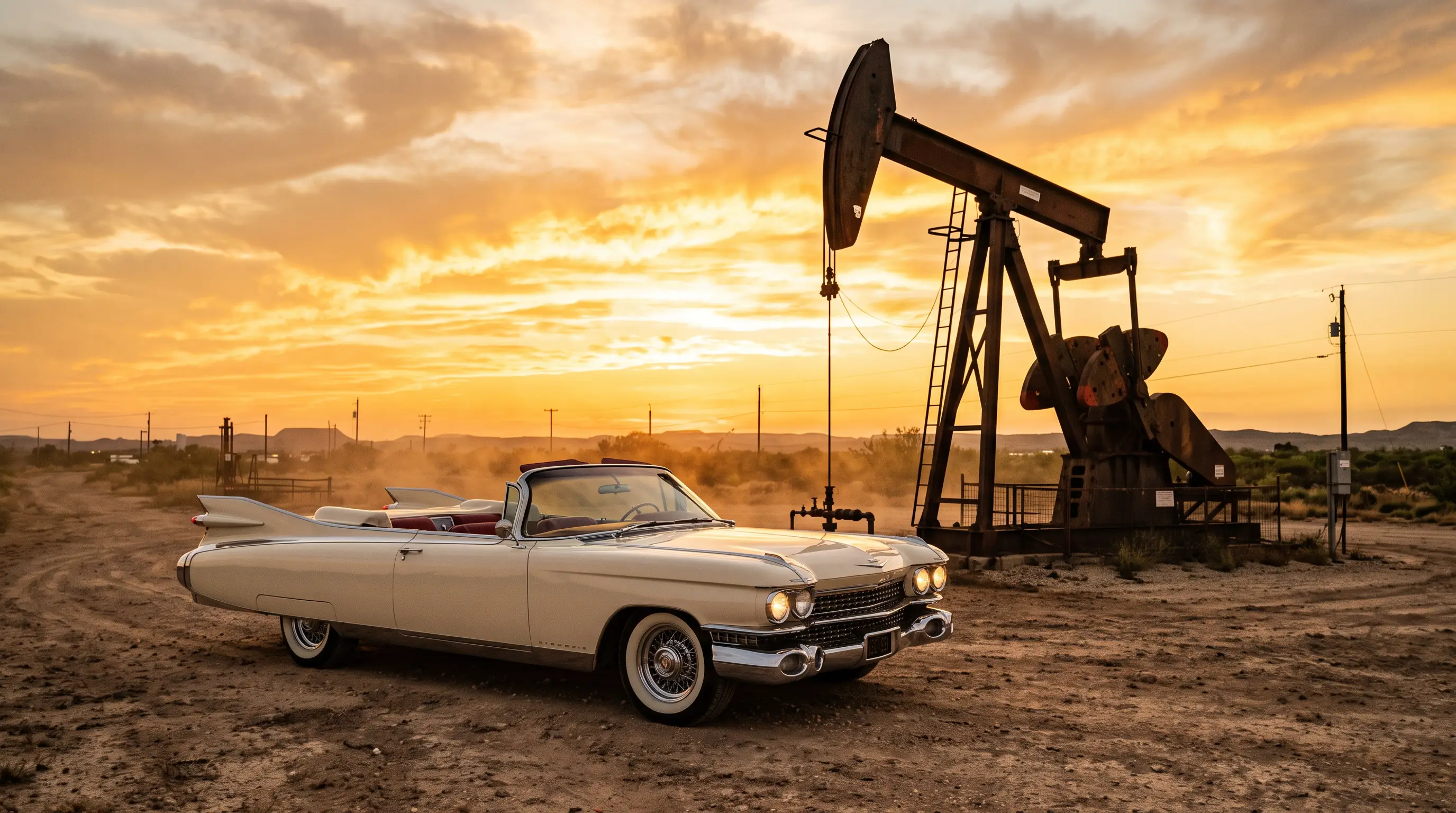
Picture a Fort Worth parking lot outside a steakhouse in 1959. Three trucks, a couple of sedans, and one car that makes every other vehicle look like it apologized for showing up: a white Cadillac Eldorado Biarritz with fins tall enough to catch a crosswind. Nobody has to ask who owns it. The car has already told them everything. That image, the Cadillac as the calling card of the Texas oil baron, did not happen by accident, and it did not happen overnight. It grew out of a specific decade, a specific set of buyers, and a car company that understood exactly what those buyers wanted to say without saying a word.
Where the association actually started
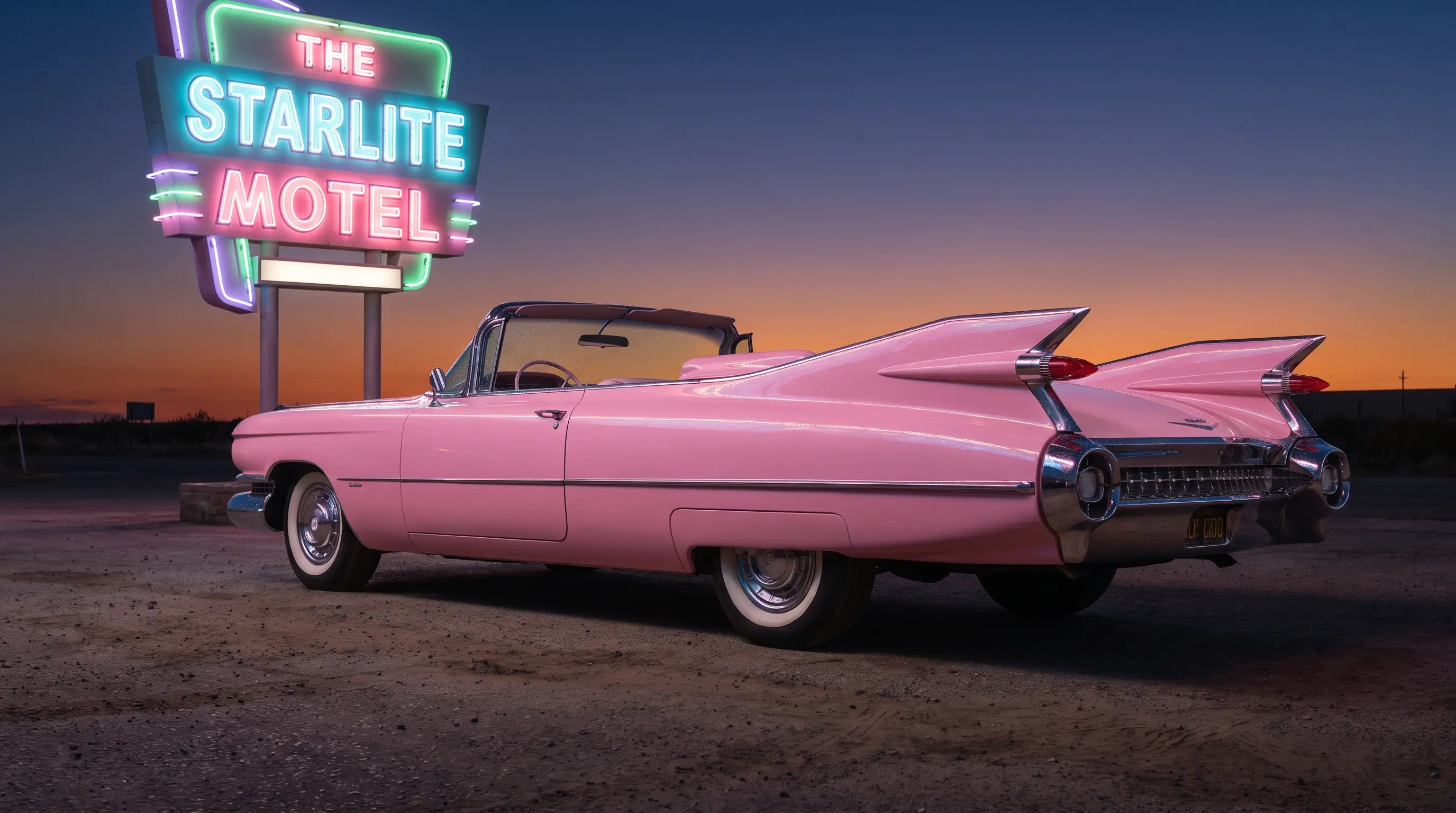
The Eldorado launched in 1953 as Cadillac's halo car, a limited-run convertible built to remind the country that Cadillac still meant something after the war. But the version that welded itself to the oil-money image came a few years later, once the fins grew and the chrome multiplied. The late 1950s cars, especially the 1957 to 1960 Biarritz and Seville variants, gave Texas buyers something that mattered more than horsepower: visibility. An oilman who had just brought in a new well did not want a car that whispered. He wanted one that could be seen from the highway, and Cadillac's design department, led by Harley Earl, had spent a decade perfecting exactly that kind of car.
Texas in the 1950s was flush with new money moving fast. Wildcatters who had been broke five years earlier were suddenly buying ranches, building mansions in Highland Park, and needing a way to show it. Cadillac dealers in Houston, Dallas, and Midland understood the assignment. They stocked the boldest colors, pushed the Eldorado over the standard Series 62, and let word travel through the oil patch that the Eldorado was the car that matched the money.
"You didn't buy an Eldorado in 1959 because you needed a car. You bought it because everyone at the country club already knew you could."
- Patrick Walsh
The fins, the chrome, and the message they sent
Design matters here more than mechanics. The Eldorado's late 1950s fins were not subtle, and that was the point. A car built to blend in does not work as a status marker. The Eldorado's dual bullet taillights, its acres of chrome, its two-tone paint options in colors with names like Alpine White and Persian Sand, all of it read as confidence from a hundred feet away. In a business built on risk, where a well could make a man rich or leave him with nothing but a dry hole and a bank note, a car this loud was also a kind of bet placed in public. You drove it because you had won, and you wanted the whole town to know it before the next well came in.
The interior mattered too. Leather in colors no other manufacturer offered, power everything at a time when power windows were still a novelty on most American cars, and a dashboard that looked more like a cockpit than a car. Oil money bought comfort as much as show, and the Eldorado delivered both without asking the buyer to compromise on either.
How television cemented the texas oil baron cadillac image
If the 1950s built the association, television made it permanent. By the time Dallas premiered on CBS in April 1978, the Cadillac-driving Texas oilman was already a cultural shorthand, but the show turned it into a national fixture in the popular imagination, even though the Ewings themselves drove a mix of marques on screen, Jock's Lincoln Continental, J.R.'s Mercedes-Benz sedans for most of the run, and eventually a Cadillac Allante later in the series. The show ran during the era of the front-wheel-drive Eldorado and its smaller, more restrained styling, but the mental picture most viewers carried into the show was still the earlier car: big, chrome-heavy, unmistakably Cadillac, the image the brand itself had spent the previous two decades building in Texas showrooms. Advertising from the period leaned into this too, running Eldorado campaigns in regional Texas and Oklahoma markets that spoke directly to oil money without ever using the word.
The image outlived the boom that created it. Oil prices crashed hard in the 1980s, and plenty of Texas fortunes went with them, but the cultural picture of the oilman in his Cadillac had already lodged itself in the American imagination. It shows up in movies, in country songs, in the way people still describe a certain kind of new-money confidence. Few cars manage that kind of staying power once the original economic moment has passed.
Later generations and a fading but persistent link
The Eldorado kept evolving after the tailfin years. The 1967 front-wheel-drive redesign moved the car toward a lower, more restrained profile, and the 1970s land yacht era brought back some of the bulk, if not the fins. Neither generation carried quite the same specific Texas oil connection as the late 1950s cars, but the Eldorado name itself never fully shook the association. Even the Northstar-powered coupes of the 1990s, technically sophisticated and far removed from Harley Earl's fin obsession, still traded on a badge that older buyers connected to that earlier era of Texas excess.
Understanding why the fins mattered so much is only the whole picture when you also look at how Cadillac marketed the car nationally during those same years, since Texas was an especially visible market but never the only one buying into the image.
Why collectors still chase the association today
Today, a well-documented late 1950s Eldorado with regional Texas provenance carries a premium at auction that has little to do with mechanical rarity and everything to do with story. Buyers want the car that matches the picture in their head, fins catching the sun outside a ranch house, chrome reflecting a Dallas skyline that did not exist yet when the car was new. That romance sells. Dealers and private sellers who can document a car's Texas history, even loosely, tend to price accordingly, and collectors pay it because the Eldorado still does what it did in 1959: it tells a story before anyone opens their mouth.
For anyone who wants to own a piece of that story rather than just read about it, the smartest move is to find a classic Eldorado with solid documentation and let the car do the talking, the same way it always has.
Separating the myth from the sales floor
It is worth being honest about how much of this image was manufactured rather than organic. Cadillac's regional dealer network in Texas ran promotions specifically aimed at ranch and oil money, and some of the most famous stories, the Eldorado bought outright with cash from a single well, the car traded in after a single season because a bigger check came in, carry more legend than paperwork behind them. That does not make the image false. It makes it a collaboration between real buying habits and a marketing department that knew exactly which stories to repeat. Oil money in Texas really did concentrate around certain dealerships, certain colors sold better in Houston than they did in Detroit, and certain salesmen built entire careers on knowing which rancher had just signed a lease.
The honest version of the story is less cinematic than the legend but still compelling on its own terms: a genuinely new class of wealth met a car company willing to build exactly what that wealth wanted to drive, and the two reinforced each other until the association became permanent. That is a more interesting story than pure myth, because it explains why the image has lasted this long. It was never just about fins. It was about a car company and a group of buyers who, for one specific decade, wanted precisely the same thing.