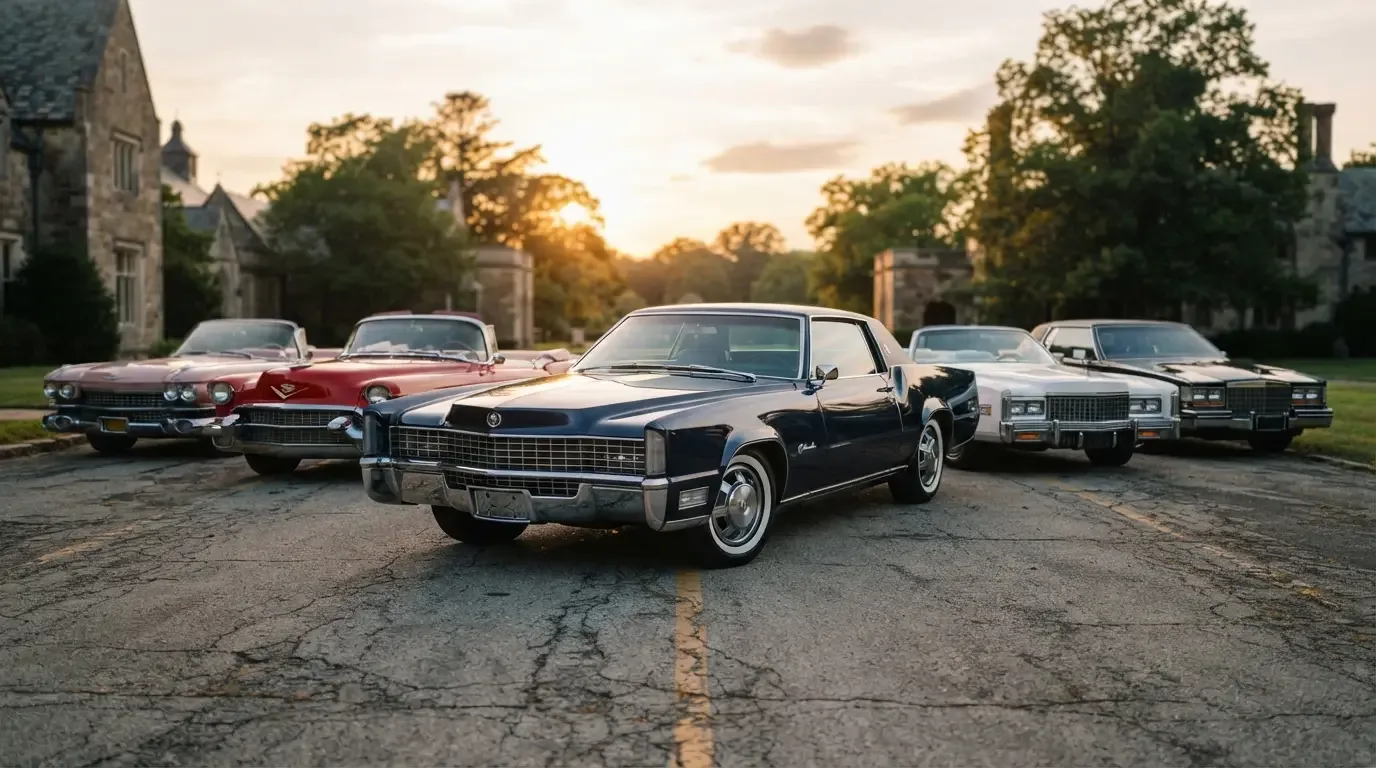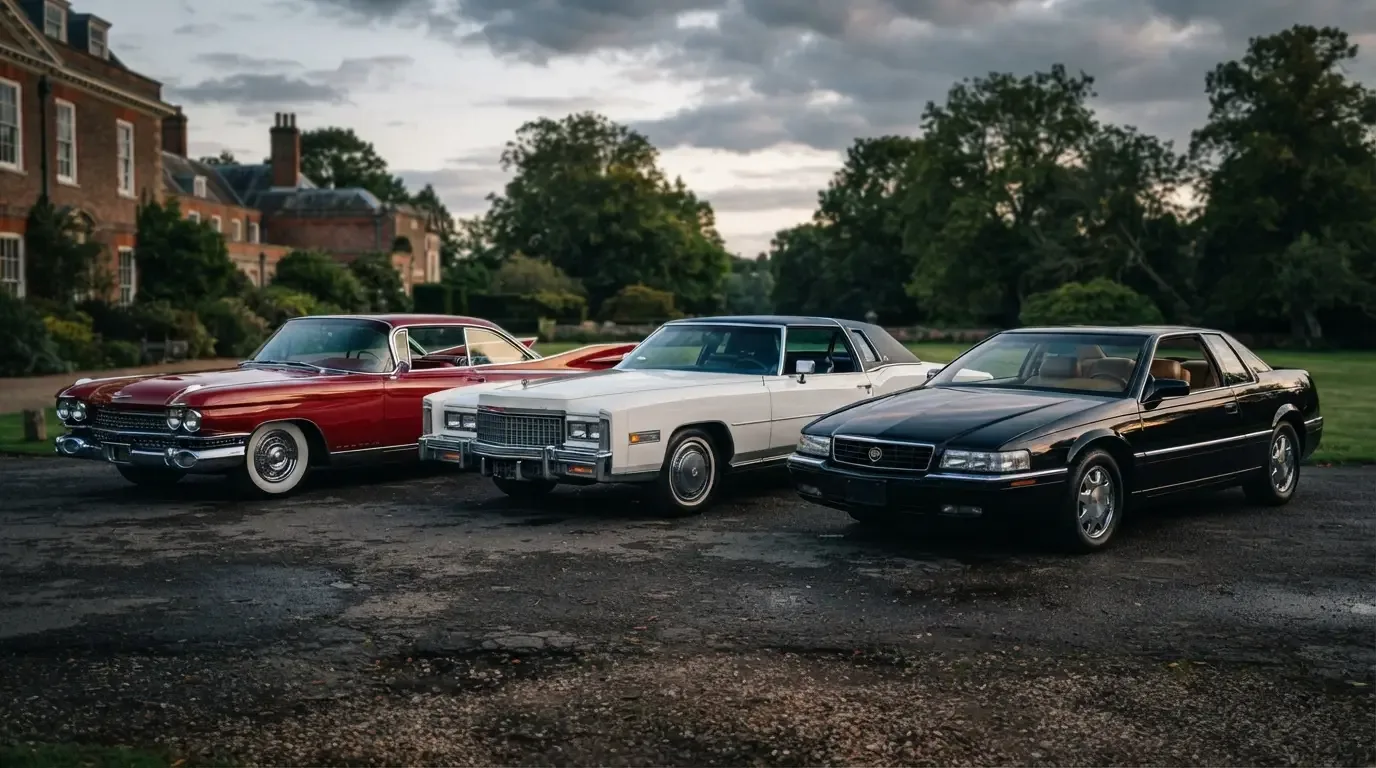
A Cadillac Eldorado timeline has to cover nearly fifty years, twelve distinct generations by some counts, and at least three complete reinventions of what the car was supposed to be. From a hand-finished 1953 flagship convertible to a numbered 2002 send-off edition, the Eldorado never stayed still for long, and tracing the key years in order is the fastest way to understand how a single nameplate could mean so many different things across its life.
1953-1959: The flagship and tailfin years
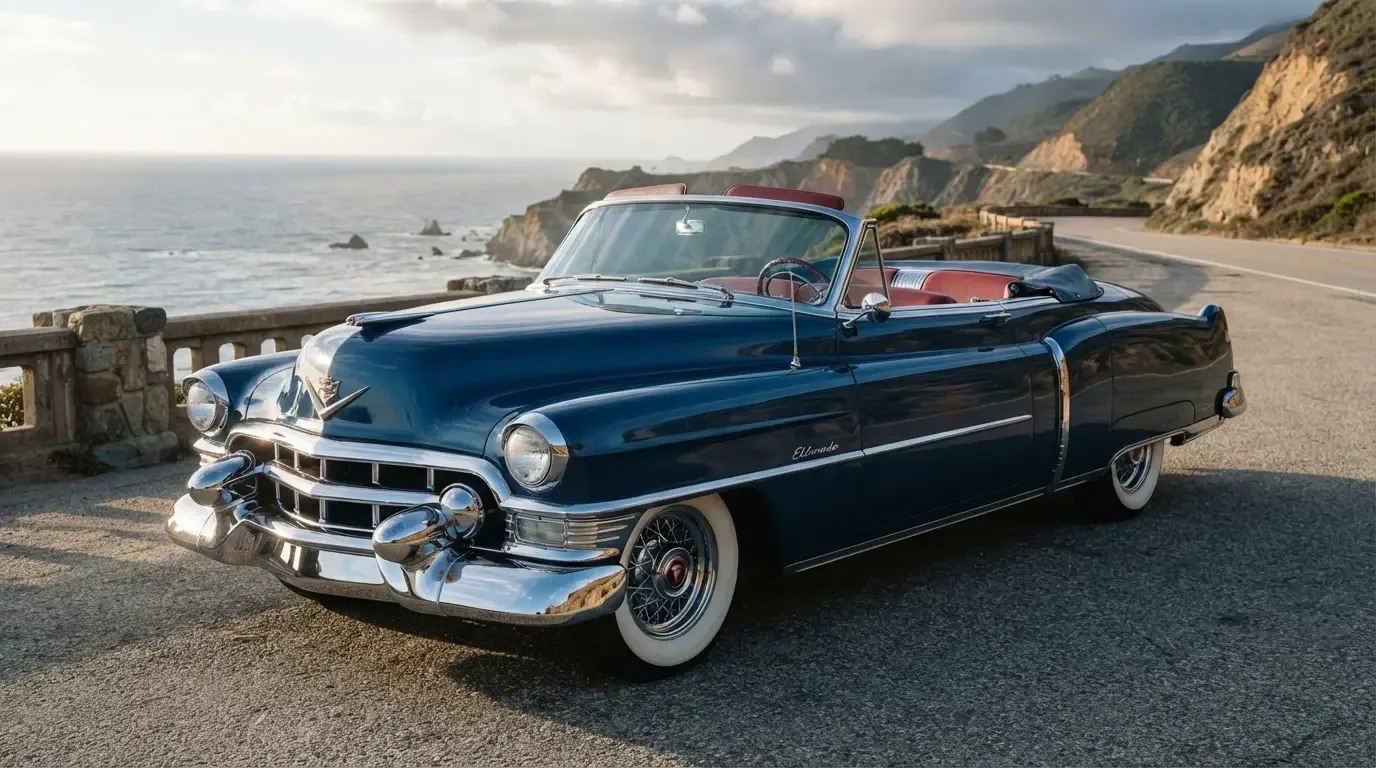
The Eldorado launched for 1953 as Cadillac's most expensive production convertible, built in a run of just 532 units and priced at roughly double a standard Series 62. It shared its basic body with other Cadillacs that year but wore unique trim, a wraparound windshield borrowed from GM's Motorama show cars, and a price tag meant to signal that this was the top of the entire lineup. The name stuck, and Cadillac kept building an Eldorado every year through the decade, gradually adding a hardtop Seville body style in 1956 and growing the tailfins with each passing model year until they reached their most extreme form in 1959.
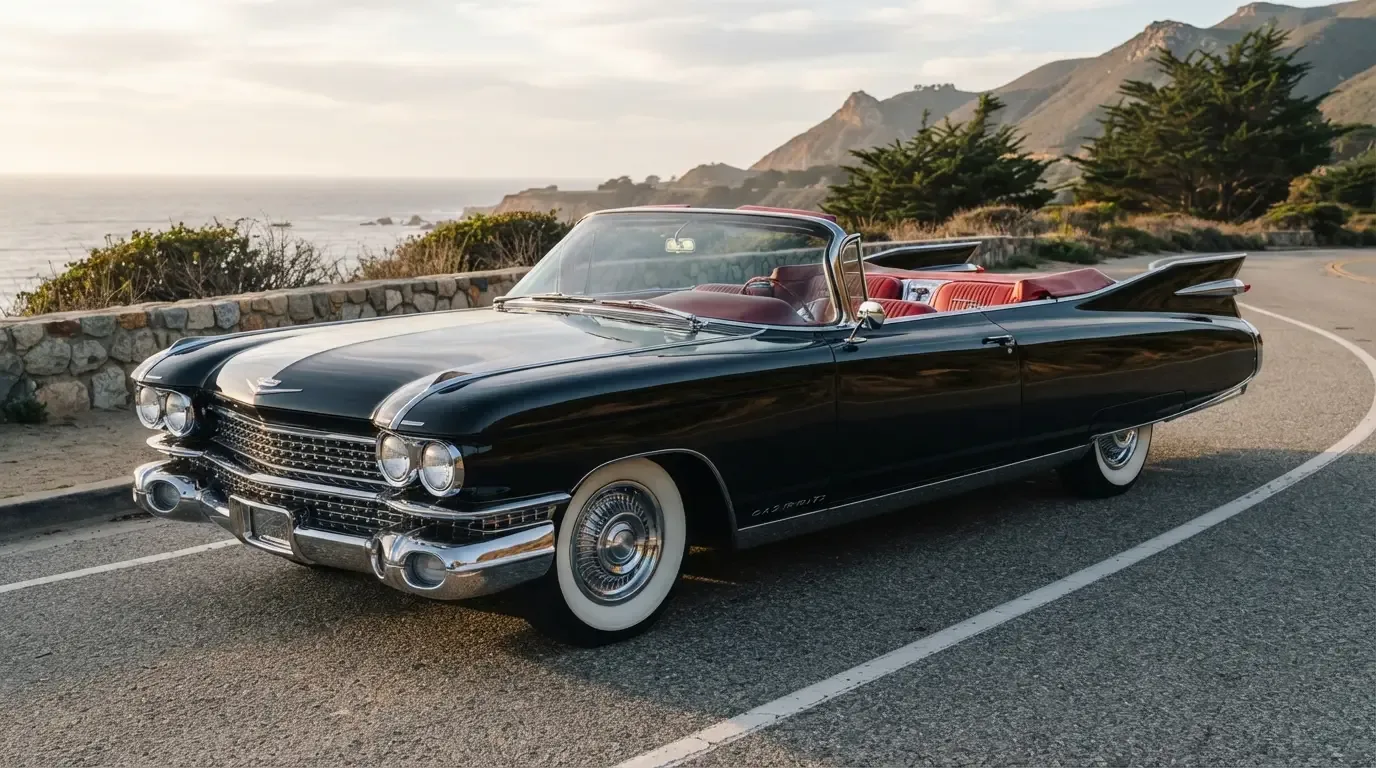
The 1959 Eldorado remains the single most photographed year in the nameplate's history, largely because of tailfins that stood taller than on any American production car before or since, paired with twin bullet-shaped taillamps and a chrome-heavy rear end that has come to define an entire era of Detroit styling. Both the Seville hardtop and Biarritz convertible carried the treatment, and 1959 has become shorthand for peak tailfin excess in American car culture generally, not just within Cadillac's own history. The early 1960s that followed saw the Eldorado gradually shed that exuberance, settling into cleaner, more restrained lines through the middle of the decade.
1967-1978: Front drive and the land yacht era
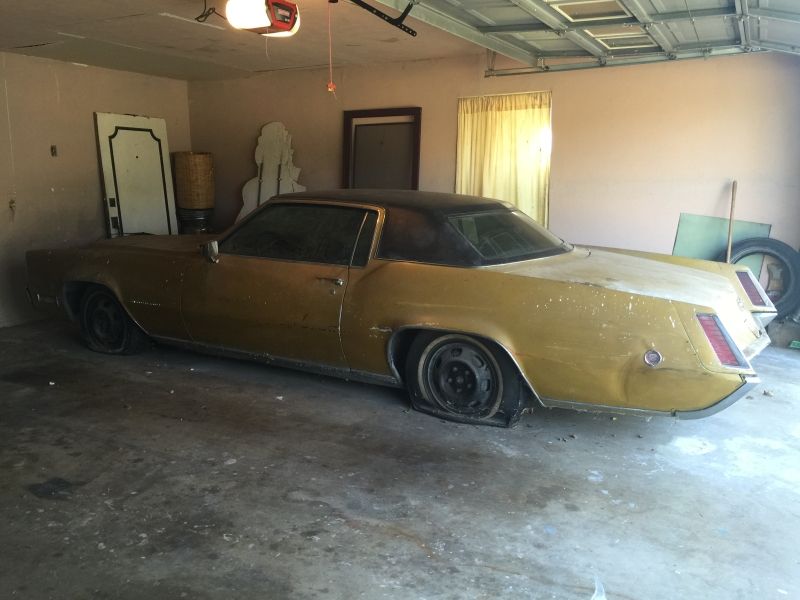
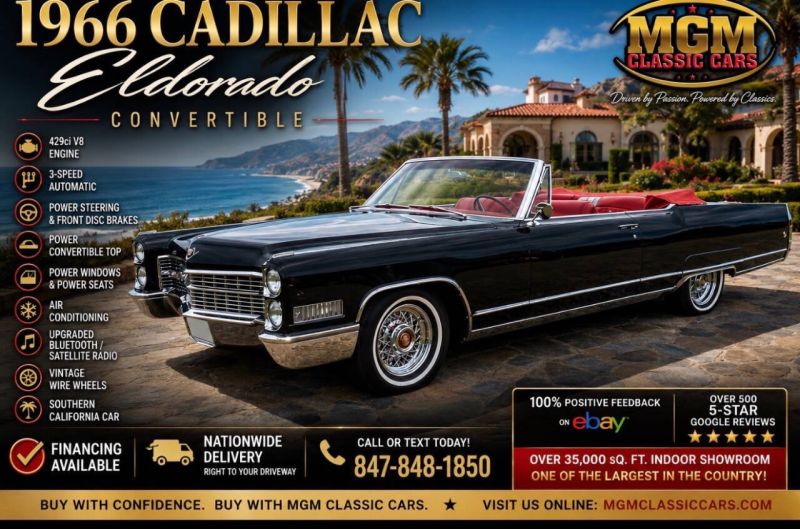
Cadillac reinvented the Eldorado completely for 1967, moving it to front-wheel drive on the E-body platform shared with the Oldsmobile Toronado, a genuinely radical engineering decision for an American luxury car at the time. The new Eldorado dropped the convertible body style temporarily, returning to it in 1971, and adopted a long-hood, short-deck profile that broke sharply from the formal three-box shape the car had worn through the 1950s and early 1960s.
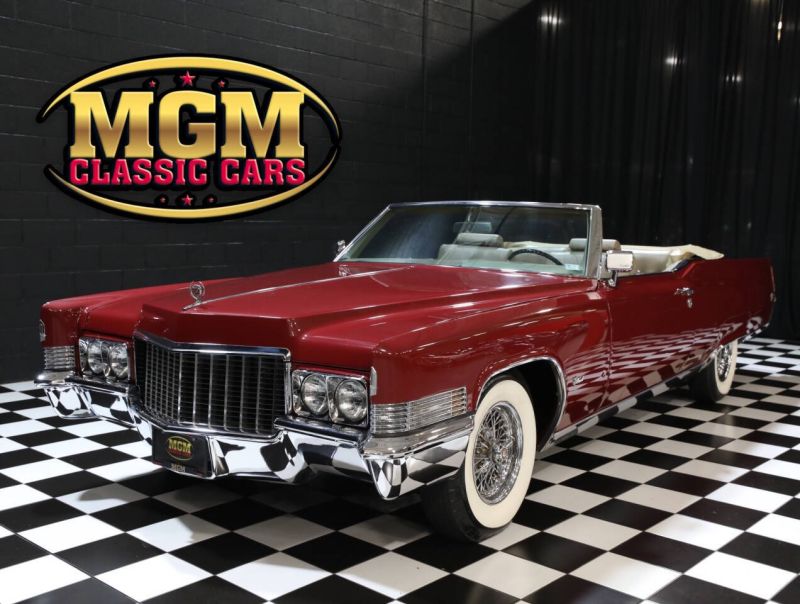
The Eldorado grew substantially larger through the early and mid-1970s, reaching its largest dimensions right as the American auto industry approached the 1973 oil crisis and tightening emissions and safety regulation. The 1976 model year holds particular significance because Cadillac marketed it as the last American convertible before the entire domestic industry dropped open-top cars, and speculative buyers paid well above sticker price for cars they believed would only appreciate. Convertibles did return to the American market a decade later, but 1976 remains a genuine milestone year in the Eldorado's own timeline. The years right after, as GM's downsizing program touched nearly every full-size car in the corporation's lineup, saw the Eldorado shrink for the first time, a preview of the far more dramatic cut still to come in 1986.
| Year | What Changed |
|---|---|
| 1953 | Eldorado launches as flagship convertible |
| 1959 | Tallest tailfins in Eldorado history |
| 1967 | Moves to front-wheel drive, E-body platform |
| 1976 | Marketed as last American convertible |
| 1986 | Major downsizing to a smaller footprint |
| 1992 | Full redesign on K-body platform |
| 1993 | Northstar V8 becomes available |
| 2002 | Final model year, Collector Series send-off |
1986: The downsizing that split opinion
Cadillac shrank the Eldorado dramatically for 1986, cutting length and weight in response to fuel economy regulation and a corporate belief that smaller, more efficient luxury cars were the industry's future. The result divided buyers immediately. Some appreciated the improved efficiency and handling, while longtime Eldorado owners felt the car had lost the visual presence that justified its price. Cadillac spent the rest of the decade addressing the criticism through styling updates before committing to a full redesign for 1992.
1992-2002: The Northstar years and the end
The 1992 redesign restored the proportions critics had been asking for, and the Northstar V8's arrival in 1993 gave the Eldorado a genuine performance credential it had not carried in years. Two further refreshes, in 1995 and 1997, kept the design current through the rest of the decade, and while those quieter refresh years rarely get their own headline in most retellings of the Eldorado story, they represent Cadillac's steady effort to keep the K-body car looking current through a full decade of production without the expense of a ground-up redesign. Small bumper, lighting, and interior updates in those years matter to anyone trying to date a specific used Eldorado precisely, even if they never generated the kind of magazine coverage the bigger structural changes did. Cadillac closed the nameplate's run with the 2002 Collector Series, a limited, numbered edition built specifically to mark the end after General Motors confirmed the platform would not continue.
"Lay the Eldorado's history out year by year and you can watch Cadillac's entire philosophy change three or four separate times. Very few nameplates get rebuilt that completely and still keep the same name the whole way through."
- Tom Ramirez
Reading the timeline as a buyer
Knowing exactly where a given model year sits on this timeline matters more with the Eldorado than with most classic cars, because the differences between generations are not incremental. A 1959 Biarritz, a 1976 convertible, and a 1994 Touring Coupe are separated by drivetrain layout, body construction, and market positioning as much as by simple styling. Getting a model year wrong is not a small mistake either, since parts, service manuals, and even VIN decoding schemes changed substantially across these platform boundaries, and a part that fits a 1978 Eldorado will not necessarily fit a visually similar 1985 car built on entirely different underpinnings.
The timeline also explains why Eldorado values do not move together across the model range. A 1959 Biarritz convertible and a 2002 Collector Series both represent genuine bookend rarity within the nameplate's history, yet a mid-1980s coupe from the downsizing years typically trades for a fraction of either, a reflection of which specific years buyers have decided matter most. Understanding the full timeline, rather than just the headline years, is what lets a buyer recognize when a less celebrated model year is actually a smart, underpriced entry point into Eldorado ownership.
Anyone doing this kind of research for the first time should resist the temptation to treat the whole fifty-year run as a single car with different faces. It is closer to three or four related cars that happened to share a name, each with its own engineering, its own market position, and its own collector following today.
For the full generational breakdown behind this timeline, read cadillac eldorado generations history, and for context on the specific moments that mattered most across the nameplate's life, a related story covers the biggest milestones in more depth. Buyers ready to compare actual cars across these eras can look at Eldorados for sale now and see how differently each generation shows up on the market today.
Sources and notes
- Wikipedia: Cadillac Eldorado
- Hagerty Media: 1971-78 Eldorado, End of the Big-Block Cadillac Convertible
- Smithsonian National Museum of American History: 1959 Cadillac Eldorado Biarritz Tail Light
- Mac's Motor City Garage: Cadillac's First Front-Drive, the 1967 Eldorado
- Ate Up With Motor: The 1971-1976 Cadillac Eldorado Convertible
- The Cadillac Database: 1953 Eldorado Special Sport Convertible Facts