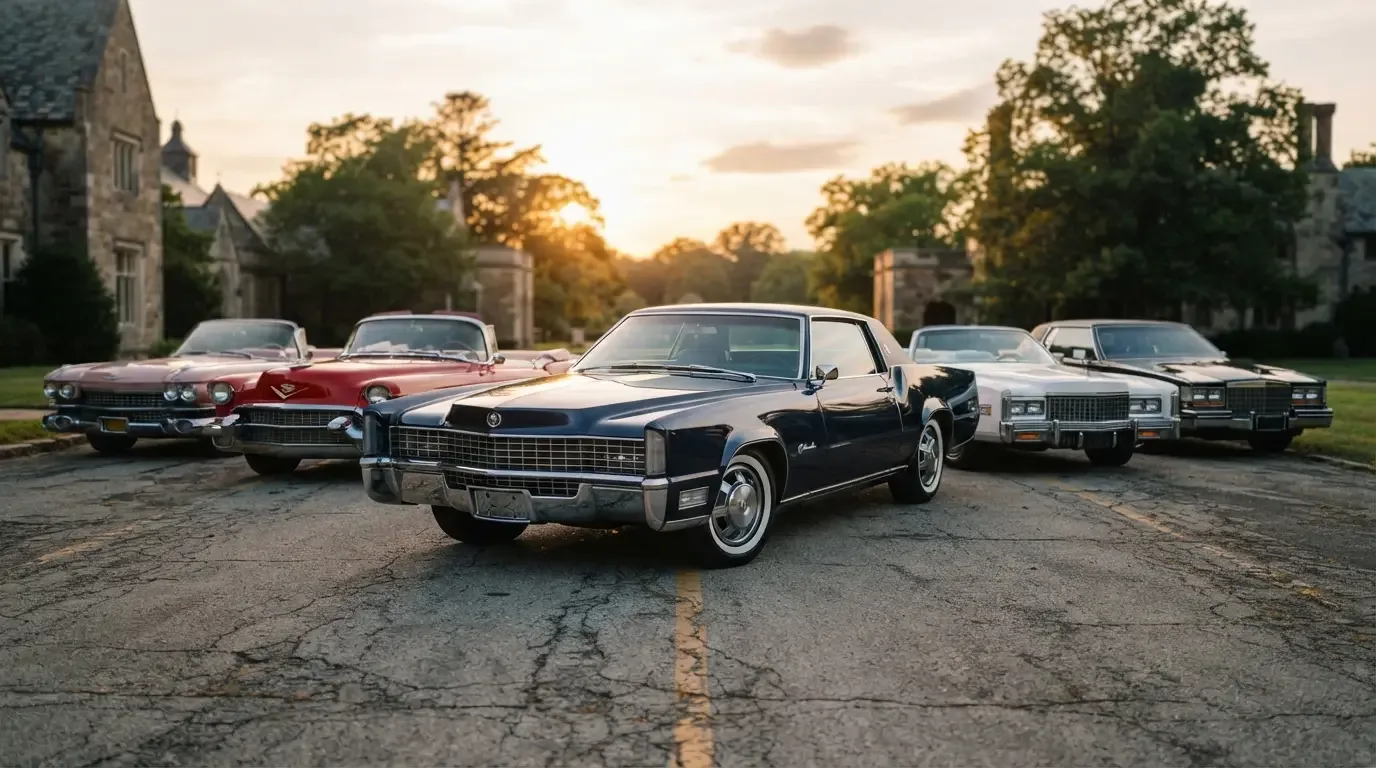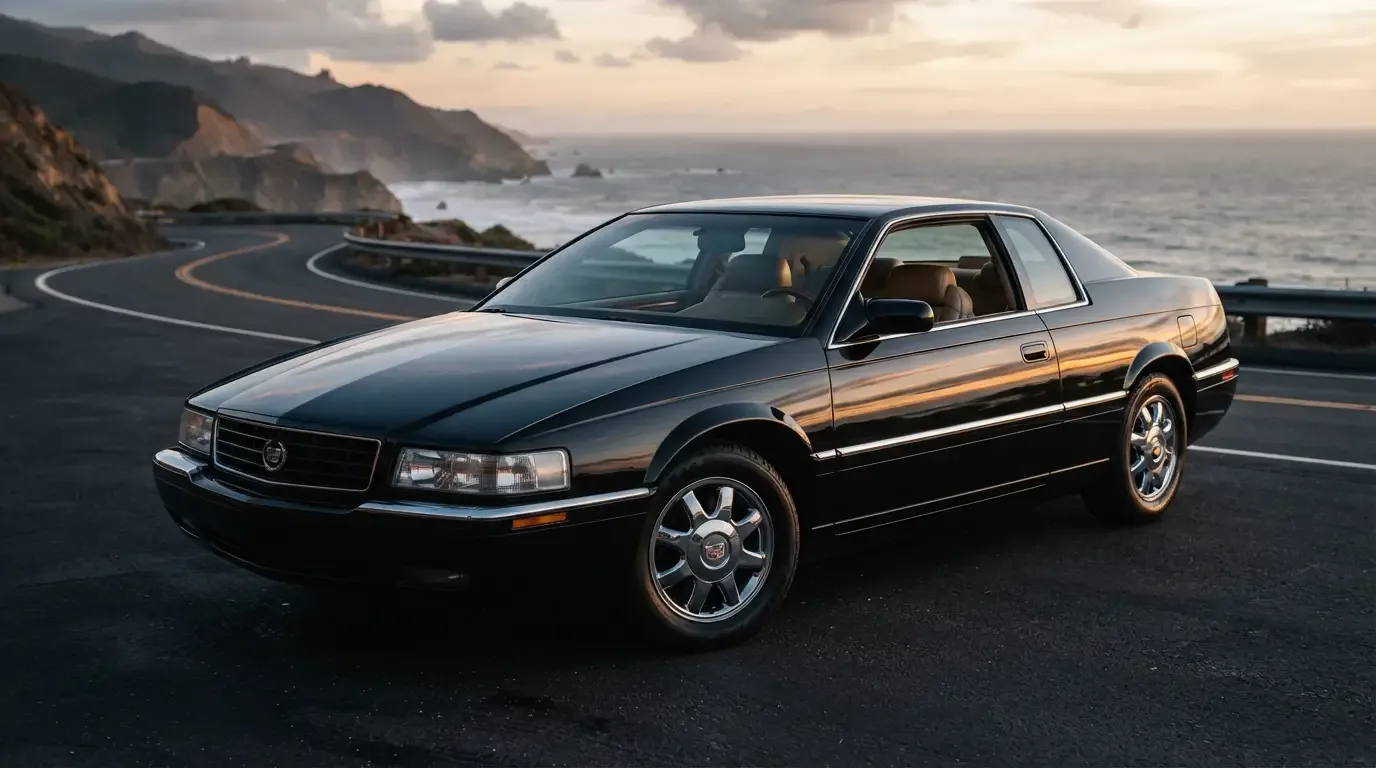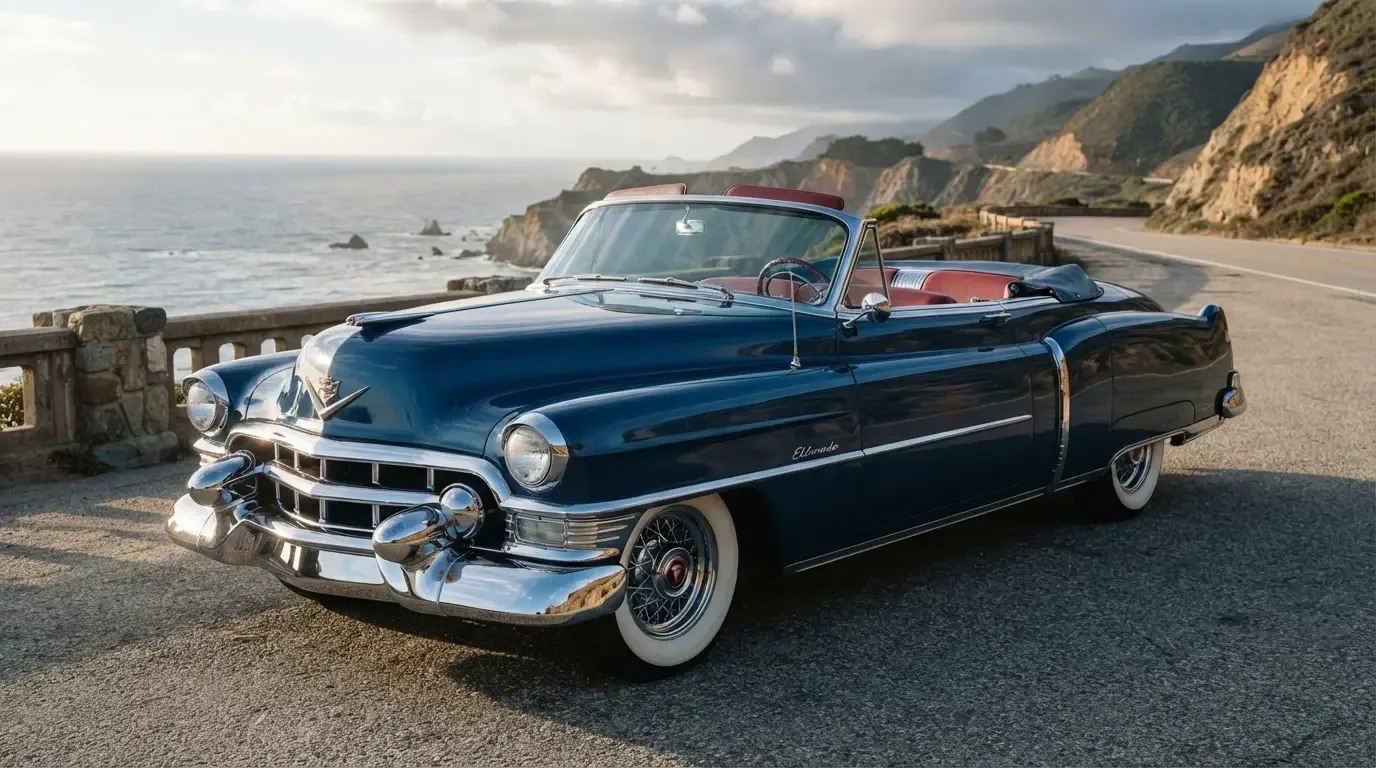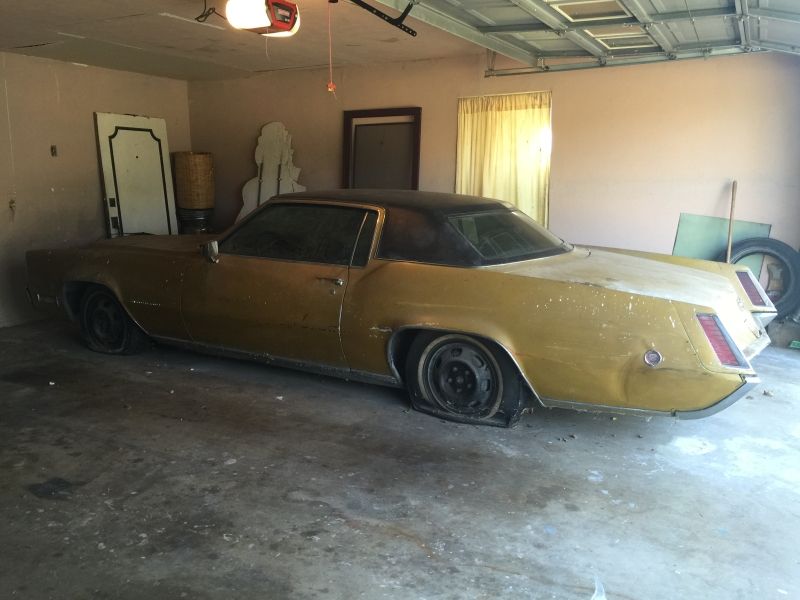
Cadillac Eldorado production numbers tell a story that raw horsepower figures and styling photos cannot. The nameplate opened in 1953 as one of the rarest cars General Motors built that year and, within two decades, became a genuine high-volume seller before sliding back toward scarcity by the time it closed out in 2002. Reading the production totals year by year explains far more about the car's real place in American culture than any single model year can on its own.
A deliberately rare beginning
The first Eldorado, introduced for 1953 as a halo convertible sitting atop the Series 62 lineup, was built in a run of just 532 units, confirmed by Cadillac's own factory production records. That scarcity was intentional. Cadillac priced the 1953 Eldorado at roughly two and a half times a standard Series 62 convertible, positioning it as a display piece meant to draw attention to the showroom rather than a volume seller. For the next several years the Eldorado remained a low-volume flagship, produced in the low thousands annually as Cadillac used it to demonstrate engineering and styling leadership rather than to chase sales charts.
By 1959, the year of the tallest tailfins Cadillac ever built, total Eldorado production, spread across the Seville hardtop and Biarritz convertible body styles, had grown but still numbered only in the low thousands combined. Rarity was still very much part of the car's identity a full six years into the nameplate's life.
The volume years
Everything changed with the 1967 redesign, when the Eldorado moved to front-wheel drive on the E-body platform shared with the Oldsmobile Toronado. Production climbed steadily through the late 1960s and exploded during the 1970s, when the Eldorado convertible and coupe became genuine volume sellers for Cadillac. By the mid-1970s, annual Eldorado production had climbed into six figures in some years, a scale the original 1953 car's planners likely never imagined for a nameplate that began as a deliberately scarce flagship.
The 1976 model year carries particular weight in this story, since Cadillac marketed it as the last American convertible before dropping open-top cars from the entire domestic industry, and buyers responded by ordering 1976 Eldorado convertibles well above typical demand, some paying dealer markups over sticker price in anticipation of the model's disappearance. That speculative buying briefly inflated both the car's price and its cultural profile beyond what the actual production run would suggest.
| Model Year | Approx. Eldorado Production |
|---|---|
| 1953 | 532 units |
| 1959 | 2,295 combined (975 Seville, 1,320 Biarritz) |
| 1967 (first front-drive year) | 17,930 units |
| 1976 (last convertible year) | 14,000 convertibles |
| 1985 (last year before downsizing) | 76,401 units (74,101 coupe, 2,300 convertible) |
| 2002 Collector Series (final) | 1,596 units |
Downsizing and the long decline
The 1986 downsizing shrank the Eldorado dramatically, both in physical dimensions and in sales appeal, and production numbers reflect the mixed reception. Buyers who had grown used to a large, imposing coupe were unsure what to make of a smaller car wearing the same badge, and annual volume never returned to the highs Cadillac had enjoyed a decade earlier. The 1992 redesign and the arrival of the Northstar V8 in 1993 helped stabilize demand, but the broader personal luxury coupe segment was contracting across the entire industry, and Eldorado numbers contracted along with it through the 1990s.
By the final Collector Series run in 2002, production had come full circle in a sense, returning to the kind of genuinely limited numbers the nameplate started with in 1953, though for very different reasons. The first Eldorado was rare because Cadillac wanted it that way. The last one was rare because the market had shrunk to the point where a small, deliberate final run made more sense than a standard production year.
"Production figures are the part of this car's history people skip past to get to the styling, but they are the clearest evidence of how the Eldorado's role at Cadillac actually changed over five decades."
- Sarah Whitfield
Reading production figures with a critical eye
Published Eldorado production totals are not always consistent across sources, and collectors researching a specific year should treat any single figure with some caution. Cadillac's own reporting practices changed over the decades, some totals get quoted as calendar-year production while others reflect true model-year figures, and body style breakdowns, convertible versus coupe versus hardtop, are not always separated cleanly in older references. A number that looks precise in a magazine article from the 1980s may actually be a rounded estimate passed down from an earlier source rather than a figure pulled directly from Cadillac's own build records.
This matters most for the rarest years. A car advertised as "one of only 400 built" deserves scrutiny, because that kind of specific claim should be traceable to a documented source, ideally Cadillac's own historical production records or a recognized marque registry, rather than repeated folklore. Buyers paying a premium for supposed rarity should ask sellers where a production figure actually comes from, the same way they would ask about a car's ownership history or service records.
Owners clubs and marque registries have done real work over the years cross-referencing Cadillac's internal build sheets against dealer invoices and state title records, and their totals, while still occasionally imprecise for the earliest 1950s years, are generally more reliable than figures repeated in casual online listings. When a specific production number matters to a purchase decision, checking it against a registry rather than a seller's description is worth the extra half hour.
What the numbers mean for buyers today
Understanding where a given Eldorado sits in the production timeline matters directly for collectors. A 1953 or 1957 car survives in genuinely small numbers today, and finding one in original condition is a serious undertaking. A 1976 convertible, despite its cultural cachet as the last domestic ragtop, was built in high enough numbers that good examples are not especially hard to locate, even if prices reflect the car's popularity. The Northstar-era cars from the 1990s and the final 2002 Collector Series sit at opposite ends of the rarity spectrum within their own decade, with the Collector Series representing genuine, documented scarcity inside a broader production run that was otherwise fairly healthy.
The gap between a car's advertised rarity and its actual documented production run is one of the most common sources of disappointment in classic Cadillac buying, and it is entirely avoidable with a little homework before money changes hands.
For readers who want to see how these production swings connect to the styling and platform changes behind them, our complete history of the Eldorado walks through every generation in order. Those ready to shop with this context in hand can browse classic Eldorado listings and weigh a given car's rarity against its condition and price.
Sources and notes
- The Cadillac Database: 1953 Eldorado Special Sport Convertible Facts
- Hagerty Media: 1959 Cadillac Eldorado Seville
- Mac's Motor City Garage: Cadillac's First Front-Drive, the 1967 Eldorado
- Ate Up With Motor: The 1971-1976 Cadillac Eldorado Convertible
- Conceptcarz: 1985 Cadillac Eldorado
- Wikipedia: Cadillac Eldorado