Ask around at any big Cadillac club show and someone will eventually bring up the Eldorado vs Toronado question, usually right about the time an Oldsmobile guy wanders over to look at the Eldorados parked in a row. It's a friendly rivalry that's been running inside collector circles for decades, and honestly, it never gets old, because the two cars really are cousins in every sense that matters, sharing bones nobody outside GM's own engineering staff would have guessed just by looking at them.
The Oldsmobile that got there first
I remember a fellow at a regional meet years back, an Olds man through and through, holding court about how his 1966 Toronado beat the Eldorado to market by a full year, and how that made it the real pioneer. He wasn't wrong about the timing. The Toronado did arrive first, wearing the front-wheel-drive Unitized Power Package a year before Cadillac got its version, and Oldsmobile deserves the credit for being the division GM trusted to prove the concept in the real world before handing the same architecture to its flagship brand.
What that Olds fellow tends to gloss over, and what I always enjoy pointing out right back, is that GM didn't choose Oldsmobile because it was the senior division. They chose it because Cadillac wasn't willing to risk its reputation on an unproven drivetrain first. Oldsmobile took the engineering risk. Cadillac took the sales.
What actually separates the two cousins
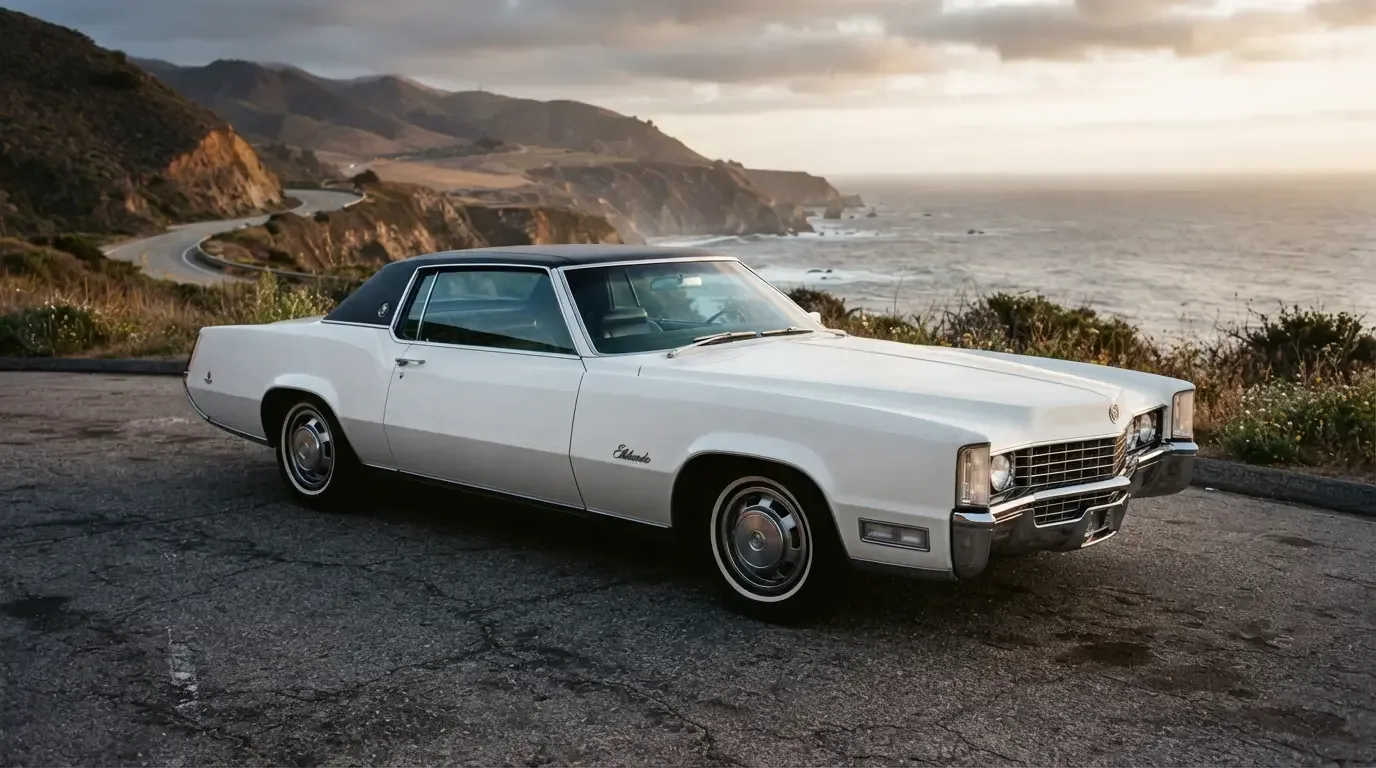
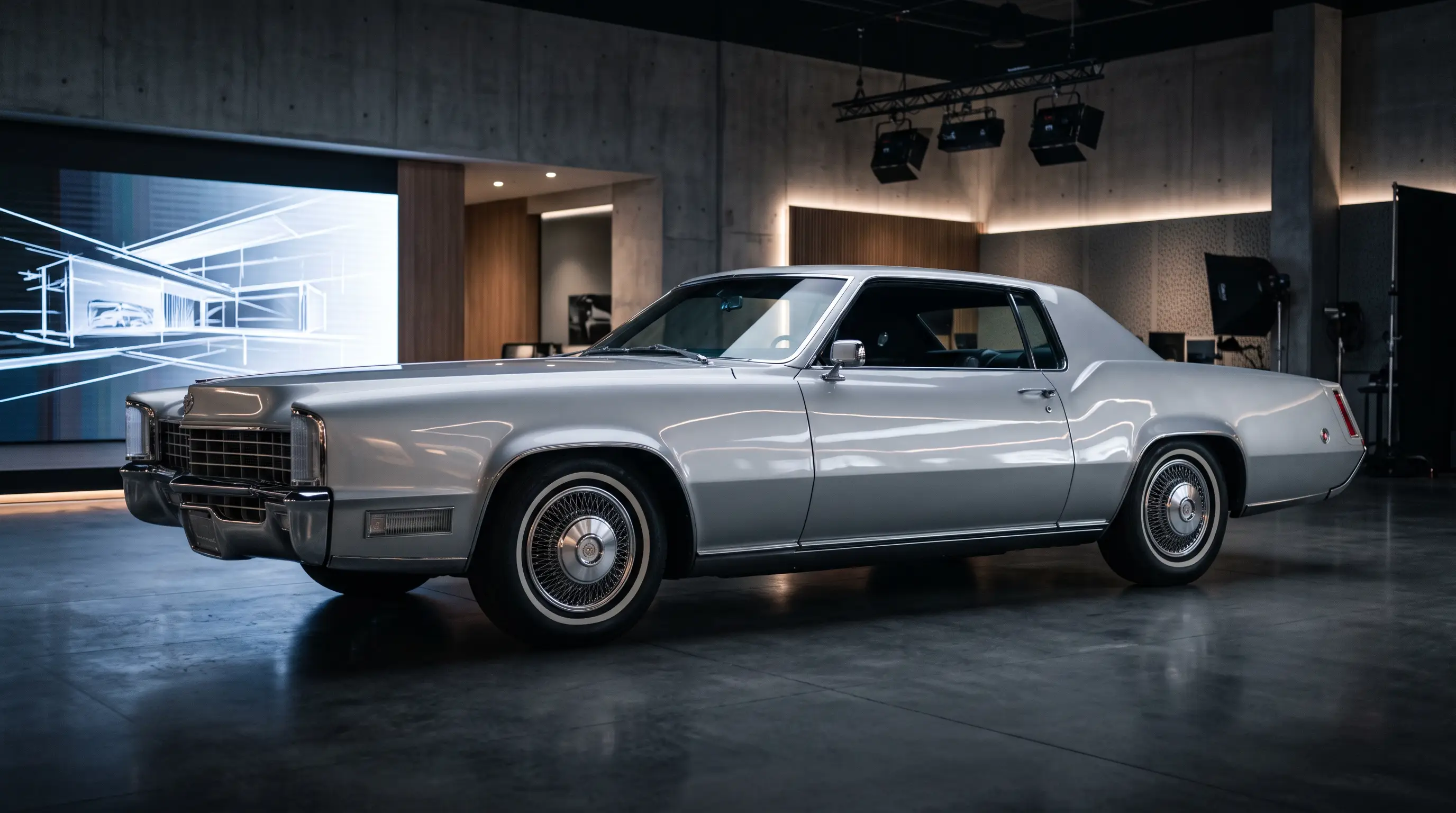
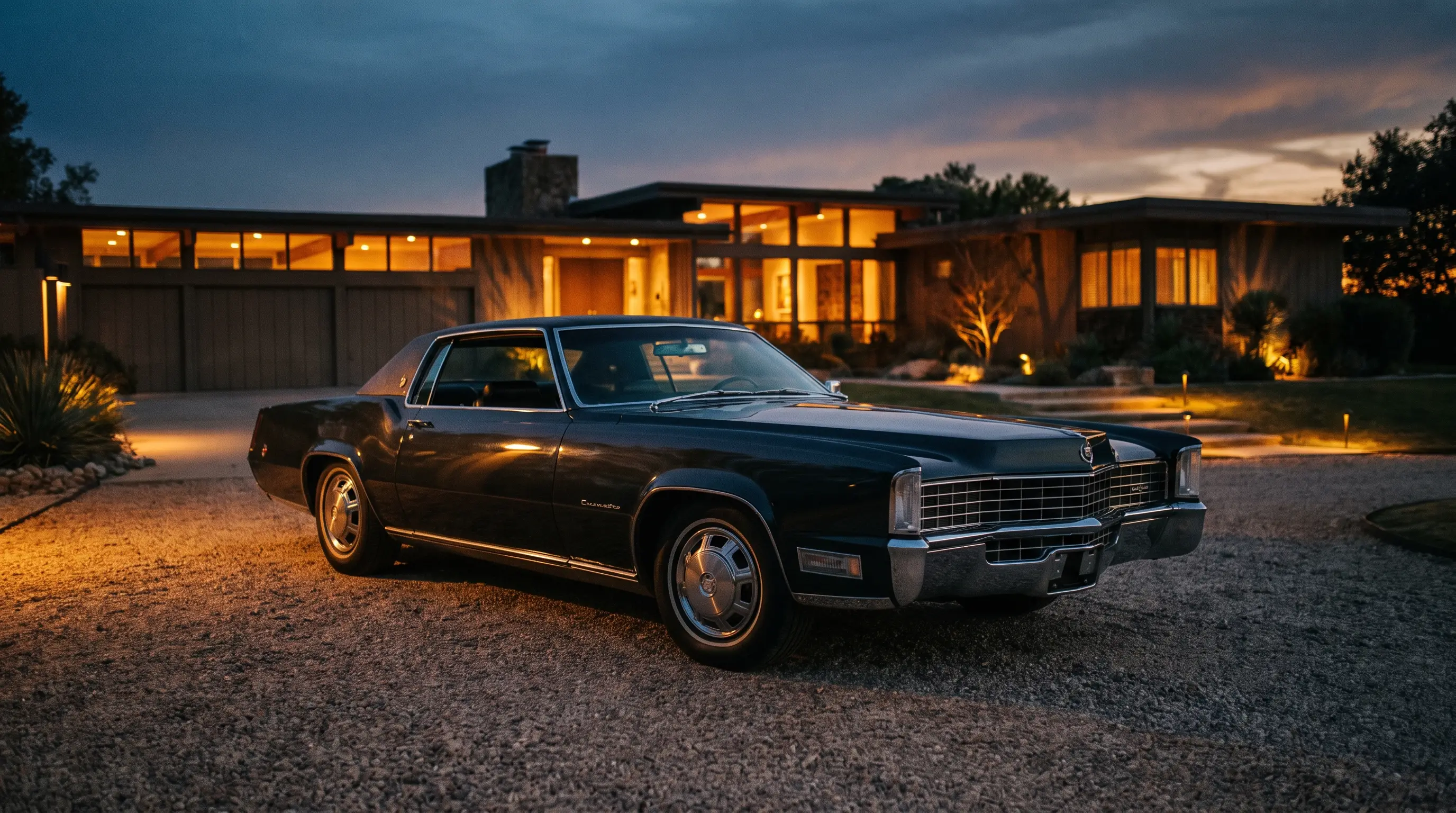
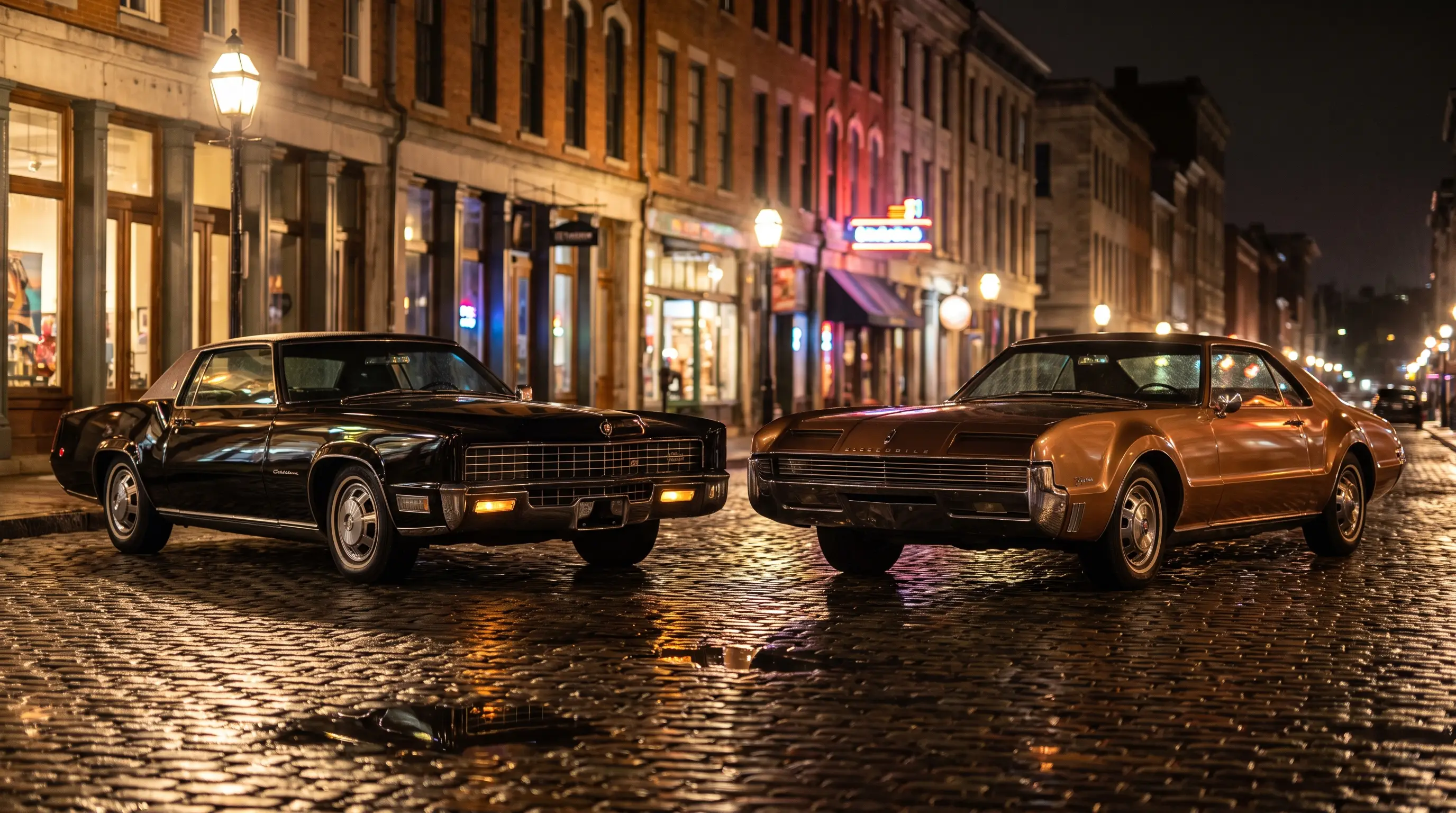
Park a 1967 Toronado next to a 1967 Eldorado and the family resemblance disappears fast once you look past the shared mechanical layout underneath. The Toronado kept a rounder, more sculpted body with softer surfacing throughout, consistent with Oldsmobile's design language of the period. The Eldorado went the opposite direction entirely, all flat planes and razor-sharp creases, a deliberate studio decision to make sure nobody mistook a Cadillac for anything wearing an Oldsmobile badge.
Underneath, both cars used the same fundamental Unitized Power Package, the chain-driven front differential setup that eliminated the need for a conventional driveshaft tunnel. But Cadillac's engineers tuned the Eldorado's suspension and added enough sound insulation and trim weight to give it a noticeably different character behind the wheel, heavier, quieter, and more clearly positioned as the senior car in the pairing, price and prestige both reflecting that hierarchy.
| Detail | Toronado | Eldorado |
|---|---|---|
| Model year introduced on E-body | 1966 | 1967 |
| Division | Oldsmobile | Cadillac |
| Styling character | Rounded, sculpted | Razor-edge, flat planes |
| Drive layout | Front-wheel drive, UPP | Front-wheel drive, UPP |
What club members actually argue about
The debate that never really settles, at least not at the shows I've been going to for years, is which car deserves more credit for pulling off front-wheel drive at this scale in an American market that hadn't seen anything like it since the Cord back in the 1930s. Toronado partisans point to the fact that their car took the actual engineering risk first, proving the concept in the field before Cadillac committed to it. Eldorado owners counter that Cadillac's version sold in higher volume and carried the technology into a segment where reliability expectations, and scrutiny, ran considerably higher.
Both sides have a point, and I've never seen the argument resolved so much as good-naturedly tabled until the next show. What I will say, having owned examples of both over the years, is that the two cars reward completely different kinds of attention. The Toronado rewards you for appreciating a genuine engineering first. The Eldorado rewards you for appreciating what a division with more resources and a stronger brand could do with someone else's proven idea.
"Every club has that one guy who insists his car is the important one and the other is just a copy. Truth is, neither the Toronado nor the Eldorado exists without the other, and anybody who's spent real time around both knows the rivalry is half the fun of owning either one."
- Wayne Coburn
Why the cousins still draw a crowd together
Every time I've seen a Toronado and an Eldorado from this era parked side by side at a show, they draw a bigger crowd together than either would alone. People want to see the comparison, want to hear the story about how one division handed a technology to another, and want to argue about which studio did more with the same mechanical starting point. That's the real value of understanding this relationship as a club member and not just a history buff. It gives you a story to tell every single time someone walks up and asks why your Cadillac looks nothing like your buddy's Oldsmobile despite them sharing so much underneath. For the deeper mechanical background behind that shared platform, where this started covers exactly how GM developed the Unitized Power Package before either car reached a dealer lot. And if the conversation gets you wanting to see one of these in person rather than just hearing club stories about it, a classic Eldorado for sale is usually not too hard to track down for anyone willing to look.
The one story that settles nothing but proves the point
A friend of mine, a longtime club officer who's owned both cars at different points in his life, tells a story about bringing his Toronado to a Cadillac-only show years back, parked just outside the official lineup because technically it didn't qualify. Within twenty minutes half the Eldorado owners had wandered over to look at it anyway, and by the end of the afternoon he'd had more conversations about GM's front-drive program standing next to that one Oldsmobile than most people have in a whole season of Cadillac club meetings. He likes to say the Toronado crashed the party and ended up being the best thing that happened to it.
That's the piece I try to get across to newer club members who show up thinking the Eldorado stands entirely on its own. It doesn't, not really, not this generation of it anyway. Understanding the Toronado connection doesn't diminish the Eldorado one bit. If anything it makes the car more interesting, because now you're not just looking at a pretty coupe with sharp fenders, you're looking at one half of a genuine engineering gamble GM took across two divisions at once, betting that American buyers were finally ready for something Detroit hadn't seriously tried in three decades. Once you know that story, you can't really look at either car the same way again, and that's exactly the kind of thing club conversations are supposed to be for.
I keep an old photograph tucked in my garage, a Toronado and an Eldorado parked nose to nose at a show maybe fifteen years back, and I still pull it out sometimes when someone new to the hobby asks why I bother owning cars from two different brands that people assume have nothing to do with each other. It's a small thing, a single photo, but it usually does more explaining than I ever could with words alone. Two divisions, one shared idea, and two completely different answers to the same engineering question. That's a story worth telling every time it comes up, and in this hobby, it comes up a lot.
Sources and notes
- Wikipedia - Cadillac Eldorado
- Eldorado-Seville.com - The History of the 1967 Cadillac Eldorado
- Automotive Mileposts - 1967 Cadillac Eldorado Production/Specifications
- Conceptcarz - 1967 Cadillac Eldorado Specifications
- Curbside Classic - Cadillac Eldorado history
- Automobile Catalog - 1967 Cadillac Fleetwood Eldorado