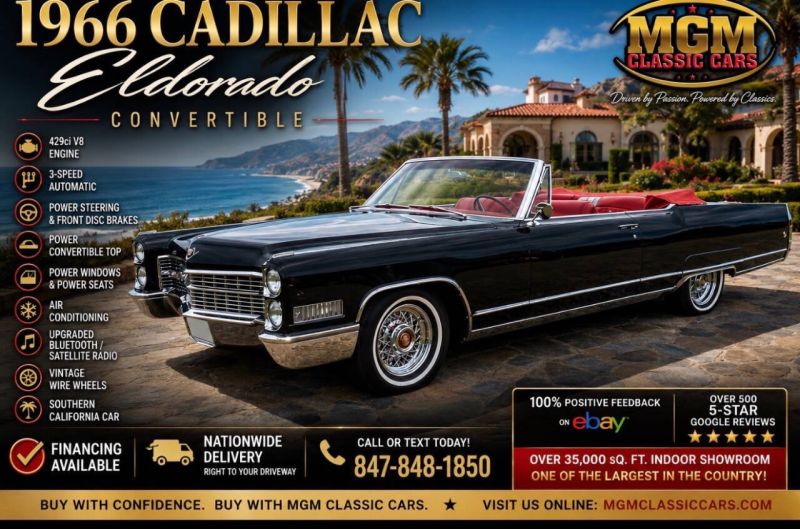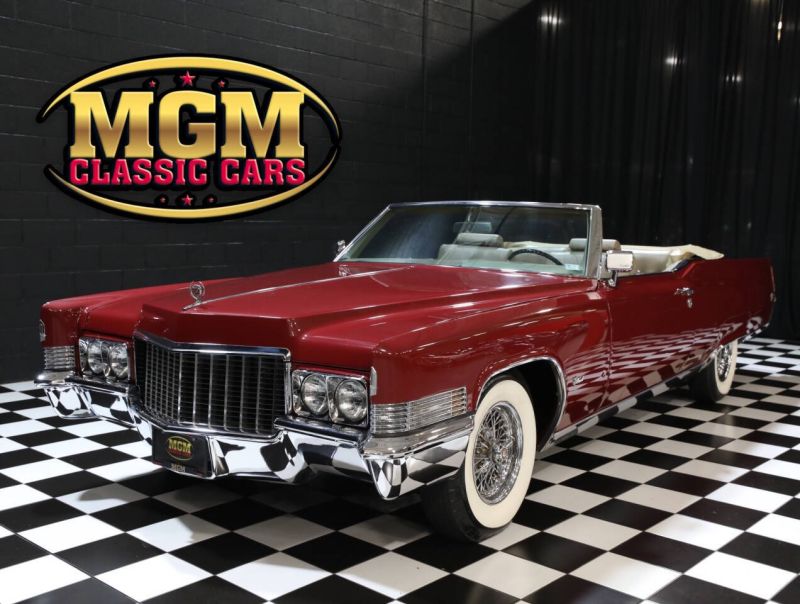
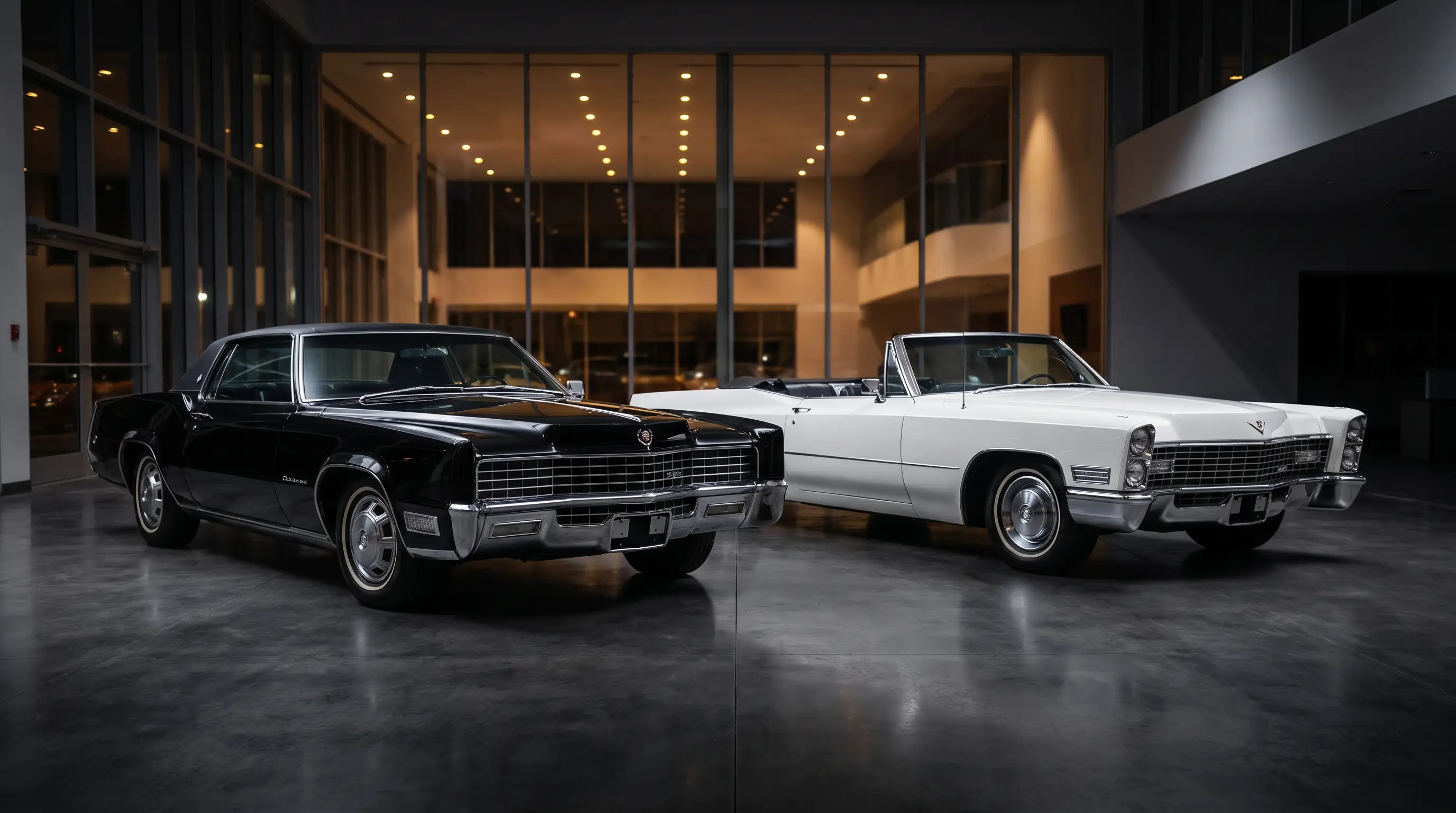
A man walked into a Cadillac showroom in the fall of 1959 with two cars parked under the same fluorescent lights, and he could not tell you, without checking the window sticker, which one cost more to build. That is the trap at the center of the Eldorado vs Coupe de Ville question, and it has followed both nameplates for four decades. The Eldorado and the Coupe de Ville came out of the same Cadillac studios, sat on related platforms for most of their history, and shared fenders, glass, and even dashboards in some years. Yet buyers who could afford either one almost never treated them as interchangeable, and neither did Cadillac's own marketing department.
Same body, different mission
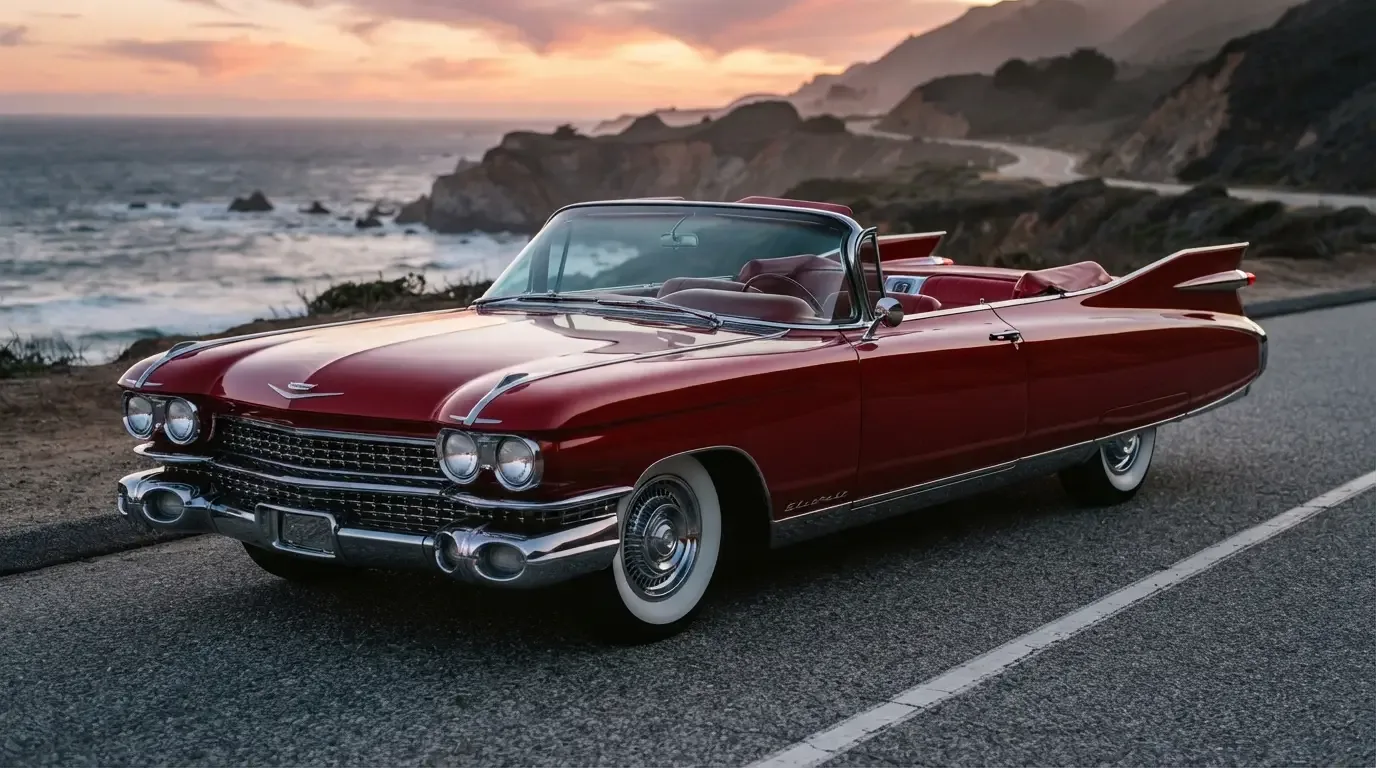
For most of the postwar era, the Coupe de Ville was Cadillac's best-selling hardtop, the car that defined "successful but not showy." The Eldorado, introduced in 1953 as a limited convertible, was built to be the car above that car. Through the tailfin years the two shared unibody structure, cowl, and much of the greenhouse, but the Eldorado carried unique brightwork, a distinct grille treatment, and interior trim levels that the Coupe de Ville simply did not offer. Cadillac priced the Eldorado at roughly double the Coupe de Ville in its early seasons, a gap that told you everything about how the company wanted each car understood.
That gap narrowed and widened depending on the decade, but it never closed. Read the full cadillac eldorado design history and you can trace exactly how the two cars diverged and reconverged in sheet metal even as their target buyers stayed worlds apart.
The 1967 split that mattered most
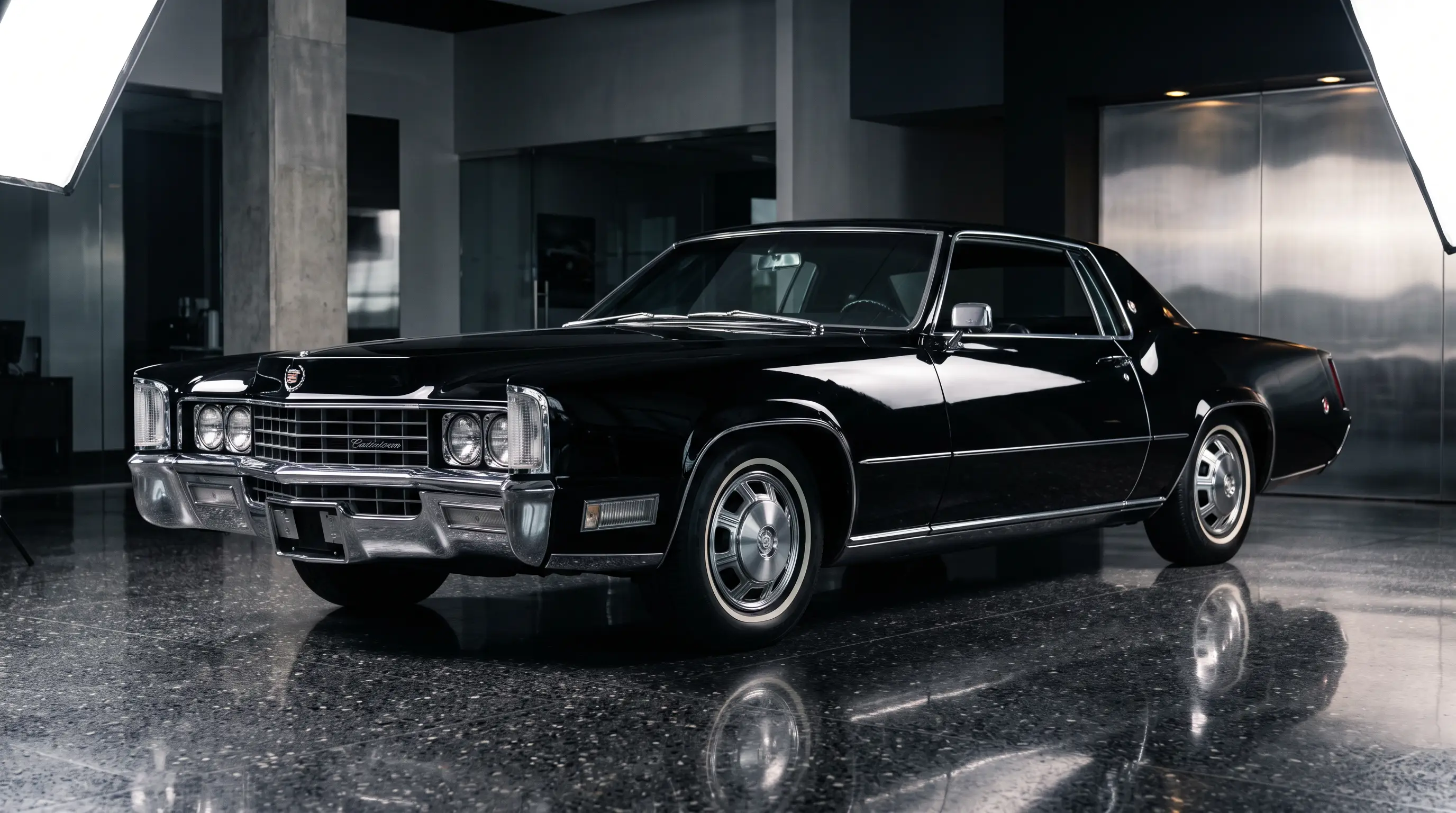
Everything changed in 1967, when the Eldorado moved to front wheel drive on the Oldsmobile Toronado's Unitized Power Package while the Coupe de Ville stayed rear drive on the C-body. From that year forward the two cars were not badge variants of the same platform. They were mechanically separate products that happened to wear the same crest. The Eldorado's low, flat floor and long hood proportions became its signature, a shape the Coupe de Ville could not replicate even if Cadillac had wanted it to.
Buyers noticed. Eldorado owners in this era tended to be a step further into the car as identity statement, someone buying the personal luxury coupe rather than the family flagship. The Coupe de Ville stayed the sedan-adjacent choice, the car a Cadillac buyer moved into after the Eldorado had already made its point in the driveway next door.
Price, trim, and the badge that justified both
By the 1970s the price spread between an Eldorado coupe and a Coupe de Ville had settled into a pattern that held through the land yacht era: the Eldorado ran a few thousand dollars above a comparably equipped Coupe de Ville, enough to matter to a buyer but not so much that cross-shopping felt strange. Standard equipment told the real story. The Eldorado came with items the Coupe de Ville offered only as options, and its interior fabrics and trim combinations were exclusive to the nameplate in most years.
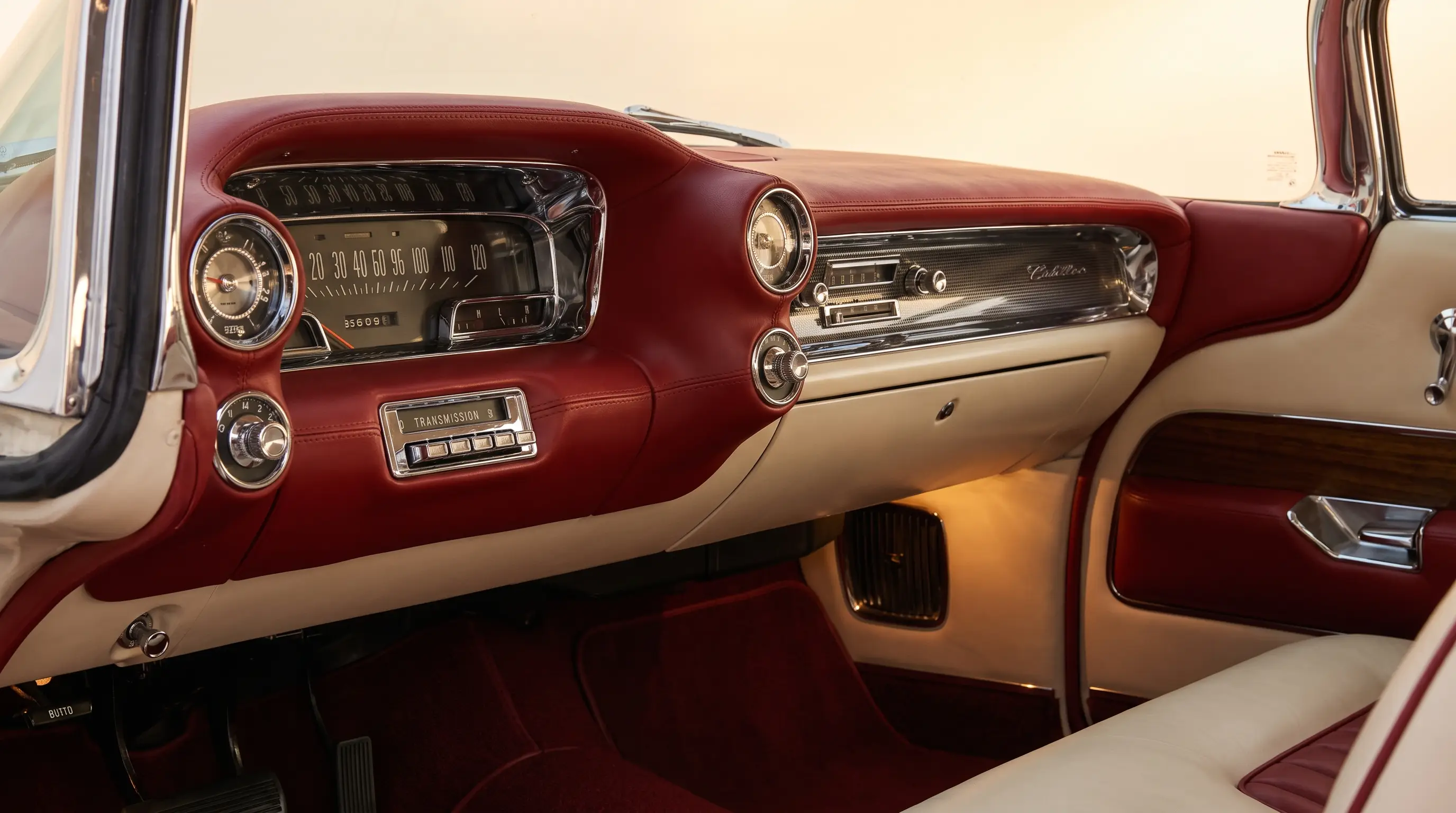
That distinction is also where the dashboards diverge most sharply, which is worth its own look in a related story covering how Cadillac treated the two instrument panels across the decades.
Convertible identity versus sedan practicality
For a long stretch, the Eldorado carried the convertible body style that the Coupe de Ville largely ceded to it. When Cadillac built ragtops in the 1970s, the Eldorado convertible was often the last one standing, famously marketed as the final American factory convertible in 1976 before the body style briefly disappeared from the lineup. The Coupe de Ville, meanwhile, kept its four doors and its reputation as the sensible senior Cadillac, the car a family bought instead of choosing the two-door statement piece.
That difference in mission shaped resale, too. Eldorado convertibles from the mid 1970s hold collector interest today in a way most Coupe de Ville sedans from the same years do not, precisely because the Eldorado was built and sold as the special car in the lineup.
"Put a 1969 Eldorado next to a 1969 Coupe de Ville and most people can tell you which one they would rather be seen in, even if they cannot explain the engineering that separates them. That instinct was Cadillac's whole marketing plan working exactly as designed."
- Patrick Walsh
Downsizing hit both cars, but not equally
The 1986 downsizing was rough on the whole Cadillac lineup, and both the Eldorado and the Coupe de Ville shrank dramatically that year, moving to a shared front drive platform with far more visual overlap than at any point since the 1950s. For a few seasons the two cars looked closer in size and stance than they had in decades, and the Eldorado's traditional advantage in proportion and drama took a real hit. Cadillac spent the rest of the decade trying to restore visual separation between the coupe and the sedan lineup, eventually succeeding with sharper Eldorado-specific styling into the 1990s Northstar era.
By the time the Eldorado wound down production in 2002 as a Collector Series model, the Coupe de Ville nameplate itself had already been folded into the DeVille sedan line years earlier, ending the direct comparison for good. The two cars had run in parallel for nearly fifty years, sharing engineering more often than most buyers realized, while Cadillac worked hard to keep them feeling like different decisions.
What the comparison tells collectors today
For someone shopping the classic market now, the practical difference between the two nameplates still shows up in values. A clean Eldorado from nearly any generation tends to command a premium over an equivalent Coupe de Ville, and that premium tracks almost exactly the gap Cadillac built into the original sticker prices. The personal luxury coupe positioning worked in period and it still works in the collector world, where a car's original story still shapes what people are willing to pay for it.
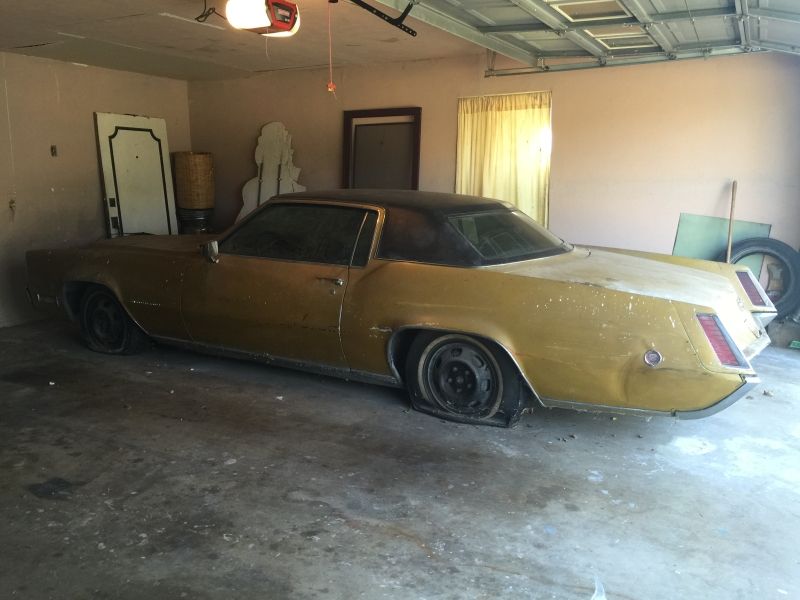
Condition matters more than nameplate once you get past that initial premium, though. A rough Eldorado with a tired top and a soft floor pan will not outsell a sharp, documented Coupe de Ville at any auction that knows what it is looking at. Buyers researching either car should treat the badge as a starting point for expectations, not a substitute for a proper inspection. Look at build sheets, trim codes, and paint history before you let the nameplate alone decide the number you are willing to pay.
There is also a generational wrinkle worth knowing. Early Eldorados from the 1950s command collector prices well above any Coupe de Ville from the same years, since those first cars were built in far smaller numbers and marketed as near-halo pieces. By the 1970s, when Cadillac was building tens of thousands of Eldorado coupes and convertibles a year, the gap between the two nameplates narrowed on the used market even as it stayed wide on the original window sticker. That shift matters if you are comparing a first generation Eldorado to a 1970s example and expecting the same kind of price separation from the Coupe de Ville in either era.
If you are weighing the two nameplates for a purchase rather than a history lesson, the current inventory of Eldorados for sale now is a good place to see how that price gap plays out in real listings today, generation by generation.