The 1953 Ford F-100 arrived in a year Ford wanted the whole country watching. It was the company's 50th anniversary, and the truck division used the occasion to retire the old F-1 name and roll out a completely reengineered line it called the F-Series, second generation. The F-100 sat in the middle of that lineup, a half-ton workhorse built to replace a truck that had barely changed since the war. Dealers called the new trucks the "Triple Economy" line, a marketing phrase meant to promise savings in gas, upkeep and time. For Ford, the 1953 ford f100 was less an update than a statement that the company's truck business had grown up.
A wider cab and a lower stance
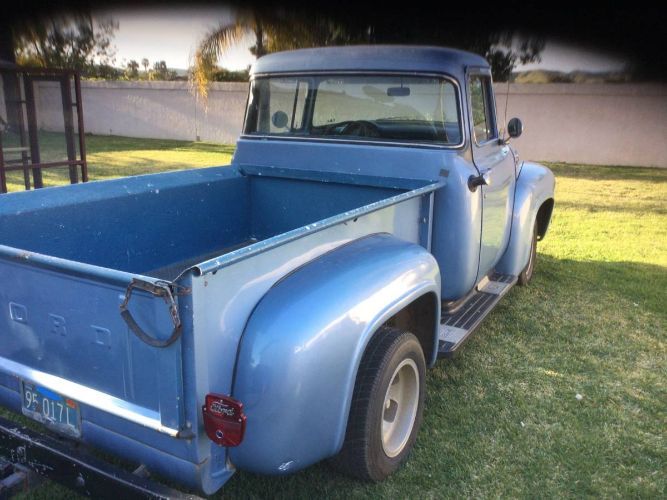
The most obvious change from the old F-1 was the cab itself. Ford widened it by several inches, which does not sound like much until you sit inside one next to a 1952 model and realize how cramped the old truck actually was. Elbow room went up, the seat moved back, and the windshield grew taller for better forward visibility. Ford also dropped the frame rails, lowering the whole truck by roughly six inches compared to the outgoing design. Drivers noticed the difference immediately: less climbing to get in, a flatter ride over rough pavement, and a dash layout that put gauges where a driver could actually glance at them instead of hunting for them.
None of this happened by accident. Ford's engineers had spent the early postwar years studying how farmers, tradesmen and delivery drivers actually used their trucks, and the 1953 redesign reflected that research directly. The cab was built around the person doing the work, not just the cargo behind them.
Engines carried over, briefly
Under the hood, 1953 was a transition year. Buyers could still order the 215-cubic-inch overhead-valve inline six, rated at 101 horsepower, as the standard engine. The optional V8 was still Ford's venerable 239-cubic-inch flathead, rated at 108 horsepower, a design that traced its roots back to 1932 and had powered trucks and cars alike for two decades. It was a familiar, easy-to-service engine, but it was also on borrowed time. Ford's engineers were already finishing development on an overhead-valve V8 that would replace the flathead the following year, so anyone who bought a 1953 F-100 with the V8 option owned one of the last new Ford trucks built with that old-school engine architecture under the hood.
That transitional status is part of why collectors and historians treat the 1953 model as its own chapter rather than lumping it in with the 1954-56 trucks that followed. If you want the full arc of how the platform evolved after this debut year, 1956 ford f100 history covers where the story goes from here.
Styling that aged well
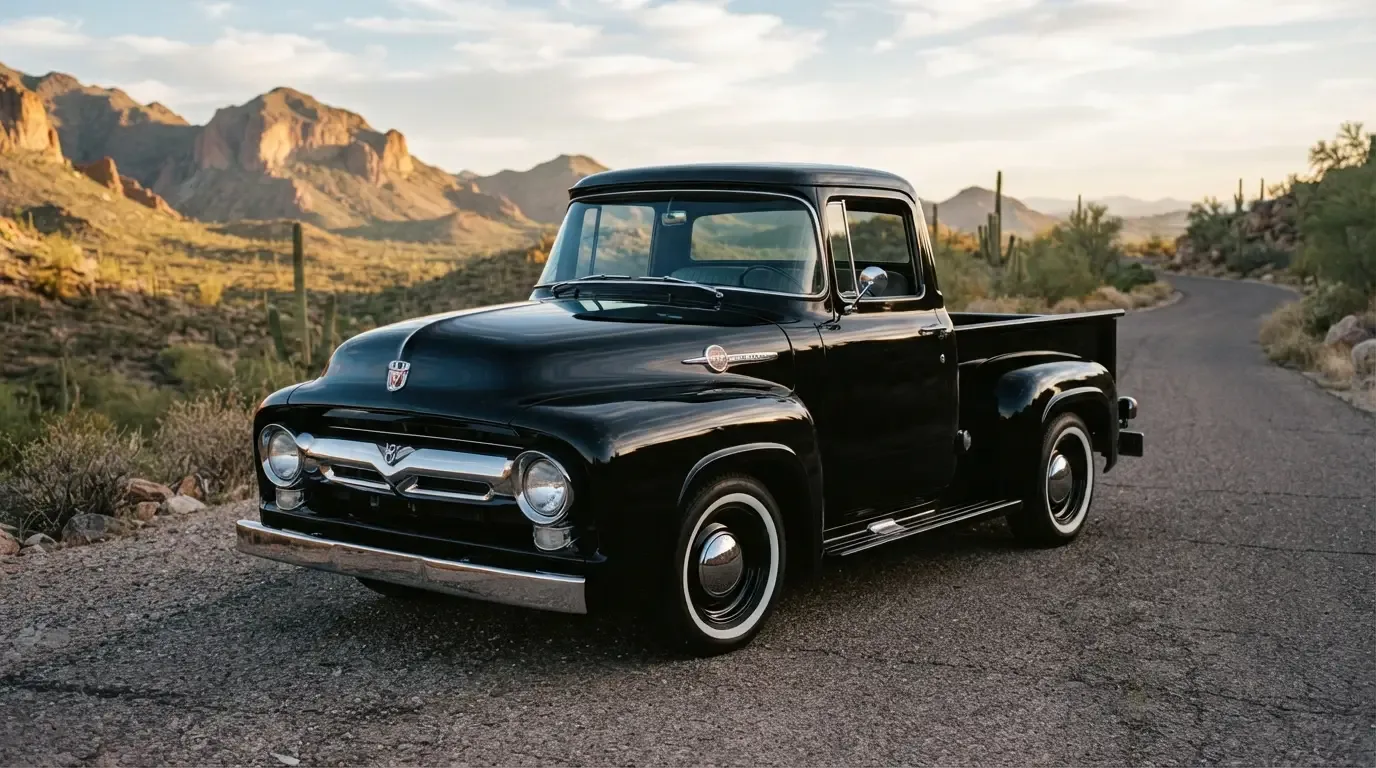
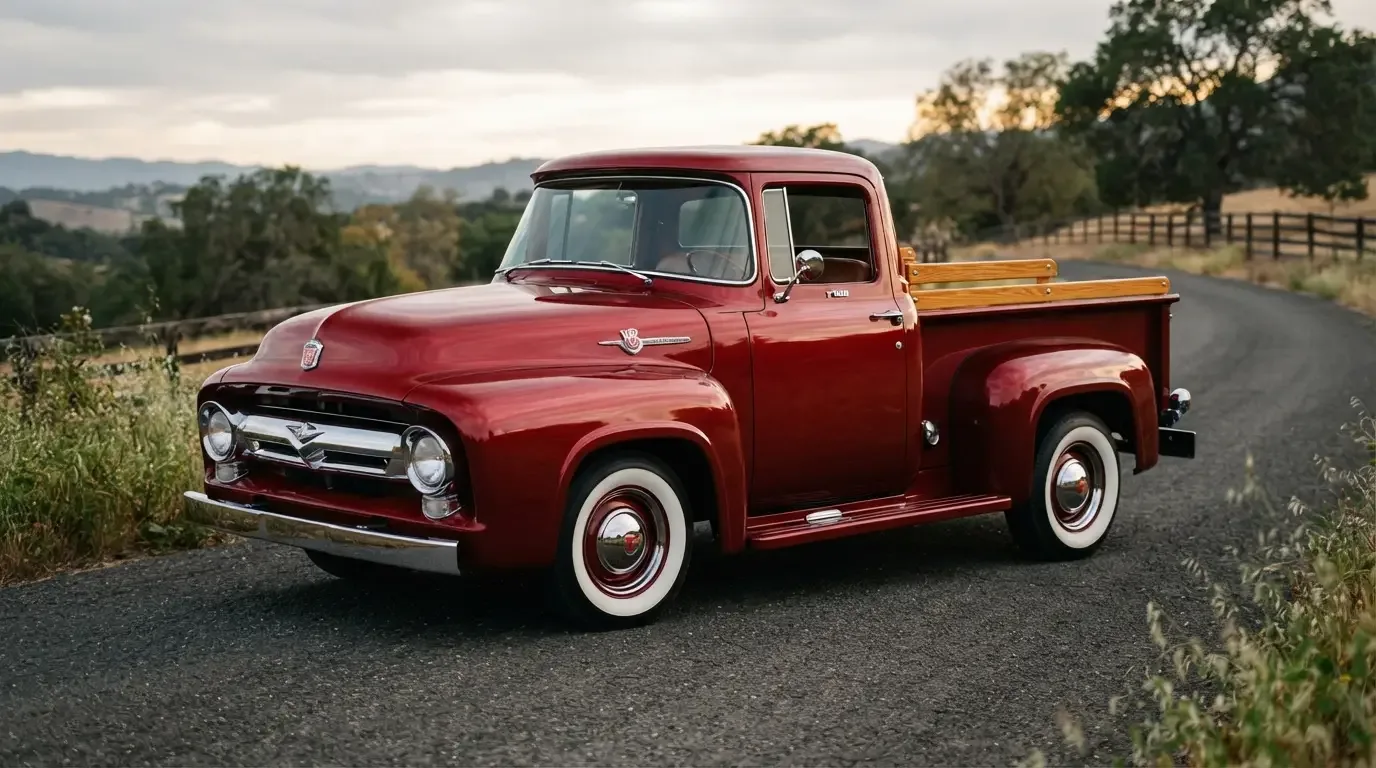
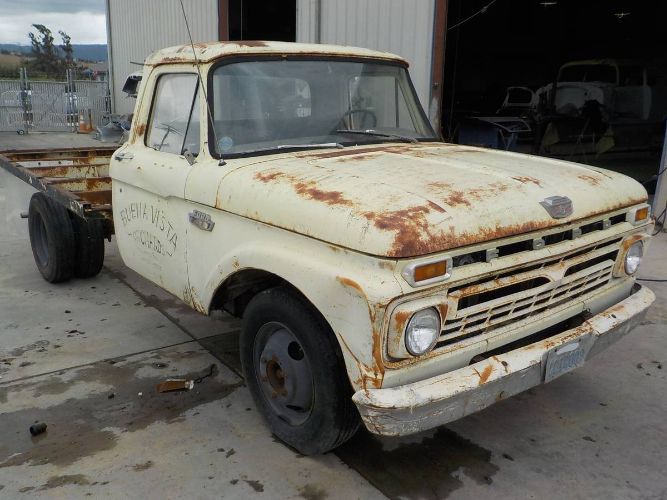
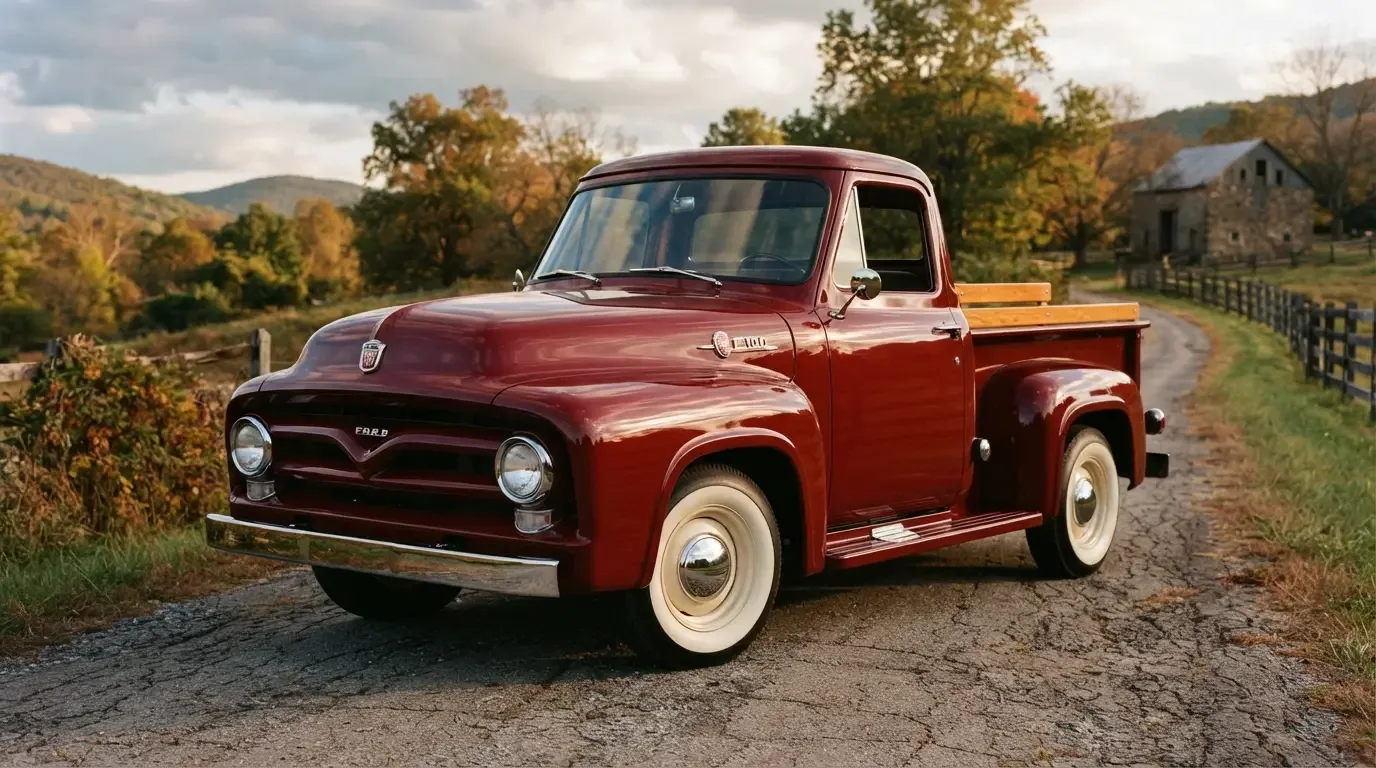
Ford's designers gave the 1953 truck a face that looked purposeful rather than flashy. A simple horizontal grille bar ran across a painted panel, flanked by round headlights set into gently rounded fenders. The hood was flatter and wider than the F-1's, and the overall proportions read as more substantial without looking bloated. It was a design built to work on a farm during the week and not embarrass its owner parked outside church on Sunday.
The Deluxe Cab option, new for this generation, added chrome trim, twin sun visors, a passenger-side armrest and better seat padding for buyers who wanted their work truck to double as family transportation. It was a modest package by today's standards, but at the time it signaled that Ford saw real demand for a truck that felt a little less like pure equipment.
"Every generation of F-Series has a debut year that gets treated like a footnote because a flashier model came right after it. The 1953 truck doesn't deserve that. It's the year Ford decided a work truck could also be comfortable, and everything that followed built on that decision."
- Tom Ramirez
Why this year matters to collectors now
Because the 1953 F-100 only carried the flathead V8 for one model year before the Y-block arrived, surviving examples with the original engine intact carry a bit of extra interest for purists who want a truck that represents the exact handoff moment between Ford's old and new V8 eras. Bodies and cabs are shared closely enough with 1954 trucks that parts availability isn't the nightmare it could be, which makes the 1953 truck a realistic restoration project rather than a museum-only curiosity.
Values have crept up steadily as buyers rediscover how well these trucks drive compared to their prewar-influenced predecessors. A clean, mechanically sound 1953 F-100 with the six-cylinder engine remains one of the more attainable entry points into classic Ford truck ownership, while V8-equipped trucks in original condition command a premium from buyers chasing that specific one-year flathead window.
For readers curious how the name change itself came about, and what exactly separated the old F-1 from the new F-100 beyond the badge, a related story walks through that transition in more detail. And for anyone who has read this far and is thinking about actually owning one, F-100s for sale now is a good place to see what is currently on the market.
The Deluxe Cab and a broader lineup
Ford did not stop at the base truck when it planned the 1953 launch. The Deluxe Cab option, mentioned above, sat alongside a broader restructuring of how Ford organized its truck business that year. Half-ton, three-quarter-ton and one-ton models all shared the new cab and much of the same sheet metal, which simplified production and let Ford spread tooling costs across a wider range of buyers. A farmer ordering a heavy-duty F-350 and a delivery driver ordering a lighter F-100 sat in essentially the same cab, a decision that made sense on the balance sheet and gave every buyer in the lineup the benefit of the redesigned interior.
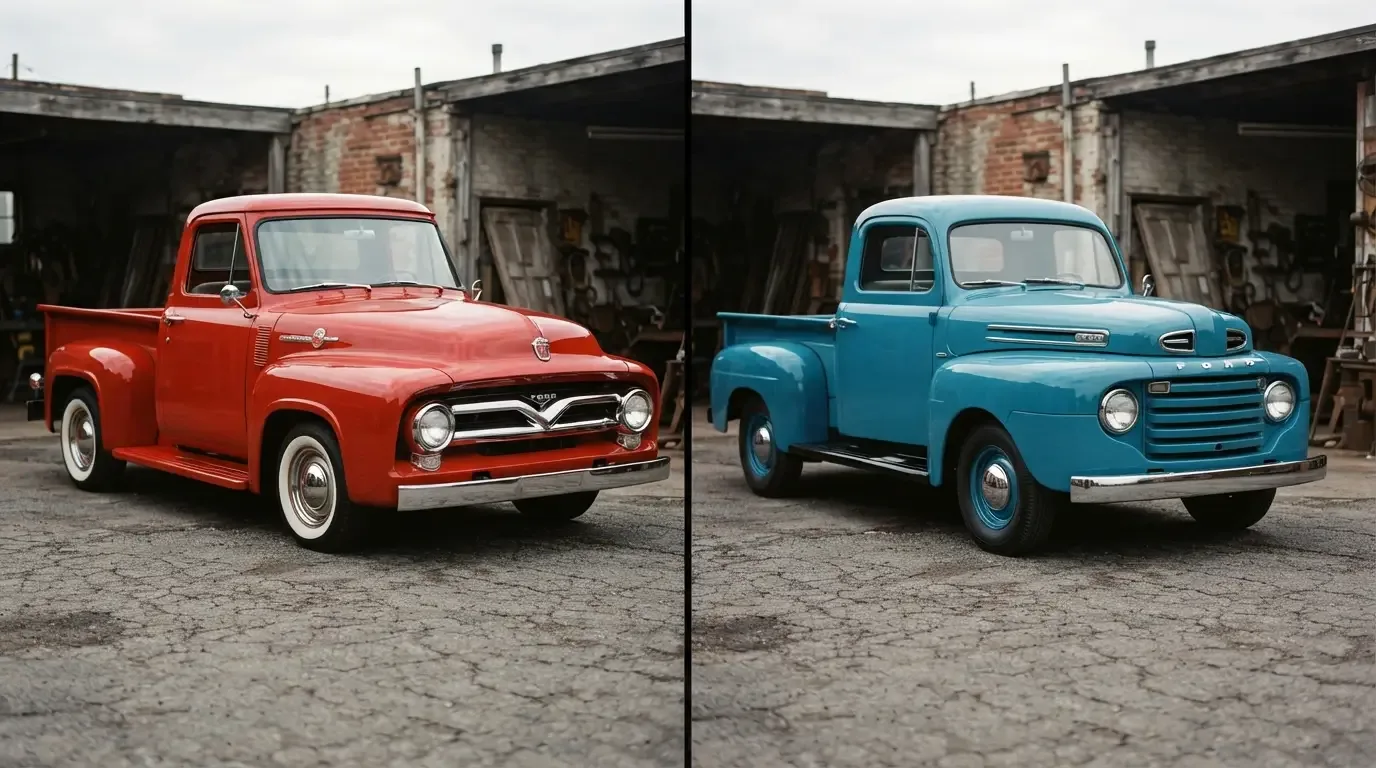
Body colors also expanded for 1953, moving beyond the utilitarian palette common on earlier trucks toward brighter options that reflected the more optimistic mood of the country in the early 1950s. Two-tone paint combinations, often pairing a bright body color with a contrasting roof or trim panel, became available on Custom Cab trucks, another small signal that Ford saw genuine demand for a work truck that looked good parked outside a house rather than just a job site.
How the truck was marketed
Ford's dealer network leaned hard into the 50th anniversary angle throughout 1953, tying showroom displays and print advertising to the company's own history as much as to the new truck's features. That marketing approach worked because the F-100 genuinely had something to show off. Sales literature from the period emphasized the wider cab and improved ride quality specifically, aiming those talking points at buyers who had spent years driving older, cramped trucks and were ready for something that treated comfort as a real consideration rather than an afterthought.
The strategy paid off in showroom traffic, and dealers reported strong early interest in the redesigned truck, particularly among buyers cross-shopping against competitors who had not yet matched Ford's updated cab dimensions. That competitive advantage would not last forever, since rival manufacturers were working on their own redesigns, but for 1953 Ford had a genuine head start.
A foundation, not a finished product
Ford treated 1953 as the opening move in a longer game. Over the next three model years the company would swap in a new V8, add ball-joint front suspension, and eventually reshape the cab windows entirely. None of that takes away from what the debut year accomplished. It set the template: wider cab, lower stance, a driver-focused interior, and styling that looked like it belonged on the road rather than just in a field. Everything Ford's truck division built for the rest of the decade started from that template, and the company's 50th anniversary gave it a fitting stage to introduce it.