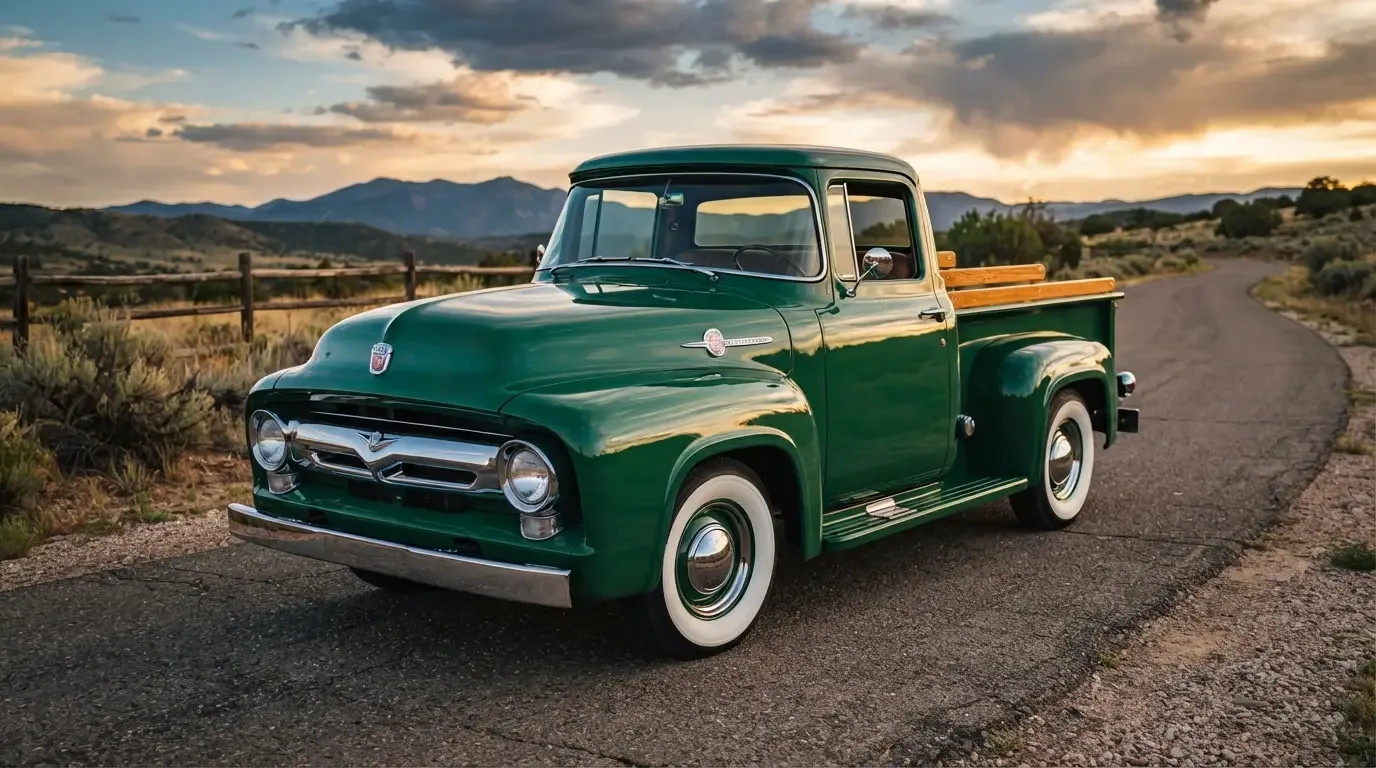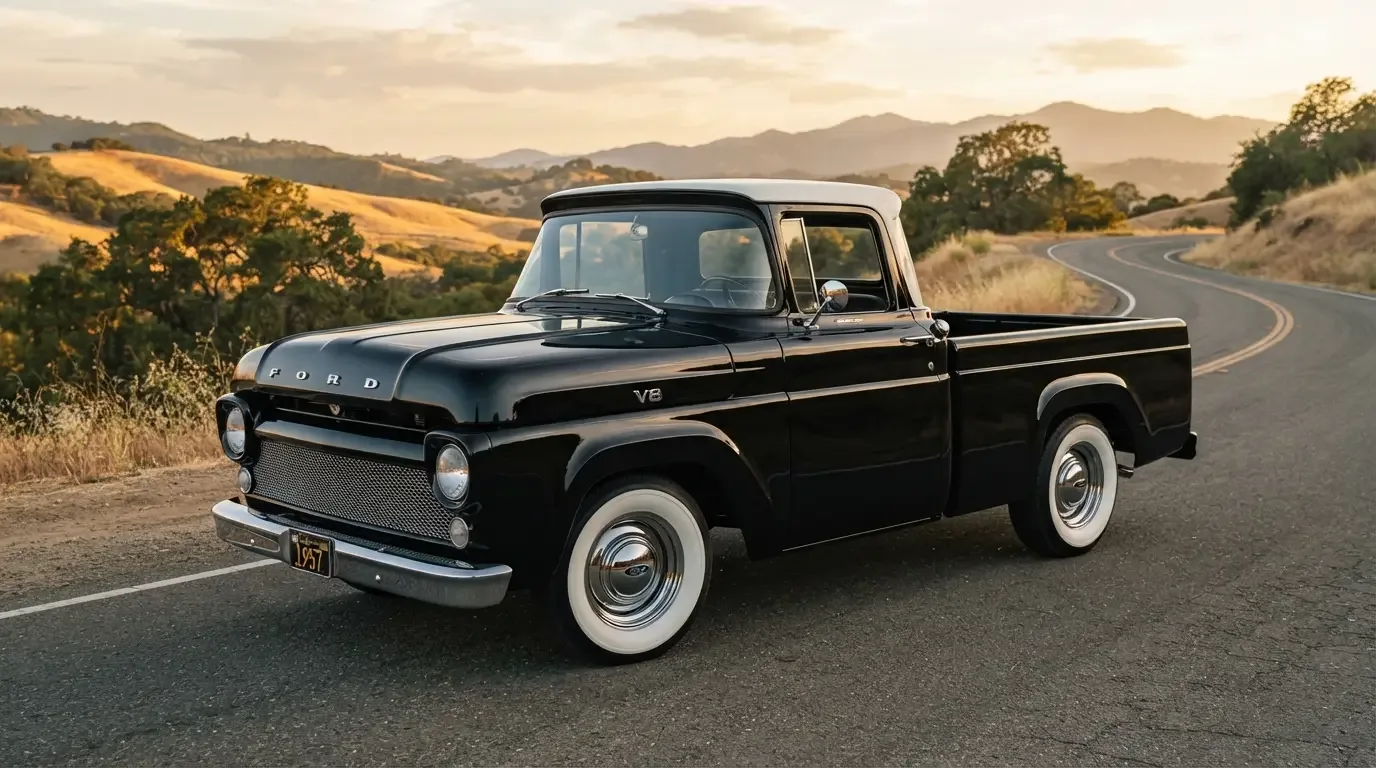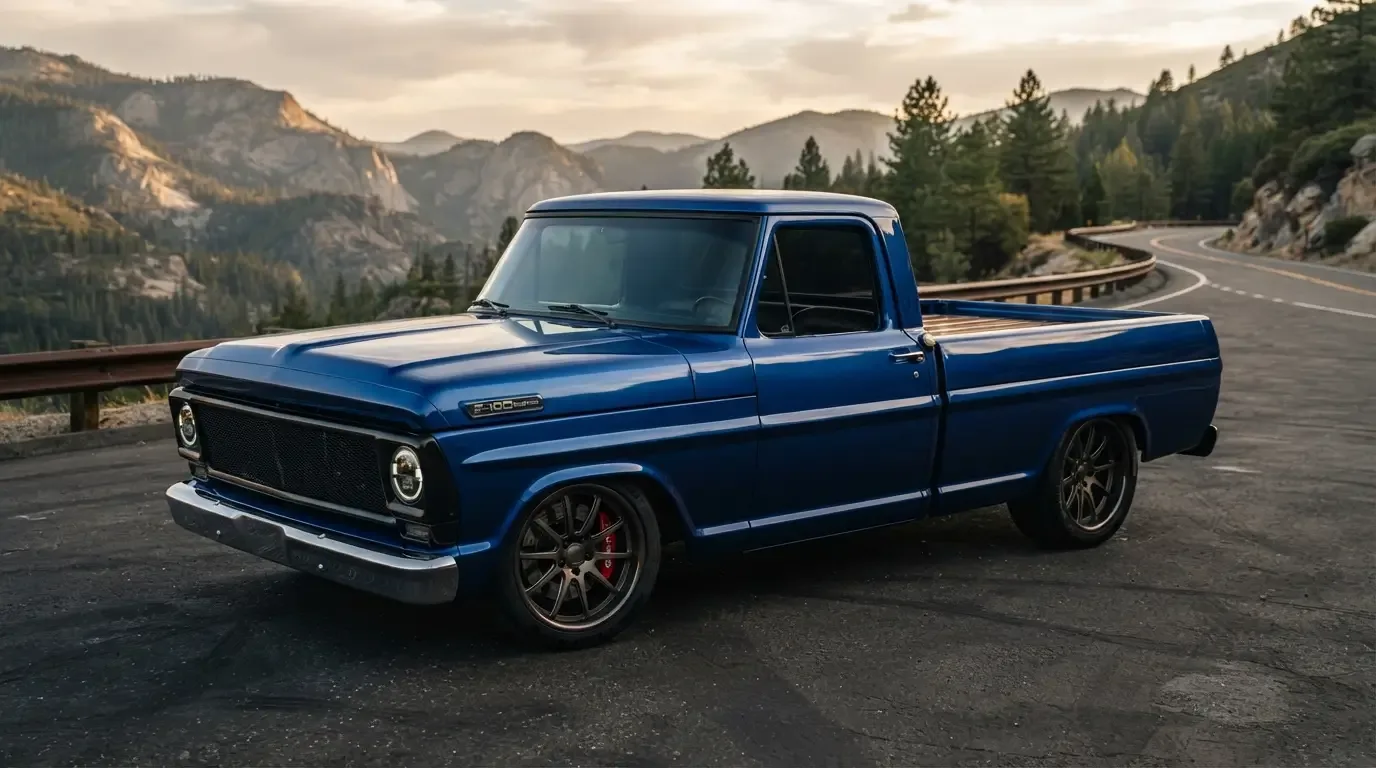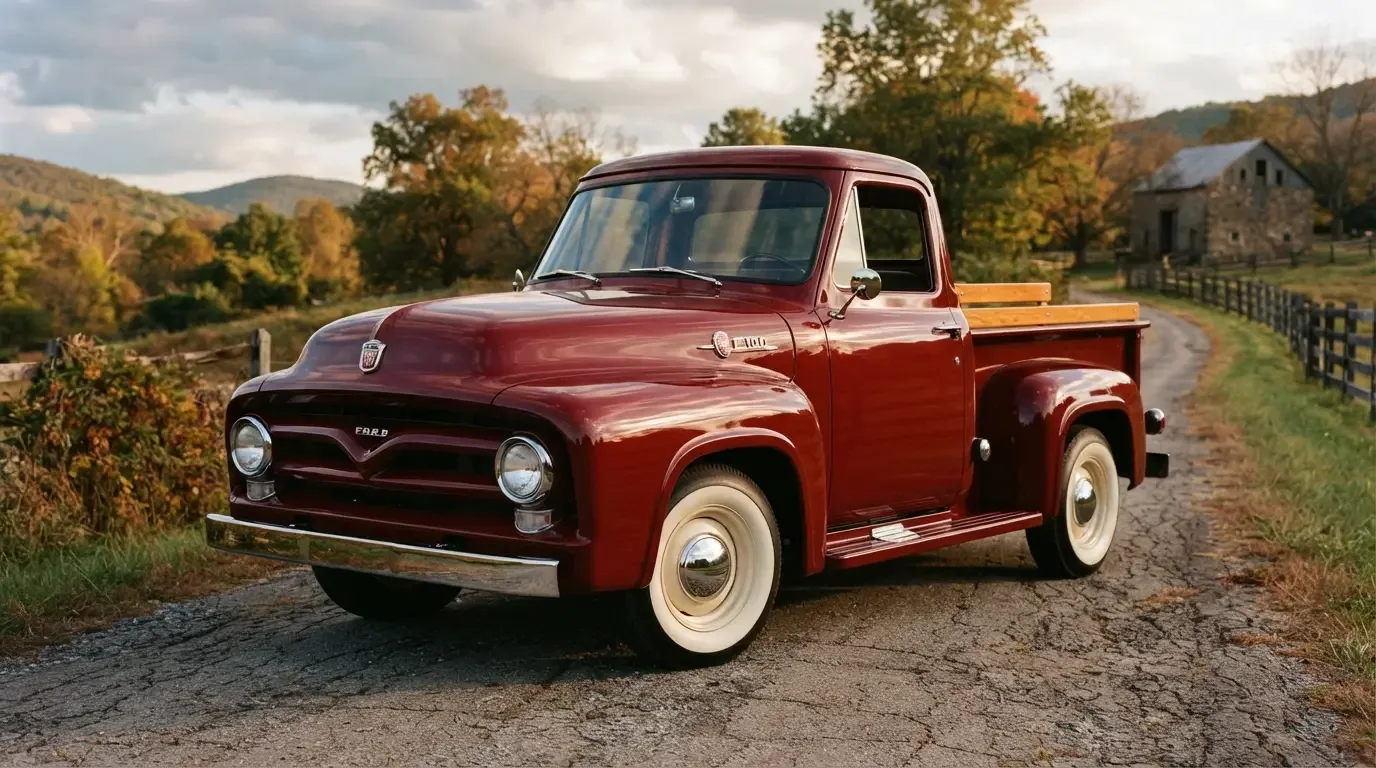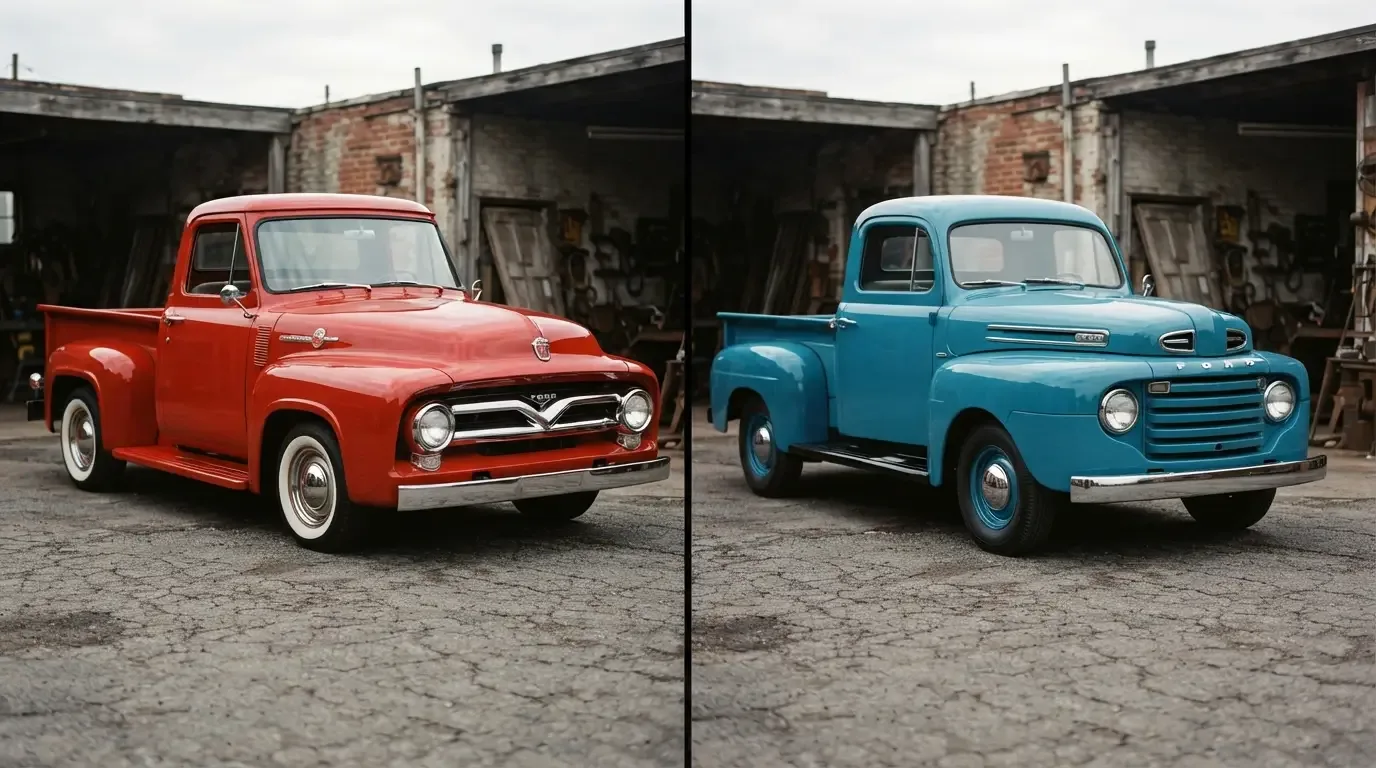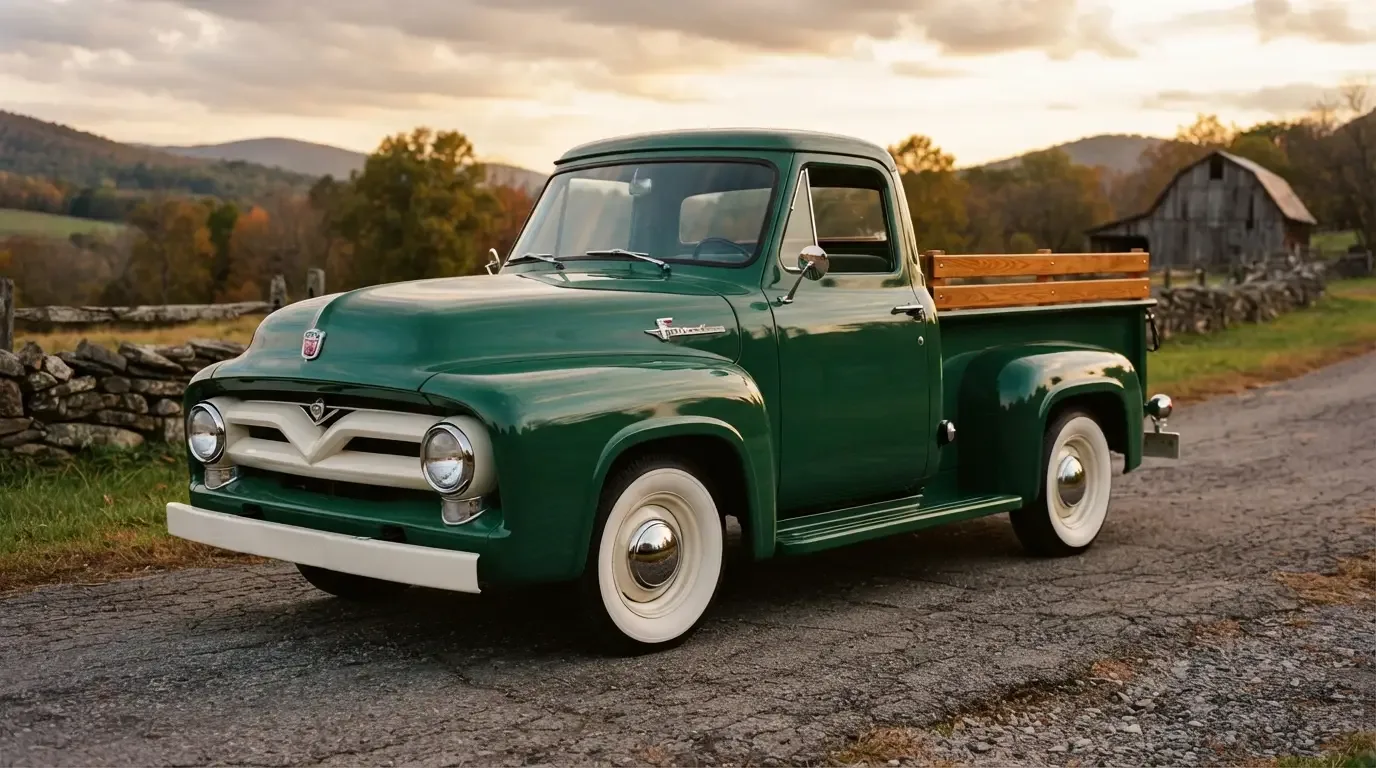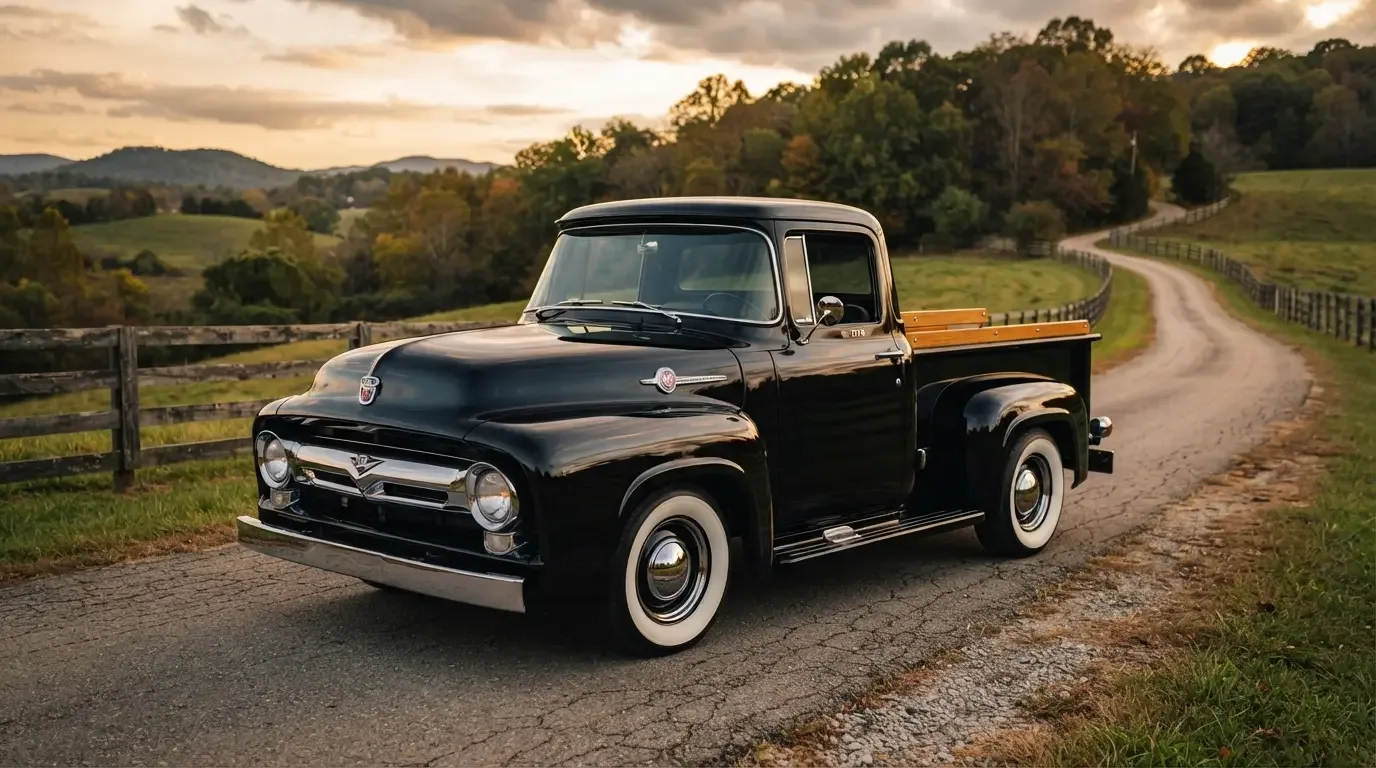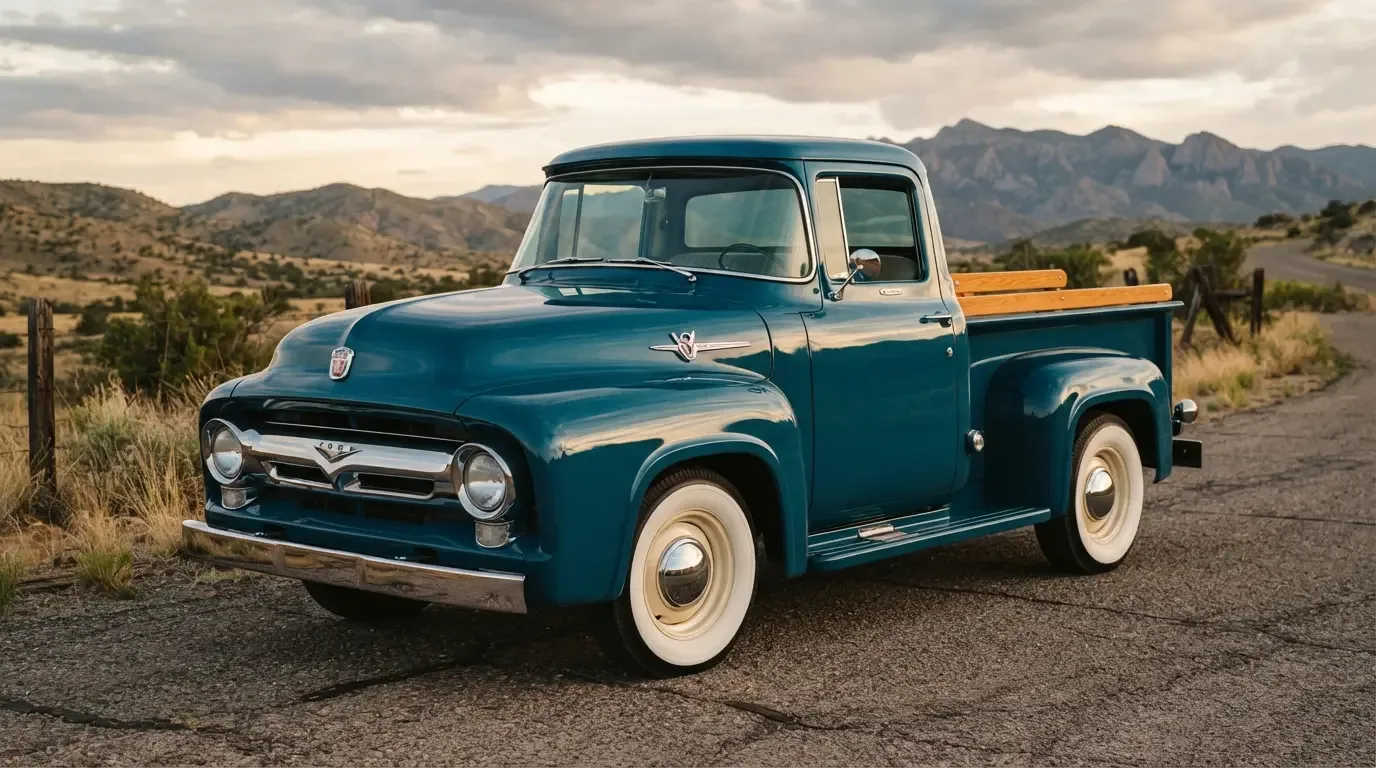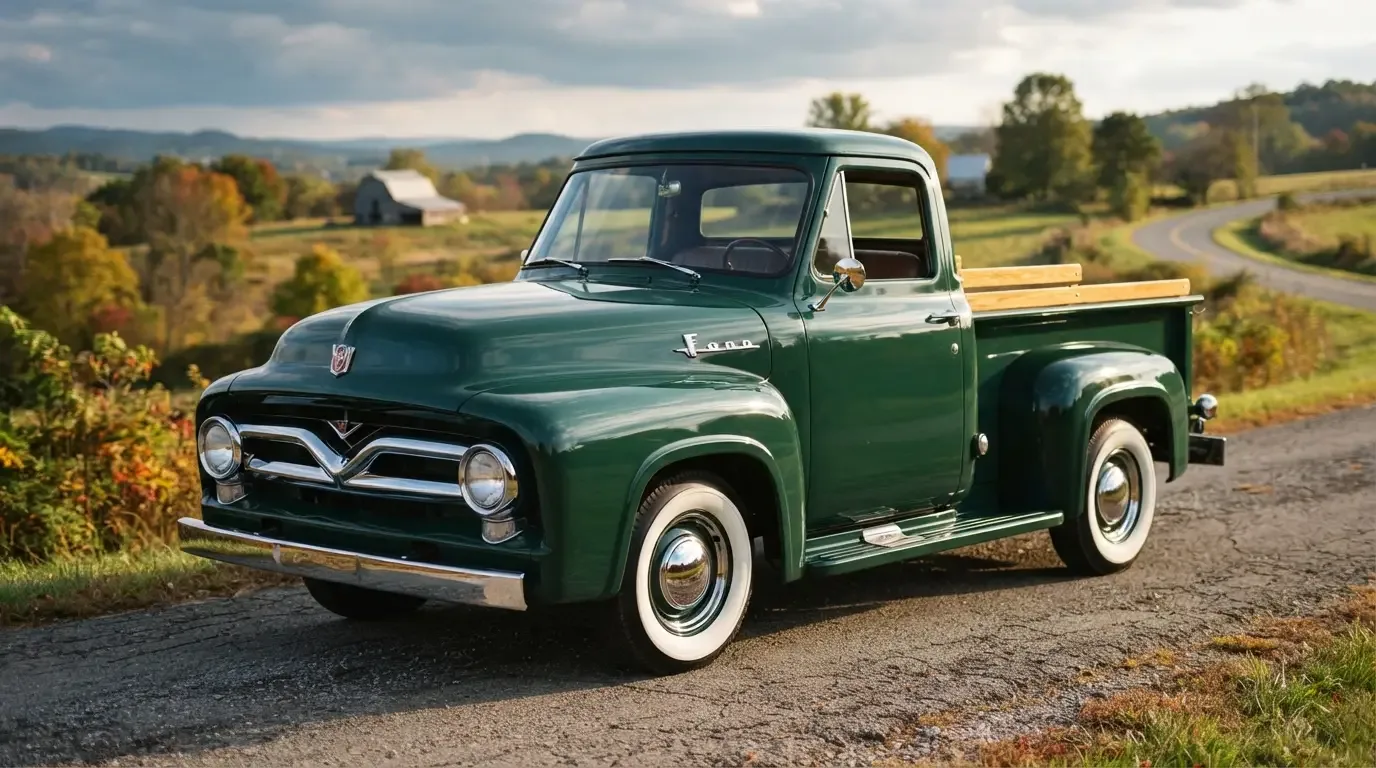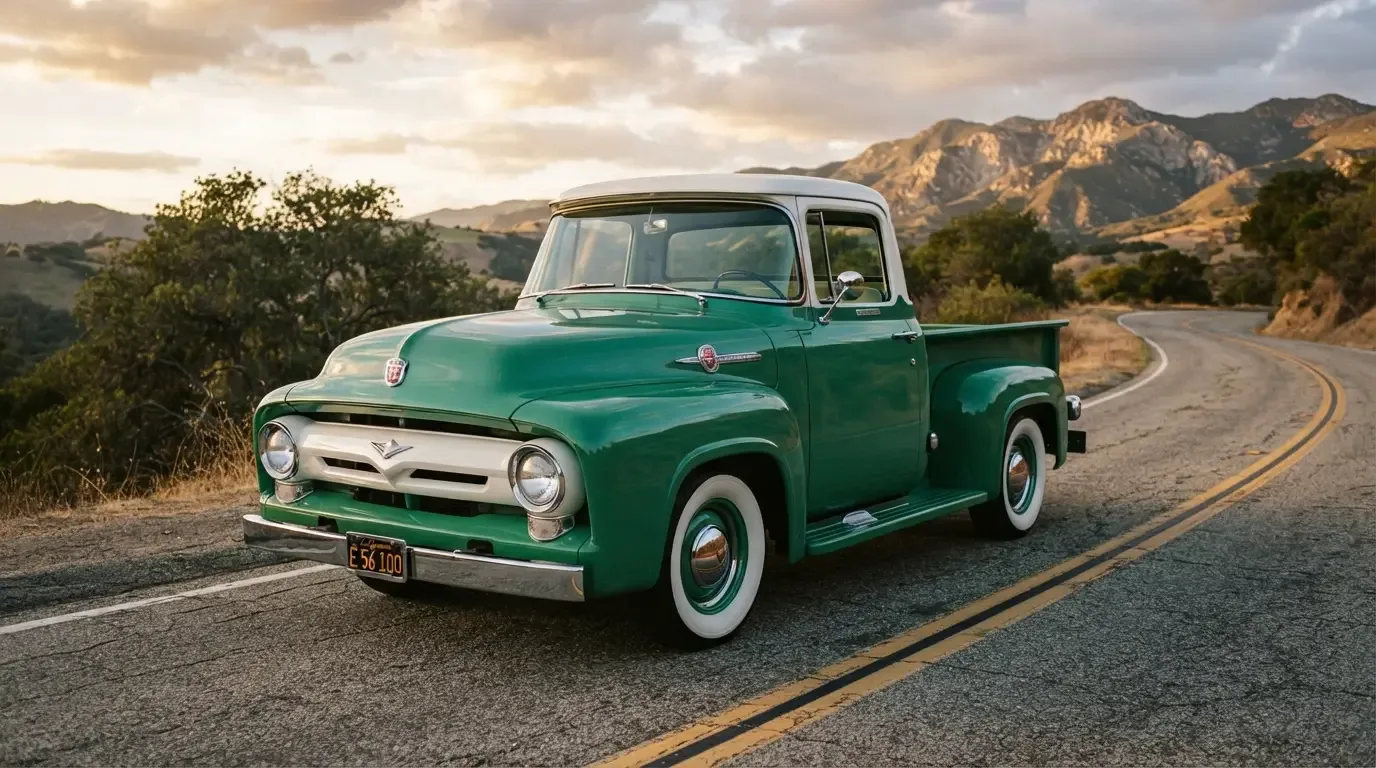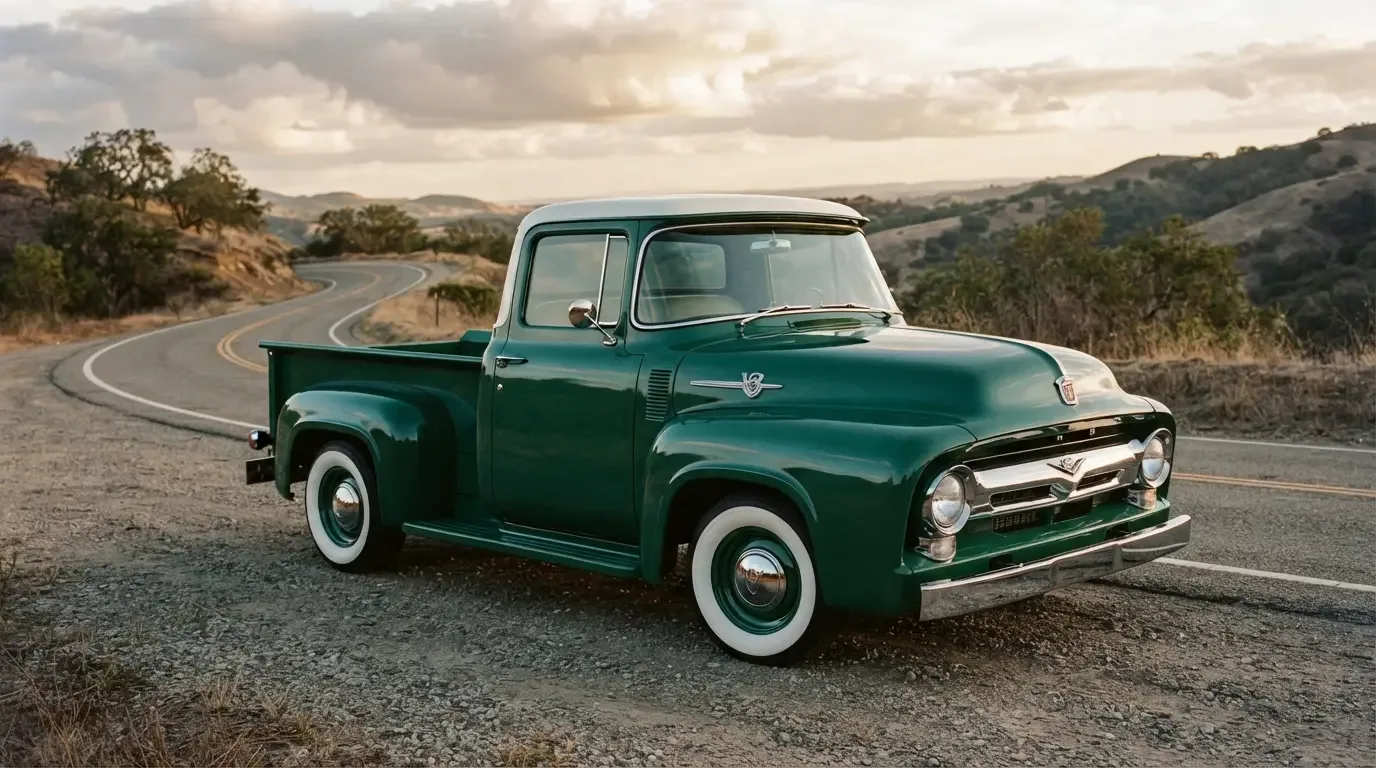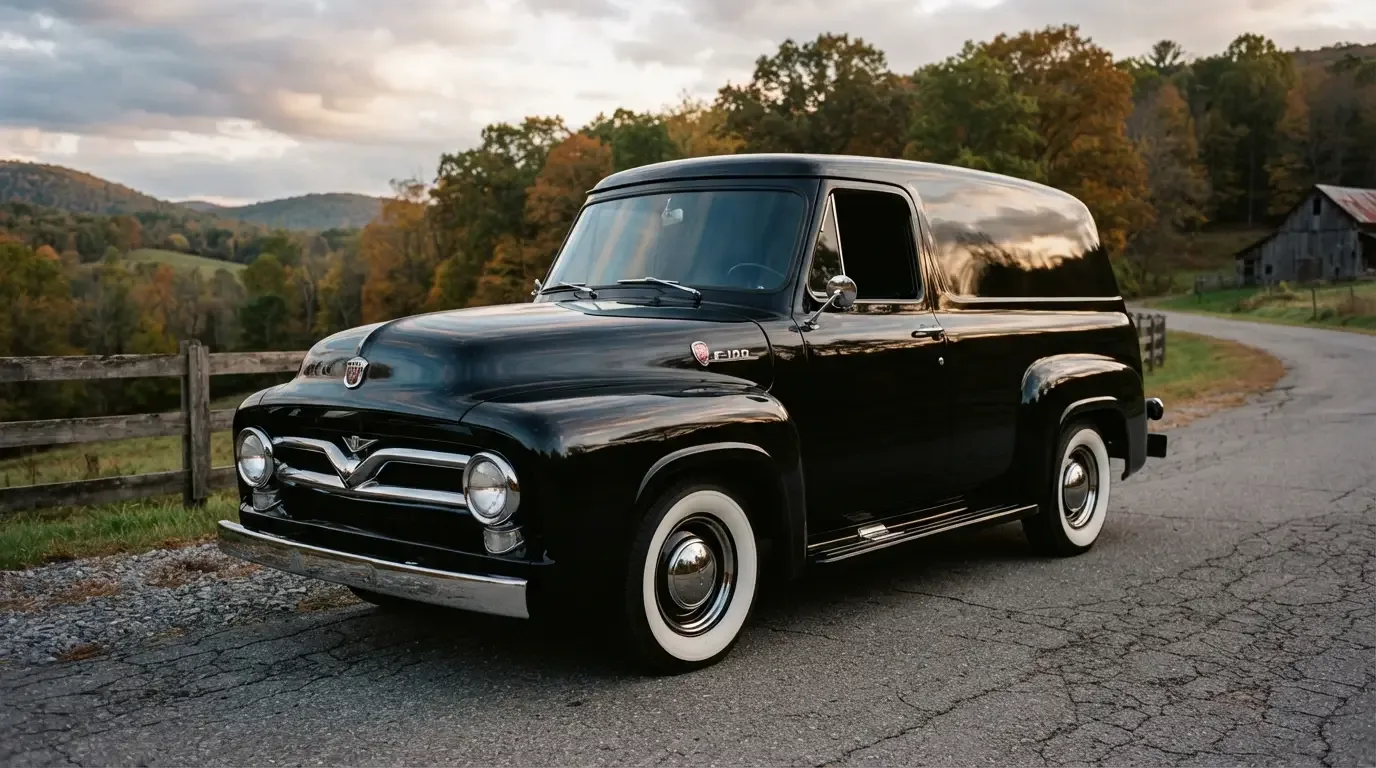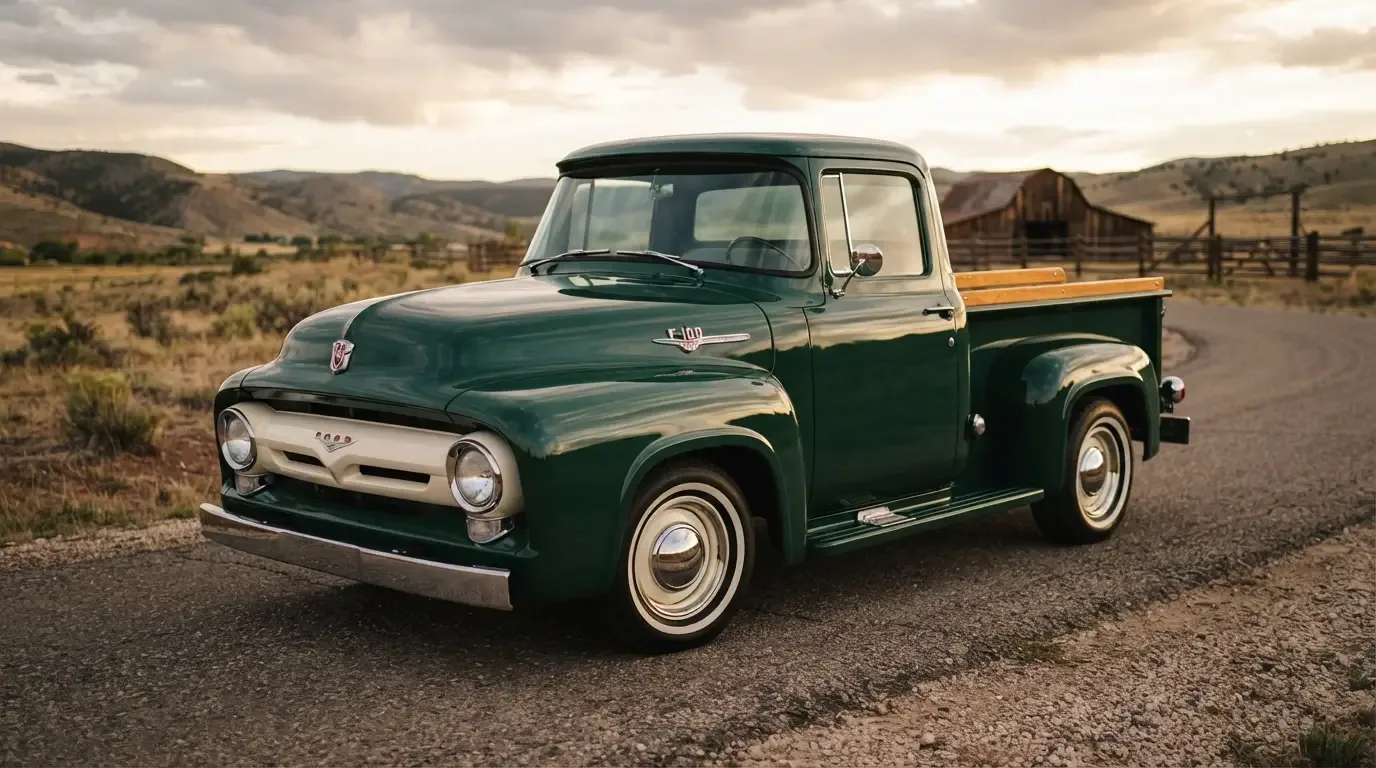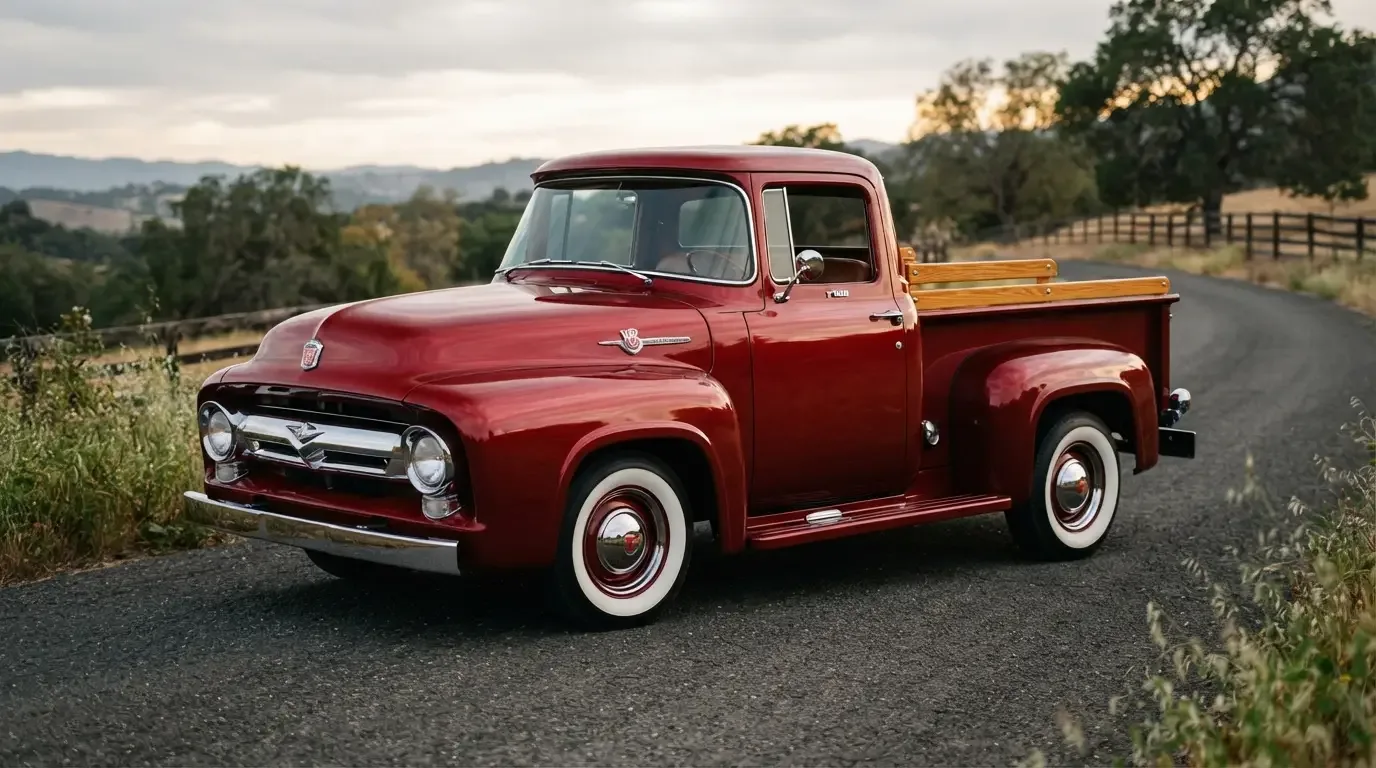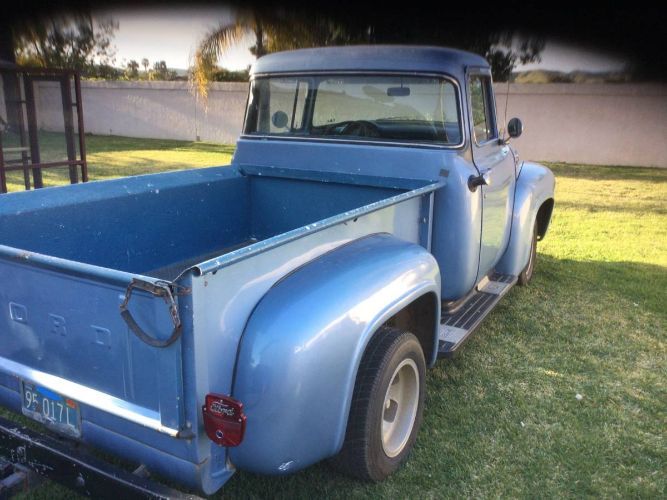
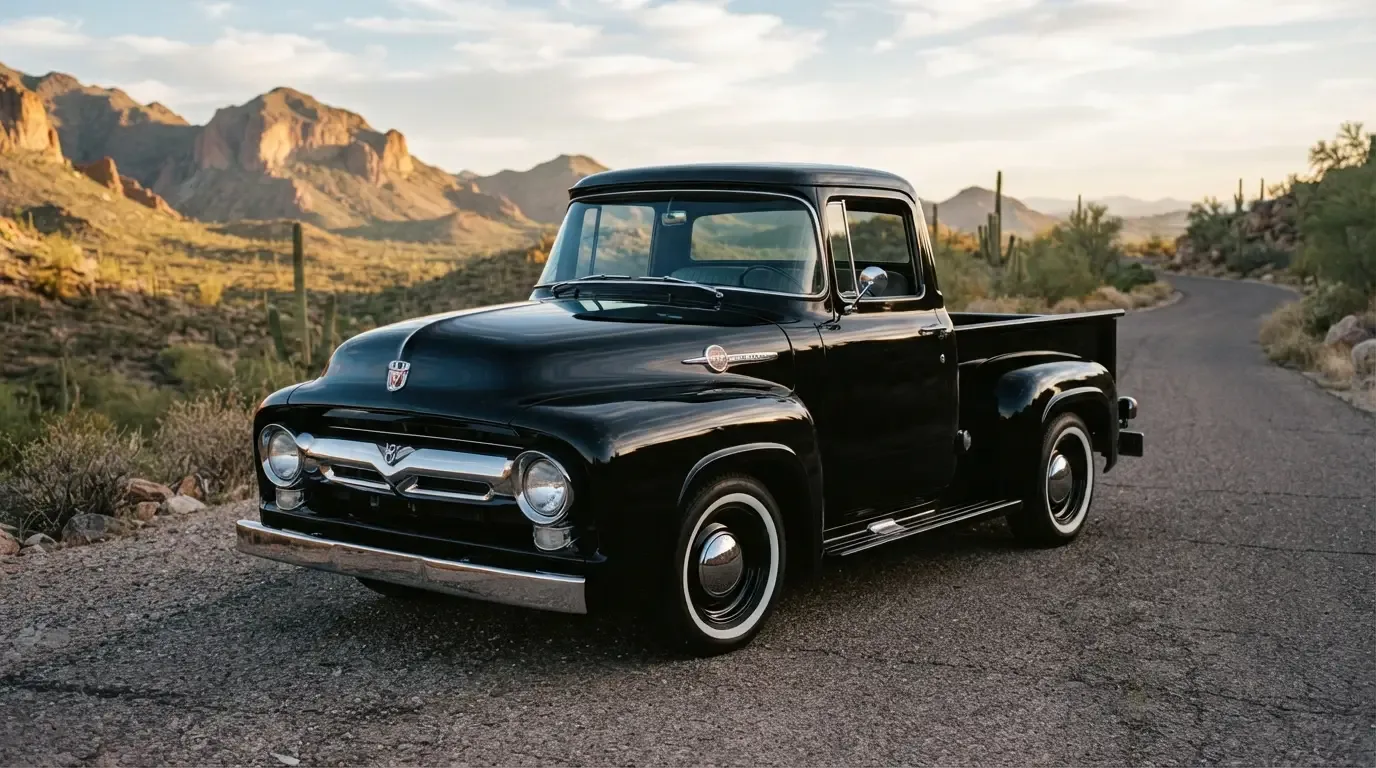
When Ford introduced the second-generation F-Series for the 1953 model year, the company was celebrating its fiftieth anniversary, and the trucks wore a small emblem to prove it. That anniversary badge is the easy trivia answer, but the real story of the 1953 through 1956 run is bigger than a commemorative script on the hood. This was the moment the F-1 became the F-100, the moment a work truck started to think about the person sitting in the cab, and the moment the styling department got a real vote in how a Ford pickup looked. The 1956 Ford F100, in particular, has become the one that collectors chase hardest, and there are good historical reasons for that which have nothing to do with nostalgia alone.
Ford built these trucks during a period when the light-truck market was changing under its feet. Farmers and tradesmen were still the core buyers, but suburbia was expanding, and a pickup was starting to double as family transport and weekend hauler. Ford read that shift early. The 1953 redesign was marketed under the banner of the "Triple Economy" trucks, and the company put unusual emphasis on driver comfort in its sales literature, something that would have seemed almost frivolous a decade earlier.
Why the F-1 became the F-100 in 1953
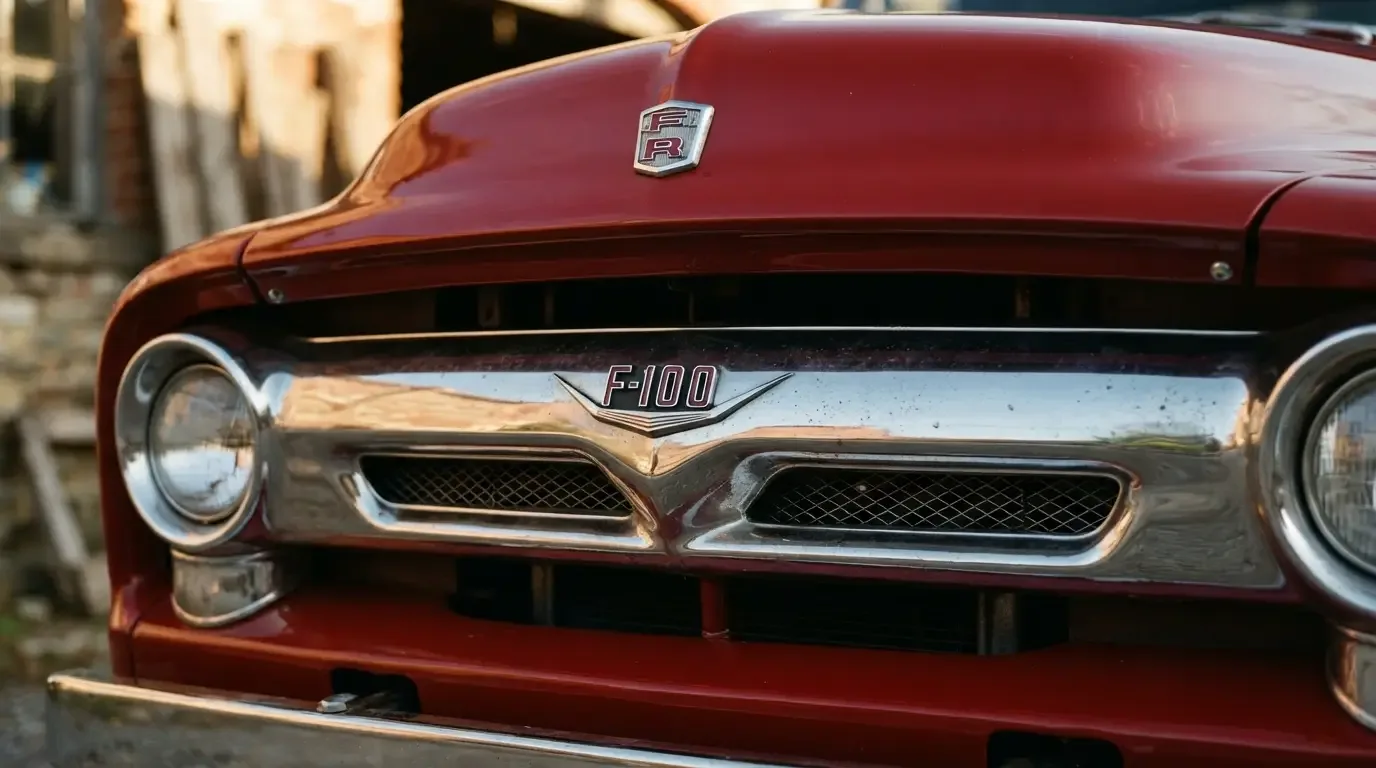
The naming change is where the modern F-Series identity begins. From 1948 through 1952, Ford's half-ton was the F-1. For 1953, Ford renumbered the entire truck line, and the half-ton became the F-100. The three-quarter-ton F-2 and light F-3 were consolidated into the new F-250, and the one-ton F-4 became the F-350. That numbering has survived, with modifications, into the trucks Ford sells today, which is a rare piece of continuity in an industry that discards names constantly.
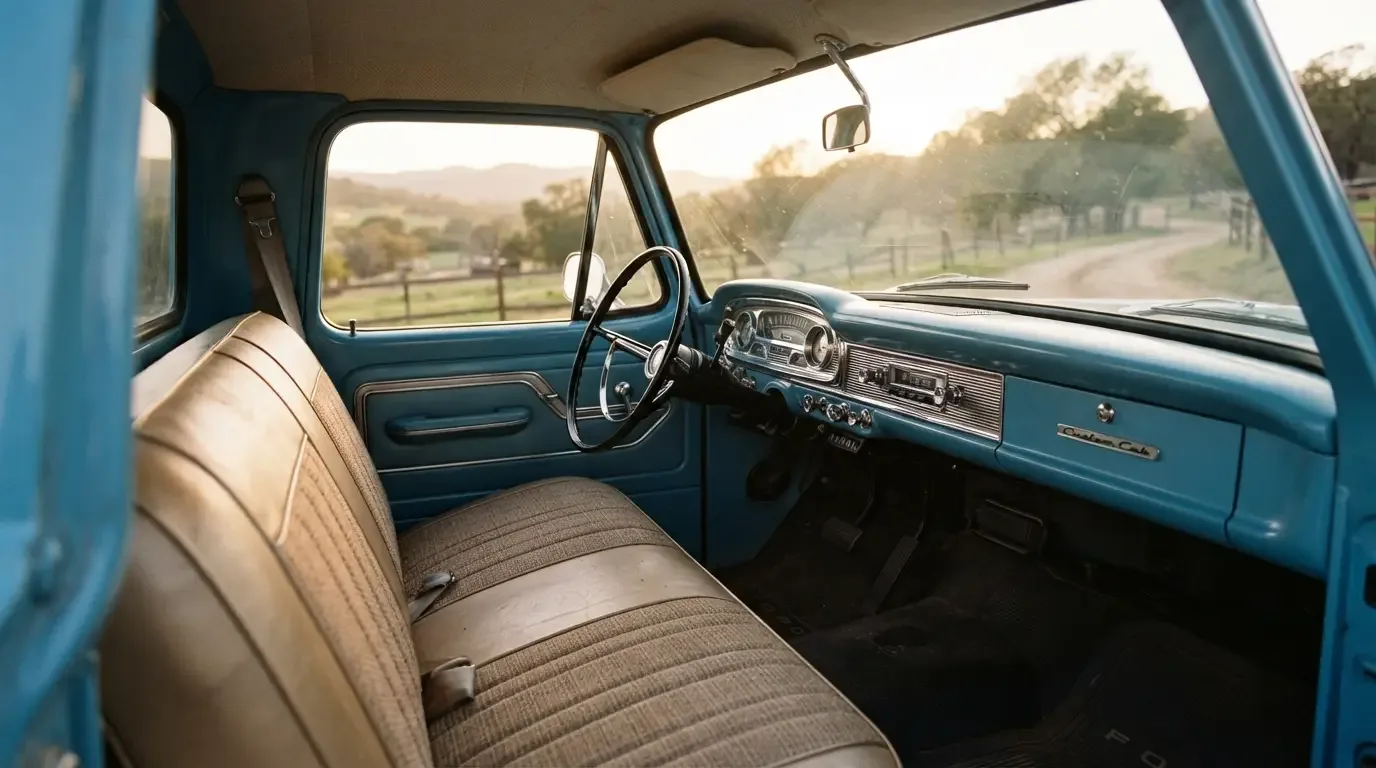
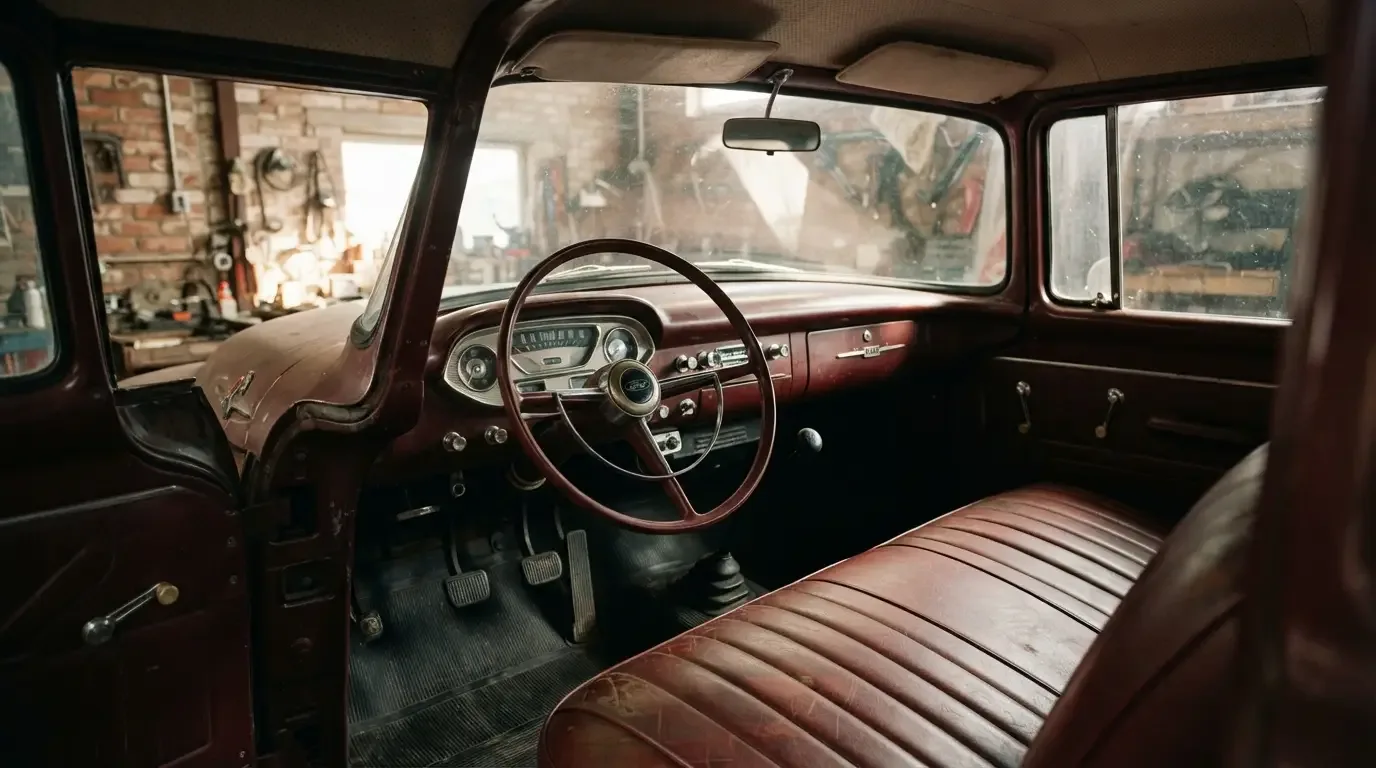
The renumbering was not cosmetic. The 1953 trucks rode on a new frame, wore an all-new cab, and offered a wider, more accommodating interior. Ford widened the seat, improved the driving position, and gave the cab a curved one-piece windshield in place of the older two-piece flat glass. The company called the cab the "Driverized" cab in its advertising, and while the term is pure marketing, the underlying engineering was real. Ford had studied driver fatigue and repositioned the pedals, the seat, and the controls to reduce it. For readers who want the full arc of how the badge evolved, our ford f100 history covers the lineage from the 1948 F-1 forward.
The flathead sendoff and the arrival of the Y-block
The 1953 trucks launched with an engine that was already living on borrowed time. The 239 cubic inch flathead V8, a descendant of the engine Henry Ford made famous in 1932, was the top powerplant at launch, rated at 106 horsepower. A 215 cubic inch inline six was the base engine. For 1953 and part of 1954, the flathead soldiered on, but Ford knew it was outdated. The overhead-valve revolution had arrived at Chevrolet and elsewhere, and a side-valve V8 could not keep pace.
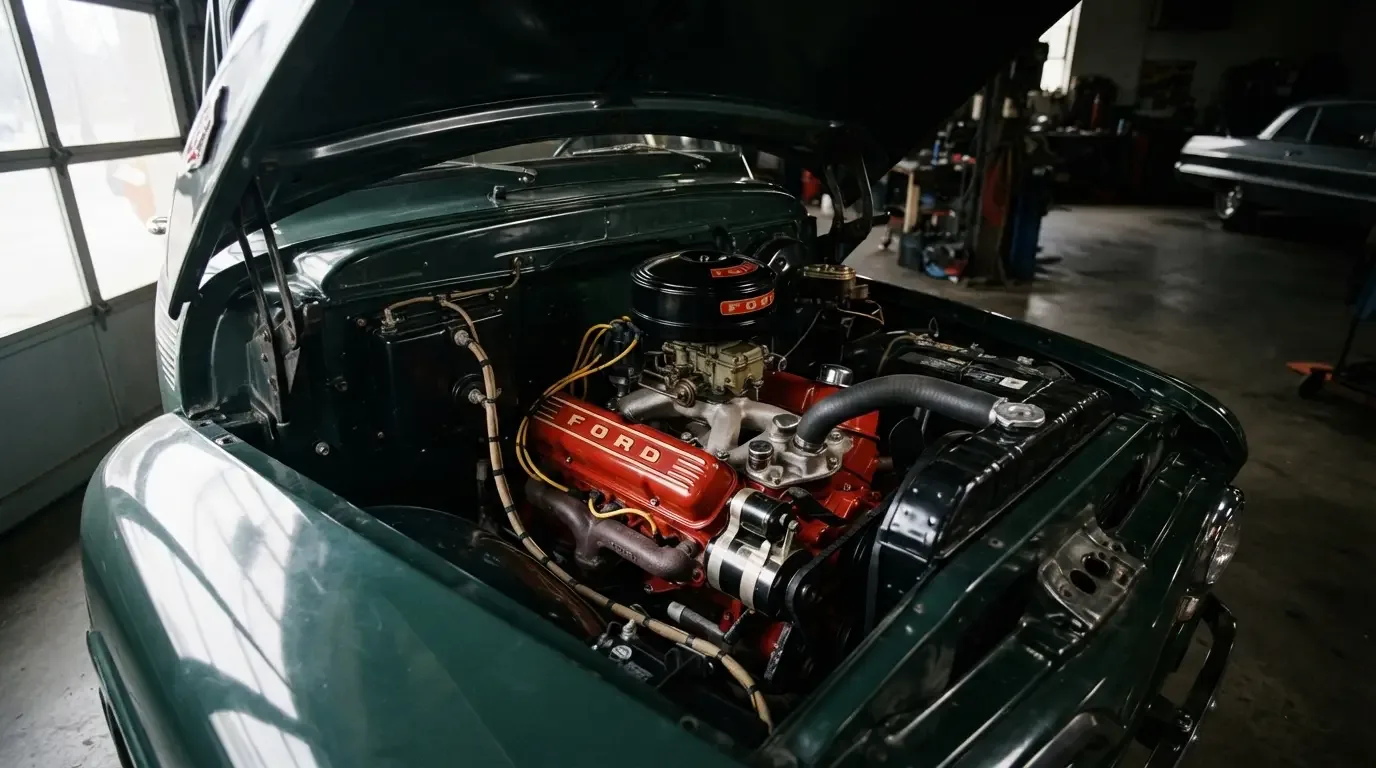
For 1954, Ford retired the flathead in its trucks and introduced the Y-block overhead-valve V8, a 239 cubic inch unit that shared its displacement with the old flathead but almost nothing else. The Y-block breathed better, made more power, and gave the F-100 a genuinely modern engine. Displacement and output climbed over the next two years. By 1956, the mainstream V8 had grown to a 272 cubic inch Y-block rated at 173 horsepower, and late in that model year Ford added a 312 cubic inch Y-block as the top truck engine. The six had been enlarged as well. The progression from a 1932-rooted flathead to a modern OHV V8 inside a four-year window tells you how quickly the postwar engine race was moving.
| Year | Notable change | Top V8 |
|---|---|---|
| 1953 | F-100 name debuts, new cab and frame | 239 flathead, 106 hp |
| 1954 | Y-block OHV V8 replaces flathead | 239 Y-block, 130 hp |
| 1955 | Grille and trim refresh, wraparound windshield expands | 272 Y-block |
| 1956 | 12-volt electrics, optional big-window cab | 272 Y-block, 173 hp (312 late) |
What makes the 1956 model the collector favorite
Among the four years, 1956 is the one that command the highest prices and the deepest affection, and the reasons are specific rather than sentimental. The 1956 Ford F100 received a wraparound windshield that was more dramatic than the earlier curved glass, and it offered an optional large rear window that gave the cab an airy, panoramic feel. That big-window cab is now one of the most sought variants of the entire second generation, and clean original examples are genuinely scarce.
Nineteen fifty-six also brought a switch to a 12-volt electrical system, replacing the older 6-volt setup. That is a small technical footnote with a large practical consequence for how these trucks live today, because a 12-volt truck is simpler to keep on the road. Ford also refined the trim and instrument panel for the final year of the generation, and buyers at the time responded. The combination of the last-year status, the big-window option, and the modernized electrics is exactly the kind of thing that makes one model year pull away from its siblings in the collector market decades later.
Trim, color, and the postwar personality
These trucks arrived just as American vehicles were escaping the monochrome palette of the immediate postwar years. Early 1953 models were still conservative, but by 1955 and 1956 Ford was offering two-tone paint schemes on its pickups, with the cab roof and body sometimes separated by a contrasting color. That two-tone treatment, borrowed from the passenger-car playbook, signaled that a pickup could be an object of pride rather than a purely utilitarian tool.
The Custom Cab option is worth knowing by name. It added brighter interior trim, additional insulation, and exterior chrome touches, and it is the trim level enthusiasts prize today because it represents Ford's earliest serious attempt to sell a truck as something you might actually want to be seen in. The base trucks were plain and honest, which has its own appeal, but the Custom Cab is where the styling ambition lived. A 1956 big-window Custom Cab with a V8 and two-tone paint is close to the platonic ideal of the mid-fifties F-100.
"People assume the 1956 truck is prized because it is pretty, and it is, but the collector premium is really about scarcity of the big-window cab and the practical appeal of the switch to 12 volts. Both are documented facts, not just taste."
- Tom Ramirez
Production, survival, and the collector market
Ford built these trucks in enormous numbers, which is part of why they remain accessible to restorers today. The half-ton F-100 was the volume seller of the light-truck range, and Ford's truck production through the mid-fifties ran into the hundreds of thousands of units per year across all series, with F-100 output alone reaching well into six figures in the stronger years. High original volume matters because it means parts, both original and reproduction, are widely available, and it means a hobbyist has a realistic shot at finding a solid project.
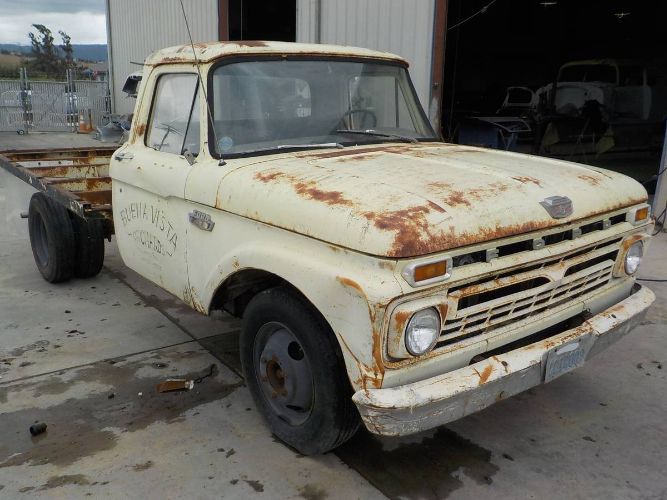
What has changed is the survival calculus. Trucks are used harder than cars, and a working pickup that spent thirty years on a farm was often used until it was worn out and then abandoned. The clean, unmolested survivors are a small fraction of what Ford built, and that gap between production volume and survival rate is where the collector value lives. A rusty parts truck is cheap. A straight, complete, matching-drivetrain 1956 big-window is not, and the spread between those two conditions has widened steadily as the generation has aged into full classic status.
There is a restomod dimension to this generation that deserves a mention as culture rather than mechanics. Because these trucks are handsome and plentiful, they became a favorite canvas for modern builders who dropped in later drivetrains and lowered the stance. That trend has pulled clean original trucks in two directions at once. On one side, the builders consume solid bodies, which thins the supply of unmodified survivors. On the other, the visibility of a well-executed custom raises the profile of the whole generation and draws new buyers toward the originals. A collector shopping for an authentic, unmolested 1956 today is competing not only with other purists but with the custom scene, and that competition has quietly firmed up prices for honest, complete trucks across all four years.
The documentation angle matters as much here as with any collectible. A truck with its original build records, a traceable history, and a drivetrain that matches its year and trim will always outrank a cosmetically nice truck of uncertain origin. For a generation this old, paperwork is scarce, so when it exists it carries real weight in the market.
Where this generation sits in the F-100 story
The 1953 through 1956 trucks are the hinge between the old and the modern F-Series. They inherited the F-Series concept from the 1948 F-1 and handed off, in 1957, to a truck with fully integrated fenders and slab-sided styling that looked like a different species. That makes the second generation the last of the classically rounded, fender-defined Ford pickups, and it gives these years a distinct visual identity that neither the trucks before nor after them share.
For the collector, that in-between status is the whole appeal. These trucks are old enough to feel genuinely vintage, with their curved fenders and upright stance, yet modern enough, especially in 1956 form, to be lived with. They started the F-100 name, they buried the flathead, and they gave the pickup a comfortable cab worth caring about. If you want to see how the design language changed almost overnight, keep exploring the next chapter of the story, because the trucks that followed rewrote the rules. Readers weighing a purchase often start by browsing what is available, and there is a healthy supply of clean examples in the current market, where the 1956 big-window remains the headline act.
You can keep exploring how Ford modernized the pickup once the second generation ended, and when you are ready to shop, the classic F-100 for sale listings are the natural place to start comparing survivors against project trucks. The 1953 to 1956 run is where the legend the rest of the F-100 story rests on actually began.