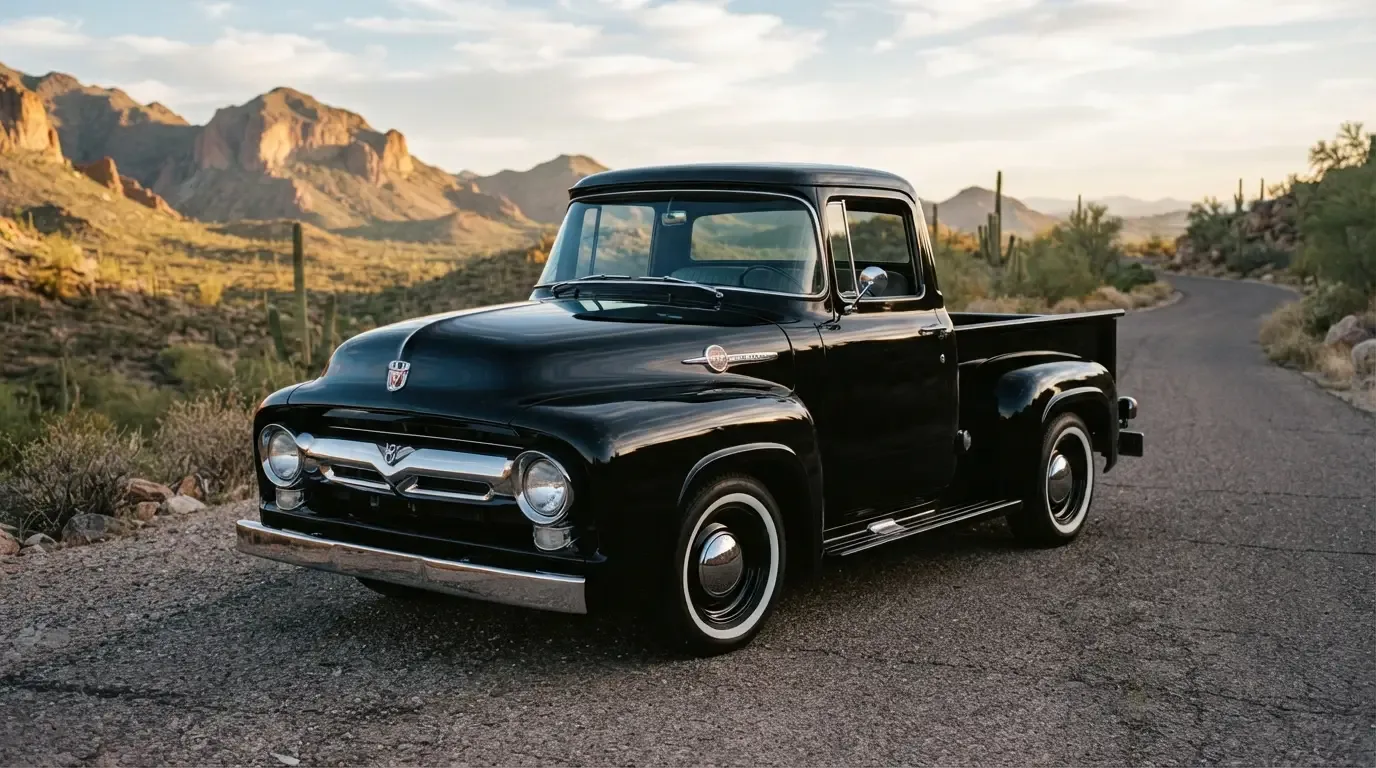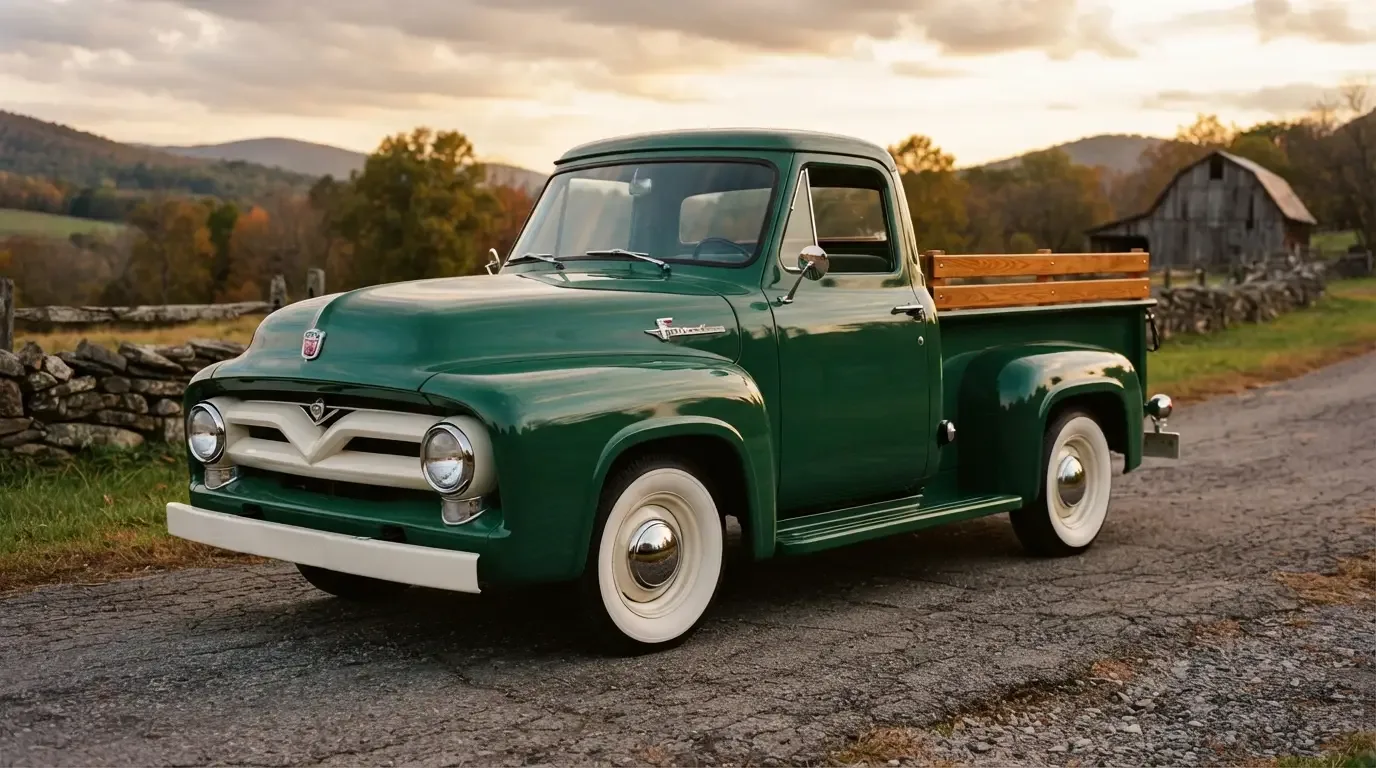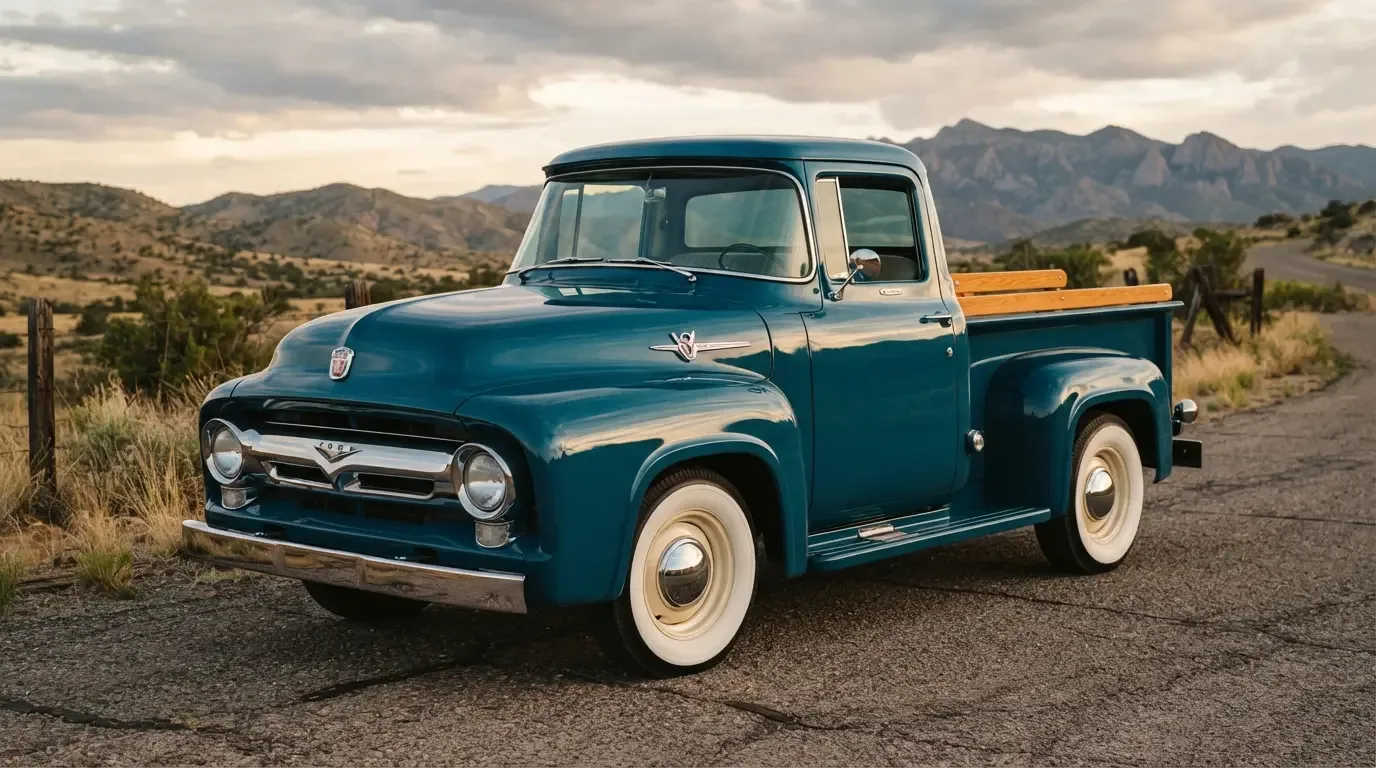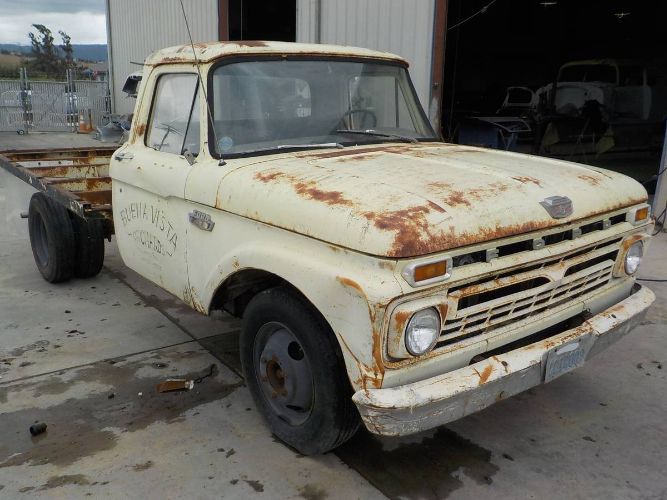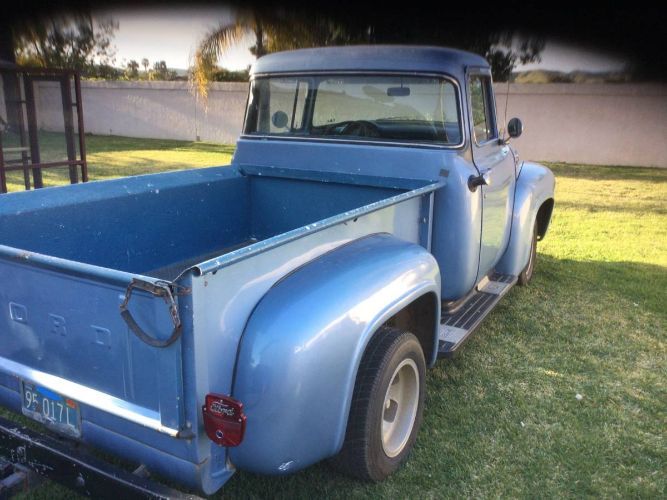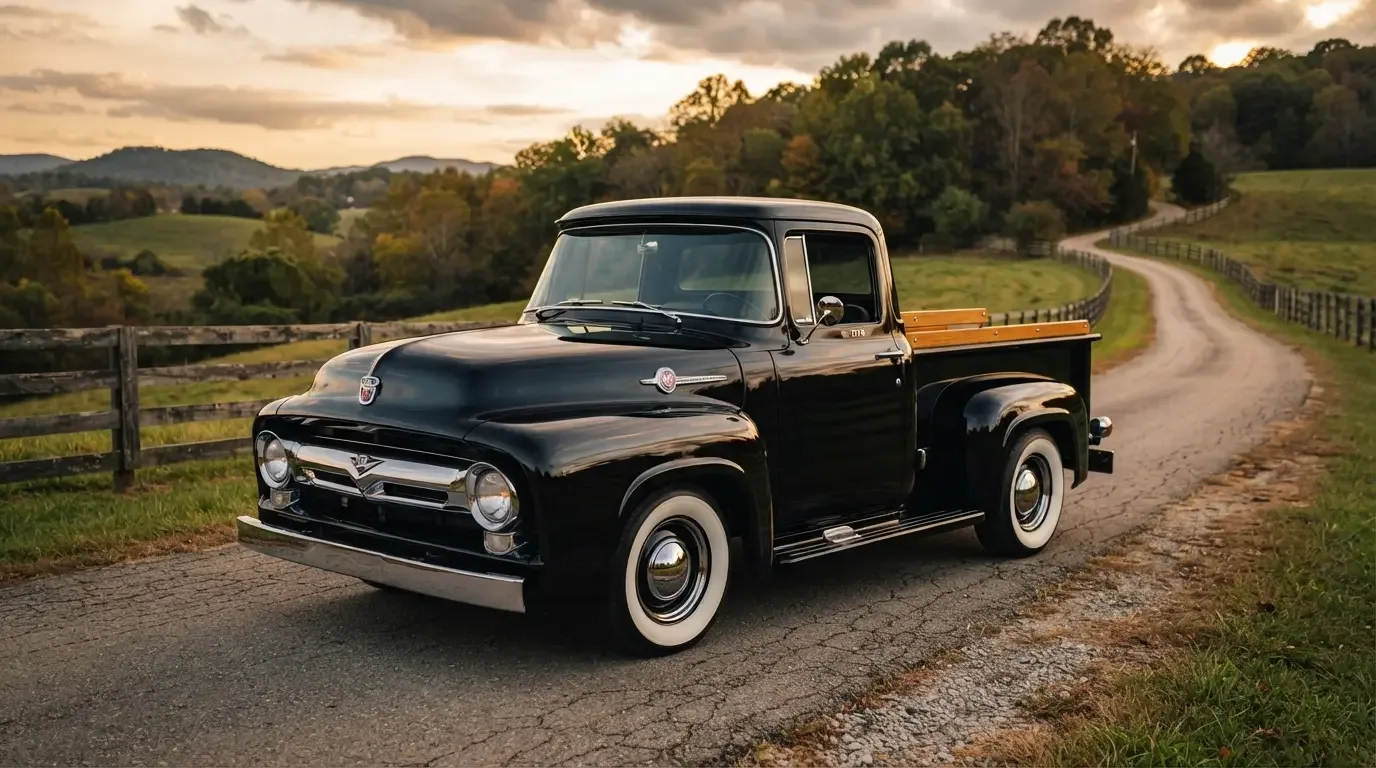
Production and dealer records from the period support what collectors have long argued informally: the 1956 ford f100 history shows a truck built at the peak of its generation, combining every refinement Ford had introduced since 1953 into a single, final model year before the platform was replaced entirely. It is widely regarded today as the most sought-after year of the second-generation F-Series, and the documentation behind that reputation is worth examining closely.
The final word on the 1953-56 platform
By 1956, Ford had spent three model years steadily improving the truck it introduced for its 50th anniversary. The Y-block V8 was in its third year of production and had been refined for smoother operation, and the 223-cubic-inch six carried forward with a modest power bump for the year. The front axle kept its familiar kingpin steering knuckles, a design Ford would not replace until the independent Twin I-Beam front suspension arrived for 1965. Ford's engineers used 1956 to consolidate the improvements made since 1953 rather than introduce entirely new mechanical systems, which is precisely why the model year functions as a capstone rather than a transition.
Factory records from 1956 also confirm the electrical system upgrade that owners and mechanics still reference today: Ford moved from a 6-volt to a 12-volt electrical system on its trucks this year, improving starting reliability and giving later owners more flexibility when adding accessories. It is a detail easy to overlook next to the styling changes, but it represents a real functional upgrade documented in period service literature.
The big-window option arrives
The single most documented change of the 1956 model year is the introduction of the big-window cab, an optional wraparound rear window that dramatically improved visibility over the small rear window used on 1953 through most of 1956 production. Ford offered both configurations during the year, but the big-window trucks are the ones collectors chase most aggressively today, and factory build sheets from later in the model year show the option becoming increasingly common as production continued.
This cab change alone accounts for much of why 1956 carries the reputation it does. It represents the last meaningful visibility improvement Ford made to this body style before replacing the entire platform for 1957, and it gives the final year of the generation a distinct visual identity separate from the trucks that came before it.
Reading the production record
Ford's factory documentation from 1956 shows a company clearly preparing to end this generation on strong footing rather than coasting through a final year. Trim options expanded, the Custom Cab package saw wider adoption, and dealer literature emphasized comfort and visibility improvements aimed squarely at buyers who wanted their work truck to double as a family vehicle. None of this was accidental. Ford understood the 1957 redesign was imminent and used 1956 to demonstrate just how far the outgoing platform had come.
"When you line up the full production record for this generation, 1956 reads less like an ending and more like Ford showing its work. Every improvement from the previous three years shows up in this truck, refined rather than reinvented, and that's exactly why the documentation supports its reputation among collectors today."
- Tom Ramirez
Why collectors treat this year differently
Market behavior around the 1956 F-100 consistently reflects its documented status as the generation's high point. Big-window examples in particular command a premium over comparable small-window trucks from earlier in the same model year, a gap that has widened as more buyers become aware of the distinction. Original 12-volt electrical components, correct third-year Y-block trim, and documented Custom Cab options all factor into how researchers and appraisers evaluate a given truck's authenticity and desirability.
For the complete account of how this generation arrived at its 1956 conclusion, starting from the 1953 redesign, where this started traces that full arc from the beginning.
Trim, color and dealer positioning
Dealer literature from 1956 shows Ford expanding its color palette and trim combinations further than any previous year in the generation, a decision that lines up with the broader strategy of closing out the platform on a high note before the 1957 redesign arrived. Two-tone paint schemes, already available since 1953, saw additional combinations added specifically for the final model year, and the Custom Cab package's trim options expanded alongside them. None of this was necessary from a purely functional standpoint. It reflects a company using its last year on a proven platform to maximize showroom appeal.
Regional dealer records also indicate that 1956 saw strong sales relative to the rest of the generation, a pattern consistent with buyers recognizing, whether explicitly or not, that this was their last chance to buy the familiar 1953-56 body style before Ford's next redesign changed the truck substantially. That sales strength at the end of a platform's life cycle is not unusual in the auto industry generally, but it is well documented in Ford's own regional sales summaries from the period.
Mechanical continuity, refined
It bears repeating that 1956 did not introduce a new engine or a new frame. The Y-block, by this point in its third year of production, benefited from three years of running refinements that ironed out early production quirks. The kingpin front axle, carried over largely unchanged since the truck's 1953 debut, likewise saw small running refinements documented in factory service bulletins. The net effect was a truck that felt more finished, more sorted, than any of its immediate predecessors, precisely because Ford had spent three years addressing issues rather than chasing entirely new features every single year.
How later years get judged against this one
Every subsequent generation of F-Series truck eventually gets compared, at least informally, against the standard the 1956 model set for closing out a platform well. Later Ford truck generations would follow a similar pattern, refining a design over several years before a full redesign, but the 1956 F-100 is frequently cited among collectors and historians as an early, clear example of that approach working exactly as intended. The documentation supports this reading rather than just repeating a popular narrative: sales figures held strong, warranty claims trended down relative to earlier years in the generation, and dealer feedback preserved in regional archives describes a truck that required little apology by the time Ford retired the body style.
A generation's closing argument
What the factory record ultimately shows is a company that treated its final year on a platform as an opportunity rather than an afterthought. The 1956 F-100 did not introduce a new engine or a fundamentally new chassis. It refined everything Ford had built since 1953 and added the one visibility improvement, the big-window cab, that owners had apparently been asking for. That combination of documented mechanical maturity and a genuinely distinctive styling feature is why this specific model year continues to anchor conversations about the second-generation F-Series, even seventy years after it left the factory floor.
Readers ready to see what documented examples are currently available can find classic F-100 for sale a useful starting point for current listings.
Sources and notes
- Ford F-Series (second generation) - Wikipedia
- 1953-1956 Ford F-100 (2nd Gen): Specs, Engines, Values - fordf100s.com
- Do I have King pins or ball joints? - Ford Truck Enthusiasts Forums
- Instant Classic: The 1953 Ford F-100 Pickup - Mac's Motor City Garage
- 1956 Ford F-Series F-100 II 3.6 223 Six (133 Hp) - Auto-Data