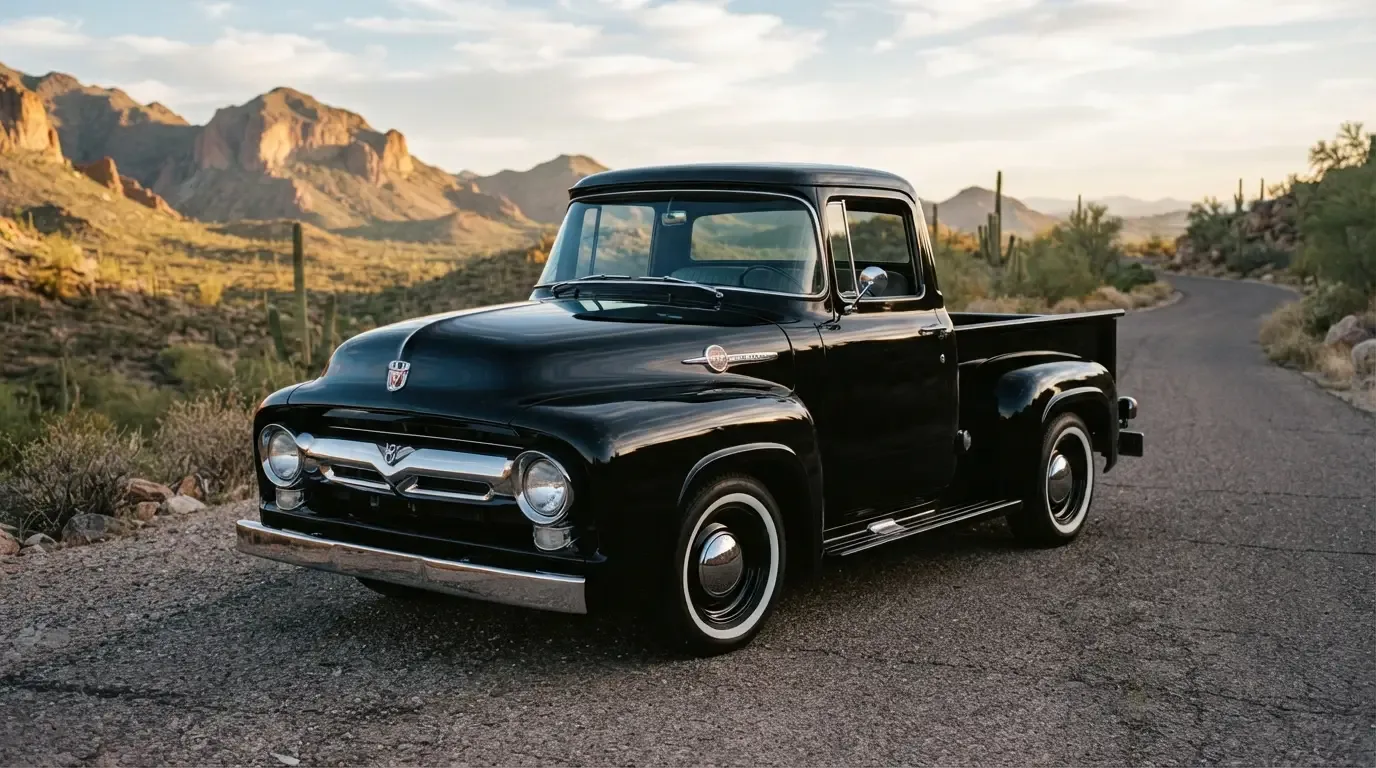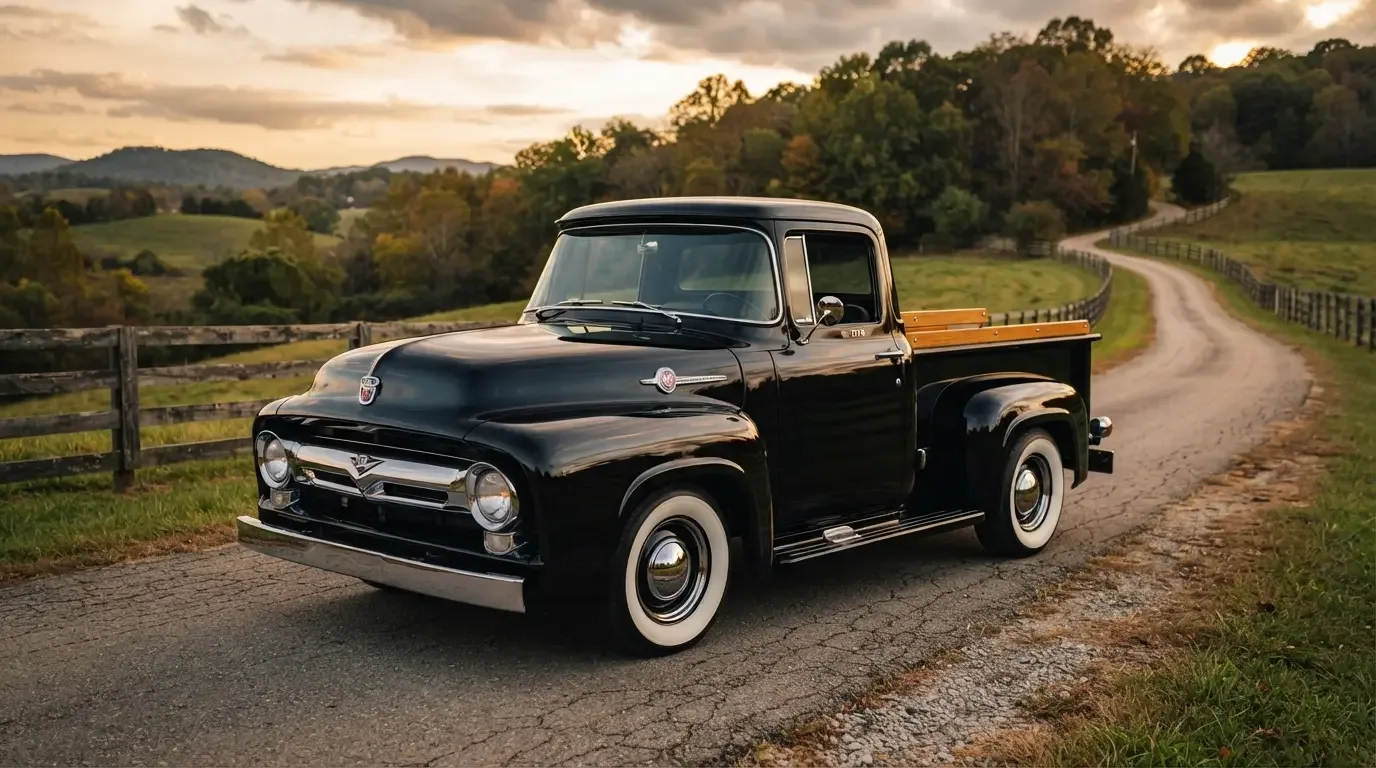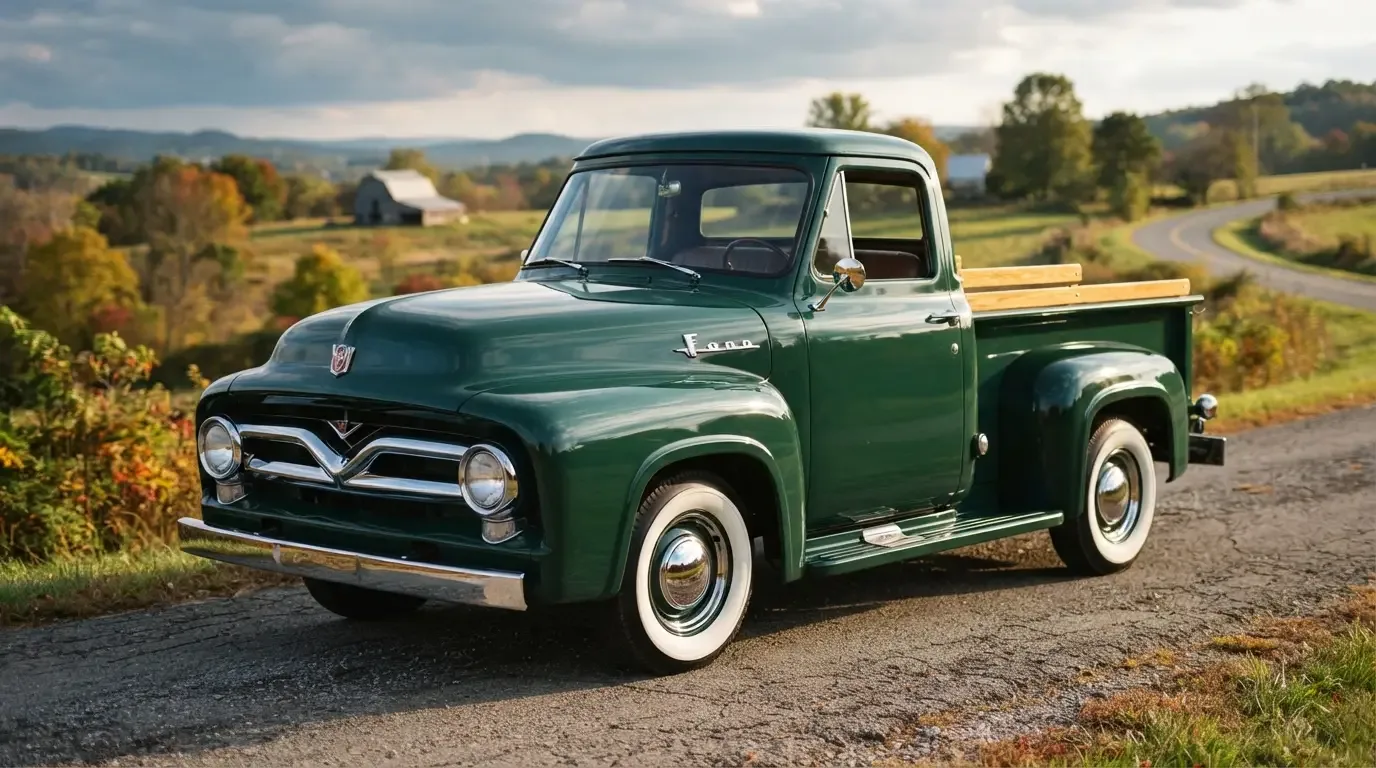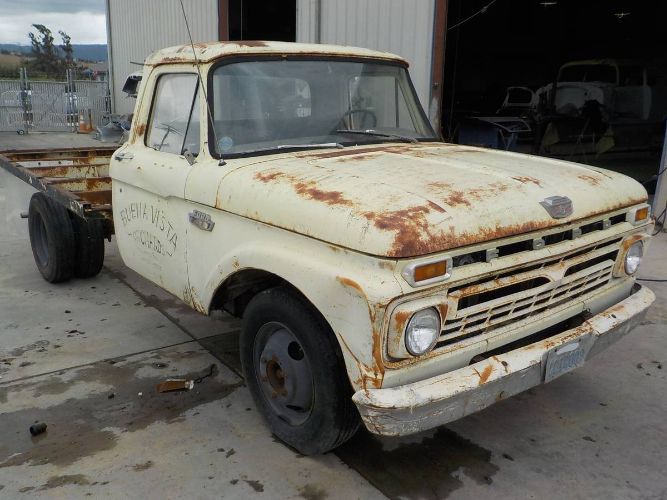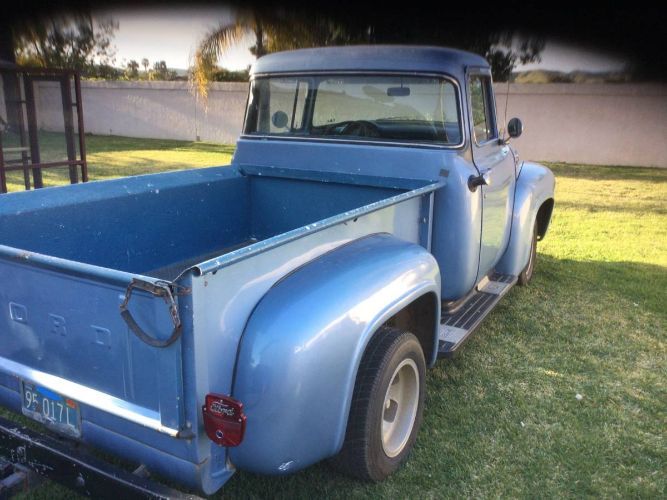
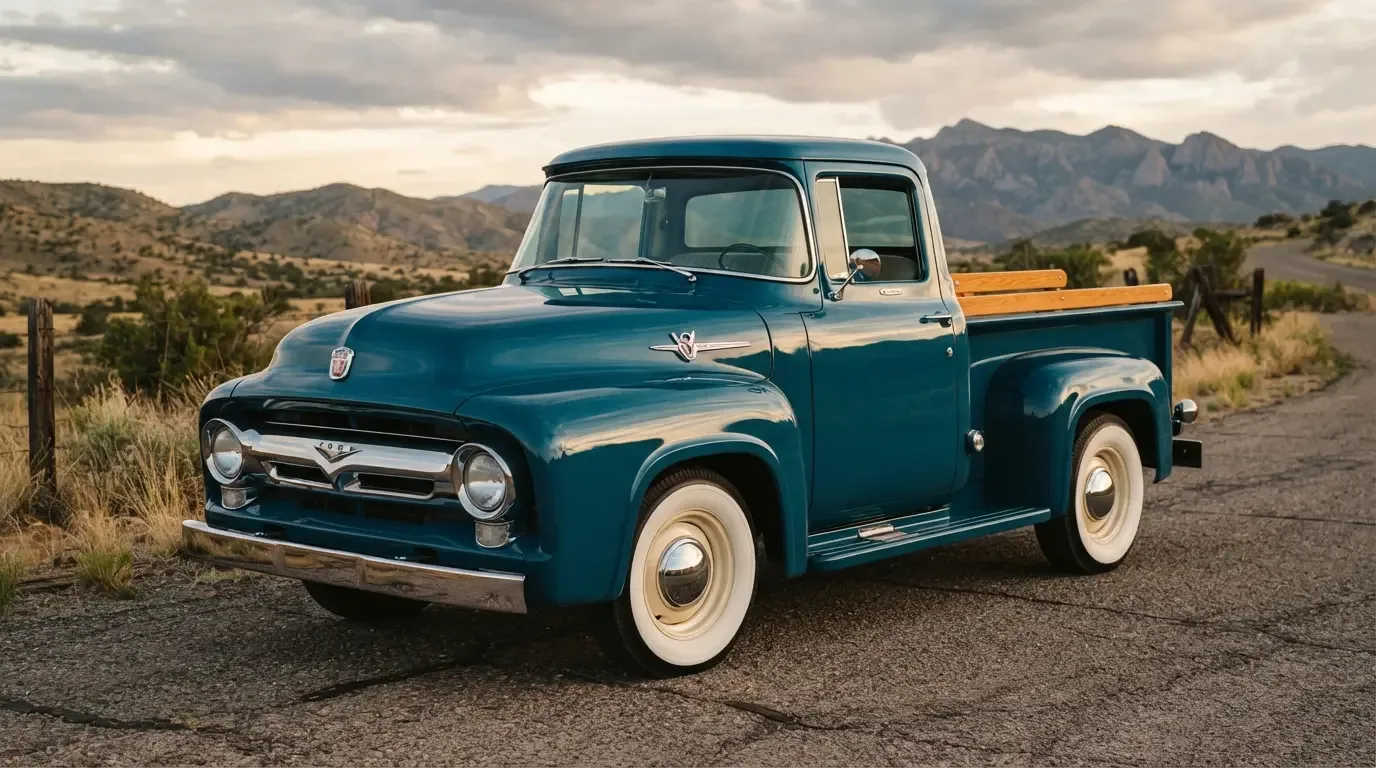
Among the documented variations within Ford's second-generation F-Series, few carry as much collector significance as the 1956 ford f100 big window option, a wraparound rear-window cab configuration that replaced the smaller, more restricted window used since the platform's 1953 debut. Cataloguing the difference between small-window and big-window trucks from this single model year has become an essential exercise for anyone researching or appraising a 1956 F-100.
What the wraparound window actually changed
The original small rear window on 1953 through early 1956 F-100 cabs was a modest, roughly rectangular opening that provided limited visibility directly behind the truck. Ford's big-window redesign replaced it with a significantly larger, curved glass panel that wrapped further around the cab's rear corners. The practical effect was a meaningful improvement in rearward visibility, particularly useful for a truck regularly backed up to loading docks, trailers and farm equipment.
Factory documentation indicates the big-window cab was introduced partway through the 1956 model year rather than at its start, which means small-window and big-window trucks both exist bearing the same 1956 build year. This detail is precisely the kind of nuance that separates careful research from casual assumption, and it explains why two 1956 F-100 trucks can look meaningfully different from behind despite sharing an identical model year designation.
Documenting authenticity
For restorers and appraisers, the wraparound windshield and rear glass on a big-window truck require specific cab stampings that are not interchangeable with small-window cabs. Attempting to convert a small-window cab into a big-window configuration involves altering the cab's structural sheet metal, which is why period-correct, factory-original big-window trucks are treated as meaningfully distinct from converted examples in serious collector circles. Documentation trails, including build sheets and dealer invoices where they survive, remain the most reliable method for confirming a truck's original configuration rather than relying on visual inspection alone.
This distinction matters increasingly as the surviving population of unmodified examples continues to shrink. A verifiably original big-window cab, correctly matched to its frame and drivetrain, represents a more complete historical record than a well-executed but undocumented conversion, even when the two are visually similar from a distance.
| Feature | Small-Window Cab | Big-Window Cab |
|---|---|---|
| Rear window shape | Rectangular, limited width | Wraparound, significantly larger |
| Production timing | 1953 through part of 1956 | Introduced partway through 1956 |
| Cab stamping | Original 1953-56 design | Distinct rear structure |
| Collector demand | Solid, steady | Higher, especially documented originals |
"The big-window cab is one of the clearest examples in this whole generation of how a single running change during one model year can create two genuinely different collector categories under the same badge. Careful documentation is the only honest way to sort one from the other."
- Sarah Whitfield
Why this configuration commands attention
Market behavior consistently shows big-window examples drawing stronger interest than comparable small-window trucks from the same model year, a pattern that has held steady as more buyers become educated on the distinction. Part of this comes down to genuine functional improvement, better visibility remains a practical benefit regardless of a truck's age. Part of it is simply that the big-window cab represents the final visual refinement of an entire three-year design language before Ford replaced the platform outright in 1957.
Anyone researching this generation's full development, from the 1953 redesign through the changes that led to this final cab configuration, can find the full story a useful reference covering that broader arc.
Locating the exact production changeover
Pinpointing precisely when Ford switched from small-window to big-window production within the 1956 model year has occupied serious researchers for years. Assembly plant records, where they survive, show the transition happening at different points depending on which factory produced a given truck, since Ford operated multiple assembly plants and did not necessarily implement running changes on identical timelines across all of them. This means a truck's plant of origin, documented through its cab tag, can matter as much as its build date when trying to determine whether a small-window configuration on a given serial number is original or the result of a later modification.
This complexity is part of why generic claims about "when" the big-window cab arrived should be treated cautiously without supporting documentation specific to an individual truck. Broad statements about the changeover happening partway through the model year are accurate at a general level, but nailing down an individual truck's originality requires plant-specific records rather than assumptions based on the model year alone.
What this means for buyers today
For someone shopping for a 1956 F-100 specifically because of the big-window option, verifying originality before purchase is worth the extra effort. Reputable sellers should be able to speak to a truck's documented history, including any known cab replacements or modifications. Absent paperwork, a careful inspection of the cab's structural seams around the rear window opening can reveal whether the panel was factory-installed or added later, since factory stampings and aftermarket conversions rarely match seam for seam even when the finished appearance looks convincing at a glance.
How this compares to other mid-year running changes
Mid-model-year running changes were not unusual in 1950s truck production generally, but the big-window cab stands out because it altered a visible, structural element of the truck rather than a mechanical component hidden under the hood. Most running changes from this era involve engine tuning, electrical components, or trim details that are relatively easy to document through parts catalogs. A structural cab change is a bigger undertaking for a manufacturer, since it requires new stamping dies and adjustments to the assembly line itself, which is exactly why researchers treat the big-window introduction as a genuinely significant event within the model year rather than a routine mid-cycle tweak.
That scale of change also explains why the transition was not instantaneous across every assembly plant simultaneously. Retooling a stamping line takes time, and Ford's plants did not necessarily complete that process on identical schedules, which is the root cause of the plant-specific variation researchers still work to document today. It is also why blanket statements about a single, clean nationwide changeover date should be treated skeptically until backed by plant-specific evidence for the truck in question.
A detail worth getting right
Cataloguing classic trucks accurately means paying attention to exactly this kind of mid-year running change, the sort of detail that dealer brochures and casual retrospectives frequently gloss over. The 1956 F-100's big-window option is not a minor trim variation. It is a documented, structurally distinct cab configuration that closed out an entire generation of Ford truck design with a genuine functional improvement, and treating it with that level of specificity is what separates thorough historical research from surface-level nostalgia.
For those looking to see what documented examples, in either window configuration, are currently available, browse classic F-100 listings for current inventory.
Sources and notes
- Ford F-Series (second generation) - Wikipedia
- 1956 Ford F-100: Wraparound Windshield, 312 V8 & Specs - fordf100s.com
- 1953-1956 Ford F-100 (2nd Gen): Specs, Engines, Values - fordf100s.com
- What Is the 1956 Ford F-100? - CJ Pony Parts
- Instant Classic: The 1953 Ford F-100 Pickup - Mac's Motor City Garage