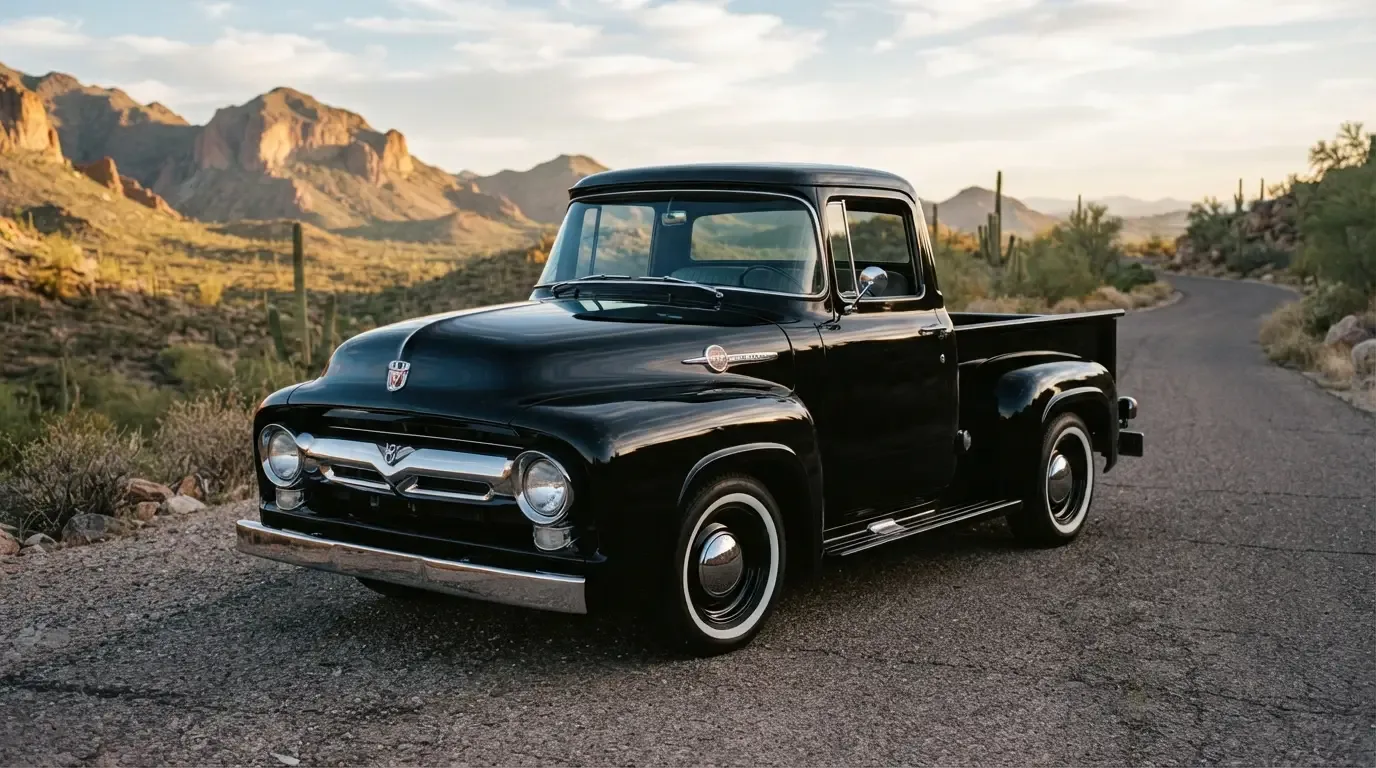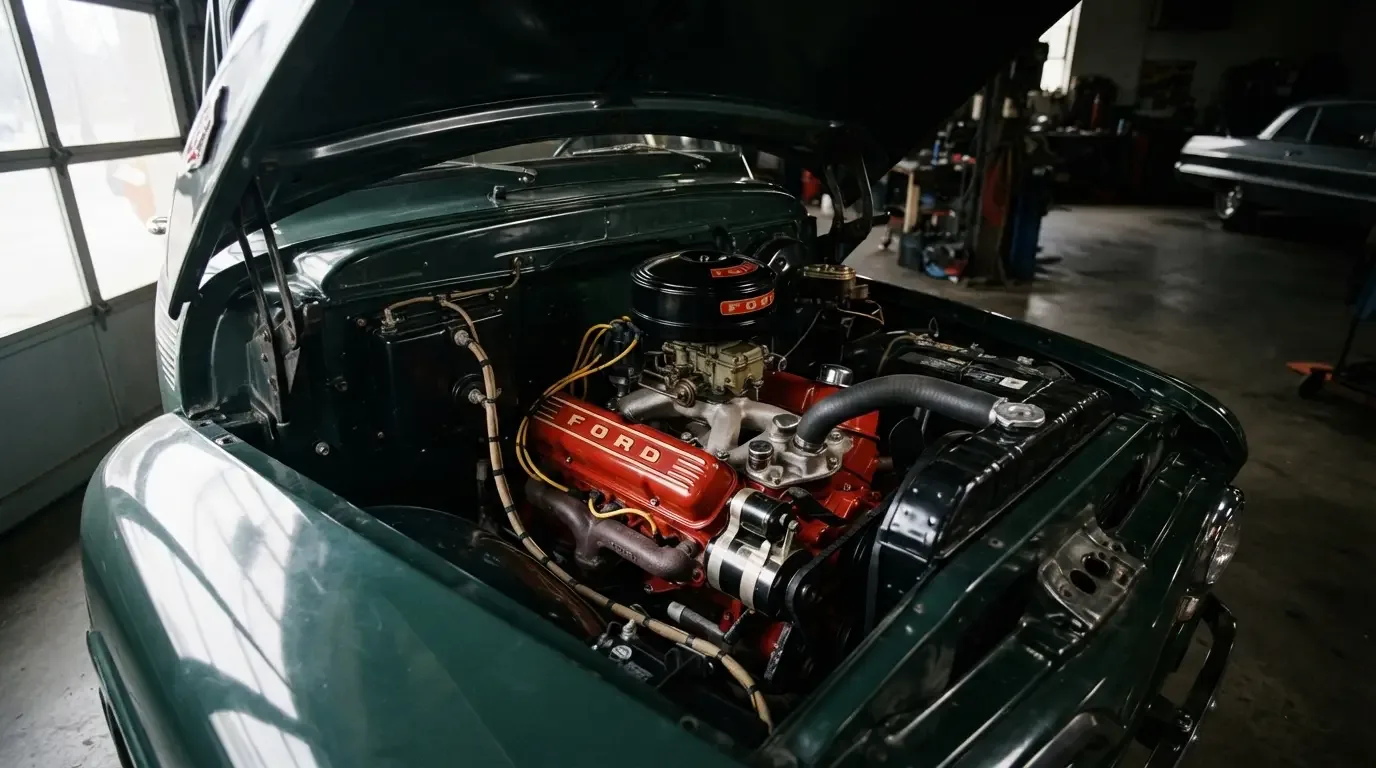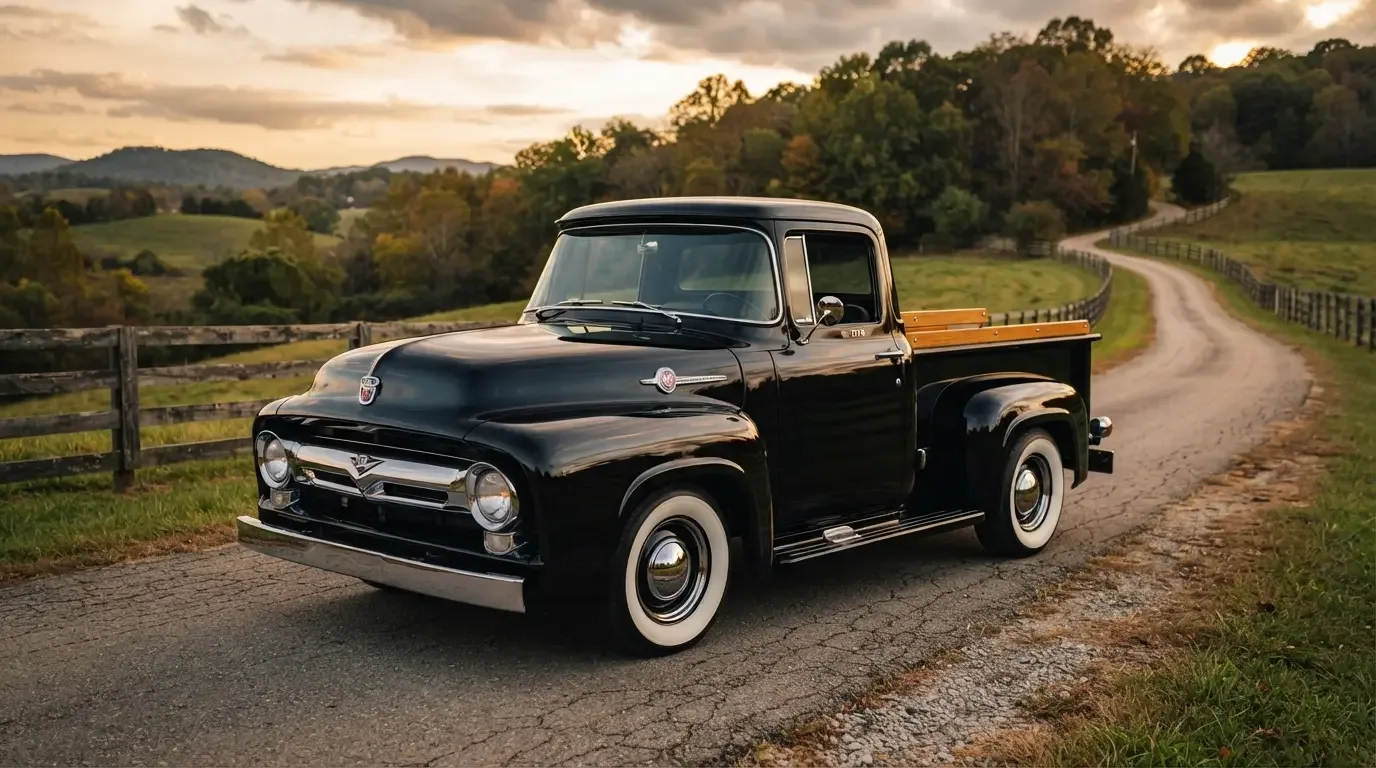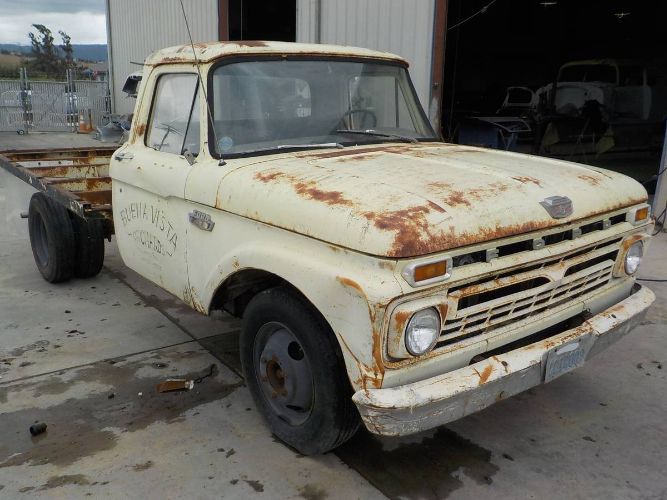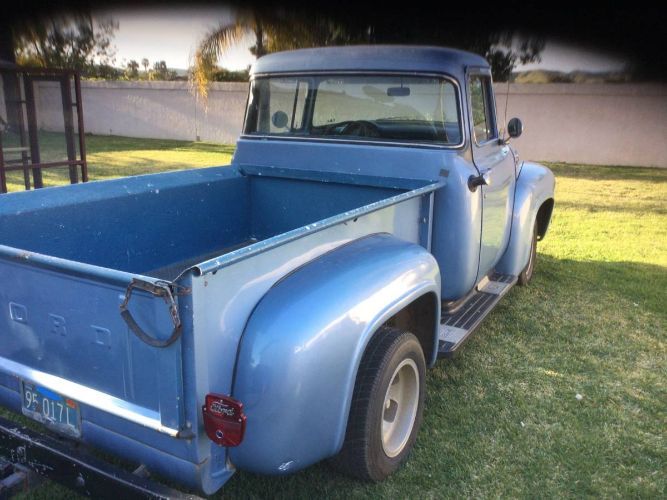
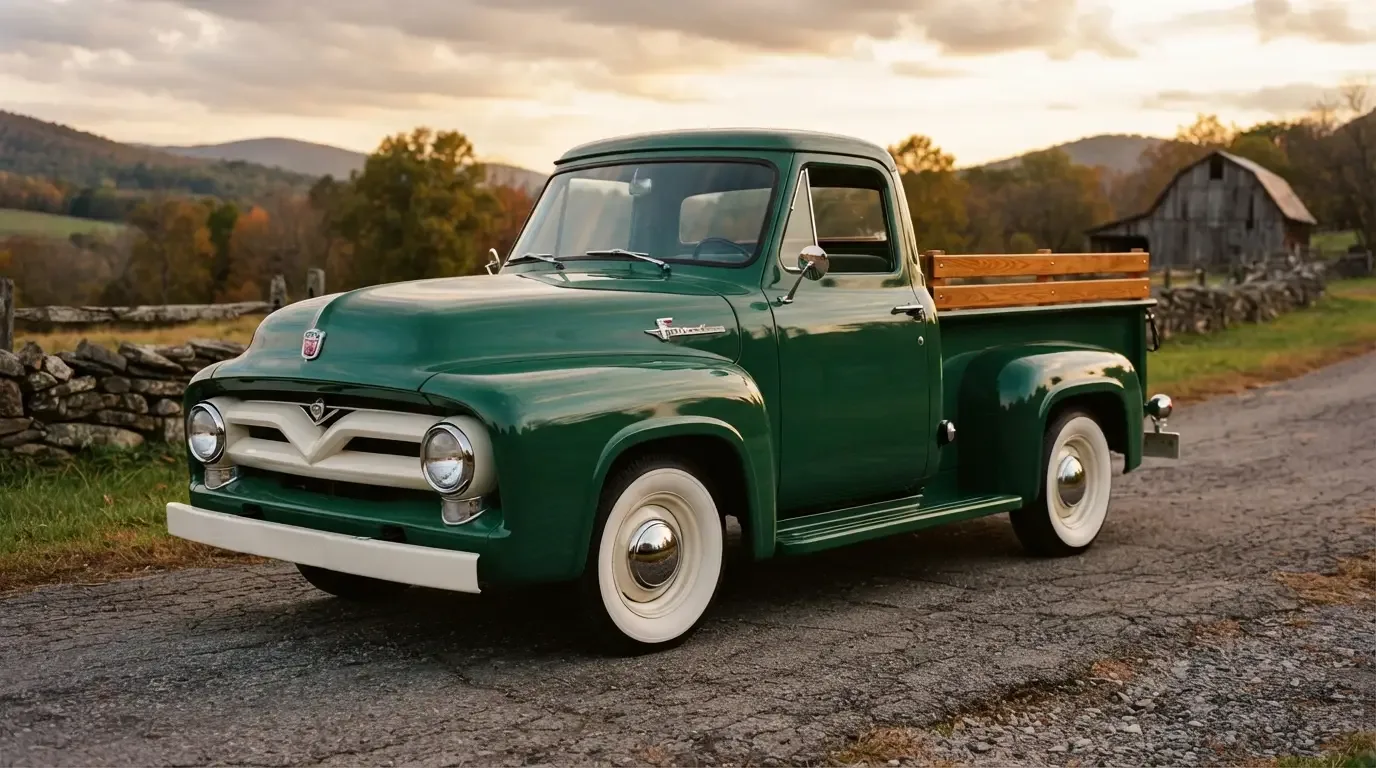
Viewed as an artifact rather than just a vehicle, the 1955 ford f100 occupies a quieter place in the historical record than its neighbors: a mid-cycle refinement year that carried the Y-block V8 forward largely unchanged while polishing the details Ford had introduced the year before. It arrived in the middle of the second-generation F-Series run, wearing modest styling updates over the 1954 truck.
What actually changed under the skin
Ford's trucks in this generation still rode on a solid front axle with kingpin steering knuckles, a design the company would keep on F-Series trucks for years to come; the independent Twin I-Beam front end most enthusiasts associate with a modern-feeling Ford truck ride did not arrive until 1965. So the 1955 F-100 did not bring a suspension overhaul. What it did bring was a bump in six-cylinder displacement, to 223 cubic inches, giving buyers who skipped the V8 noticeably more low-end pull than the smaller six offered in the truck's debut years.
This detail matters for anyone documenting or restoring a truck from this era, because it establishes a useful mechanical marker. A 1954 F-100 and a 1955 F-100 share a great deal of styling DNA and the same basic front axle design, but engine displacement and small trim differences are exactly the kind of detail that separates an accurately dated truck from one assembled out of mismatched model-year parts.
Styling refinements, carefully catalogued
Exterior changes for 1955 were modest but documented in period sales literature. The grille received a revised bar arrangement, and detail trim on the hood and fender line was updated to differentiate the model year from 1954. These are the kinds of small variations that matter enormously to concours judges and serious restorers, since an incorrect grille bar or trim piece can immediately flag a truck as having been assembled from mismatched model-year parts. Careful documentation of exactly which trim belongs to which year is part of what separates an accurately restored 1955 F-100 from a truck that merely looks old.
The Y-block V8 carried over largely unchanged from 1954, continuing to displace 239 cubic inches, though minor running changes throughout the model year are noted in factory service bulletins. The inline six remained the standard engine for buyers prioritizing economy over power, a pattern consistent with the broader F-Series lineup throughout this generation.
What the paperwork confirms
Factory parts catalogs from the period list the 1955 front-end components as distinct part numbers from the 1954 and 1956 equivalents even though the basic kingpin design carried over, which researchers use to confirm running changes within an otherwise similar-looking axle assembly. For anyone assembling a numbers-matching restoration, cross-referencing these part numbers against original invoices remains the most reliable method of verifying authenticity, far more dependable than relying on visual inspection alone.
| Spec | 1955 Ford F-100 |
|---|---|
| Standard engine | 223 cu in inline six |
| Optional engine | 239 cu in Y-block V8 |
| Front suspension | Solid axle, kingpin steering knuckles |
| Payload class | Half-ton |
| Body generation | Second-generation F-Series (1953-1956) |
"Restorers often ask which model year in this generation offers the best balance of period style and mechanical refinement. The 1955 truck is a strong answer, since it carries the Y-block's power along with a stronger six, in a truck that had already worked most of the bugs out of the 1954 changeover."
- Sarah Whitfield
Positioned between two well-known years
The 1955 F-100 tends to sit in the shadow of its neighbors. The 1954 truck gets attention for introducing the Y-block, and the 1956 truck is widely regarded as the most desirable year of the generation thanks to its big-window cab option. That leaves 1955 as something of an overlooked middle chapter, even though it quietly refined the powertrain the year before had introduced. For a complete account of how the 1956 model built on these foundations, more on the 1956 ford f100 covers that transition in detail.
Readers interested in how this generation began in the first place, before the ball joints and styling refinements arrived, can find where this started useful background on the platform's origins.
Interior and cab details worth cataloguing
Beyond the mechanical changes, 1955 saw modest interior updates documented in Ford's parts and accessories catalogs. Seat fabric patterns changed from the 1954 offerings, and dash trim received minor bright-metal accents not present on the earlier truck. For a concours-level restoration, matching these details precisely requires cross-referencing period photographs against surviving original interiors, since aftermarket reproduction fabric does not always replicate the exact weave and color of factory originals from this specific model year.
The 1955 model year also brought a new name to Ford's dress-up option: the Custom Cab, replacing the Deluxe Cab designation used on the 1953 and 1954 trucks. Chrome window surrounds, dual sun visors and upgraded seat padding continued as the defining features of that package, though the specific trim patterns and part numbers associated with the option shifted slightly from year to year within the generation. Careful researchers track these small variations closely, since they provide one of the more reliable methods for dating a truck when other documentation has been lost.
Placing 1955 within the production timeline
Understanding exactly where the 1955 model sits within Ford's broader three-year development plan for this generation helps explain why certain features appeared when they did. The Y-block arrived in 1954. The six grew to 223 cubic inches by 1955. The big-window cab and 12-volt electrical system arrived in 1956. Each year built directly on the one before it, and treating 1955 as simply "the year between the interesting ones" misses the actual engineering narrative the factory record tells: a company making one deliberate improvement at a time rather than overhauling the truck all at once.
Documentation gaps and how researchers fill them
Surviving factory paperwork for the 1955 model year is less complete than for some other years in this generation, which has made careful cross-referencing between parts catalogs, dealer invoices and surviving trucks especially important for anyone doing serious research. Where original documentation has been lost, researchers rely on comparing part numbers stamped directly onto components, since Ford's internal numbering system changed in traceable ways between 1954, 1955 and 1956 even when the visible differences between those trucks are subtle. This kind of component-level verification is slower than simply trusting a title or a seller's description, but it produces a far more reliable record, particularly for a model year that gets less attention than its more famous neighbors.
Why this year deserves closer study
Trucks are rarely appreciated for the kind of quiet, incremental changes that separate one model year from the next, but the 1955 F-100's stronger six and running refinements represent exactly the sort of unglamorous engineering polish that actually improved the ownership experience. It gave buyers who skipped the V8 a genuinely more usable truck, a benefit that mattered enormously to the tradesmen and farmers who relied on the six-cylinder trucks daily. Collectors researching this generation owe it to the historical record to treat 1955 as more than a placeholder between two flashier years.
For those documenting a restoration or simply looking to add a 1955 model to a collection, classic F-100s on the market is a reasonable starting point for current availability.
Sources and notes
- Ford F-Series (second generation) - Wikipedia
- Do I have King pins or ball joints? - Ford Truck Enthusiasts Forums
- F-100 King Pin Spindle Bolt and Bushing Kit, 1957-1964 - CJ Pony Parts
- Ford F-Series F-100 II 3.6 223 Six (118 Hp) /1955 - Auto-Data
- 1953-1956 Ford F-100 (2nd Gen): Specs, Engines, Values - fordf100s.com