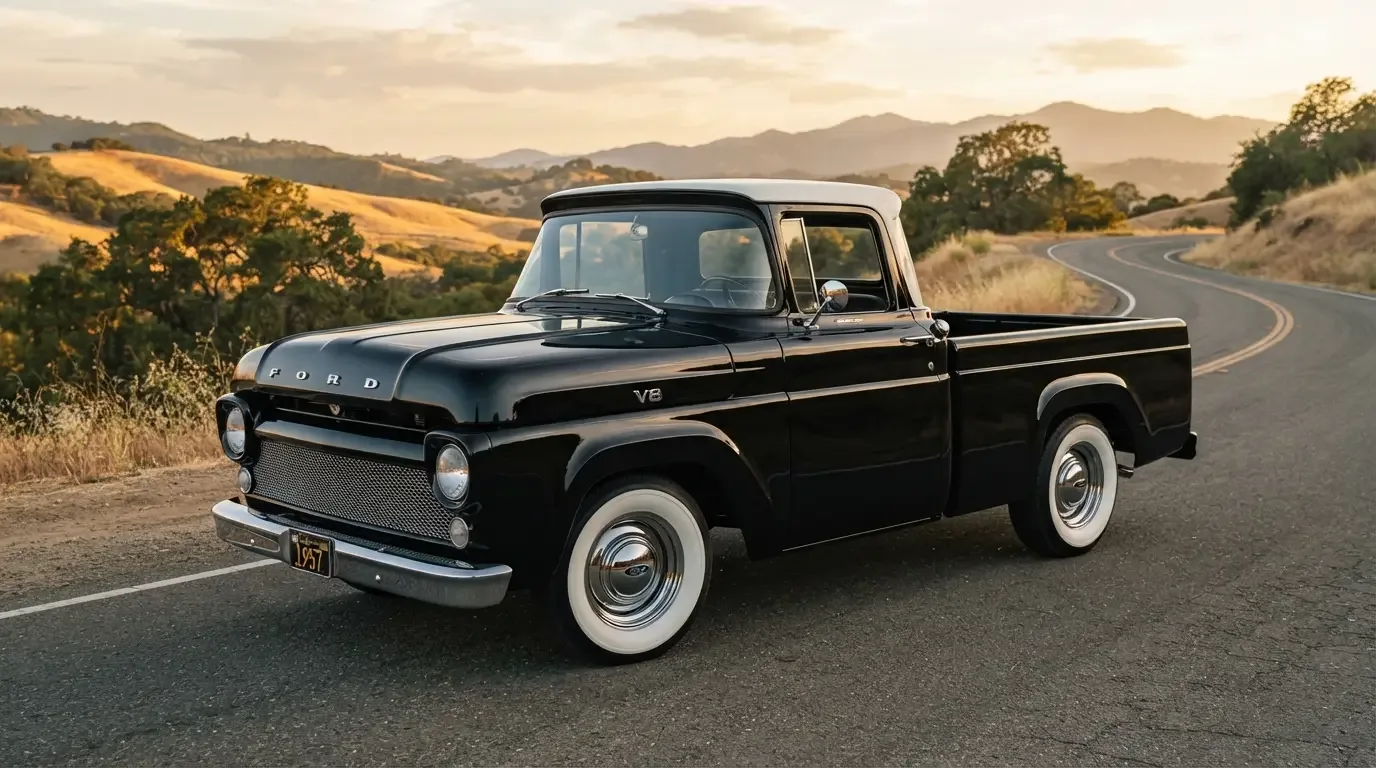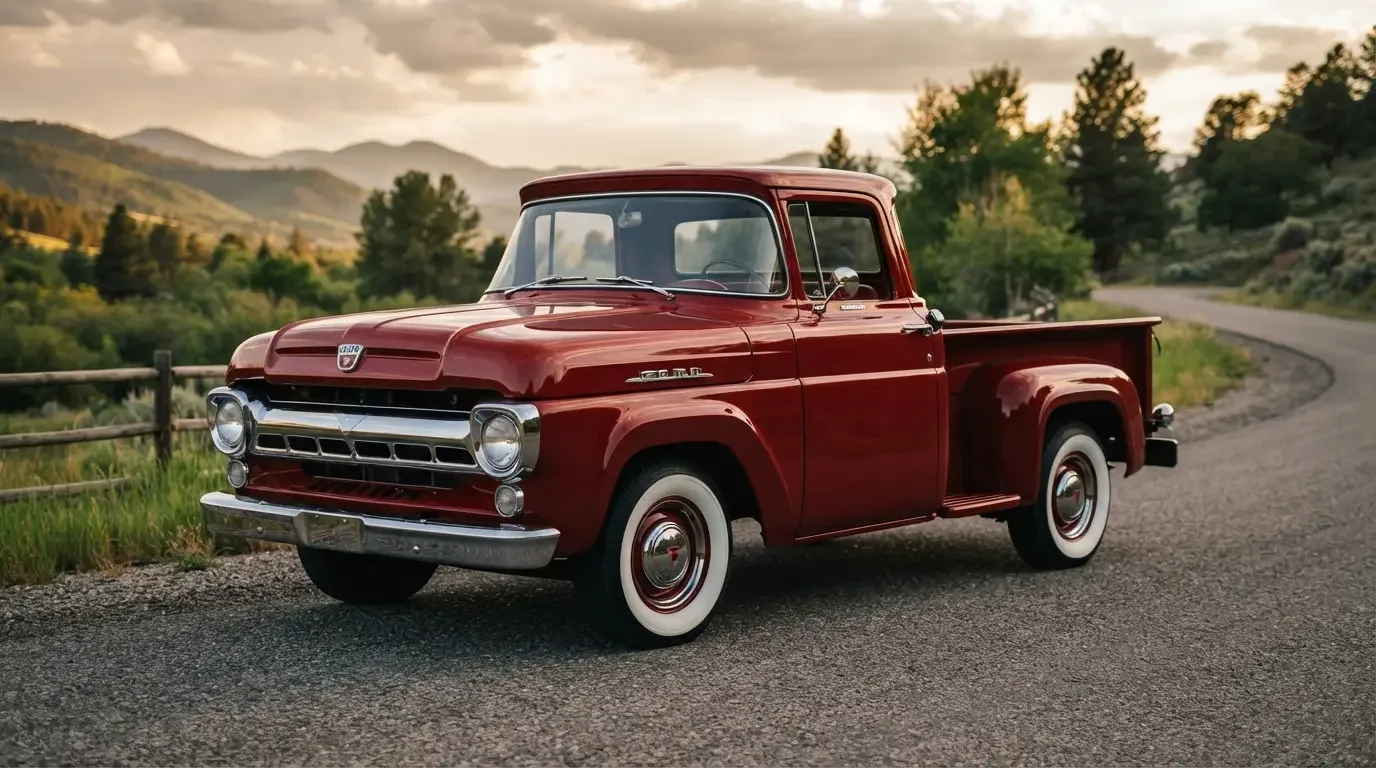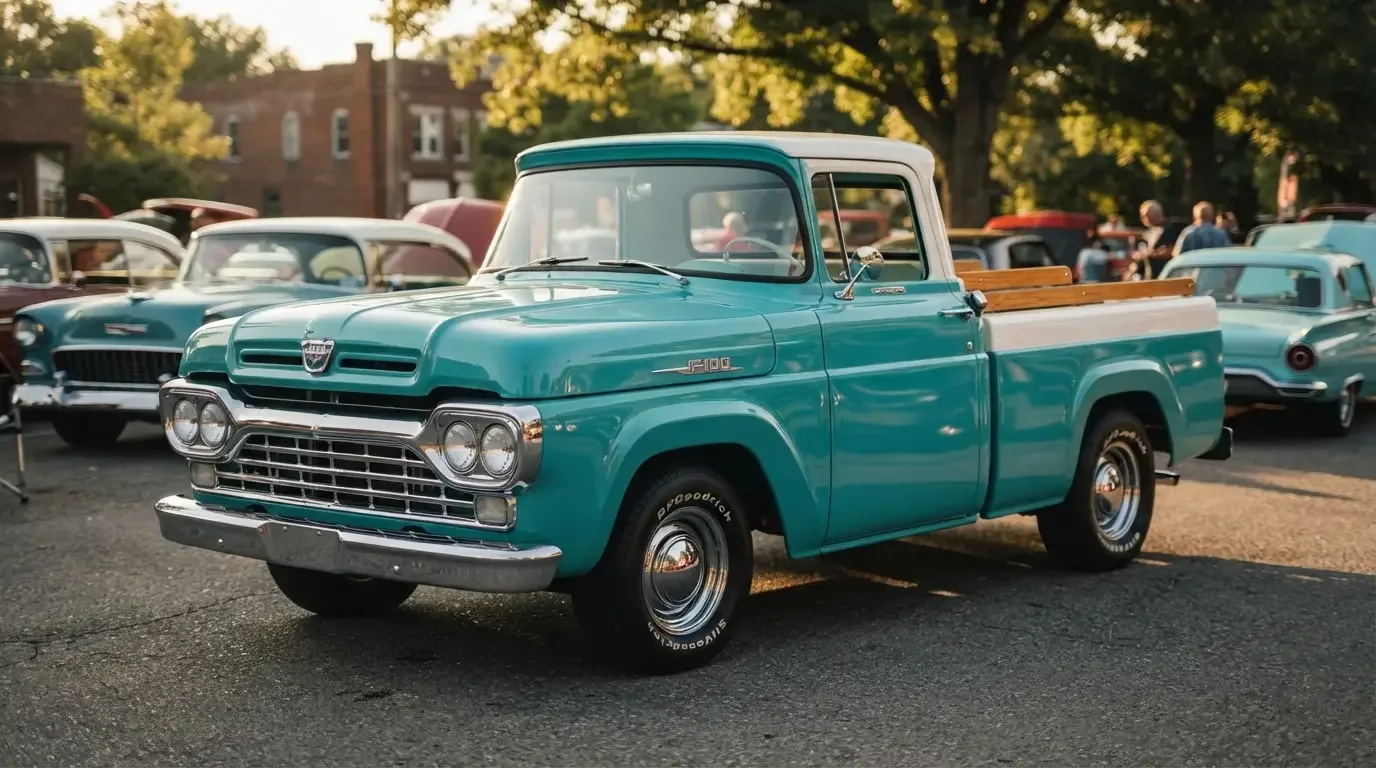
Production records tell a clearer story than nostalgia usually allows, and the 1957 ford f100 is a case where the paperwork actually backs up the legend. This was not a mild refresh of the previous generation. Ford tore up the truck line's design brief and started over, and the result reshaped what an American pickup was expected to look like for the next several decades.
A genuinely new truck, not a facelift
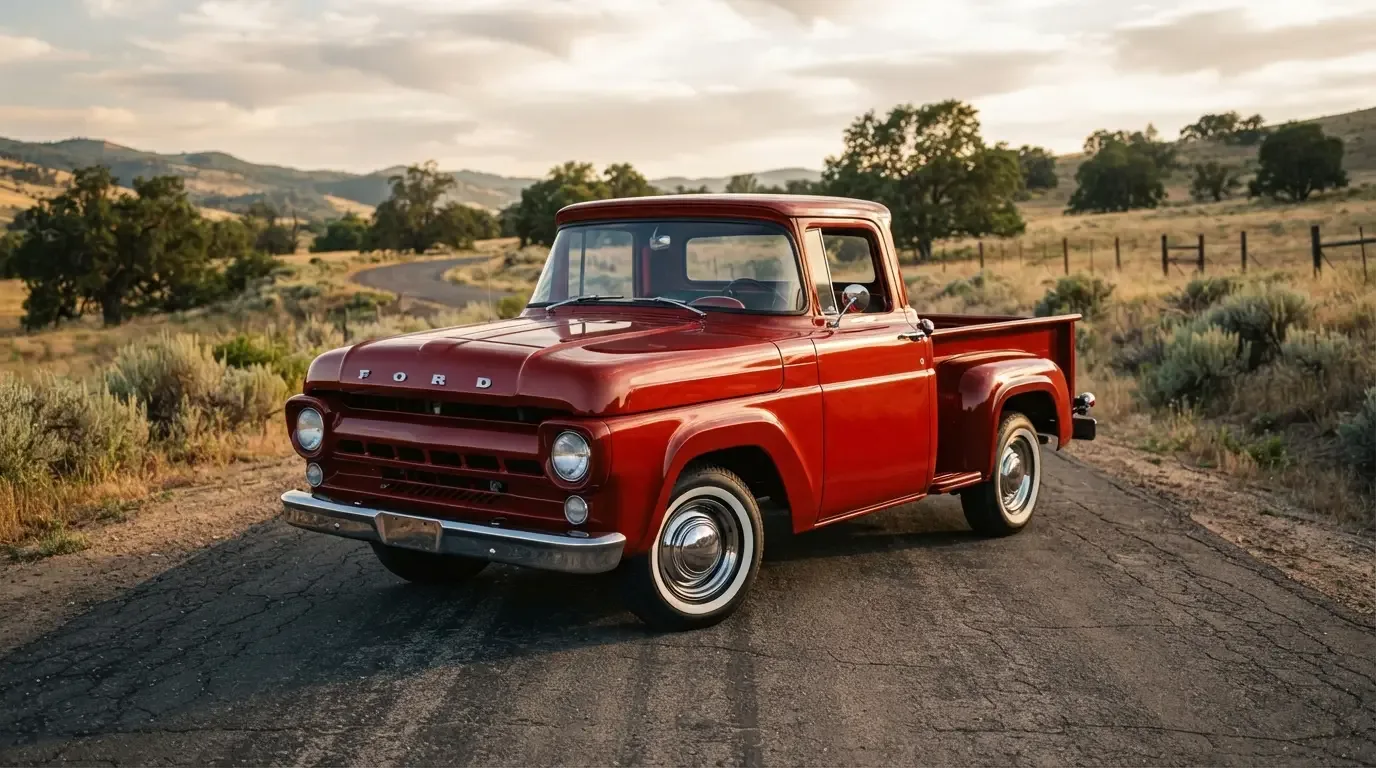
Where the 1953 to 1956 trucks had evolved gradually within a single basic body, the 1957 F-100 arrived on an entirely new platform with a wider cab, a lower stance, and styling that borrowed confidently from contemporary car design. Ford's engineers also addressed a longstanding complaint from truck buyers about ride quality, revising the frame and suspension to smooth out the harsh ride that had defined pickup trucks for decades. Original factory documentation from the period describes the changes as the most significant truck redesign the company had undertaken since the F-Series launched in 1948, and the surviving records support that claim rather than overstating it.
The cab itself grew meaningfully wider than its predecessor, addressing another common complaint about cramped interior space, and Ford's engineering notes from the period emphasize driver comfort as a design priority in a way earlier truck development records simply did not.
The Styleside bed changes everything
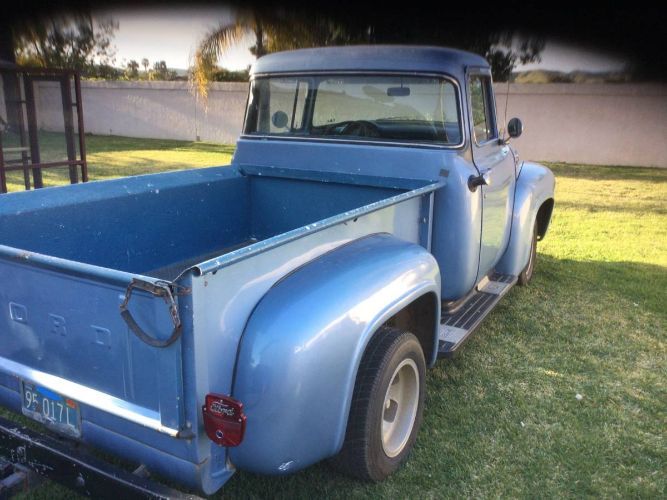
The single most consequential change for 1957 was the introduction of the Styleside bed, a smooth-sided cargo box design that eliminated the traditional rear fenders bulging outside the bed walls. Previously, every F-Series pickup used what would come to be called the Flareside configuration, with separate fenders flaring out beyond a narrower bed. The new Styleside integrated the fenders into a single smooth-sided box, widening usable cargo space and giving the truck a cleaner, more modern silhouette that echoed the smooth flanks of contemporary sedans and wagons.
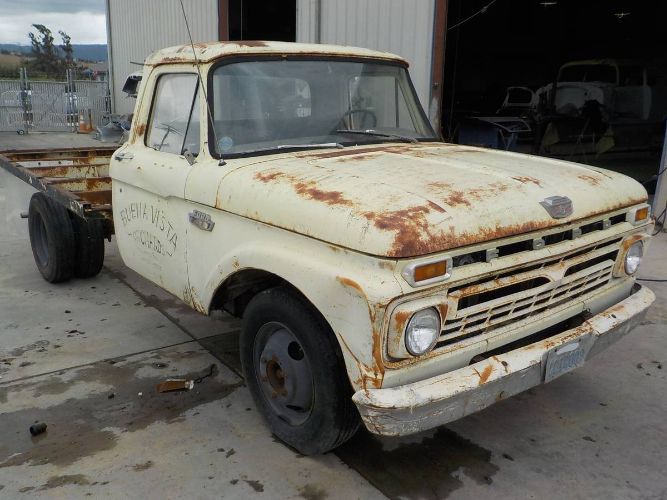
Crucially, Ford did not retire the Flareside bed outright. Buyers could still order the traditional fendered bed style alongside the new Styleside option, a decision that reflected careful market research rather than a wholesale bet on one design. Some buyers, particularly those replacing an aging farm truck, wanted the familiar layout they already knew. Others wanted the modern look and additional cargo width the Styleside offered. Ford's decision to offer both simultaneously let the market sort out its own preference rather than forcing a single answer, and factory order data from the period shows both configurations selling in meaningful numbers throughout the truck's production run.
Correcting a common misconception
A persistent myth among casual collectors holds that the Styleside bed replaced the Flareside entirely starting in 1957, when in fact both configurations remained available concurrently for years afterward. This confusion likely stems from the Styleside's outsized influence on later truck design trends, which makes it easy to assume in hindsight that it must have immediately dominated sales. Original dealer order guides from the period tell a more complicated story, with Flareside trucks remaining a legitimate, popular choice well into the 1960s for buyers who preferred the classic look or simply wanted a lower-cost option, since the Flareside bed was typically priced slightly below its Styleside counterpart.
"The paperwork is unambiguous on this point even though the popular version of the story keeps getting it wrong. Ford ran both bed styles side by side for years. It was not a transition. It was a genuine choice Ford offered its customers."
- Tom Ramirez
Engine and drivetrain updates supported the new look
The redesigned platform also brought updated engine options into the lineup: a 223 cubic-inch inline six rated around 139 horsepower as the base engine, and a 272 cubic-inch Y-block V8 producing roughly 171 horsepower for buyers who wanted genuine highway performance to match the truck's more car-like ride and styling. Ford's engineering notes frame these mechanical updates as necessary complements to the new frame and suspension design, rather than standalone improvements, reflecting an integrated approach to the truck's redesign that treated ride, styling, and performance as connected priorities instead of separate line items.
This integrated approach represents a shift in how Ford approached truck development more broadly, moving away from incremental yearly tweaks toward the kind of coordinated, ground-up redesign process that had previously been reserved mostly for passenger cars. The success of that approach with the 1957 F-100 influenced how Ford planned future truck generations for years afterward.
How this connects to the broader F-100 story
The 1957 redesign marks a clear dividing line in the F-100's history, and readers looking for the full context of 1957 ford f100 history will find that this generation set patterns that carried the truck line through the end of the decade. The bed style question in particular remains a point of genuine interest for collectors and is covered in more depth in a related story comparing the two configurations directly.
Anyone researching a specific 1957 F-100 and browsing F-100s for sale now will benefit from understanding this history before evaluating a truck, since the bed style and trim configuration tell a real story about what a specific customer chose from Ford's expanded lineup that year.
Trim levels expanded alongside the redesign
The 1957 redesign also brought a broader spread of trim levels than the previous generation offered, giving Ford's dealer network more room to position the F-100 against both budget-focused work truck buyers and customers who wanted something closer to a personal vehicle. Factory literature from the period lays out these trim distinctions clearly, with upgraded interior packages adding chrome trim, better upholstery, and additional sound insulation for buyers willing to pay for it. This expansion mirrored a broader industry trend of the late 1950s, as manufacturers increasingly recognized that pickup buyers were not a single homogeneous group but a market that could be segmented much the way passenger car buyers already were.
Original order sheets and dealer invoices from this period, where they survive, remain valuable primary sources for researchers trying to document exactly how a specific truck left the factory, since aftermarket additions and later dealer-installed options can otherwise be mistaken for original equipment decades after the fact. Careful cross-referencing against these documents is precisely the kind of work that separates a well-researched restoration from one built on assumption.
Why 1957 still marks a turning point
Looking back across seven decades of F-Series history, the 1957 redesign stands out as one of the few genuine inflection points rather than an incremental step. The combination of a new platform, the Styleside bed option, expanded trim choices, and updated mechanicals reset expectations for what a pickup truck could be, and those expectations shaped the market for years to come. Factory records from the period support that assessment consistently, which is precisely why this model year draws such sustained attention from historians and collectors alike.